



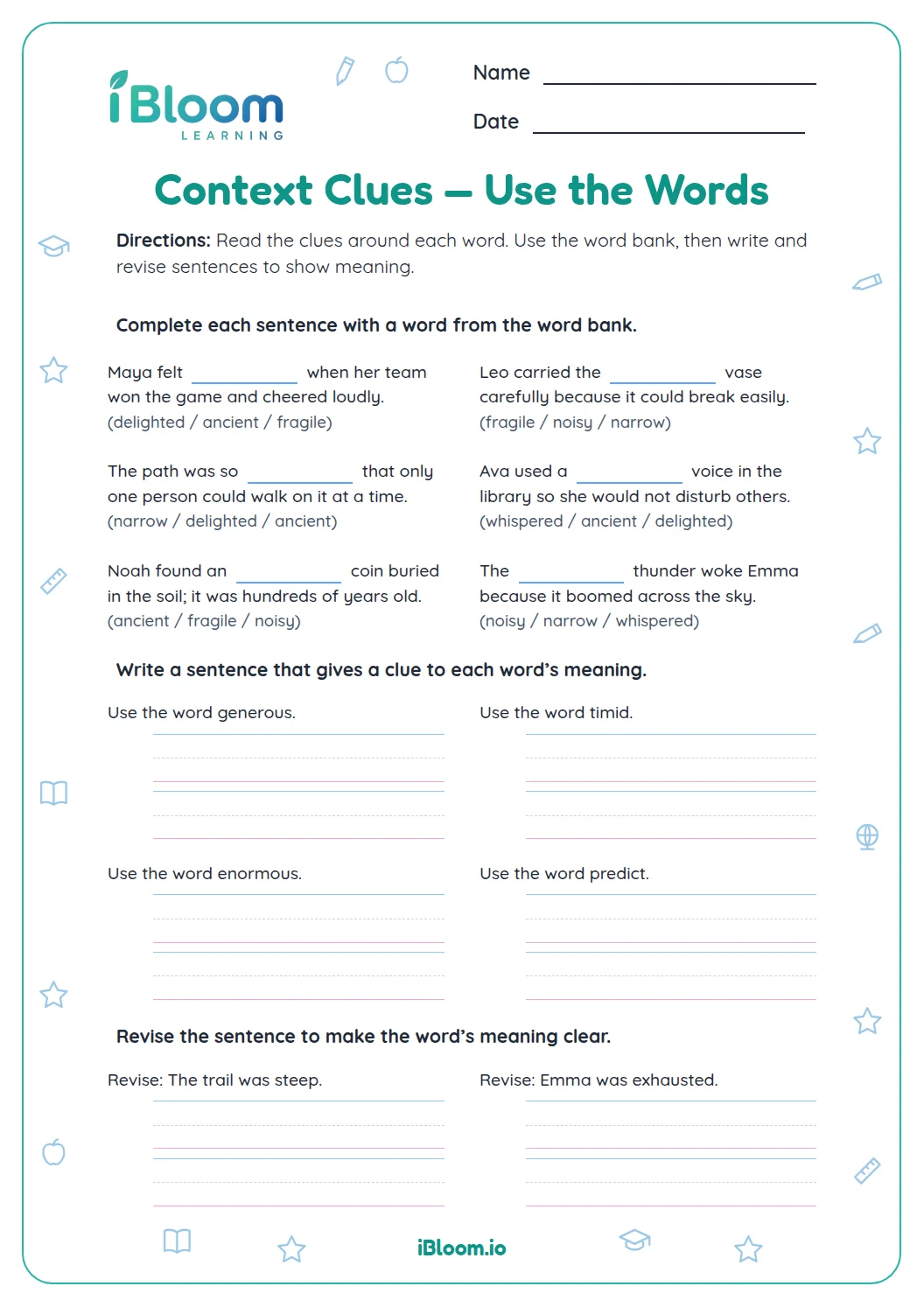
About this worksheet
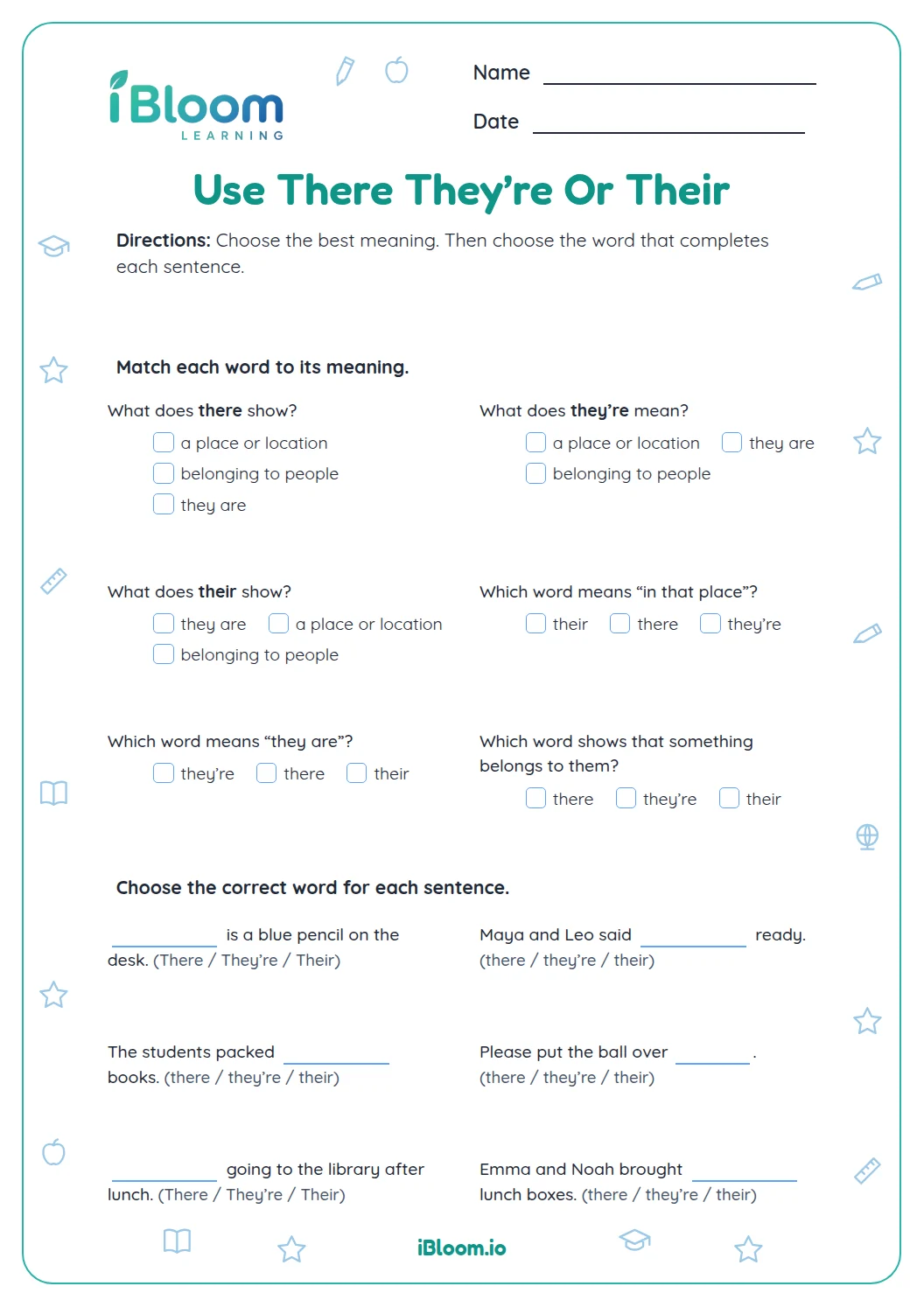
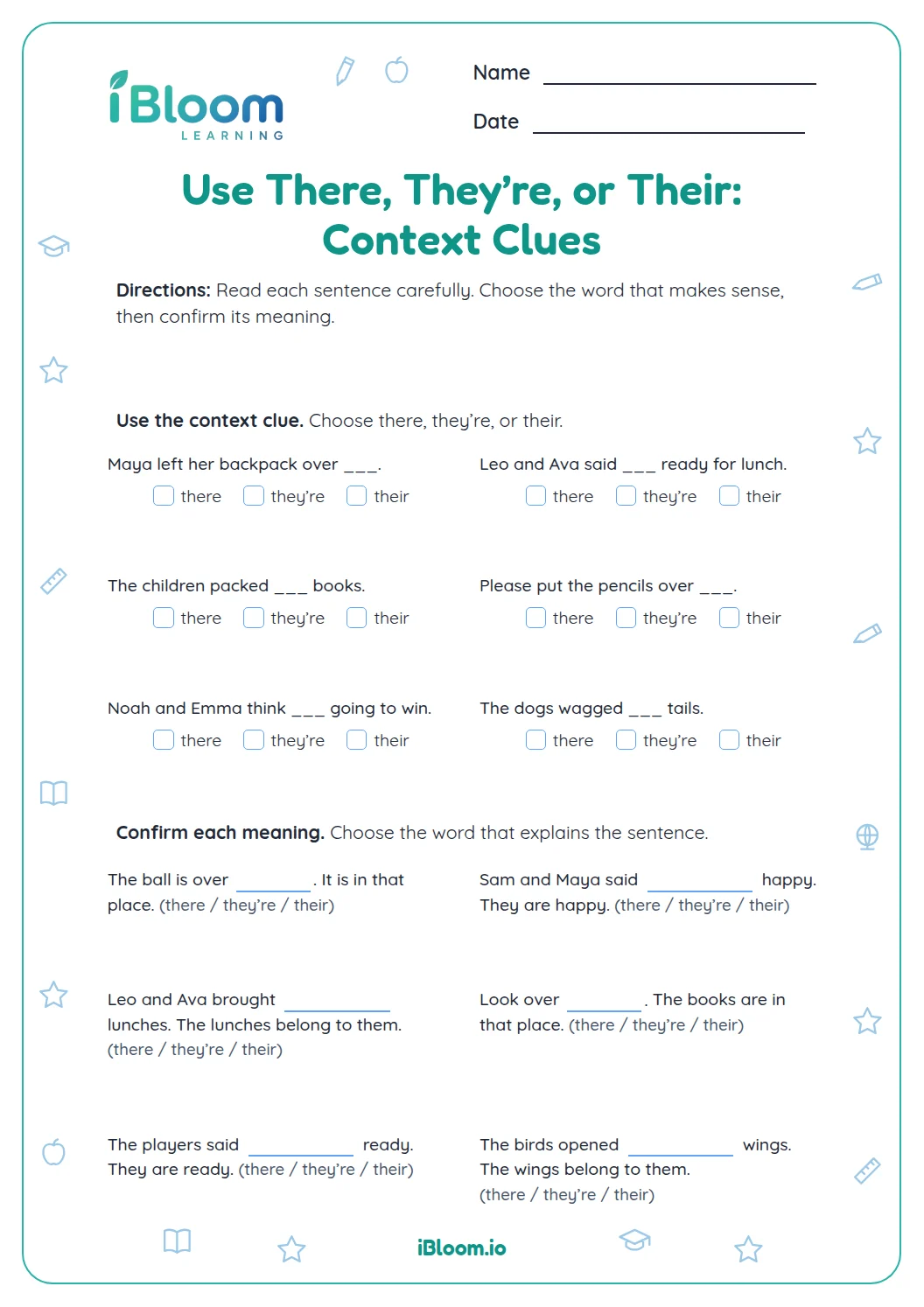
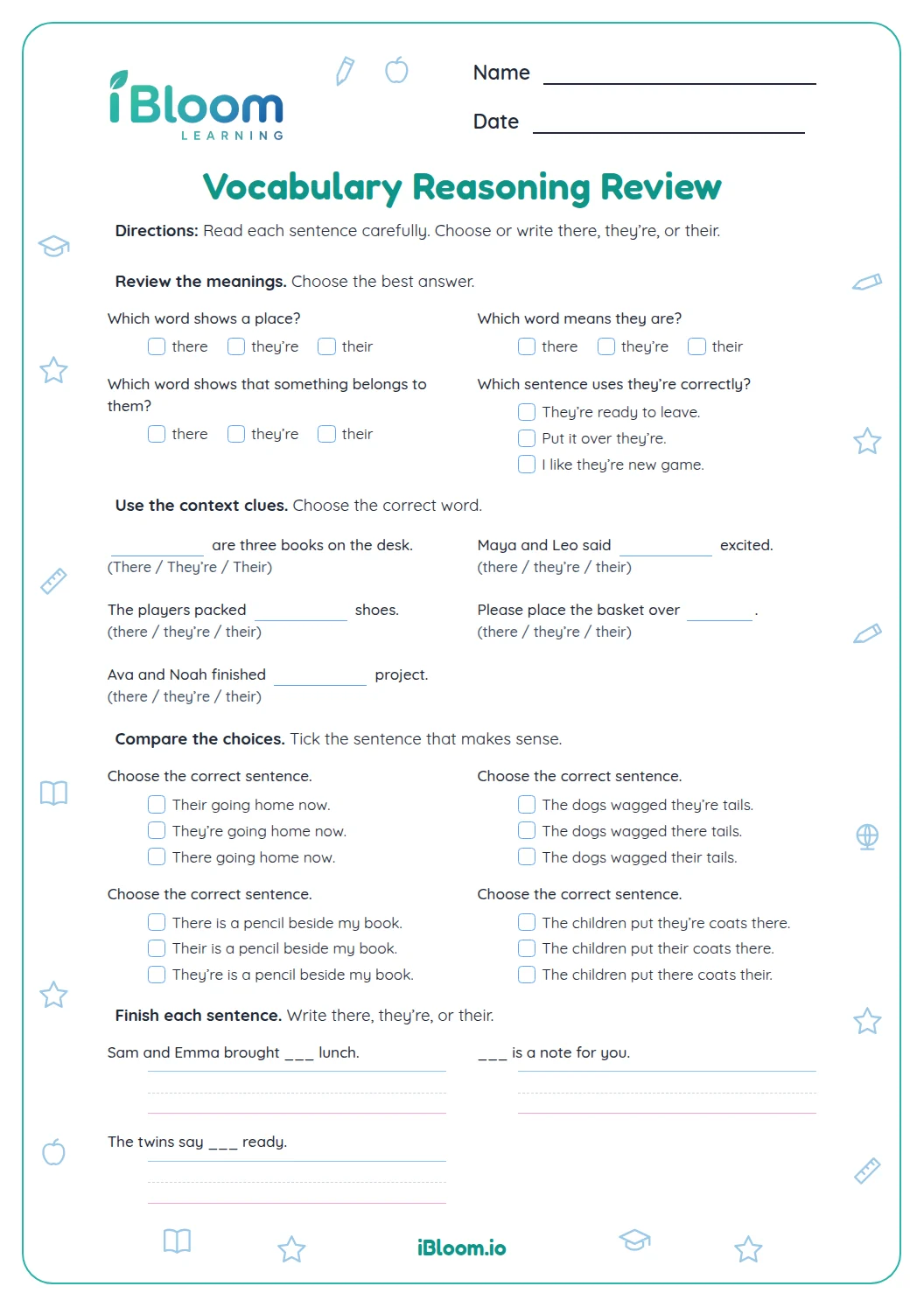
This printable Grade 3 worksheet helps learners distinguish there, they’re, and their while reading full sentences. Four multiple-choice items introduce the spellings, followed by ten sentence blanks for learners to complete independently. Children use sentence meaning and grammar to select the spelling that fits. A separate answer key lists each answer. The examples use school, home, and community contexts rather than isolated word definitions.
What does each word mean?
There can point to a place, as in “Put it there,” or begin a sentence such as “There is a note.” They’re is a contraction for they are. Their shows ownership, as in “their books.”
- 1They’re ready. → They are ready.
- 2Their bags are here. → The bags belong to them.
- 3The library is over there. → a place
How does sentence context reveal the right spelling?
Read the words around the blank. A noun after the blank may need an ownership word, as in “their lunches.” An action or description about a group may fit “they’re.” A place clue may fit “there.”
What kinds of sentences are on this page?
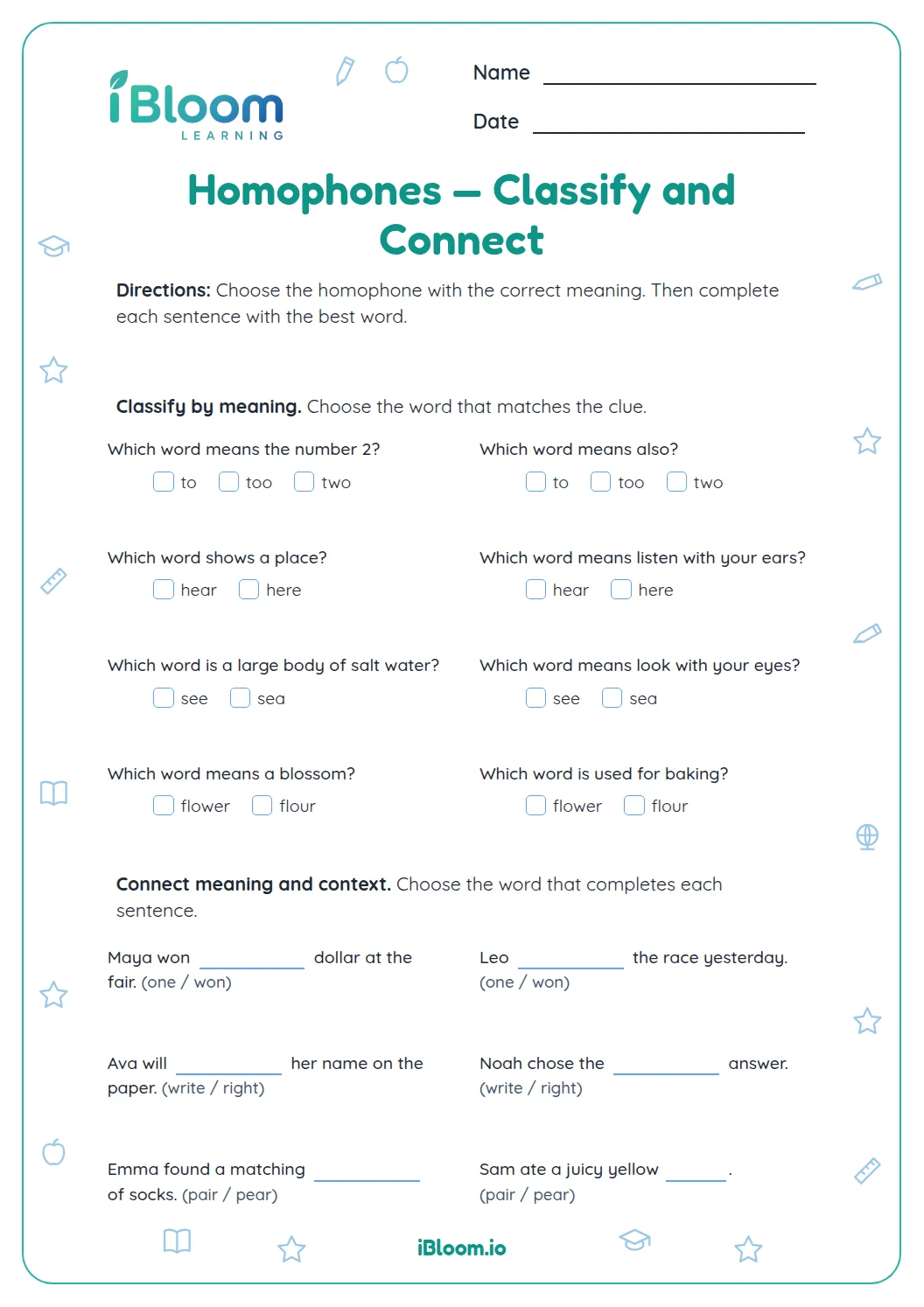
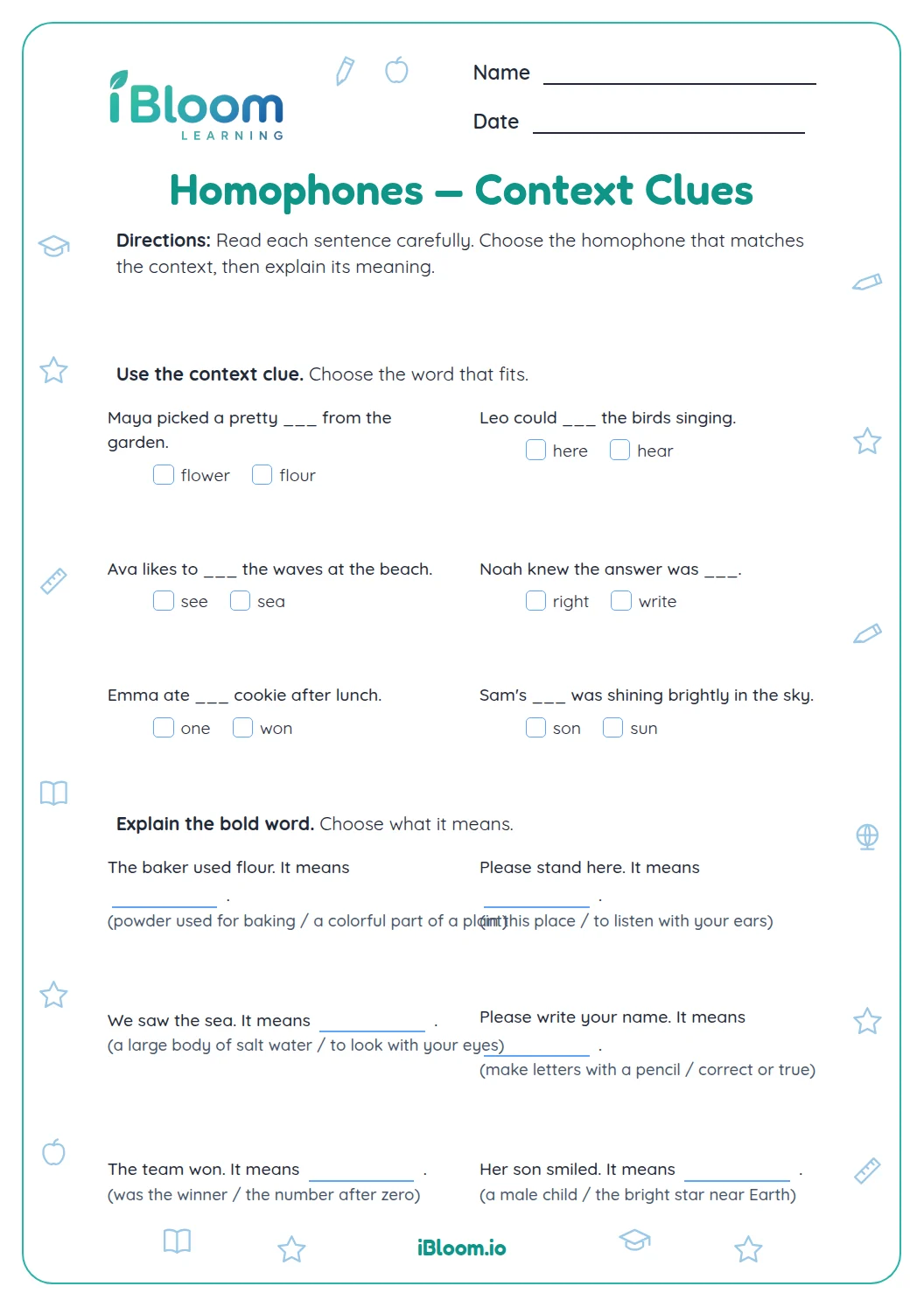
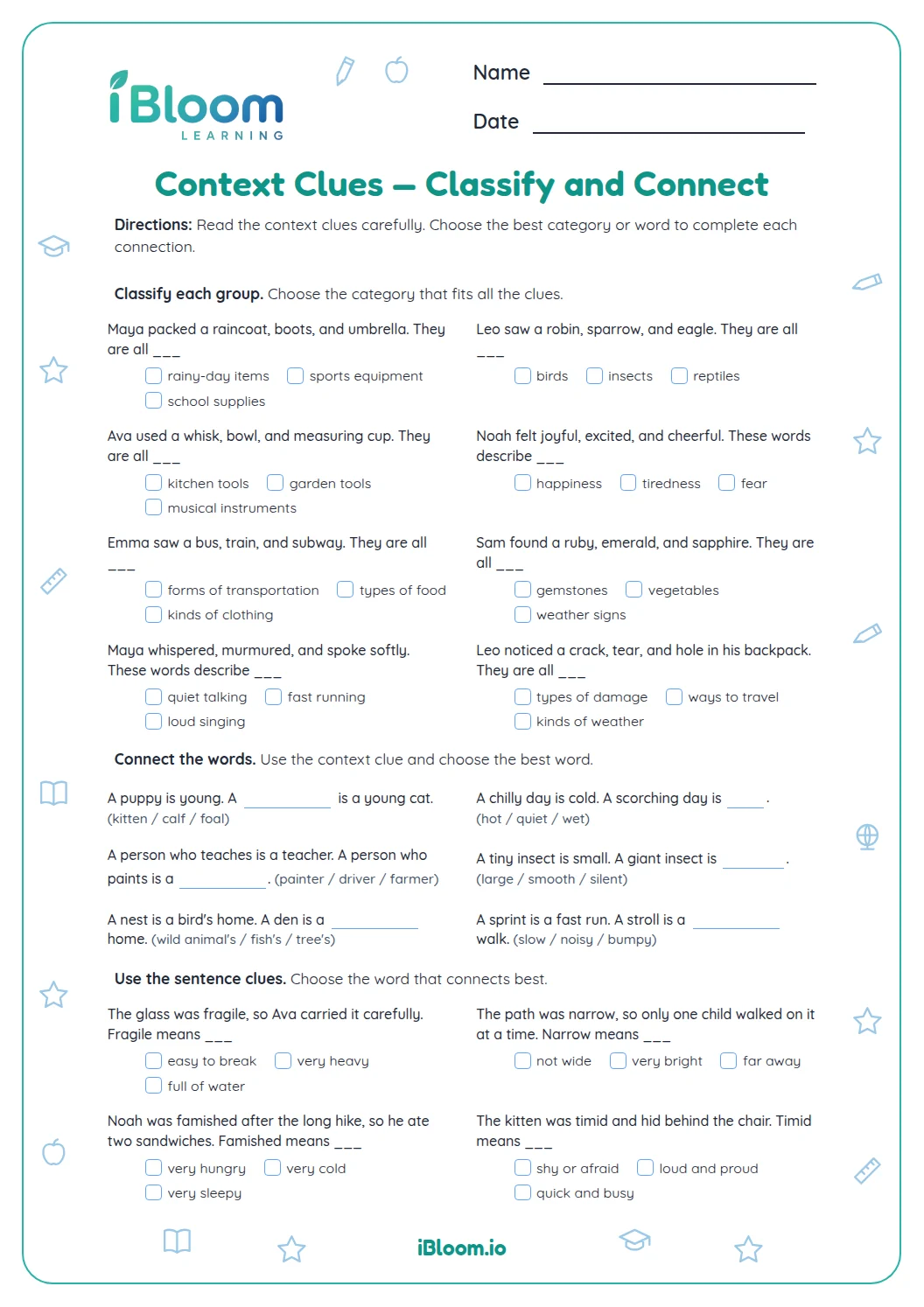
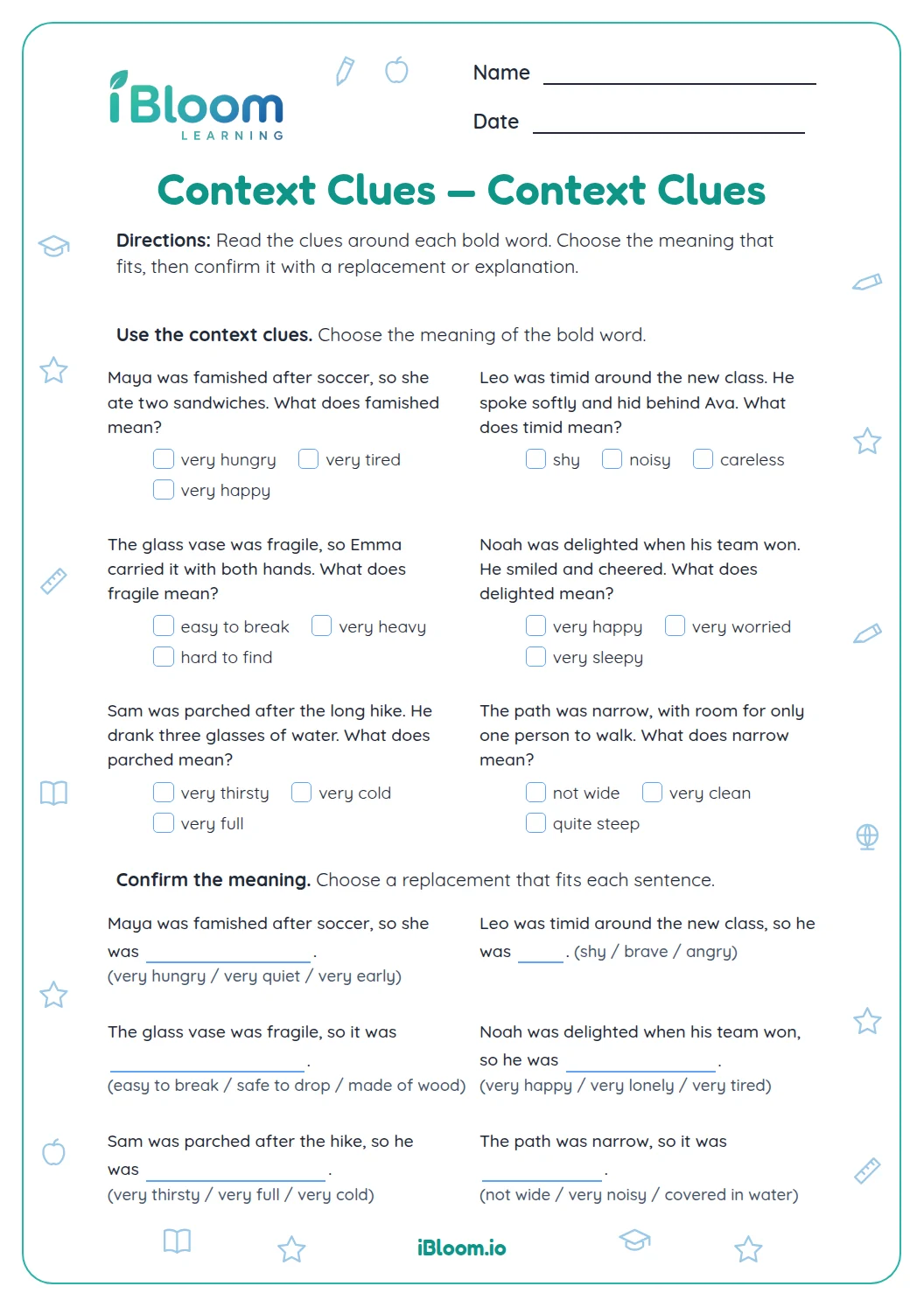
The first four questions offer three choices for each sentence. The next ten remove the choices, so learners must use context to write the correct spelling themselves. The sentences use school, garden, library, and home settings.
- Part A: 4 multiple-choice sentences
- Part B: 10 sentence blanks
- A separate answer key lists all 14 responses
How to use this worksheet
- 1Read the whole sentence aloud.
- 2Ask whether the blank names a place, means “they are,” or shows ownership.
- 3Try replacing they’re with “they are.”
- 4Look for the noun that belongs to someone when testing their.
- 5Reread the completed sentence to check that it makes sense.
Common mistakes and quick fixes
The mistake
Using they’re because it sounds like their.
The fix
Expand they’re to “they are”; if the sentence breaks, choose another spelling.
The mistake
Using there for ownership.
The fix
Ask who owns the following thing. Use their when it belongs to them.
The mistake
Choosing a word before reading the rest of the sentence.
The fix
Read through the ending for clues about place, people, or ownership.
What to practice next
Make more practice
Questions parents and teachers ask
What is the difference between there and their?
There can point to a place or introduce that something exists. Their shows that something belongs to a group. In “Their coats are over there,” the first word shows ownership and the last points to a place. Reading the whole sentence helps distinguish them.
What does they’re mean?
They’re is a contraction for “they are.” Try expanding it in the sentence. “They’re ready” becomes “They are ready.” If those words do not fit, the sentence needs there or their instead. The worksheet includes several examples about groups of children.
How many questions are on the worksheet?
There are 14 context questions across two worksheet pages. The first four are multiple choice, and the next ten ask the learner to write the missing spelling. A separate two-page answer key lists every response, giving adults a quick way to check the sentences.
Does this worksheet explain the three words before practice?
Yes. The written page gives a brief definition and a substitution check for each spelling, and the worksheet uses full context sentences. Learners see place, ownership, and contraction clues in school, home, and community settings across all 14 items. Rereading each completed sentence aloud is a useful final check.
Can a child use the sound of the words to choose?
The words sound alike, so sound alone does not identify the correct spelling. The child needs to use sentence meaning: a place or existence, “they are,” or ownership. Rereading the full sentence helps confirm the choice before filling the blank.
Is the answer key included?
Yes. The separate answer key identifies the correct word in each sentence. An adult can ask the learner to explain a clue for a missed answer, such as the noun that belongs to someone or whether “they are” fits. It supports review without printing another copy of the exercise itself.