


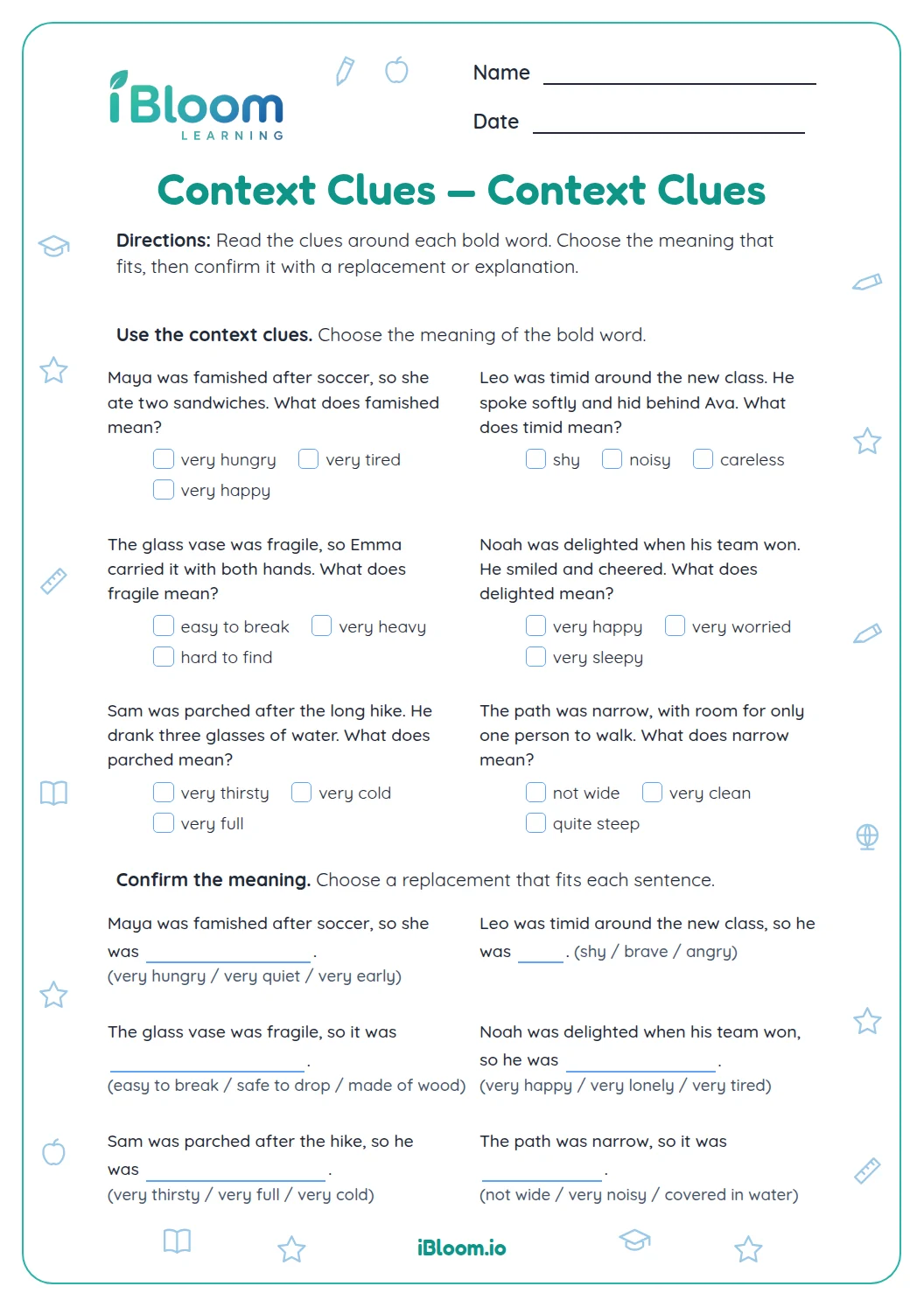
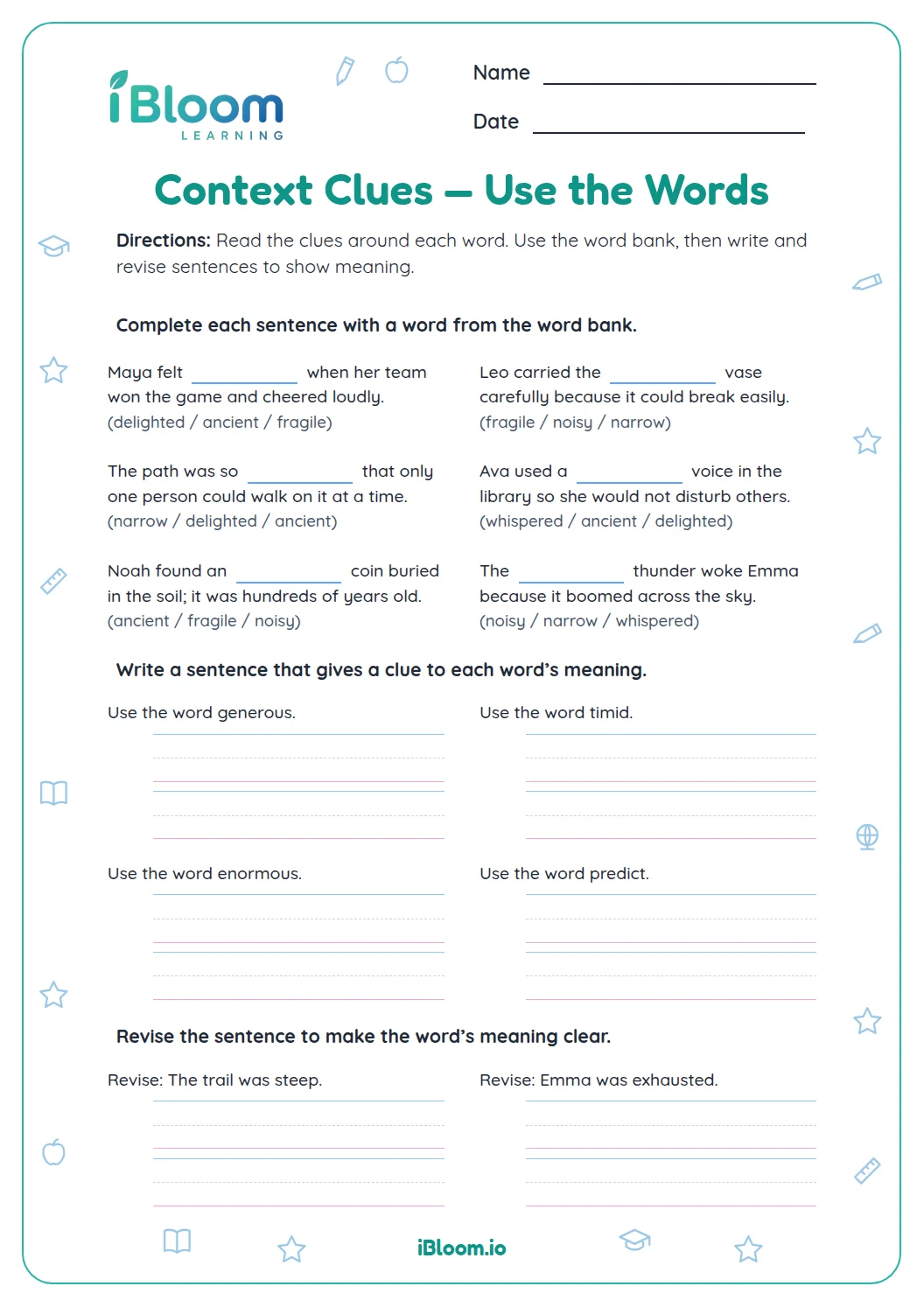
About this worksheet
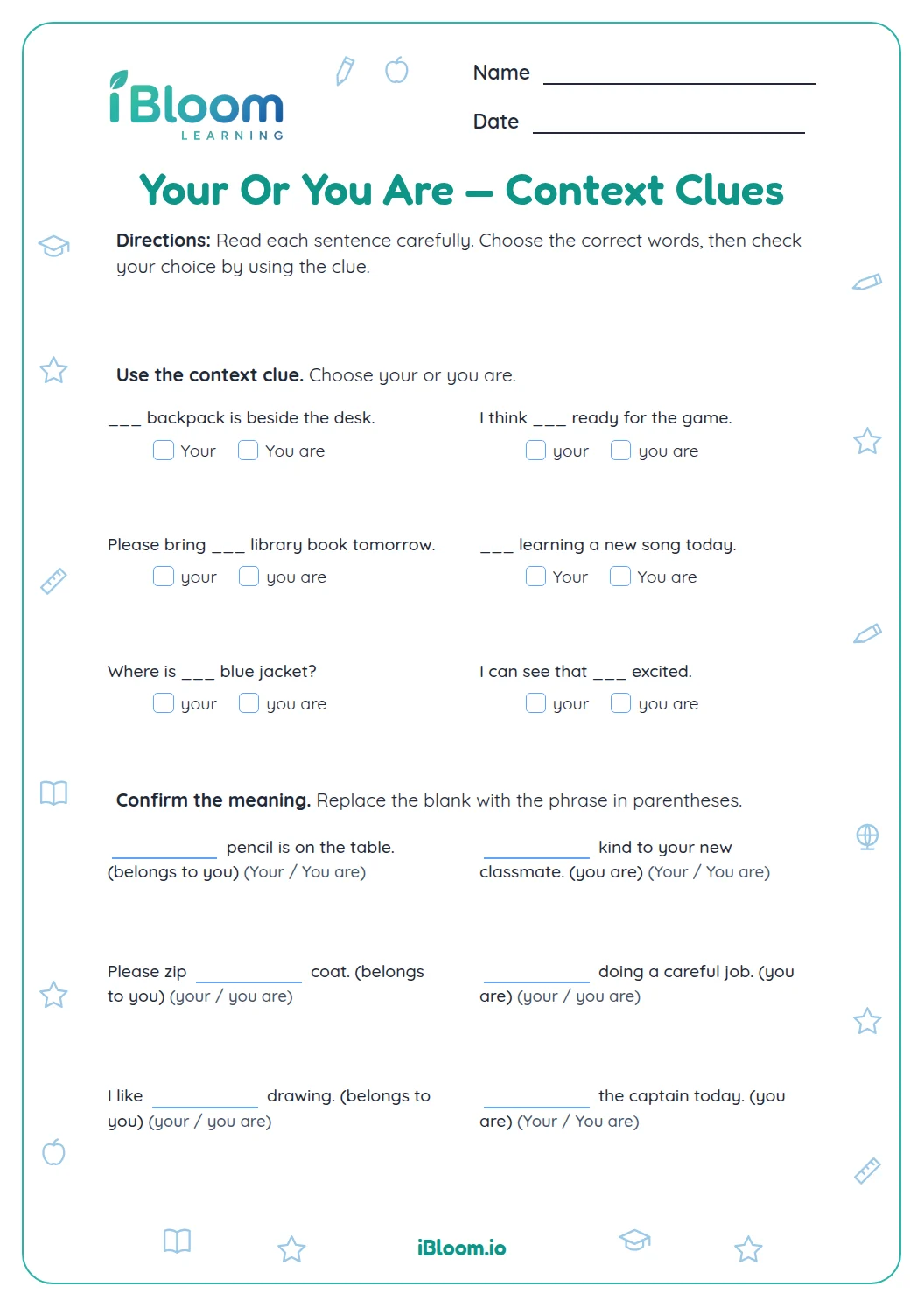
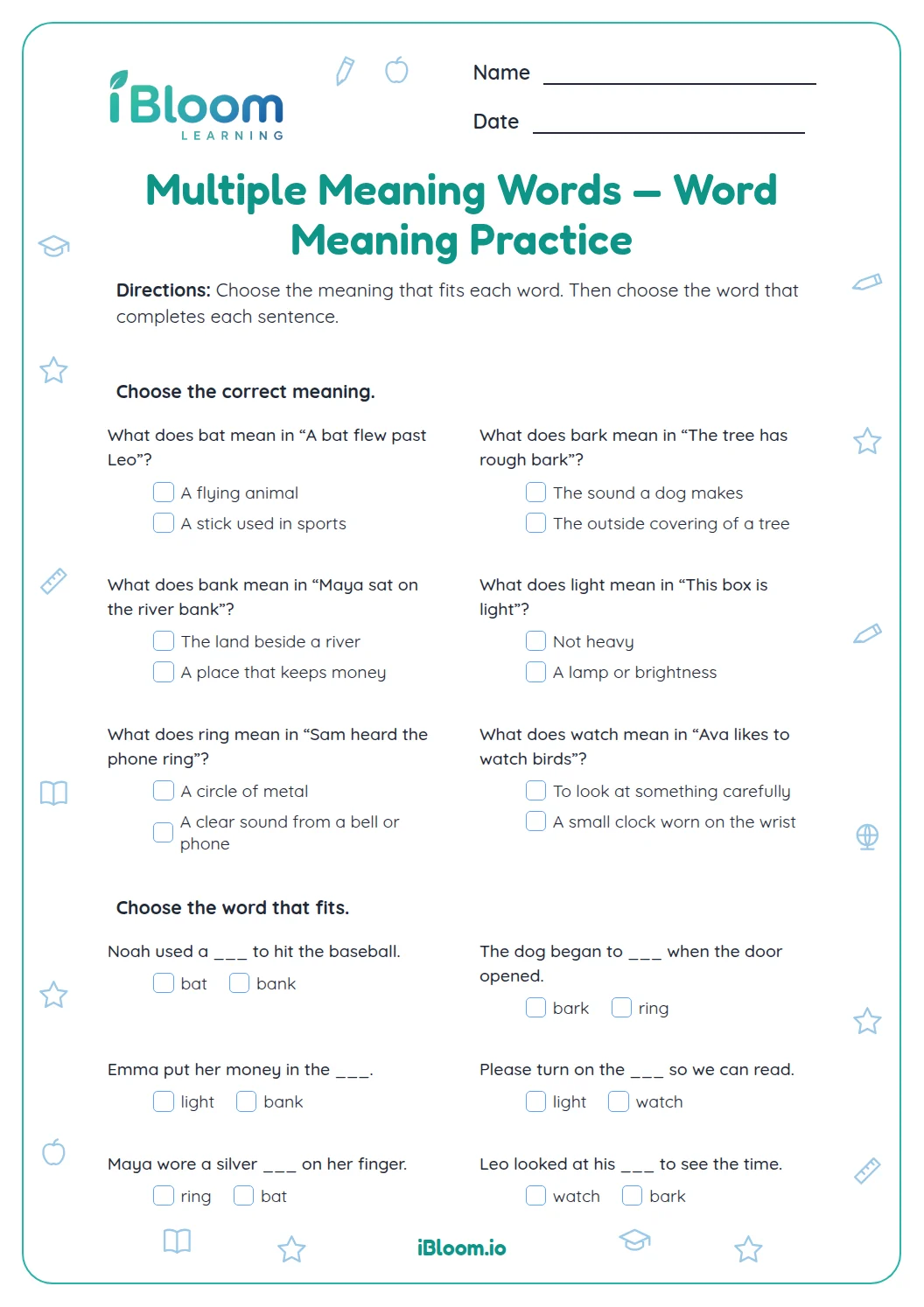
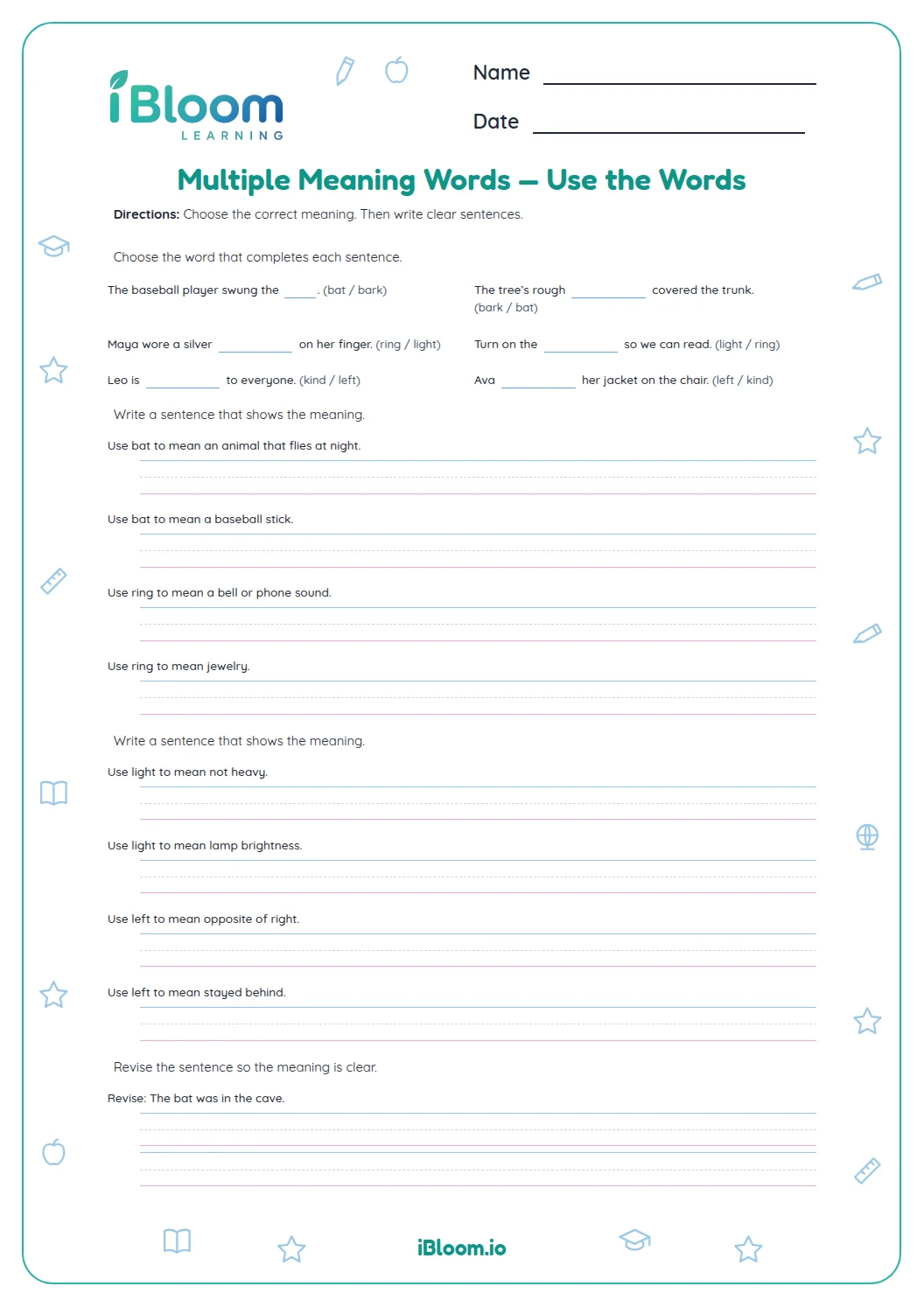
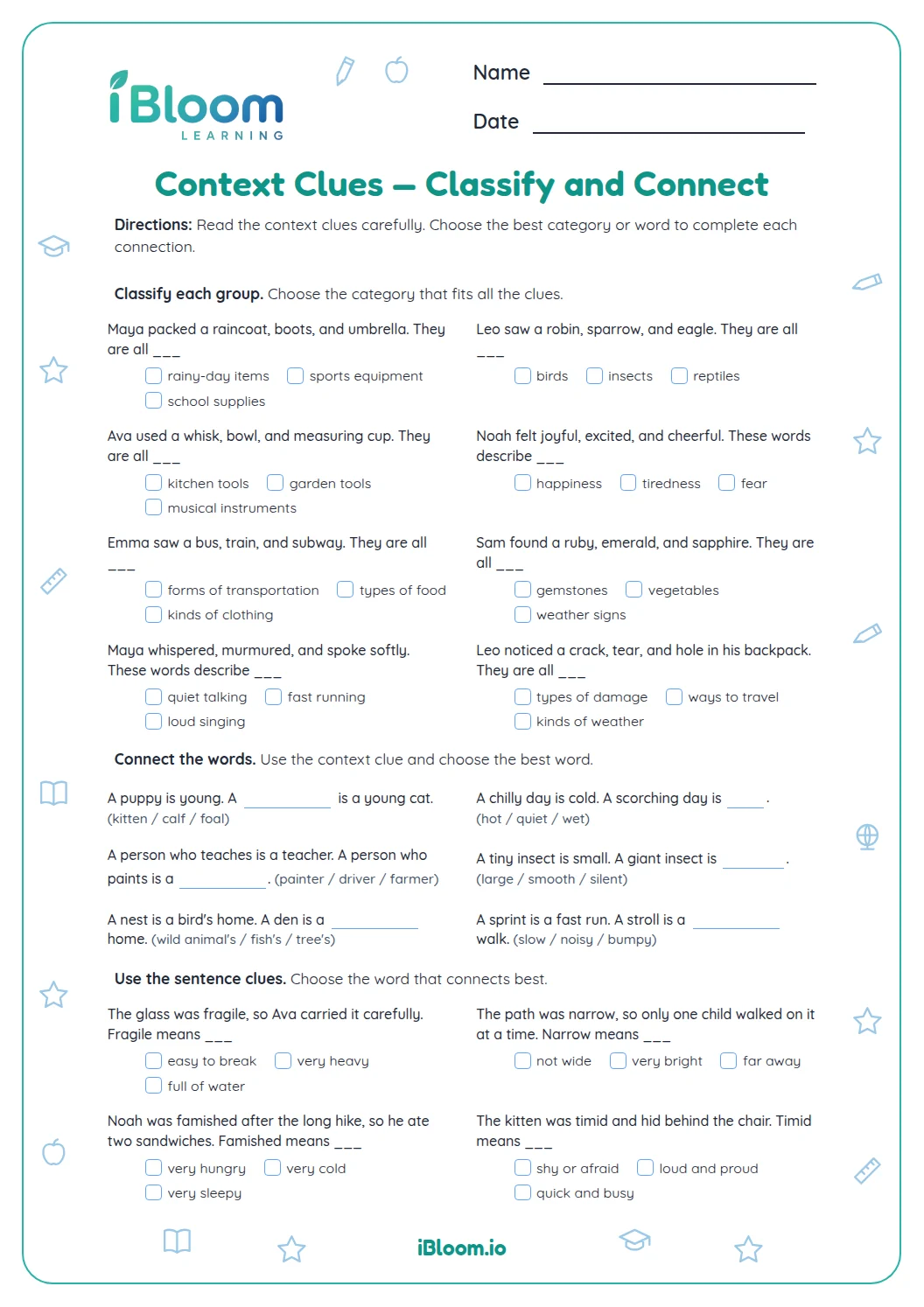
This free printable Grade 3 worksheet helps students distinguish its, the possessive form, from it’s, the contraction for it is. Across four parts, learners complete sentences, select forms that fit context, and choose correctly written examples. The answer key gives the completed forms and sentences so an adult can review the meaning and punctuation clues with the learner.
Aligned to L.3.2
What does this worksheet practice?
Fourteen items move from sentence completion to choosing correctly written examples. In the first three parts, learners complete sentences with its or it’s. Part D asks them to choose a sentence that matches a stated meaning or is written correctly.
How do you test it’s?
Try “It’s almost time to bake the muffins.” Substitute “It is”: “It is almost time to bake the muffins.” The sentence still works, so it’s is correct. In “The clock stopped because its battery was loose,” its shows that the battery belongs to the clock.
How can a learner check each answer?
Read the whole sentence. If “it is” fits, use it’s with an apostrophe. If the word shows that something belongs to an object or animal, use its without an apostrophe.
How to use this worksheet at home or in class
- 1Read each whole sentence before choosing a form.
- 2For it’s, say “it is” in its place.
- 3For its, ask what object or animal owns the next thing.
- 4Rewrite the two mixed-up sentences carefully.
- 5Use the answer key to explain the meaning clue, not just mark right or wrong.
Common mistakes and quick fixes
The mistake
Adding an apostrophe to every possessive word.
The fix
Its is the possessive form here; it does not take an apostrophe.
The mistake
Choosing it’s because the next word names a thing.
The fix
Try replacing it’s with “it is”; if the sentence breaks, choose its.
The mistake
Reading only the words around the blank.
The fix
Read the entire sentence so the intended meaning is clear.
Common Core alignment
The worksheet practices standard English spelling and punctuation conventions through its and it’s.
Use standard spelling and punctuation conventions, including apostrophes in contractions.
On this sheet: The sentence items practice the apostrophe in it’s and the conventional spelling of possessive its.
Show the official wordingHide the official wording
Demonstrate command of the conventions of standard English capitalization, punctuation, and spelling when writing.
What to practice next
Make more practice
Further reading
Questions parents and teachers ask
What does its mean?
Its shows that something belongs to or is part of an animal, object, or idea. In “The puppy wagged its tail,” the tail belongs to the puppy. Read the complete sentence and ask what has the tail to decide whether this possessive form fits.
What does it’s mean?
It’s is a contraction for “it is.” In “It’s easy to stir this batter,” replacing it’s with “it is” keeps the sentence grammatical and clear. The worksheet uses this substitution check alongside sentences where its shows ownership. The worksheet asks learners to apply this check to several cooking, school, and everyday sentences.
Why does possessive its have no apostrophe?
Its is the possessive form, while it’s is the contraction of it is. The apostrophe marks the letters omitted in the contraction. For example, “The clock lost its hands” shows ownership, while “It’s late” means “It is late.” These forms are specific to the word it.
How many questions are on the worksheet?
There are 14 questions in four parts. The first ten ask learners to complete sentences with its or it’s; the final four use choices to check sentence meaning and correct usage. The answer key lists the expected form or sentence for every item.
How can we practice the two forms?
Read a sentence and test it’s by saying “it is” in its place. If the sentence still makes sense, it’s may fit. For its, ask what belongs to the object or animal. The key can help you discuss the sentence clue after the learner has chosen.