




About this worksheet
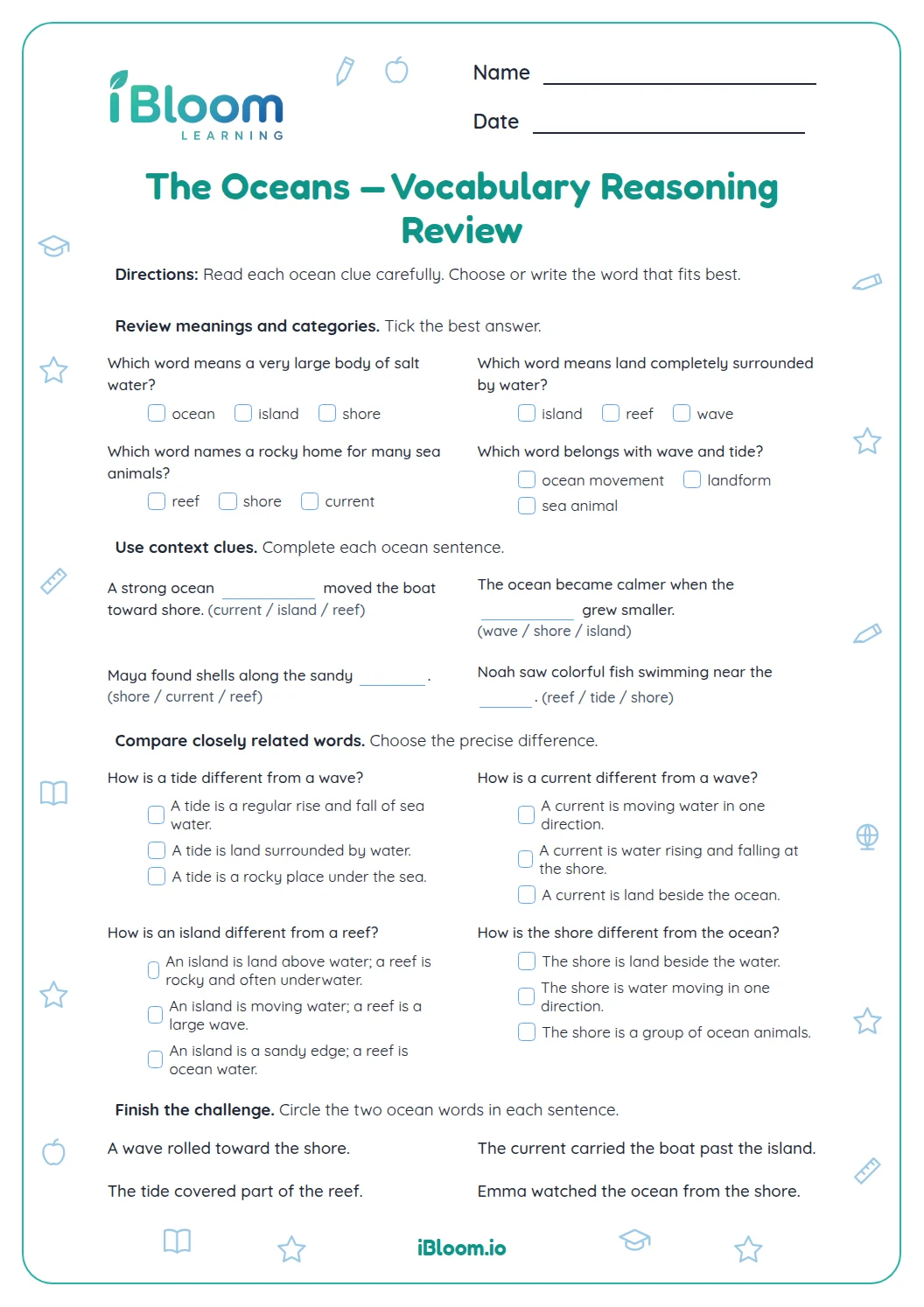
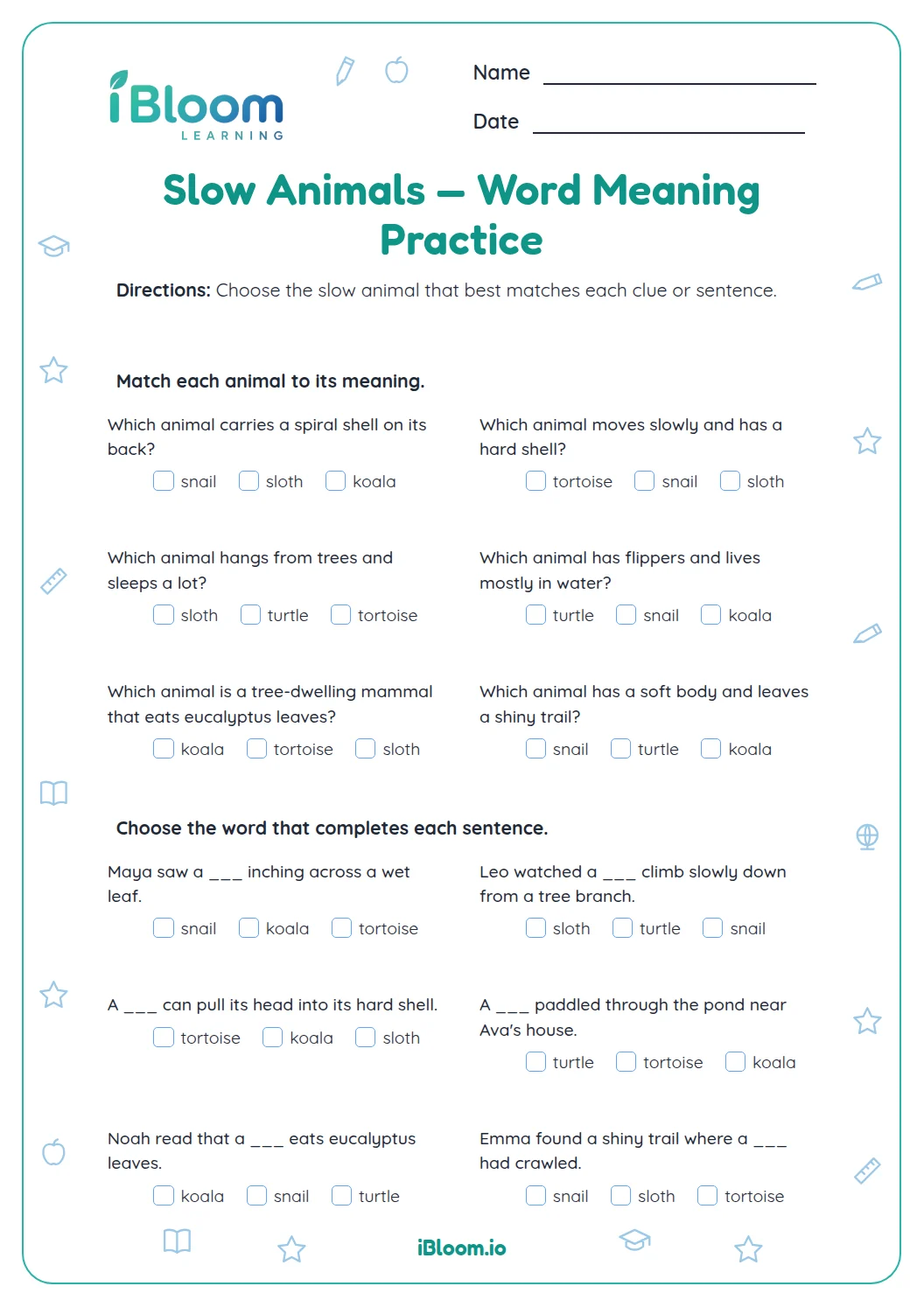
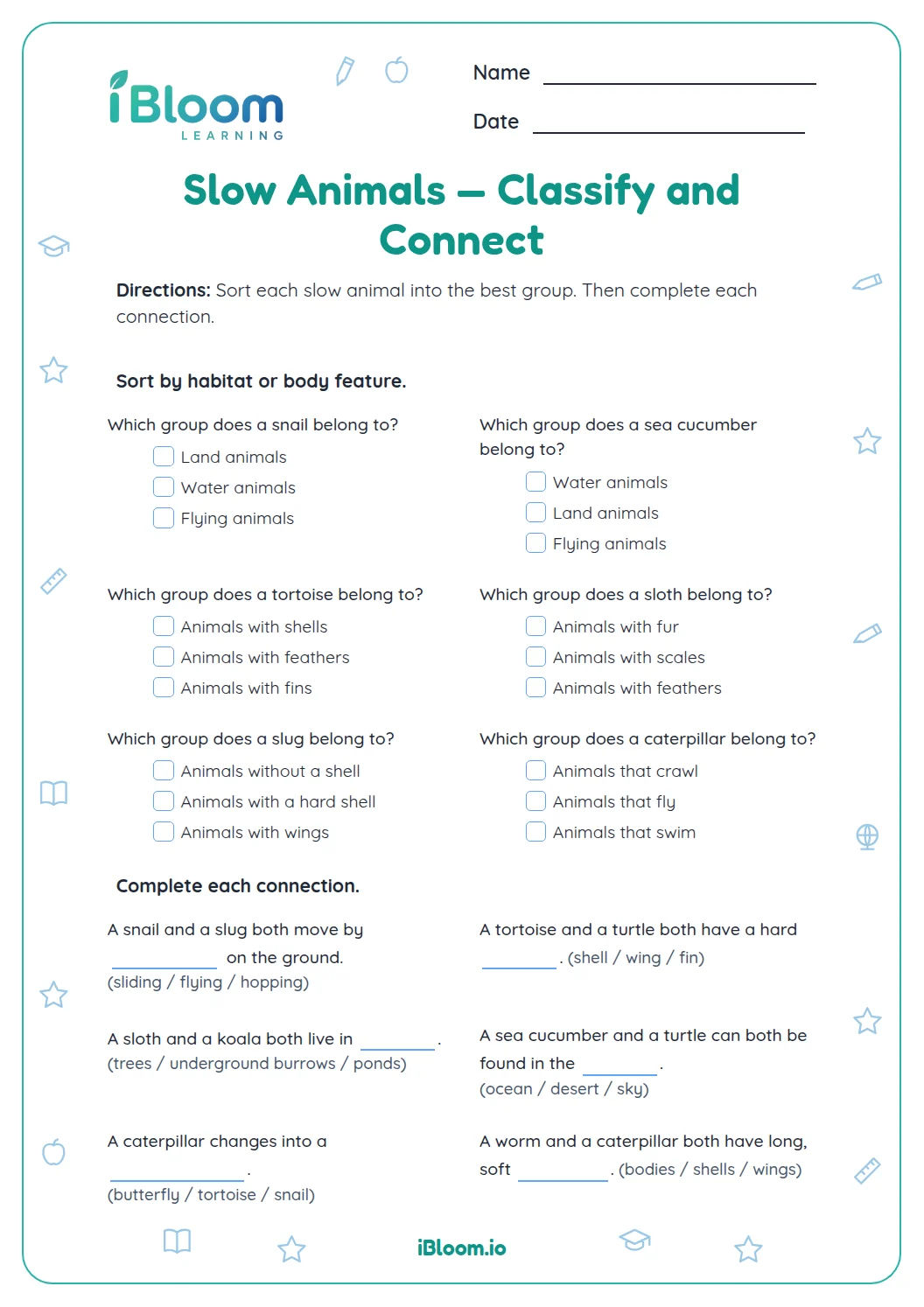
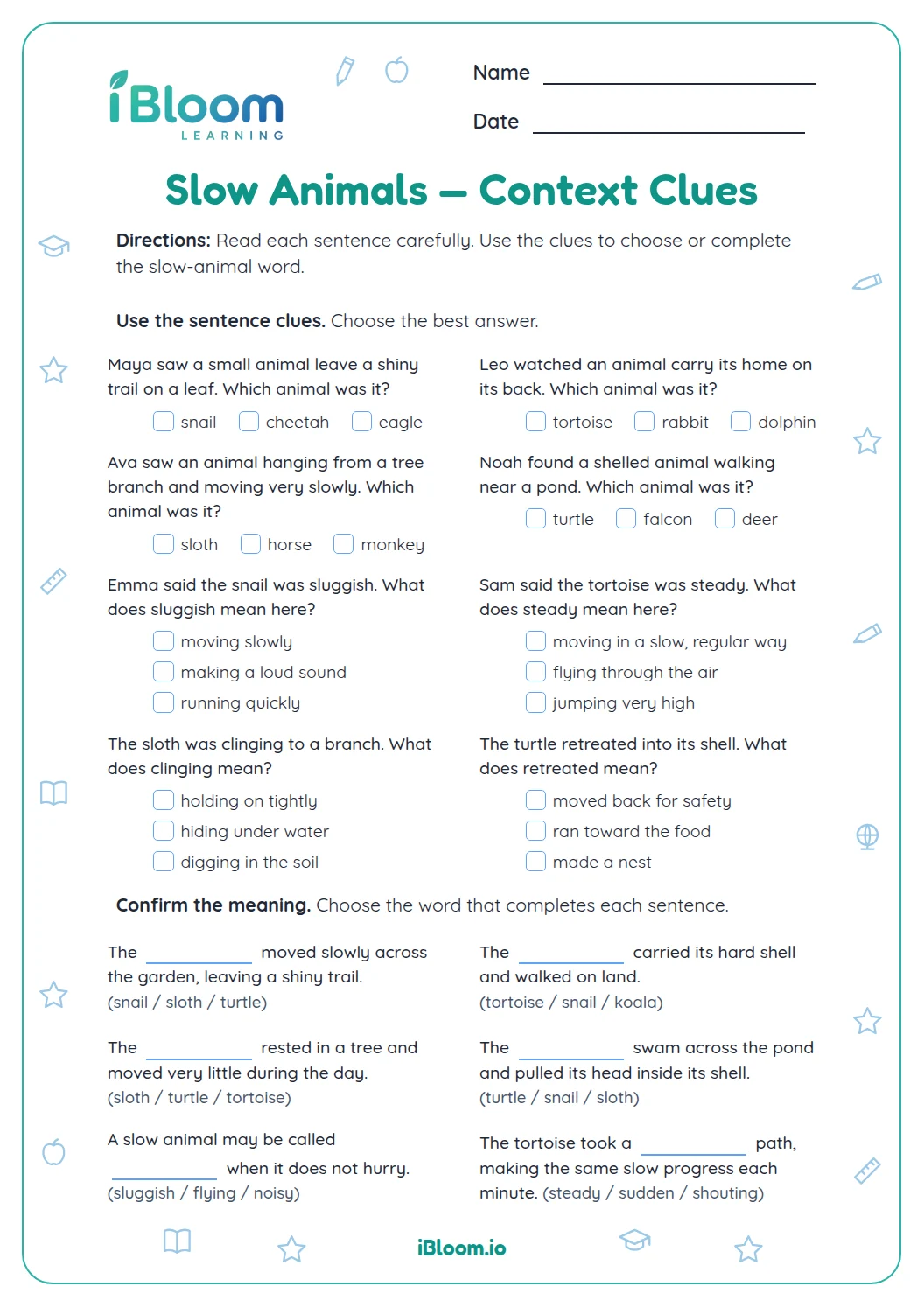
This free printable Grade 3 worksheet builds ocean vocabulary by asking children to sort words into meaningful groups, connect related words, and use vocabulary clues in sentences. The 14 questions move from familiar ocean terms to relationships among habitat, animals, and water movement. The work aligns with CCSS L.3.5 as children demonstrate word relationships and nuances in meaning. A separate answer key supports review.
Aligned to L.3.5
How can ocean words be sorted?
Shark, whale, and seal are animals; reef and coast are places. Identify what each word names to find a category.
- 1shark · whale · seal · reef
- 2Reef is a place; the other words name animals.
How are ocean words connected?
A reef can be a habitat, while a wave and tide describe water movement. A coast is land beside the sea; the open ocean is farther from land.
How does a sentence clarify ocean meaning?
In “where land meets the sea,” the sentence explains coast. Read the clue and check that the selected meaning fits the word in context.
How to use this ocean vocabulary worksheet
- 1Read all four words in a set before deciding what three have in common.
- 2Name the category in your own words, such as “ocean animals” or “water movement.”
- 3For a word pair, tell how the words connect and whether they mean exactly the same thing.
- 4In a sentence question, underline the phrase that hints at the word’s meaning.
- 5Use a complete thought for the two explain questions; more than one clear wording may be correct.
- 6Check each selected category or relationship against the word meanings.
Common vocabulary mix-ups
The mistake
Putting reef with animals because animals live there.
The fix
Ask whether the word names a living thing or a place. A reef is a place; coral and fish are living things.
The mistake
Treating wave and tide as identical words.
The fix
Both describe ocean water movement, but a wave is a moving ridge of water and a tide is a regular rise or fall.
The mistake
Choosing a meaning from one familiar use of a word without reading its sentence.
The fix
Read the entire sentence and use its details as clues before choosing.
Common Core alignment
This sheet asks children to connect vocabulary by category and meaning.
Group ocean words by category and explain relationships among their meanings.
On this sheet: Children classify ocean words and describe how related terms connect.
Show the official wordingHide the official wording
Demonstrate understanding of figurative language, word relationships and nuances in word meanings.
What to practice next
Make more practice
Further reading
Questions parents and teachers ask
What kinds of ocean words appear?
Children work with ocean animals, habitats, and water movement, including whale, seal, reef, coast, tide, and wave. The questions ask children to notice what each word names and how related terms connect. Later sentences add clues that help distinguish the meanings.
How can a child identify a word group?
Read all the words and name the category shared by most of them. Shark, whale, and seal are animals, while reef names a place where ocean animals may live. Finding the category first makes the word that does not belong easier to spot.
How are wave and tide different?
A wave is a moving ridge of water, while a tide is the regular rise and fall of ocean water. The worksheet connects both words with water movement and also asks children to use sentence details to identify what is happening.
What does coast mean in the sentence?
In “The boat stayed near the coast, where land meets the sea,” the words after the comma explain coast. It means land beside the sea. Children can use that nearby explanation to distinguish coast from deep ocean water or an ocean animal.
How many questions and pages are included?
There are 14 questions across two worksheet pages, plus a two-page answer key. The choices cover categories, connections among ocean terms, and sentence clues. A child can explain a selected answer aloud by naming the category or clue that supports it.