

About this worksheet
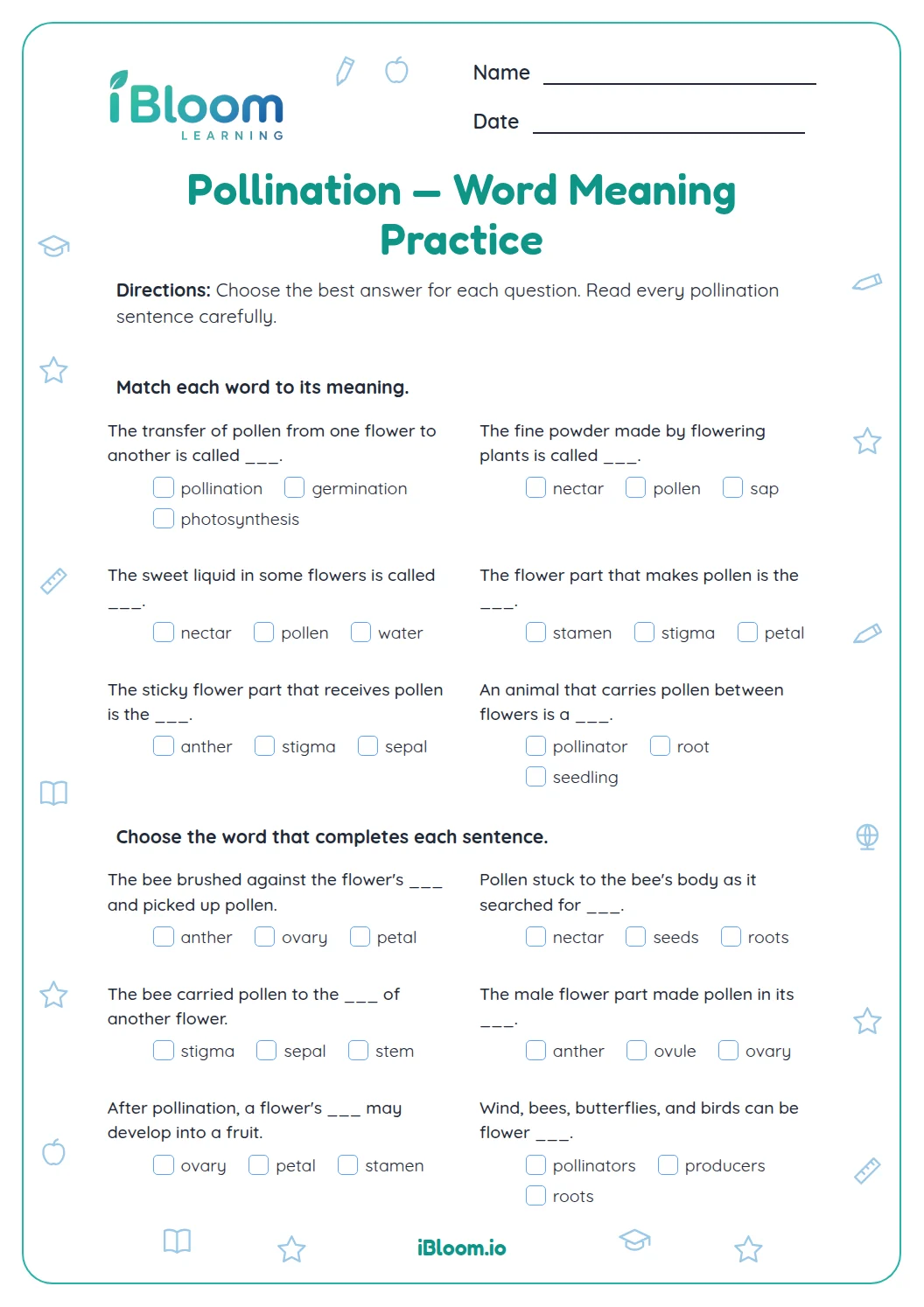
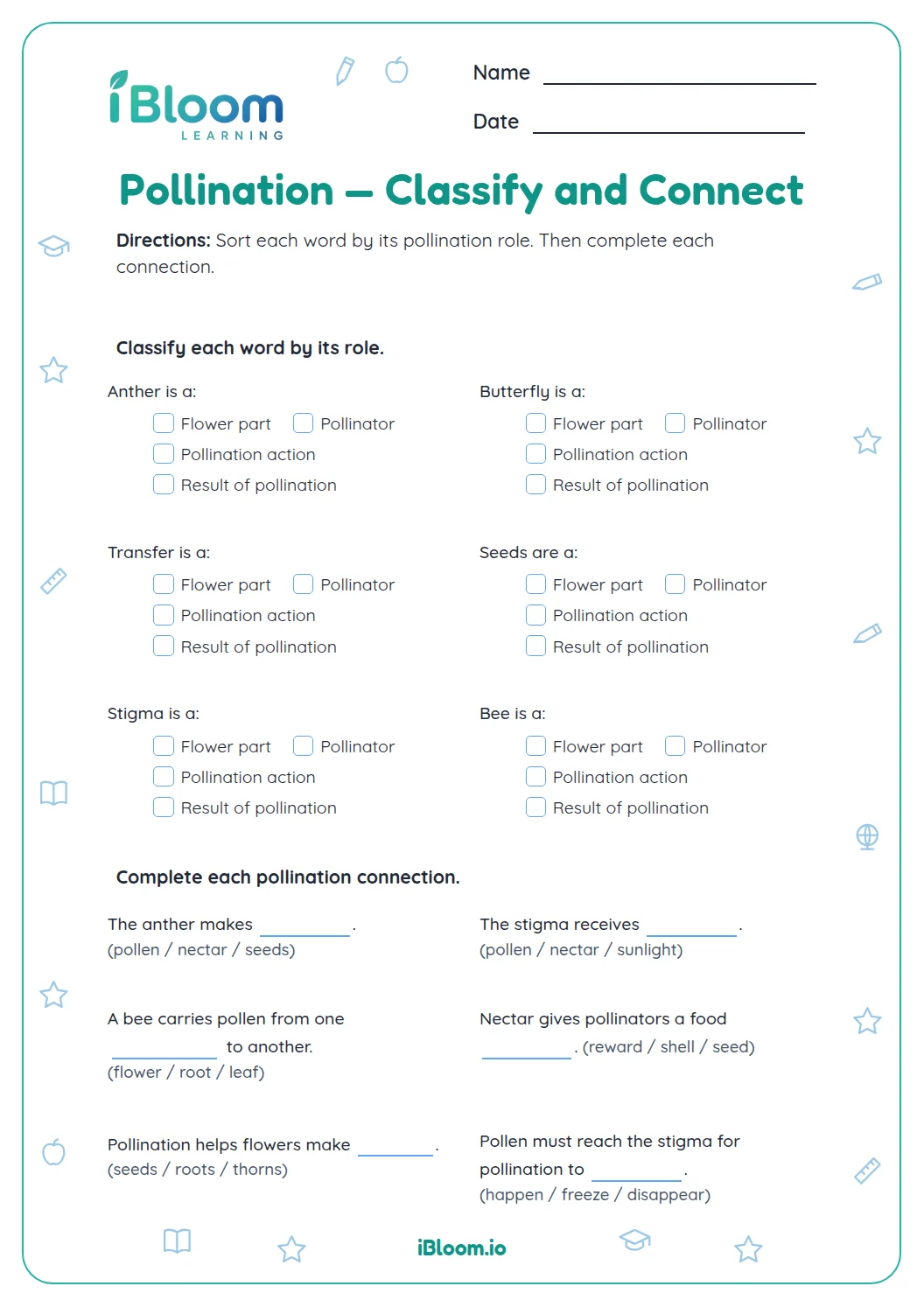
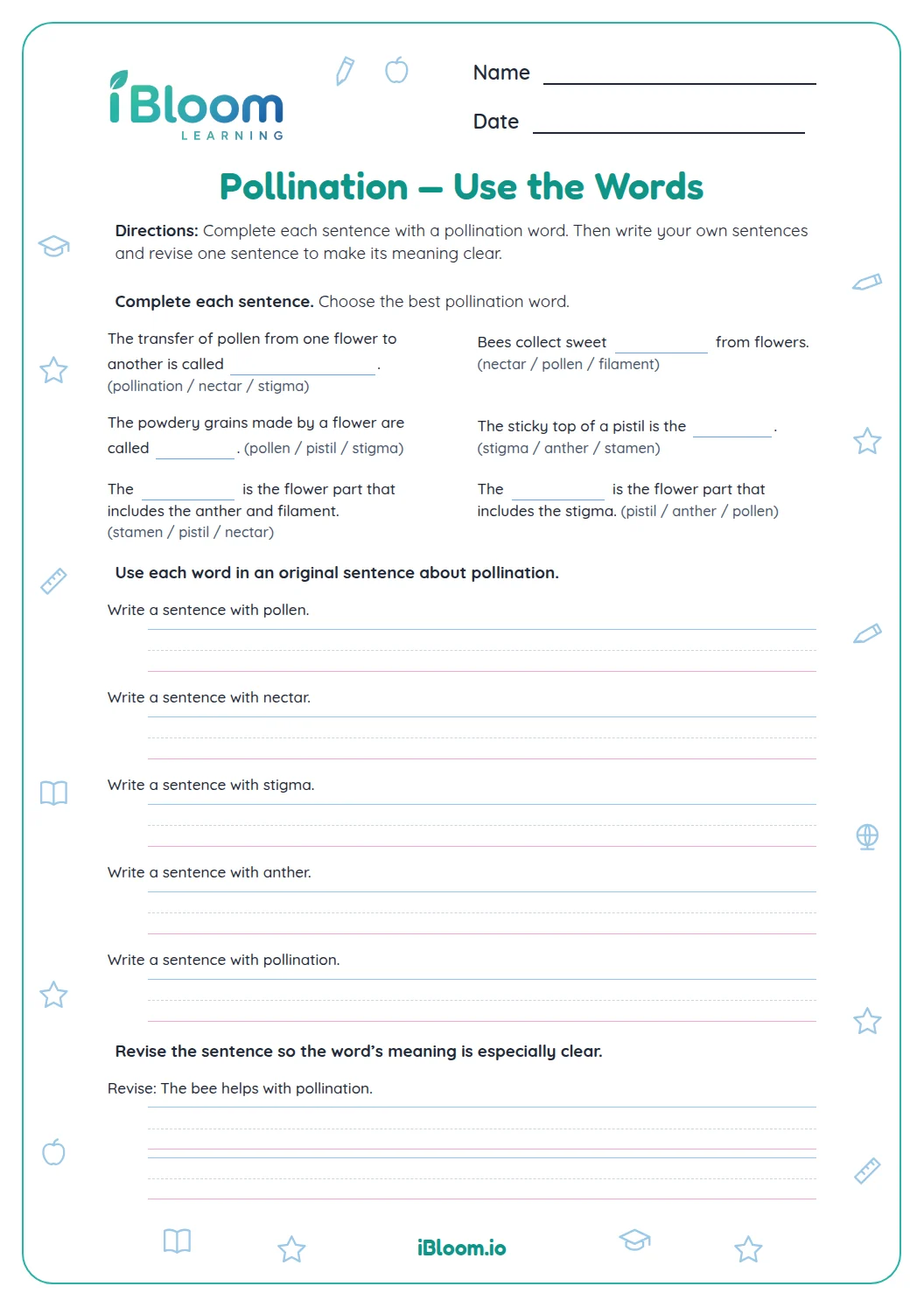
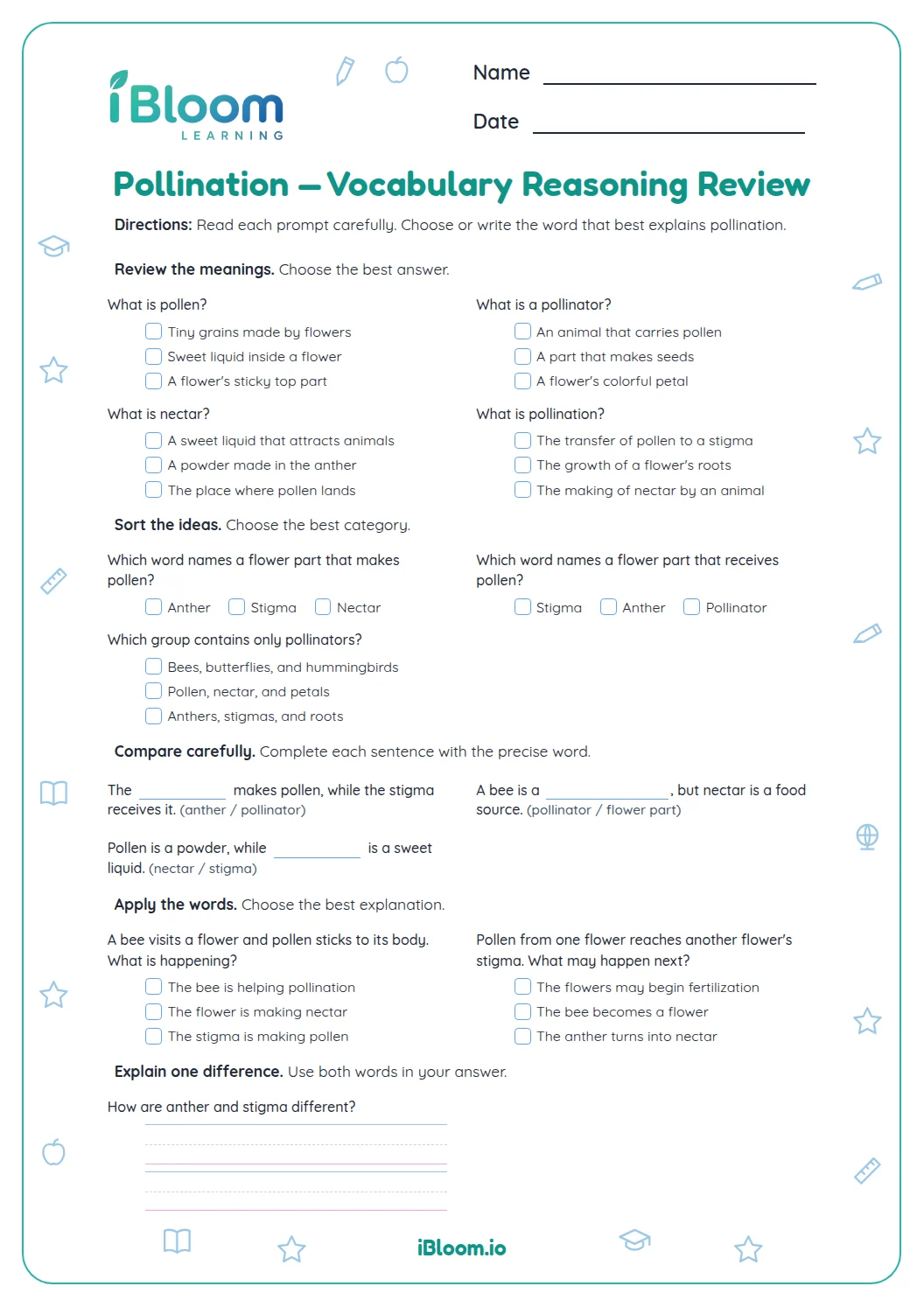
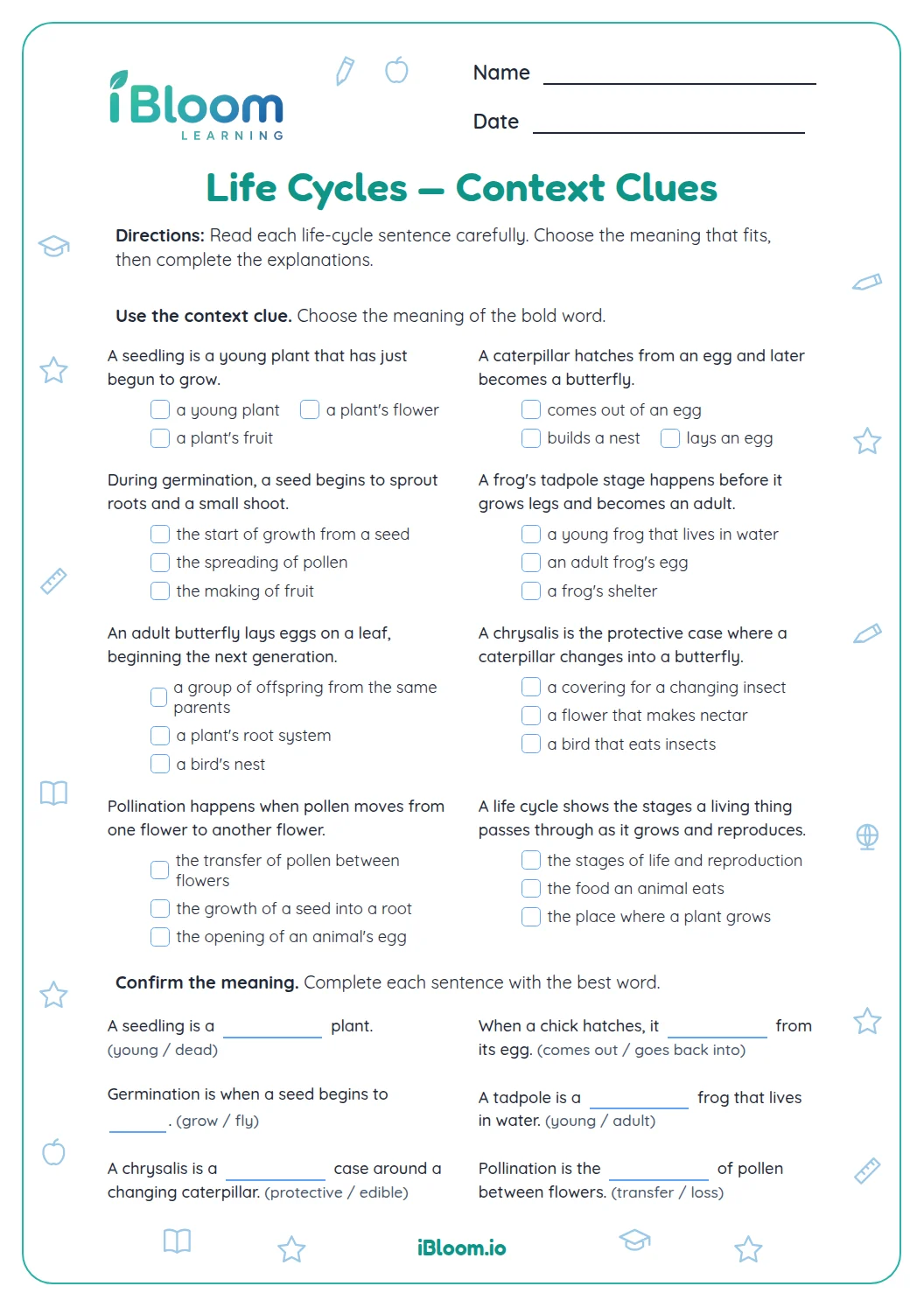
This Grade 4 pollination vocabulary worksheet keeps the original sentence-clue method. Students use nearby definitions and examples to identify pollen, nectar, pollinators, stigma, and related terms in 14 questions across two parts. The answer key lists choices and completions. The context work aligns with Common Core L.4.4.a.
Aligned to L.4.4.a
What context clues help explain pollination words?
Part A uses sentence clues to choose a word meaning. Part B completes short ideas about flower parts and pollen movement with vocabulary from the sheet.
For example, “Bees collect nectar, a sweet liquid, from flowers” explains nectar directly. The phrase “a sweet liquid” is the clue to its meaning.
- 1Bees collect nectar, a sweet liquid, from flowers.
- 2The clue “a sweet liquid” tells what nectar means.
How to use this worksheet
- 1Read the whole sentence, including the words after the target term.
- 2Look for a definition, example, or restatement.
- 3Try each choice in the sentence to see which meaning fits.
- 4Use the word bank to complete each final sentence.
- 5Check the answer key and reread any tricky clue.
Common mistakes and quick fixes
The mistake
Mixing up nectar and pollen.
The fix
Nectar is a sweet liquid; pollen is tiny grains made by flowers.
The mistake
Choosing a flower part based only on its name.
The fix
Use the sentence clue to tell the anther from the stigma.
The mistake
Picking a meaning that fits the topic but not the sentence.
The fix
Replace the target word with your choice and reread the full sentence.
Common Core alignment
Students use definitions and restatements in sentences as clues to word meaning.
Use context clues such as definitions and restatements to find word meaning.
On this sheet: Every part gives a sentence clue or a word-bank sentence to help infer pollination vocabulary.
Show the official wordingHide the official wording
Use context (e.g., definitions, examples, or restatements in text) as a clue to the meaning of a word or phrase.
What to practice next
Make more practice
Further reading
Questions parents and teachers ask
Which pollination words appear on the worksheet?
The questions use pollen, nectar, pollinator, stigma, anther, transferred, and related words such as flower and habitat. Each appears in a sentence with a clue or definition, so students can use context to select or complete a meaning. Ask them to point to the clue.
How does the worksheet teach context clues?
Students read a sentence with a definition or example, such as nectar described as a sweet liquid. They then choose a meaning in another sentence and complete short vocabulary statements. The two parts use sentence clues in different formats. The key ties each response to its clue.
What is the difference between nectar and pollen?
Nectar is the sweet liquid made by flowers that bees gather. Pollen is tiny grains produced by flowers and carried between them. Sentence clues help students distinguish the two terms. Ask the child to explain which detail supports each meaning.
What do anther and stigma mean in this worksheet?
The anther is the flower part that makes pollen. The stigma is the sticky top of the pistil that receives pollen. Short question sentences state these meanings directly, giving students a nearby definition to use as evidence. Reread the full sentence before answering.
Is there a passage to read?
No long passage is included. The printable uses short context sentences, each with a definition or example about pollination vocabulary. This keeps practice centered on noticing clues inside a sentence and makes individual terms easier to compare. Students can reread each sentence before selecting an answer.
Does the worksheet include an answer key?
Yes. The separate key lists the correct meanings and completions for all 14 questions. Students can return to each clue and explain which nearby words helped them decide. This evidence check reinforces the context-clue strategy. This makes it easy to discuss clues together.