




About this worksheet
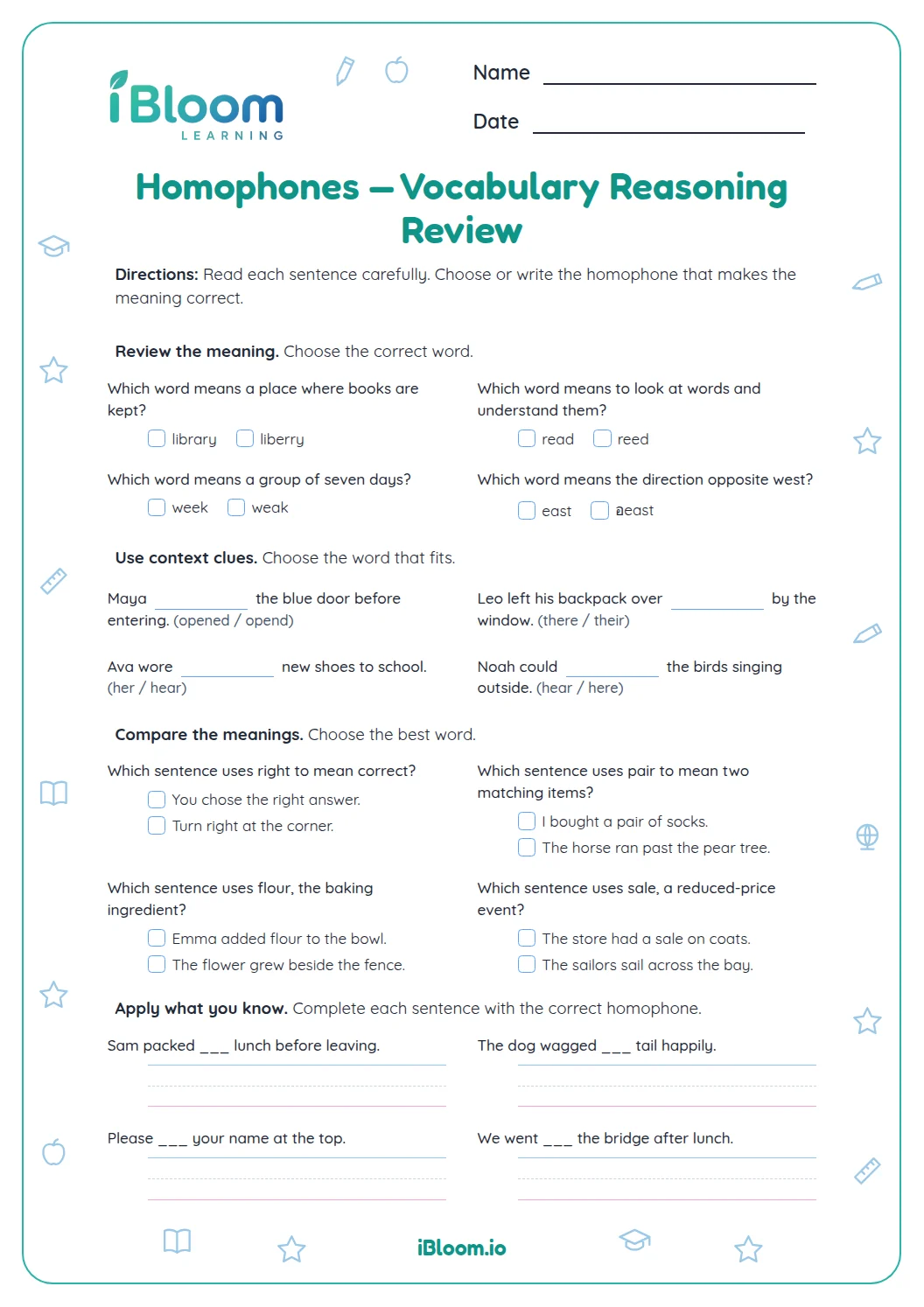
This free Grade 5 worksheet gives students 14 sentence contexts for distinguishing homophones. Students choose between word pairs such as there/their, hear/here, tail/tale, and write/right by using each sentence’s meaning. The work supports CCSS L.5.4.a, which asks students to use context as a clue to word meaning. A separate answer key lists the intended word for every sentence.
Aligned to L.5.4.a
Why can homophones be tricky?
Homophones sound alike but have different meanings and spellings. Part A asks students to match six definitions to words such as aisle/isle and principal/principle. In question 7, “We ate lunch by the ___ of the lake” points to shore, a place beside water.
- 1We ate lunch by the ___ of the lake. (shore / sure)
- 2The lake is a place, so shore fits the sentence.
What clues help distinguish a homophone pair?
Look at the whole idea. Their shows that something belongs to people; hear connects to listening; tale is a story; tail is part of an animal. Questions 7–14 use sentence context, while the first six ask directly about word meanings.
How can students check their choice?
Replace the blank with each option and reread the sentence. One option should express the intended meaning and fit the grammar. If both seem possible, explain what each would mean and identify the clue that makes one fit the sentence best.
How can a student work through the page?
- 1Read the entire sentence, including the words before and after the blank.
- 2Recall what each homophone means.
- 3Use the context clue to select one spelling.
- 4Substitute the word and reread the sentence.
- 5Check that the spelling and meaning both fit.
What should students check?
The mistake
Choosing by sound alone.
The fix
Use the sentence to identify the meaning before choosing the spelling.
The mistake
Mixing up there and their.
The fix
Use there for a place; use their to show that something belongs to them.
The mistake
Choosing a word with the right meaning but wrong spelling.
The fix
Reread the pair and check the spelling attached to the intended meaning.
Students use sentence context to select the homophone with the intended meaning.
On this sheet:
Show the official wordingHide the official wording
Use context (e.g., cause/effect relationships and comparisons in text) as a clue to the meaning of a word or phrase.
What to practice next
Make more practice
Further reading
Questions parents and teachers ask
What is a homophone?
Homophones are words that sound alike but have different meanings and spellings. Examples on this worksheet include there and their, hear and here, and tail and tale. Students use the sentence context to decide which word belongs. Students can describe each word’s meaning before filling the blank.
How many homophone questions are included?
The worksheet has 14 questions on two pages: six definition choices and 11 sentence-context choices, followed by a separate answer key. The first part revisits word pairs from the old sheet; the remaining prompts ask students to use sentence meaning to select a homophone.
Why does context matter if the words sound the same?
Sound alone cannot tell which spelling is intended. A sentence gives meaning clues: “over ___” suggests a place, while “___ lunches” signals ownership. Students can explain the clue before writing the word. Reading each option in the sentence helps reveal which meaning fits.
Can students read the options aloud?
Yes. Saying the sentence aloud can help students notice whether it sounds complete, but both homophones may sound the same. The deciding step is to match the spelling and meaning to the sentence clue. A spoken rereading may sound the same, so the meaning clue matters most.
What should students do when both options seem possible?
Try each option in the sentence and say what the sentence would mean. Then look for a clue such as a location word, an action, or a possessive noun. This makes the intended meaning easier to identify. Ask what nearby words reveal about the intended meaning.
What related skill comes next?
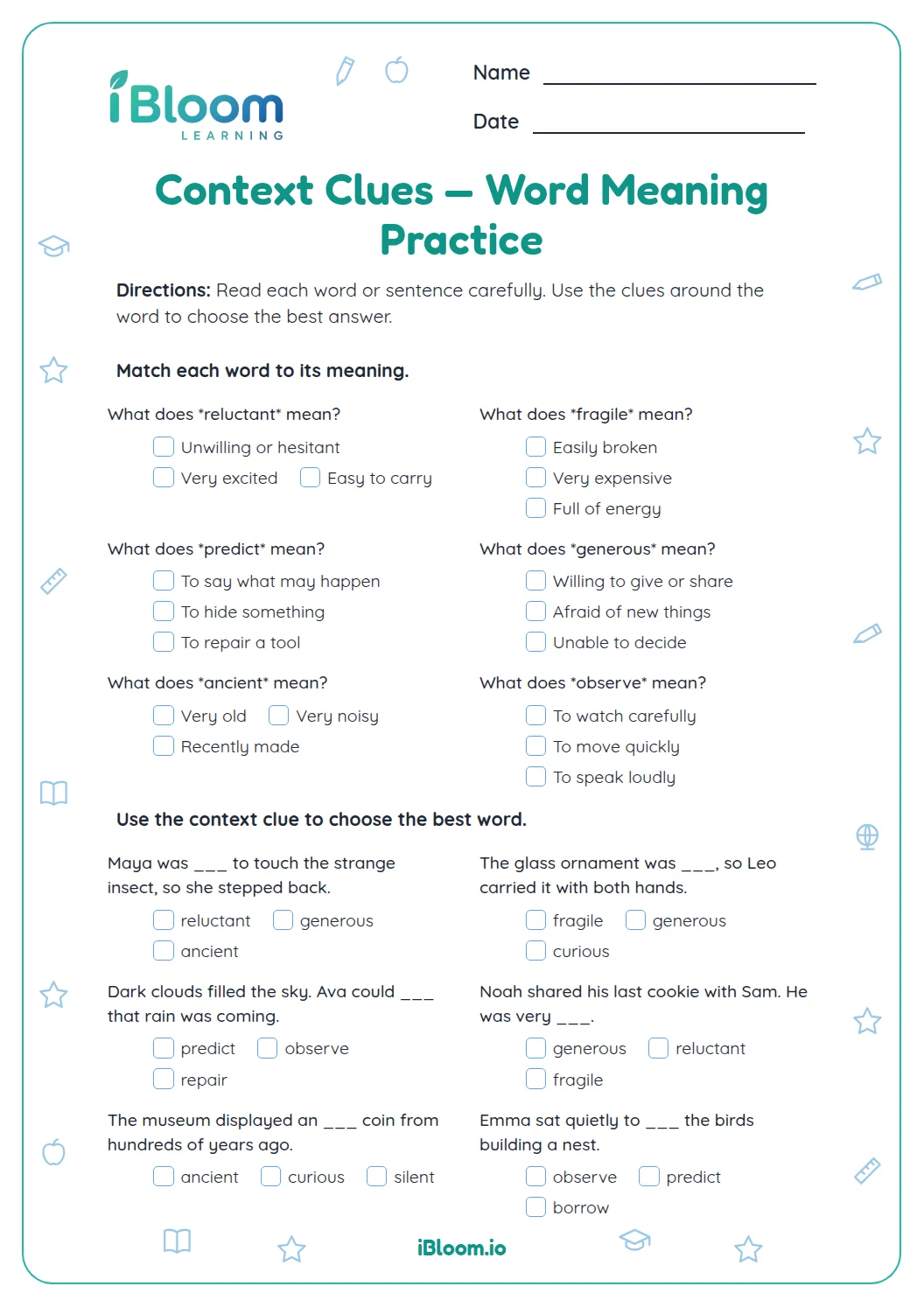
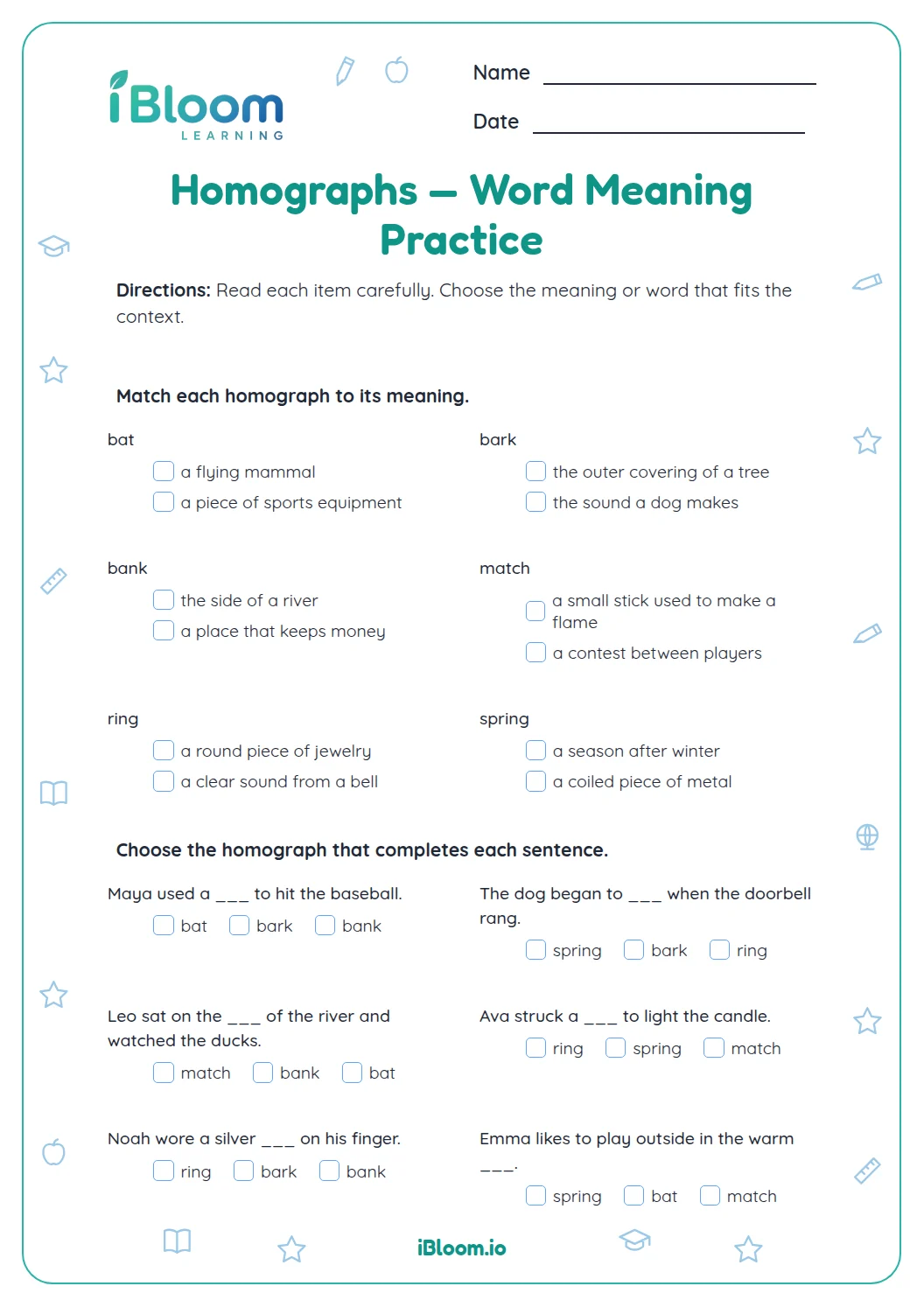
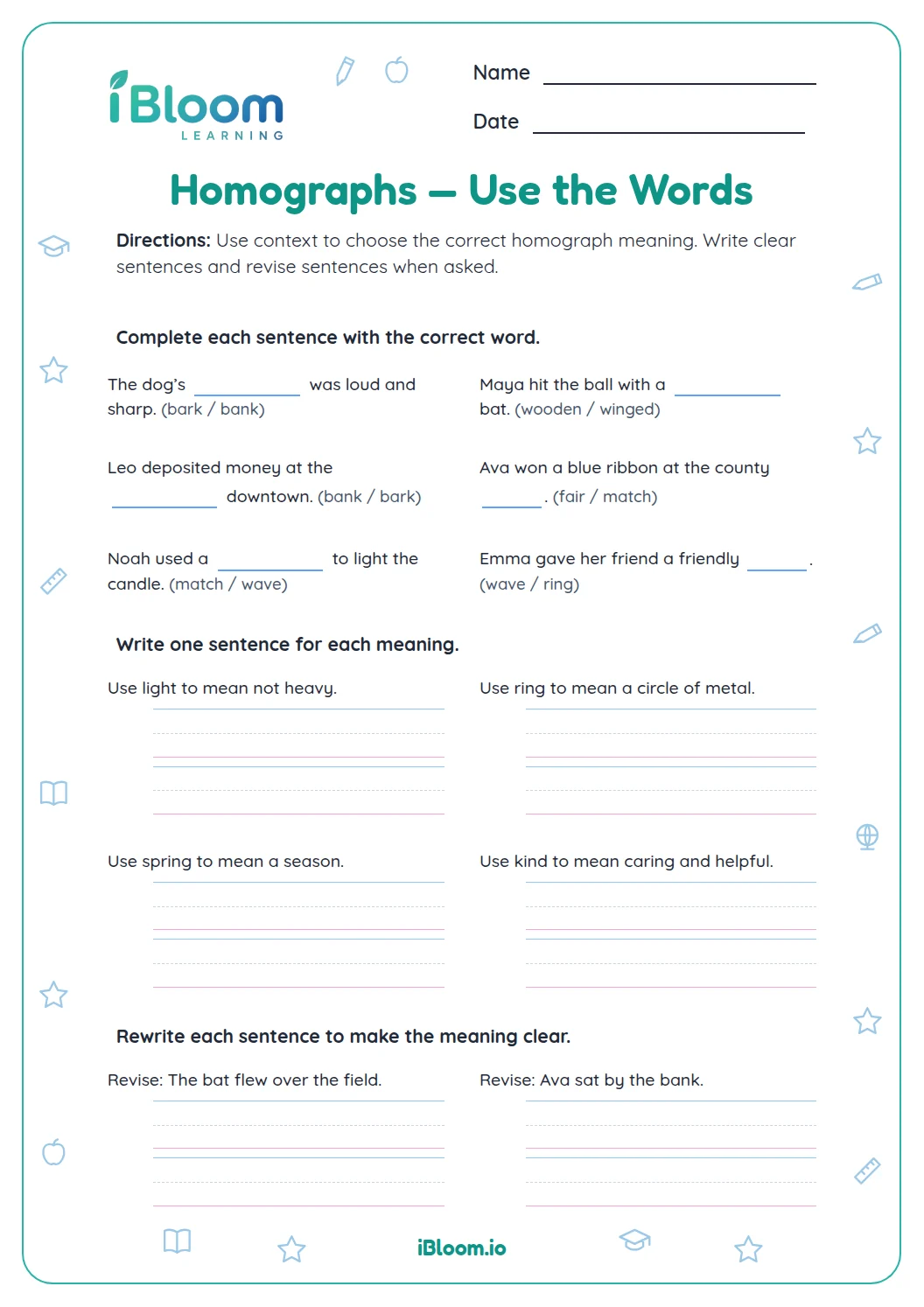
Context clues are a natural next step because they help readers determine word meaning from surrounding text. Students can also compare homophones with homographs, whose spellings match but meanings differ. Comparing homophones with homographs gives students another useful word study contrast.