

About this worksheet
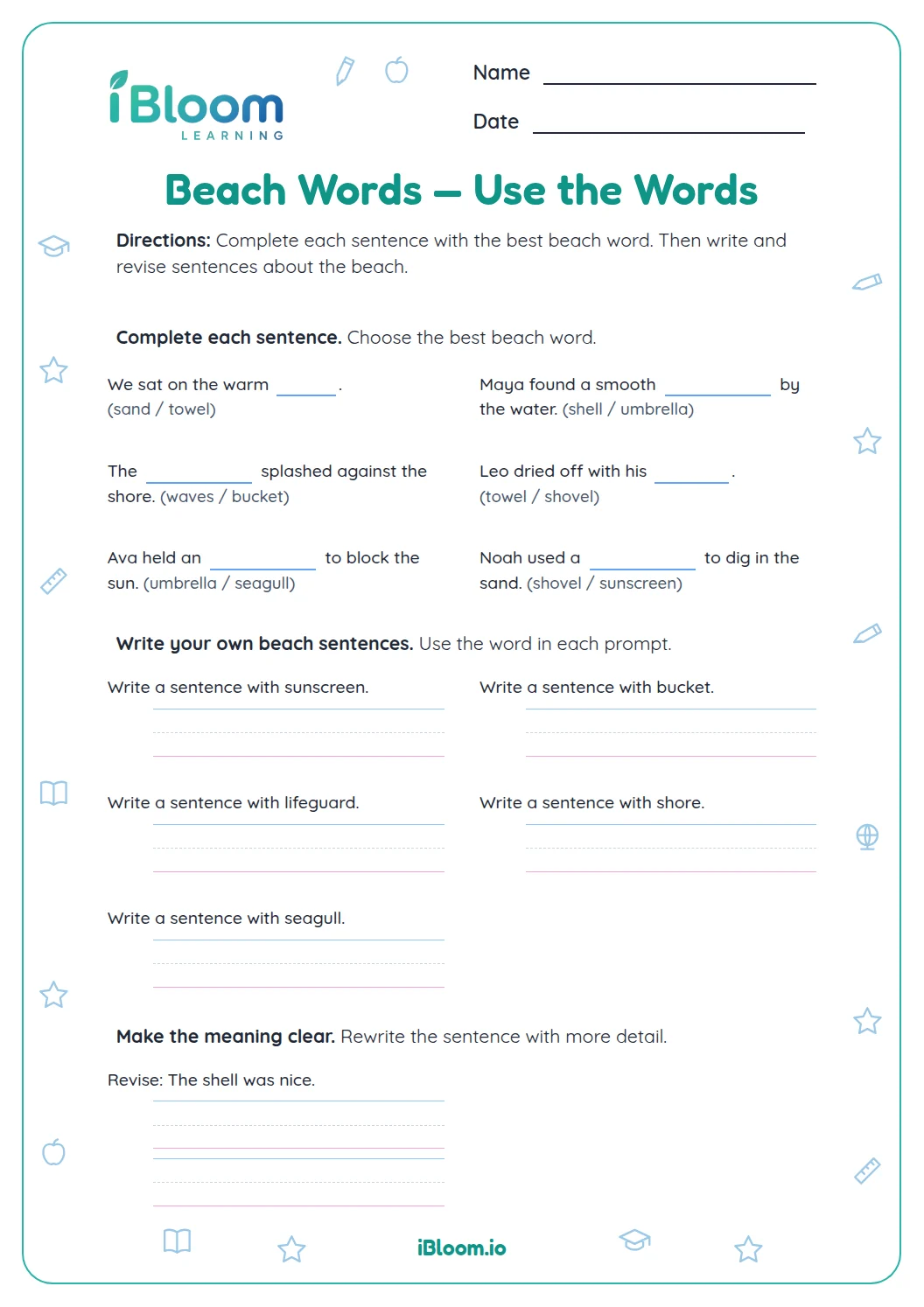
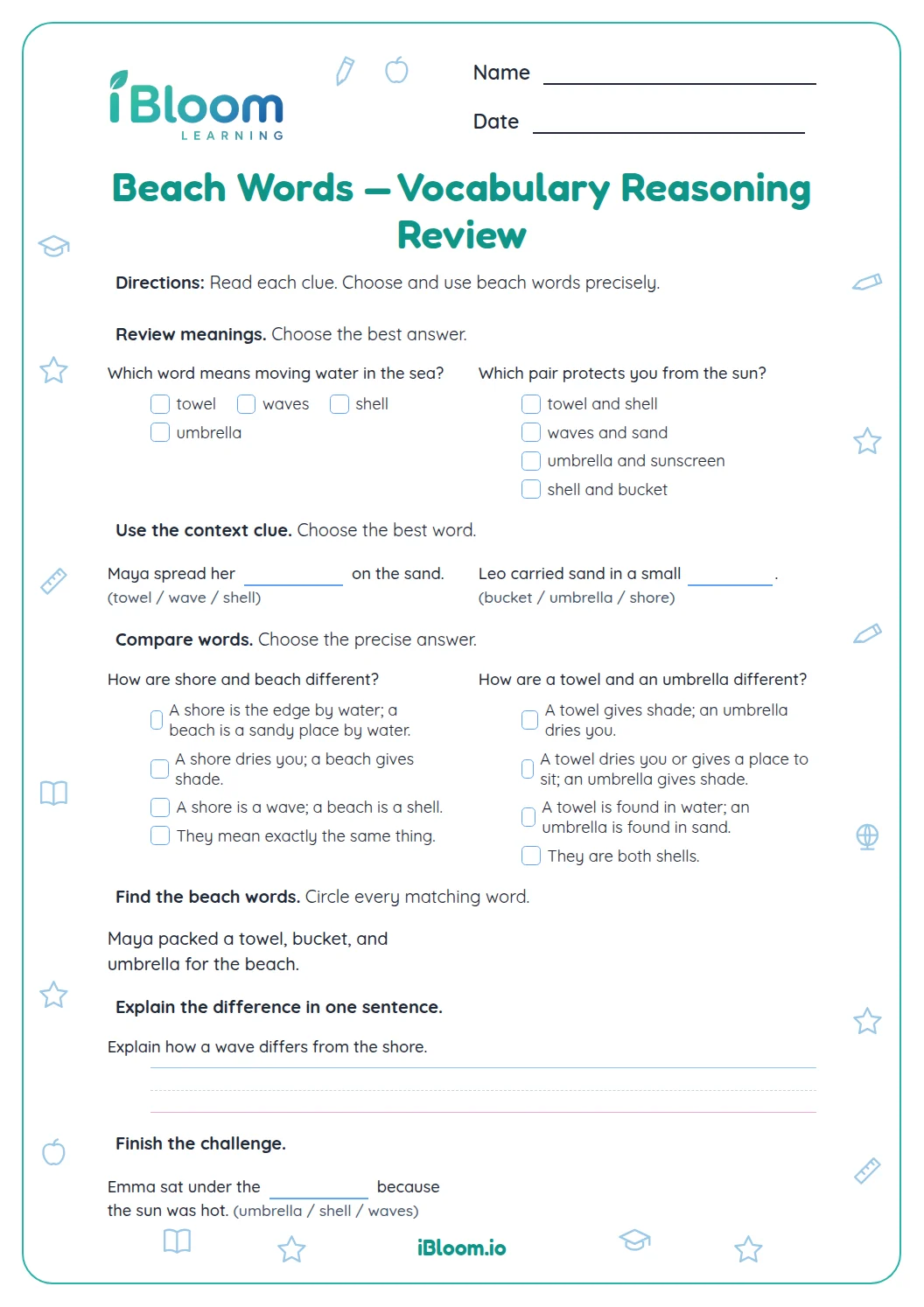
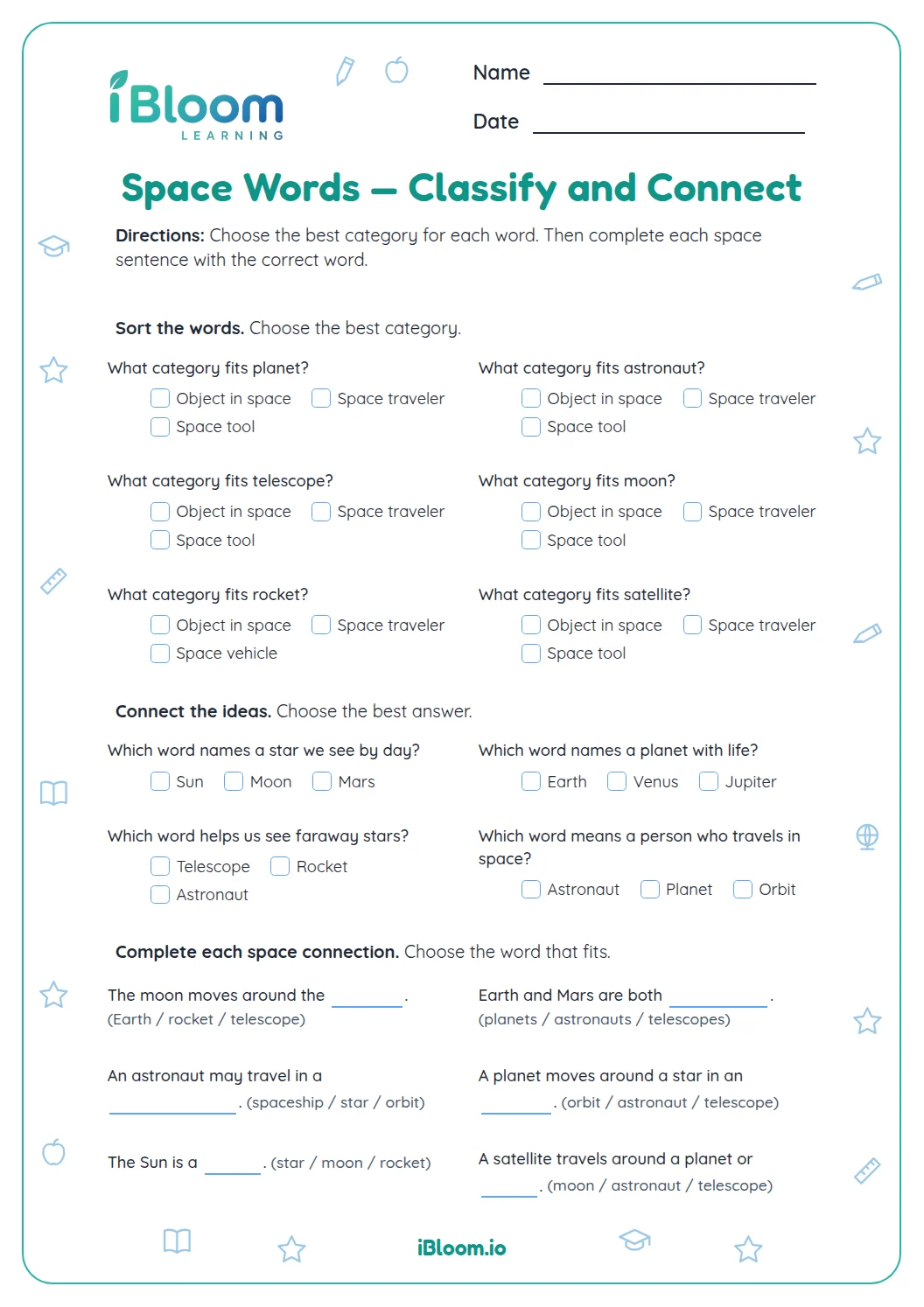
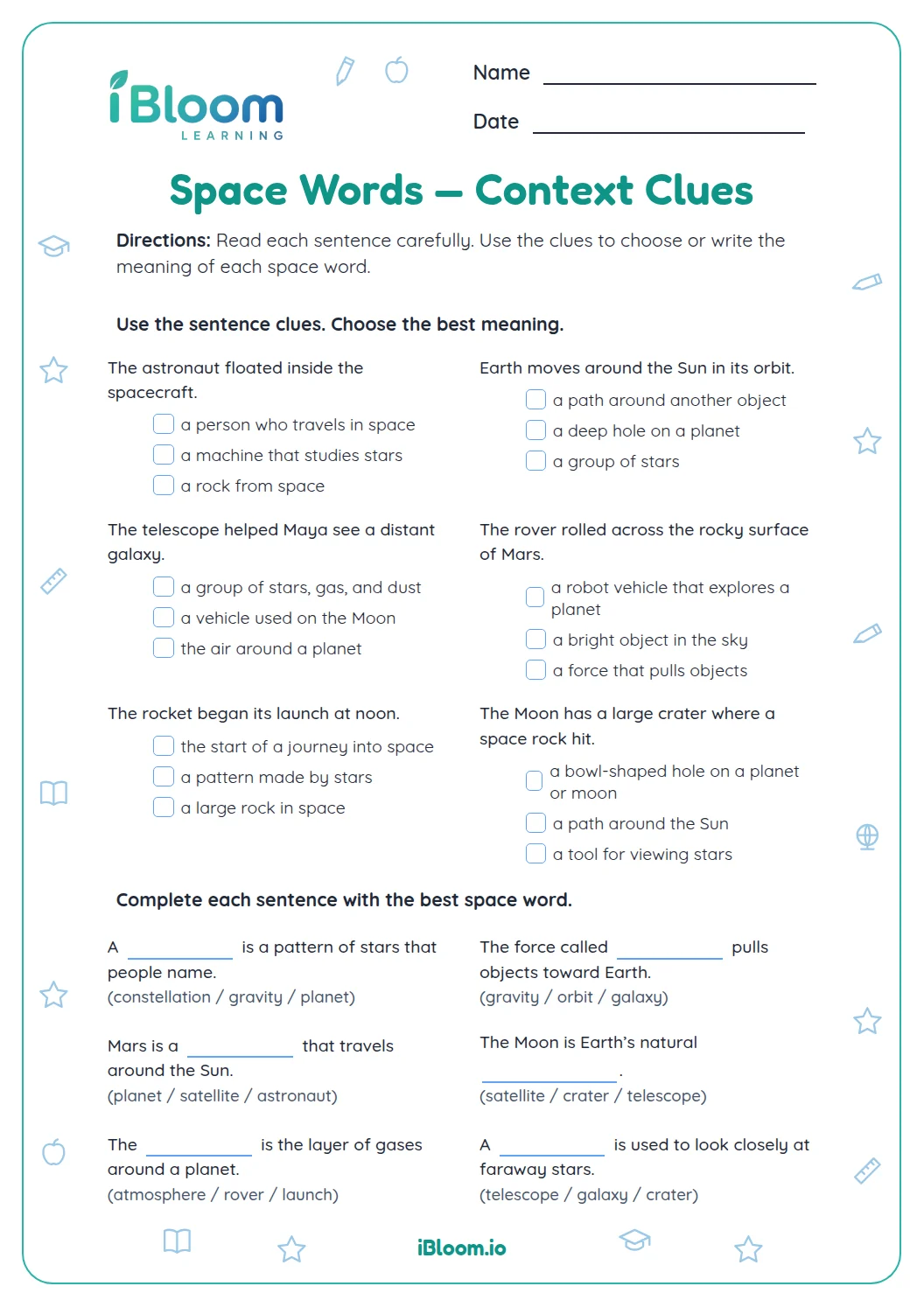
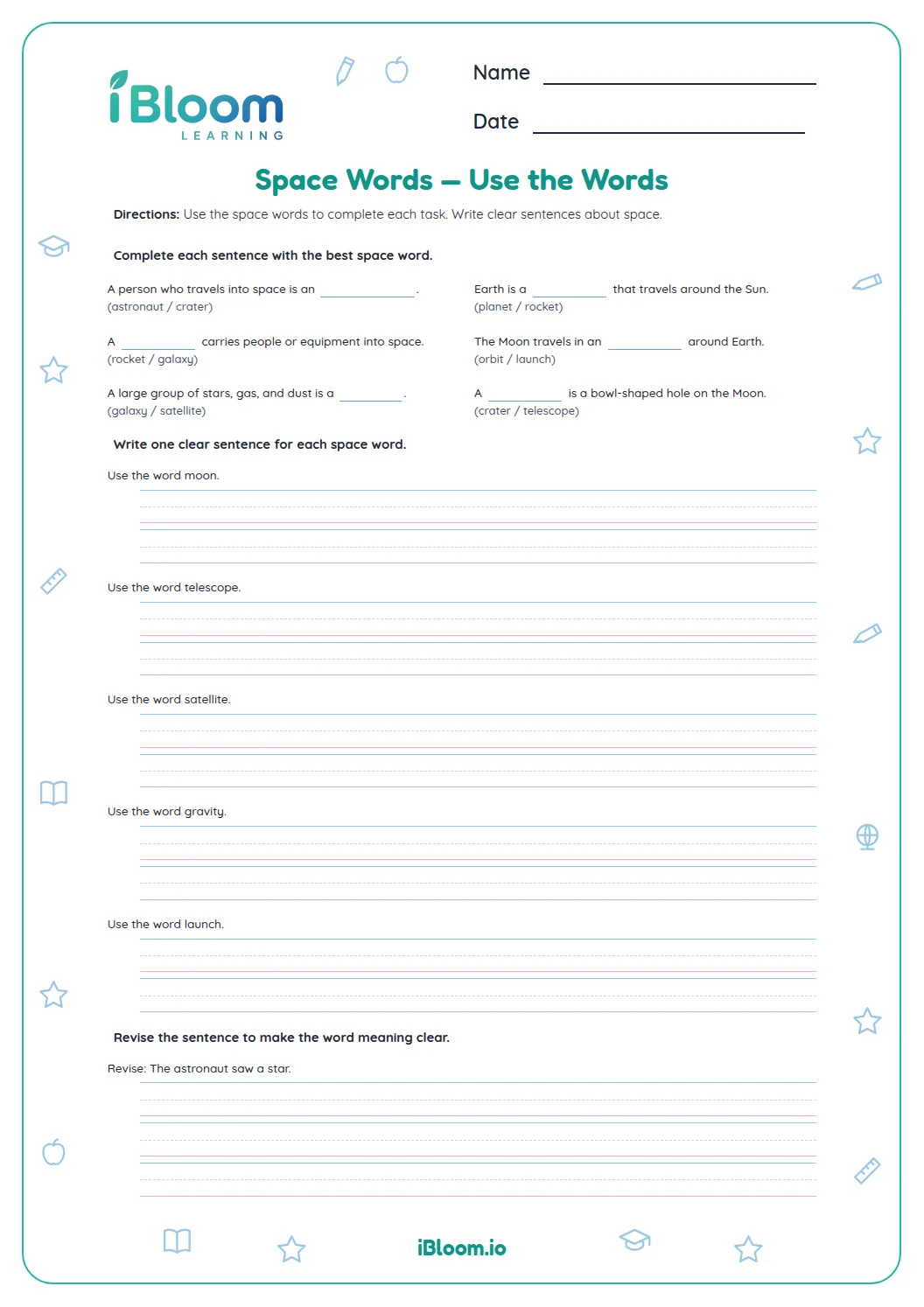
This beach-themed vocabulary sheet offers 15 classification and word-relationship questions for elementary learners. Students sort familiar words by beach or ocean context, connect items that belong together, identify a related word, and explain simple relationships. It supports sorting words into meaningful categories under CCSS L.1.5.a. A separate answer key includes sample responses for open-ended items.
Aligned to L.1.5.a
What word groups appear on the sheet?
Students sort words connected to the beach, sand, and ocean. The choices include places, objects, and animals, so they use meaning rather than just noticing that words share a first letter.
How can you connect two beach words?
In q8, sand and shovel belong together because a shovel can move sand. The connection is a real use relationship. Other pairs may share a place: a shell and crab can both be found in a beach or ocean setting.
How do category clues help?
Read all the choices before selecting one. For q11, shore means the land along the water, and coast is a closely related word. A mountain is a different landform and does not name the same idea.
How to use this worksheet
- 1Read the whole question and each word choice.
- 2Name the category or relationship the prompt asks about.
- 3Check that the selected word fits the meaning, not only the setting.
- 4For an open response, use clear words from the page.
- 5Compare your answers with the key and explain any different valid example.
Mistakes to watch for
The mistake
Choose any word that could appear at the beach, even if it does not fit the clue.
The fix
Match the exact category or relationship asked about.
The mistake
Mix up a place with an object.
The fix
Ask whether the word names where something is or a thing found there.
The mistake
Give a connection with no explanation.
The fix
State how the words relate, such as what one item is used for.
Curriculum alignment
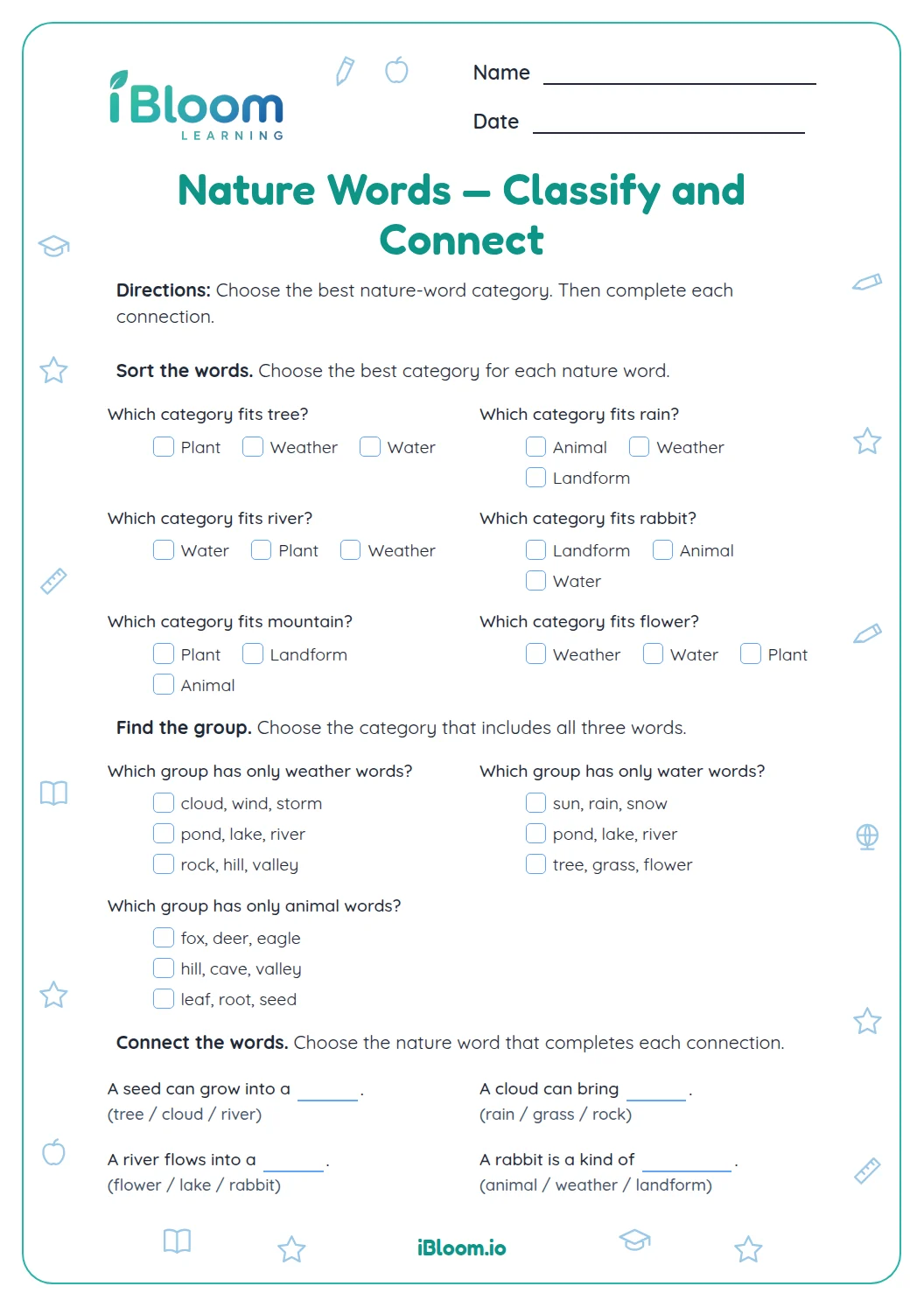
Sort related words into categories and notice what each category means.
On this sheet: Students classify words by beach and ocean connections, then explain simple relationships among them.
Show the official wordingHide the official wording
Sort words into categories (e.g., colors, clothing) to gain a sense of the concepts the categories represent.
What to practice next
Make more practice
Further reading
Questions parents and teachers ask
What does classify mean?
Classify means to sort words into groups based on a shared idea. On this page, students identify words tied to the beach, ocean, and shoreline, then connect words by use or meaning. For instance, a shovel can move sand.
How many questions are included?
There are 15 questions: word classification, selecting related words, and short written connections. They use familiar words such as shell, sandcastle, wave, towel, crab, shore, and shovel. The three-page answer key includes sample responses. Students also explain a few connections in their own words.
What grades can use this worksheet?
The page is labeled Grades 1–5. Younger students can read or discuss the word choices with an adult, while older students can explain why two words belong together. The prompts focus on familiar beach vocabulary and clear relationships.
How are sand and a shovel connected?
A shovel can scoop or move sand. This is a use relationship: one word names a material and the other names a tool that works with it. Students can explain the connection in their own words on the worksheet.
Can written answers differ from the key?
Yes. The key uses sample answers for open questions. A different response is suitable if it names an appropriate ocean or beach word, or clearly explains a sensible connection between the words asked about. The key allows another answer when its meaning clearly fits the prompt.
What is the answer key for?
The separate key lists the correct selections and sample responses. For open questions, use the relationship explained by the student to decide whether another answer also fits. It can help an adult review the child’s reasoning. It is designed for checking both the chosen words and the stated connections.