
About this worksheet
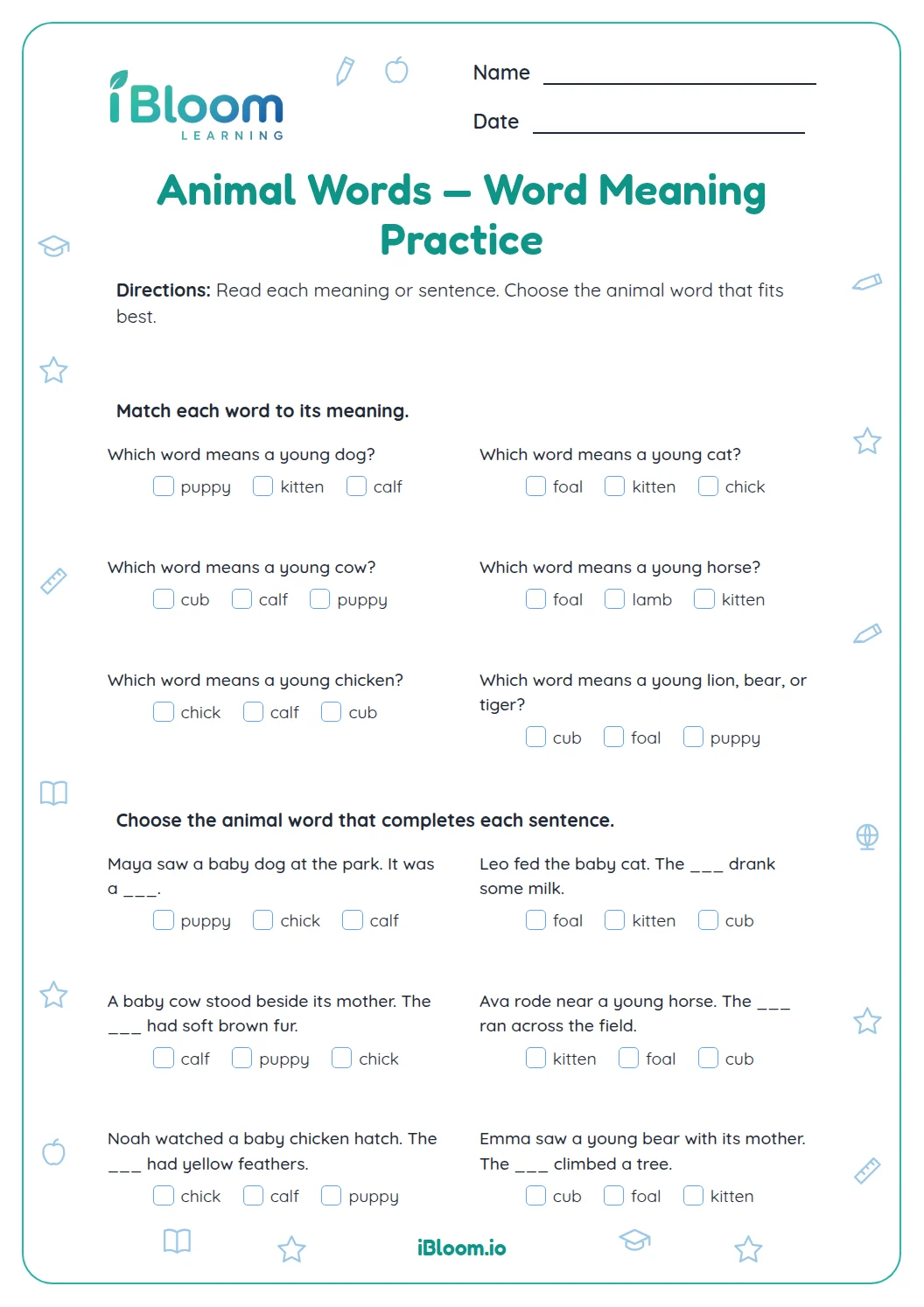
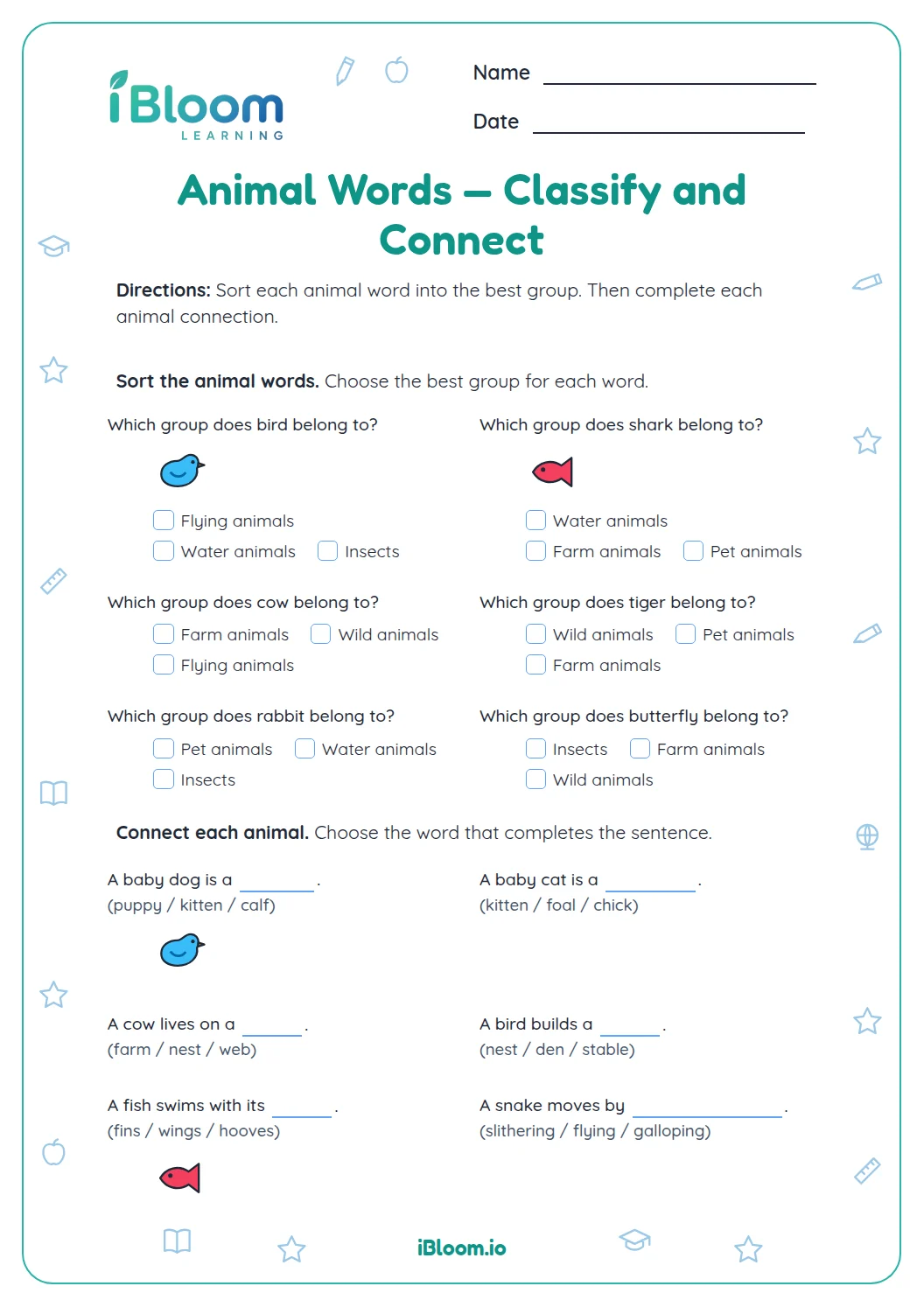
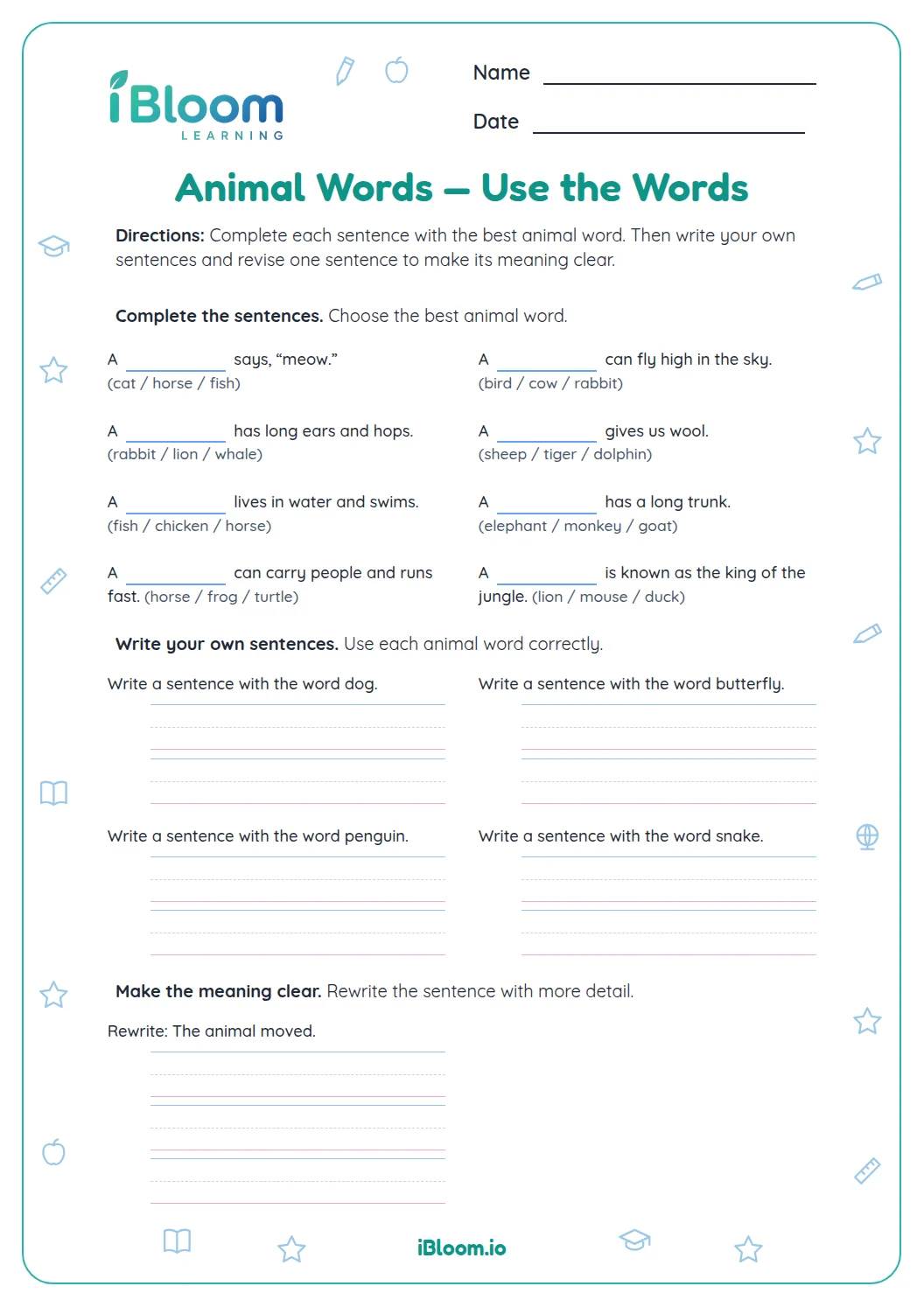
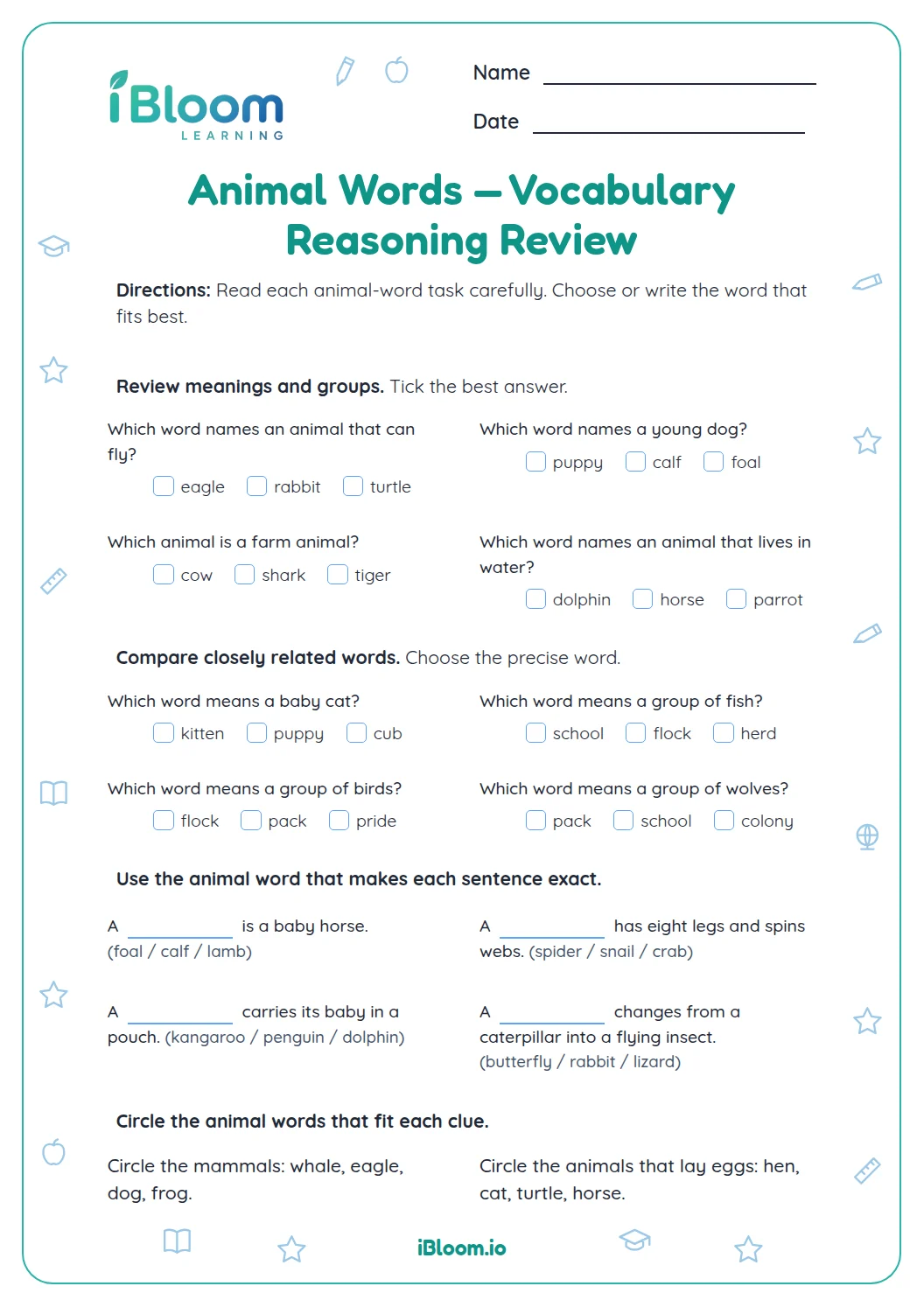
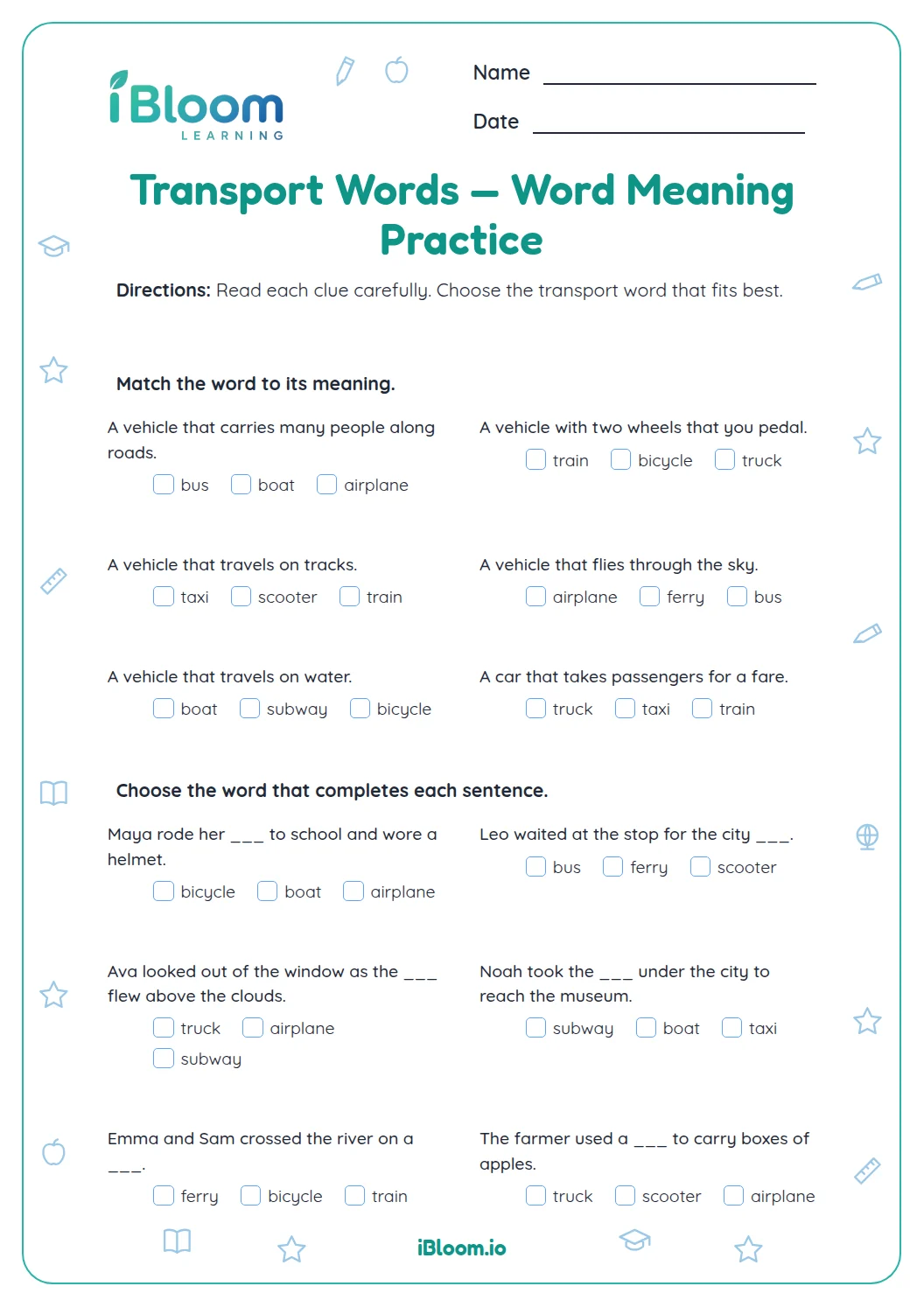
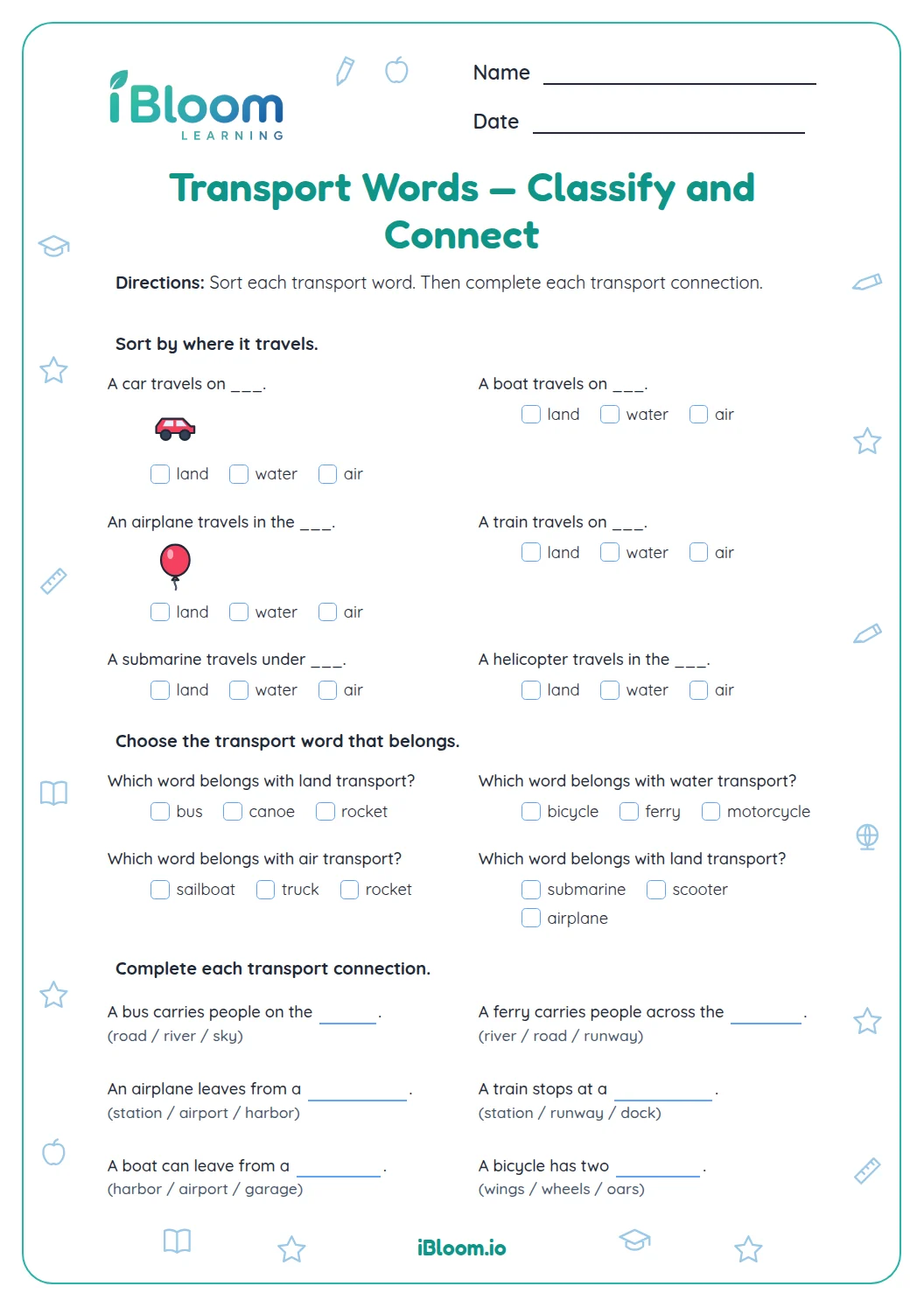
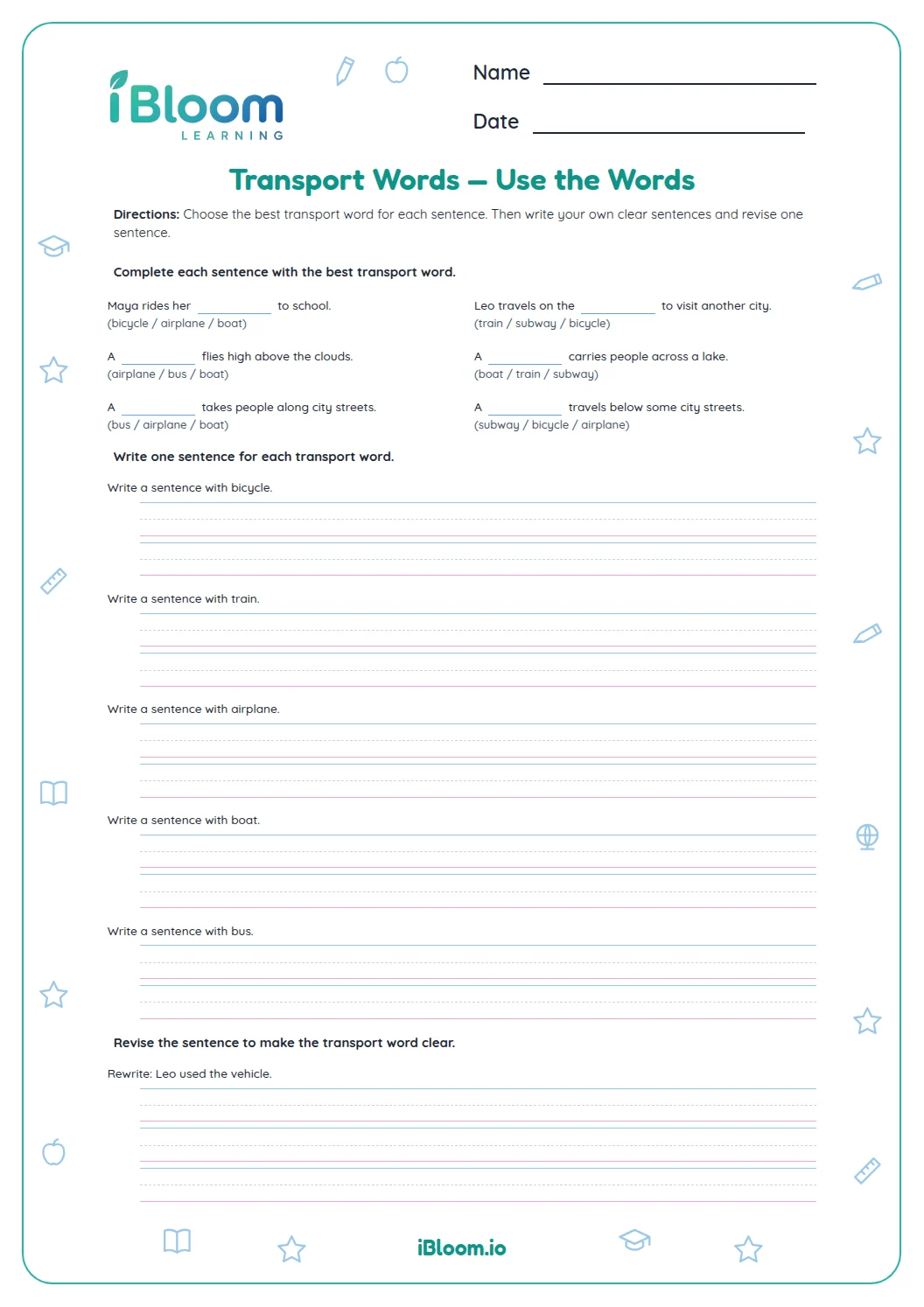
This Grade 2 printable helps students use a sentence to figure out animal words. Part A asks students to complete short clues about paws, beaks, shells, burrows, hooves, wings, fur, and feathers. Part B uses simple animal facts to identify words such as cub, herd, nest, fins, and tail. Each blank is supported by a clue in its sentence. The sheet practices CCSS L.2.4.a and includes an answer key.
Aligned to L.2.4.a
How can a sentence explain an animal body part?
Look at the action in the sentence. If a duck uses its beak to pick up a seed, the beak is the duck’s hard mouth. The action gives a clue to the word’s job.
- 1A duck picks up a seed with its ___.
- 2The action tells what the duck uses to pick up food.
- 3Answer: beak
What clues identify an animal’s home?
Notice where the animal goes or what it does there. A rabbit that hides in a burrow is inside a hole where it lives. The surrounding words help distinguish a home from a body part or group.
How do you choose a phrase to complete an animal sentence?
Check that the word fits the grammar and the animal clue. Fish steer through water with fins, and a dog wags its tail.
- 1Fish use ___ to steer through water.
- 2The action points to the body parts fish use to move.
- 3Answer: fins
How can a student check an animal word answer?
Read the finished sentence aloud. Ask whether the word fits the animal and whether the clue supports it. If it makes sense only when isolated from the sentence, check again.
How to use this worksheet
- 1Read the entire sentence before looking at the choices.
- 2Find the animal action or detail that gives a clue.
- 3Choose the meaning that fits the clue and the animal.
- 4For a blank, read the completed sentence to check that it sounds right.
- 5Use the answer key to review the clue that supports each answer.
Common mistakes and quick fixes
The mistake
Choosing a body part that belongs to a different animal.
The fix
Use the sentence: a duck’s beak picks up a seed, while a rabbit has a burrow.
The mistake
Confusing an animal’s home with its body part.
The fix
Ask whether the sentence describes where the animal lives or a part it uses.
The mistake
Picking a familiar phrase without rereading the sentence.
The fix
Read the whole sentence with the answer inserted and check that its meaning fits.
Common Core alignment
Use each animal sentence as a clue to a word’s meaning.
On this sheet: Each question supplies an animal action or detail that clarifies the target word.
Show the official wordingHide the official wording
Use sentence-level context as a clue to the meaning of a word or phrase.
What to practice next
Make more practice
Further reading
Questions parents and teachers ask
What is a context clue?
A context clue is a nearby word or detail that helps explain an unfamiliar word. In “The rabbit hid inside its burrow,” the action of hiding inside points to a burrow as a hole where the rabbit lives. The sentence helps the reader infer the meaning.
Which animal words does the sheet include?
The questions use paws, beak, shell, burrow, hooves, wings, feathers, cub, herd, nest, fins and tail, along with other familiar animal words. Each appears with an action or detail that helps explain its meaning. Students can underline the clue before selecting a choice.
Can more than one meaning fit an animal word?
Some words can have different meanings in different sentences. For each question, choose the meaning supported by the sentence provided. For example, the beak is the duck’s hard mouth in the sentence about picking up a seed. The other answer choices describe different features or meanings.
How should I use the answer key?
First ask the student to explain which detail supports an answer. Then check the key for the intended meaning or phrase. A brief explanation shows how context supports the choice instead of relying on a guess. Have the student point to the sentence detail that supports the choice.
What grades is this printable for?
The source page is tagged for Grades 1–5, and this worksheet is labeled Grade 2. It uses familiar animals and short sentences that can be read independently or with an adult; students can explain which clue led to each answer.