
About this worksheet
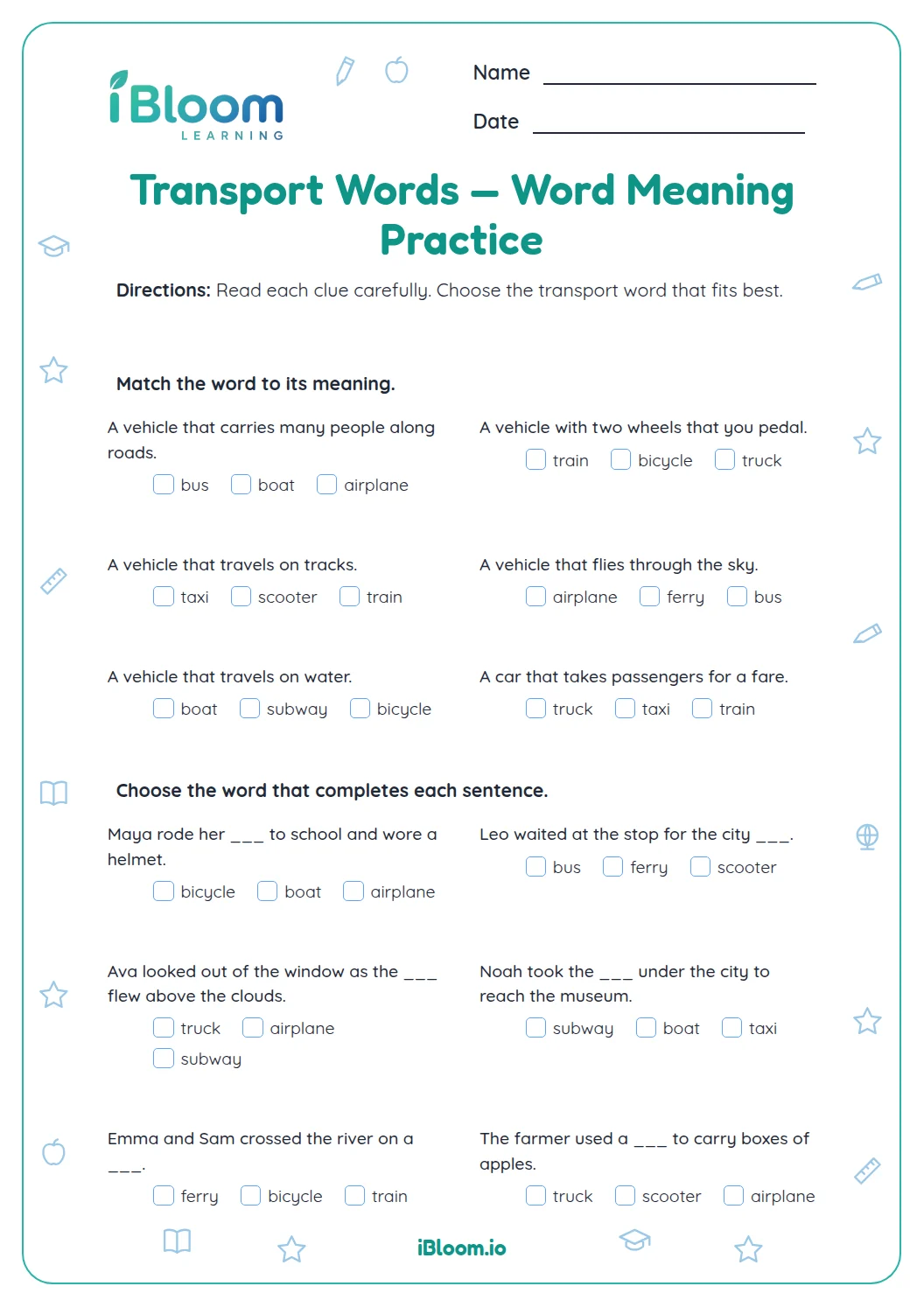
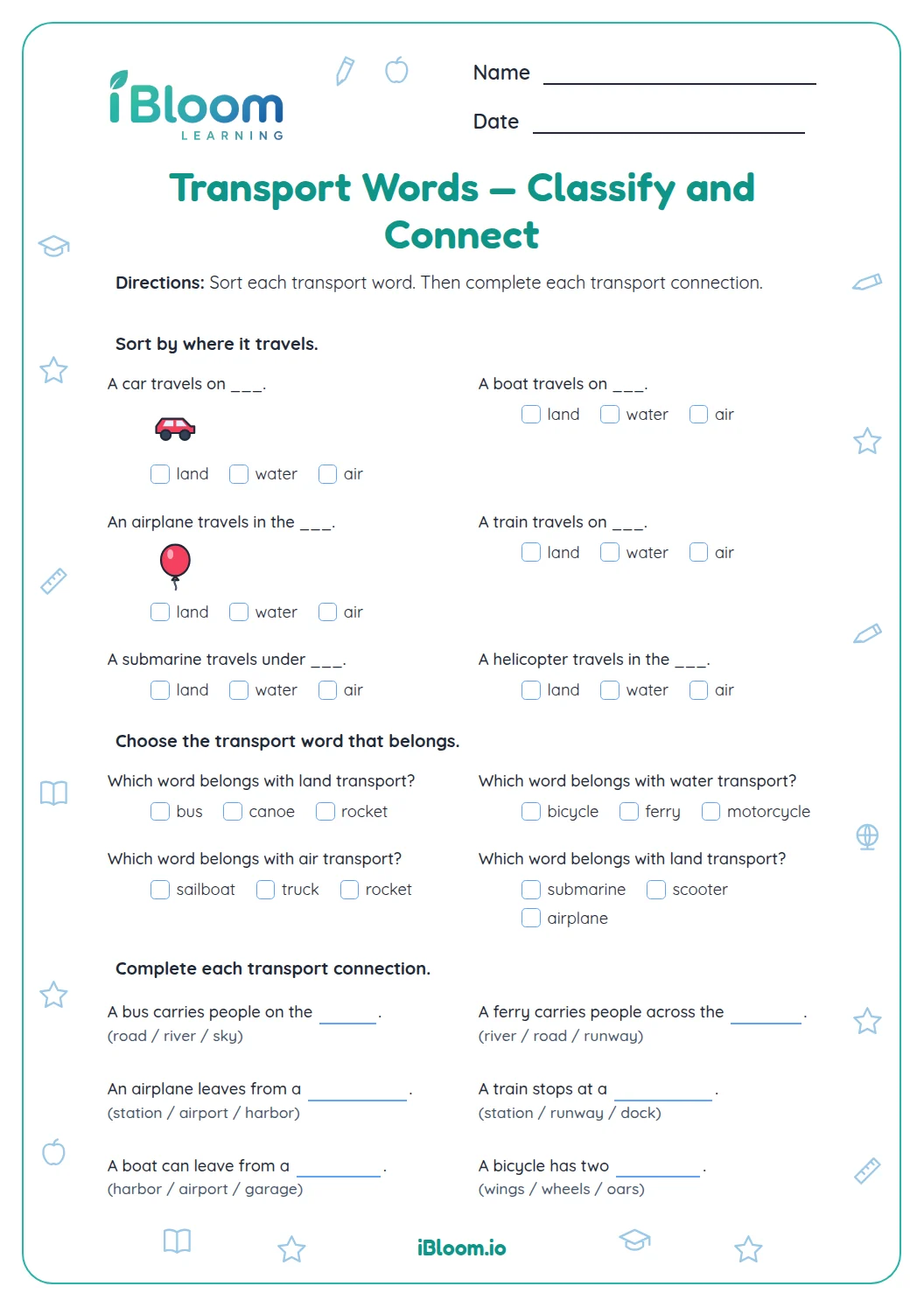
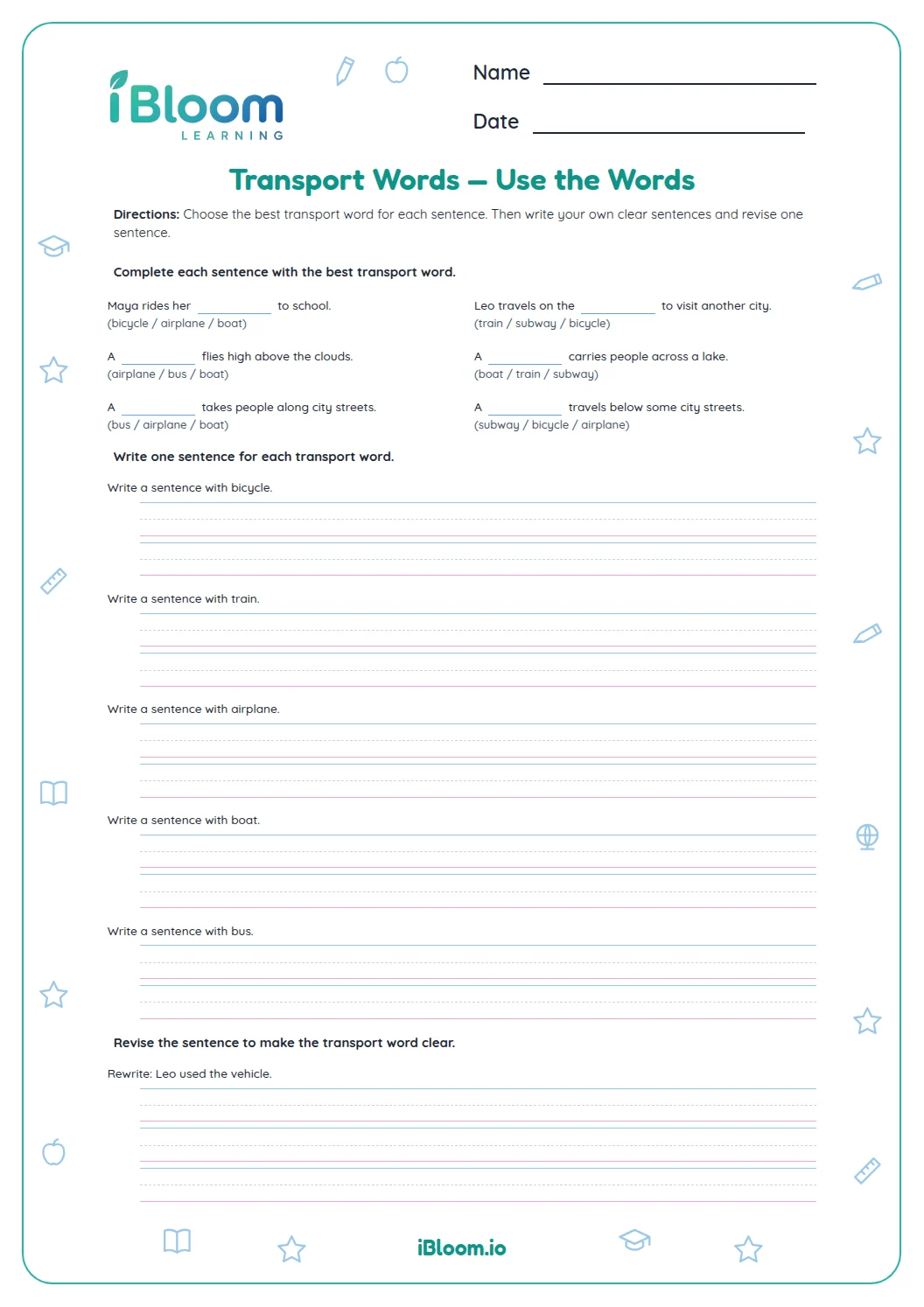
Use sentence details to identify transportation words in this Grade 3 vocabulary worksheet. Sixteen one-blank clues cover vehicles, travel actions, people, and places, with a separate answer key.
Aligned to L.3.4.a
How do sentence clues help?
Look for an action, object, or place that narrows the meaning. In question 1, the road vehicle carries students and stops at school, so bus fits the clues.
How do you choose a precise word?
Some clues describe a job or action rather than name a vehicle. Question 2 describes the person flying the airplane, which points to pilot.
How can you check a vocabulary answer?
Read the sentence again with your word in place. The sentence should make sense, and the word should fit the details.
How to work through this page
- 1Read the sentence from beginning to end.
- 2Underline details about the vehicle, person, or action.
- 3Think of a word that matches those details.
- 4Read the sentence with your word in the blank.
Check these details
The mistake
Choosing a word that is related but too broad.
The fix
Use the sentence details to find the most precise match.
The mistake
Ignoring the action word.
The fix
Check what the person or vehicle is doing.
The mistake
Filling the blank before reading the full clue.
The fix
Read the entire sentence before deciding.
Common Core alignment
Use sentence clues to work out the meaning of transport vocabulary.
On this sheet:
Show the official wordingHide the official wording
Use sentence-level context as a clue to the meaning of a word or phrase.
What to practice next
Make more practice
Further reading
Questions parents and teachers ask
What vocabulary does this page practice?
The 16 clues use words for vehicles, travel actions, and people or places connected with transportation. Students write one word in each blank, then check how the sentence context points to it. The answer key lists the intended word for every clue. Examples include bus, pilot, ferry, and landed. Each sentence supplies a detail that helps narrow down the missing word.
How can a child use context clues?
Have the child read the complete sentence and notice details about what is happening. A clue such as “flew the airplane” points to pilot, while “came down safely on the runway” points to landed. Then reread the sentence with the answer.
Are the answers only vehicle names?
No. The page includes vehicles as well as transportation people, actions, and places. This variety lets children use context to distinguish words such as passenger, pedaled, and harbor instead of selecting only a vehicle name. The clues include both nouns and action words, so students attend to the full sentence before filling a blank.
How many questions are included?
There are 16 context-clue sentences across two worksheet pages, with a matching answer key on two pages. The items use one blank each and ask for a transport-related word that fits the sentence details. The varied words include names for vehicles, people, travel actions, and places, rather than repeating one word family throughout.
What if more than one word seems possible?
Look for the clue that makes one word the best fit, then reread the sentence with that word inserted. For example, the sentence about a sheltered place beside shore points to harbor. The key provides the intended word for checking.