

About this worksheet
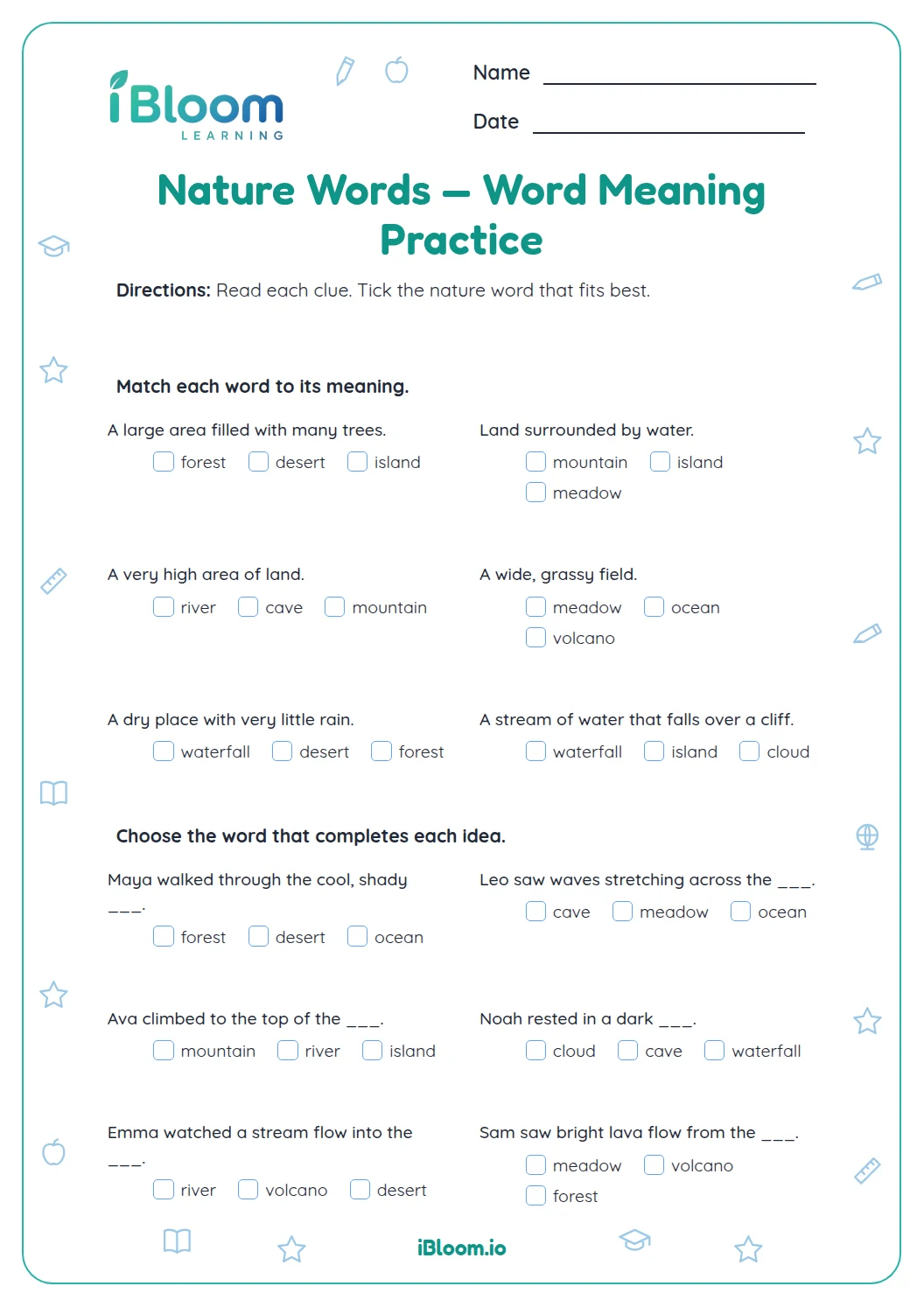
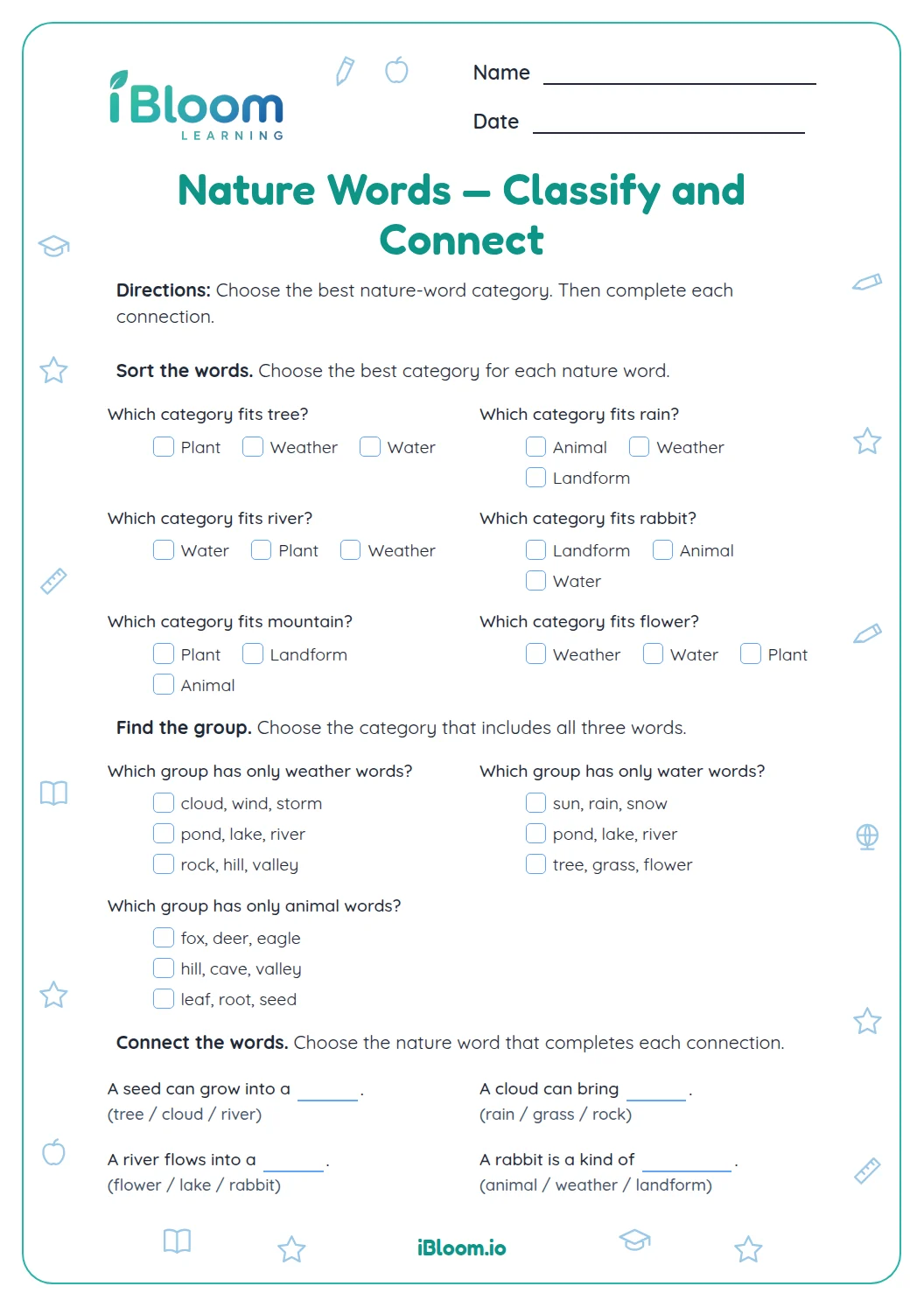
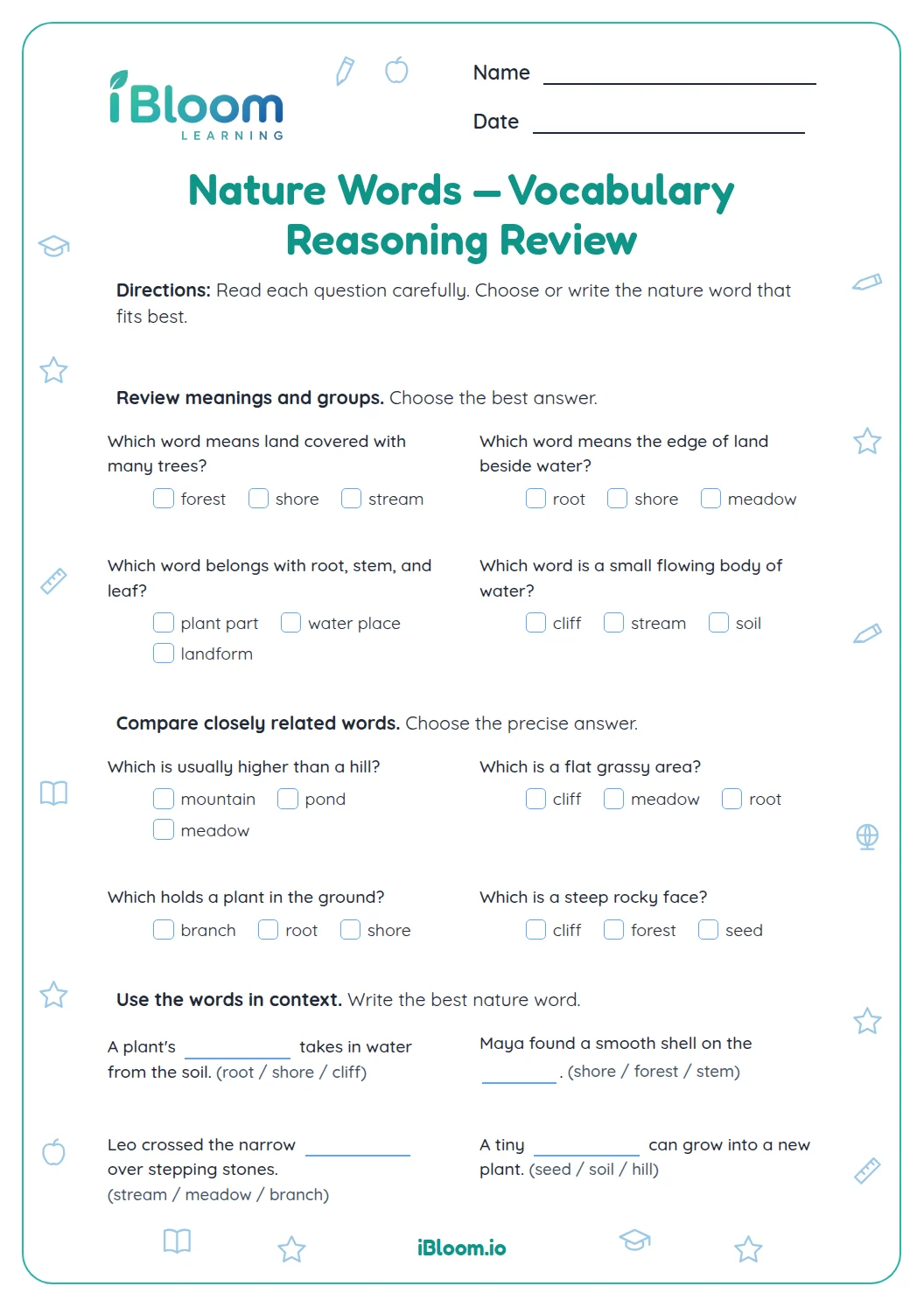
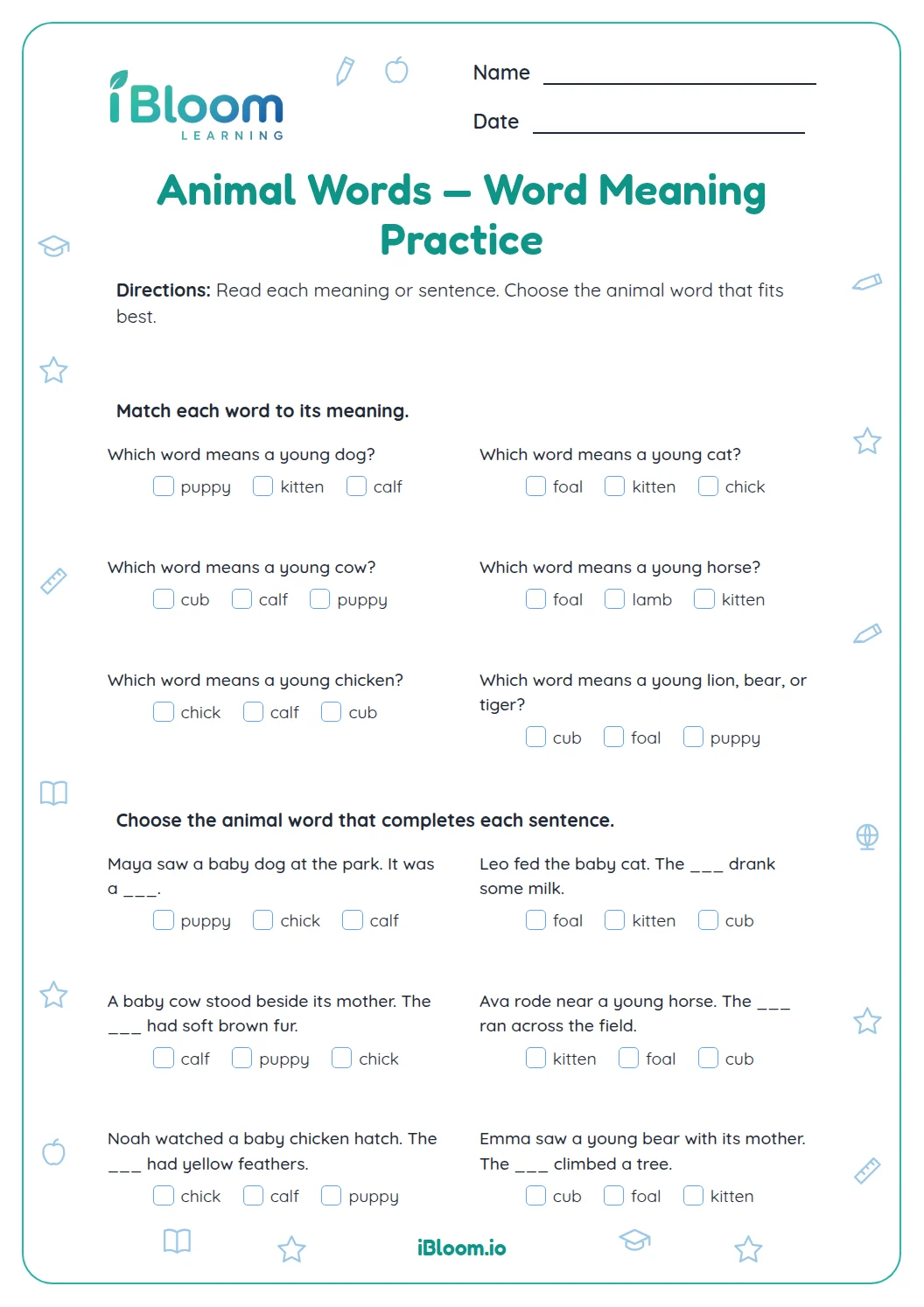
This Grade 3 printable gives readers 14 nature vocabulary questions. Each sentence offers a clue to a word about weather, land, plants, or animals; children choose the meaning that fits. The two-page worksheet includes a separate two-page answer key. It practices using sentence-level context as a clue to a word or phrase, as described in CCSS L.3.4.a.
Aligned to L.3.4.a
How do sentence details point to a word meaning?
Look for an action, description, or result that explains the missing word. In question 1, weeks without rain and the gardener watering the soil show that parched means very dry.
- 1Clue: weeks without rain
- 2Action: the gardener watered the soil
- 3Meaning: very dry
What kinds of nature words appear?
The sentences include landforms, plants, weather, and animal behavior. Read the whole sentence because the clue may be a definition, an example, or an action.
- Part A: use direct descriptions.
- Part B: connect a word to an example or result.
- Part C: infer meaning from actions and details.
How can you check a possible meaning?
Try a possible meaning in place of the blank and reread the sentence. For question 8, fur that blends with fallen leaves means the fox is hidden by matching surroundings.
How to use this worksheet at home or in class
- 1Read the whole sentence once.
- 2Notice the description, example, or action near the blank.
- 3Think of a meaning that fits those details.
- 4Reread the sentence with your choice in place.
Common mistakes and quick fixes
The mistake
Choosing a meaning based on one familiar word alone.
The fix
Use the entire sentence and connect multiple details to the blank.
The mistake
Mixing up a clue with the word meaning.
The fix
Say the sentence in your own words, then explain what the blank describes.
The mistake
Picking a choice that could fit nature but not this sentence.
The fix
Test the choice in the sentence; it must match the specific clue.
Common Core alignment
This worksheet practices the following Common Core skill.
Use sentence-level context as a clue to the meaning of a word or phrase.
On this sheet: Children infer the meaning of a nature word from a sentence clue.
Show the official wordingHide the official wording
Use sentence-level context as a clue to the meaning of a word or phrase.
What to practice next
Make more practice
Further reading
Questions parents and teachers ask
How do context clues help with nature words?
Details in a sentence suggest what an unfamiliar word means. In question 1, weeks without rain and the gardener watering the soil point to “dry.” Readers can connect the clue to a meaning and reread the sentence to see whether the choice fits.
What does seedling mean here?
A seedling is a young plant. Question 2 says it pushed its first leaves through the soil, which signals that it has just begun to grow. The sentence detail helps explain the word without a separate definition. This is a helpful reminder to test each choice against its sentence.
Do all the sentences define the word directly?
No. Some sentences give a direct description, while others provide an example or describe an action or result. For instance, the fox’s fur blending with leaves helps readers infer that it is hidden by matching surroundings. Reading the entire sentence keeps each unfamiliar word connected to its meaning.
How many questions are on the worksheet?
There are 14 multiple-choice questions. Each one gives a sentence clue and three possible meanings. The words relate to nature, including land, plants, weather, and animal behavior. Use the key to review each choice and notice the detail that supports the meaning.
Is an answer key included?
Yes. A separate answer key shows the best meaning for each sentence. Children can compare the selected choice with the clue in the sentence and talk through why that meaning fits. The numbered entries make checking each selection straightforward.