

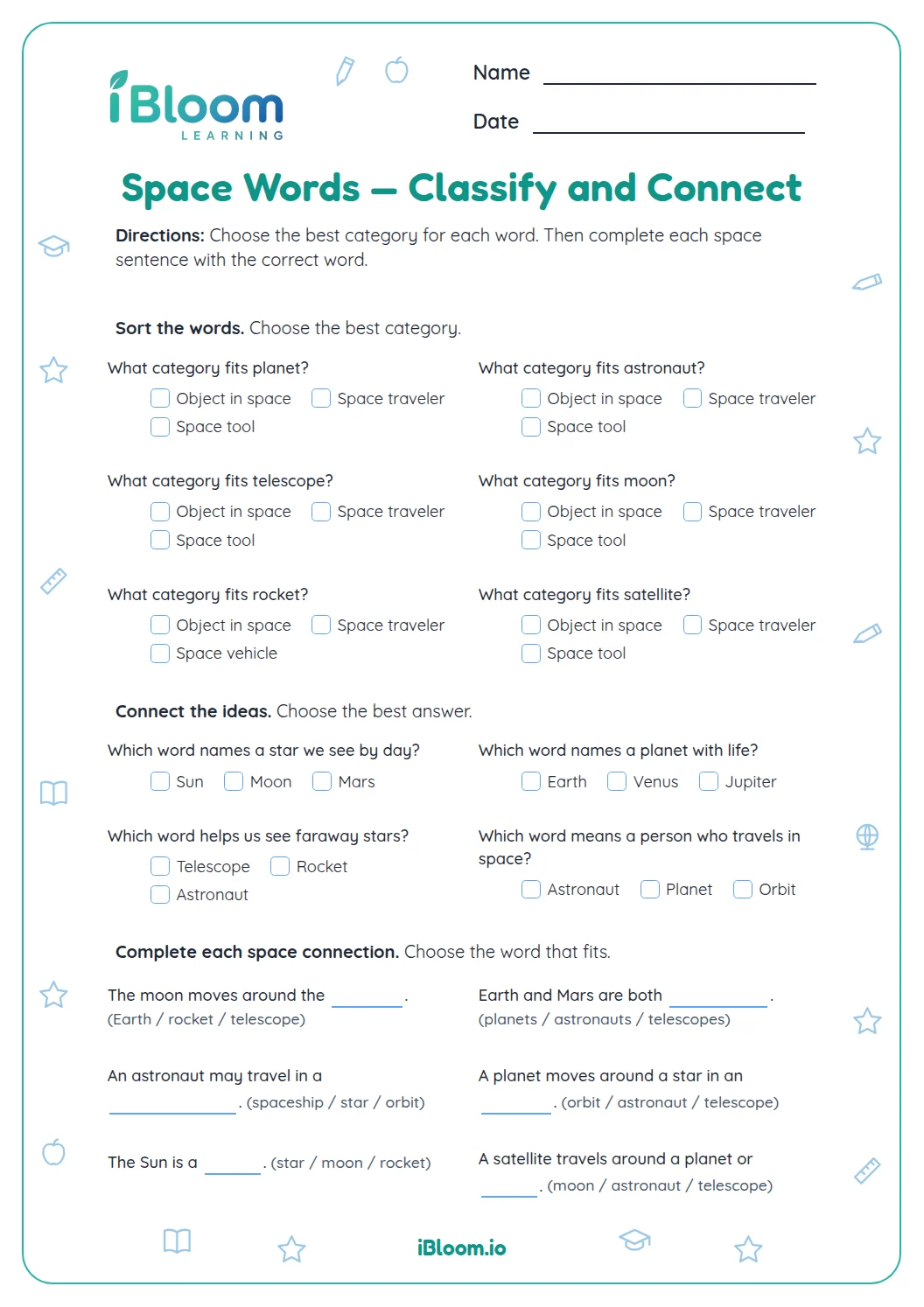
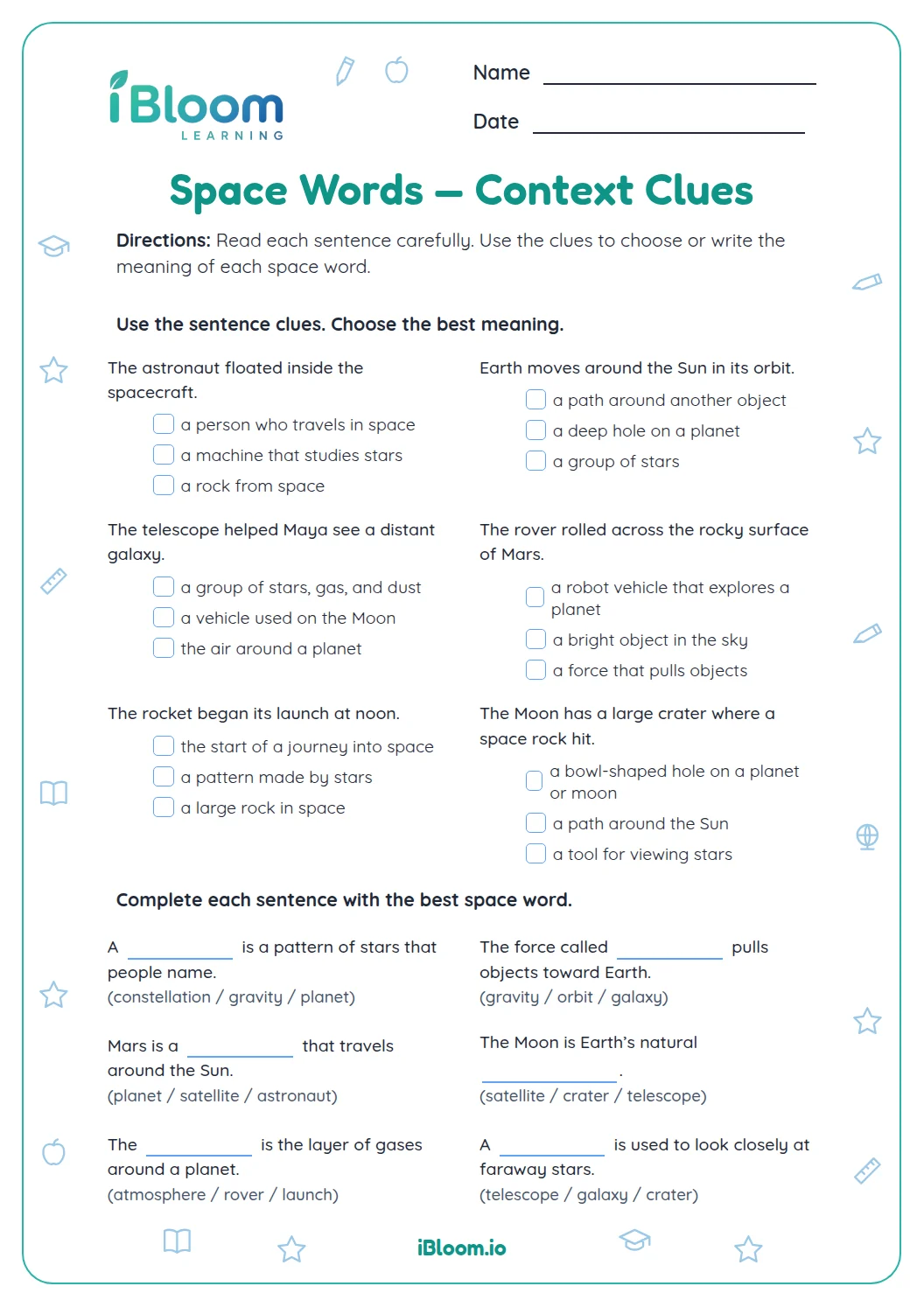
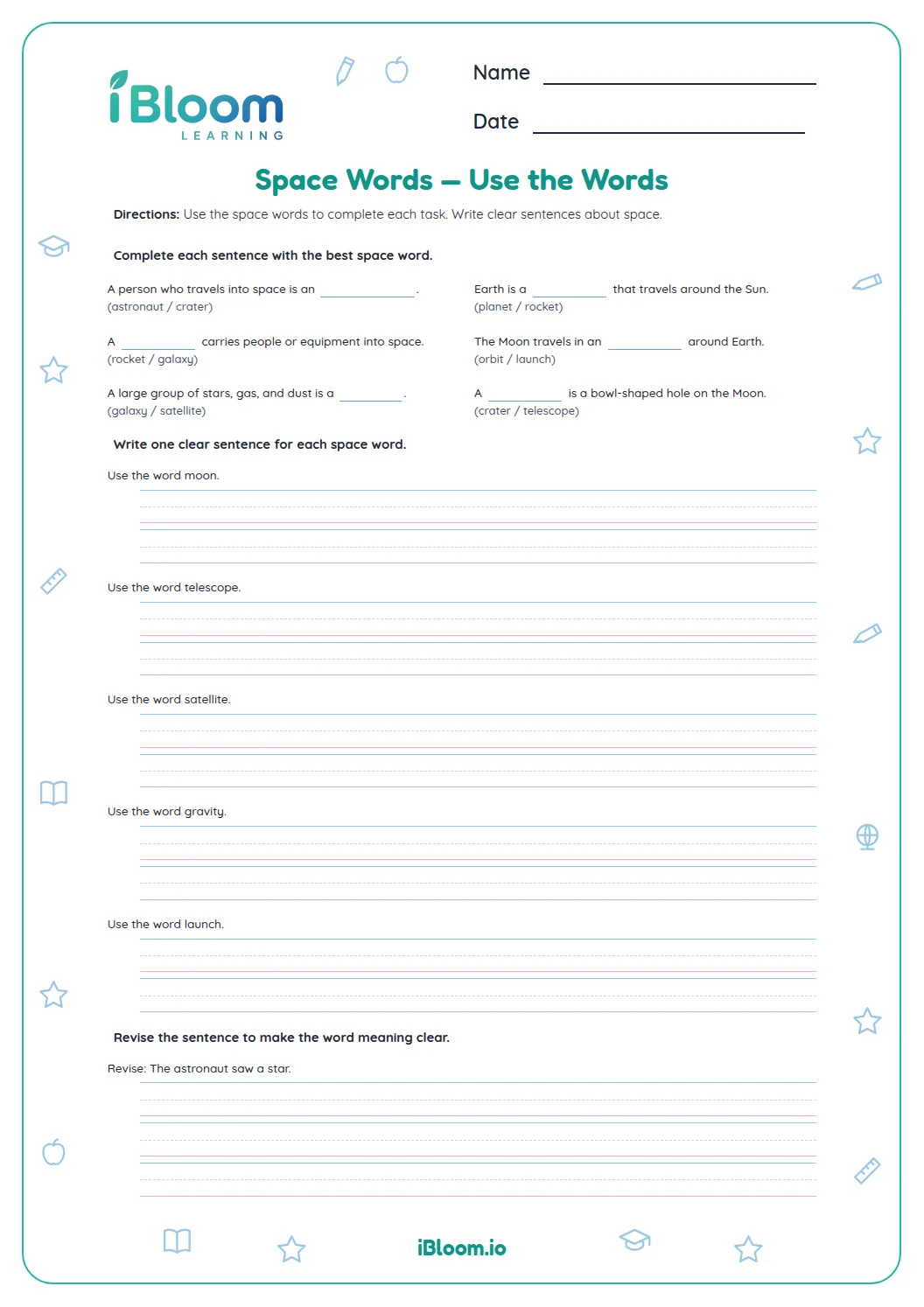
About this worksheet
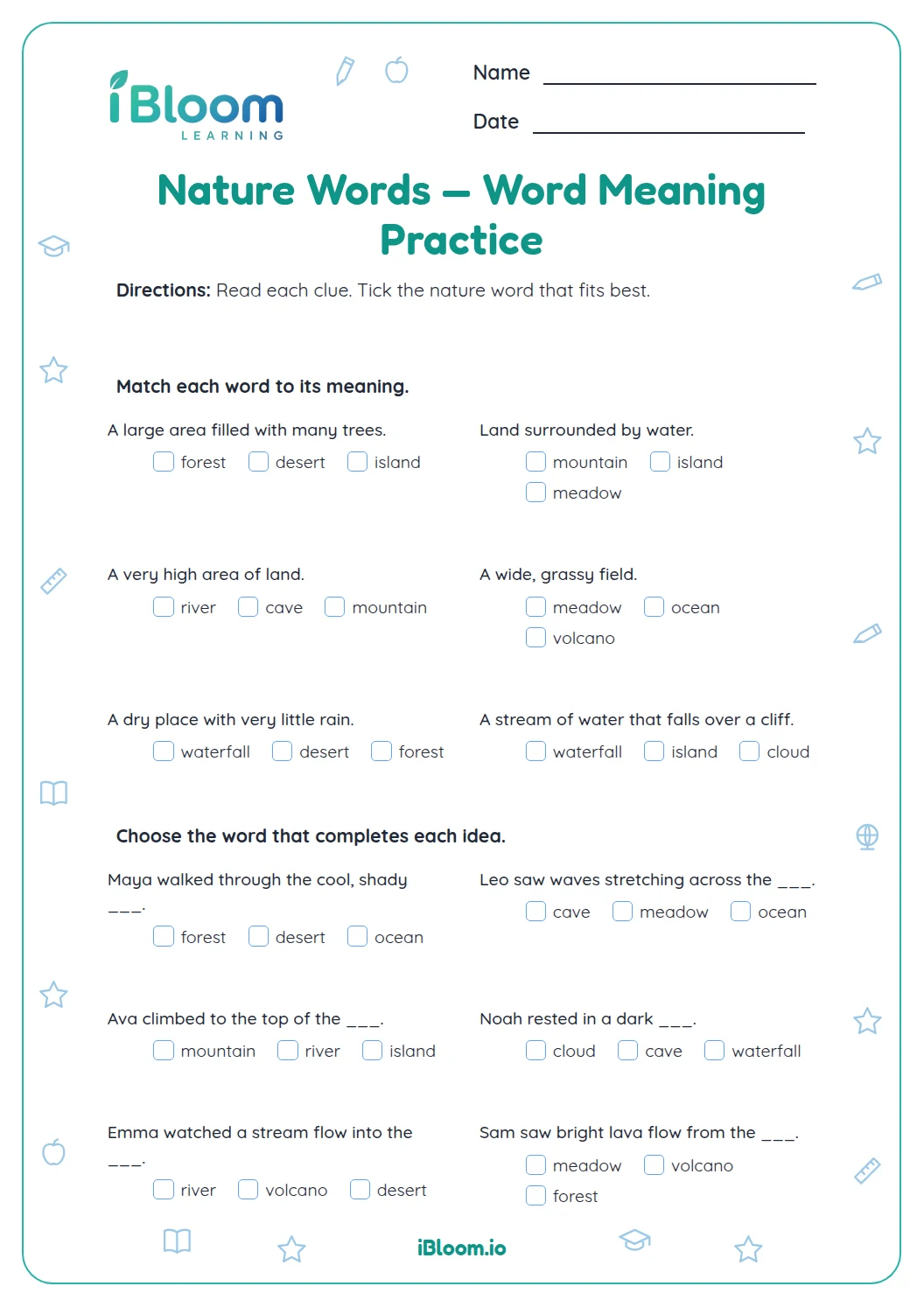
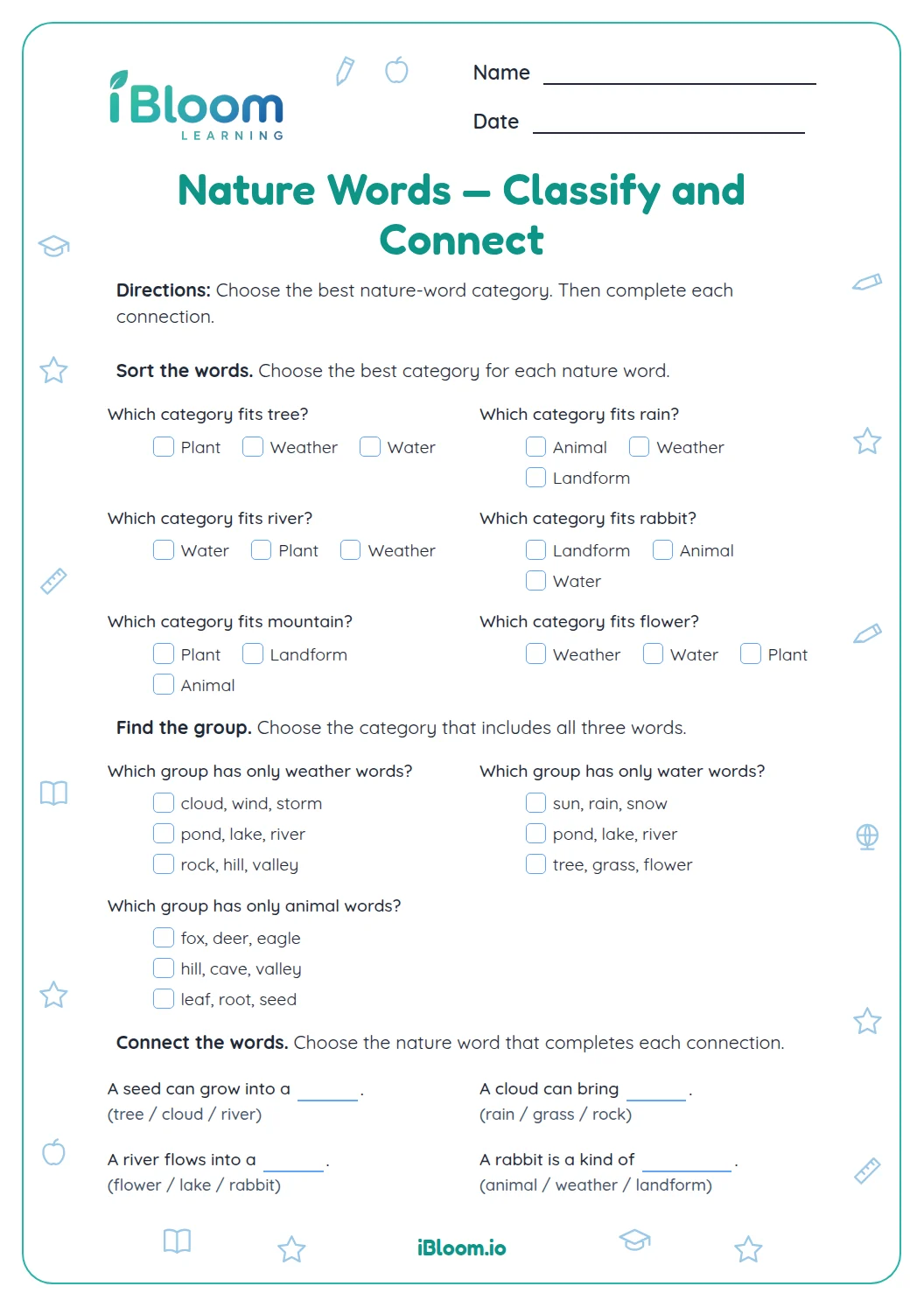
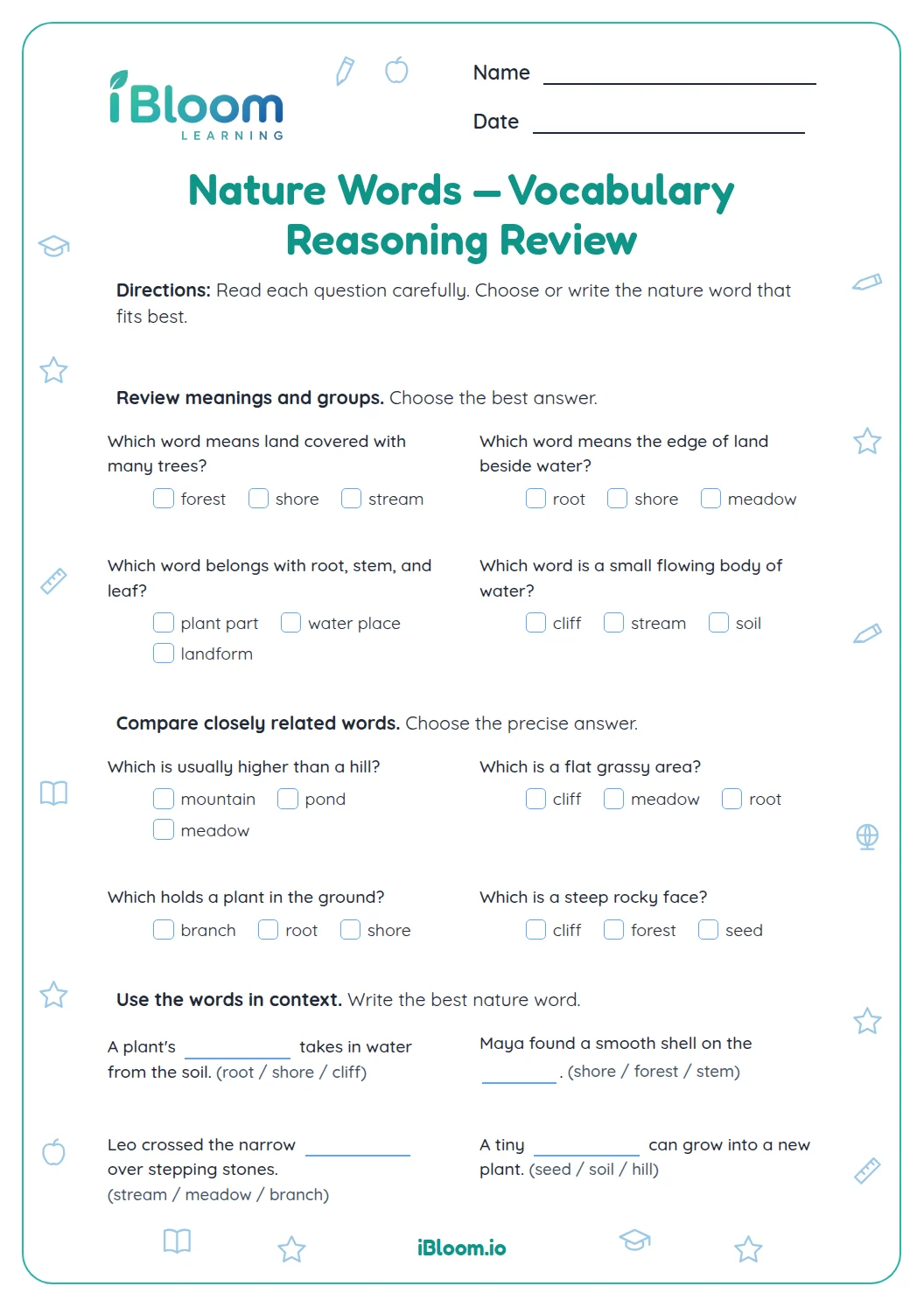
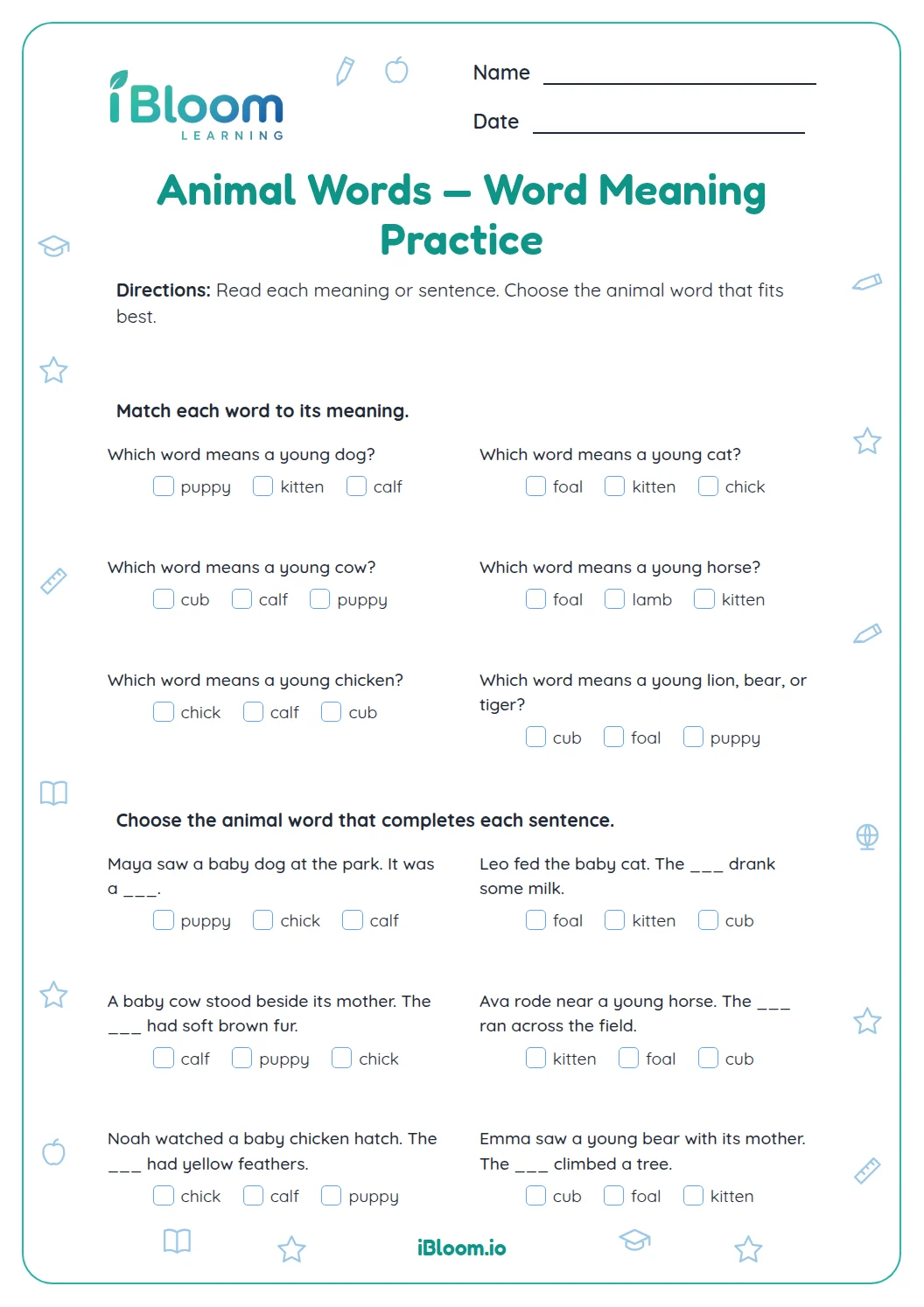
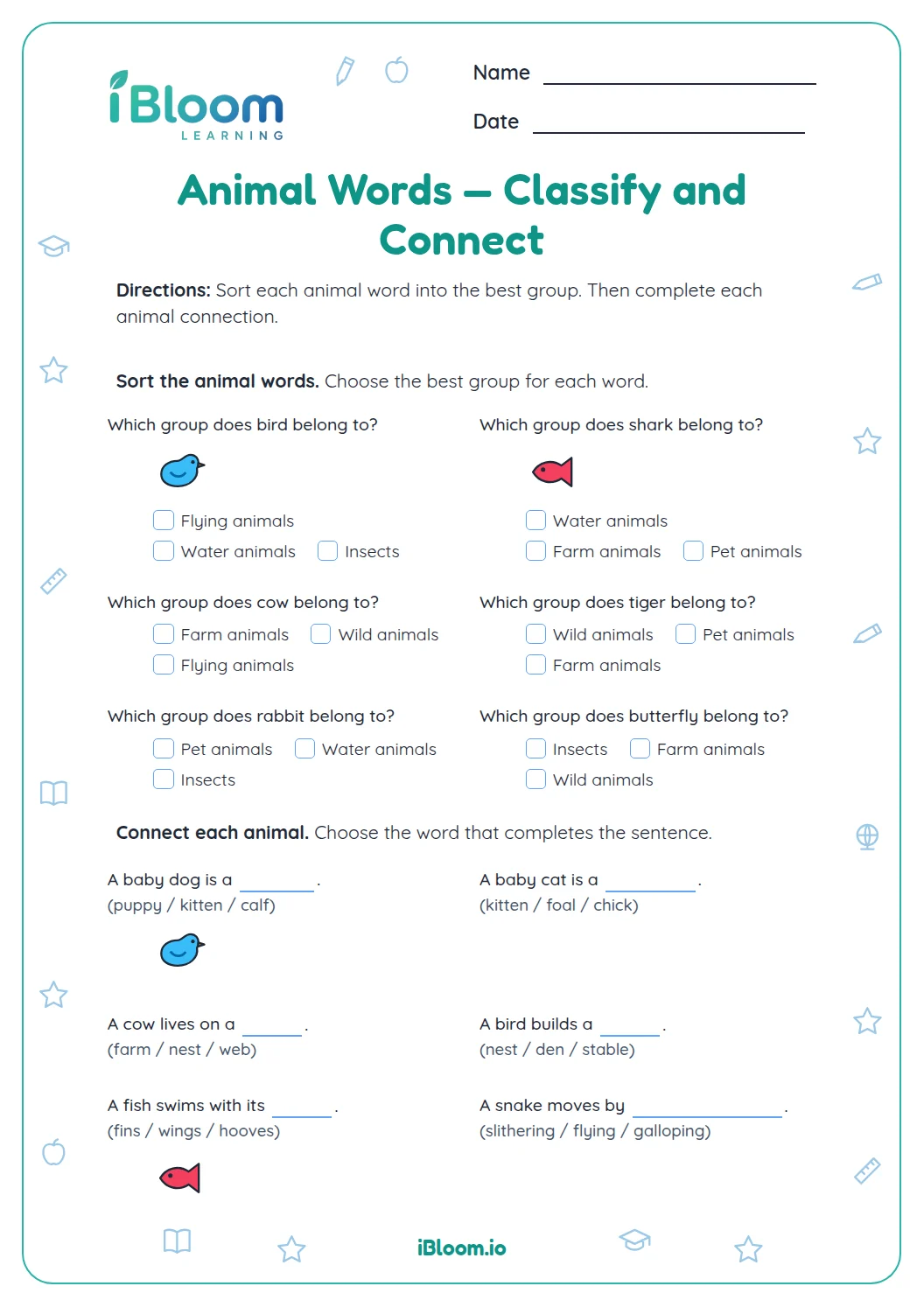
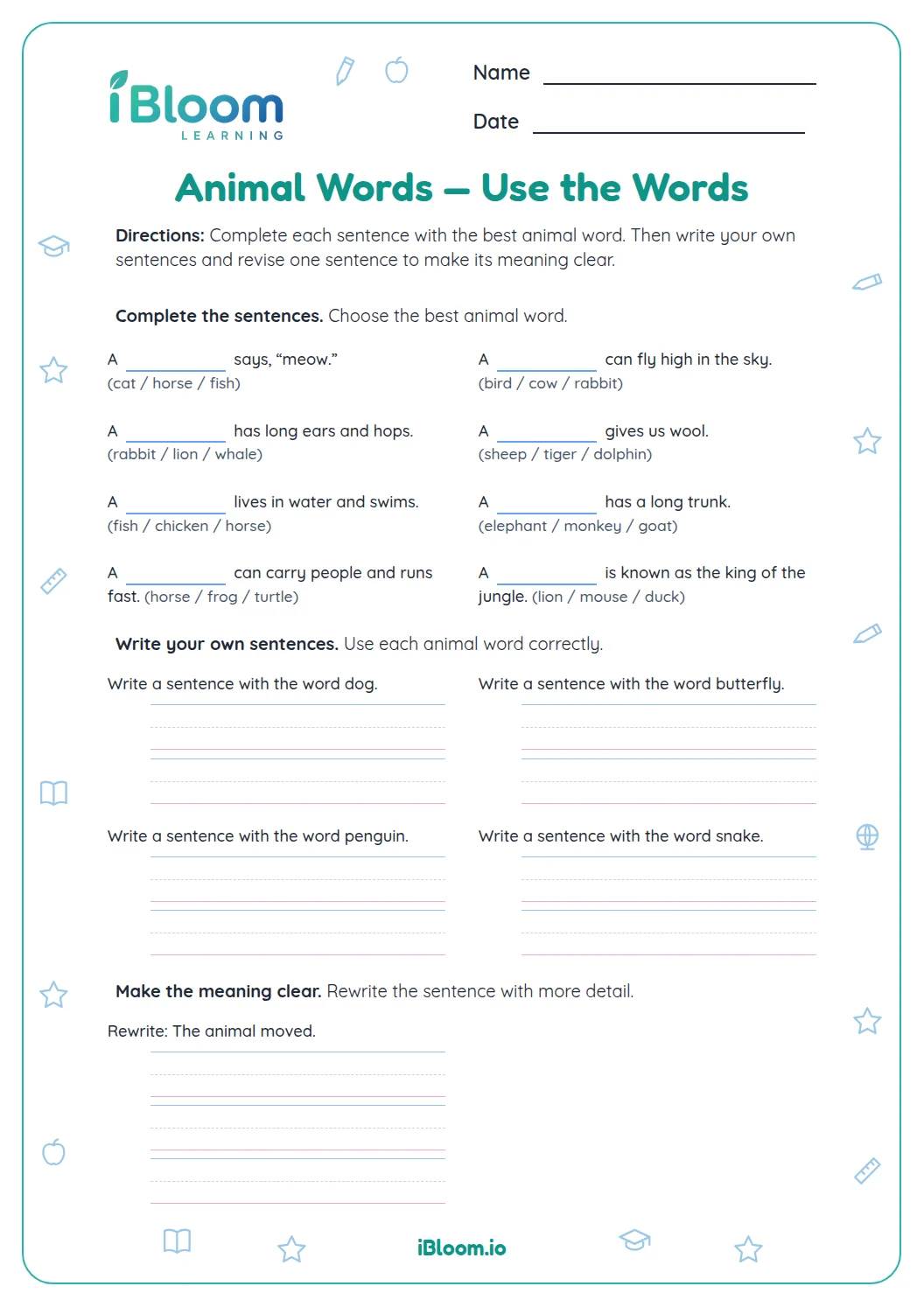
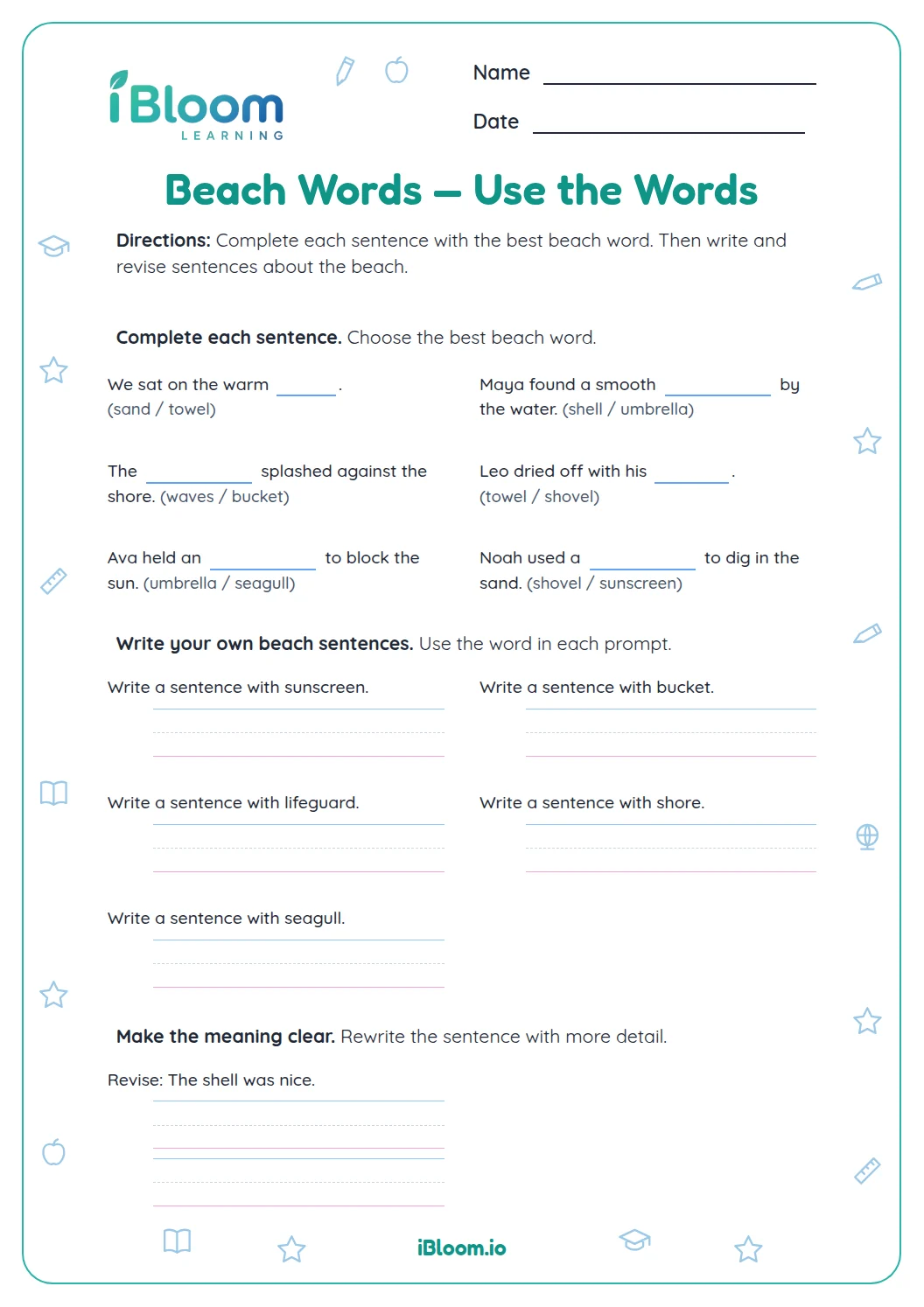
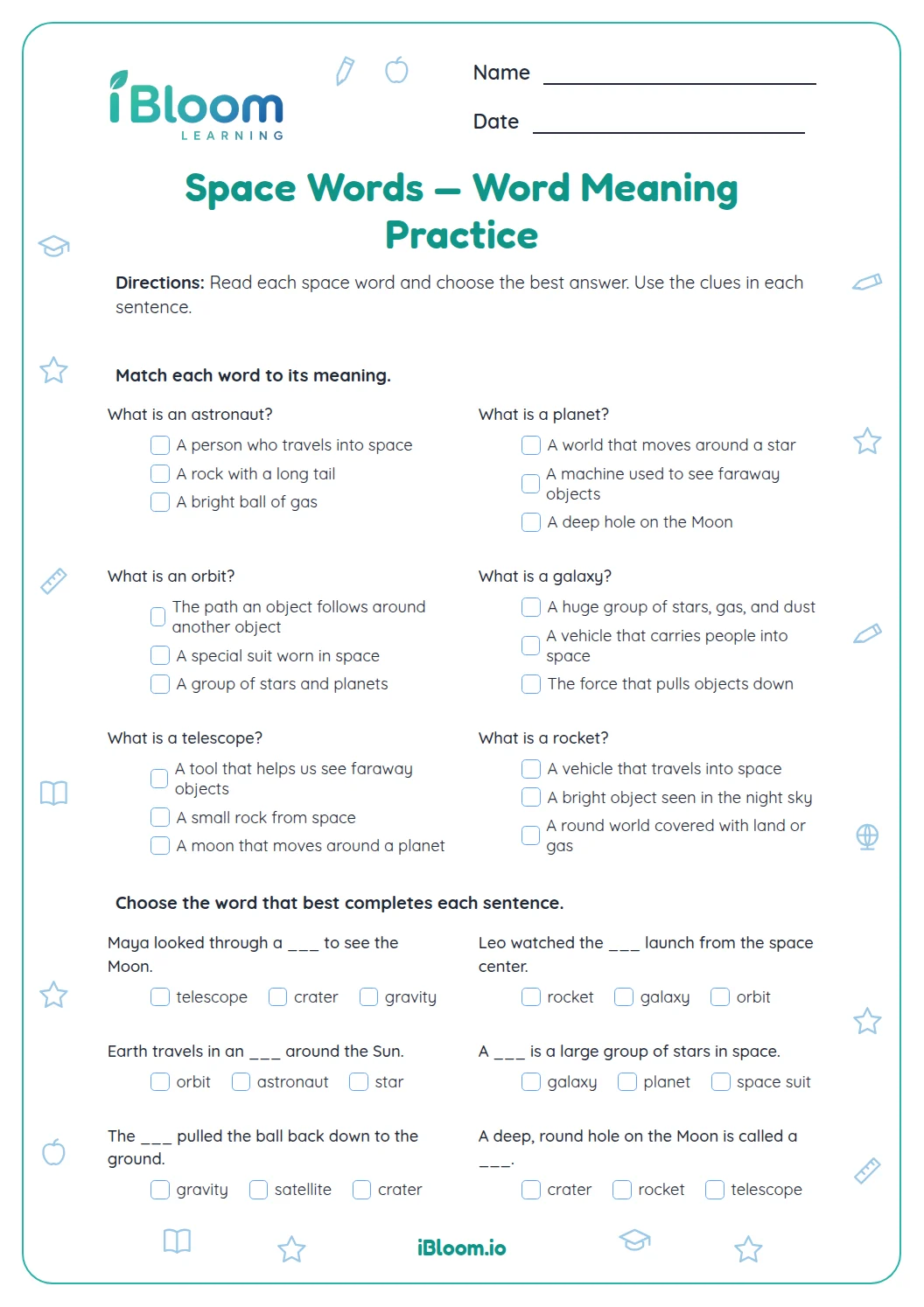
This printable Nature Words worksheet supports vocabulary practice across Grades 1–5. Students choose a word to complete six sentences, write four sentences using given words, and revise six vague sentences with precise nature details. The answer key gives the choices and sample responses for open-ended writing.
How do the word choices work?
Questions 1–6 ask students to choose a nature word that fits a sentence. In question 1, “A bird rested on a ___ above the path,” branch fits the perch described; stone and hill do not fit the sentence as naturally.
What should a sentence show when using a word?
Questions 7–10 give one word at a time, including forest, flower, river, and cloud. A useful sentence shows what the word means in a clear situation, such as a river flowing past rocks.
How can a vague sentence become clearer?
Questions 11–16 replace words such as “it,” “something,” or “the place” with details a reader can picture. The key offers sample revisions; other sentences work when they use a specific nature word and make sense.
- 1Revise: It moved over there.
- 2The stream flowed past the mossy rocks.
How to use this worksheet
- 1Choose the word that makes each sentence clear.
- 2Read the four given words before writing a sentence.
- 3Use the target word in a sentence that shows its meaning.
- 4Replace vague nouns in the revision section with nature details.
- 5Compare open responses with the sample answers and discuss alternatives.
Common mistakes and quick fixes
The mistake
Choosing a word that fits the topic but not the sentence.
The fix
Read the whole sentence and check how the word works there.
The mistake
Writing a sentence that includes the target word without showing its meaning.
The fix
Add an action or detail that makes the word’s use clear.
The mistake
Keeping vague words such as “it” in a revision.
The fix
Name the plant, landform, or water feature directly.
What to practice next
Make more practice
Questions parents and teachers ask
What types of practice are included?
The worksheet has three parts: six multiple-choice sentence completions, four prompts for writing a sentence with a given nature word, and six prompts to revise vague sentences. This mix lets students recognize words in context and then use more specific language themselves.
Are the writing questions open-ended?
Yes. Questions 7–16 allow many sensible responses. The answer key gives one sample for each prompt; a different response is suitable when it uses the target word or adds clear nature details that fit the sentence. The prompts appear in a steady sequence.
Which words do students use?
The completion items include words such as branch, breeze, cliff, current, dew, and fern. The sentence-writing prompts use forest, flower, river, and cloud. Revision prompts invite specific words such as stream, butterfly, pebble, and trail. Students meet the words in sentence context.
How should a child revise “It moved over there”?
Replace the vague pronoun and location with details that tell what moved and where. The key gives “The stream flowed past the mossy rocks” as one example. A different sentence can work if the nature detail is clear and grammatical.
Can the sheet work across different grades?
The source page lists Grades 1–5, so the same printable can be used with different levels of support. Younger students may benefit from reading prompts aloud or brainstorming nature words together before they write; older students can add precise details.