


About this worksheet
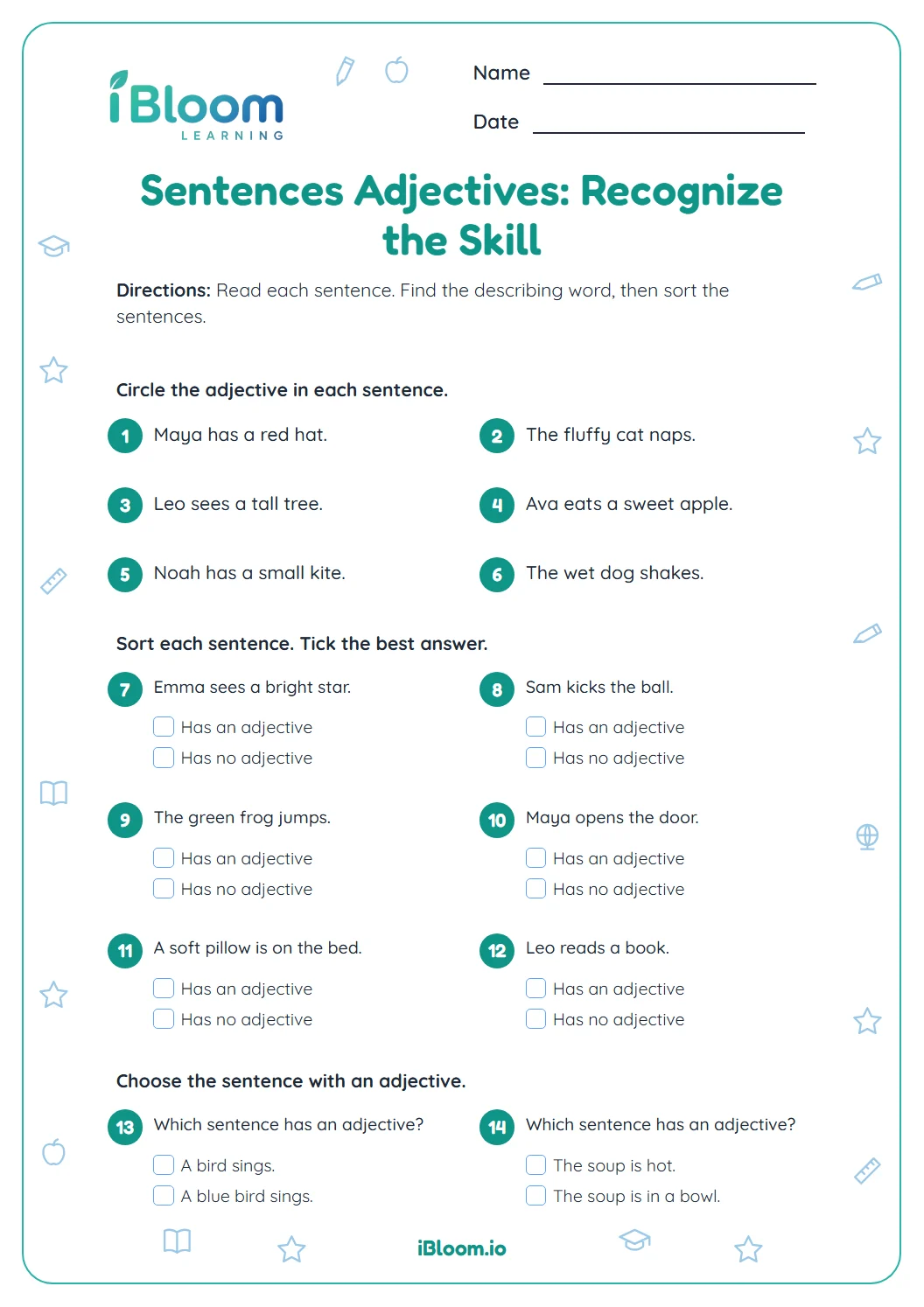
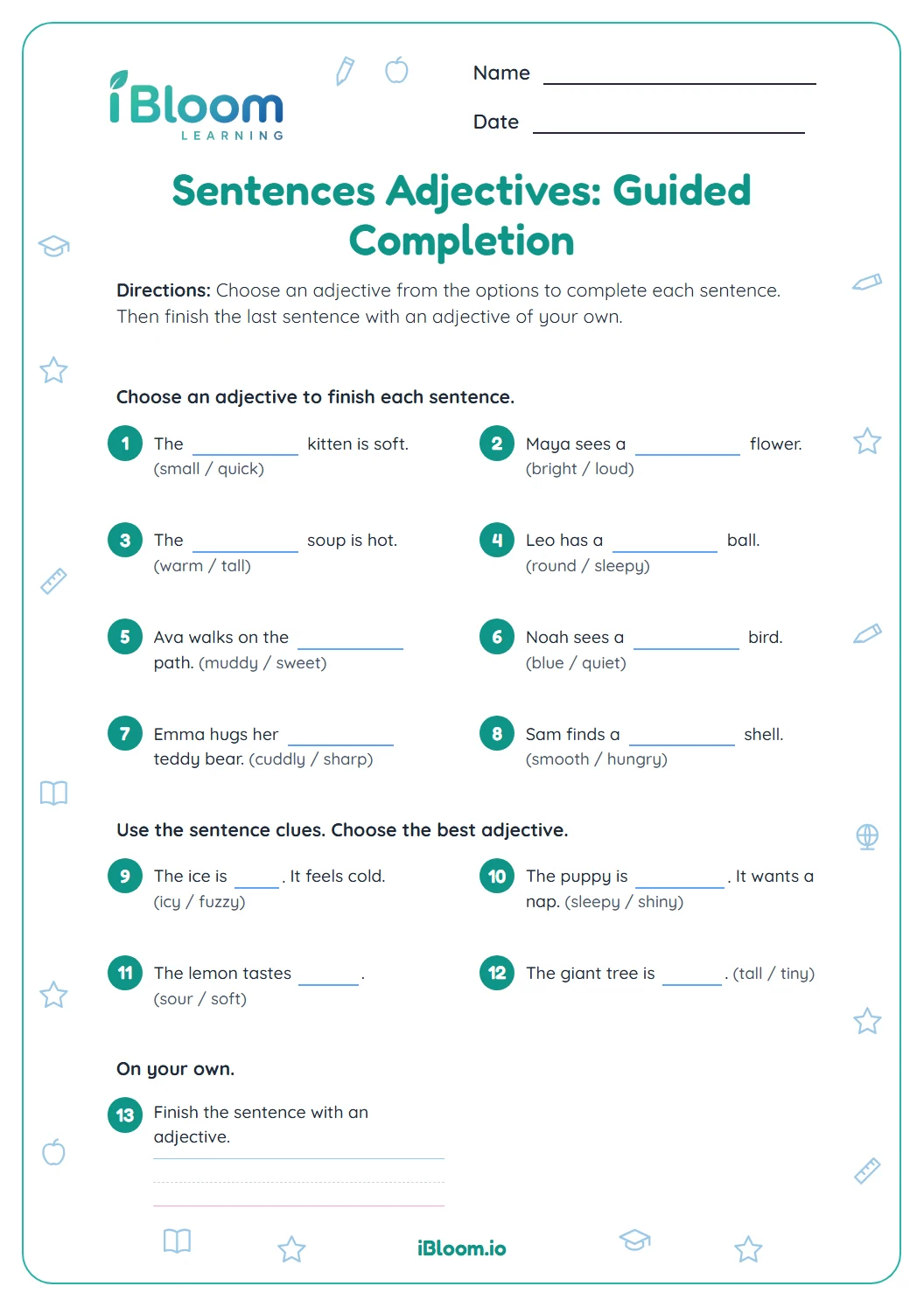
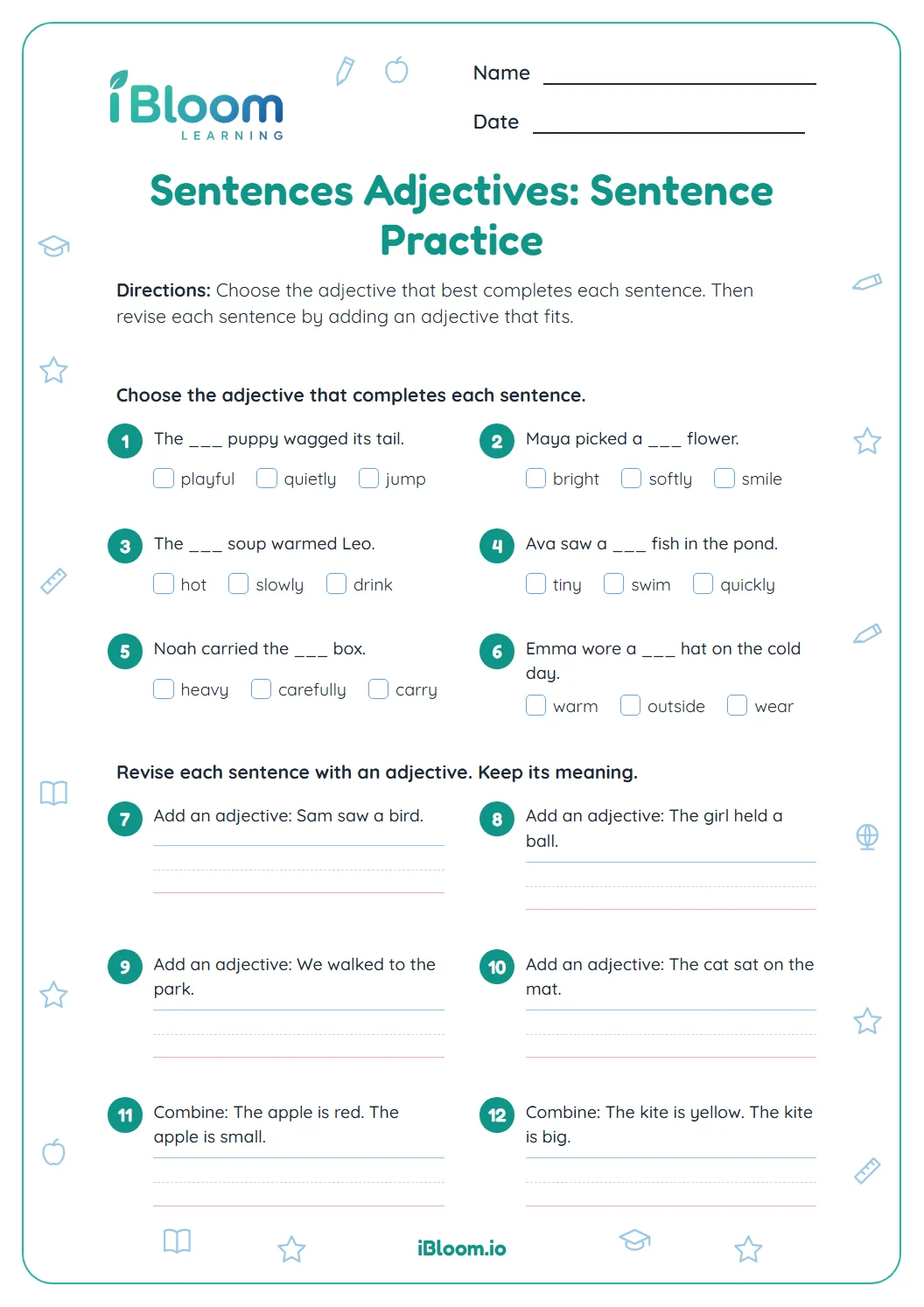
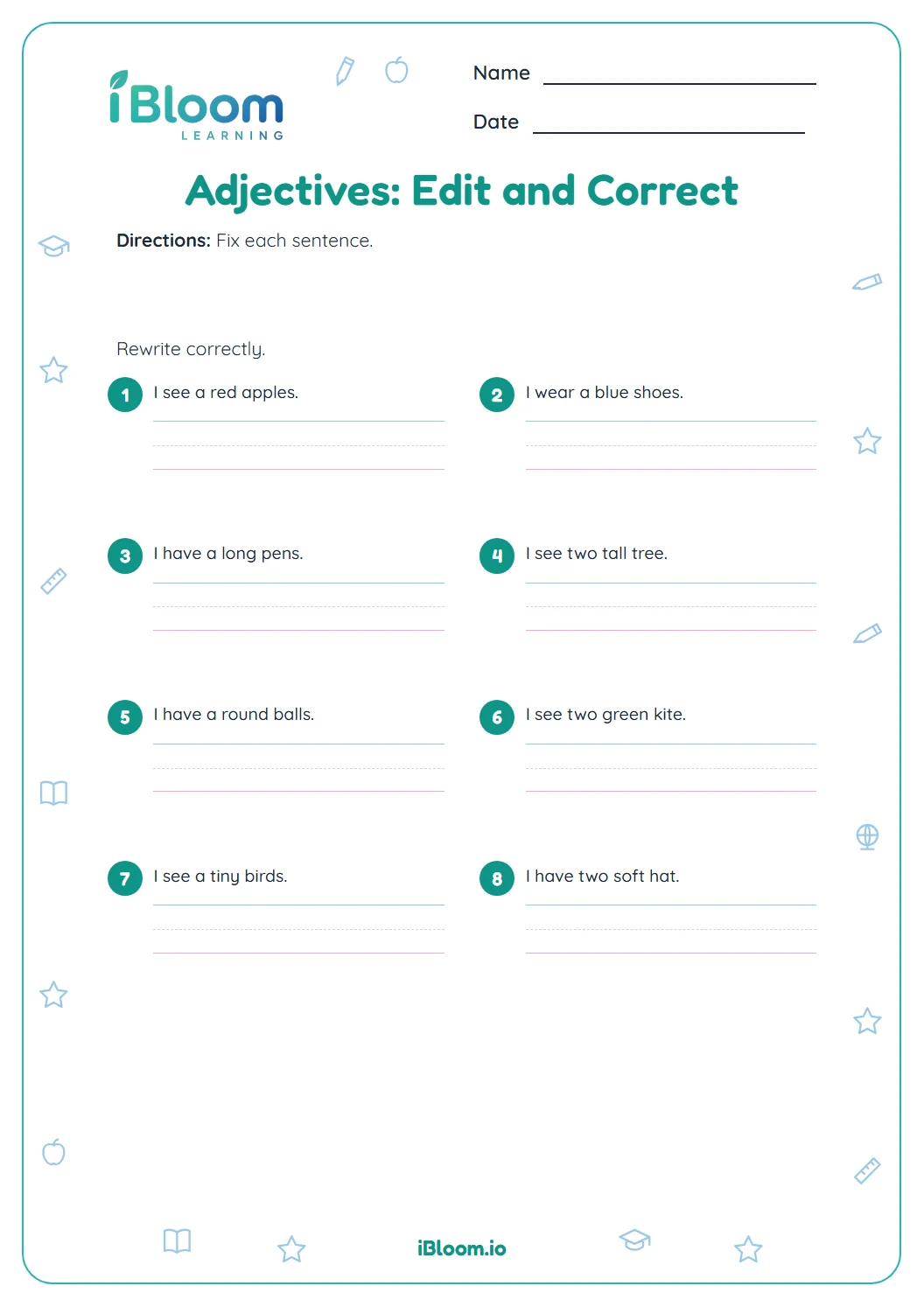
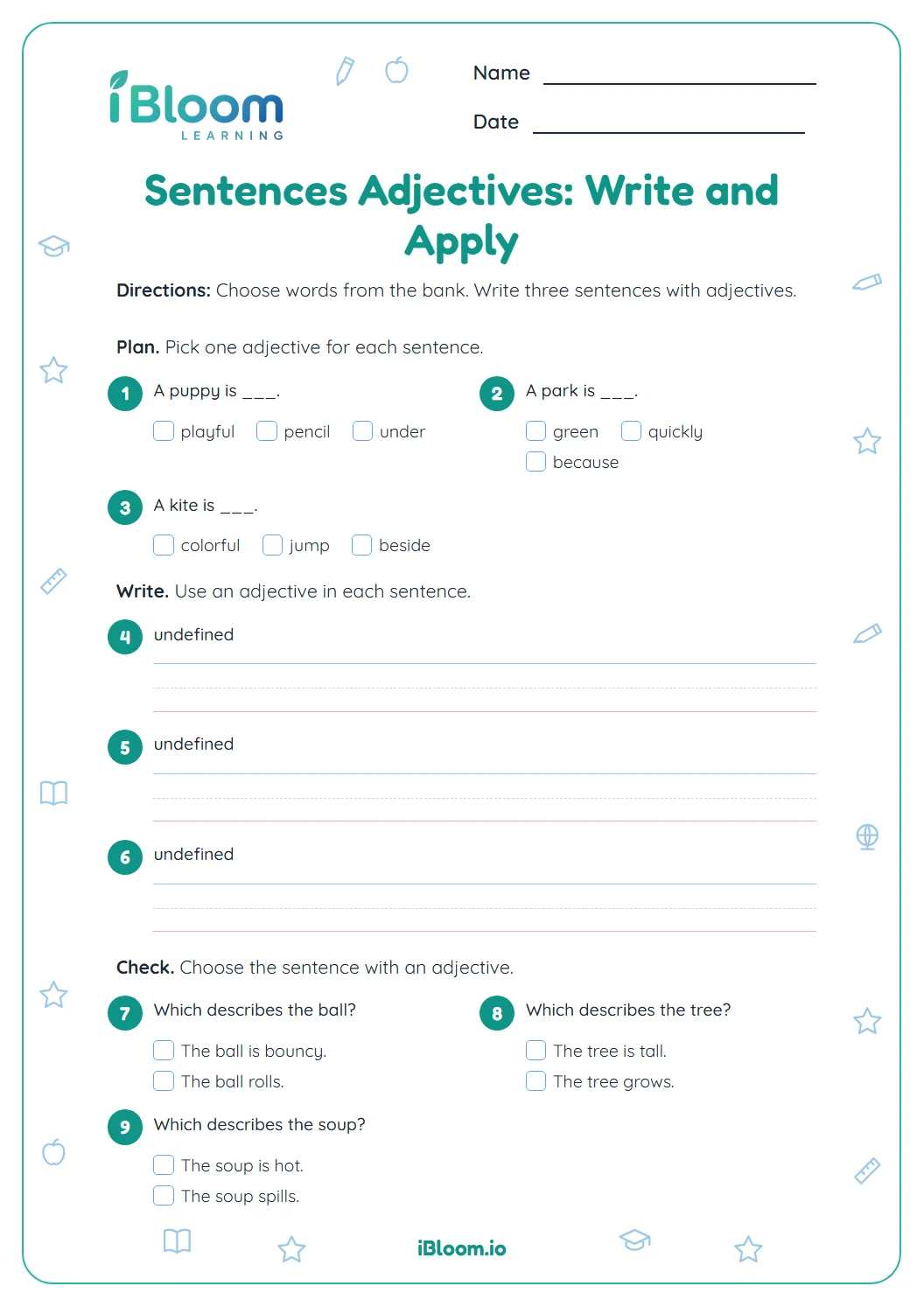
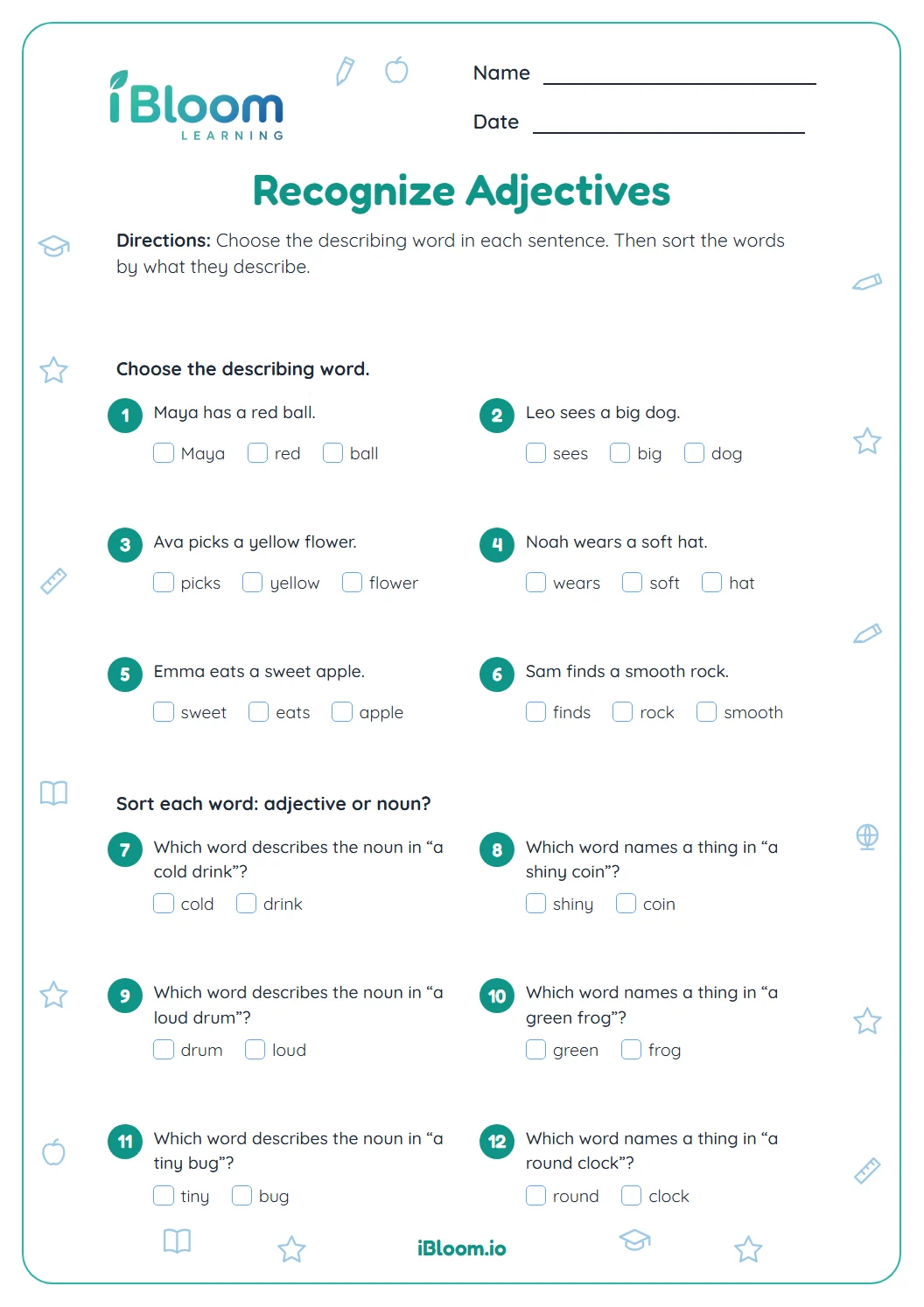
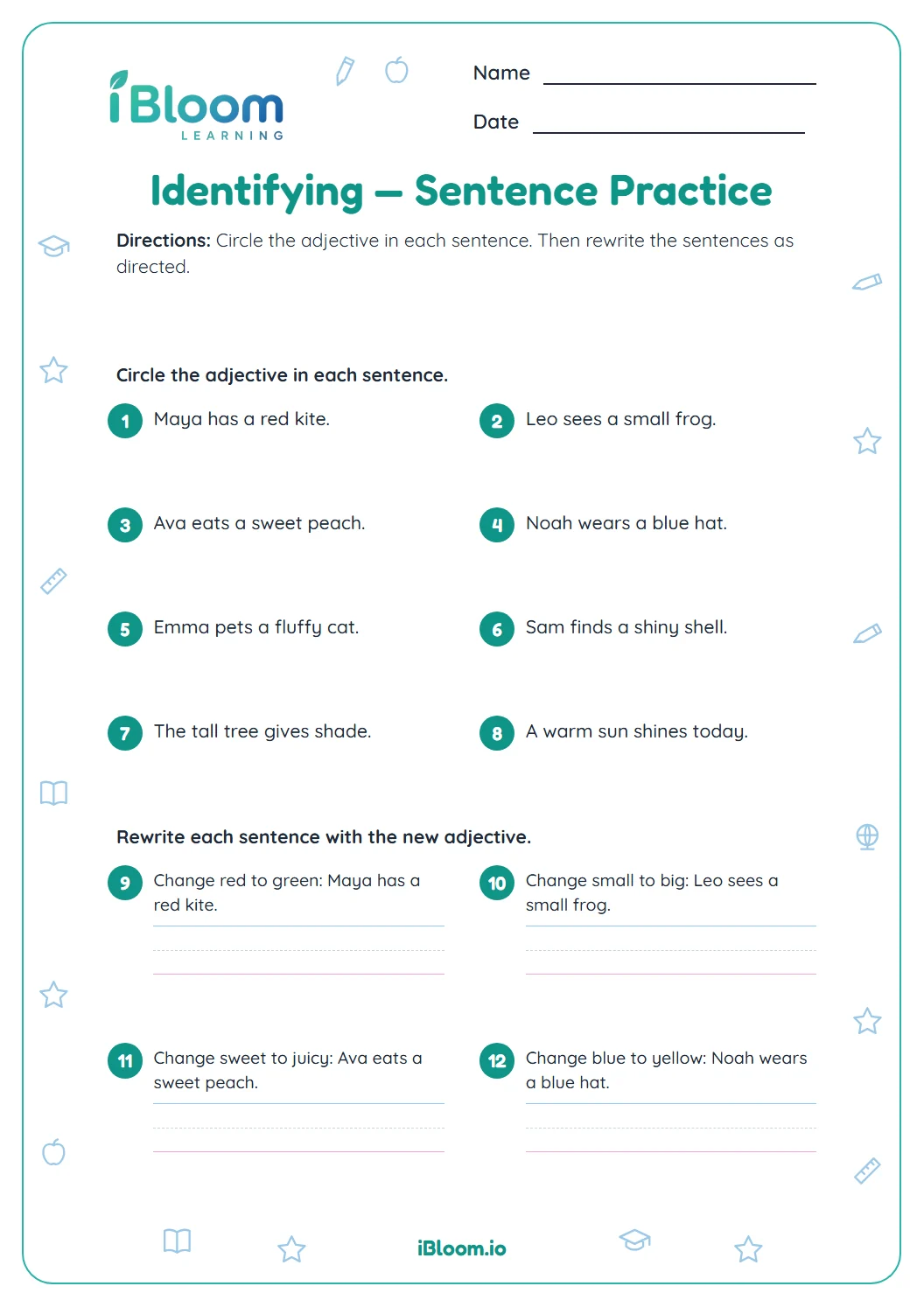
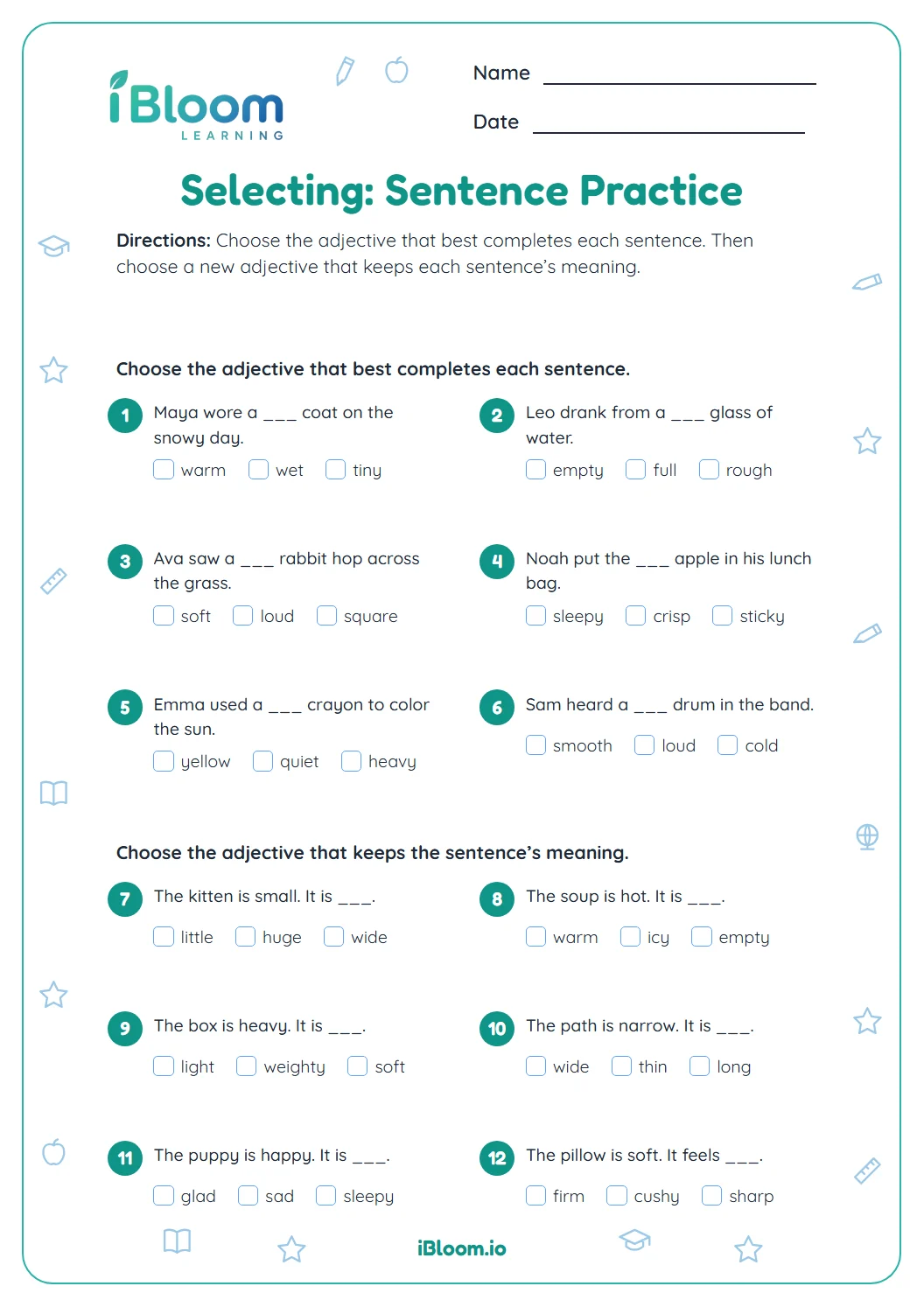
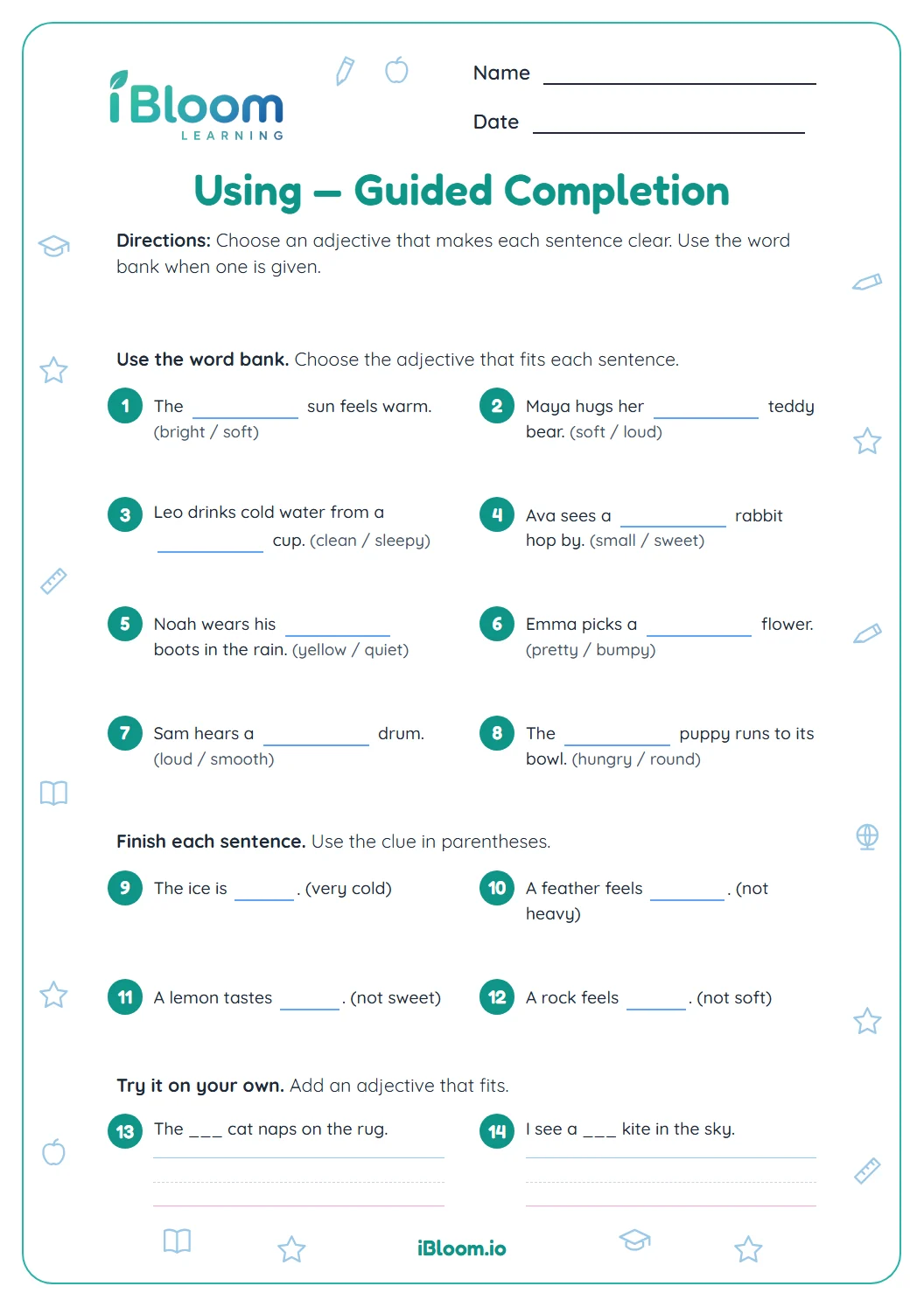
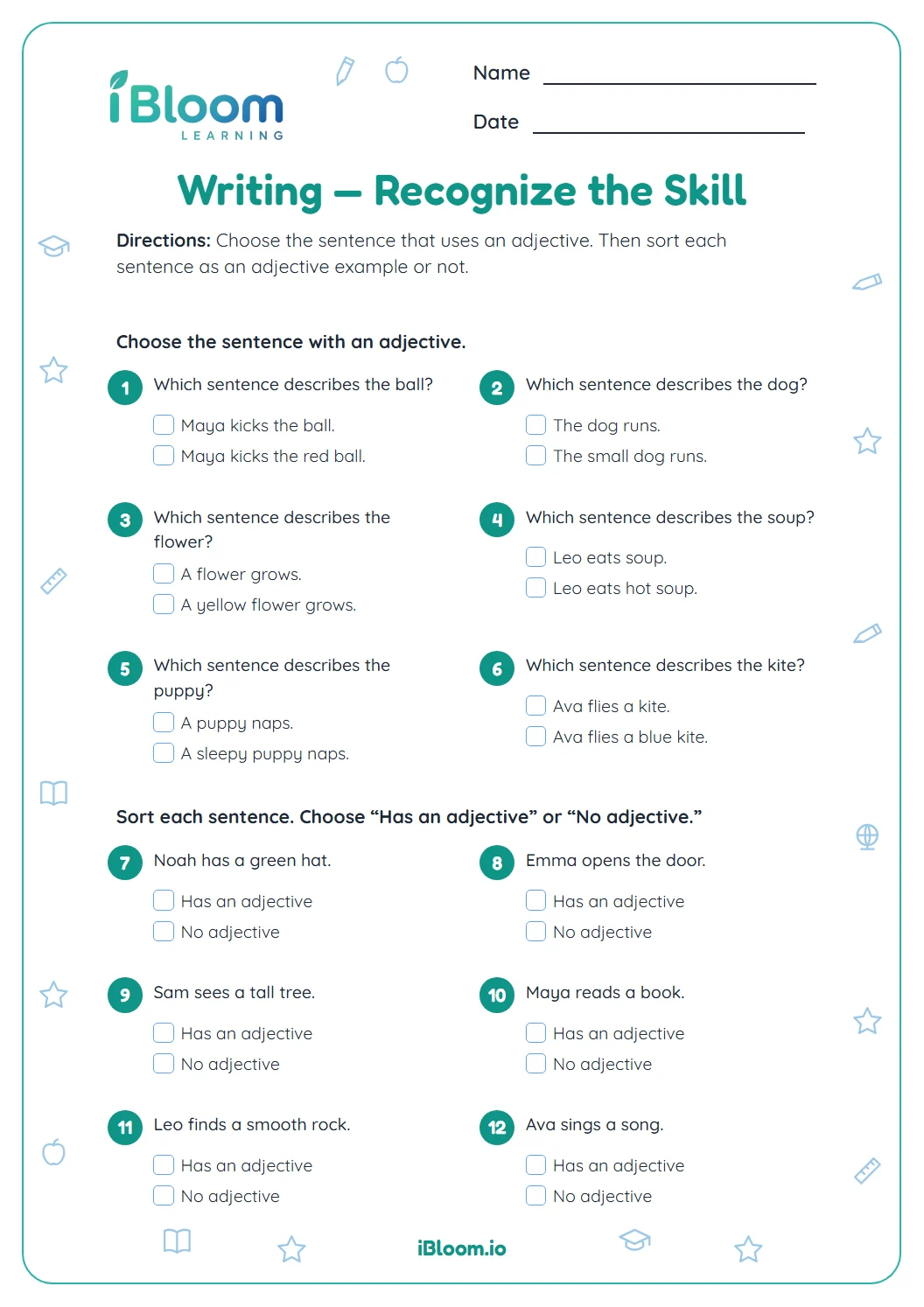
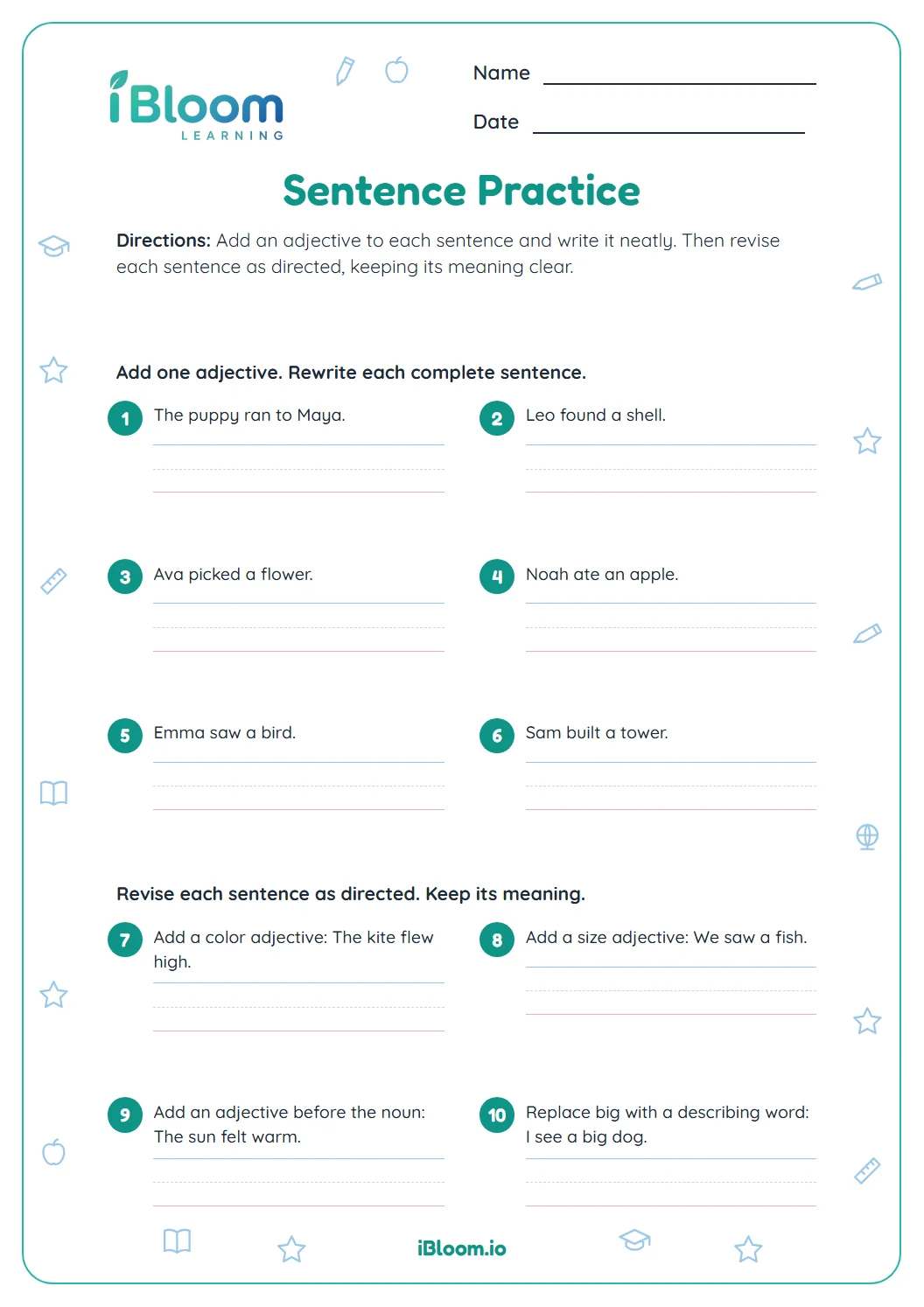
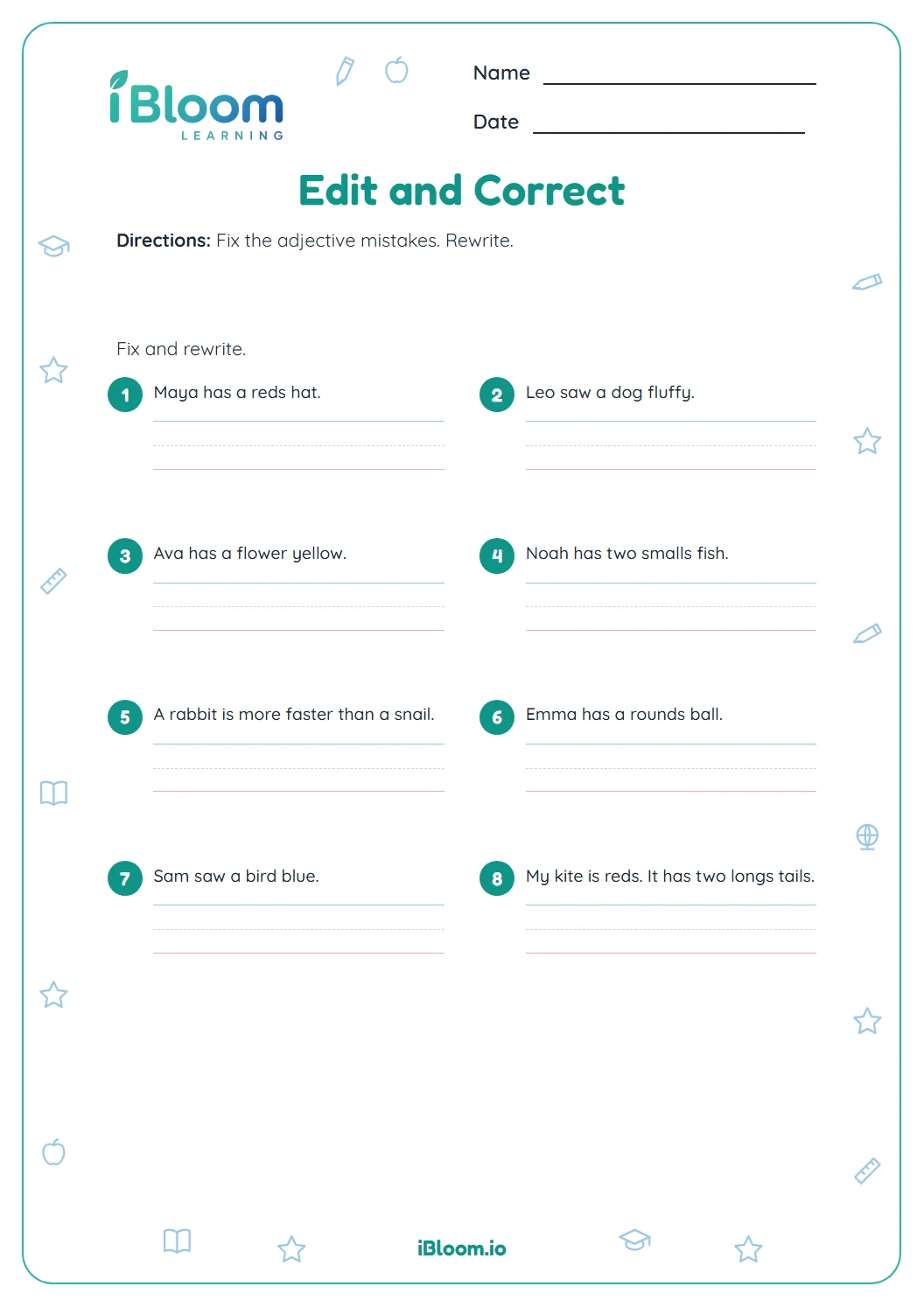
This Grade 1 printable reviews adjectives in sentences. Children identify the describing word, choose an adjective that fits a noun, and complete or write a few sentences. The 16 questions move from recognition to using adjectives, matching the old sheet’s shift from choosing stronger descriptions to writing with describing words. A separate answer key gives examples for open responses.
Aligned to L.1.1.f
What does this adjective worksheet ask children to do?
The first questions ask children to identify adjectives such as tall, soft, and noisy. Later items ask them to select a fitting describing word or add one to a sentence, then write a sentence using shiny.
In Question 2, tall describes the tree: “The tall tree sways.” The word tree names the thing; tall tells what kind of tree.
- Spot an adjective in a sentence.
- Choose or add a describing word that fits.
- Use an adjective in a sentence of your own.
How can a child spot an adjective?
Find the person, place, animal, or thing named in the sentence. Ask what it is like. In “The noisy bus stops,” noisy describes the bus.
How can children use adjectives in sentences?
Choose a detail that makes sense for the noun, then reread the complete sentence. A sample response for “Write a sentence with shiny” is “The shiny shell glows.” Other clear sentences using shiny are correct too.
How to use this worksheet
- 1Read the sentence and find the person, place, animal, or thing.
- 2Ask which word tells what it is like.
- 3Try each answer choice in the sentence when needed.
- 4Add a describing word that makes sense for the noun.
- 5Reread your own sentence and check it with the answer key.
Common mistakes and quick fixes
The mistake
Choosing the naming word instead of the adjective.
The fix
Ask what the naming word is like; the answer is the adjective.
The mistake
Picking a describing word that does not fit the sentence.
The fix
Read the whole sentence with the choice in place.
The mistake
Writing a word without making a complete sentence.
The fix
Use the adjective with a subject and an action or being word.
Common Core alignment
This worksheet gives practice with use frequently occurring adjectives.
Use frequently occurring adjectives.
On this sheet: Use frequently occurring adjectives.
Show the official wordingHide the official wording
Use frequently occurring adjectives.
What to practice next
Make more practice
Further reading
Questions parents and teachers ask
What is an adjective?
An adjective is a word that describes a person, place, animal, or thing. In “The tall tree sways,” tall describes the tree. This worksheet asks children to find adjectives in sentences and choose words that make sense with the nouns.
Does the worksheet include writing practice?
Yes. Several questions ask children to complete a sentence with an adjective, and one asks them to write a sentence using shiny. The answer key offers sample responses; other sensible adjectives or complete sentences can also work. Children can use any sensible adjective that completes the sentence.
How can I help a child identify an adjective?
Ask the child to find the naming word first, then ask what it is like. In “The noisy bus stops,” bus is the naming word and noisy tells what the bus is like. Have the child point to the word that answers the question.
Is every adjective question multiple choice?
No. The worksheet mixes multiple-choice identification with sentence completion and a short writing prompt. This lets children practice recognizing describing words and using them in context. The answer key includes examples for responses that can vary. The writing item asks students to apply the skill in context.
How long should this worksheet take?
Plan for about 20 minutes for all 16 questions, including the writing items. A child may finish recognition questions quickly and use more time to think of a fitting adjective or reread a sentence. The key can be checked after each part.