


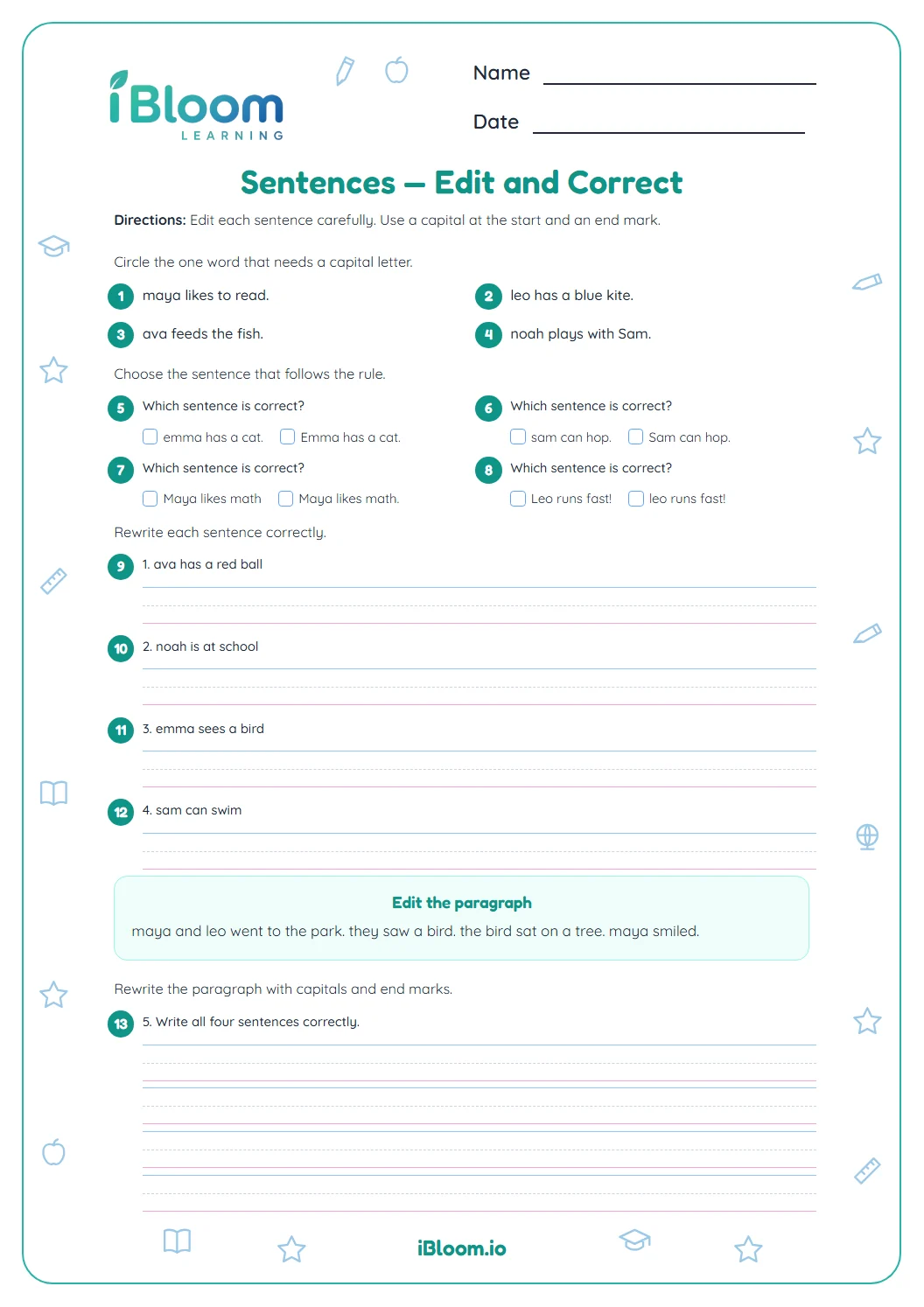
About this worksheet
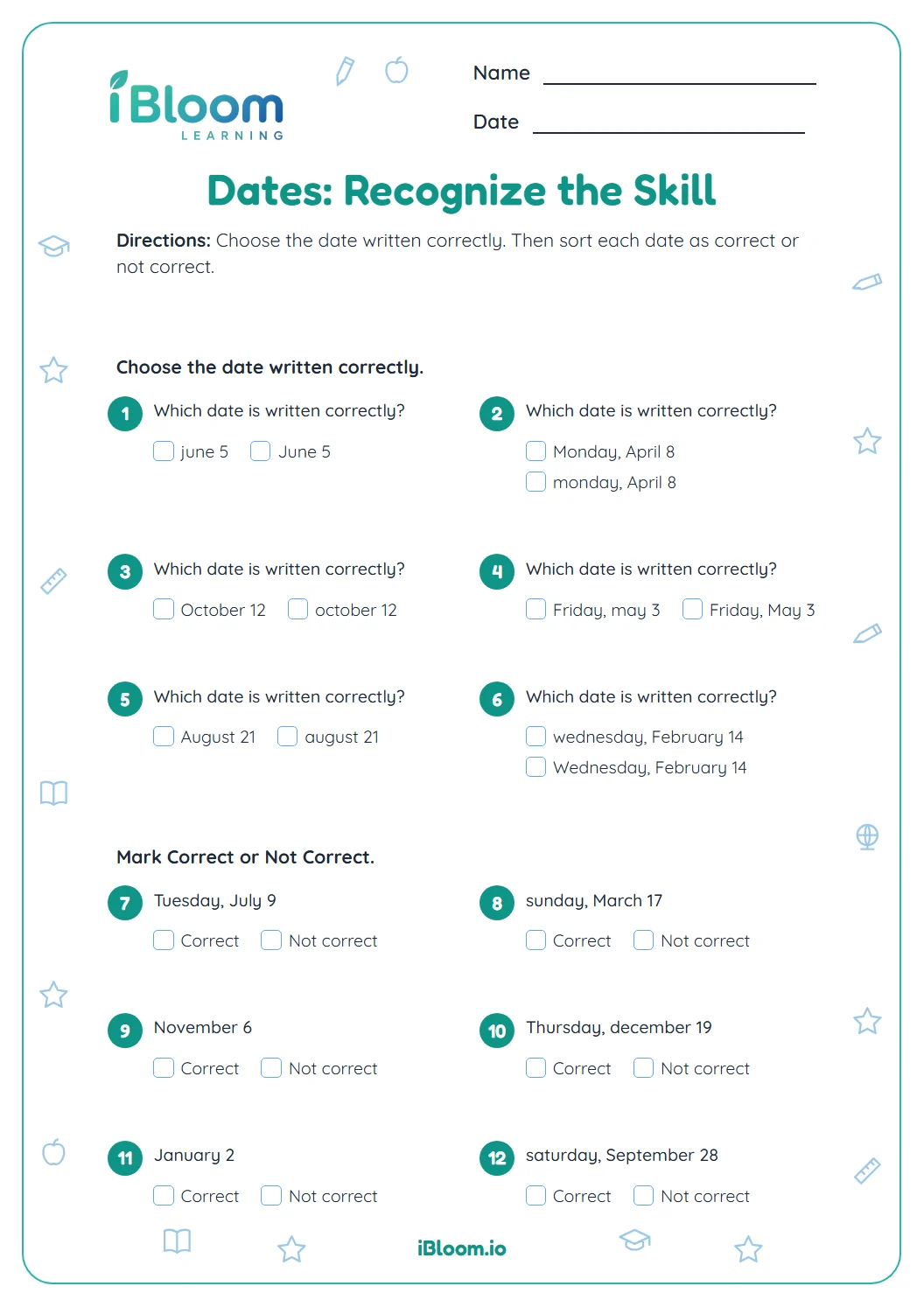
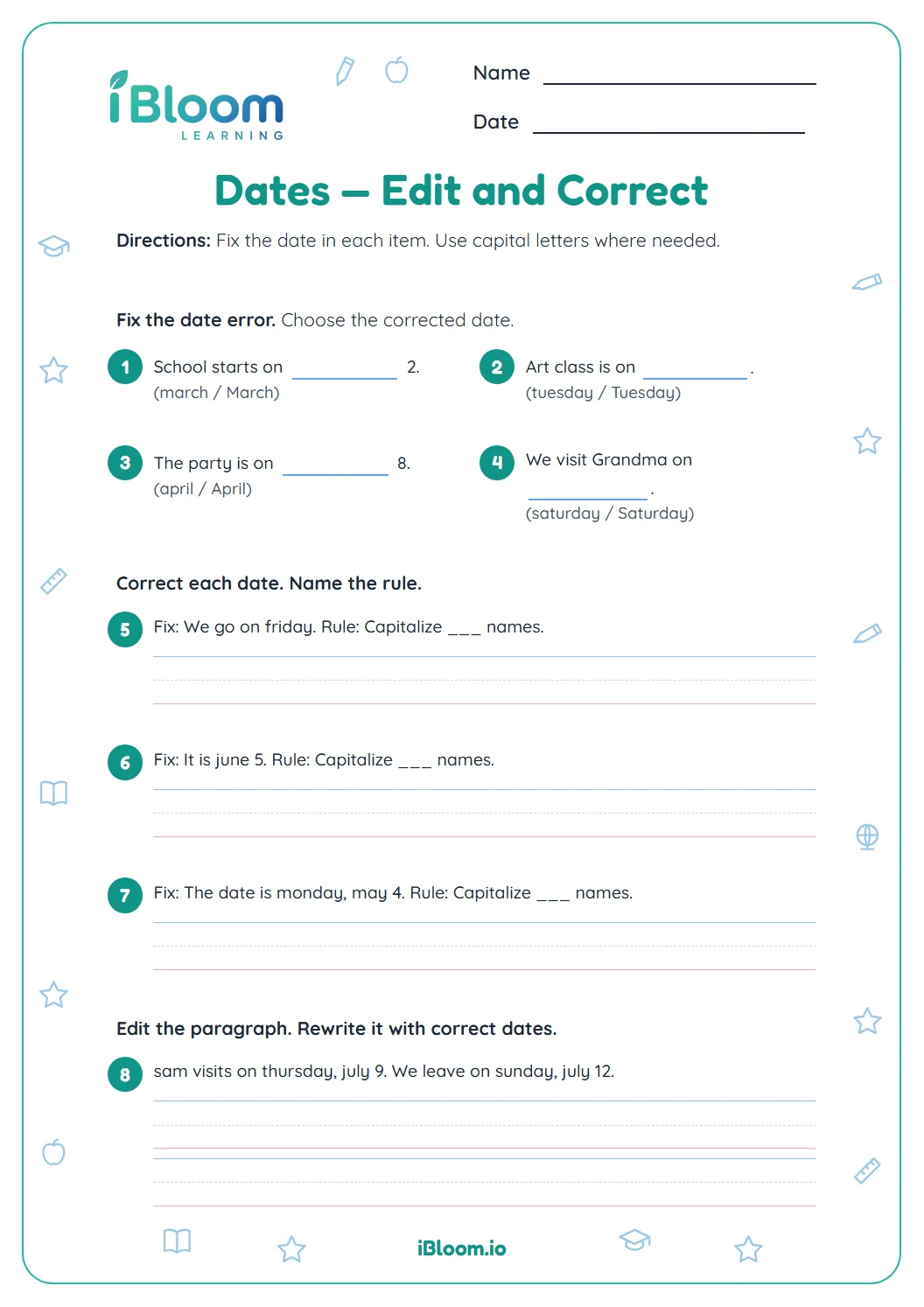
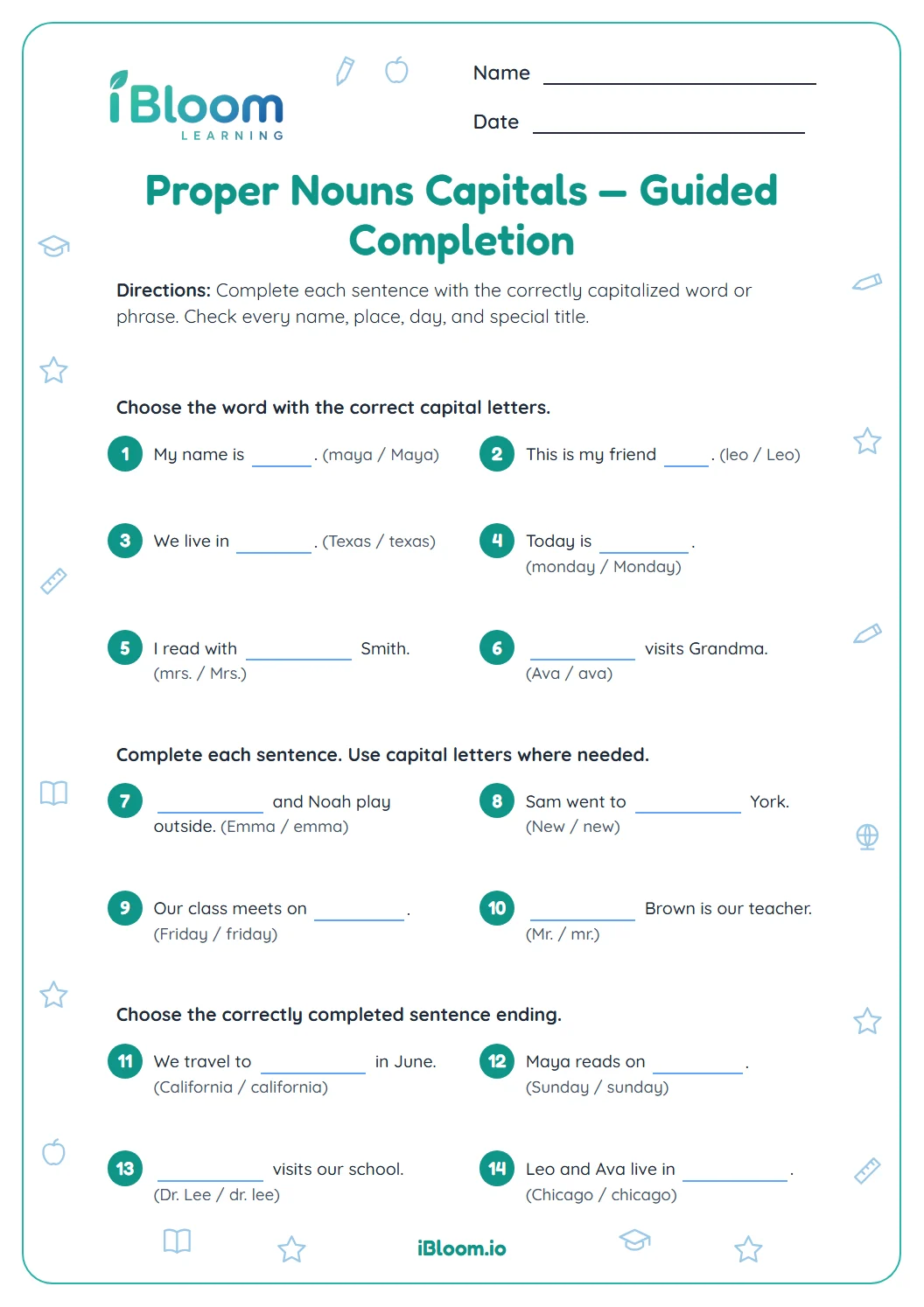
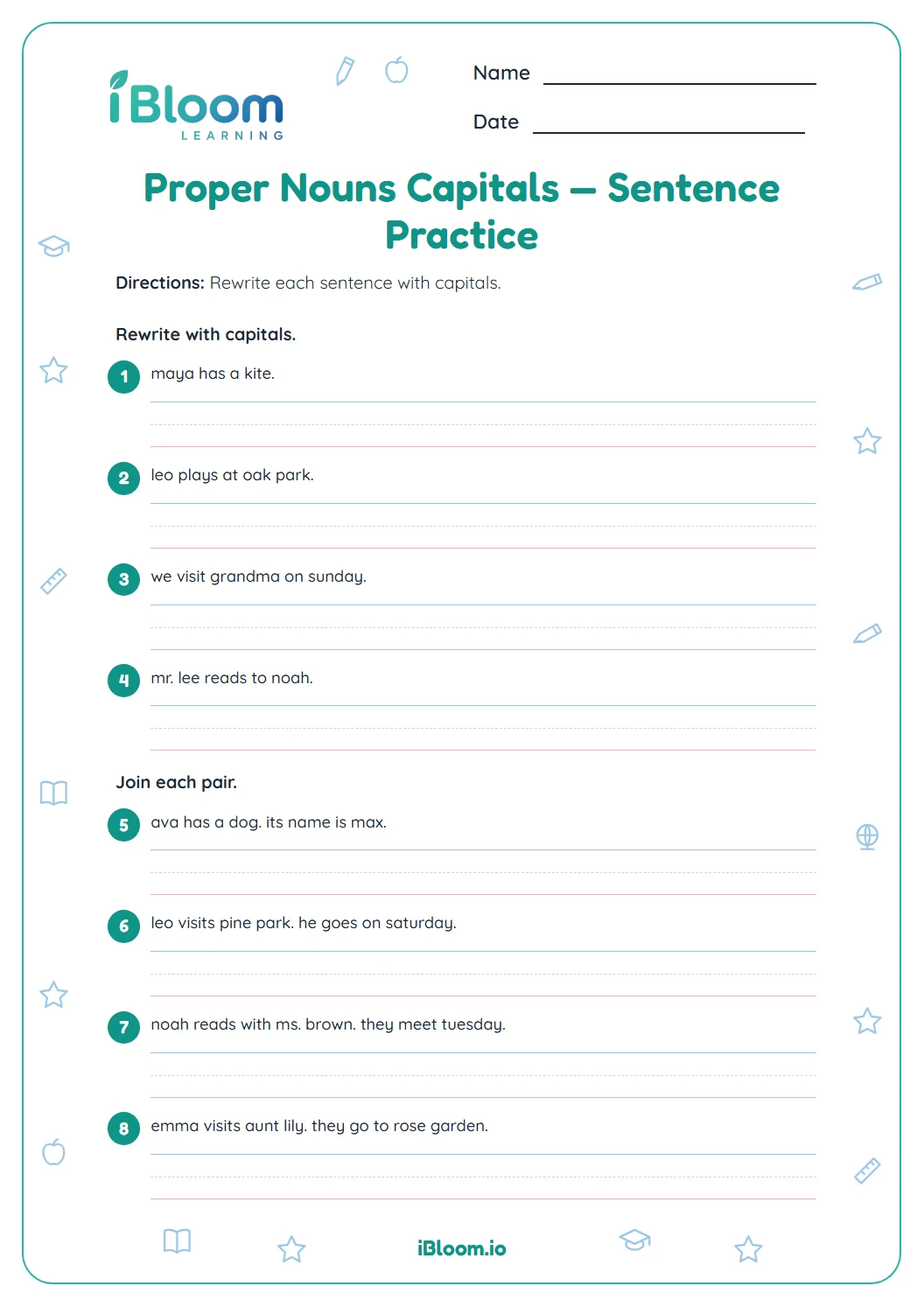
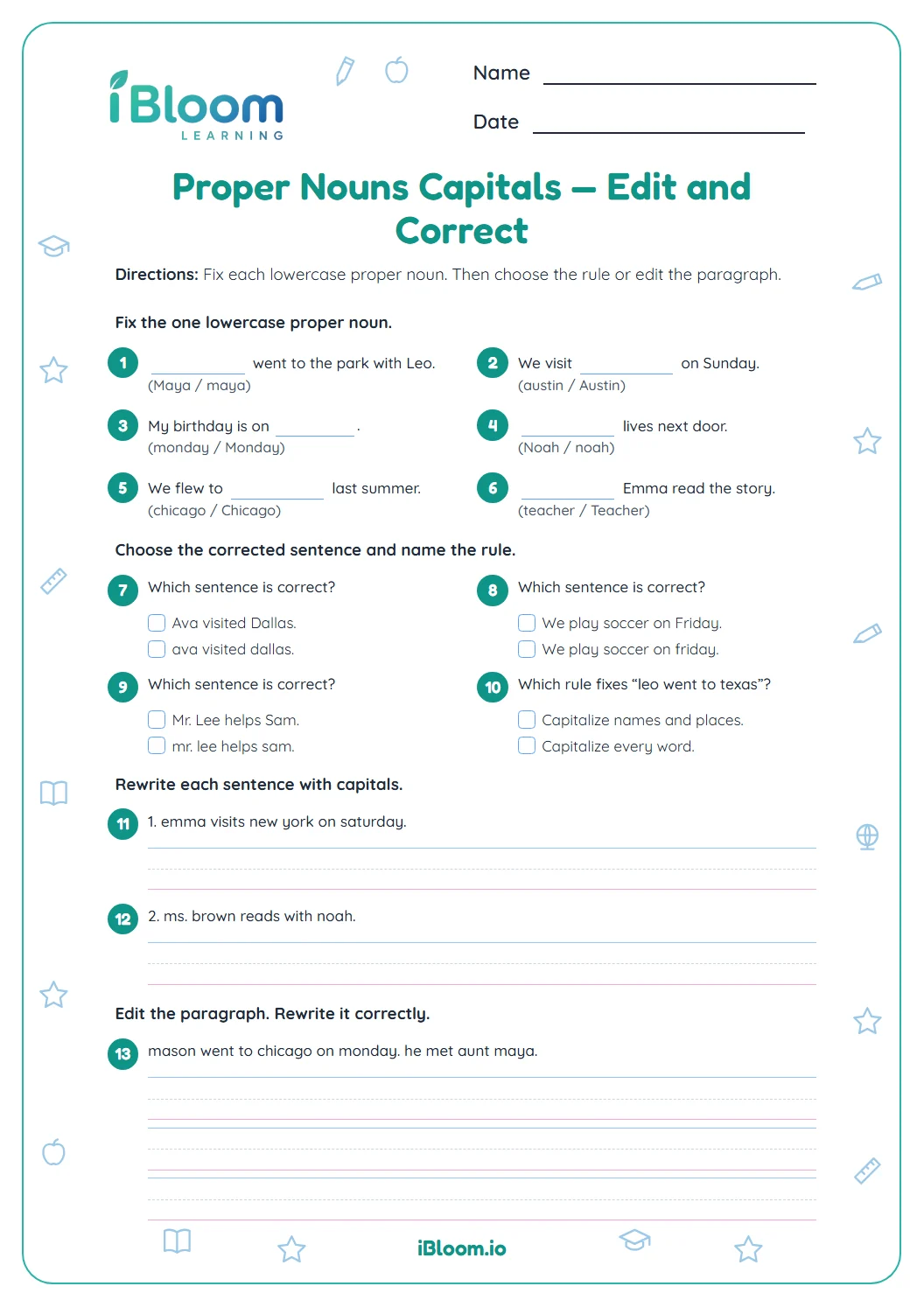
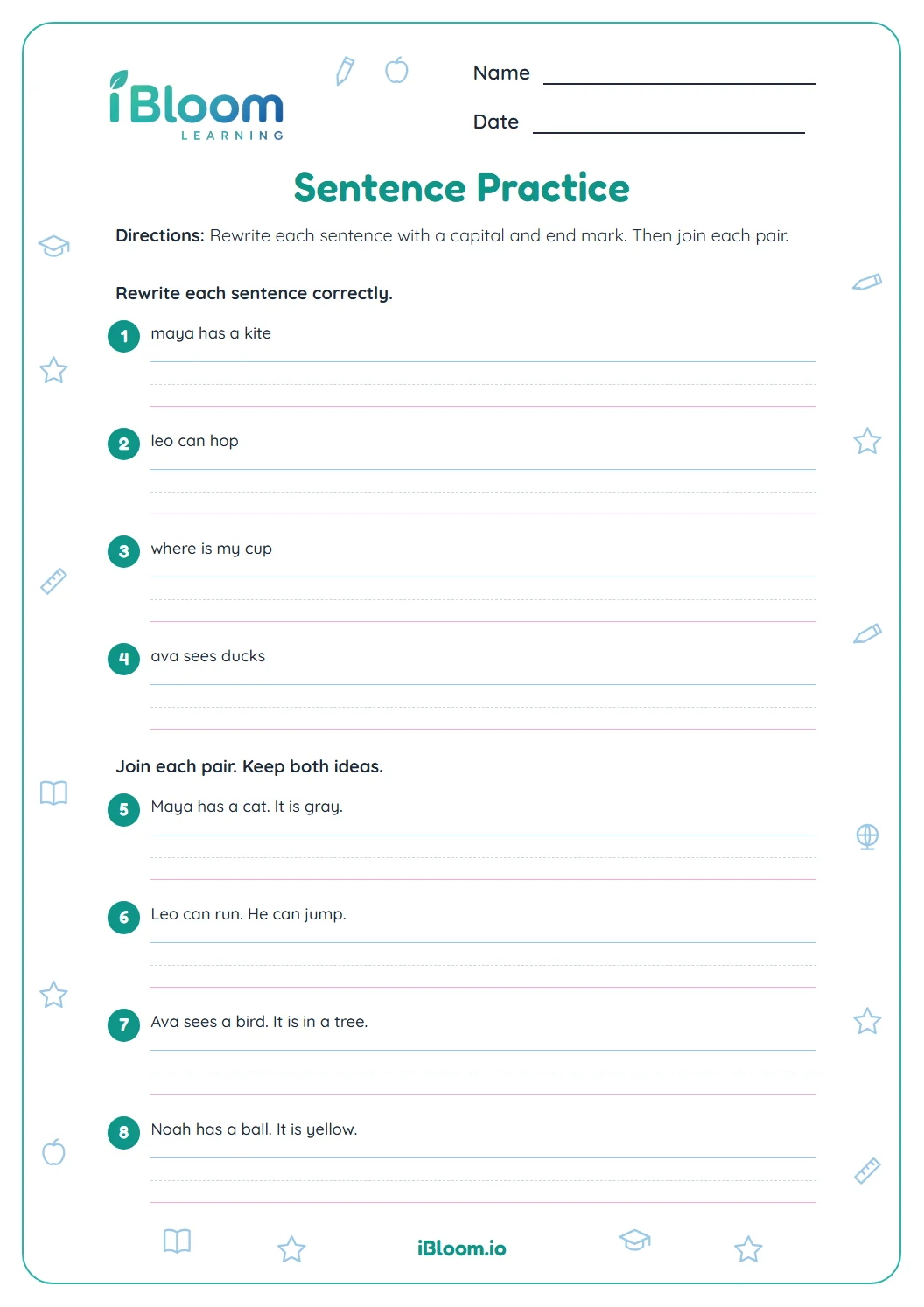
This free printable worksheet is for grade 1 learners practicing capitalizing dates. It includes 16 questions for multiple-choice date sentences, followed by a separate answer key. Each section gives learners a clear way to apply the skill. It aligns with L.1.2a.
Aligned to L.1.2a
What does capitalizing dates practice?
Learners rewrite dates with capitals in the weekday and month. For example, “monday, june 8” becomes “Monday, June 8.”
How can a learner solve an item?
Read each weekday and month, then write its first letter as a capital. The day number stays the same.
- 1The date sentence names Monday, June 8.
- 2Capitalize the weekday and the month.
- 3Keep the rest of the sentence as written.
How is the printable organized?
The worksheet has 14 short responses across two pages, followed by a separate answer key.
How to use the worksheet
- 1Read both date sentences.
- 2Find the weekday and month name.
- 3Check whether each begins with a capital letter.
- 4Choose the sentence with both date words capitalized.
- 5Reread the sentence before moving on.
Common mistakes and quick fixes
The mistake
Capitalizing only the first word of the sentence.
The fix
Check the weekday and month names too.
The mistake
Leaving the first word lowercase.
The fix
Look at the beginning of the complete sentence.
The mistake
Choosing a sentence with one date word still lowercase.
The fix
Check both the day and month before selecting.
Common Core alignment
Capitalize dates and names of people.
On this sheet: Each question asks learners to select a sentence with a properly capitalized day and month.
Show the official wordingHide the official wording
Capitalize dates and names of people.
What to practice next
Make more practice
Further reading
Questions parents and teachers ask
What does this capitalization in dates worksheet include?
This printable has 14 short responses about capitalizing weekdays and months in dates. Learners rewrite each date with the correct capital letters, then use the separate answer key to check their work. The practice keeps the date itself unchanged.
Can an adult read the directions aloud?
Yes. Read the directions and each prompt aloud if that helps the learner focus on the skill. Keep the printed words or pictures in view, and invite the learner to explain the clue or letter pattern that supports each answer.
When should we use the answer key?
Let the learner complete the questions first, then compare each response with the separate key. For a missed item, return to its sentence or model and identify the part that supports the answer. This gives you a specific point to review together.
Can we split the worksheet into shorter sessions?
Yes. The 14 short questions fit across two worksheet pages, so you can pause after a group and continue later. Check answers after the learner completes a group, then revisit any weekday or month that needs a capital letter.
How long should this practice take?
Plan for about 15 to 20 minutes, with extra time if the learner talks through choices, traces carefully, or writes slowly. The estimate is a flexible guide rather than a timer. Pause at a section break when the learner needs a rest, then return to the next set of questions.