


About this worksheet
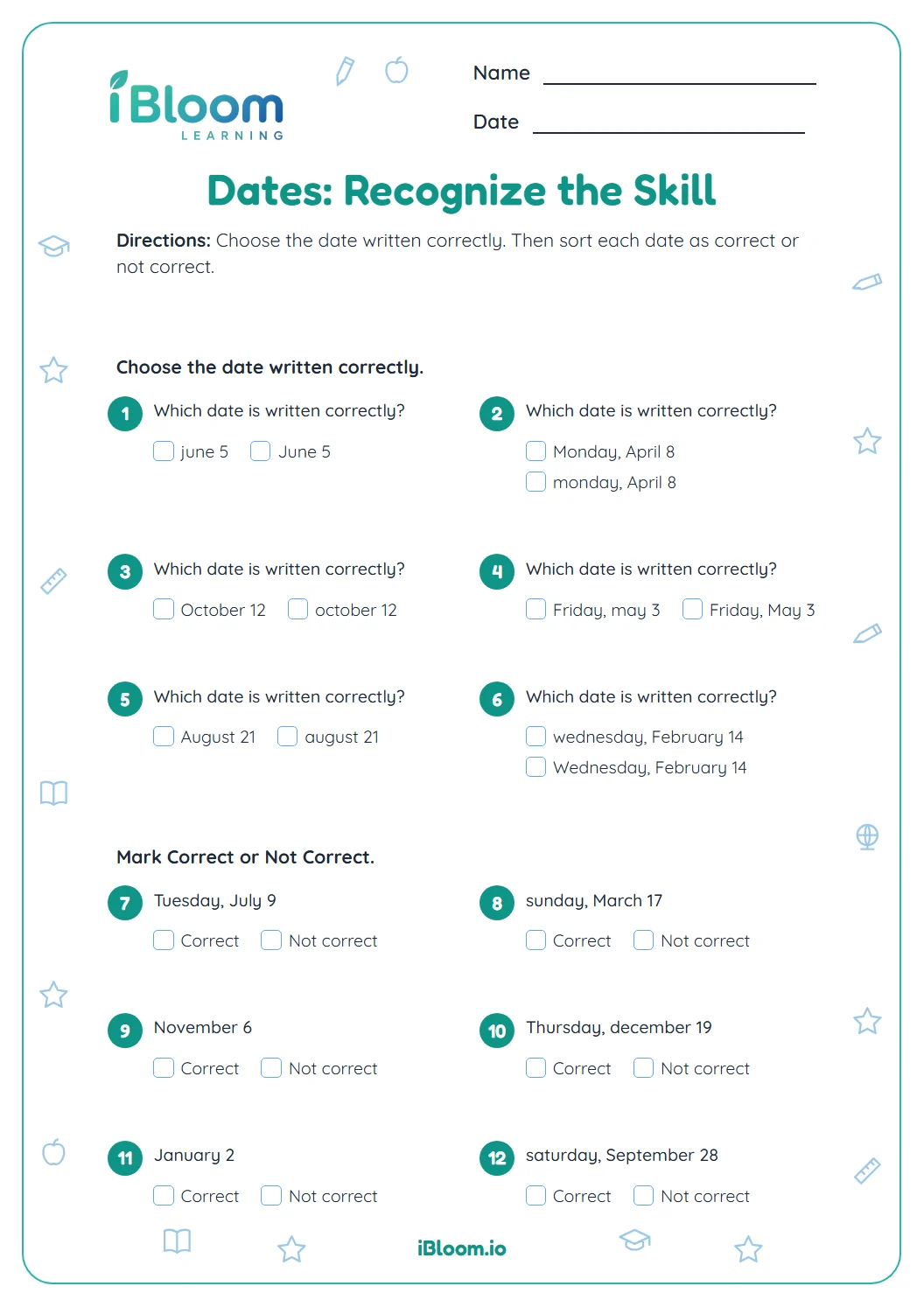
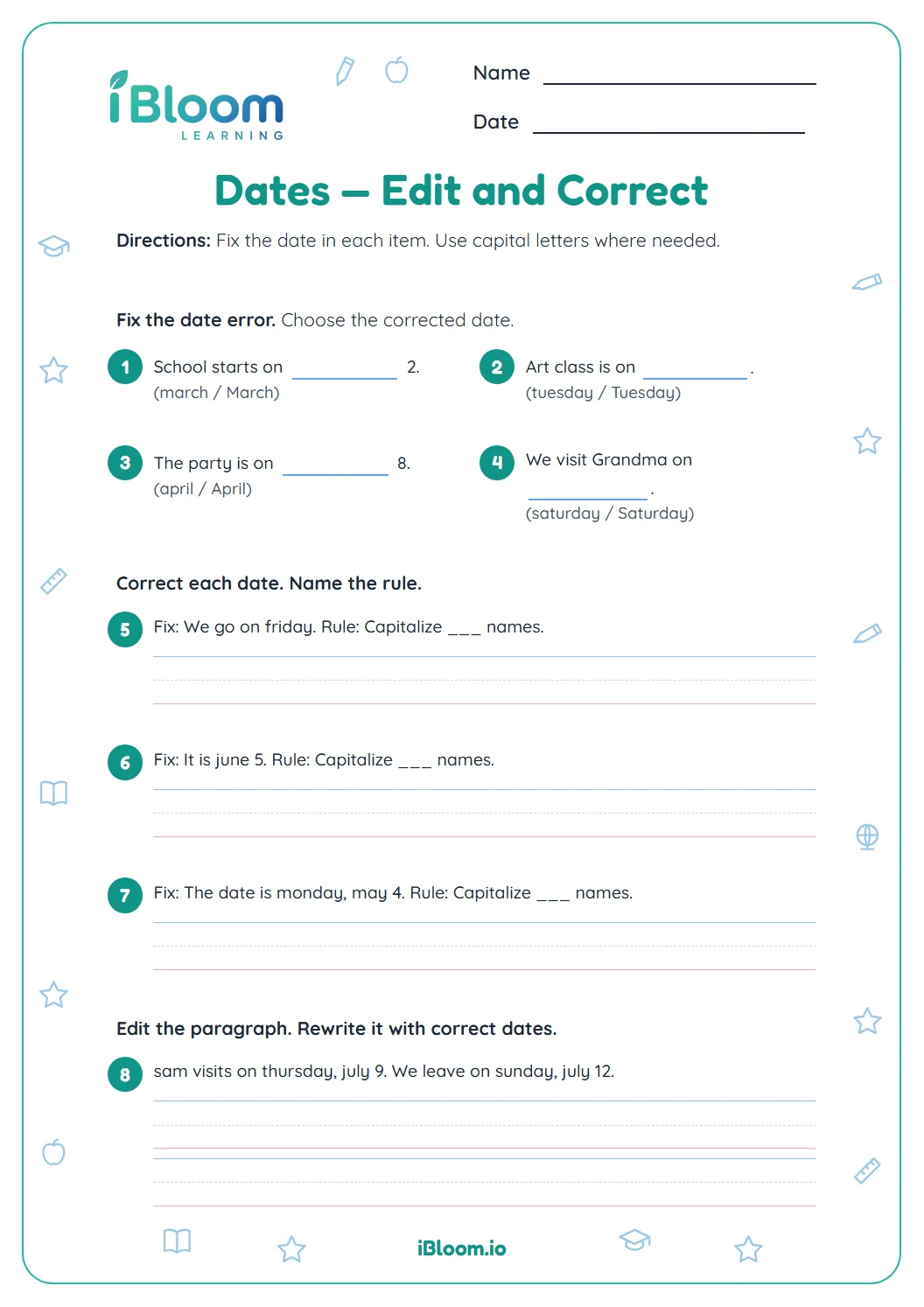
This Grade 1 printable focuses on capitalization in dates. Children choose correctly written weekday-and-month combinations, complete five missing date words or capitals, answer four more capitalization checks, and write a date and a sentence of their own. The practice builds a simple editing habit: capitalize weekday and month names wherever they appear. A separate answer key gives corrections and sample responses.
Aligned to 1.L.2.a
Which parts of a date need capital letters?
Weekday names and month names begin with capital letters. The day number stays a numeral. In question 1, Monday is capitalized because it names a weekday, and June is capitalized because it names a month.
- 1monday, June 8
- 2Capitalize the weekday: Monday
- 3June already begins with a capital.
- 4Correct: Monday, June 8
How can a child edit a date in a sentence?
Find the weekday and month first. Check the first letter of each, then reread the whole sentence to make sure it begins with a capital too. Question 5 combines both checks.
What practice is on the page?
There are 14 prompts in four parts: seven capitalization choices, five missing weekday or month letters, and two short writing responses. The answer key includes examples for the open responses.
How to use this worksheet
- 1Read the date and point to its weekday and month.
- 2Check the first letter of both names.
- 3Rewrite a sentence with the capitals in place.
- 4Reread for the sentence’s first word as well.
- 5Write a new date and check it with the key.
Common mistakes and quick fixes
The mistake
Capitalizing only the weekday.
The fix
Check both the weekday and the month.
The mistake
Leaving a month lowercase in the middle of a sentence.
The fix
Month names stay capitalized wherever they appear.
The mistake
Changing the day number while editing.
The fix
Keep the date details the same and fix only the letters that need capitals.
Common Core alignment
This worksheet practices the standard through the reading and response tasks on the page.
Capitalize weekday and month names when writing dates.
On this sheet: Children capitalize weekday and month names when they write and edit dates.
Show the official wordingHide the official wording
Capitalize dates and names of people.
What to practice next
Make more practice
Further reading
Questions parents and teachers ask
Do weekday and month names use capitals in the middle of a sentence?
Yes. Weekday and month names begin with capitals even in the middle of a sentence. Children practice this in the editing questions, where they keep the sentence meaning and date details while correcting the letters. The key shows how each revised sentence should look.
Does the date number need a capital letter?
No. The date number is written as a numeral, not with a capital letter. This worksheet asks children to check the weekday and month names while keeping the number unchanged. For example, “Thursday, October 10” uses capitals for both names.
How many editing sentences are included?
Five prompts ask children to complete a weekday or month name in a date or sentence. The other questions include seven capitalization choices and two short writing tasks, moving from recognition to applying the rule. The key shows the expected spellings and gives examples for the open responses.
Can children write their own date?
Yes. One response asks children to write a date containing a weekday and month; another asks for a sentence about something on a date. The answer key gives examples, and other accurate responses work when both names begin with capitals.
Is an answer key included?
Yes. A separate key gives the correct choices, revised sentences and sample responses for the open writing prompts. Personal examples can vary as long as capitalization is correct. Children can check each weekday and month name before reviewing the rest of the sentence.