




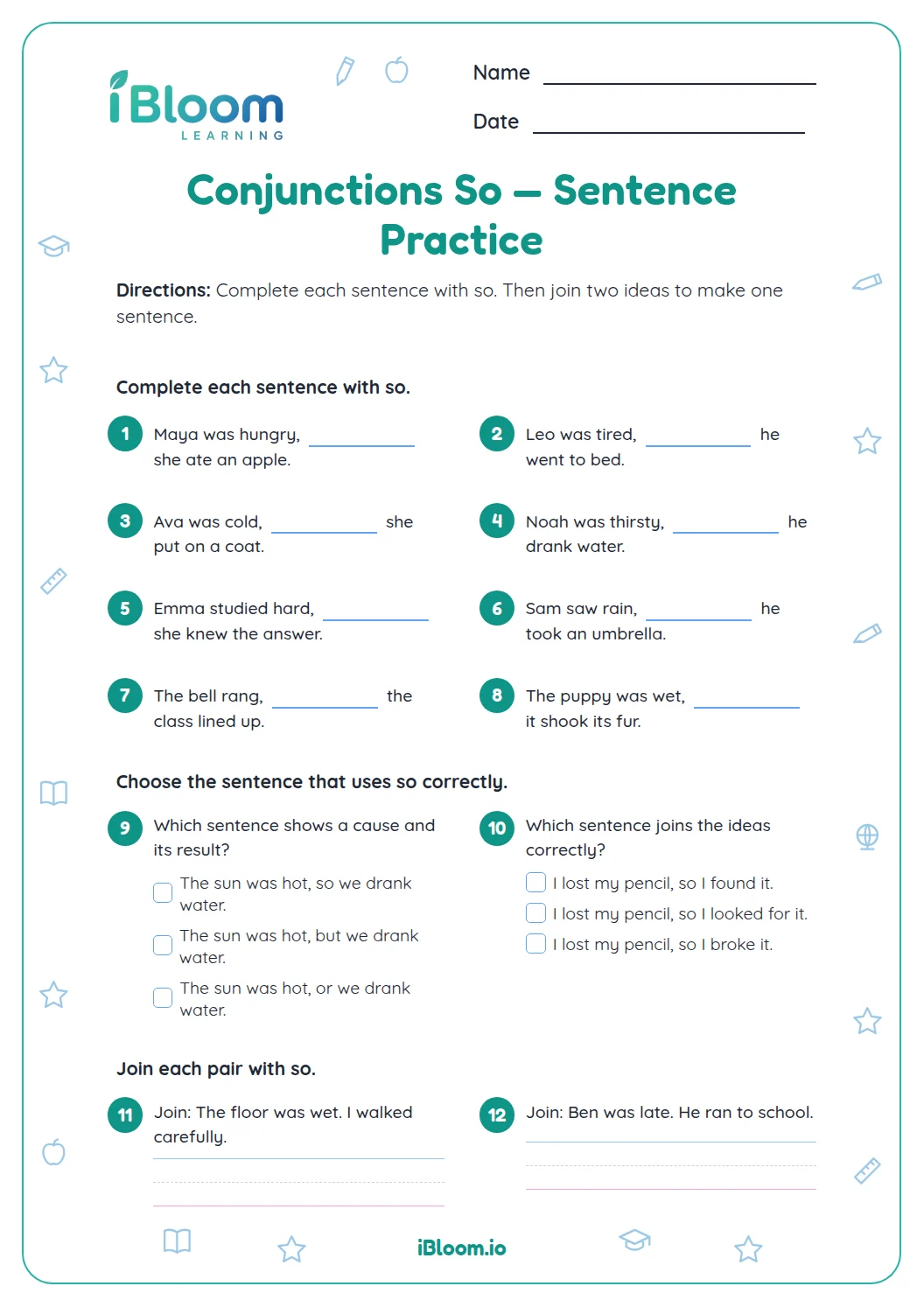

About this worksheet
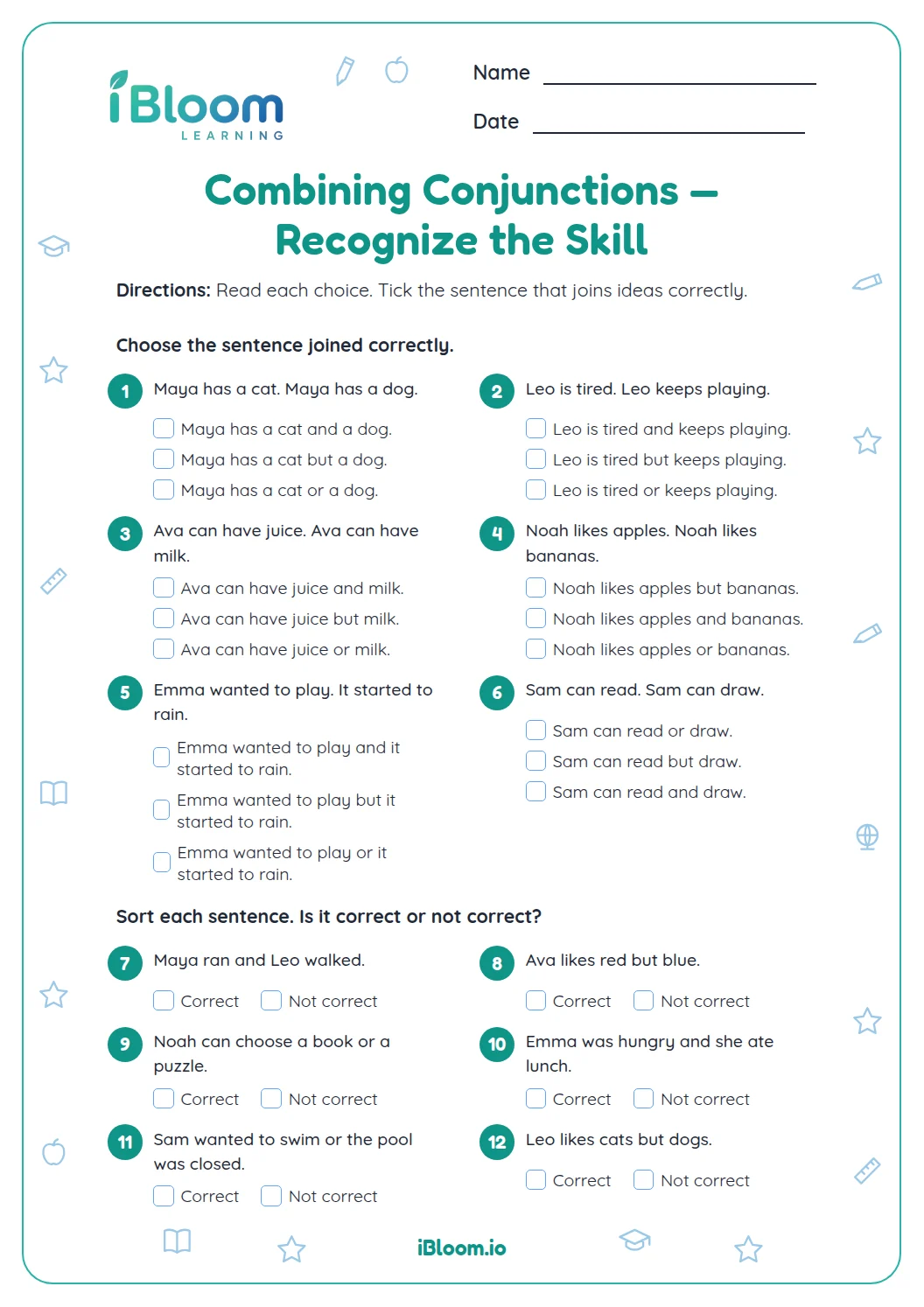
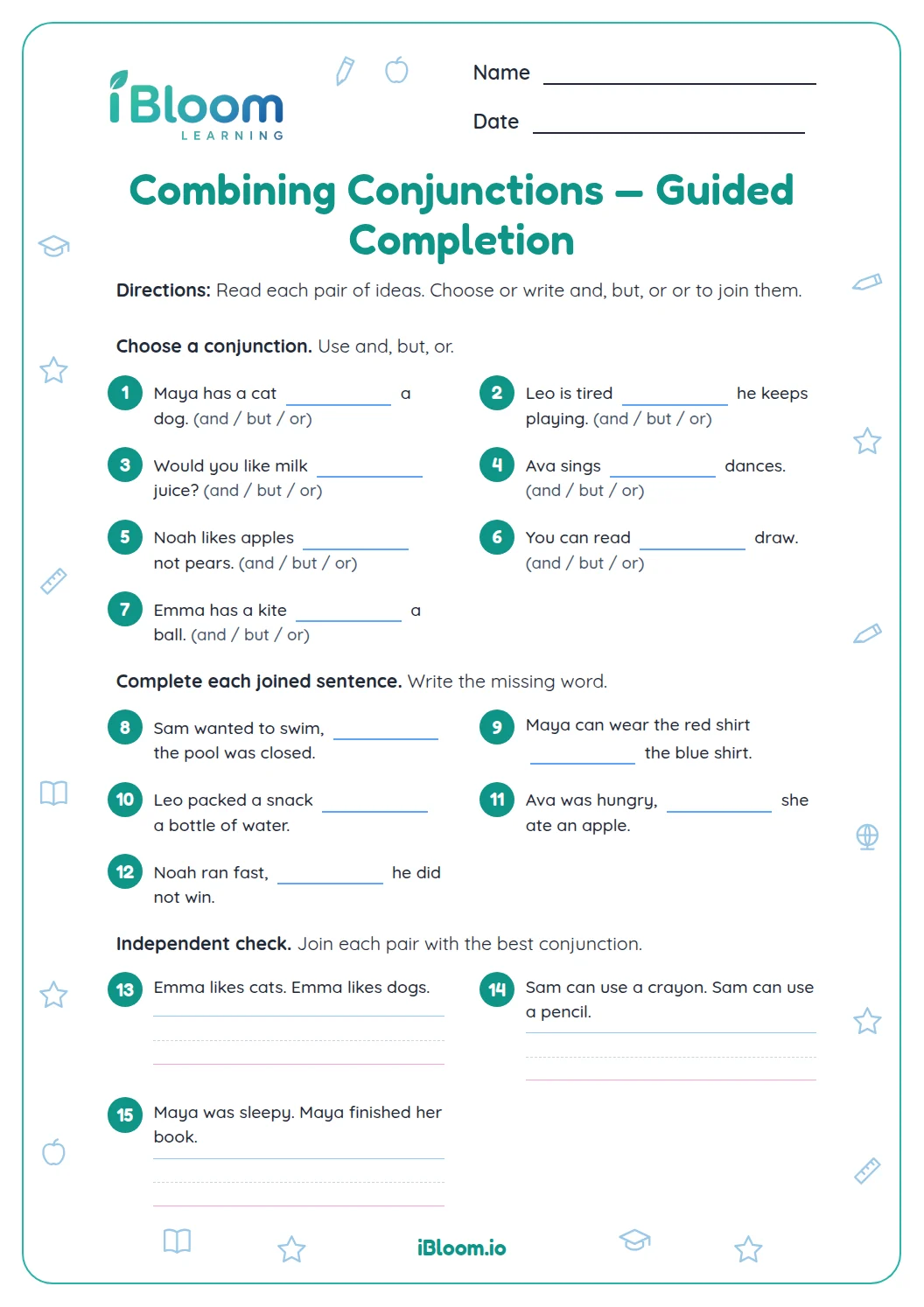
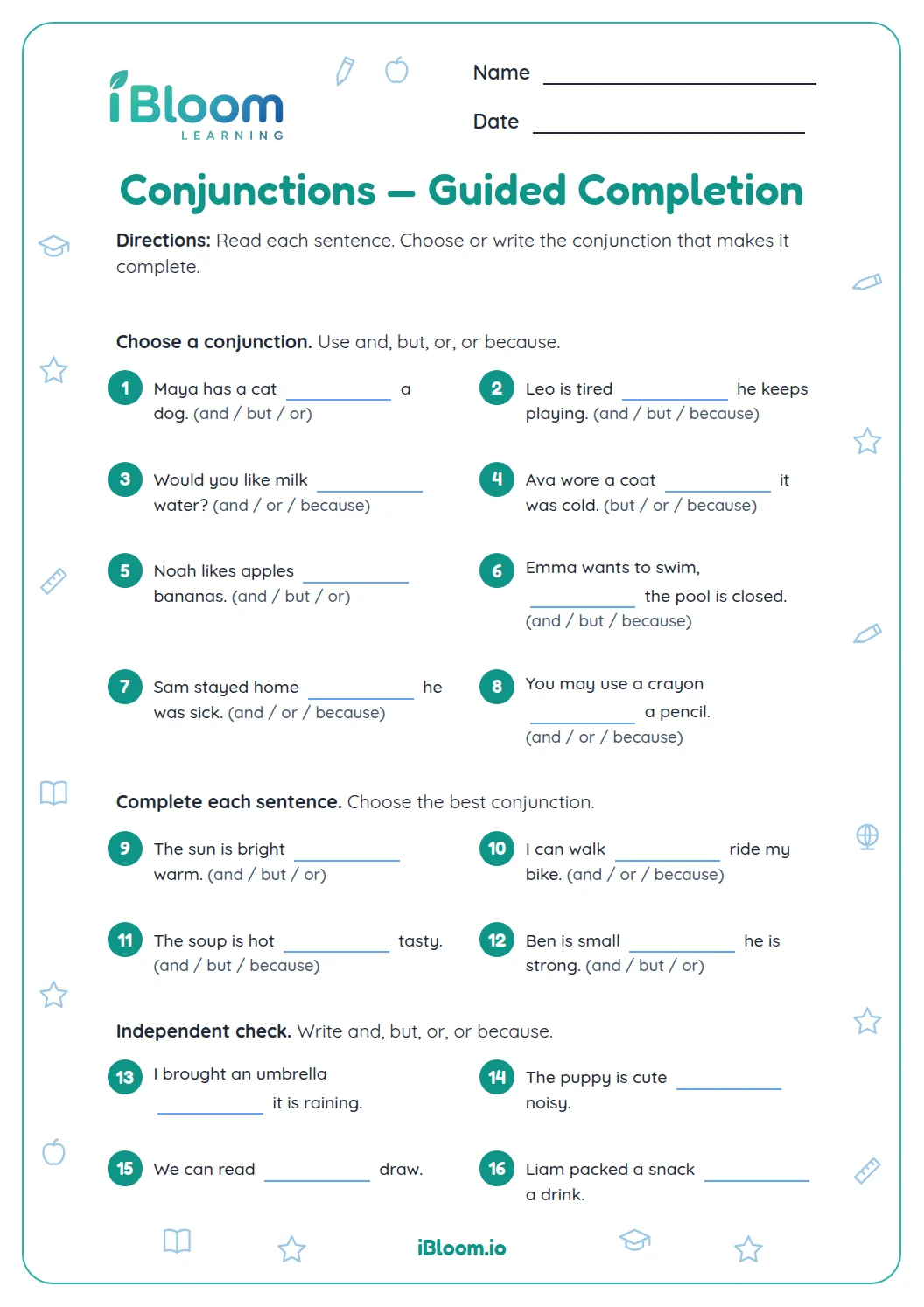
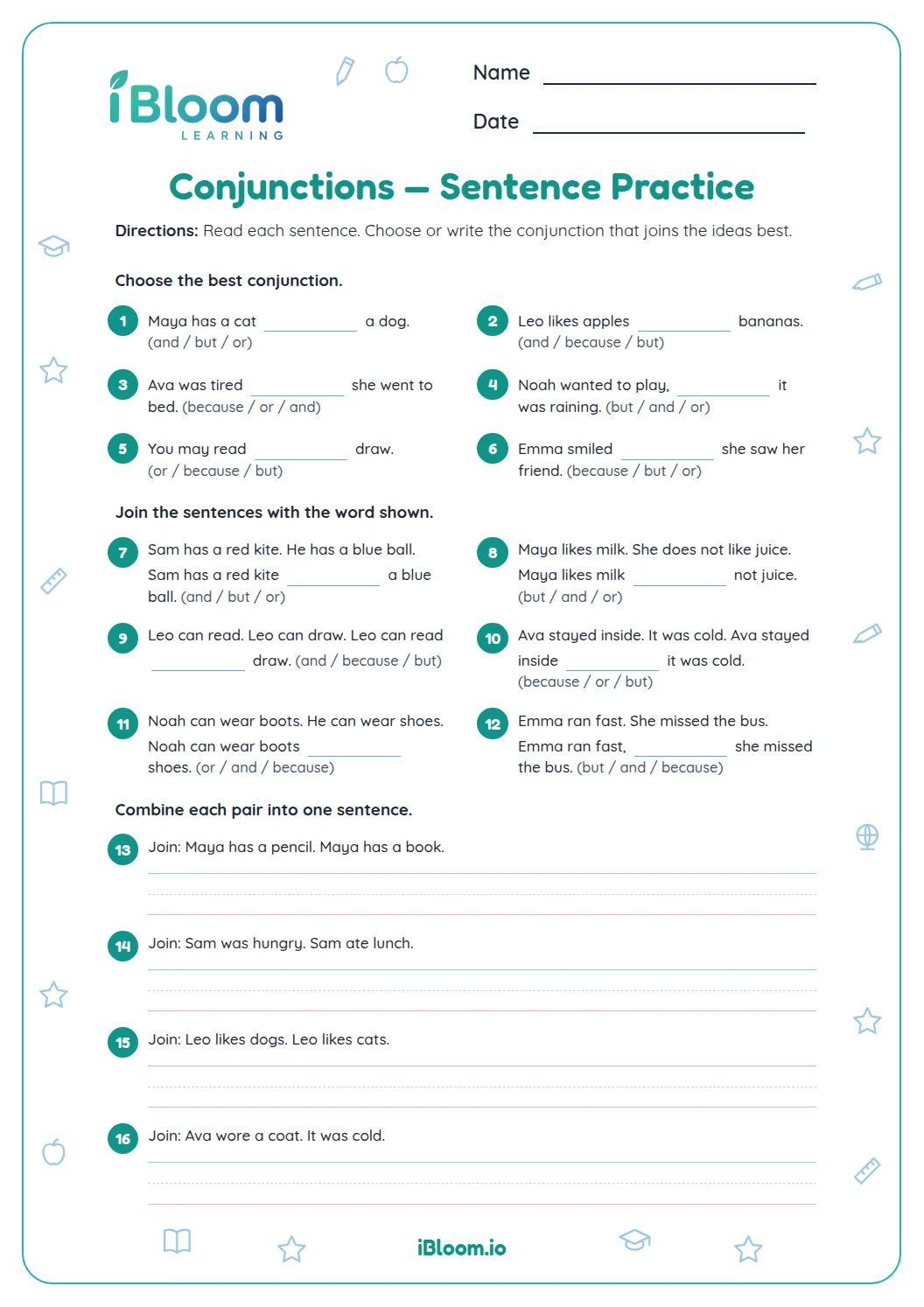
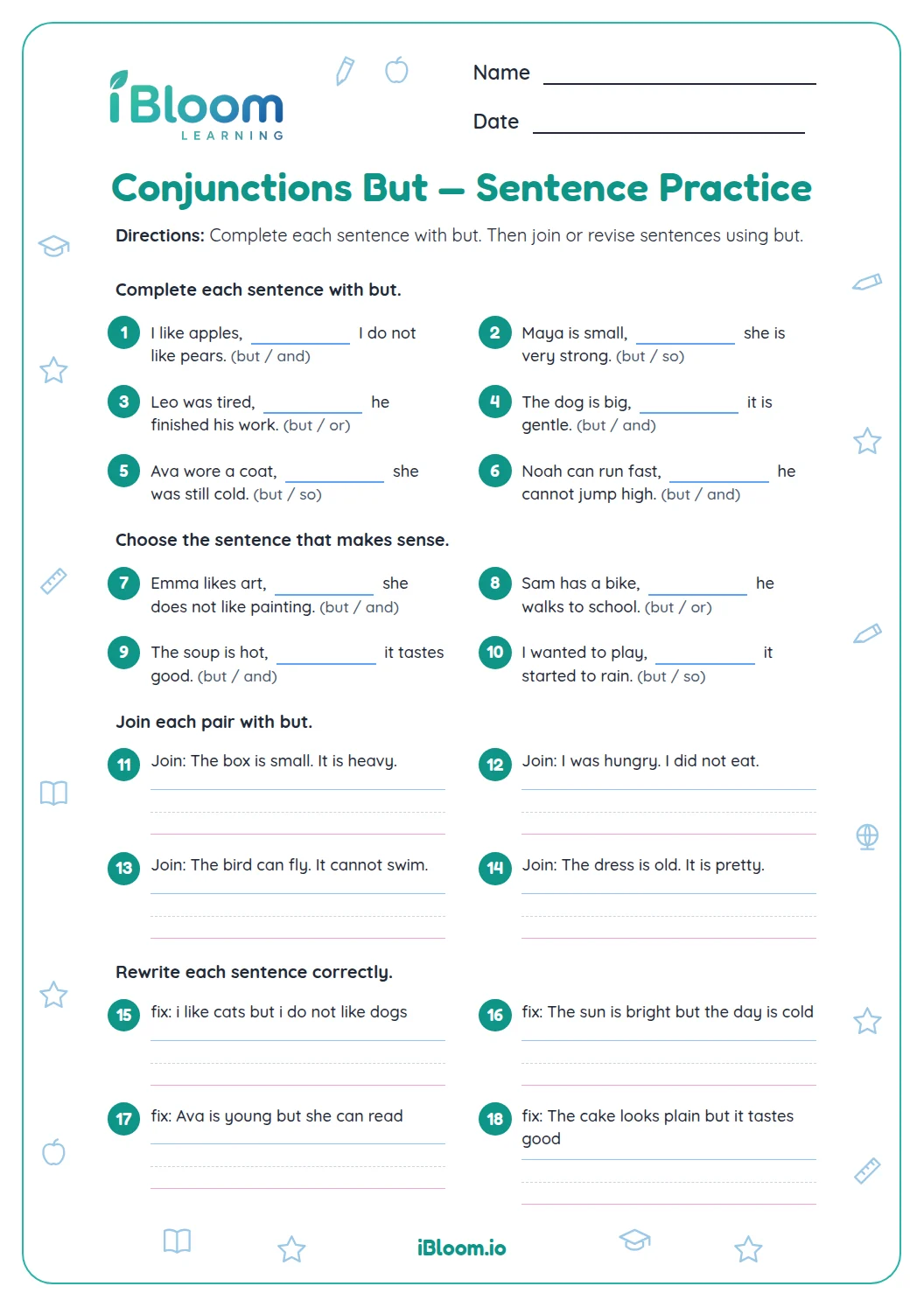
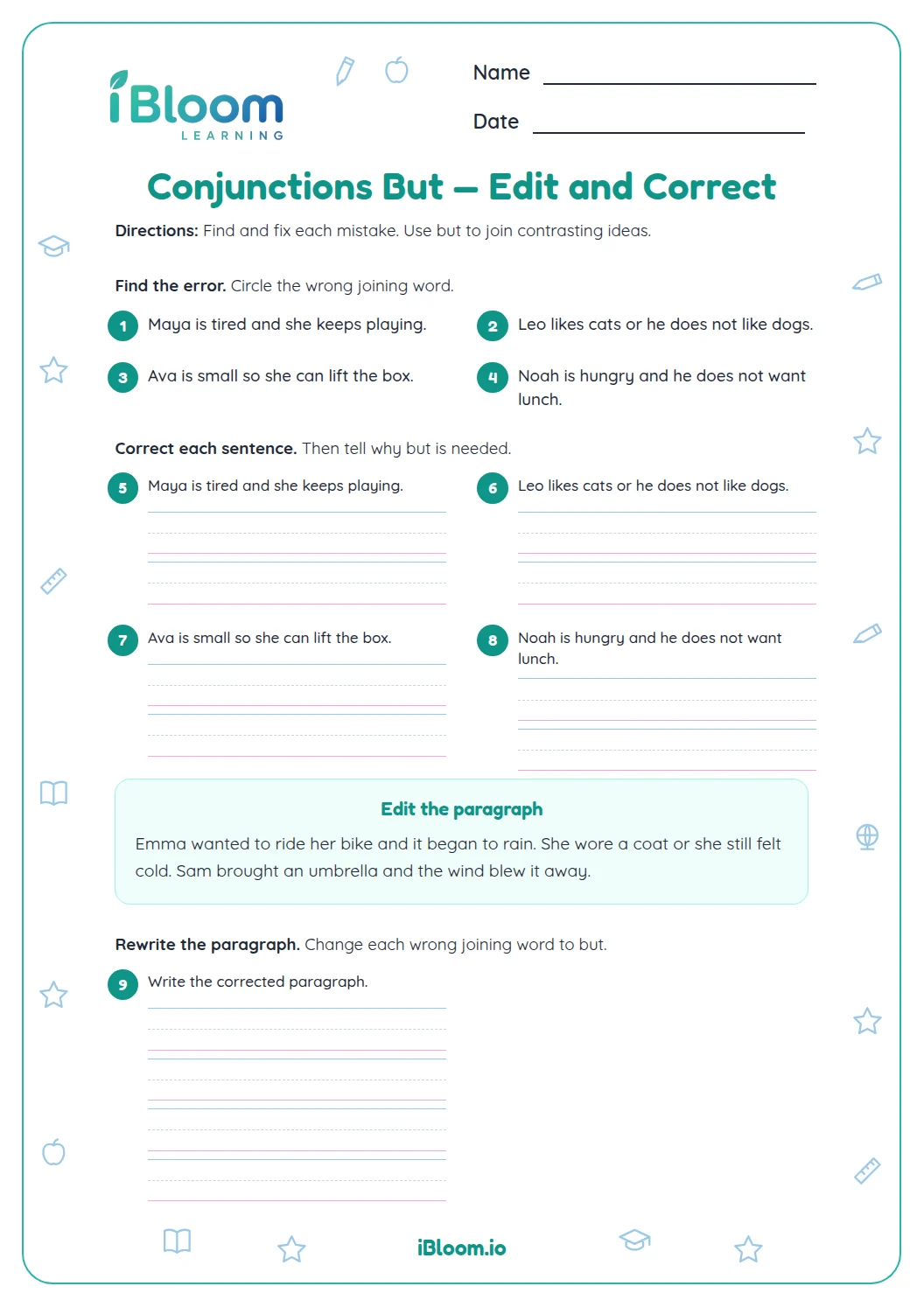
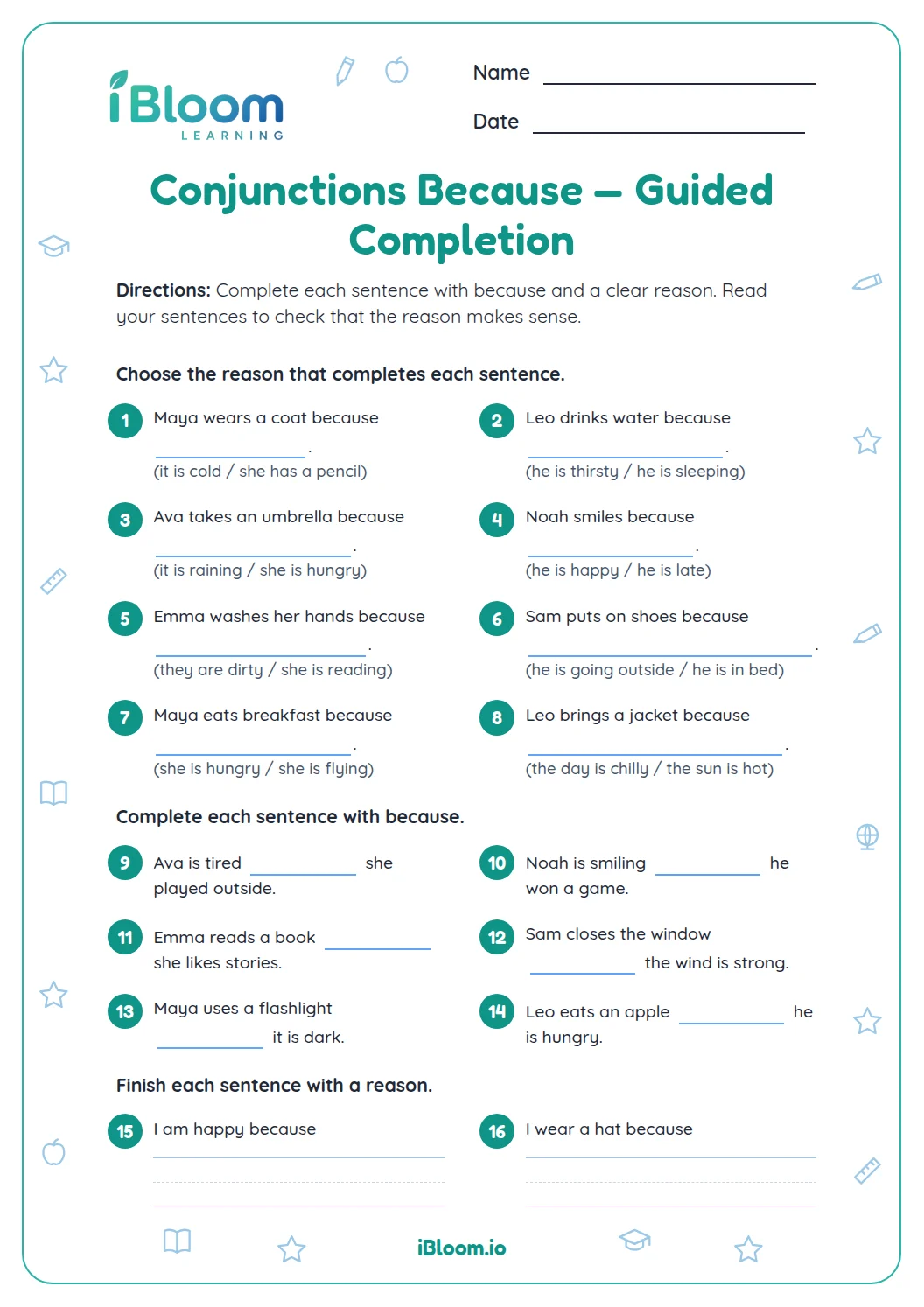
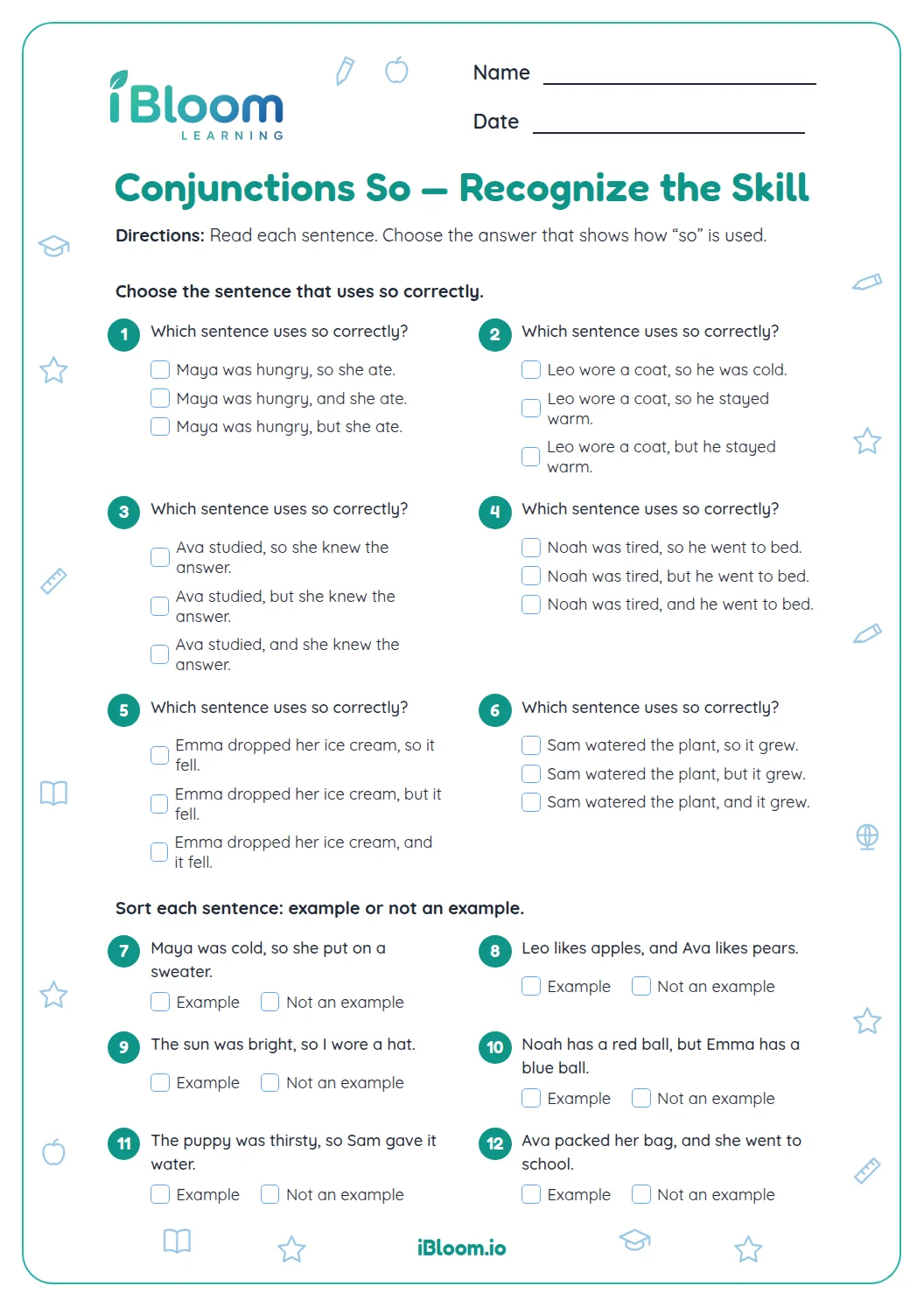
This free Grade 1 worksheet helps children use and, but, or, so, and because to join ideas. Four choices in Part A connect a sentence to a stated meaning, such as a choice or a reason. In Part B, children rewrite five pairs as single sentences using the given conjunction. Part C invites them to finish two sentence starters with their own ideas. These eleven questions practice frequently occurring conjunctions in Common Core L.1.1g. The answer key includes sample sentences for the writing tasks, so adults can check the connection while accepting other sensible wording.
Aligned to L.1.1g
How do I explain the five joining words?
And adds an idea; but signals a difference; or offers a choice; so introduces a result; because introduces a reason. Part A names the intended connection so children can choose from the two words without guessing what the writer meant.
How can children turn two sentences into one?
Read both sentences, say the assigned joining word, and speak the new sentence before writing. With a shared subject, children can sometimes remove repeated words, as in “Mia can hop and skip.” Keep both original ideas.
- 1Mia can hop. Mia can skip. Use and.
- 2Both sentences tell what Mia can do.
- 3Mia can hop and skip.
What makes a good answer in Part C?
A good ending completes the thought and matches the joining word. After “I wore boots because,” children need a reason, such as “the path was muddy.” After “We can play tag or,” they need another possible activity.
Read the finished sentence aloud. Check the connection first, then the capital letter and ending mark. The sample key shows one possible completion for each starter.
How to use this worksheet
- 1Say a sentence with and about two things the child can do.
- 2Read the meaning cue in each Part A question before choosing a word.
- 3For Part B, say both ideas as one sentence using the given conjunction.
- 4Write the combined sentence with a capital and an ending mark.
- 5Complete Part C with personal ideas and check that each ending fits its conjunction.
Mistakes to check together
The mistake
Using and when the direction asks for a choice.
The fix
Try or between the two options: “We can walk or ride.”
The mistake
Putting a period before because and leaving the reason alone.
The fix
Read the whole thought together, then write one sentence with because inside it.
The mistake
Dropping an idea while combining a pair.
The fix
Point to each original sentence and find its idea in the new sentence.
Common Core alignment
Use and, but, or, so, and because to combine and complete sentences.
On this sheet: Children choose conjunctions, combine pairs, and write original sentence endings.
Show the official wordingHide the official wording
Use frequently occurring conjunctions (e.g., and, but, or, so, because).
What to practice next
Make more practice
Further reading
Questions parents and teachers ask
Which conjunctions does this worksheet practice?
The worksheet practices and, but, or, so, and because. Part A asks children to match a joining word to a stated purpose. Part B gives the joining word for each pair. Part C asks children to create endings after because and or using their own ideas.
Are the written answers all supposed to match the key?
No, the key gives sample sentences for the seven writing questions. In Part B, a correct answer keeps both original ideas and uses the assigned conjunction. In Part C, a correct answer completes the thought sensibly. Accept different wording when the meaning and sentence structure work.
Can a child remove repeated words when combining sentences?
Yes, repeated words can be removed when both ideas stay clear. For “Mia can hop. Mia can skip,” the child can write “Mia can hop and skip.” Saying the new sentence aloud helps check that the subject still belongs with both actions and nothing important disappeared.
How do I explain because and so?
Because introduces a reason, while so introduces a result. On this sheet, wet paint explains why Sam waits, and a cold feeling leads to putting on a coat. Ask what happened and why, then read the complete sentence to check which connection the word makes.
How much help should I give with writing?
Help the child say the sentence before writing it. You can read the original pair or spell an unfamiliar word while leaving the choice of wording to the child. When reviewing, check that both ideas are joined correctly before helping with capital letters or ending marks.