


About this worksheet
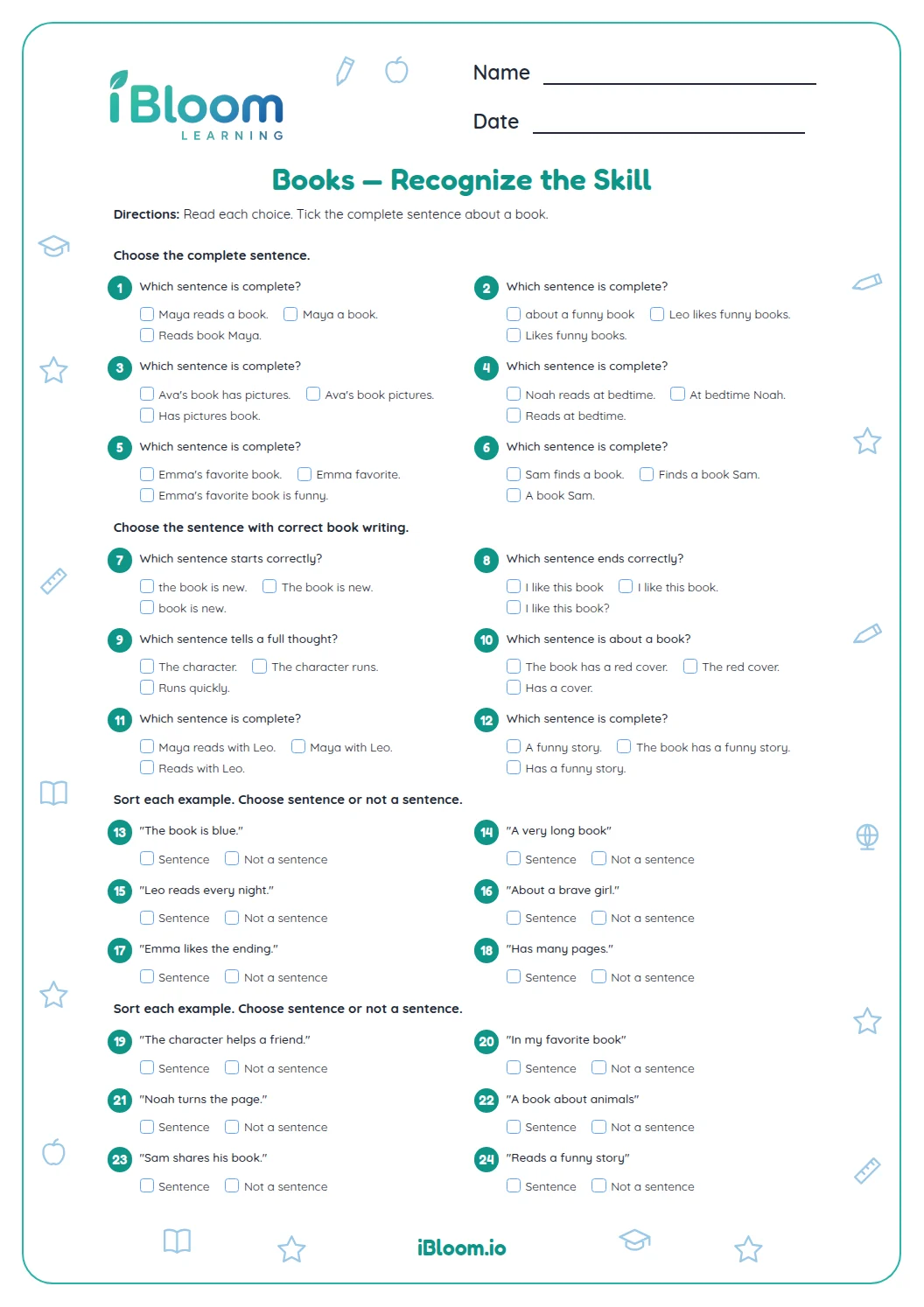
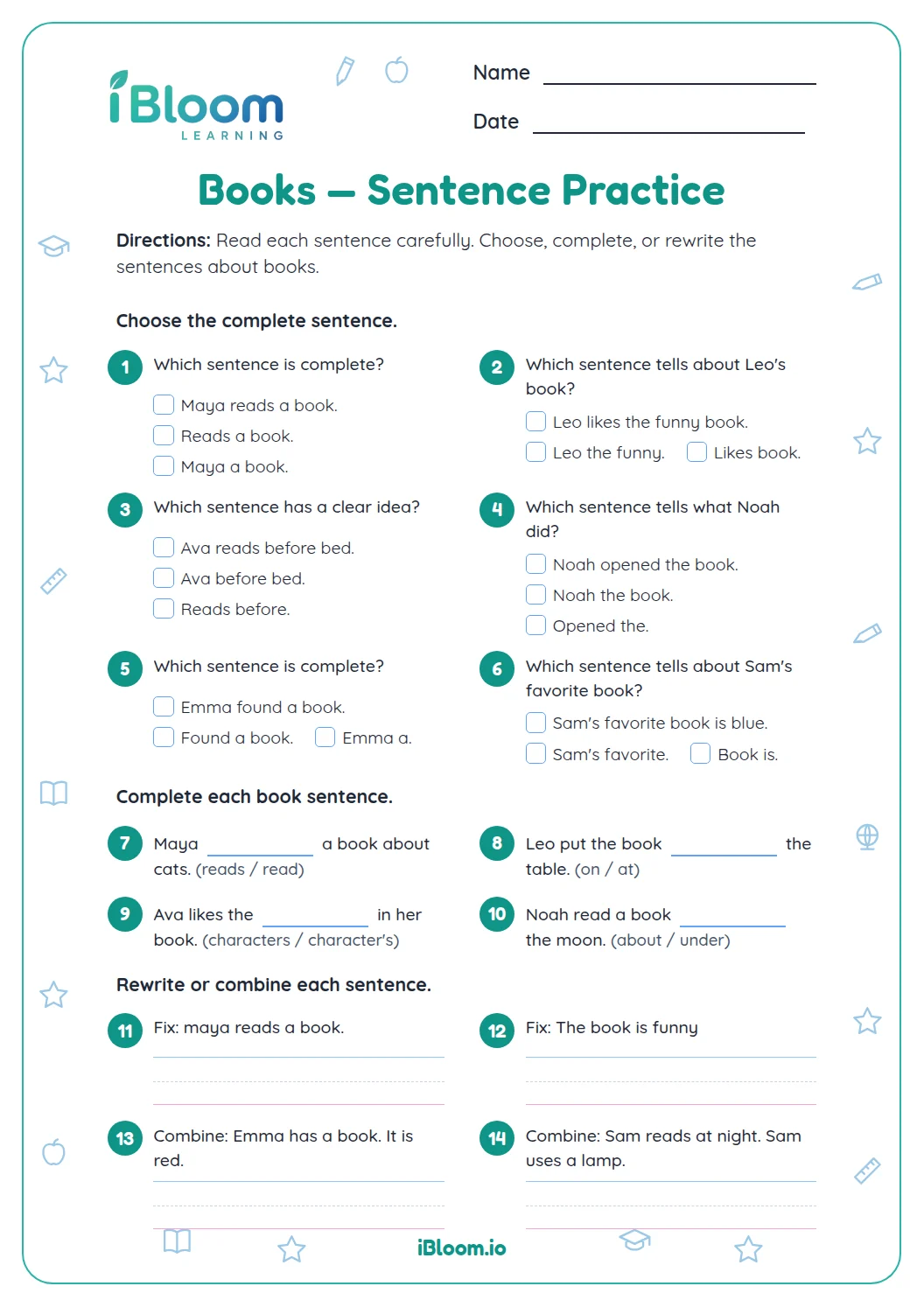
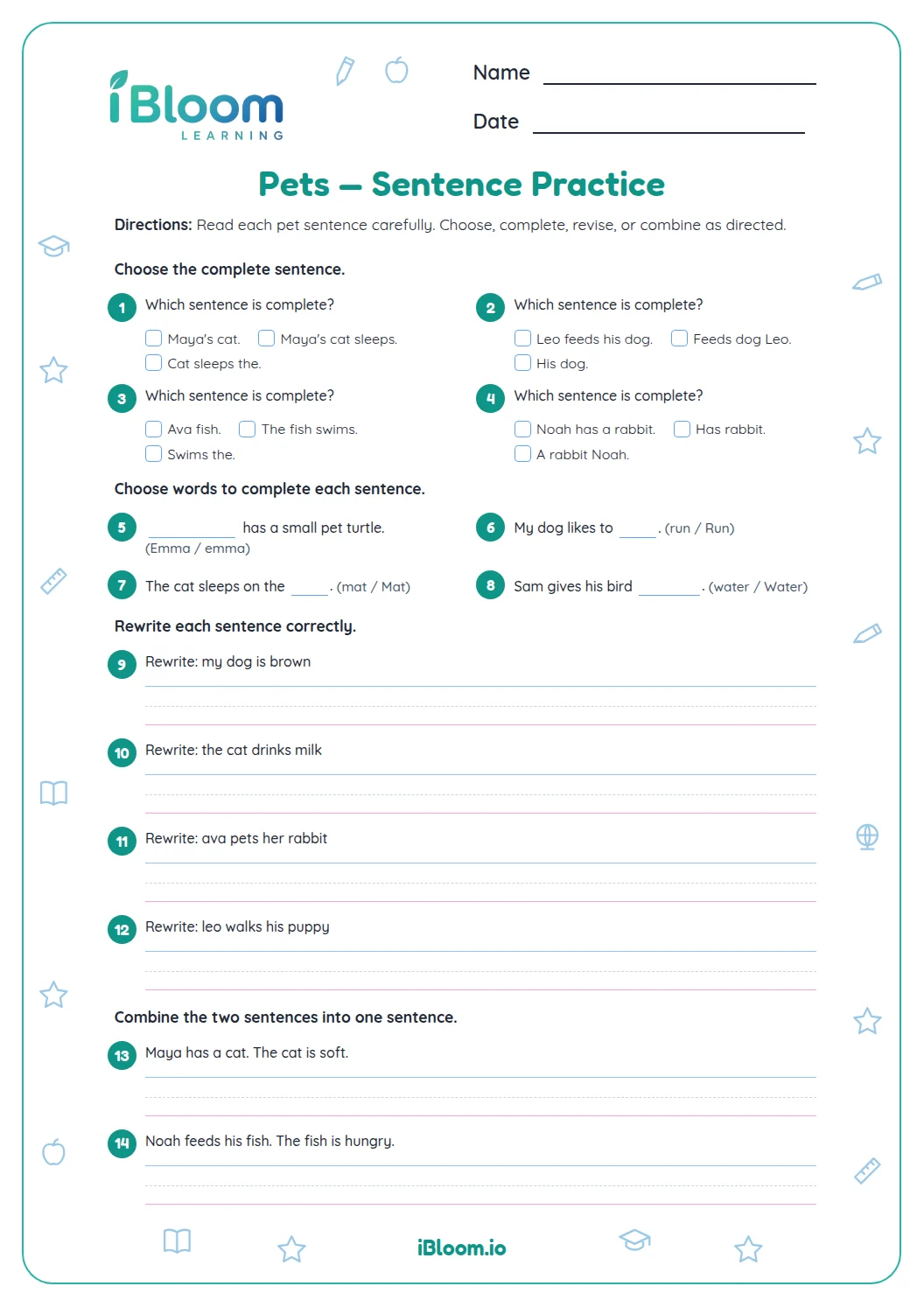
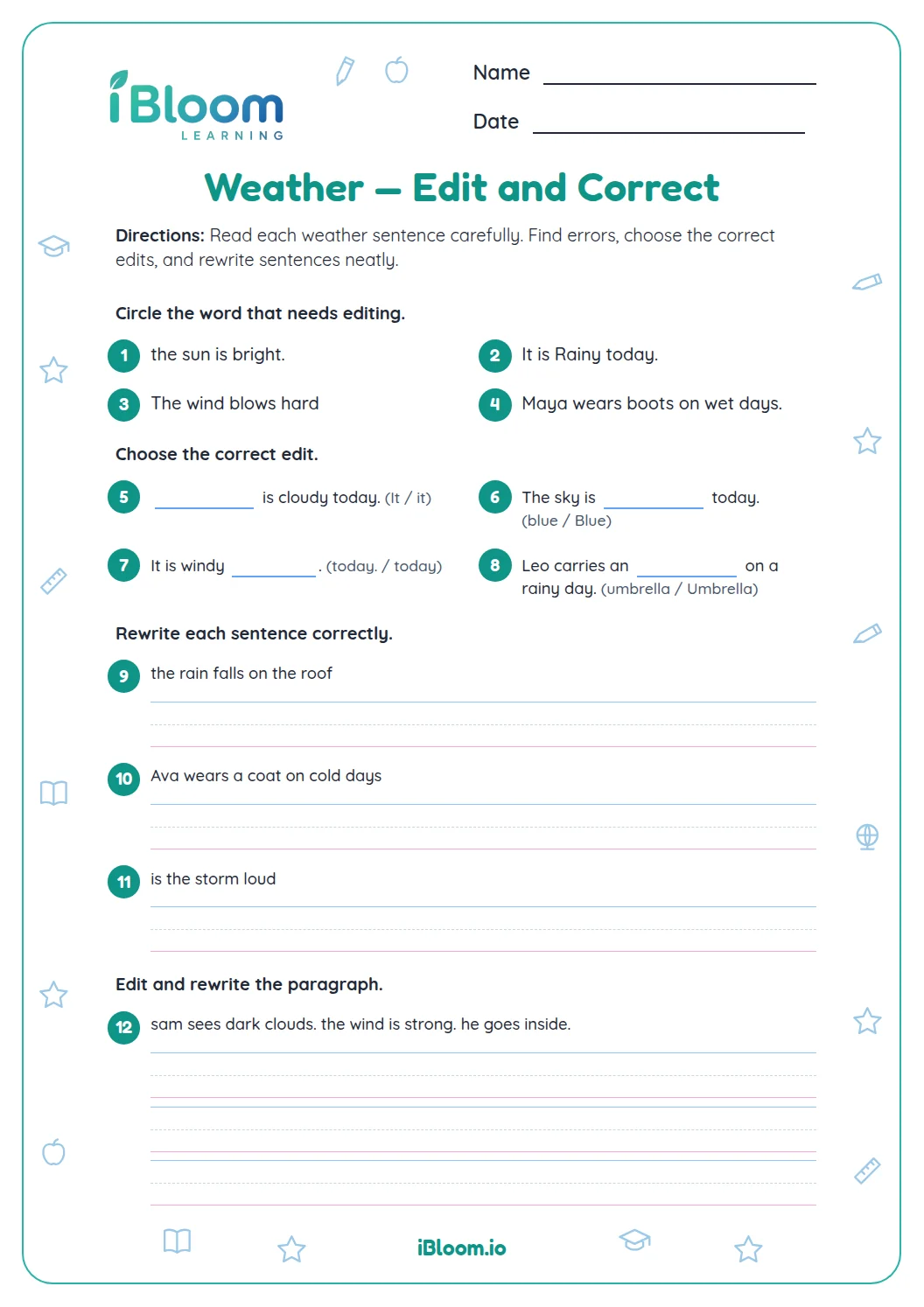
This free printable worksheet is for Grade 1 learners editing school sentences for capitals, spelling, spacing, and ending punctuation. Its 15 questions move from choosing correct forms to rewriting sentences. The separate answer key gives a response for every item.
Aligned to L.1.2
How does the worksheet practice Grade 1 sentence editing with capitals, spelling, spaces, and punctuation?
Part A compares sentence forms for capitals, spelling, and spaces. Part B completes school sentences with a word or ending mark. Part C asks learners to rewrite examples with the correction in place.
- 1Choose the sentence written correctly.
- 2Answer: Maya reads a book in class.
How can a learner check an answer?
Read the direction for each part and identify the detail the question asks for. Solve it, then use the answer key to check the result and revisit any step that needs attention.
What is on the printable?
The sheet has 15 questions across three parts, followed by a separate answer key.
How to use this worksheet
- 1Read the whole sentence before changing it.
- 2Check the first letter and any name.
- 3Look at the spelling and spaces between words.
- 4Choose an ending mark that matches the sentence.
- 5Rewrite the complete sentence and reread it.
Sentence-editing checks
The mistake
Capitalizing every word in a sentence.
The fix
Use a capital at the beginning and for names, then use lowercase for other words.
The mistake
Choosing a spelling by sound alone.
The fix
Check the whole familiar word, such as school or pencil.
The mistake
Adding an ending mark but forgetting the first capital.
The fix
Reread from the first word to the end after making the correction.
Common Core alignment
Use capitals and ending punctuation when writing complete sentences.
On this sheet:
Show the official wordingHide the official wording
Demonstrate command of the conventions of standard English capitalization, punctuation, and spelling when writing.
What to practice next
Make more practice
Further reading
Questions parents and teachers ask
What does this sentence editing worksheet practice?
The worksheet focuses on editing short school sentences for capital letters, spelling, spacing, and ending punctuation. Learners choose correct forms, select a word or punctuation mark, and rewrite sentences. The final items ask them to apply more than one editing check.
How many questions are included?
There are 15 questions in three parts. The first part uses sentence choices, the second completes short sentences, and the final part asks learners to rewrite sentences with corrections. All examples use brief, familiar school contexts. The answer key includes sample rewrites for the final questions.
Is an answer key included?
Yes. The key shows the correct choices and sample corrected sentences. Since a rewrite can be formed in more than one readable way, compare the learner’s response with the sentence meaning and check capitals, spelling, spaces, and ending punctuation.
What should a learner check when editing?
Read the whole sentence, then check its first word, spelling, spaces, and ending mark. A question usually ends with a question mark, while a telling sentence ends with a period. Rewrite the full sentence so the corrections are easy to see.
How long will this editing practice take?
Plan for about 20 minutes. The choice items are brief, while rewriting takes longer because learners need to form and check a complete sentence. Pause after the first two parts and review one editing check before continuing. The examples are short enough to review one sentence at a time.