

About this worksheet
Children complete short sentences about books with fitting words, their own ideas, and sentence endings. The sequence begins with choices, then invites independent completion and a final check for capitals and punctuation.
Aligned to L.1.1.J
Build a complete thought
A sentence needs to make sense as a whole thought. A helpful first step is to read the words before the blank, try each possible ending, and say the finished sentence aloud.
Some prompts have one clear word choice. Later prompts invite children to add their own idea, so answers can differ while still making sense.
Check the finished sentence
After filling a blank, reread the whole sentence. Check that the first word starts with a capital and that the sentence ends with a period or question mark.
Common Core alignment
Students respond to familiar book prompts by completing clear sentences.
Complete simple sentences in response to familiar book prompts.
On this sheet: Children complete sentence frames in response to familiar book prompts.
Show the official wordingHide the official wording
Produce and expand complete simple and compound declarative, interrogative, imperative, and exclamatory sentences in response to prompts.
What to practice next
Further reading
Questions parents and teachers ask
Can children give different answers to the open prompts?
Yes. Questions 7–10 invite children to finish an idea in their own words. Accept a response that makes sense, completes the thought, and stays connected to books. The answer key gives examples rather than requiring every child to use the same words.
What does this worksheet ask children to write?
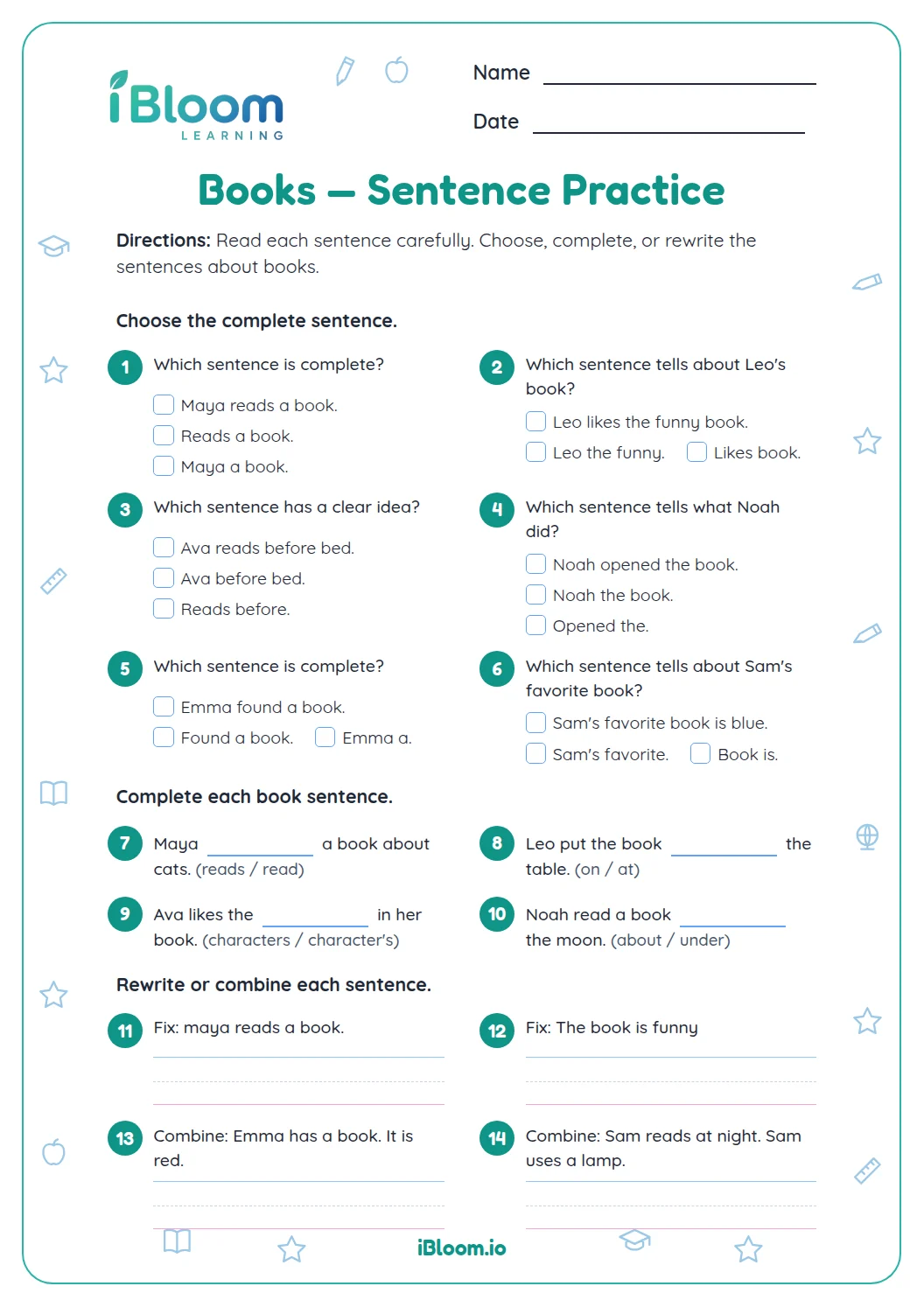
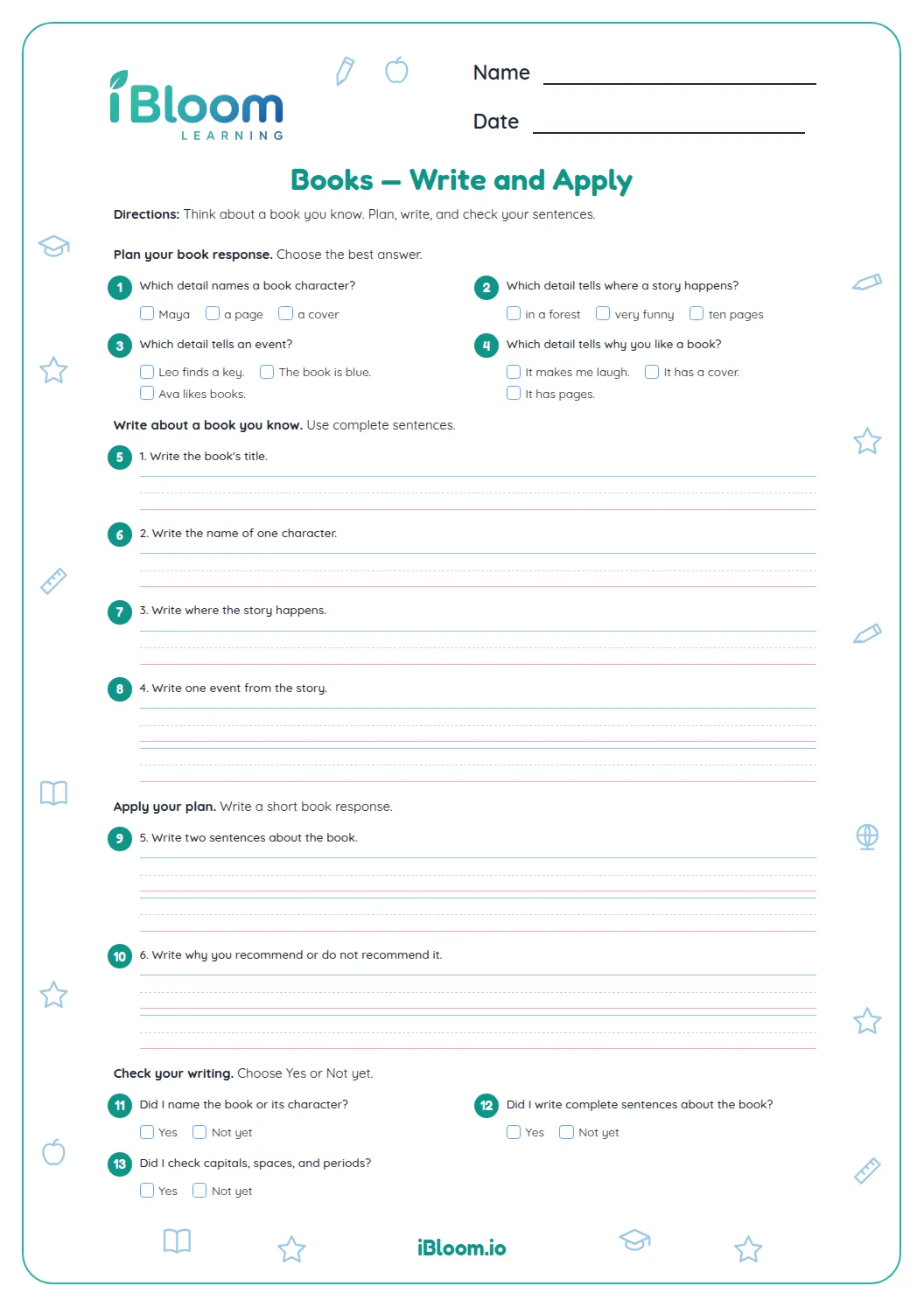
Children complete short book-themed sentence frames, such as naming what a book is about or what they like to read. They also choose sentence endings and identify sentences with a capital letter and an ending mark. The prompts use familiar Grade 1 vocabulary.
How many questions and pages are included?
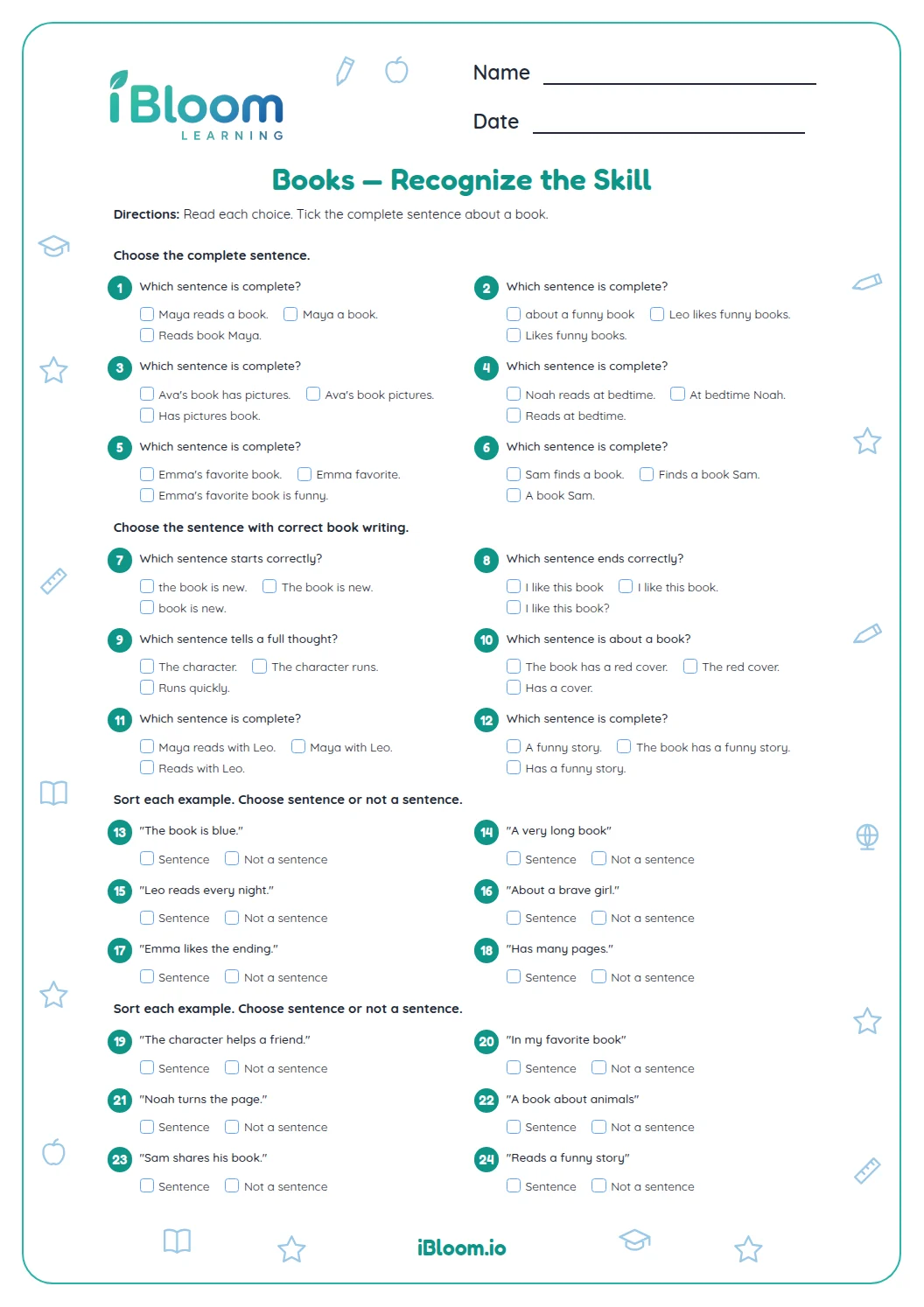
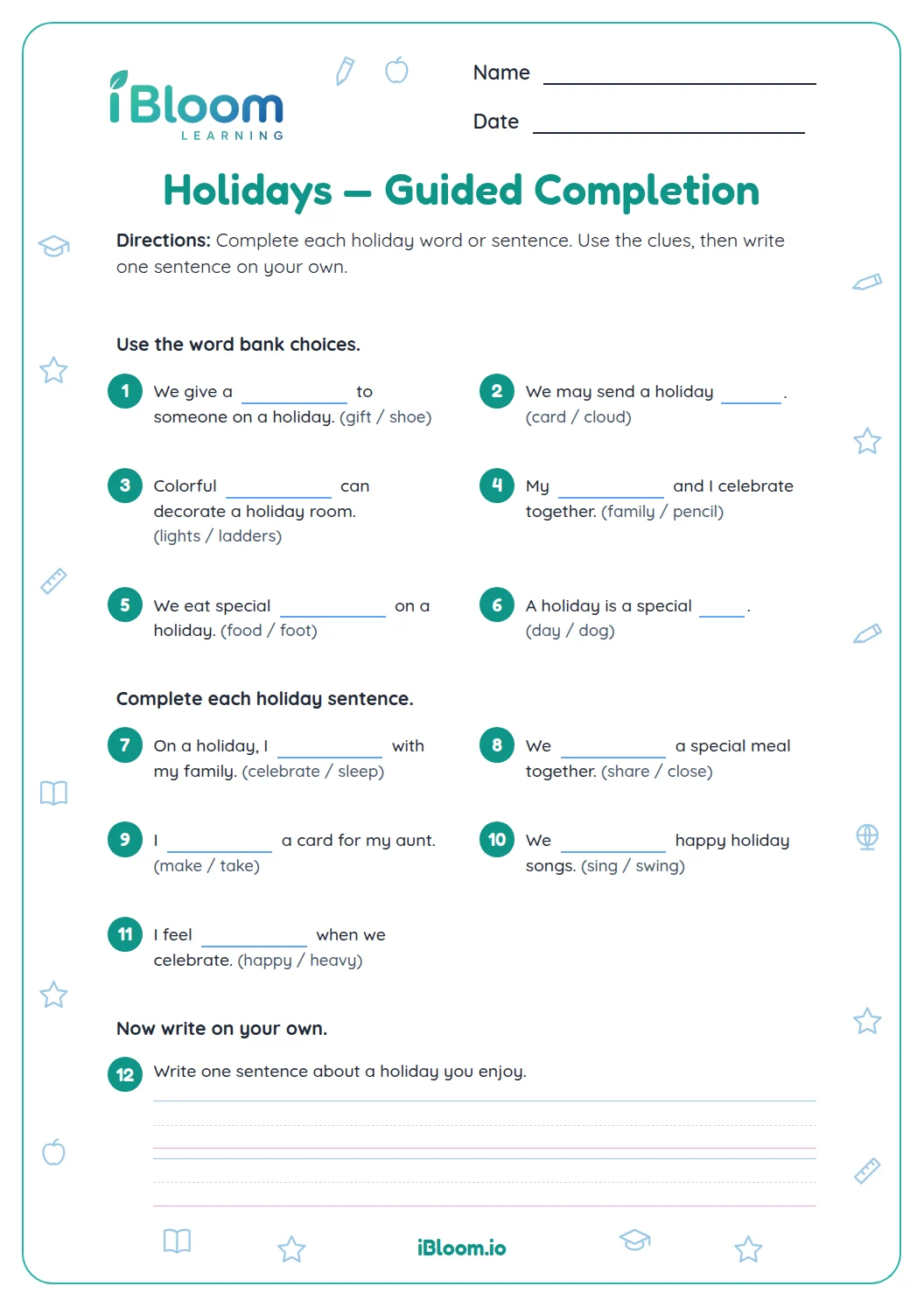
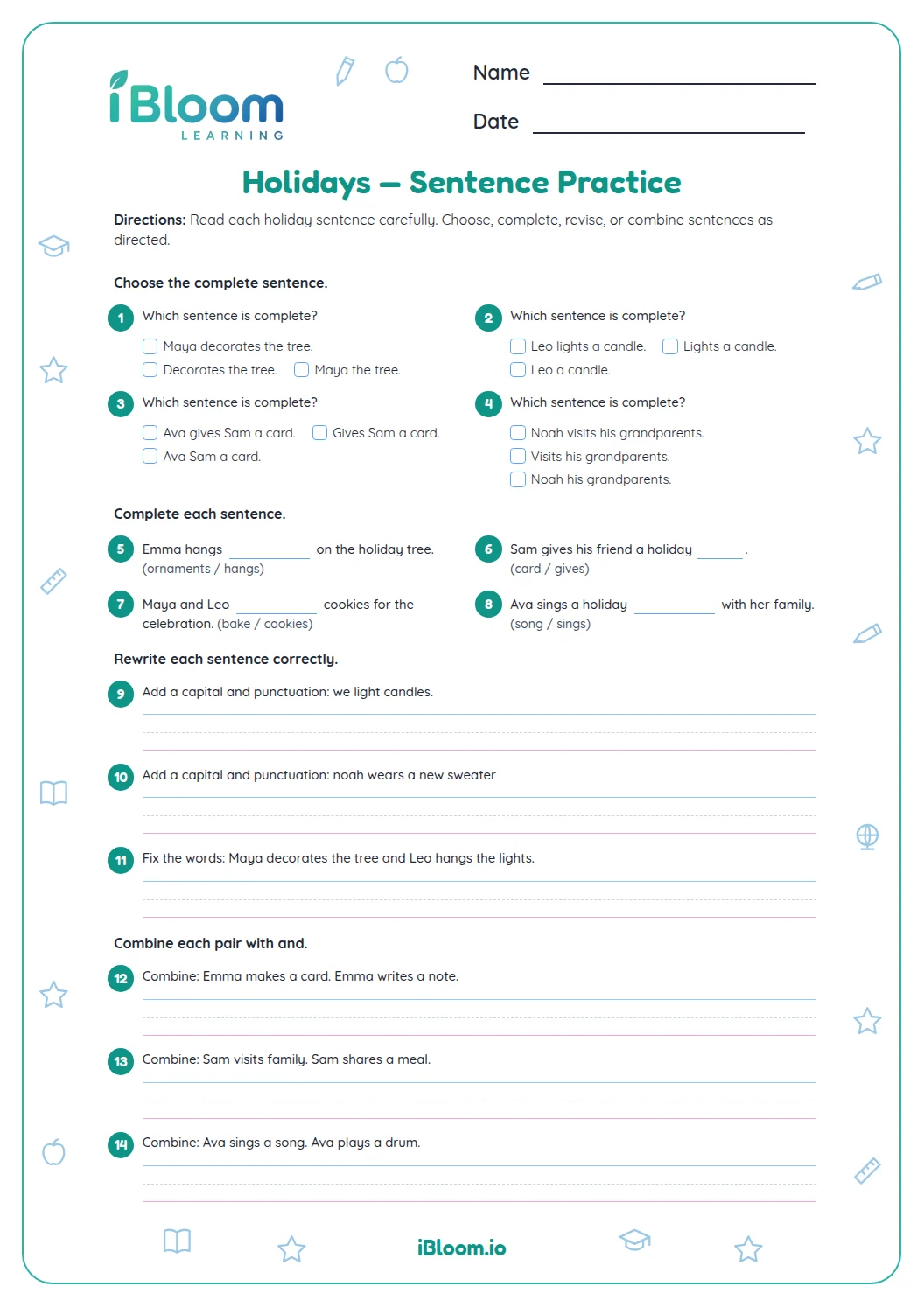
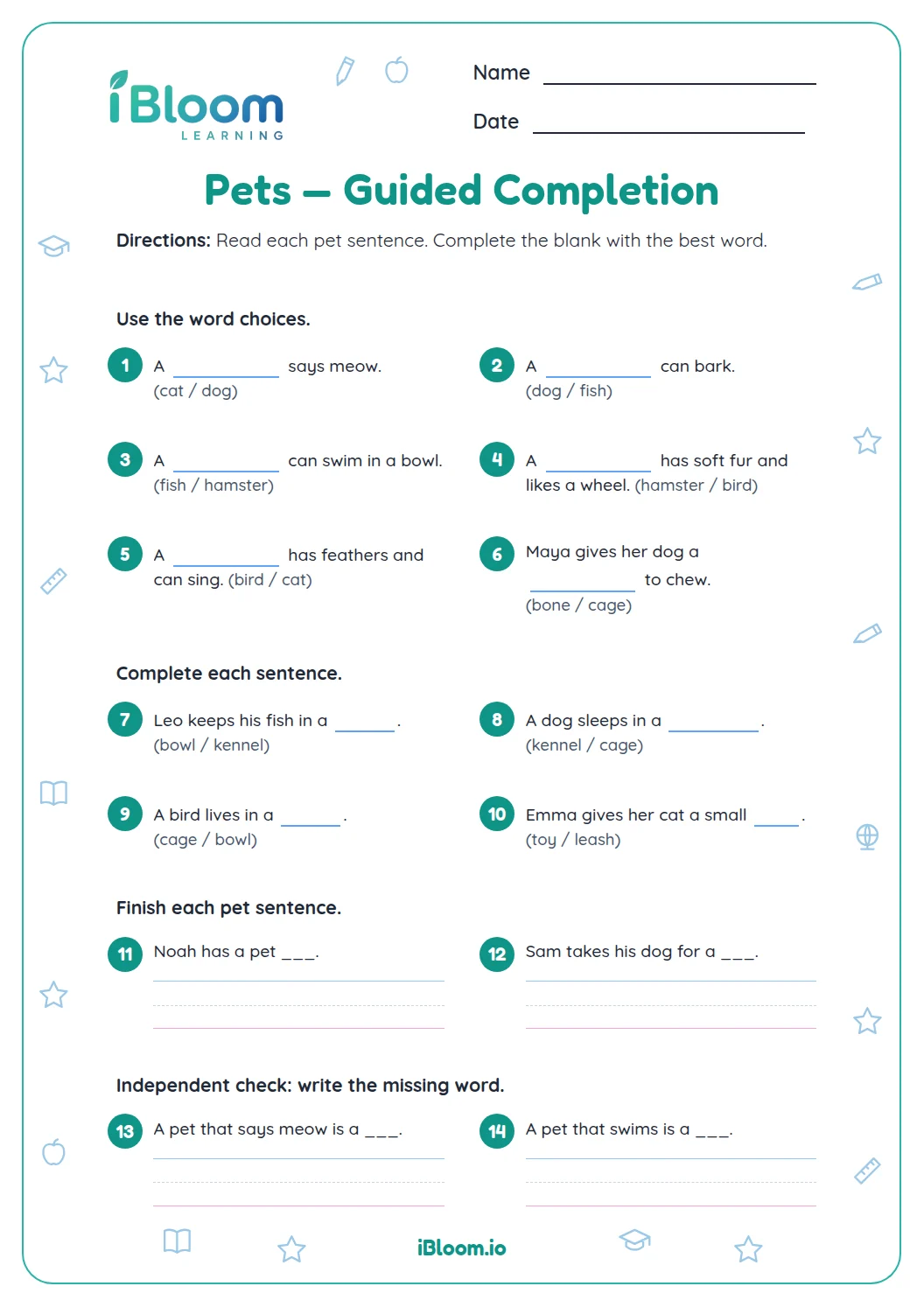
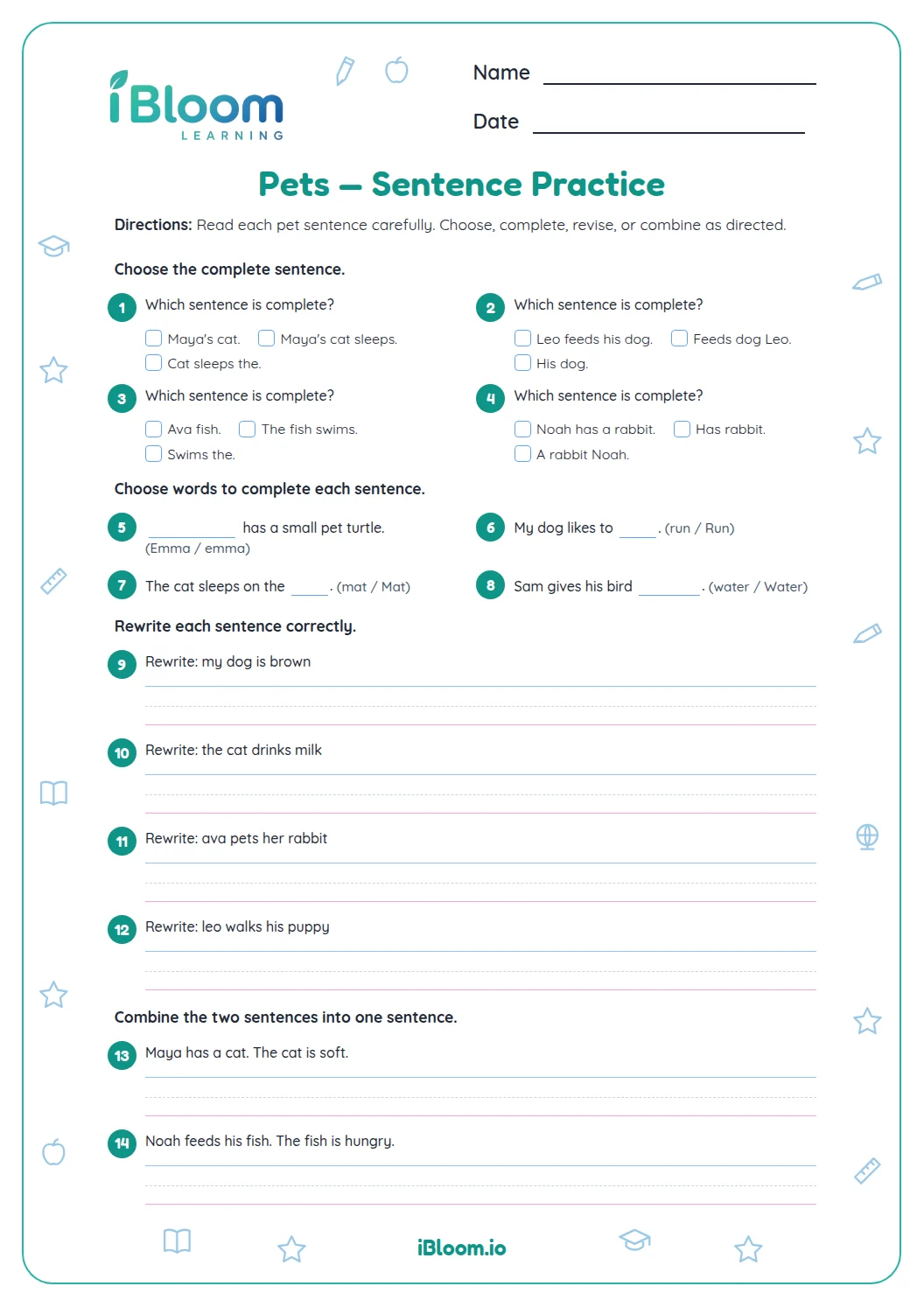
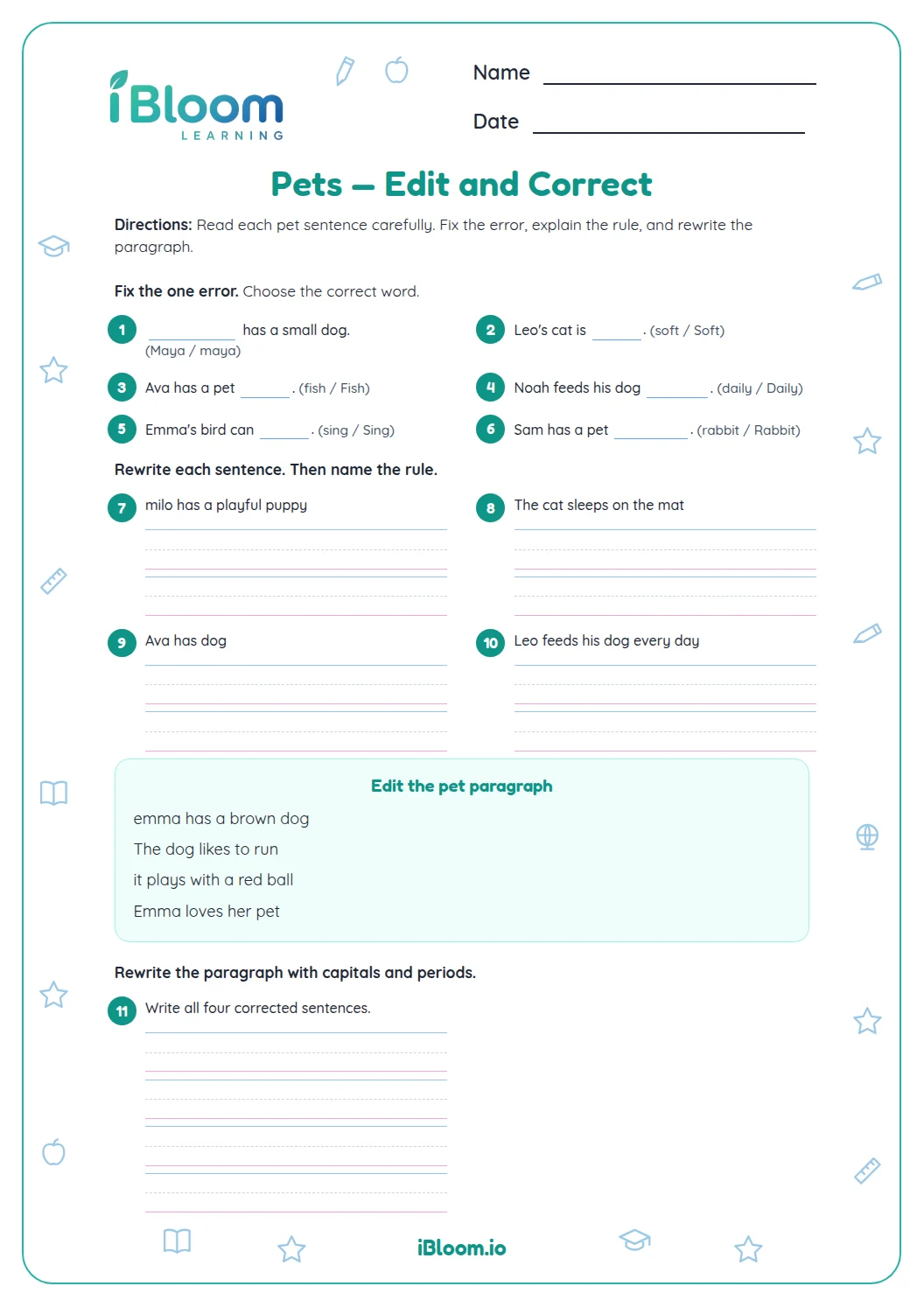
The sheet has 18 questions in four parts and a separate answer key. It prints as two worksheet pages and two key pages. The parts move from word choices to completing sentence ideas, then checking capitals and ending marks in book-themed examples.
How can I help without choosing the words for my child?
Read the sentence aloud and pause at the blank. Ask what kind of word or idea would make the thought complete, then invite your child to explain the choice. For an open prompt, accept a sensible sentence in the child’s own words.
What is a complete sentence?
A complete sentence shares a whole thought. It begins with a capital letter and ends with punctuation. On this worksheet, children choose endings that finish the idea and check sample sentences for a capital and an ending mark. Together, rereading helps children notice these conventions.
What can children do after finishing the page?
Ask your child to tell you about a book they enjoy using one complete sentence. They can add a detail about a character, setting, or favorite part, then reread the sentence to check that it begins with a capital and ends with punctuation.