

About this worksheet
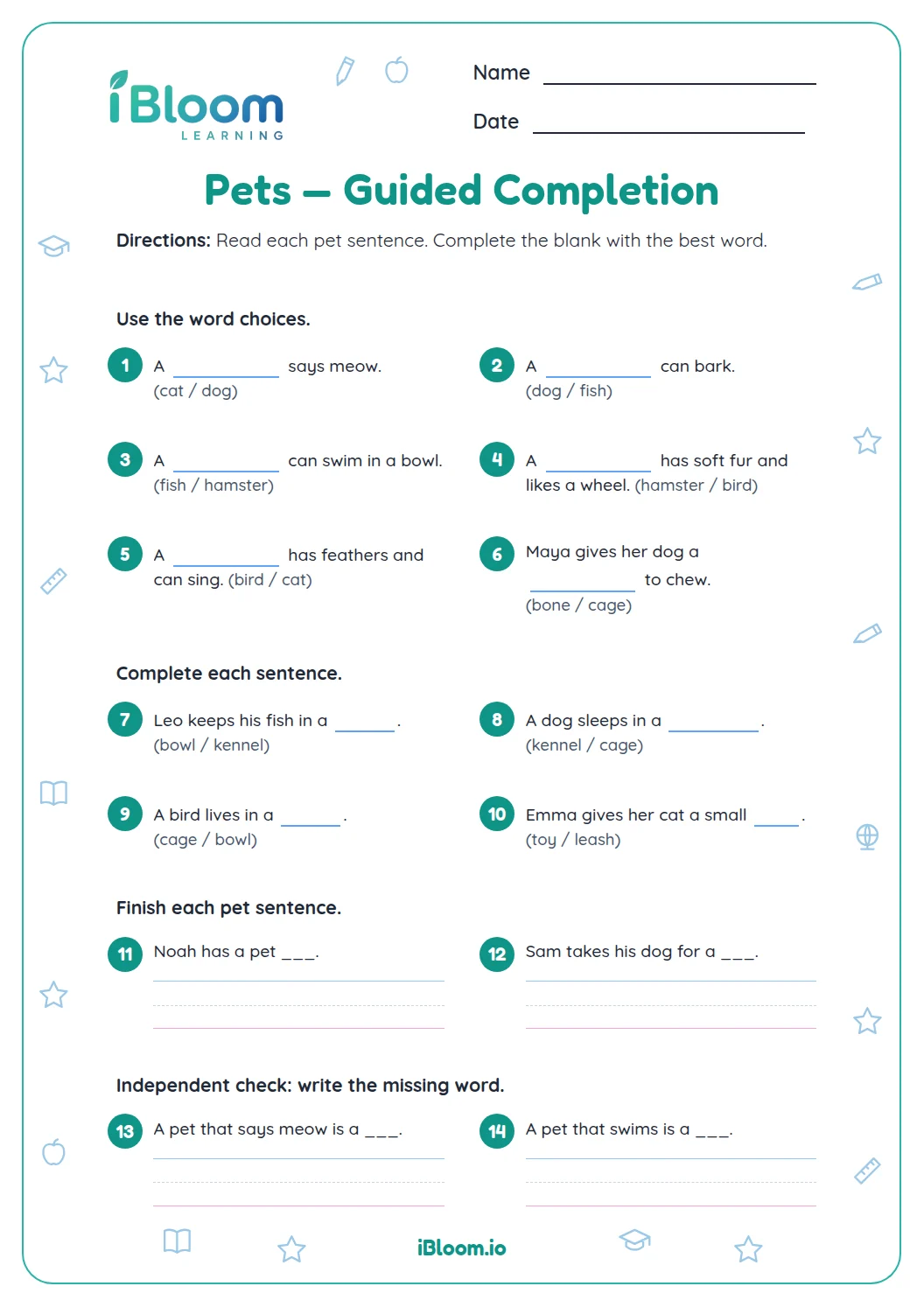
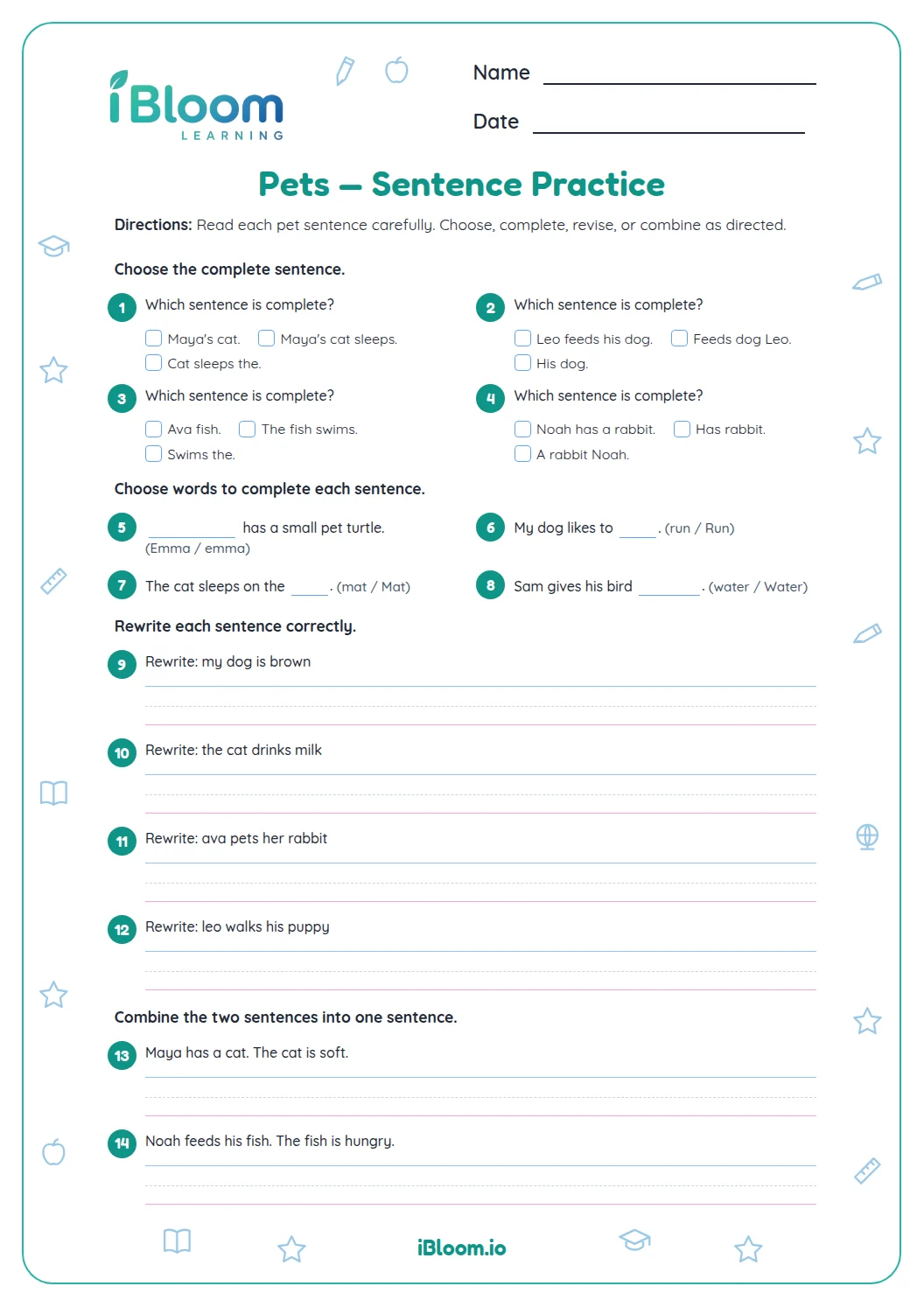
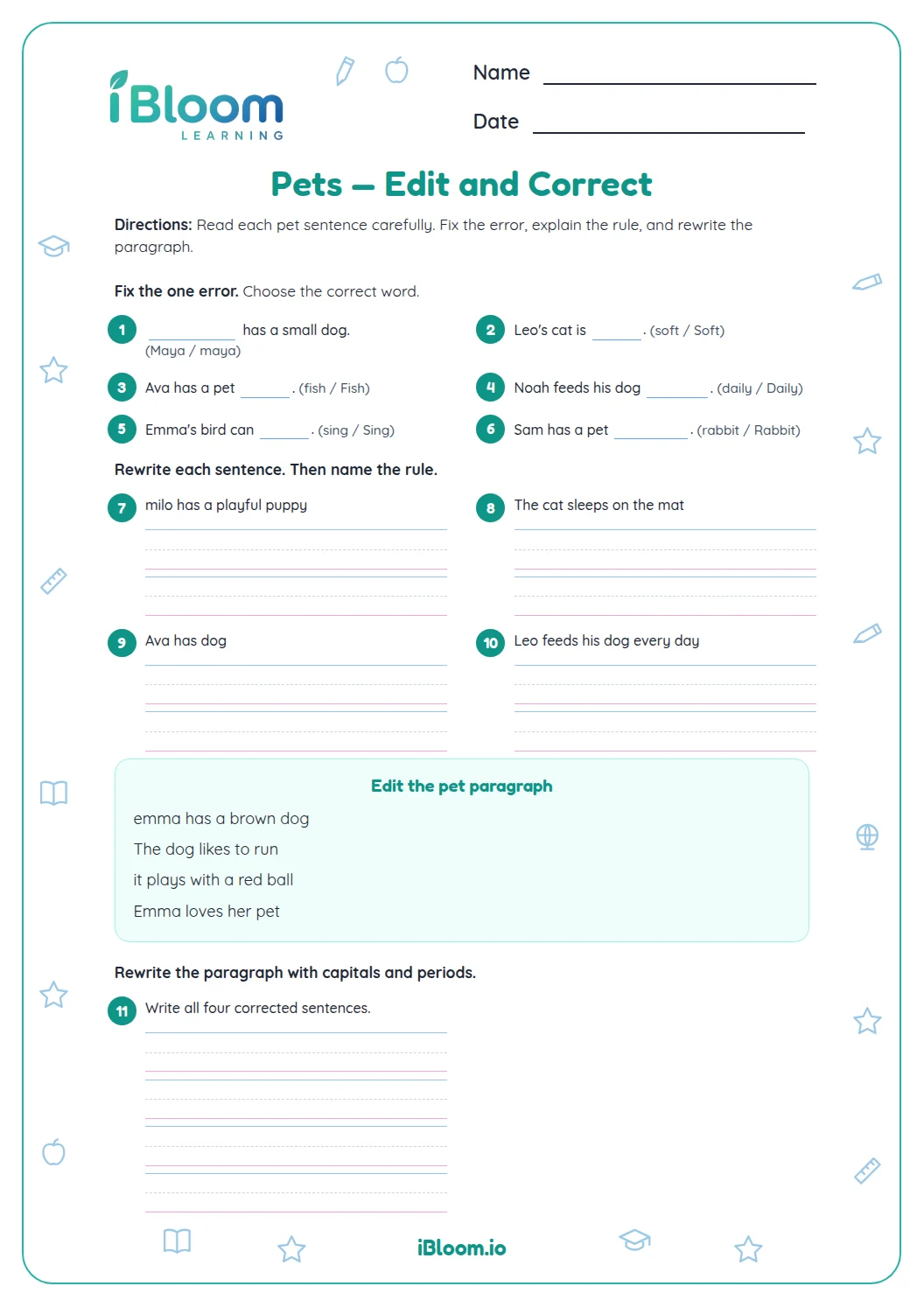
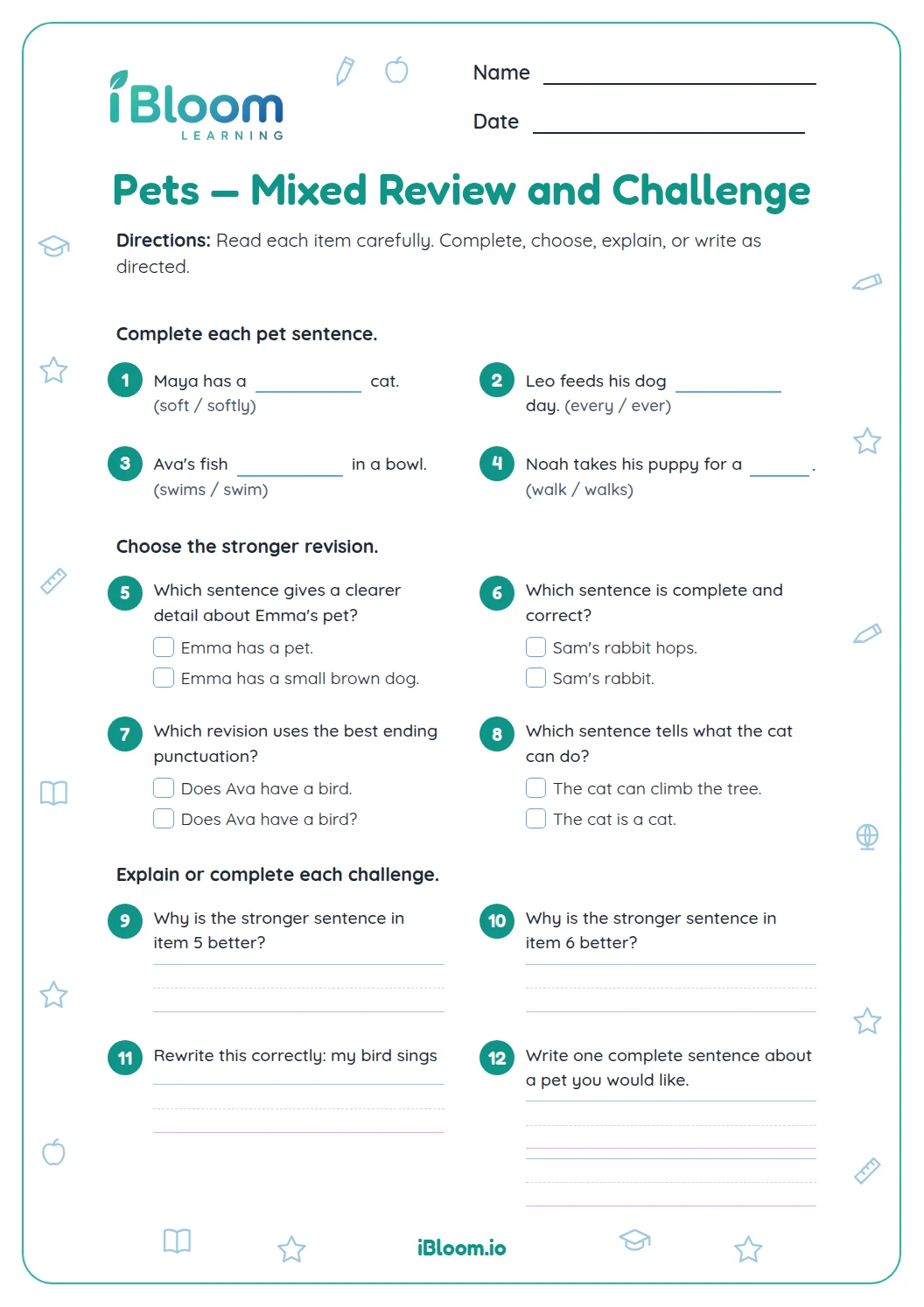
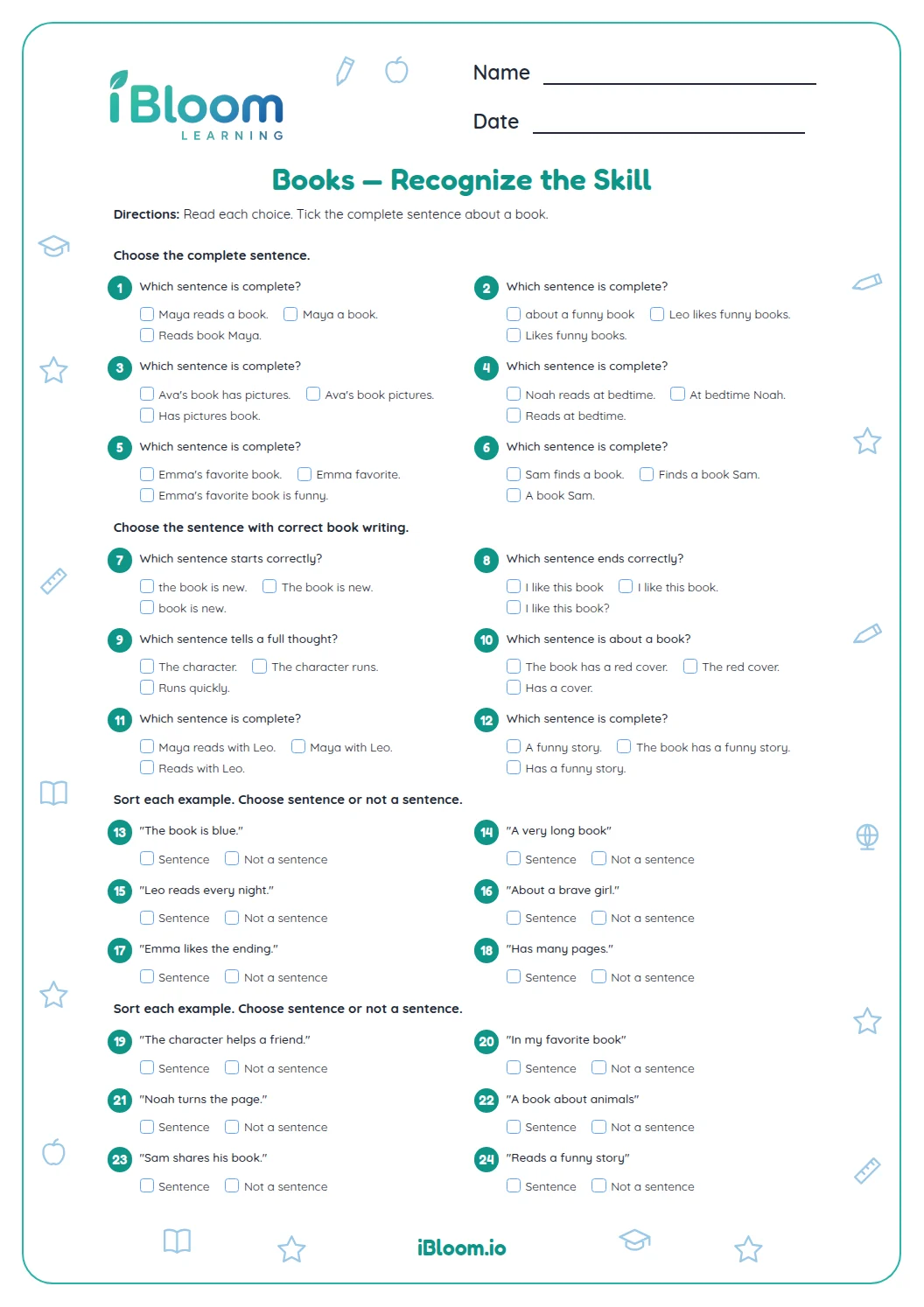
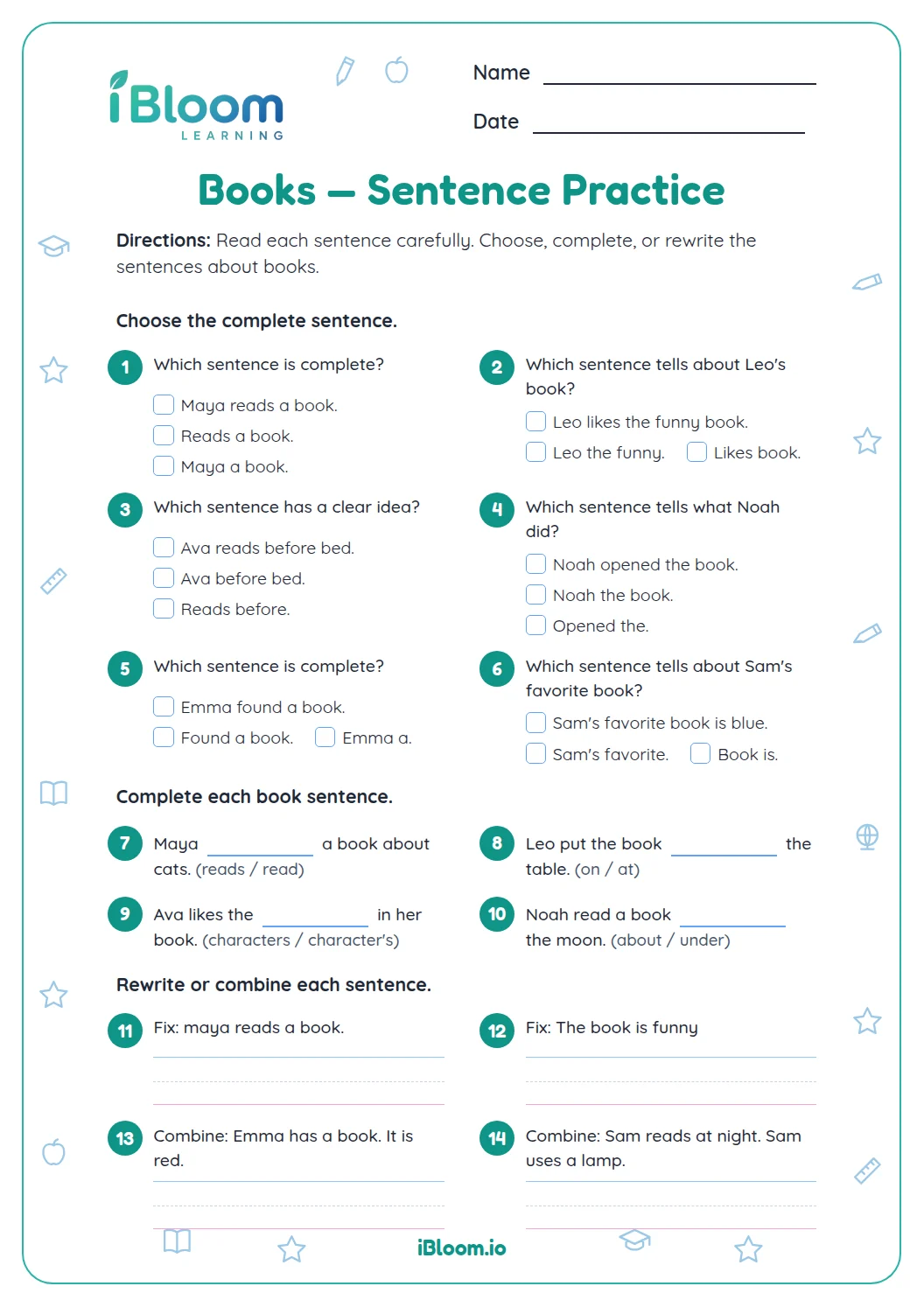
This Grade 1 printable helps children recognize complete sentences about familiar pets. In each of 14 two-choice questions, children choose the words that make a whole idea, such as “The dog naps.” The two-page worksheet and separate answer key give practice spotting who or what a sentence is about and what it says.
Aligned to L.1.1.j
What makes a pet sentence complete?
A complete sentence tells a whole idea. It names who or what the sentence is about and tells something about that subject. Question 1, “The dog naps,” tells who and what the dog does.
- 1The dog naps. — a whole idea
- 2The dog — who, but no information
How does the worksheet build sentence sense?
Some questions ask you to choose between a sentence and a group of words that leaves the idea unfinished. Others ask you to complete an opening such as “The turtle ___.”
- Part A: choose a whole idea.
- Part B: complete or fix a pet sentence.
- Part C: check for a subject and what it does.
How can a child finish an incomplete idea?
Read the choice aloud. Ask whether it says who or what and tells something about that subject.
How to use this worksheet at home or in class
- 1Read both choices.
- 2Find who or what each choice is about.
- 3Check whether it tells something about that subject.
- 4Choose the one that expresses a whole idea.
Common mistakes and quick fixes
The mistake
Choosing a phrase that names a pet but says nothing about it.
The fix
Ask what the pet does; a full sentence gives an answer.
The mistake
Thinking an action word alone is a complete idea.
The fix
Find who does the action, such as “The hamster runs.”
The mistake
Forgetting the ending punctuation.
The fix
Read the sentence with a pause at the end and add a period.
Common Core alignment
This worksheet practices the following Common Core skill.
Produce and expand complete simple and compound sentences in response to prompts.
On this sheet: Children recognize complete pet sentences and choose revisions that make fragments complete.
Show the official wordingHide the official wording
Produce and expand complete simple and compound declarative, interrogative, imperative, and exclamatory sentences in response to prompts.
What to practice next
Make more practice
Further reading
Questions parents and teachers ask
What is a complete sentence?
A complete sentence expresses a whole idea. “The dog naps” tells who the sentence is about and what the dog does. “The dog” names the subject but leaves the reader waiting for more information. The subject tells who or what the sentence is about.
What should a child look for?
Look for who or what the sentence is about and what the sentence says about it. Read both choices and notice whether one is only a subject or an unfinished group of words. A sentence needs information about its subject to feel finished.
Are all questions about pets?
Yes. The choices mention familiar pets such as dogs, cats, rabbits, birds, turtles, and hamsters. Children focus on whether the words make a complete idea, rather than learning facts about the animals. Children can focus on the sentence clues without needing special pet knowledge.
How many questions are included?
There are 14 two-choice questions about recognizing or completing a whole sentence. Some ask children to choose between a full idea and an unfinished phrase; others complete a sentence opening. Each question is numbered so children can review answers one at a time.
Does the worksheet include an answer key?
Yes. A separate key marks the complete sentence or best sentence ending for each question. Use it after the child has read both choices and selected the one that communicates a whole idea. The child can read the correct choice aloud to hear the complete idea.