


About this worksheet
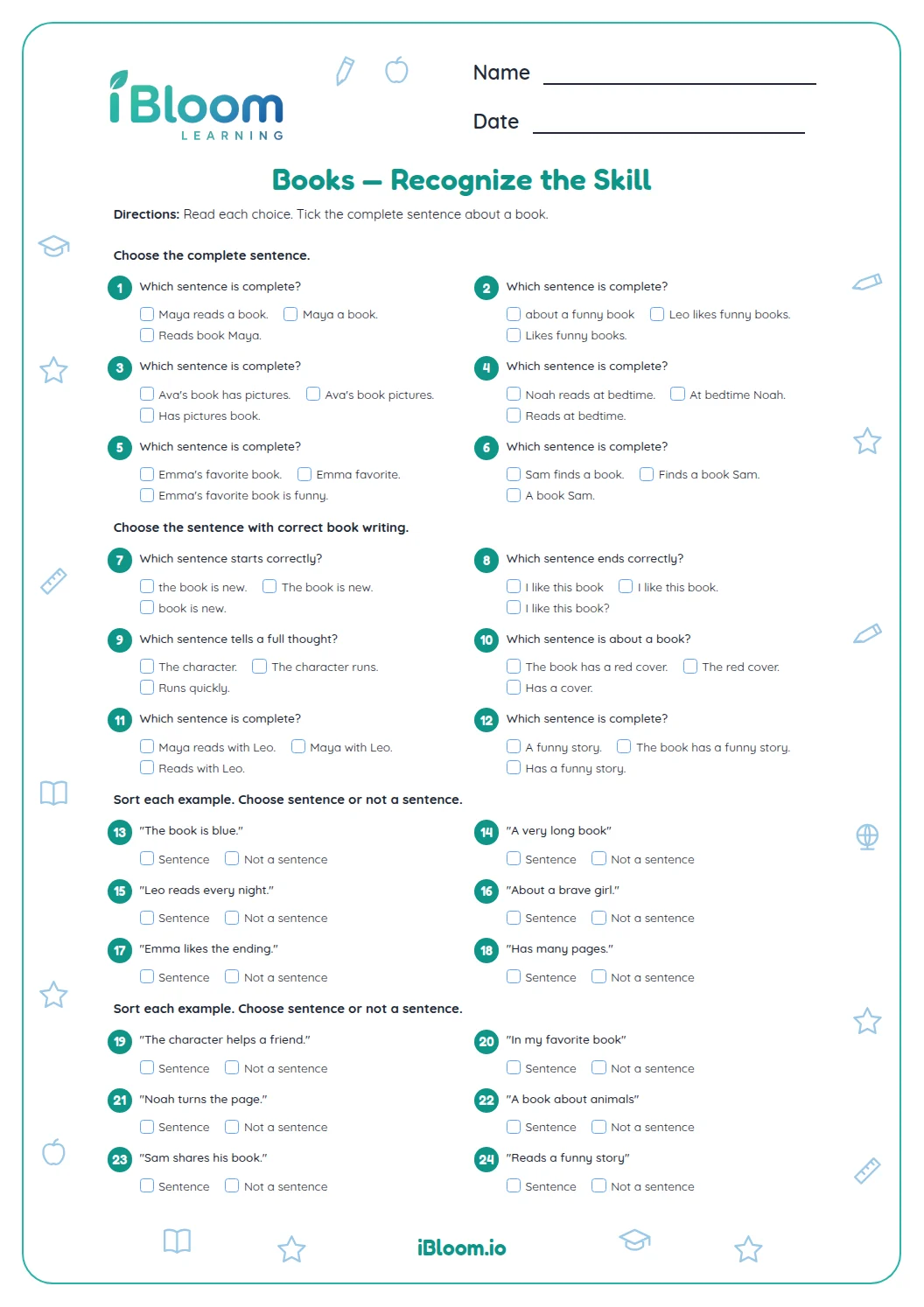
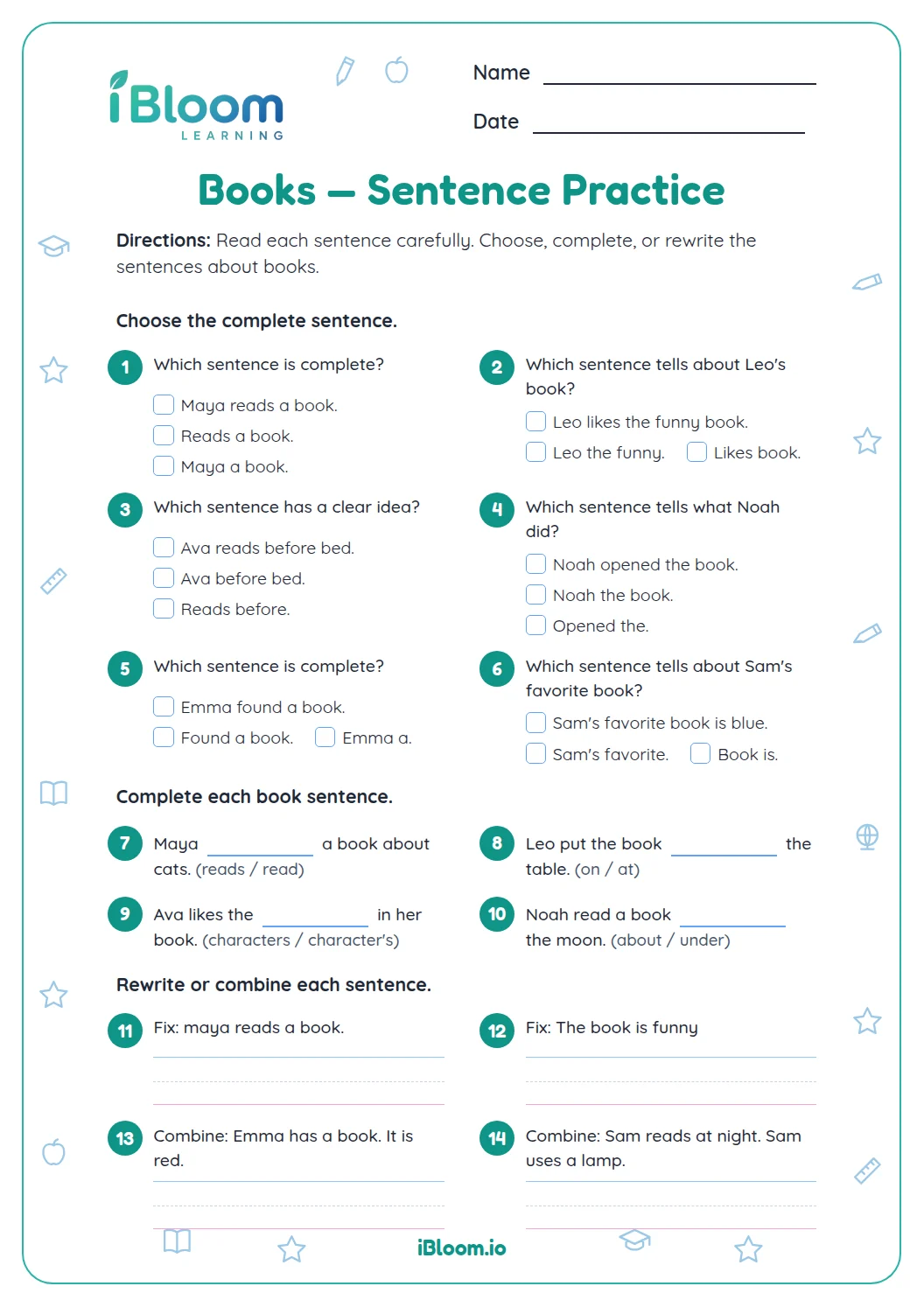
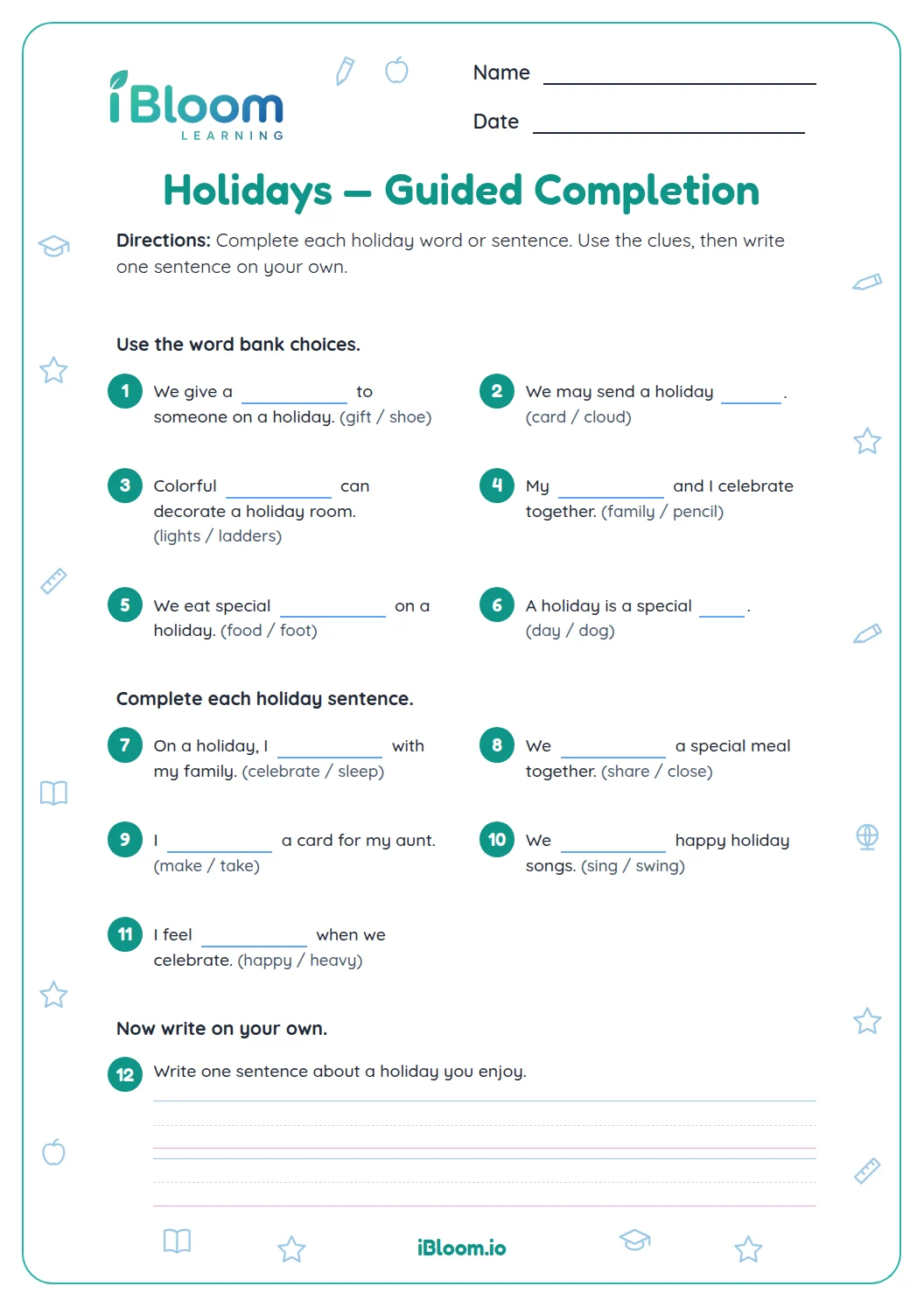
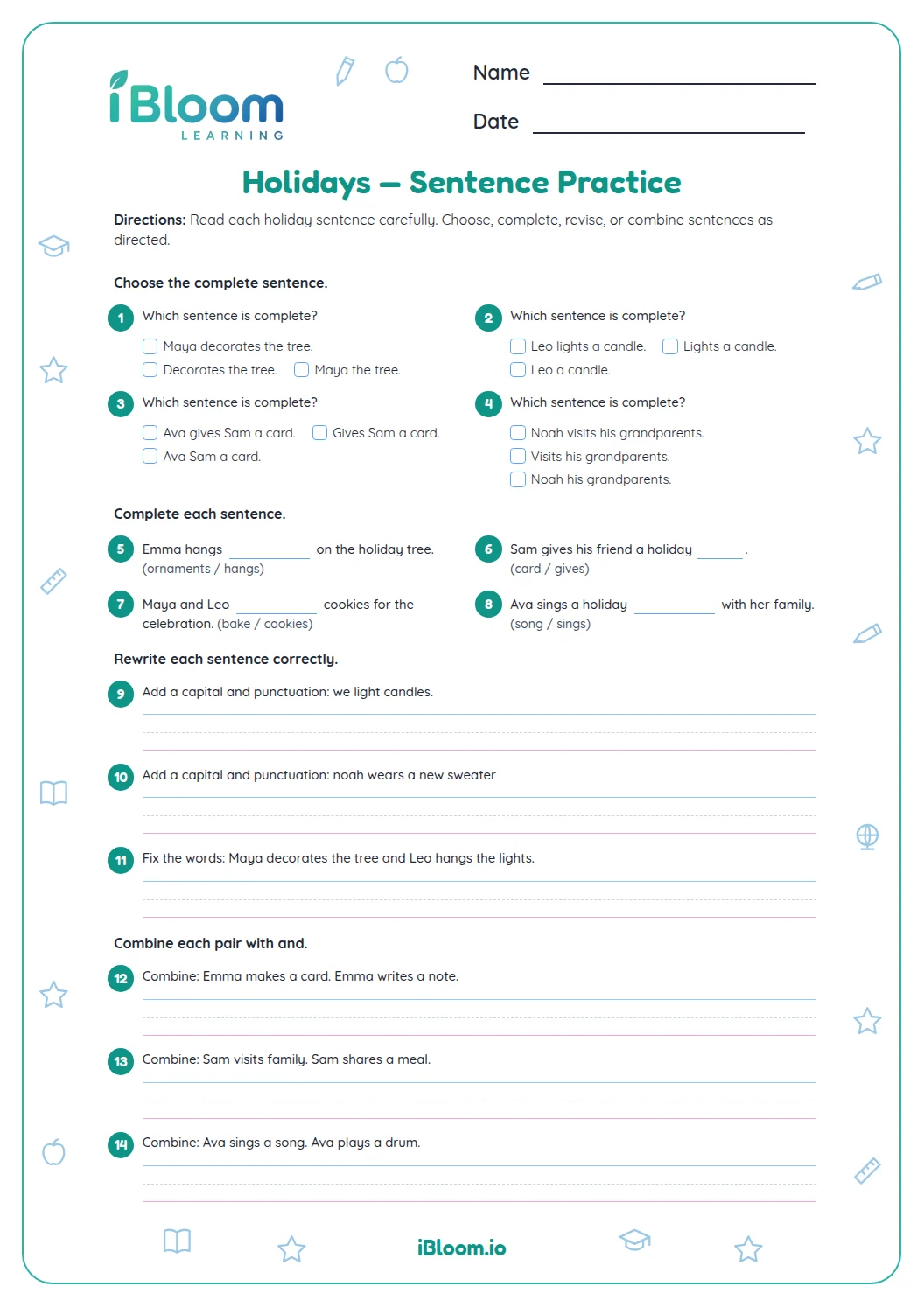
This Grade 1 school sentence worksheet moves from recognizing a complete thought to writing one. In Part A, students choose the complete sentence from two school-themed choices. In Part B, they complete four sentence choices and write four sentences using familiar actions such as tying shoes, singing, and reading. A separate answer key marks the choices and offers a sample for each open response. The writing practice focuses on producing complete sentences.
Aligned to L.1.1.j
How can a child spot a complete sentence?
Read each choice aloud and ask whether it tells who or what and what that person or thing does. “Birds sing.” is complete; “Birds” leaves the thought unfinished.
What makes a sentence complete?
A complete thought has a naming part and a telling part. For example, “Lena ties her shoes” names Lena and tells what she does. Start with a capital letter and finish with punctuation.
- 1Lena ties her shoes.
- 2Who? Lena. What does she do? Ties her shoes.
How should students check a sentence?
Read the sentence aloud. Check that it tells a whole thought, begins with a capital letter, and ends with a period or other fitting mark.
How to use this worksheet
- 1Read the two choices in Part A all the way through.
- 2Choose the one that tells a whole thought.
- 3In Part B, write a naming part and an action or telling part.
- 4Begin with a capital letter and add an ending mark.
- 5Read each sentence aloud, then check it with the answer key.
Common mistakes and quick fixes
The mistake
Choosing a word group that leaves the idea unfinished, such as “Maya at school.”
The fix
Ask who the sentence is about and what that person does.
The mistake
Writing only a subject, such as “The puppy.”
The fix
Add what the puppy does to complete the thought.
The mistake
Leaving off the first capital or ending punctuation.
The fix
Check the first and last marks after reading the sentence aloud.
Common Core alignment
This worksheet supports the listed Common Core skill.
Produce complete sentences with a naming part and a telling part.
On this sheet: The worksheet questions give students practice with this skill.
Show the official wordingHide the official wording
Produce and expand complete simple and compound declarative, interrogative, imperative, and exclamatory sentences in response to prompts.
What to practice next
Make more practice
Further reading
Questions parents and teachers ask
What is a complete sentence?
A complete sentence tells a whole thought. It usually names a person, place, animal, or thing and tells something about it, as in “Birds sing.” Part A asks students to recognize complete thoughts, and Part B gives practice writing them.
What does the student write in Part B?
The student writes eight sentences about familiar school and home actions, such as tying shoes, singing, and reading. The answer key provides a sample for each prompt; other complete, sensible sentences can also work. The separate answer key supports a quick check and gives families a way to review the worksheet together.
Does the worksheet include an answer key?
Yes. The separate key marks the correct choices in Part A and gives sample sentences for Part B. Since students write their own ideas, compare each response with the model for a complete thought, capital, and ending mark. The separate answer key supports a quick check and gives families a way to review the worksheet together.
How can I help a child who writes only a few words?
Ask “Who is this about?” and then “What does this person or thing do?” Put the answers together to make a complete thought, such as “The puppy runs.” Then have the child read the sentence aloud. The separate answer key supports a quick check and gives families a way to review the worksheet together.
How long does the sentence worksheet take?
Plan for about 20 minutes. The first eight items are choices, while the second part asks children to write eight complete sentences, so writing speed and time spent checking punctuation will affect the total. The separate answer key supports a quick check and gives families a way to review the worksheet together.