



About this worksheet
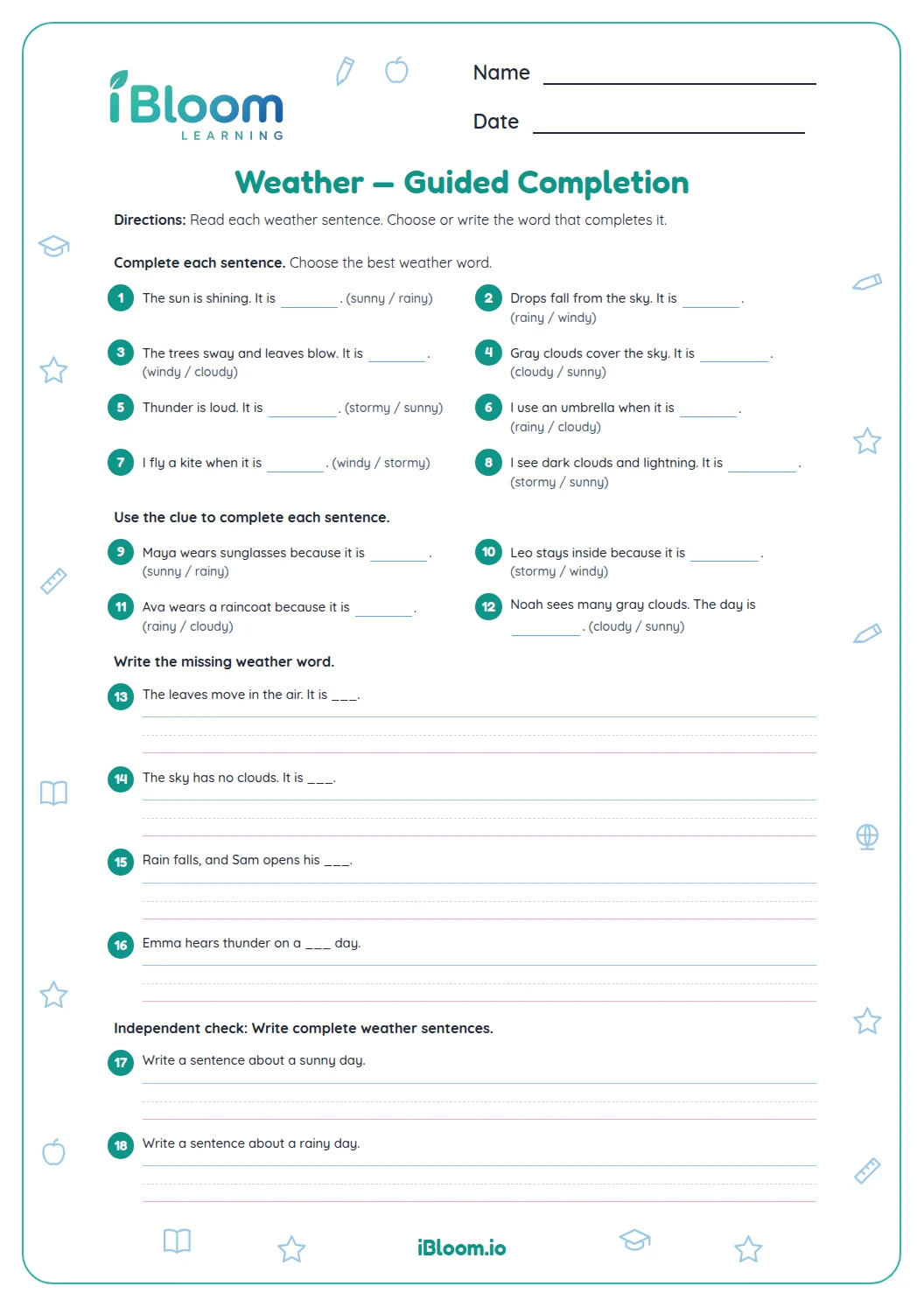
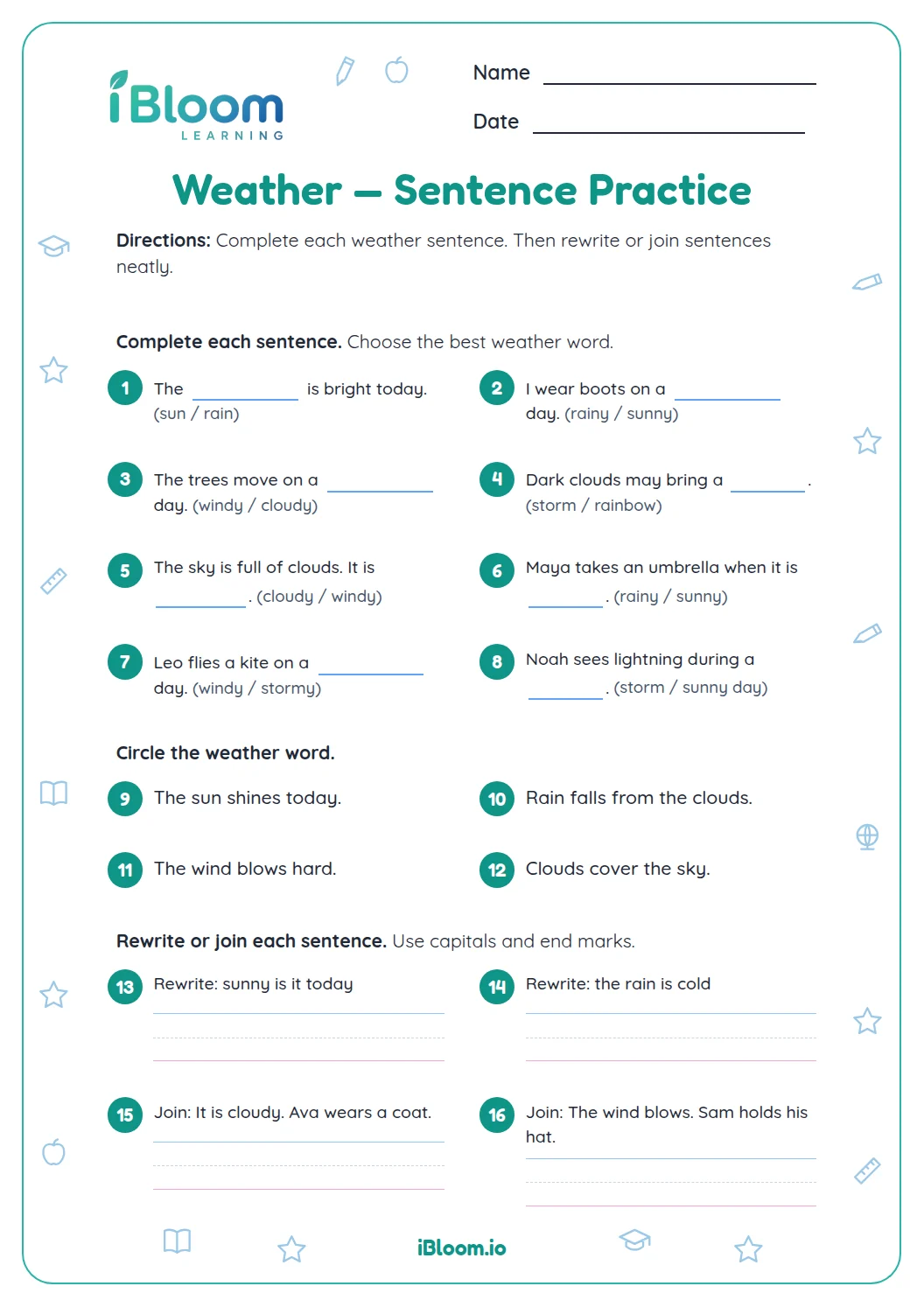
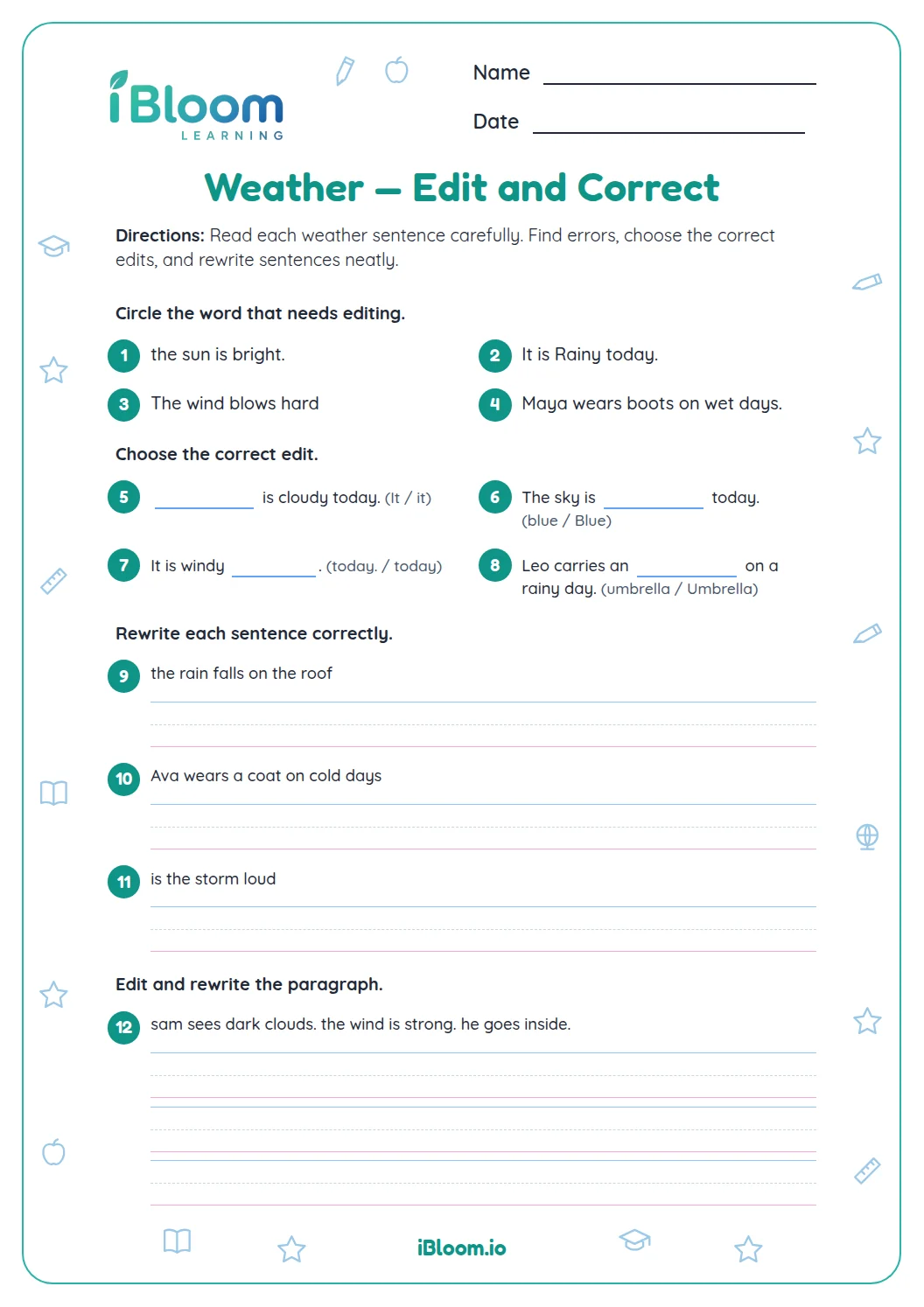
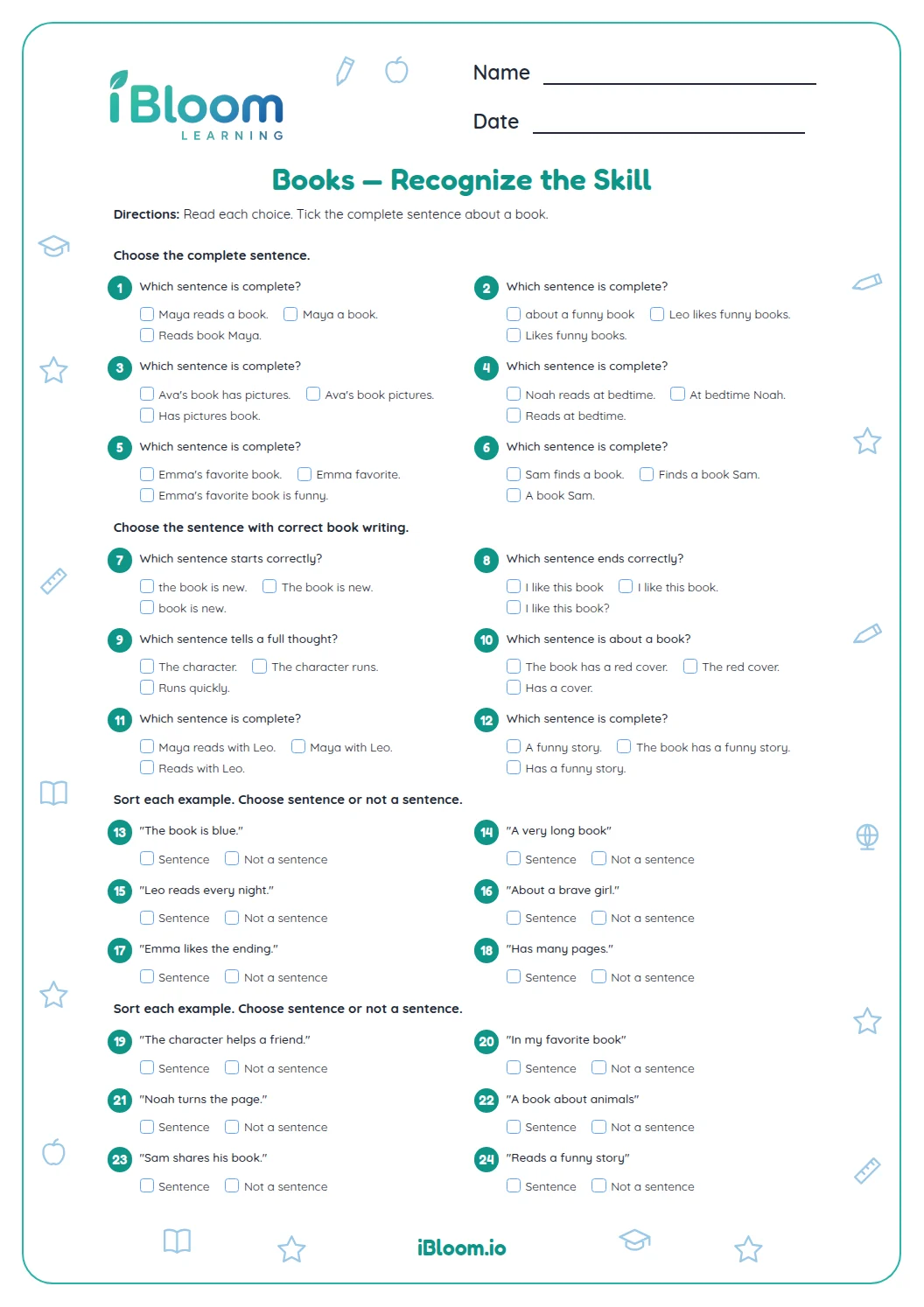
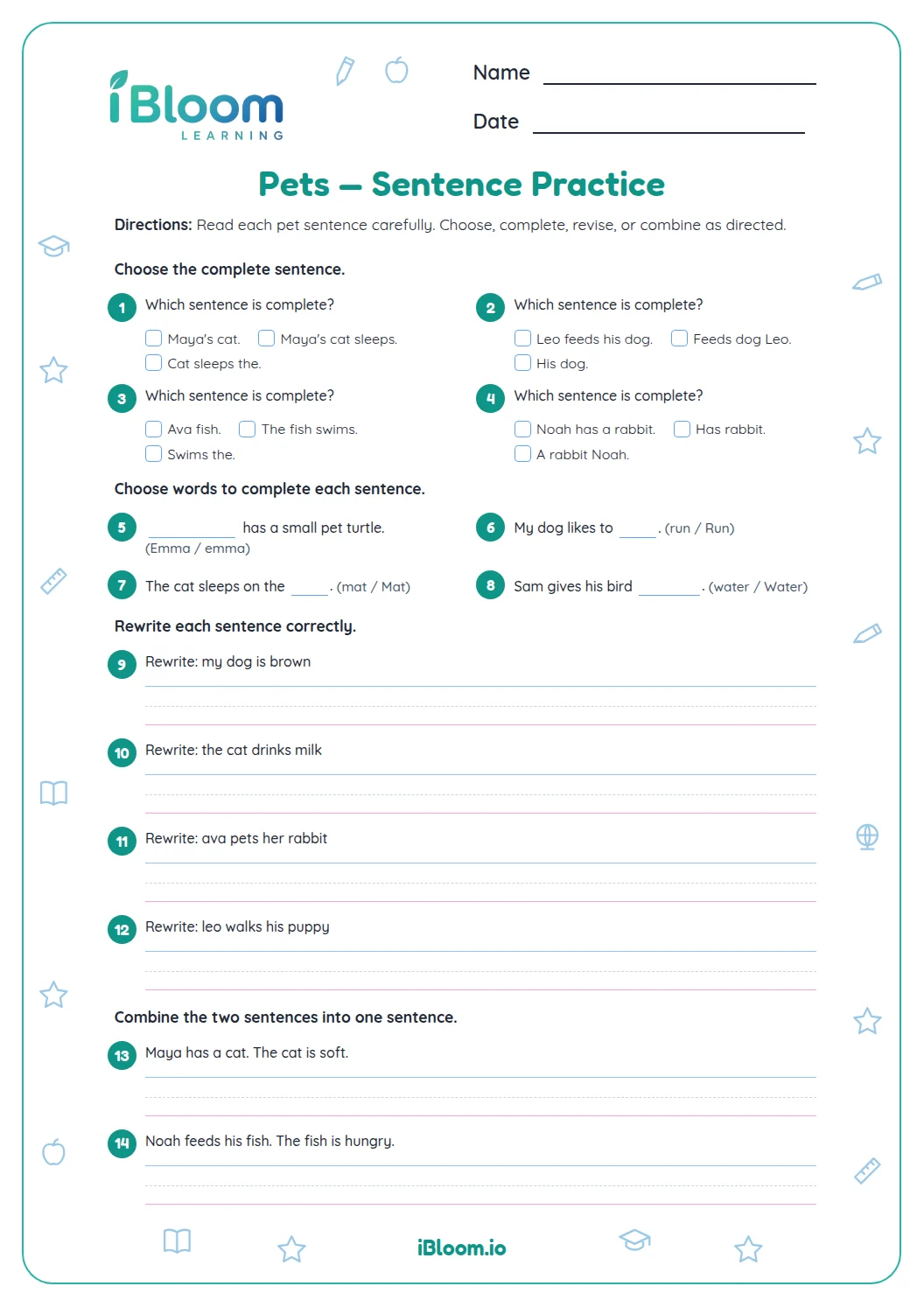
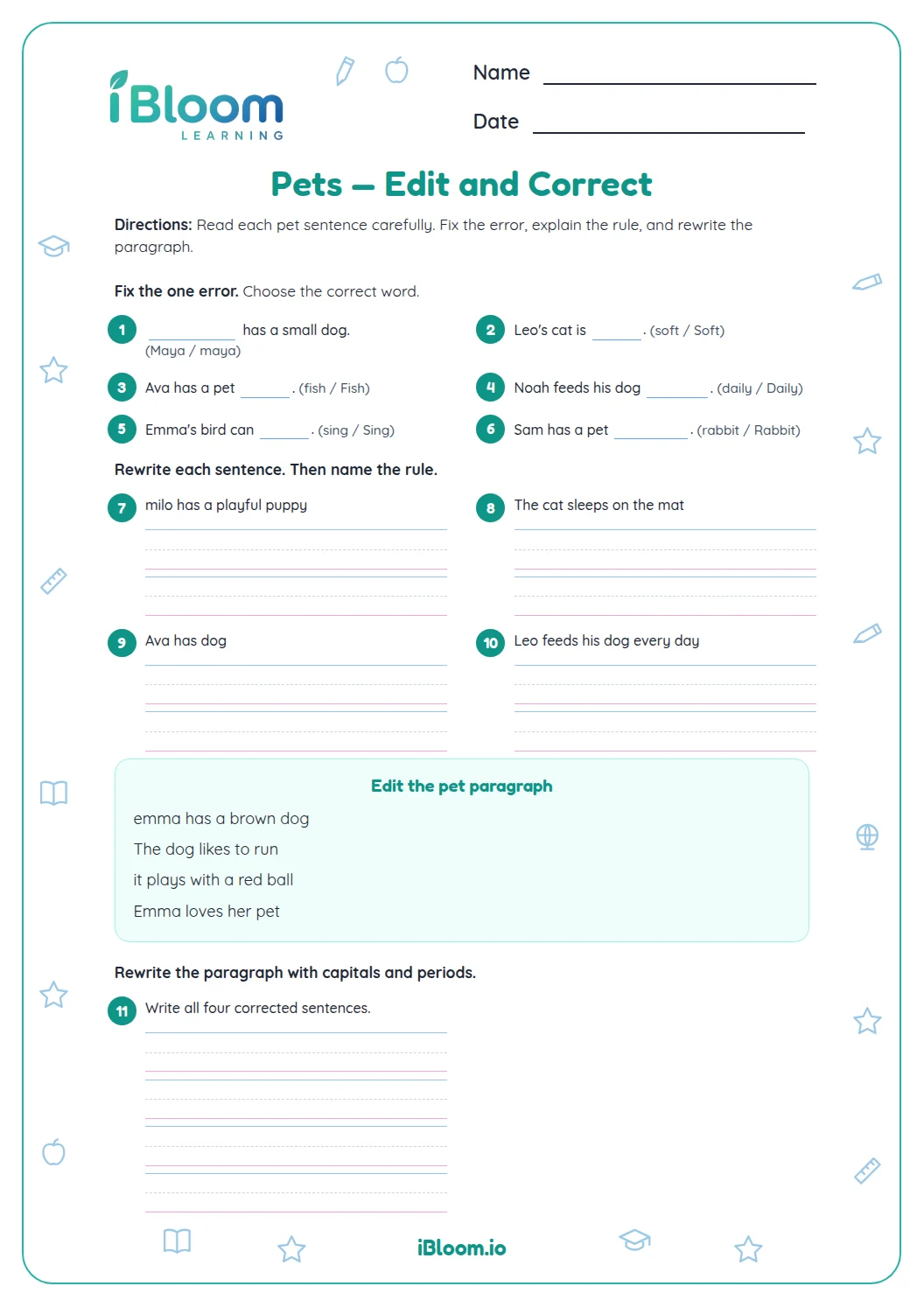
This Grade 1 printable has 14 weather-sentence questions in three parts. Students choose sentences that tell about weather, classify weather and non-weather statements, and write two complete sentences of their own. A separate answer key gives the selected answers and sample writing responses. The final prompts practice producing complete sentences in response to prompts, as described in Common Core L.1.1.j.
Aligned to L.1.1.j
How can a reader spot a weather sentence?
Look for words that tell about the sky or conditions outside, such as sunny, rain, wind, clouds, or thunder. The first five questions ask learners to choose the sentence that tells about weather. The other choices are complete sentences too, but they describe people or everyday activities.
- 1The day is sunny. tells about weather.
- 2The bag and apple sentences do not.
What belongs in each weather category?
Questions 6–12 ask students to mark each sentence Weather or Not weather. A sentence can be complete without being about weather: “Maya packs her lunch” has a subject and action, but it does not describe the weather.
How can a learner write a weather sentence?
Questions 13 and 14 ask students to write one weather sentence each. One prompt is about a rainy day and the other is about a sunny day. Check that each response is a complete sentence with an end mark.
How to use this worksheet
- 1Read the whole sentence once.
- 2Look for a word or idea about outdoor conditions.
- 3Choose Weather or Not weather for the sorting prompts.
- 4For writing, name the weather or what it does.
- 5Start with a capital and end with punctuation.
Common mistakes and quick fixes
The mistake
Choosing a sentence just because it is complete.
The fix
Ask whether it tells about the sky or outdoor conditions.
The mistake
Marking a sentence about an activity as weather.
The fix
Check the subject and action: packing lunch or kicking a ball is not weather.
The mistake
Writing only a word or phrase for a prompt.
The fix
Turn the idea into a whole thought with who or what and what happens.
Common Core alignment
This worksheet gives practice with the stated skill.
Write and expand complete sentences in response to the weather prompts.
On this sheet: The final five prompts ask students to produce complete sentences about weather.
Show the official wordingHide the official wording
Produce and expand complete simple and compound declarative, interrogative, imperative, and exclamatory sentences in response to prompts.
What to practice next
Further reading
Questions parents and teachers ask
What does “weather sentence” mean on this worksheet?
A weather sentence tells about conditions outside, such as sun, rain, wind, clouds, or thunder. In the first five questions, learners select the sentence that gives weather information. The other choices describe people, objects, or activities instead. All answer choices are complete sentences.
Are the other choices incomplete sentences?
No. The distractor sentences are complete thoughts, but they do not tell about weather. That distinction matters in this worksheet: students are recognizing the topic of a sentence, then separately writing their own complete weather sentences in the final part.
What is included in the writing section?
Questions 13 and 14 ask students to write a weather sentence from a prompt. One response can describe a rainy day, and the other can describe a sunny day. Check that each answer says a complete thought, starts with a capital letter, and ends with punctuation.
How many questions are included?
There are 14 questions in three parts: five choices that identify a weather sentence, seven Weather or Not weather classifications, and two writing prompts. A separate answer key gives the selected answers and sample sentences. Learners can finish each part before checking their choices.
Does the worksheet have an answer key?
Yes. The key lists the correct weather choices and classifications. For the final two prompts it shows sample sentences; a child’s wording can differ as long as it is a complete sentence that follows the weather prompt. Review the capital letter and end mark together.