

About this worksheet
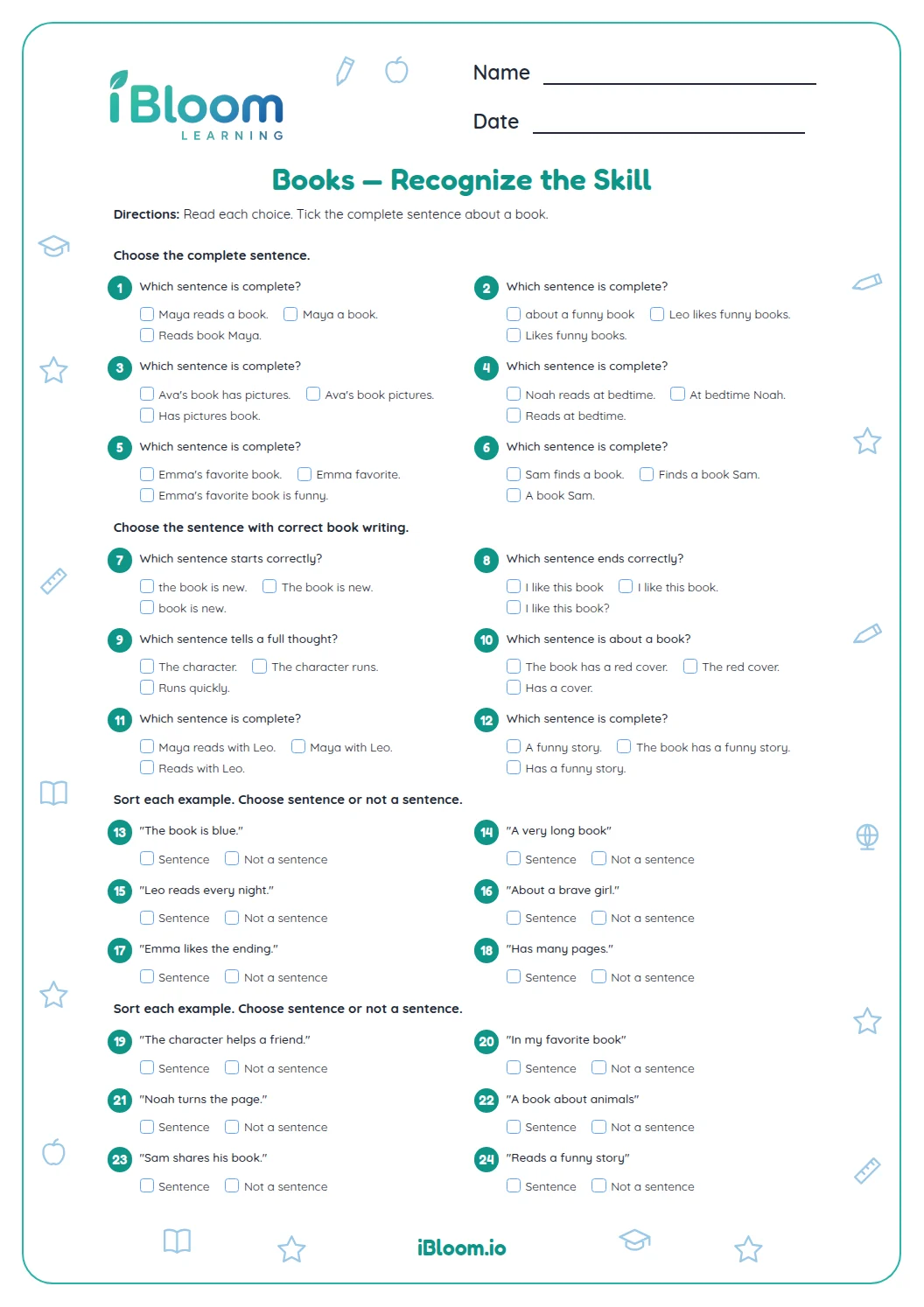
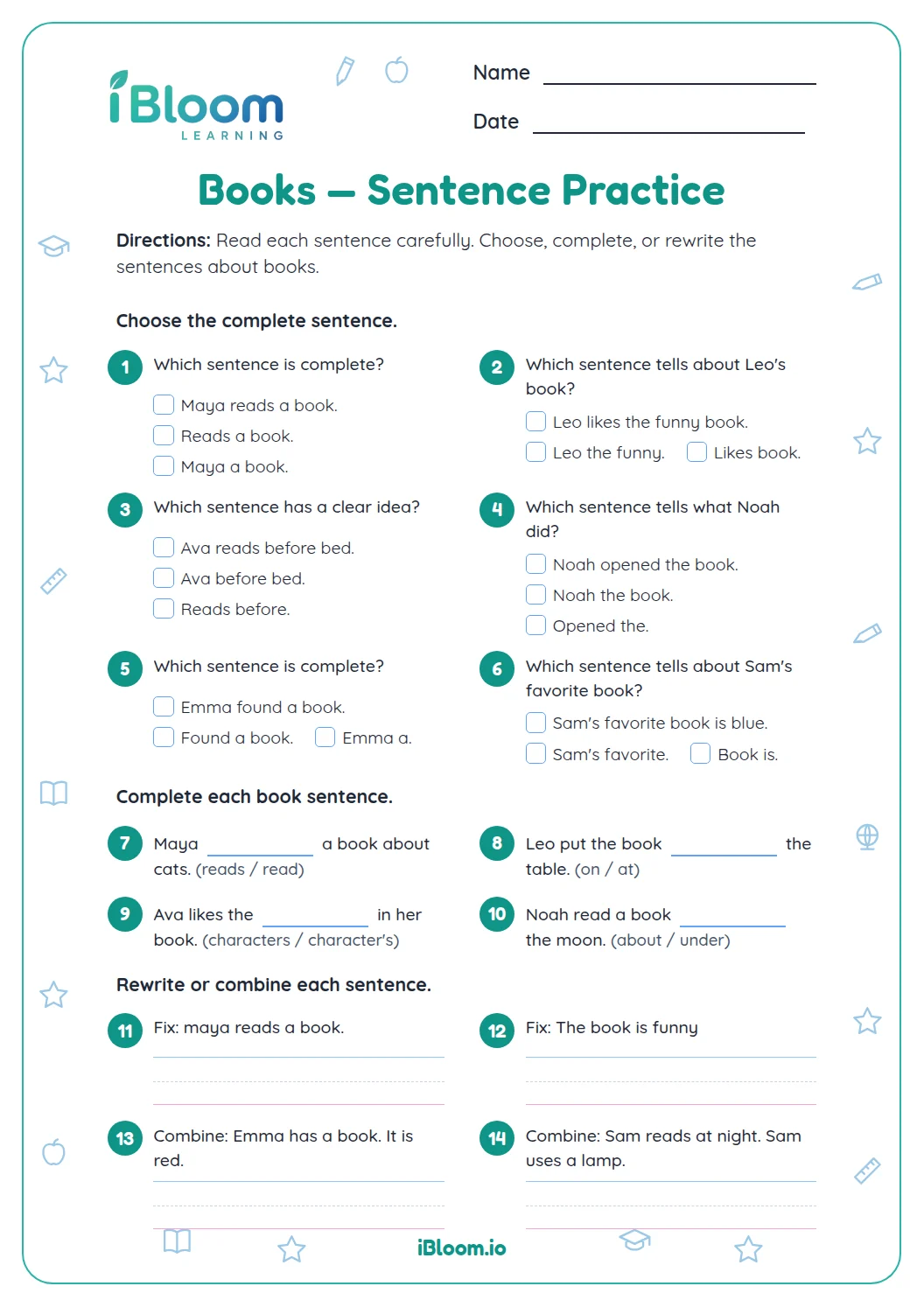
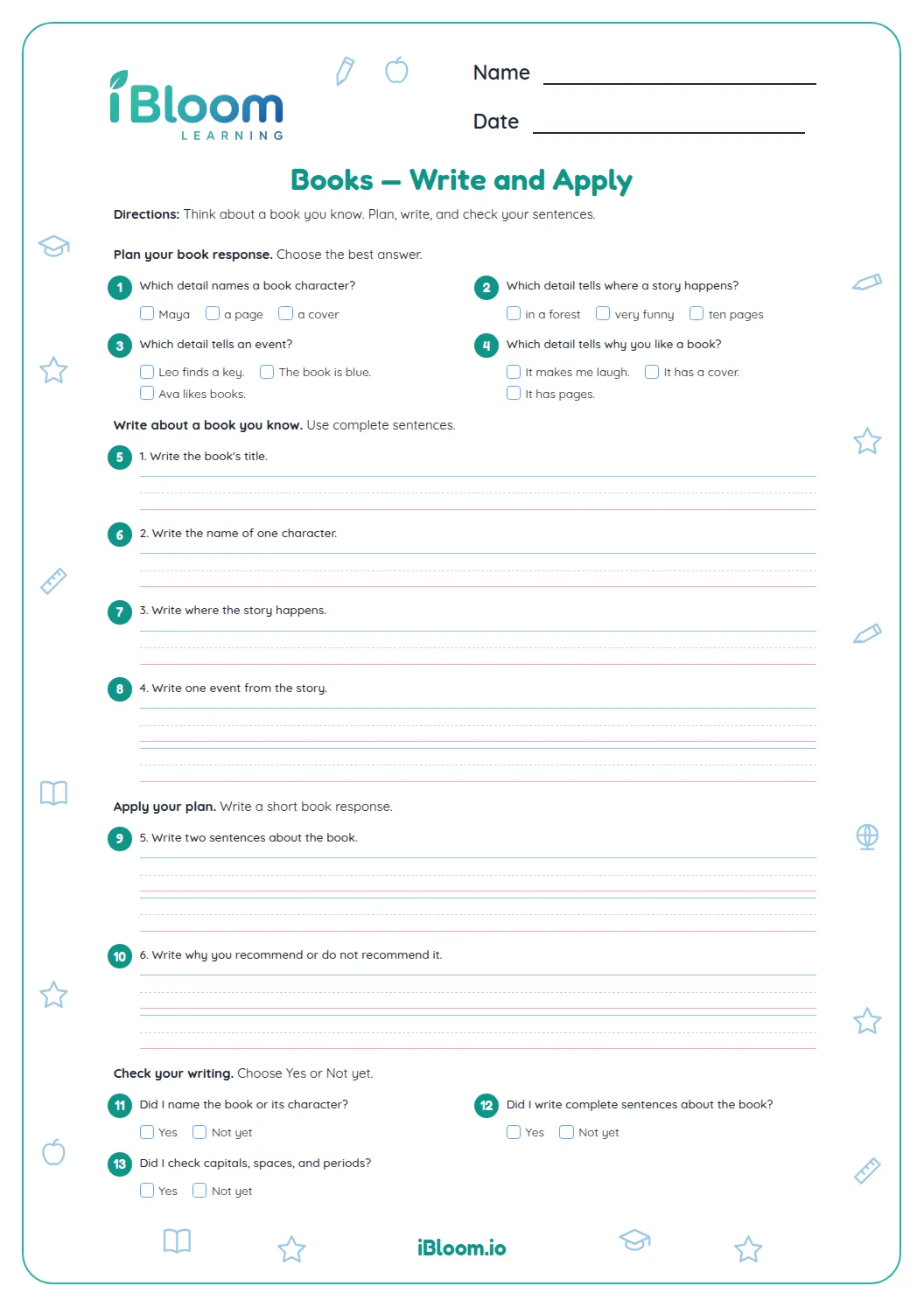
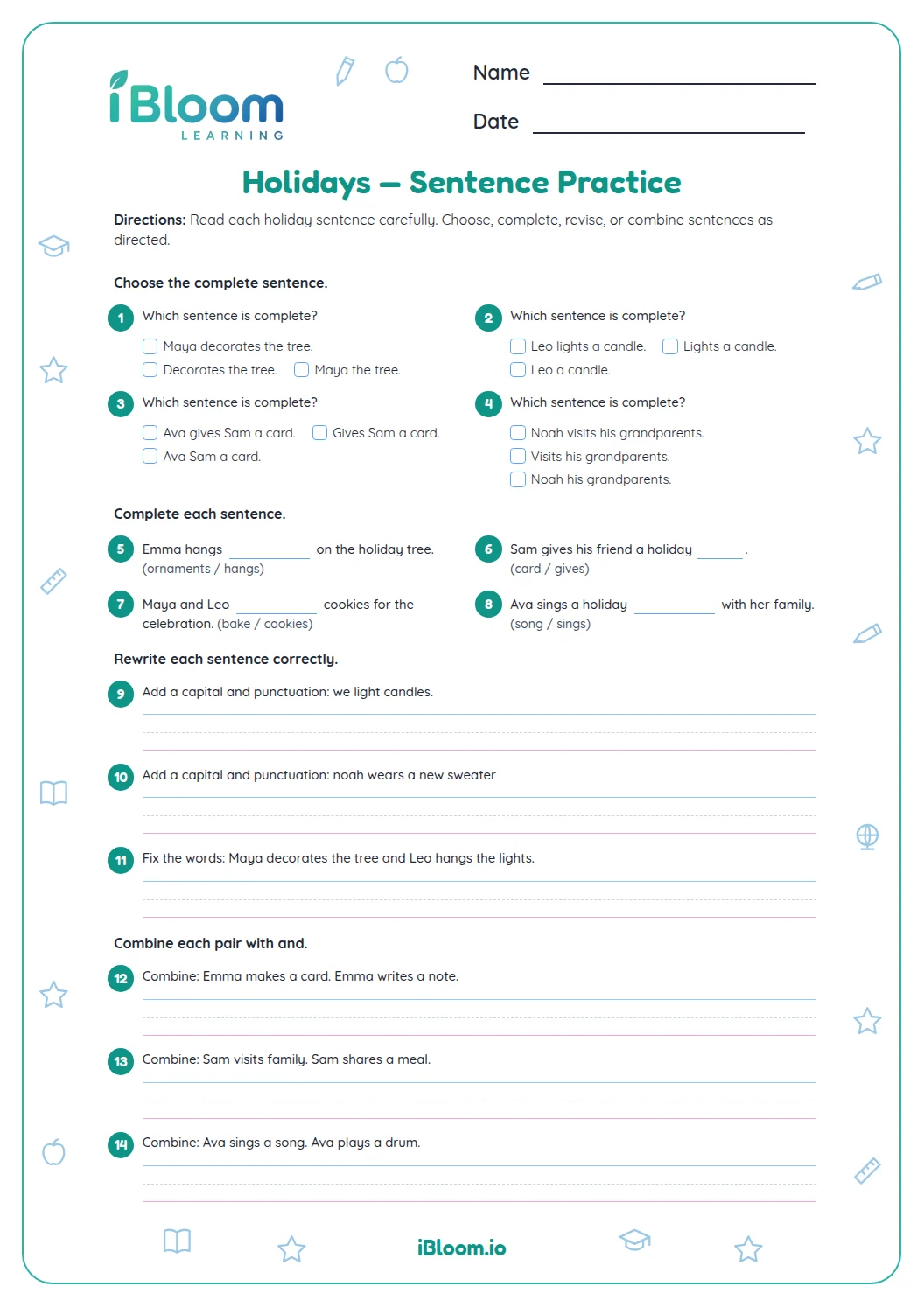
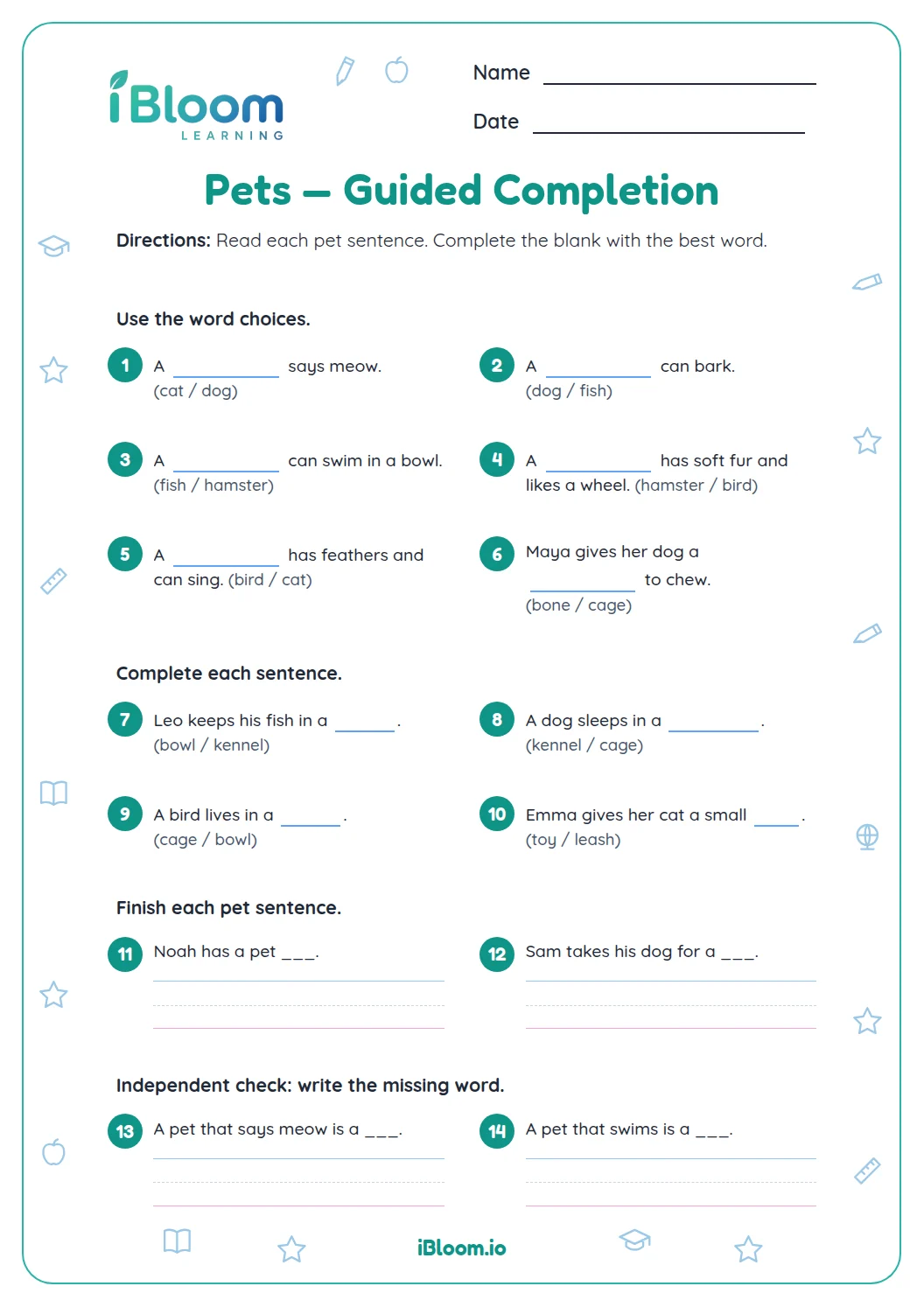
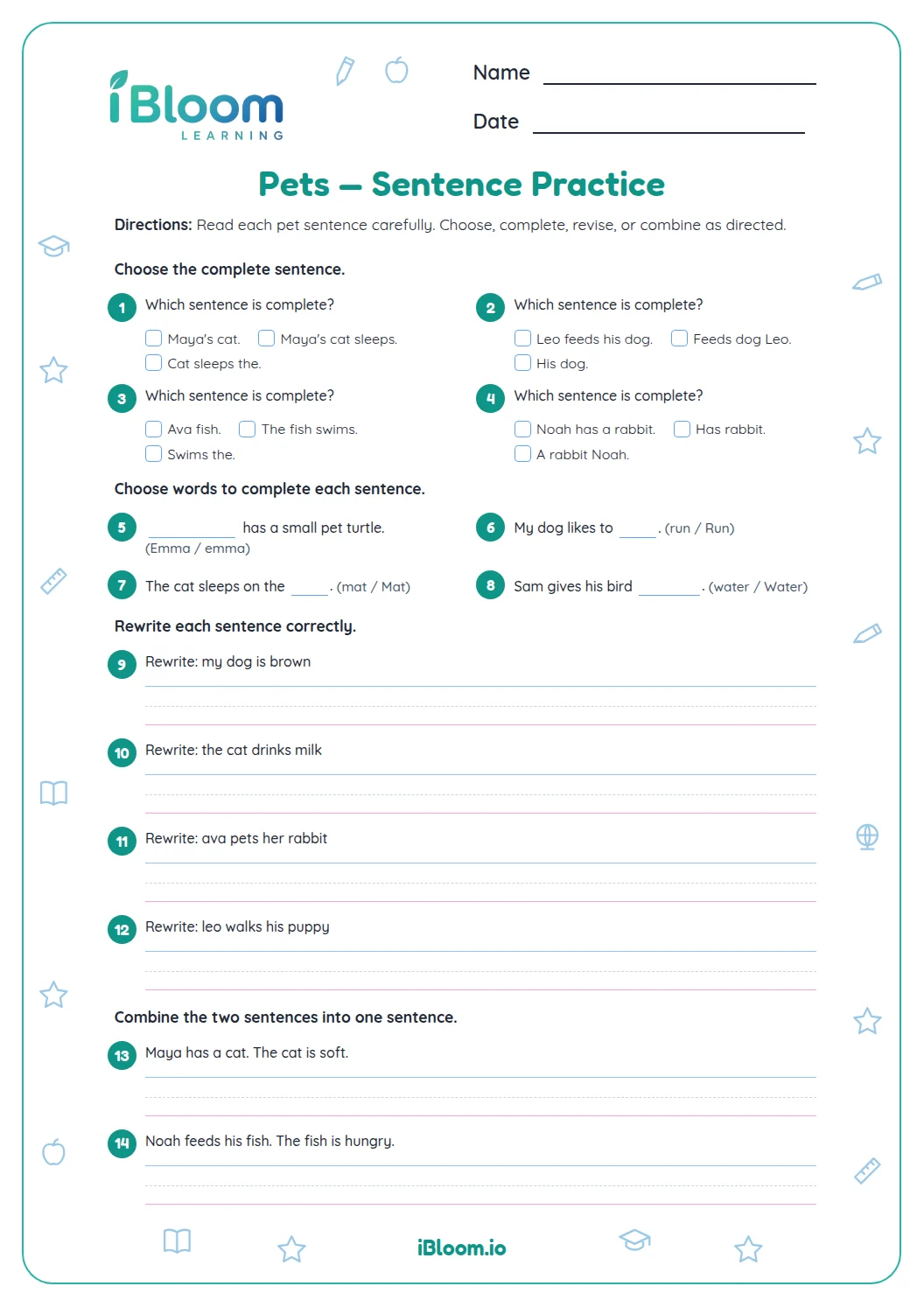
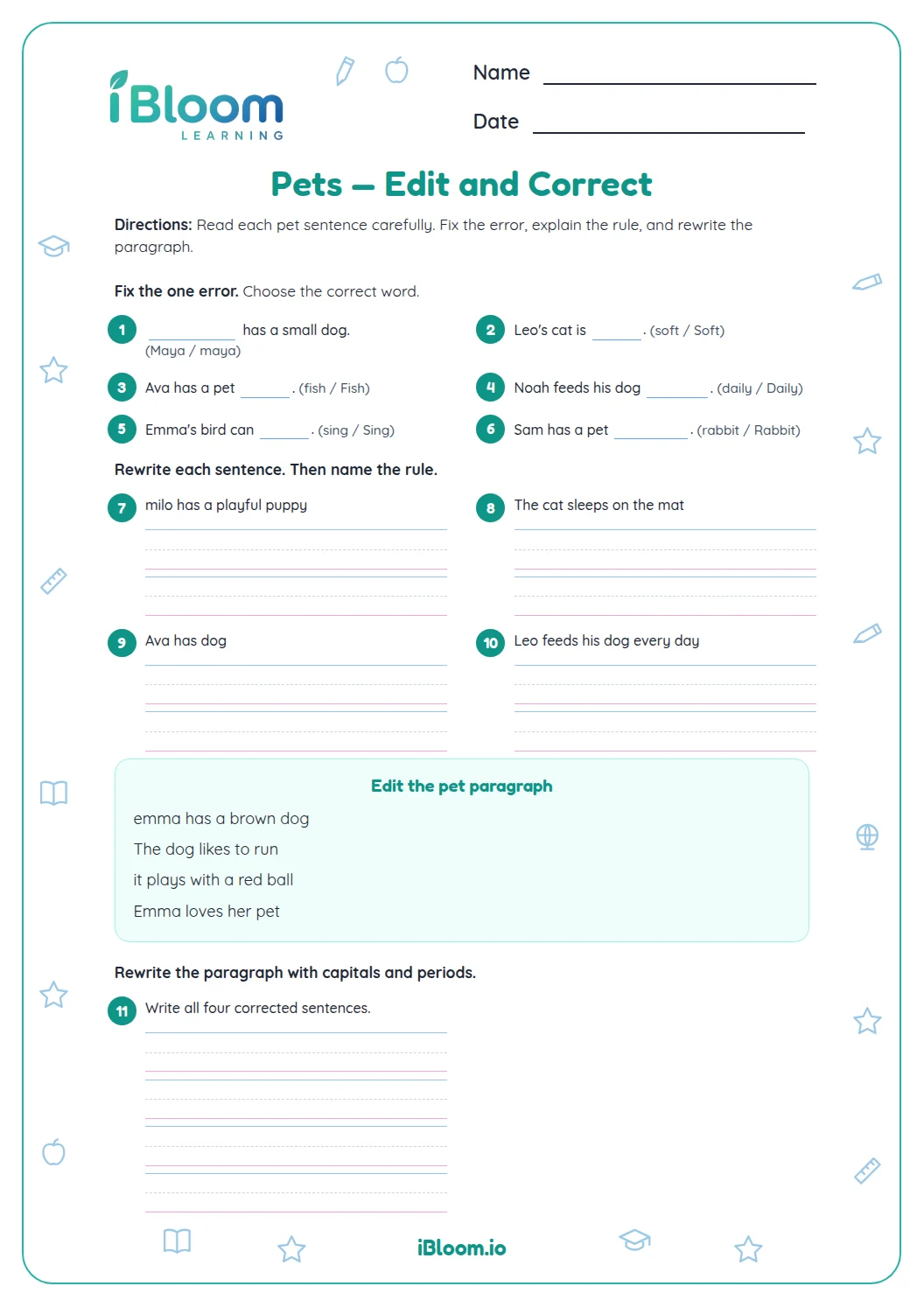
This Grade 1 printable uses book-themed sentence choices, completions, revisions and short writing. Children identify complete ideas, add useful details, and check capitals and end marks. The answer key includes model responses for open writing.
How can a sentence tell a complete idea?
A complete sentence tells a full idea. “Maya read a book.” tells who and what happened; “Maya and the book” leaves the idea unfinished. Questions 1–4 ask children to choose clear sentences.
- 1Maya read a book.
- 2It tells who: Maya.
- 3It tells what happened: read a book.
How can you add a detail about a book?
A useful detail can tell what a book is about or why someone likes it. Questions 8–10 compare revisions; the best choice adds information that makes the idea clearer.
How do capitals and end marks help?
Start a sentence with a capital and finish it with an end mark. Questions 11–16 give children practice explaining, writing, editing and adding details.
How to use this worksheet
- 1Read each choice aloud and listen for a complete idea.
- 2For a blank, think of one word that finishes the thought.
- 3Say your sentence before writing it.
- 4Check that it begins with a capital letter.
- 5Add an end mark and reread the sentence.
Common mistakes and quick fixes
The mistake
Writing only a naming word, such as “book.”
The fix
Say who and what happens: “I read.”
The mistake
Forgetting the small words in a sentence.
The fix
Read it aloud and listen for a smooth, complete thought.
The mistake
Leaving off the ending mark.
The fix
Point to the final word and add a period, question mark or exclamation mark.
What to practice next
Make more practice
Questions parents and teachers ask
How many questions are on the sheet?
There are 16 questions across three parts. Children choose complete sentences, finish sentence starters and write their own book sentences. The separate key gives answers for choices and sample responses for writing. Your child’s sentence may use different words and still be correct if it is complete and about the prompt.
Should my child copy the sample answer?
No. The sample shows one way to answer. Children can write a different sensible idea, such as naming another book or reading place. Encourage your child to say the sentence aloud first, then write it with a capital letter at the start and an end mark.
What makes a sentence complete?
A complete sentence gives a whole idea. It usually tells who or what the sentence is about and what happens or what it is like. “The bear reads” is complete; “The bear” leaves the listener waiting for more.
How can I help with spelling?
For this practice, focus on getting a complete thought onto the page. Your child can say sounds slowly, use a classroom word wall or ask for help with a tricky word. Then reread together to check that the sentence says what they meant.
Is there an answer key?
Yes. The answer key gives the correct choices and sample responses for open-ended writing. Accept other clear, complete sentences that fit the prompts. It is useful to read the sentence aloud while checking it, since the child can hear whether an idea feels finished.