






About this worksheet
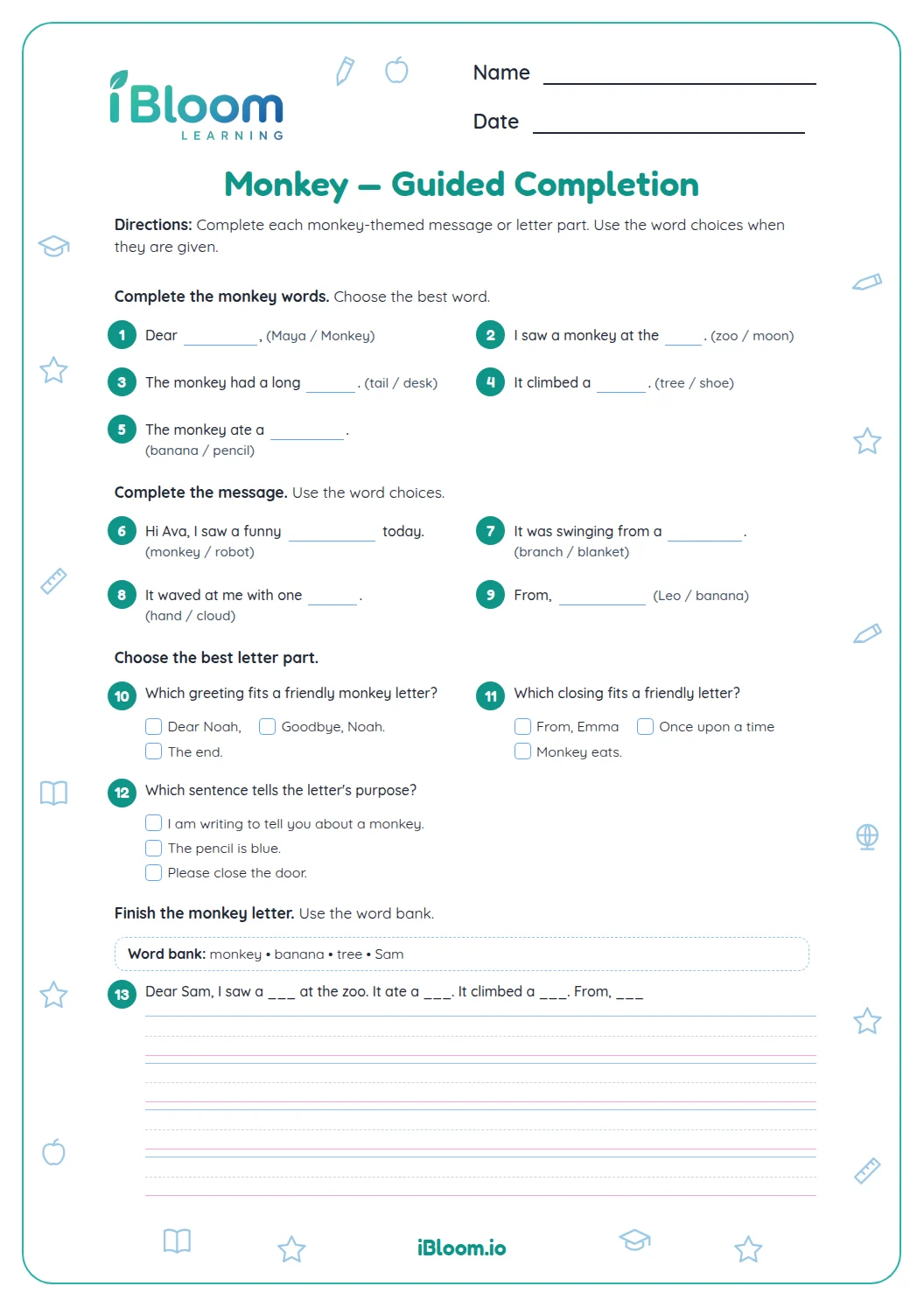
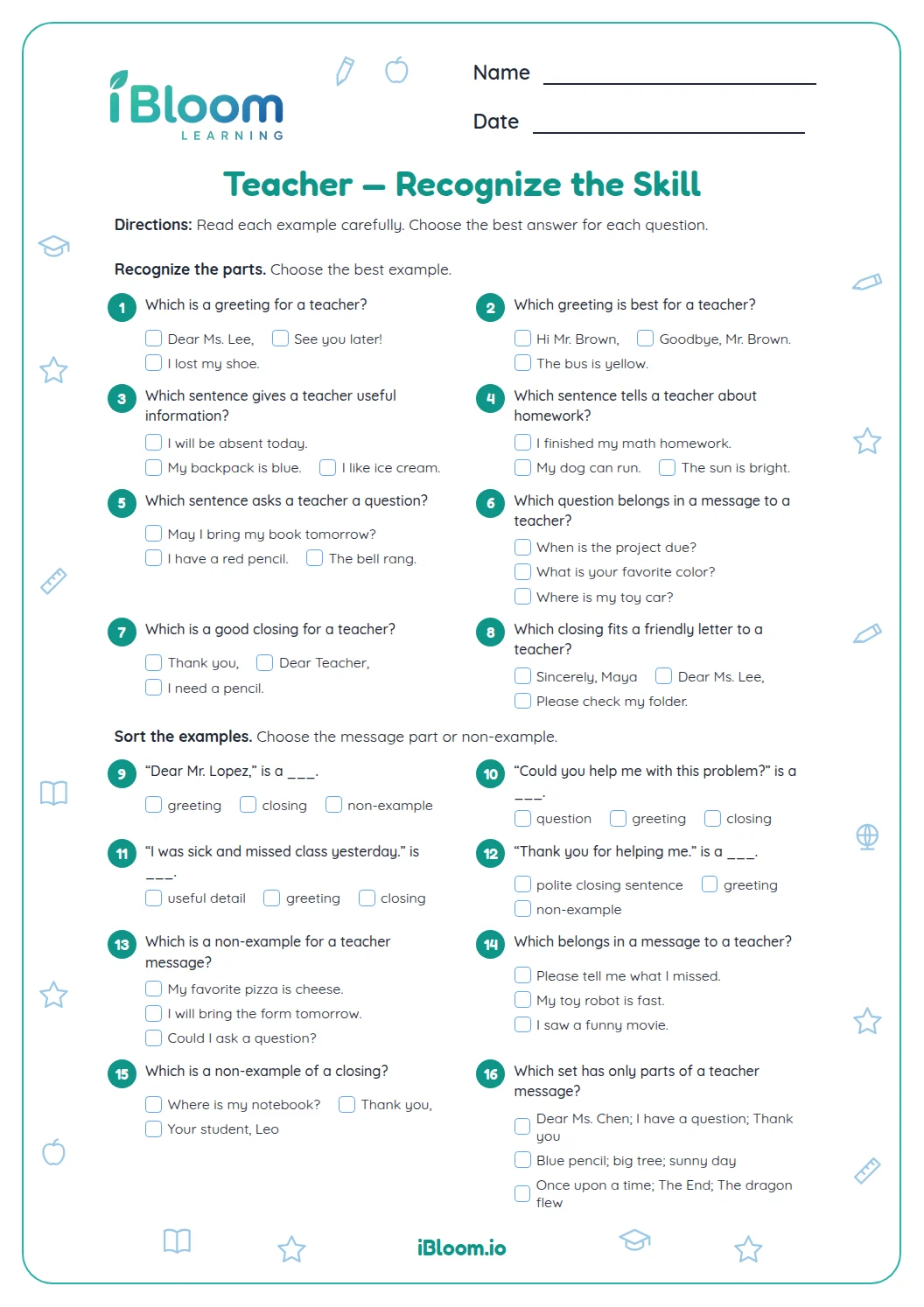
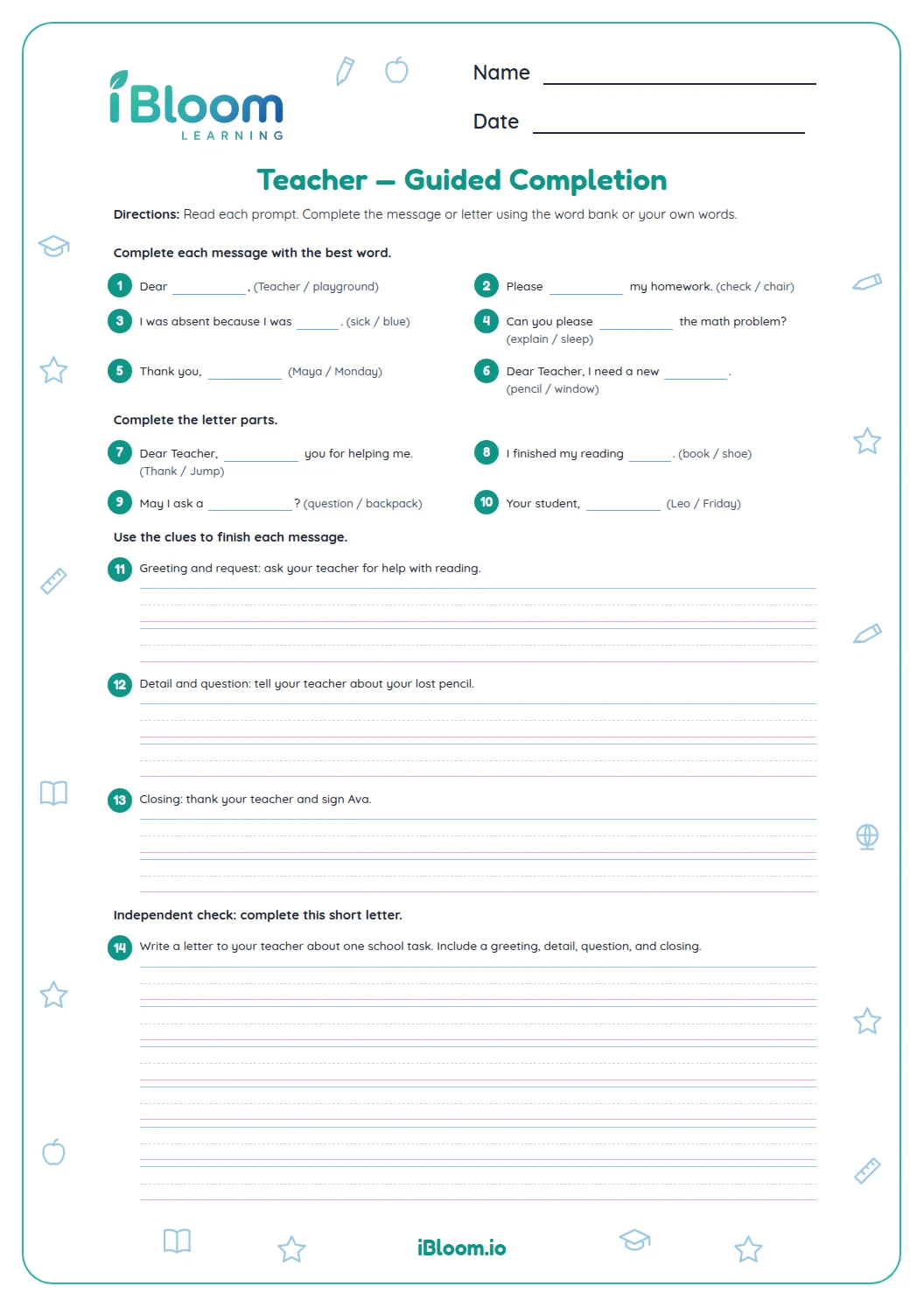
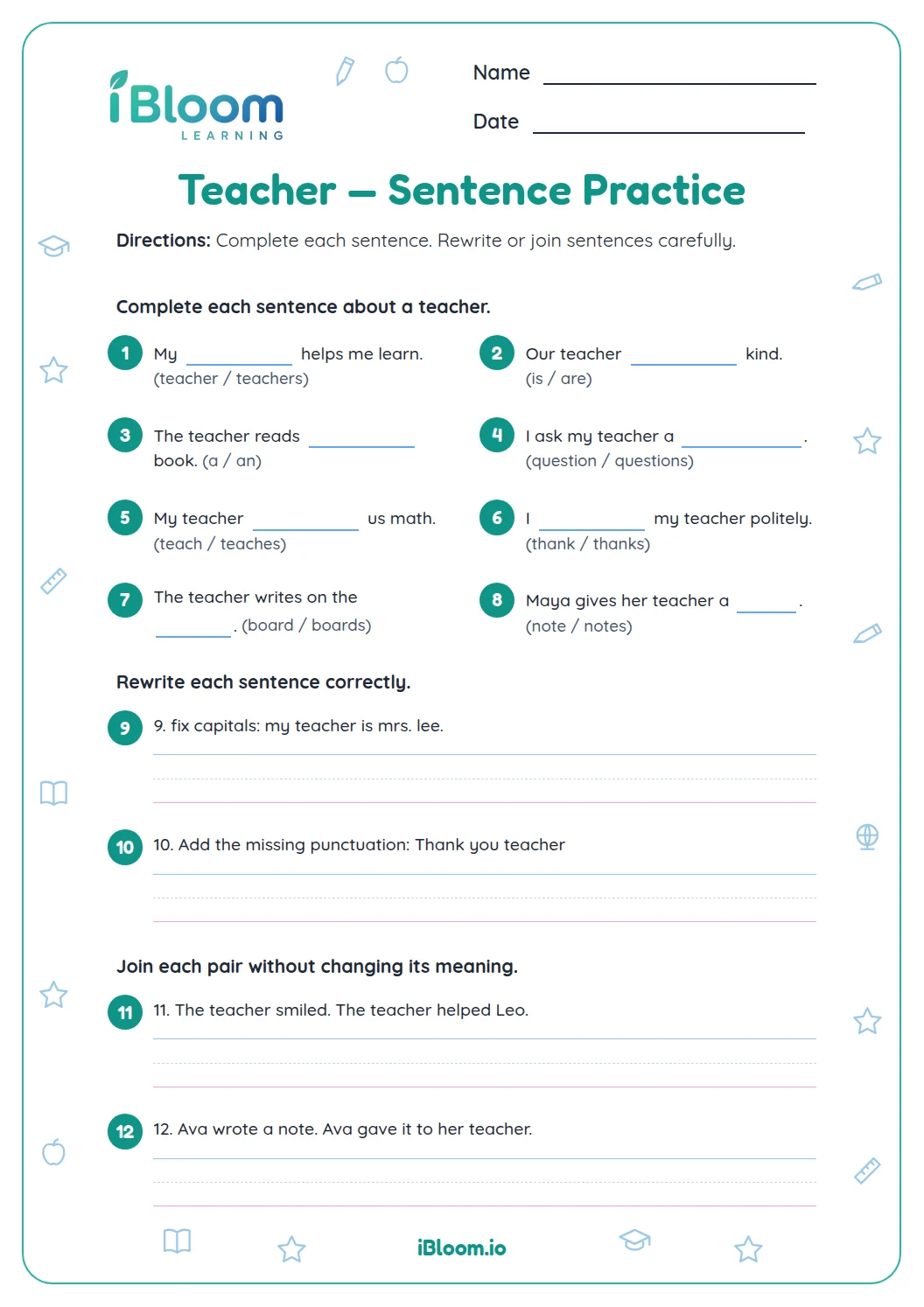
This Grade 2 writing worksheet helps children plan and write short messages and a friendly letter around a monkey theme. Students choose a clear message, write a note with relevant details, and build a letter with a greeting, sentences, a question, and a closing. It contains 14 questions across three worksheet pages, followed by a separate three-page key with sample responses. The activities expand the old sheet’s monkey-letter prompt into smaller planning and writing steps.
How does the worksheet help children plan a message?
Part A asks children to choose a complete message, a friendly greeting and closing, and details that help a reader understand the monkey topic. These choices prepare them to write for a friend rather than list disconnected words.
What makes a short message clear?
A clear message tells the reader what the writer wants to share or ask. It uses a complete thought and details that make sense for the reader.
- 1Which message tells a friend what to bring?
- 2“Bring your red ball to the park.” is complete and tells the friend what to bring.
What belongs in a friendly letter?
Parts B and C move from a short note to a brief letter. Children practice a greeting, related details, a question, and a closing with a name. The key offers samples; other clear, on-topic responses are acceptable.
How to use this worksheet
- 1Choose the complete message that fits each reader and purpose.
- 2Write a note with a clear sentence and monkey-related detail.
- 3Start the letter with a greeting.
- 4Add related sentences and a question for the friend.
- 5Close the letter and sign it, then check with the sample key.
Common slips and quick fixes
The mistake
Writing a fragment instead of a complete message.
The fix
Reread the words to make sure they tell a complete thought.
The mistake
Leaving out the reader or purpose.
The fix
Ask who will read the note and what the message should tell them.
The mistake
Putting the greeting or closing in the wrong place.
The fix
Use the greeting at the start and the closing with your name at the end.
What to practice next
Make more practice
Questions parents and teachers ask
What does this worksheet teach about messages?
It asks children to choose and write clear messages for a friend. The prompts practice a complete thought, a useful detail, and a question, then apply those parts in a short note and friendly letter. The reader and purpose guide the choices and open-ended writing tasks.
How many writing prompts are included?
The worksheet has 14 questions in three parts. Six planning choices come first, followed by four short-note prompts and four prompts that help children build a friendly letter. The planning section focuses on greetings, closings, complete thoughts, and details. That helps children prepare before drafting the note.
Does the answer key require the same wording?
No. The key gives sample responses for open-ended writing. A child’s answer can use different words as long as it follows the prompt, makes sense to the friend, and includes the requested letter or message part. Use a response that fits the prompt, even when it differs from the sample.
What parts should a friendly letter include?
This practice uses a greeting at the beginning, clear sentences about the monkey topic, a question for the friend, and a closing with the writer’s name. Children build those pieces across the final part. The examples keep the reader in mind and give each message a clear purpose.
How many pages are in the worksheet and key?
The writing space uses three worksheet pages, and the separate answer key uses three pages. The longer layout leaves room for students to plan and write their note and letter by hand. This format gives children separate prompts for planning, composing, and checking.