



About this worksheet
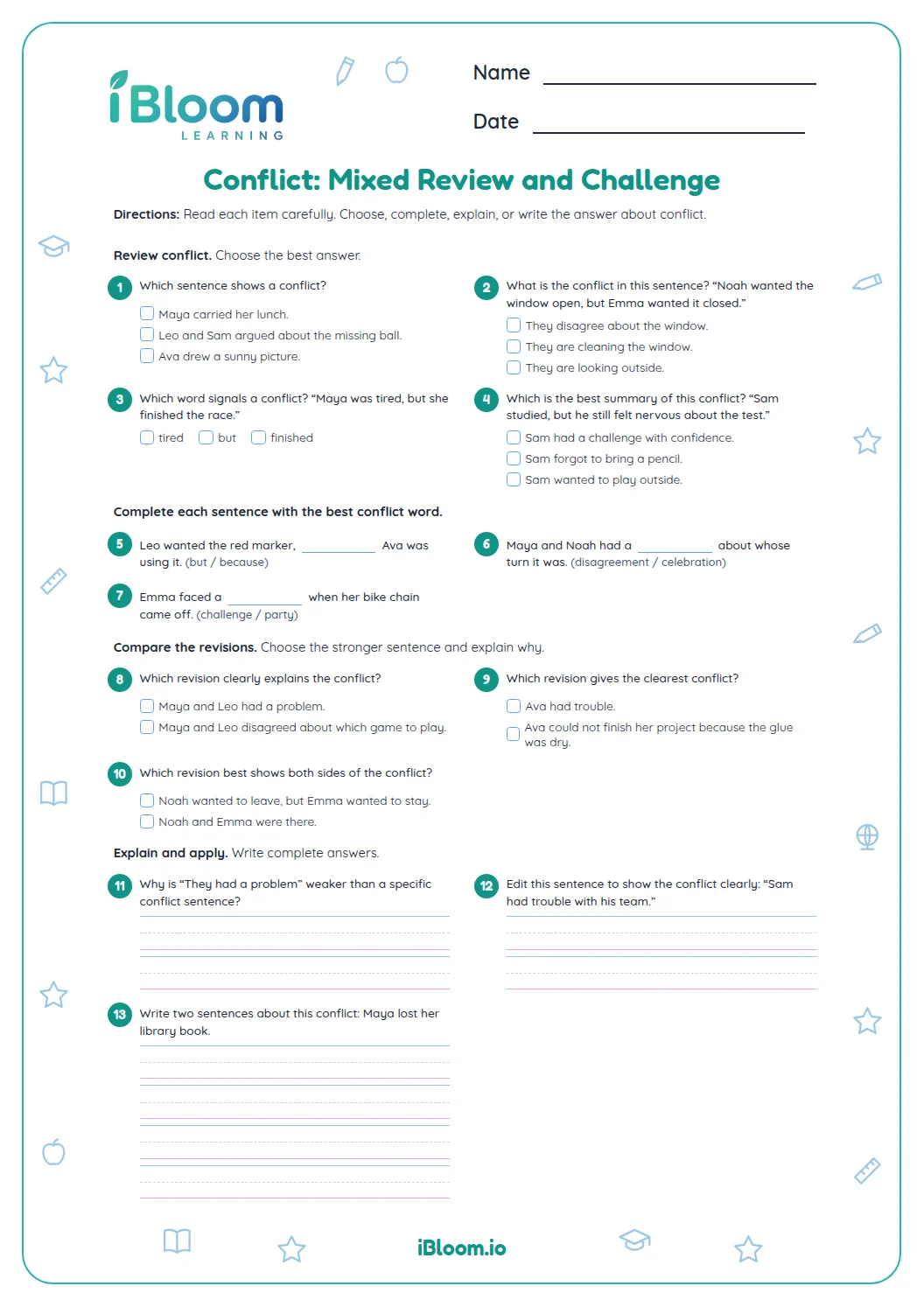
This Grade 3 writing worksheet helps students explain a conflict with connected details. Students identify problems and causes, complete planning statements about Maya and Leo sharing a marker, then write a short paragraph explaining what each wants and a fair solution. The work supports Common Core W.3.2: writing informative or explanatory texts that examine a topic and convey ideas clearly. The answer key provides model responses while allowing students to phrase their own explanations.
Aligned to W.3.2
What makes a situation a conflict?
A conflict is a problem or disagreement between people, or a challenge someone must solve. A detail belongs when it shows what is getting in the way; a setting detail alone does not explain the conflict.
- 1Maya and Leo both want the last seat.
- 2Their wants cannot both be met at once, so this is a conflict.
How can a writer explain why a conflict began?
First state the problem in plain words. Then name a cause: what did each person want, need or misunderstand? A cause gives the reader a reason the disagreement started.
What makes a solution fair?
A useful solution responds to the problem and considers the people involved. In questions 9–12, Maya and Eli need the same room for different activities, so taking turns is one possible solution.
- 1Maya and Eli can take turns to use the room fairly.
- 2That solution gives both people a chance.
How do I put the details into a paragraph?
Name what each person wants, explain why the disagreement began, and describe a fair next step. Then connect those details in a short paragraph.
- 1Maya and Leo both want the marker.
- 2They can take turns so each can make a poster.
How to use this worksheet
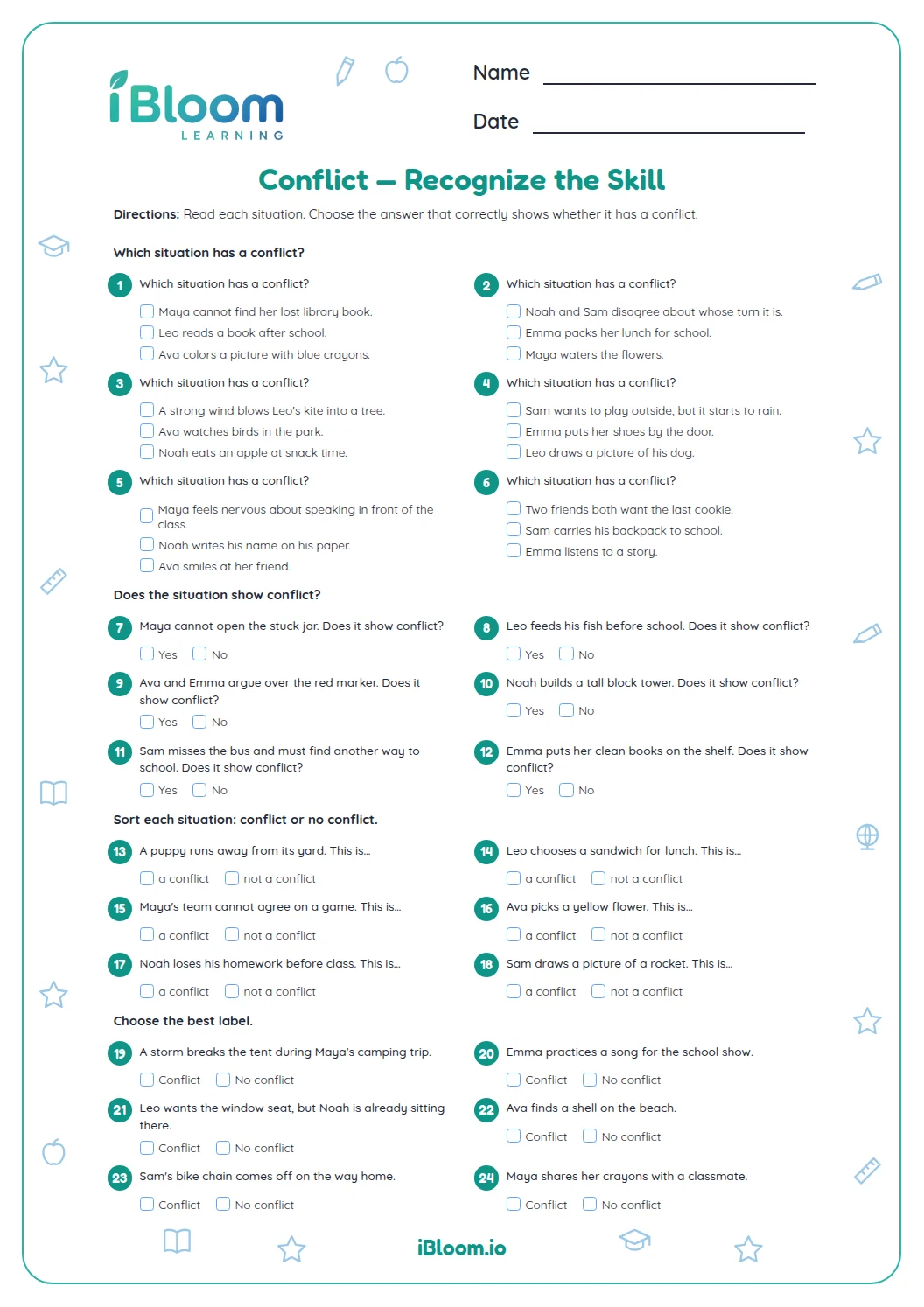
- 1Choose the situation that contains a problem or disagreement.
- 2Name what caused Maya and Leo’s marker conflict.
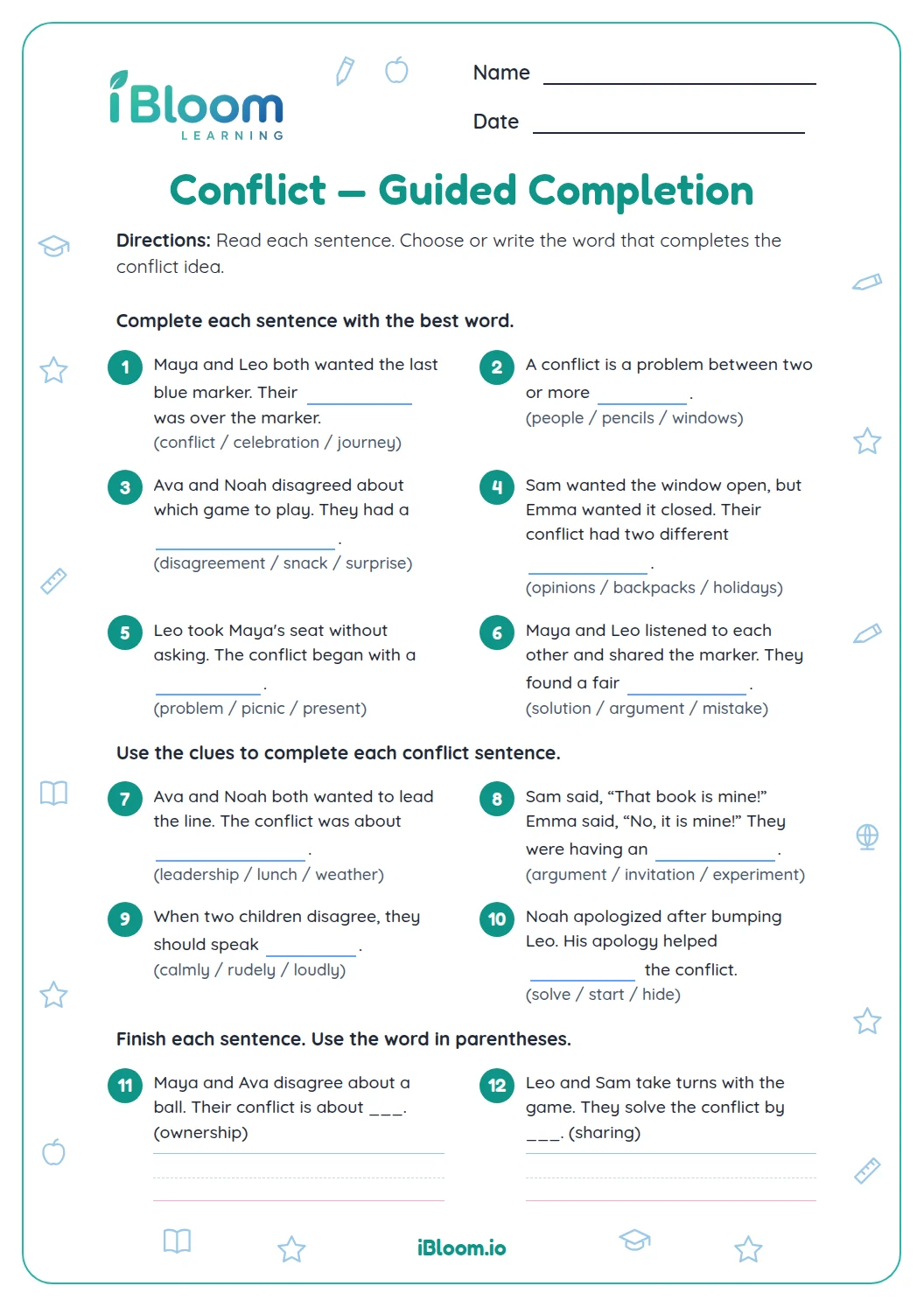
- 3Complete the planning statements about what each person wants.
- 4Choose a fair way for both people to use the marker.
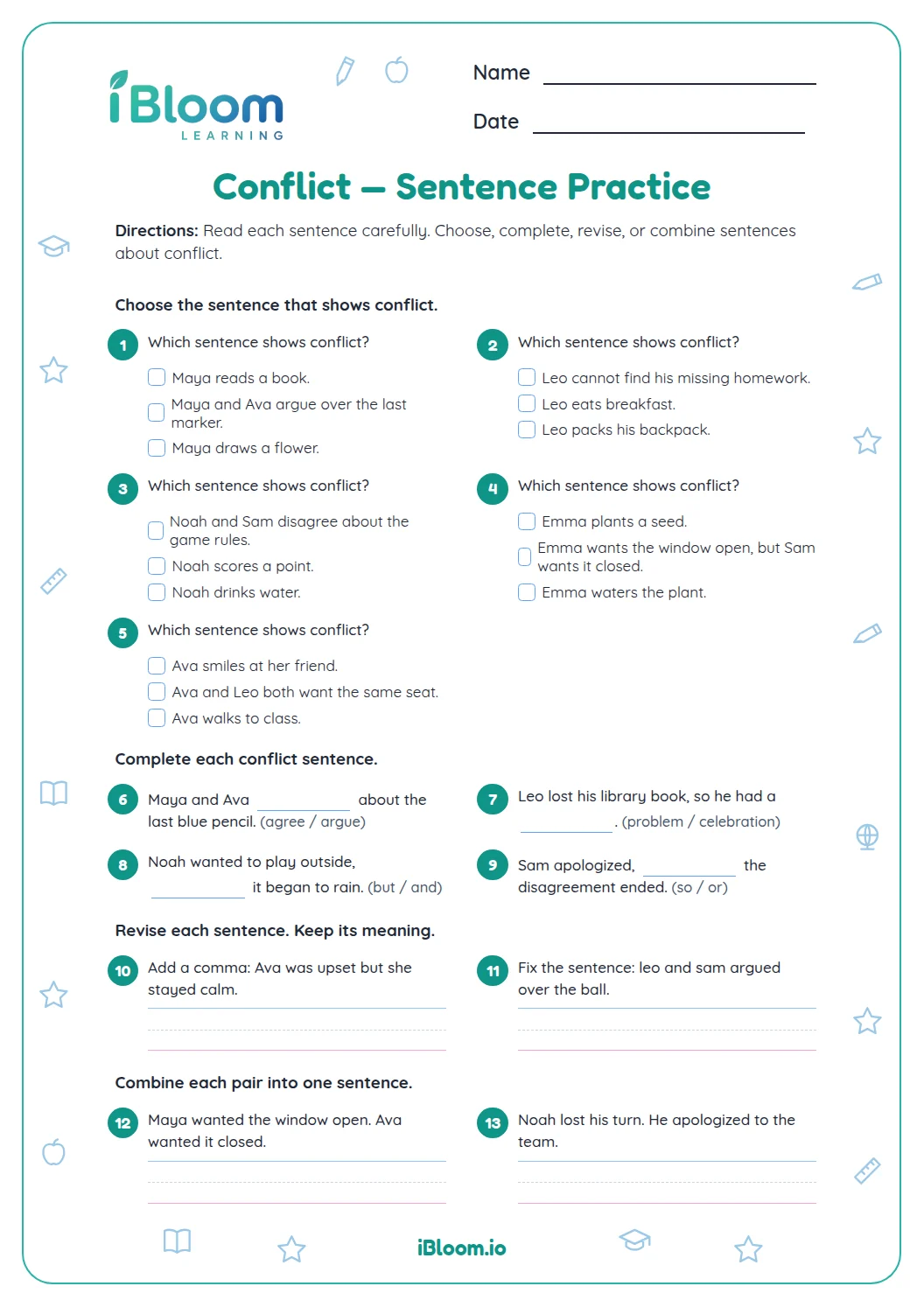
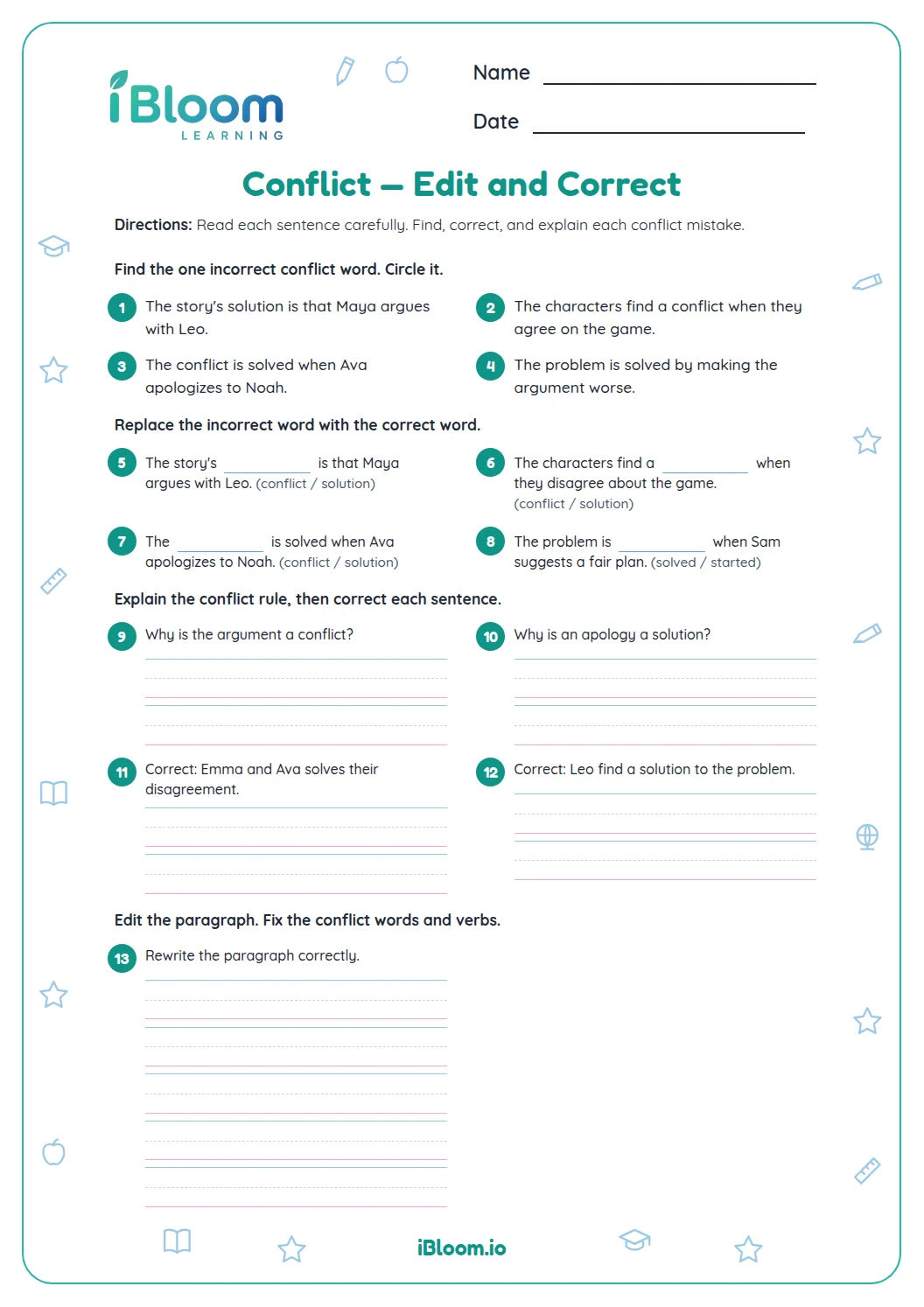
- 5Write a short paragraph that connects the conflict and solution.
Common mistakes and quick fixes
The mistake
Retelling the setting without naming the problem.
The fix
Write what the people want and why those wants clash.
The mistake
Naming an effect as the cause.
The fix
Ask what happened first and what happened because of it.
The mistake
Suggesting a solution that helps only one person.
The fix
Check whether both people get a reasonable next step or turn.
Common Core alignment
Students use clear explanatory writing to examine a conflict and communicate connected details.
Write an explanation that names a conflict and conveys its cause and a possible solution clearly.
On this sheet: Students explain the conflict scenario through connected facts and ideas in sentence and paragraph responses.
Show the official wordingHide the official wording
Write informative/explanatory texts to examine a topic and convey ideas and information clearly.
What to practice next
Make more practice
Questions parents and teachers ask
What is a conflict in a story or writing prompt?
The worksheet asks students to explain why Maya and Leo disagree about using the same marker and to suggest a fair way to share it. In the final response, a student can state what each person wants and explain how taking turns could solve the problem.
Does the answer key require exact wording?
No. The key gives sample responses to show the kind of detail that answers the question. A student may use different words as long as the response names the conflict, explains the cause or gives a reasonable solution that connects to the people in the scenario.
What should a conflict paragraph include?
A cause explains why the conflict began. On this page, Maya and Leo both want the same marker, so students can name that shared need as the cause and then explain a fair way to use it. This distinction helps students keep the reason separate from the result.
What can students write about after this page?
A solution is a fair action that addresses the problem. For Maya and Leo, taking turns with the marker gives each person a chance to use it. Students explain that idea in the final paragraph and can add why the plan is fair.