




About this worksheet
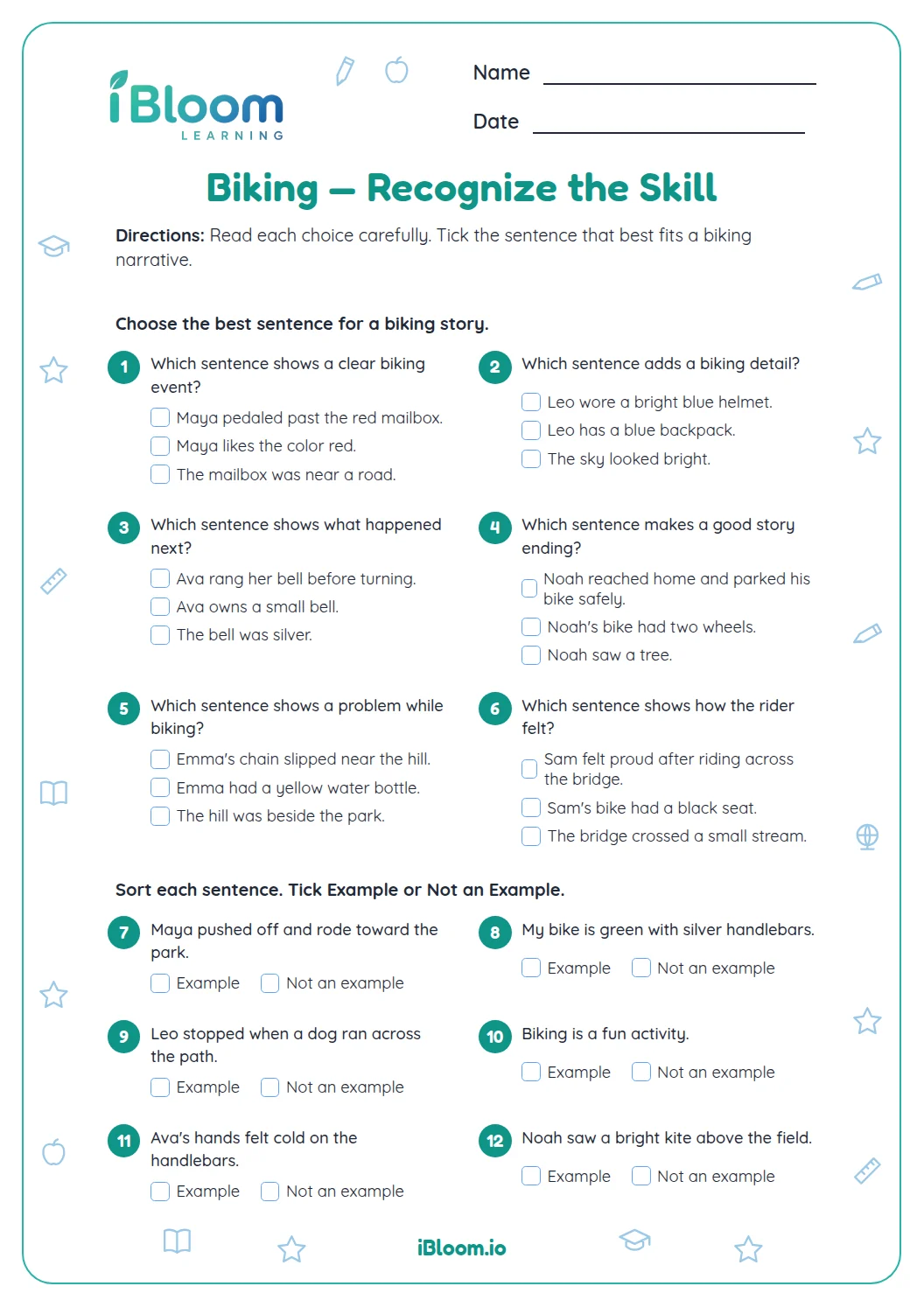
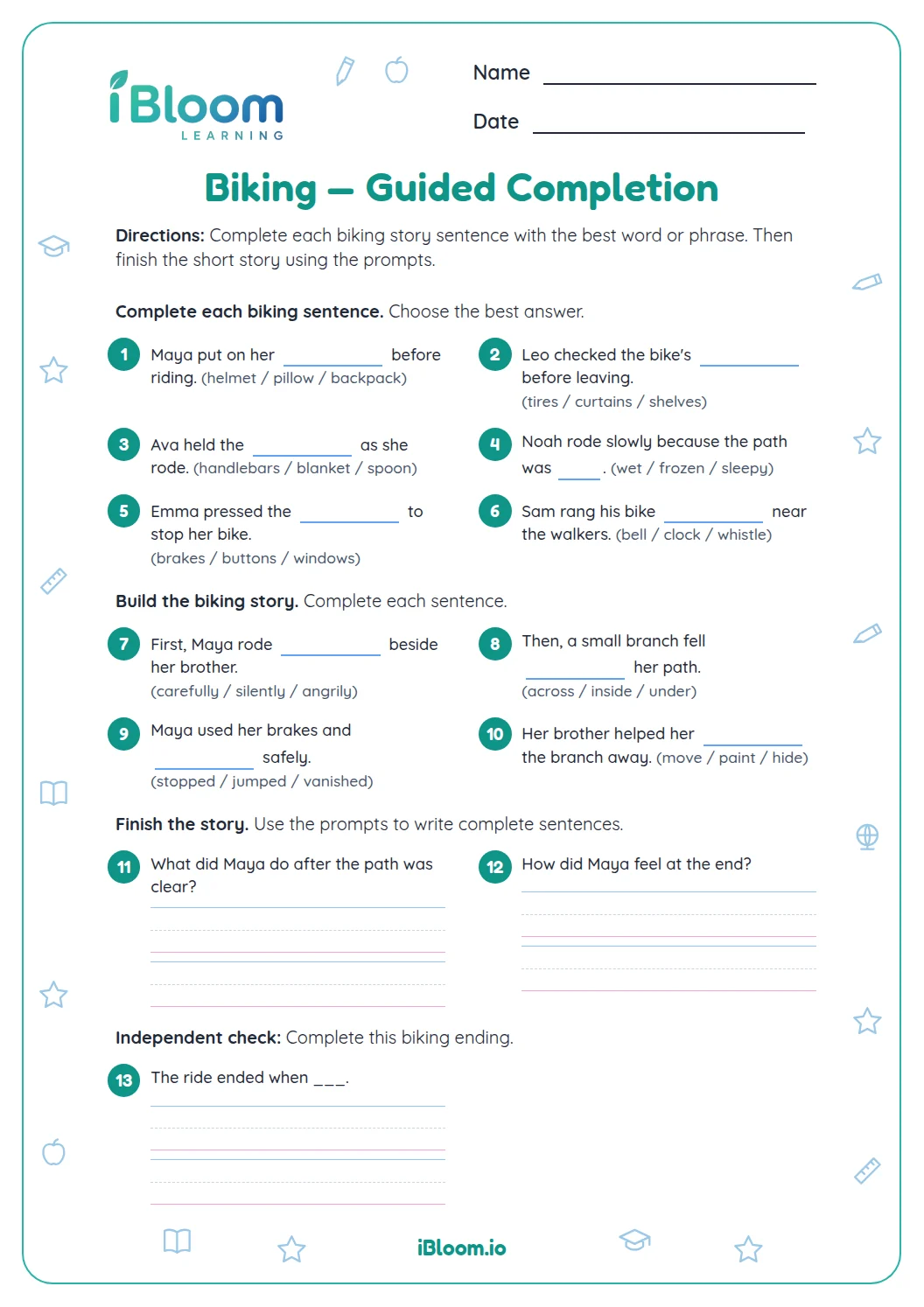
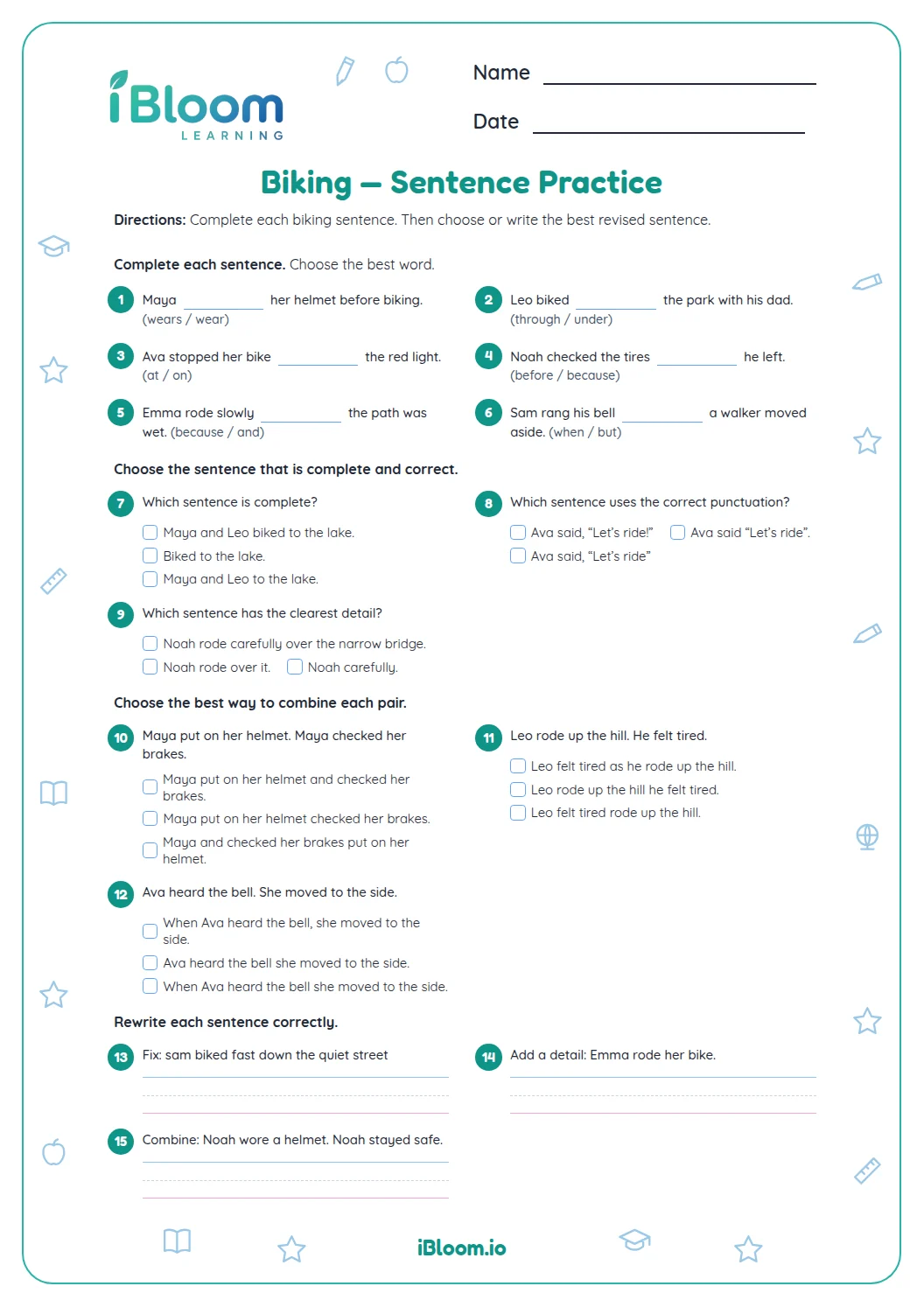
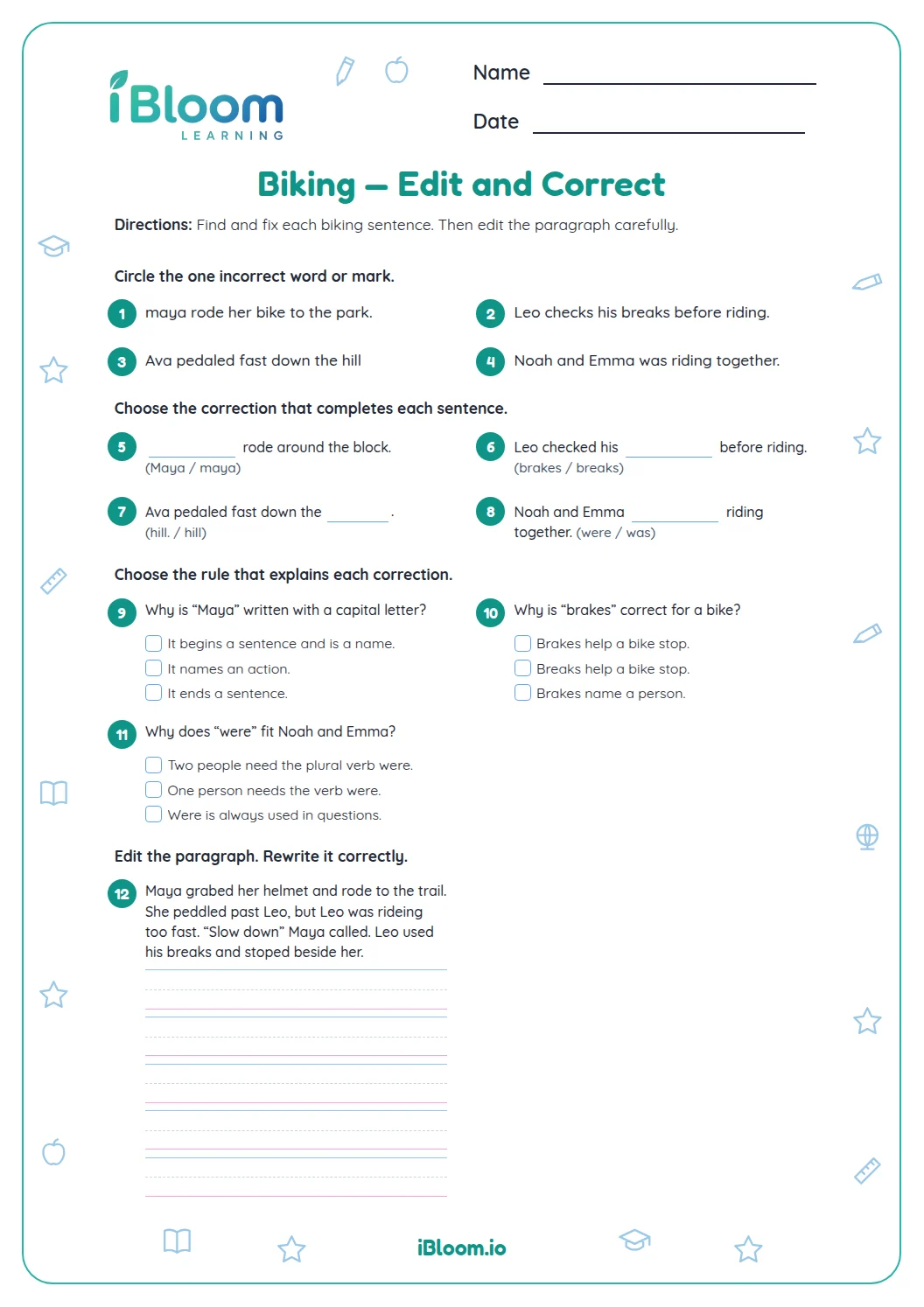
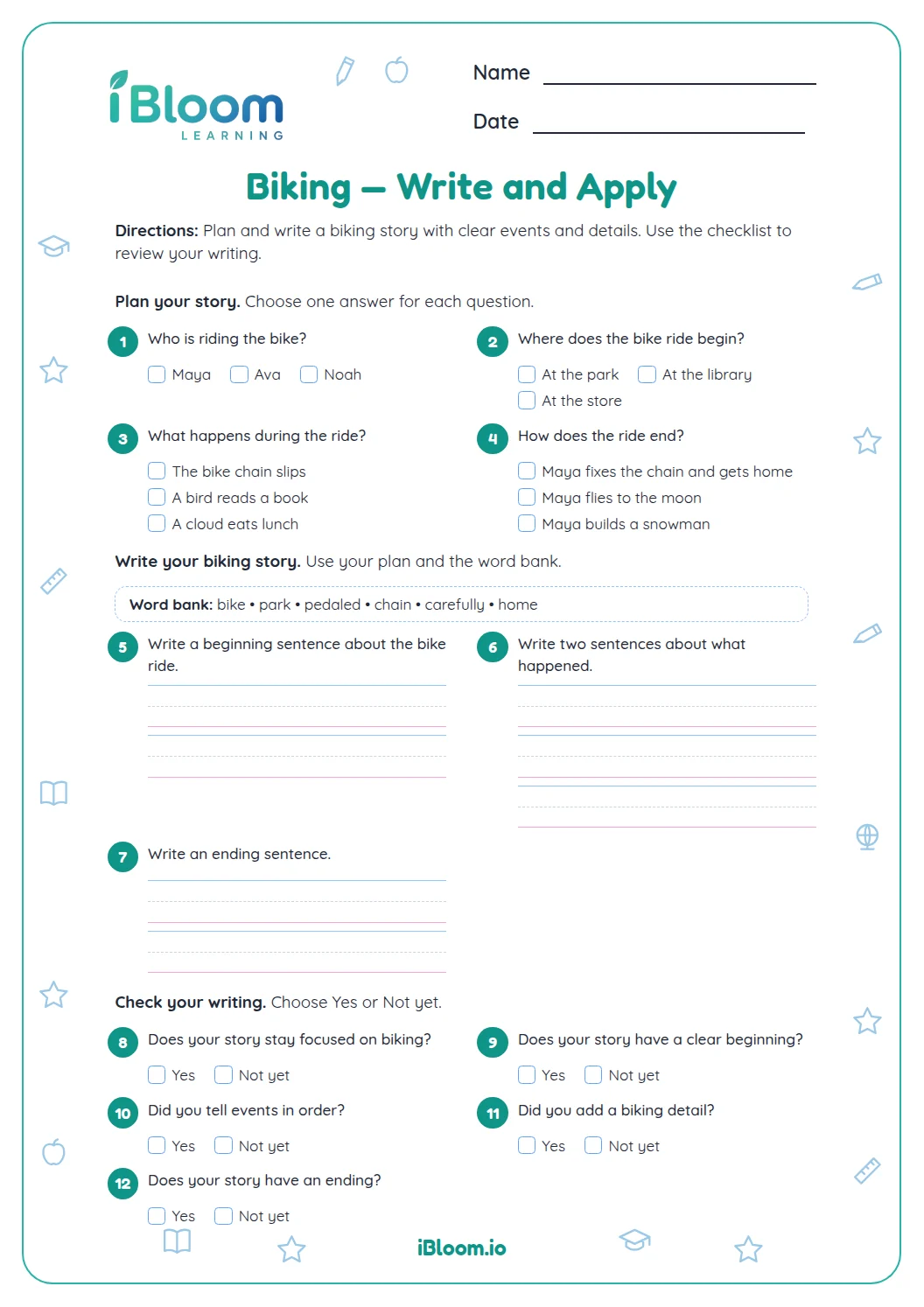
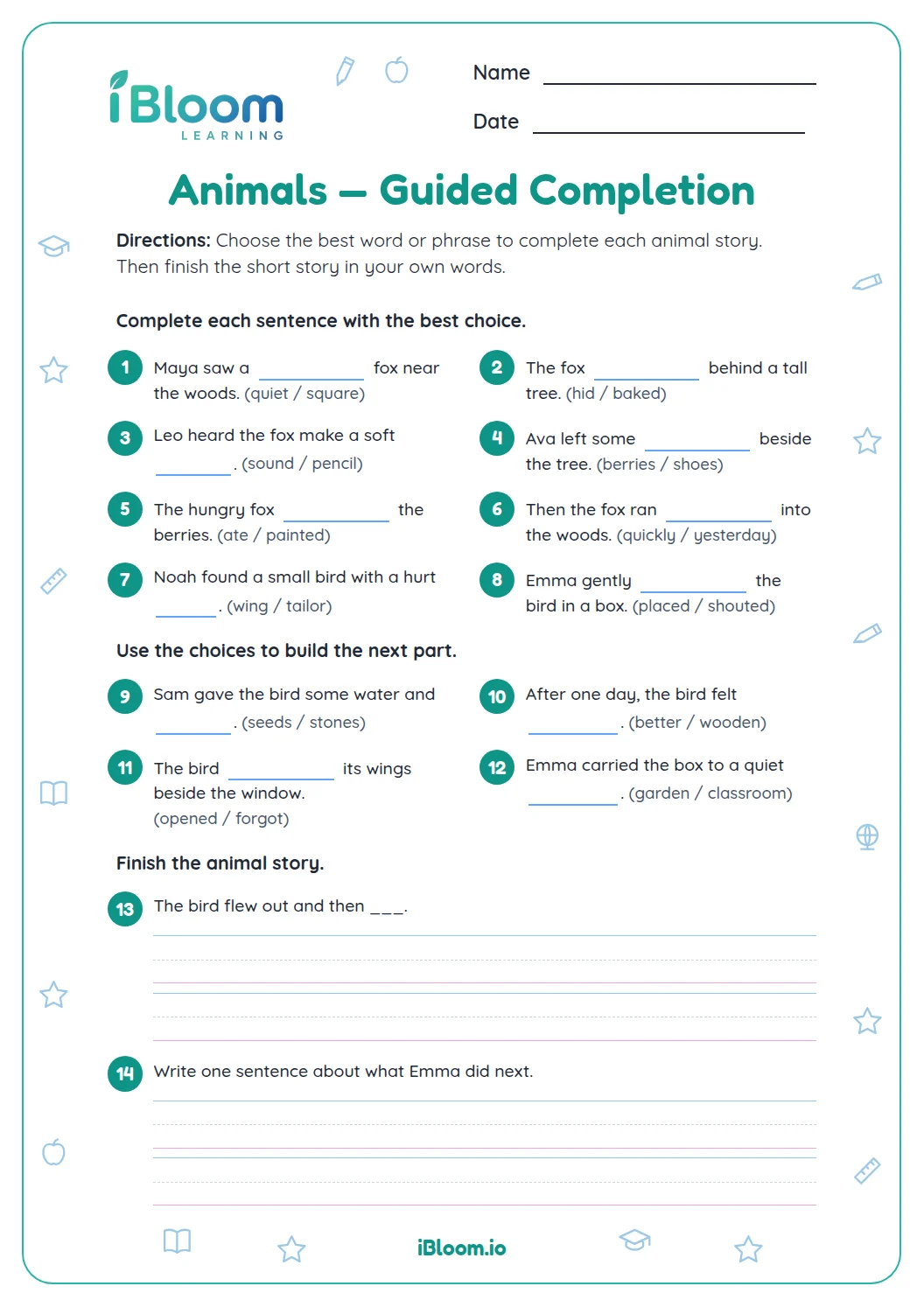
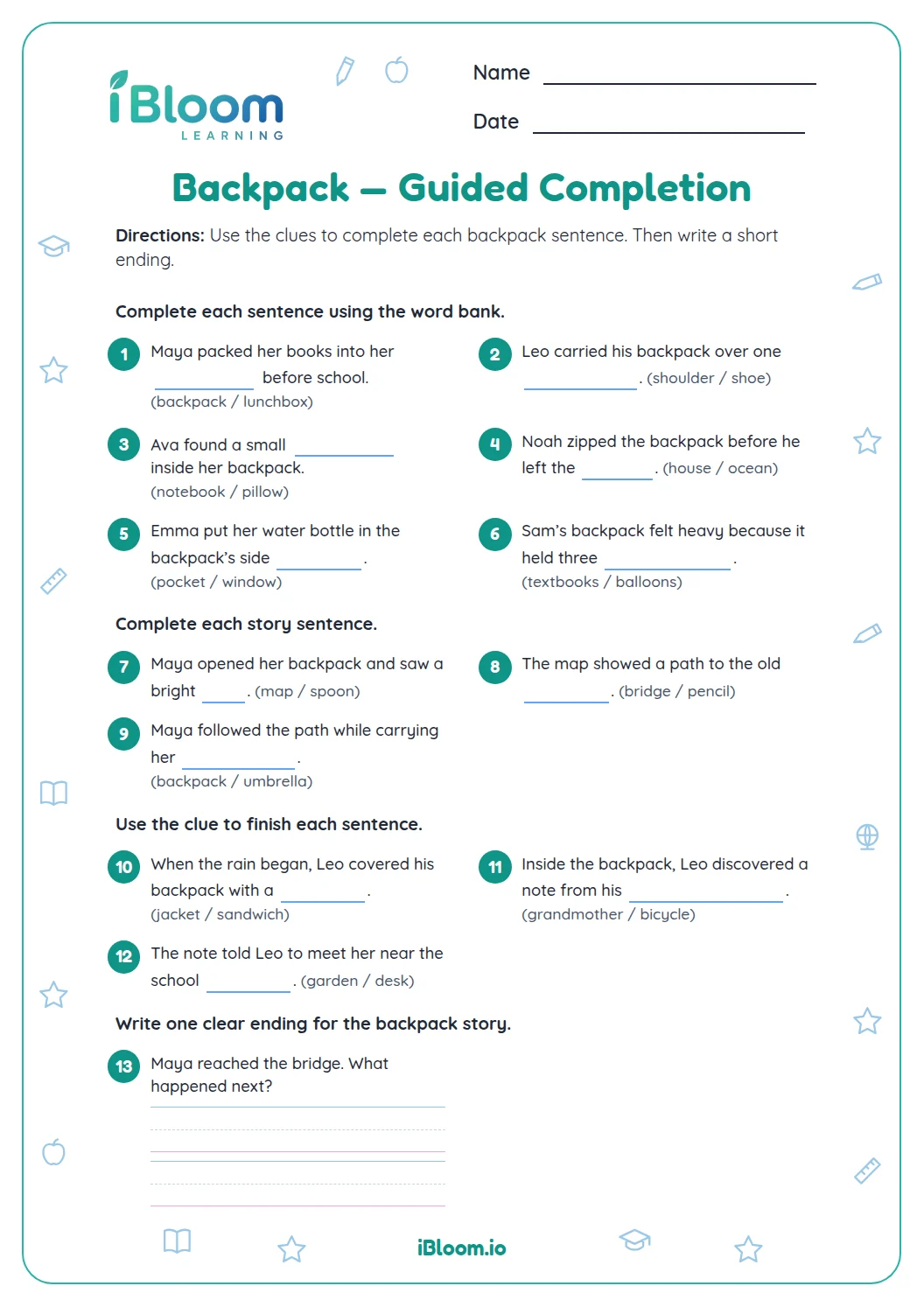
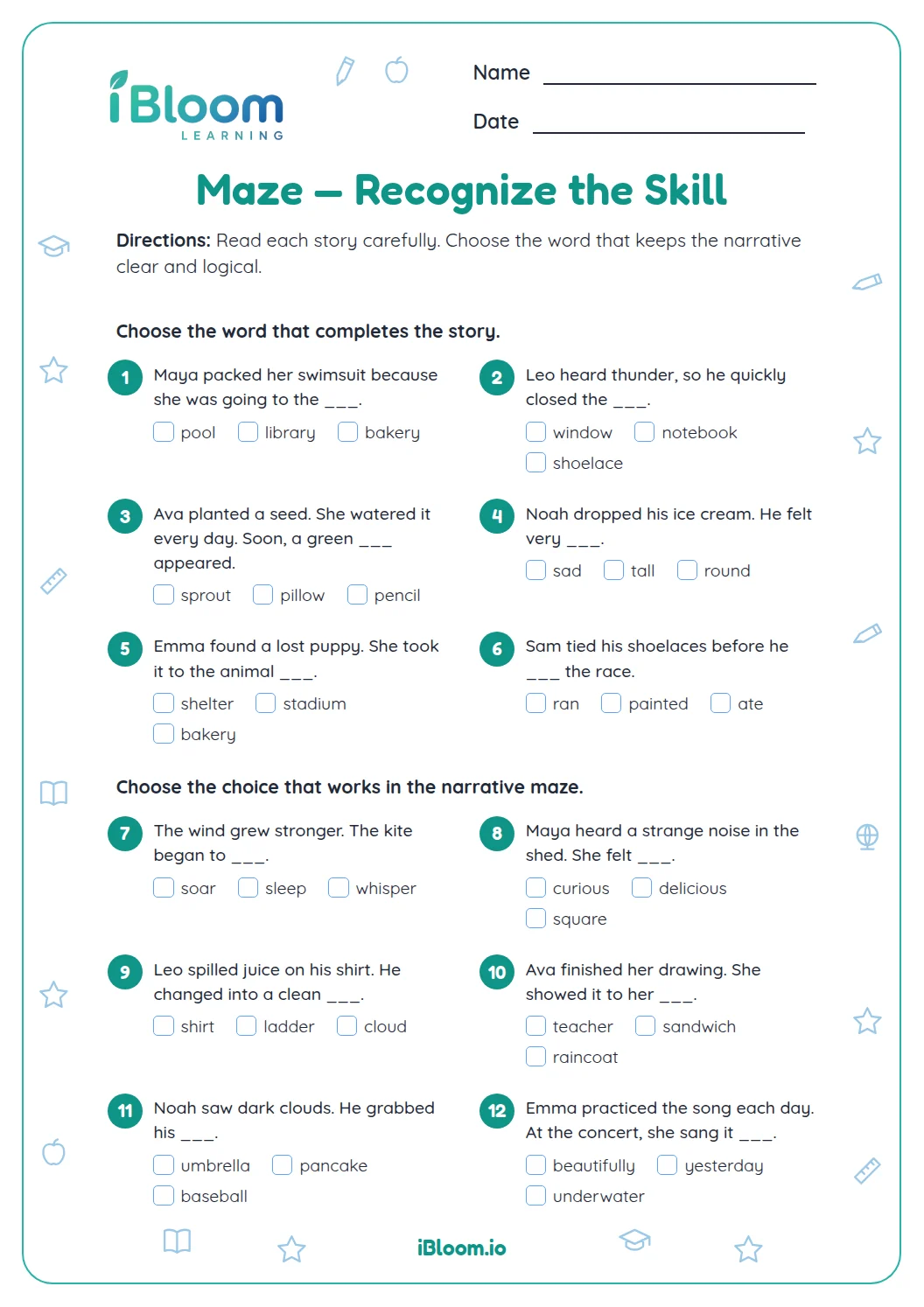
This Grade 3 worksheet uses a biking story to practice narrative choices, sentence editing, event order, and original writing. Children select useful details, revise sentences, sequence a ride, and write four brief story parts. The prompts build toward a clear beginning, connected events, and a fitting ending; a separate answer key includes sample responses.
Aligned to W.3.3
What makes a biking story easy to follow?
A narrative has a beginning, events in an order readers can follow, and an ending. Specific actions and sensory details help readers imagine the ride.
- 1A bike chain slips off.
- 2The rider stops to fix it.
- 3The second event follows the first.
Which details make a scene vivid?
Choose details readers can picture, hear, or feel. “Stones crunched under my tires” gives a clearer biking scene than a general statement.
How can editing help the reader?
Capitalize names and days, use punctuation to mark sentence endings, and replace repeated words when they make a sentence hard to read.
How to use this worksheet
- 1Read each choice and ask how it supports the story.
- 2Check capitals and ending punctuation in editing items.
- 3Put events in the order a reader would experience them.
- 4For the story challenges, choose an event that connects clearly to the rider and the situation.
- 5Use the key to check choices and discuss why each selected sentence fits.
Common mistakes and quick fixes
The mistake
Listing events without showing what happened first.
The fix
Use time words such as first, next, and finally to connect the sequence.
The mistake
Adding details unrelated to the story problem.
The fix
Choose a detail that helps explain the setting, action, or feeling.
The mistake
Leaving out a sentence-ending mark.
The fix
Reread each sentence aloud and add a period where the thought ends.
Common Core alignment
The prompts practice planning and writing a short narrative.
Write narratives with details and events in a clear sequence.
On this sheet: The prompts plan and draft an imagined biking story with ordered events and details.
Show the official wordingHide the official wording
Write narratives to develop real or imagined experiences or events using effective technique, descriptive details, and clear event sequences.
What to practice next
Make more practice
Further reading
Questions parents and teachers ask
What kind of writing does this worksheet practice?
It practices Grade 3 narrative writing through biking-themed story details, editing, event sequencing, and short original responses. Children select fitting details, correct sentence mechanics, order events, and complete two story endings. A separate key gives correct choices and sample endings.
How many questions are included?
There are 14 questions in three parts: six choices about story details, six editing or sequencing tasks, and two short writing prompts. The prompts ask for a sentence or a brief event sequence, not a long essay. Open answers can vary while still meeting the task.
Does my child need to know how to ride a bike?
No. Biking is the shared setting for the prompts, but a child can invent a rider and events. The sentence choices and planning questions give enough context to write even if biking is not a familiar activity. A child may imagine any rider and destination; the task is to make the events connect clearly.
How should I use the sample answers?
Use the key as one possible response for open-ended items. A child’s wording can differ and still work if it answers the prompt, keeps events clear, and includes a fitting detail or transition. The sheet includes editing work as well as composing, so mechanics and story structure both receive attention.
Is the answer key included?
Yes. The key lists correct choices for story details, editing, and sequencing, with sample wording for the two ride challenges. Review why each chosen option makes sense in the biking setting and how one event leads to the next.