





About this worksheet
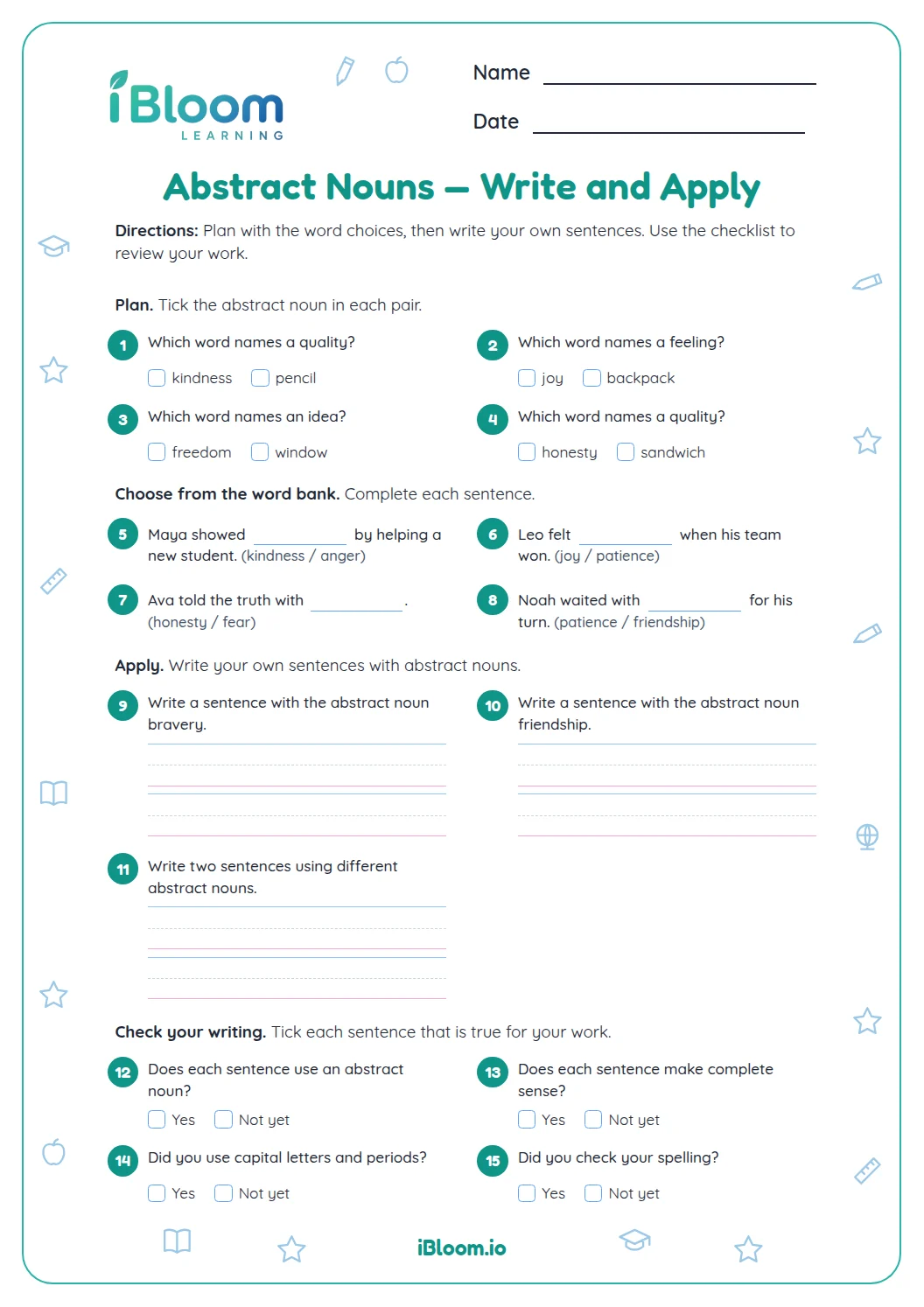
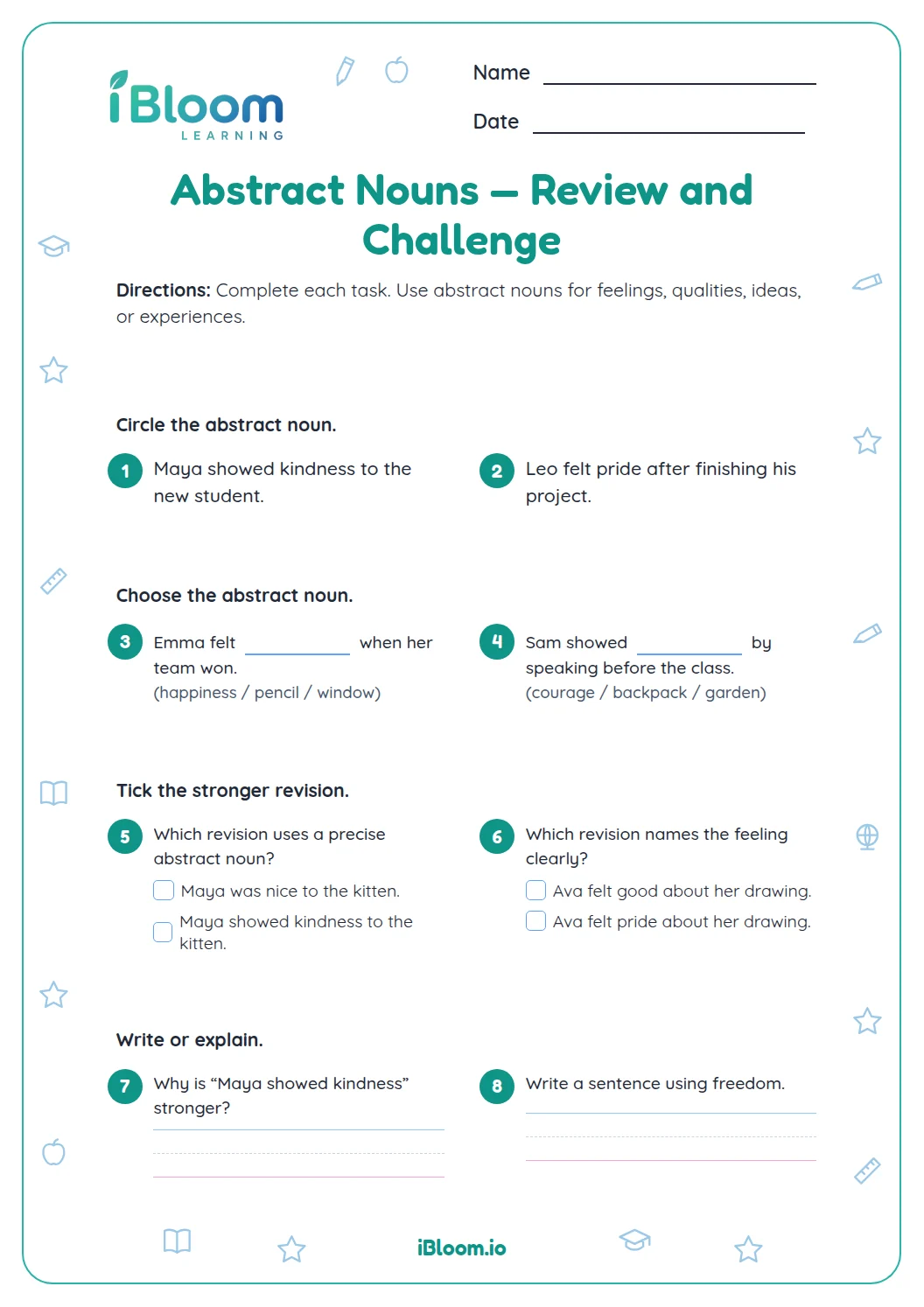
This Grade 3 abstract nouns worksheet moves from recognition to sentence completion and short writing. Students distinguish nouns for feelings, ideas, qualities, and conditions from concrete nouns, then use abstract nouns in context. The 14 questions combine choices, sentence completion, and one written response. A separate answer key gives direct answers and a sample sentence.
Aligned to L.3.1
How can you recognize an abstract noun?
An abstract noun names something that cannot be held or seen as an object, such as joy, freedom, or health. Ask whether the word names an idea, feeling, quality, or condition. A word such as basket names a concrete object; kindness names a quality.
- 1kindness → abstract noun (a quality)
- 2pencil → concrete noun (an object)
How can an abstract noun complete a sentence?
Use the meaning of the whole sentence to select a noun that fits. In “The team showed great ___ when the game was close,” courage makes sense because it names a quality the team showed. The completed sentence remains grammatically complete.
How can students use abstract nouns in their own writing?
Name a real feeling, idea, or quality and give a detail that makes its meaning clear. “My friend showed kindness by saving me a seat” uses the noun and shows what the kindness looked like.
How to use this worksheet
- 1Read the choices in Part A and ask what each noun names.
- 2For each sentence completion, read the full sentence with your answer inserted.
- 3Read the whole sentence and use its meaning to choose an abstract noun.
- 4In Part C, write a complete sentence with a clear subject and verb.
- 5Check the key for the main idea of each sample response; answers may vary.
Common mistakes and quick fixes
The mistake
Choosing kind instead of kindness when the sentence needs a noun.
The fix
Kind describes someone; kindness names the quality. Check whether the sentence needs a person, place, thing, idea, feeling, or quality.
The mistake
Calling health a concrete noun because a doctor can measure it.
The fix
The noun names a condition, not a physical object. Ask whether you can point to the condition itself as an object.
The mistake
Writing a sentence with courage but not showing what it means.
The fix
Add a clear action or situation, such as speaking up or trying again, so the reader understands the noun in context.
Common Core alignment
This page practices standard English grammar and usage through noun identification and sentence writing.
Use standard English grammar and usage when speaking or writing.
On this sheet: Students identify, complete and write sentences with abstract nouns.
Show the official wordingHide the official wording
Demonstrate command of the conventions of standard English grammar and usage when writing or speaking.
What to practice next
Make more practice
Further reading
Questions parents and teachers ask
What does an abstract noun name?
An abstract noun names an idea, quality, feeling, or condition rather than a physical object. This worksheet uses joy, freedom, kindness, and health as examples. Learners identify these nouns, use sentence clues to complete more examples, and write a sentence of their own.
How is an abstract noun different from a concrete noun?
A concrete noun names something that can be experienced through the senses, such as a bell or basket. An abstract noun names an idea, quality, feeling, or condition, such as courage or relief. The worksheet asks learners to use both definitions when choosing and completing answers.
Why does the worksheet use generosity instead of generous?
The sentence needs a noun after “showed,” so generosity fits the grammar and meaning. Generous is an adjective that describes a person, as in “a generous neighbor.” The choices help learners notice the noun form while reading the whole sentence for context.
Can more than one answer fit a sentence?
The completion questions use sentence clues and answer choices to point to one intended noun. For example, hikers who have rested after a tiring walk may feel relief. The written question allows different sentences, so the key gives a model rather than one required wording.
How can I help a child write a useful sentence?
Ask the child to include an abstract noun and give a detail that makes its meaning clear. A sentence about kindness might describe someone sharing a seat or helping a classmate. Then check that the sentence has a subject, verb, and ending punctuation.
What should students practice next?
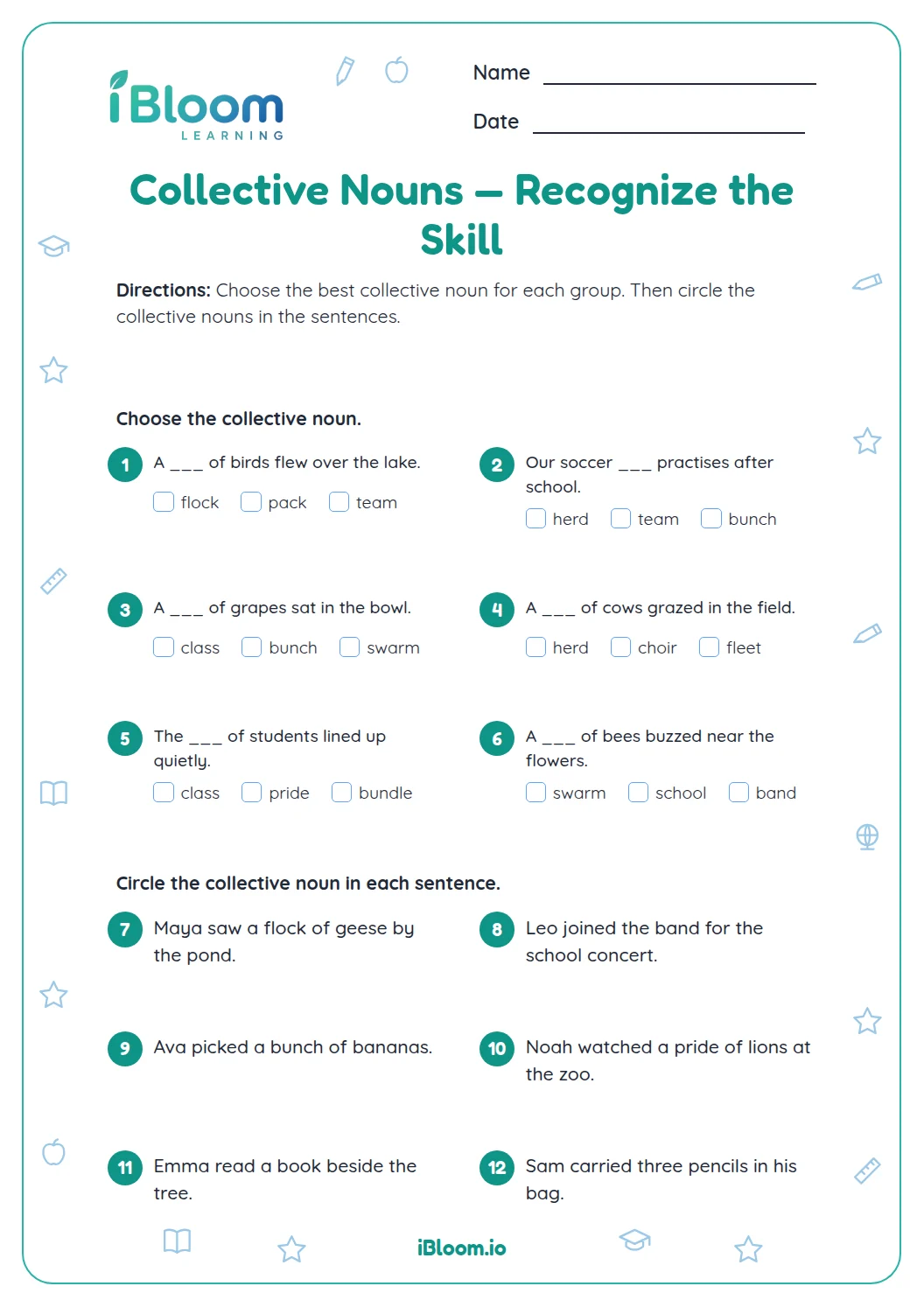
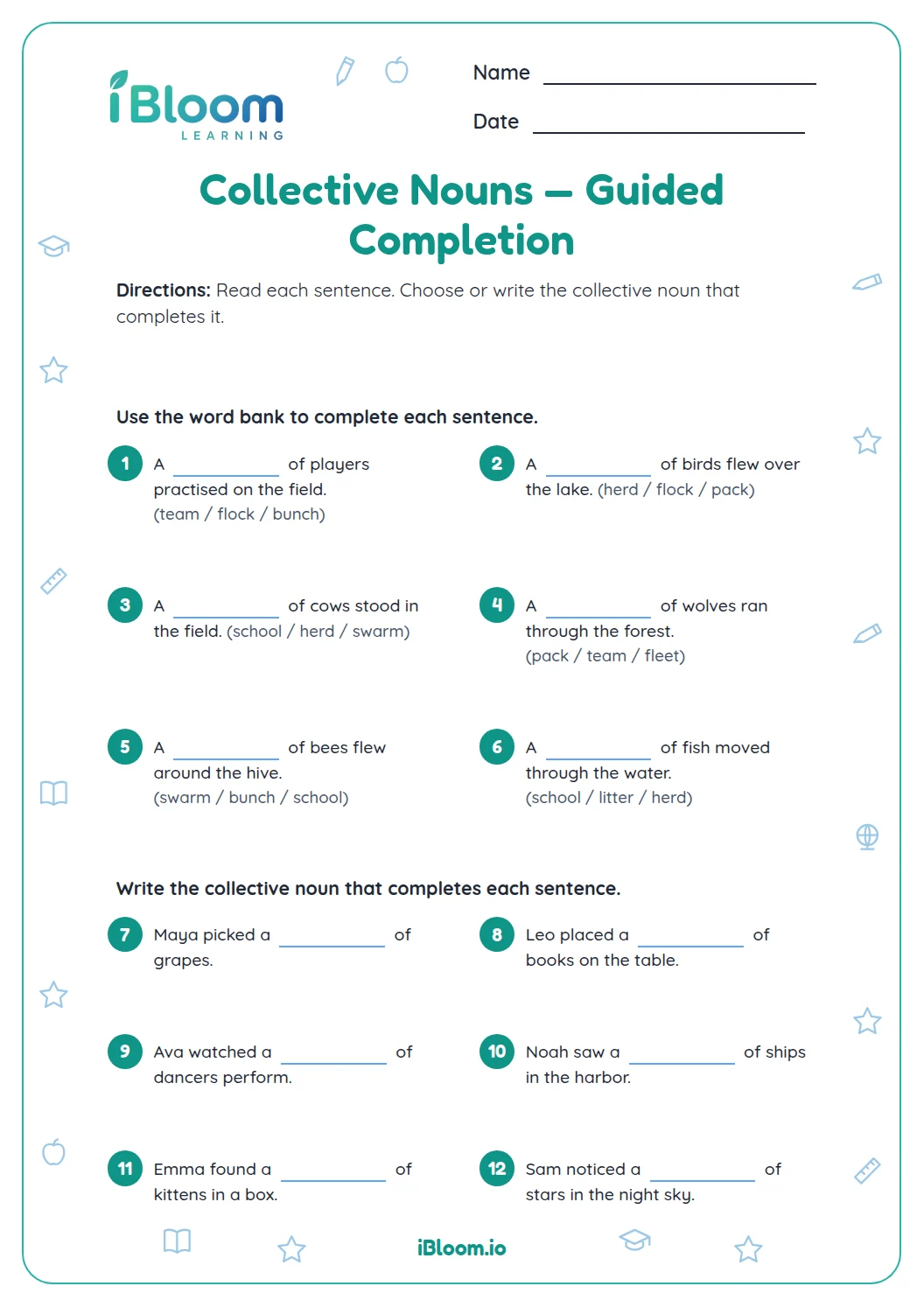
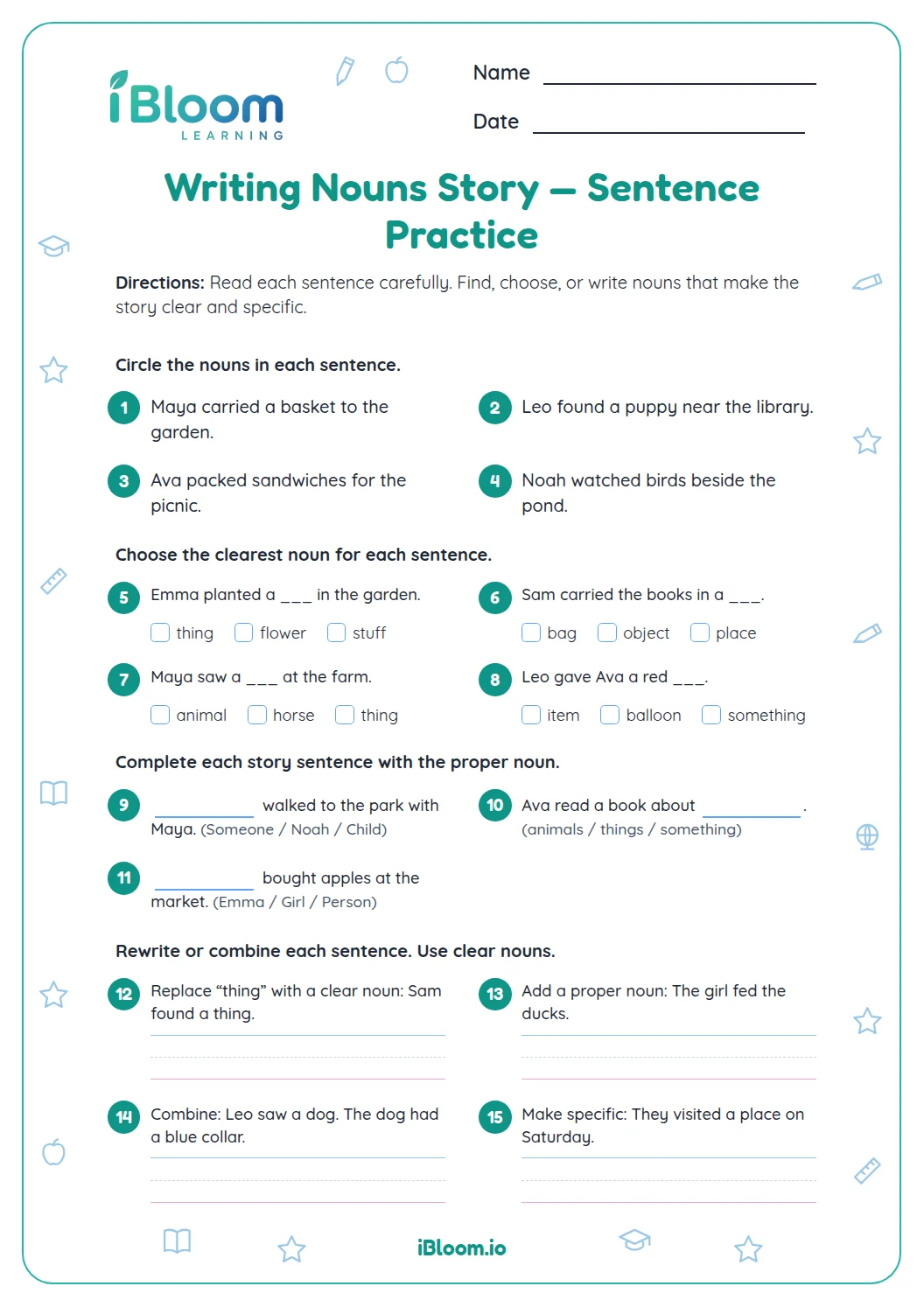
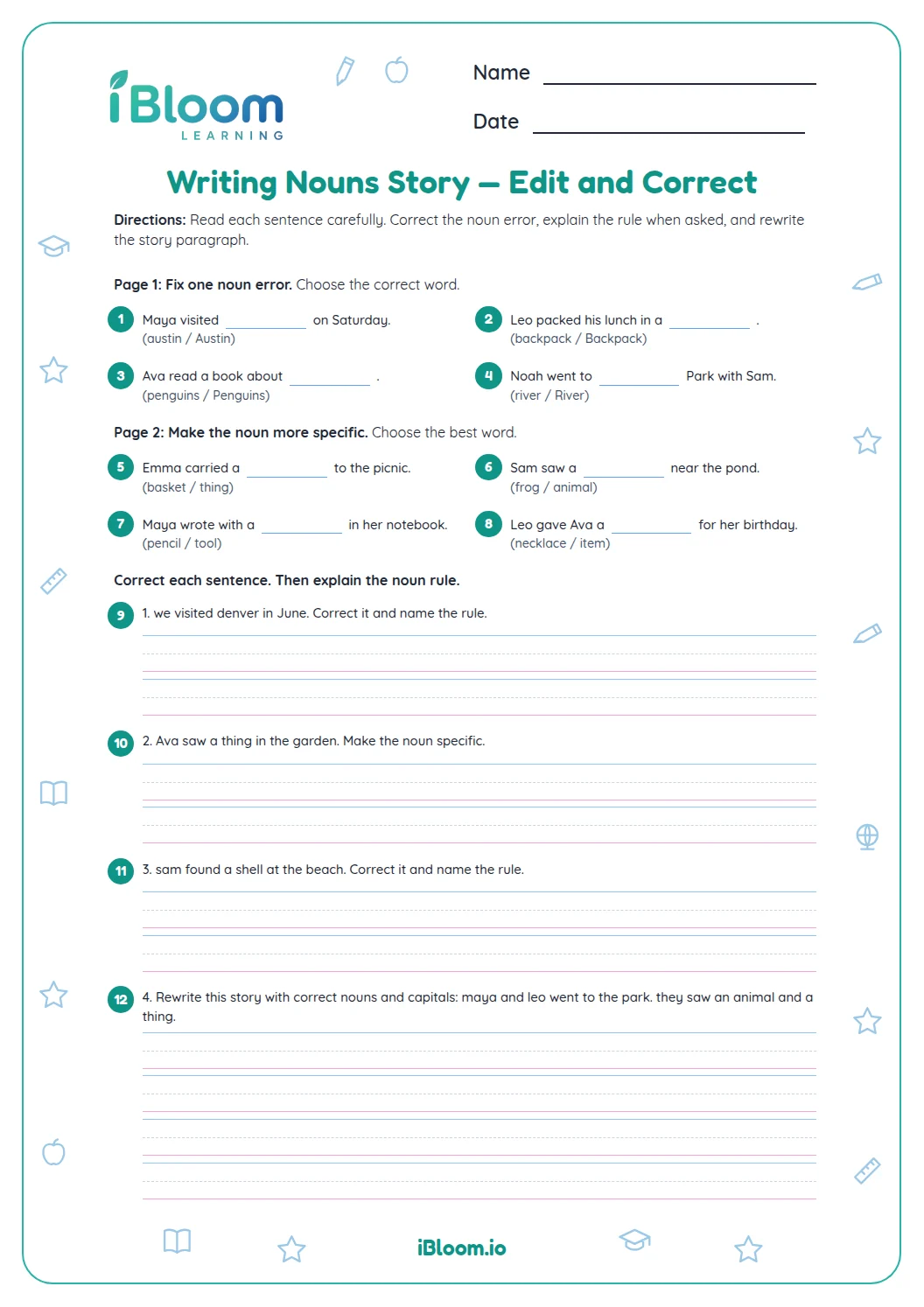
After identifying and using abstract nouns, students can compare concrete and abstract nouns in the paired practice. The Grade 3 noun pages also include collective nouns and writing with nouns, which let students apply noun knowledge in other sentence contexts.