




About this worksheet
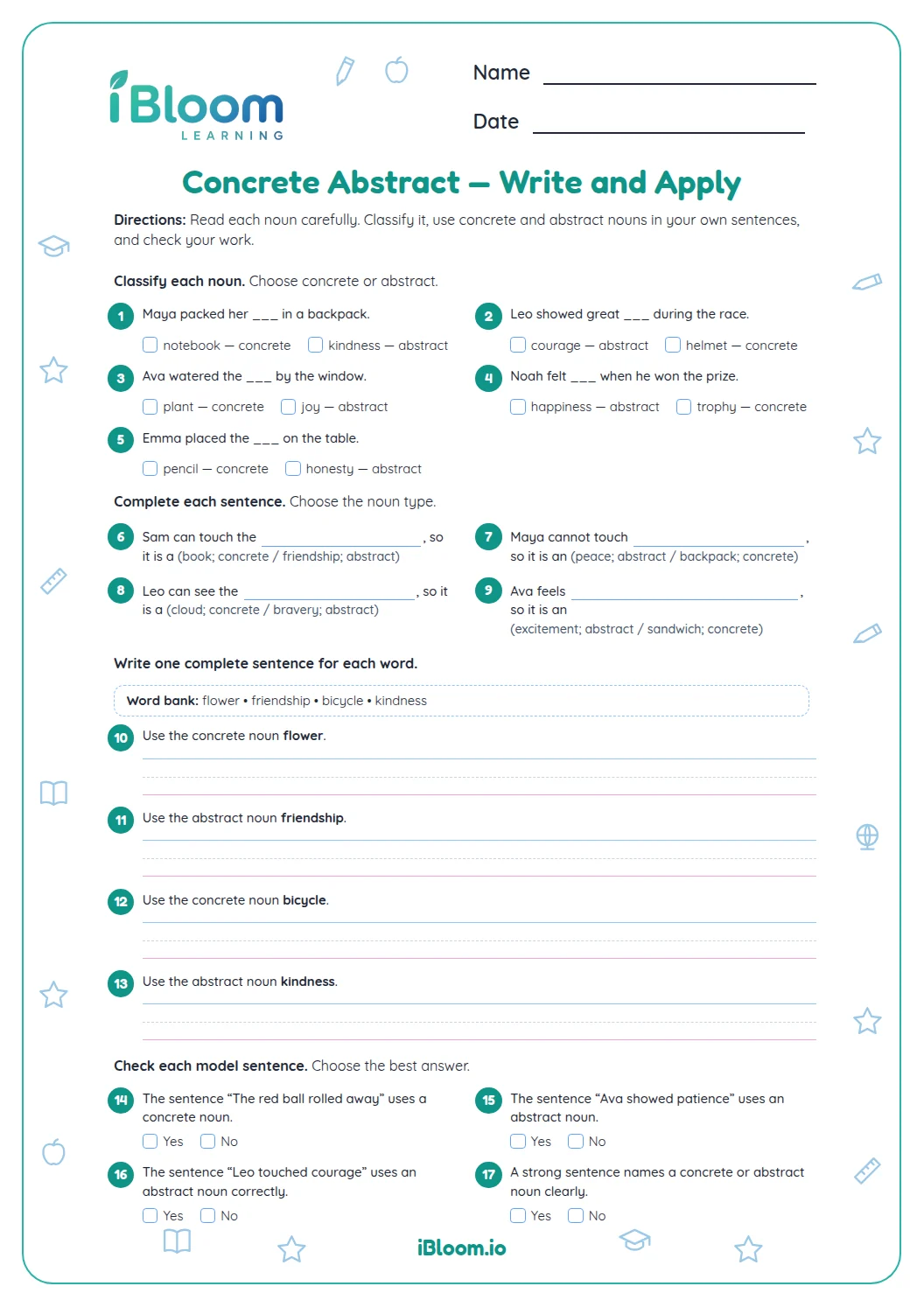
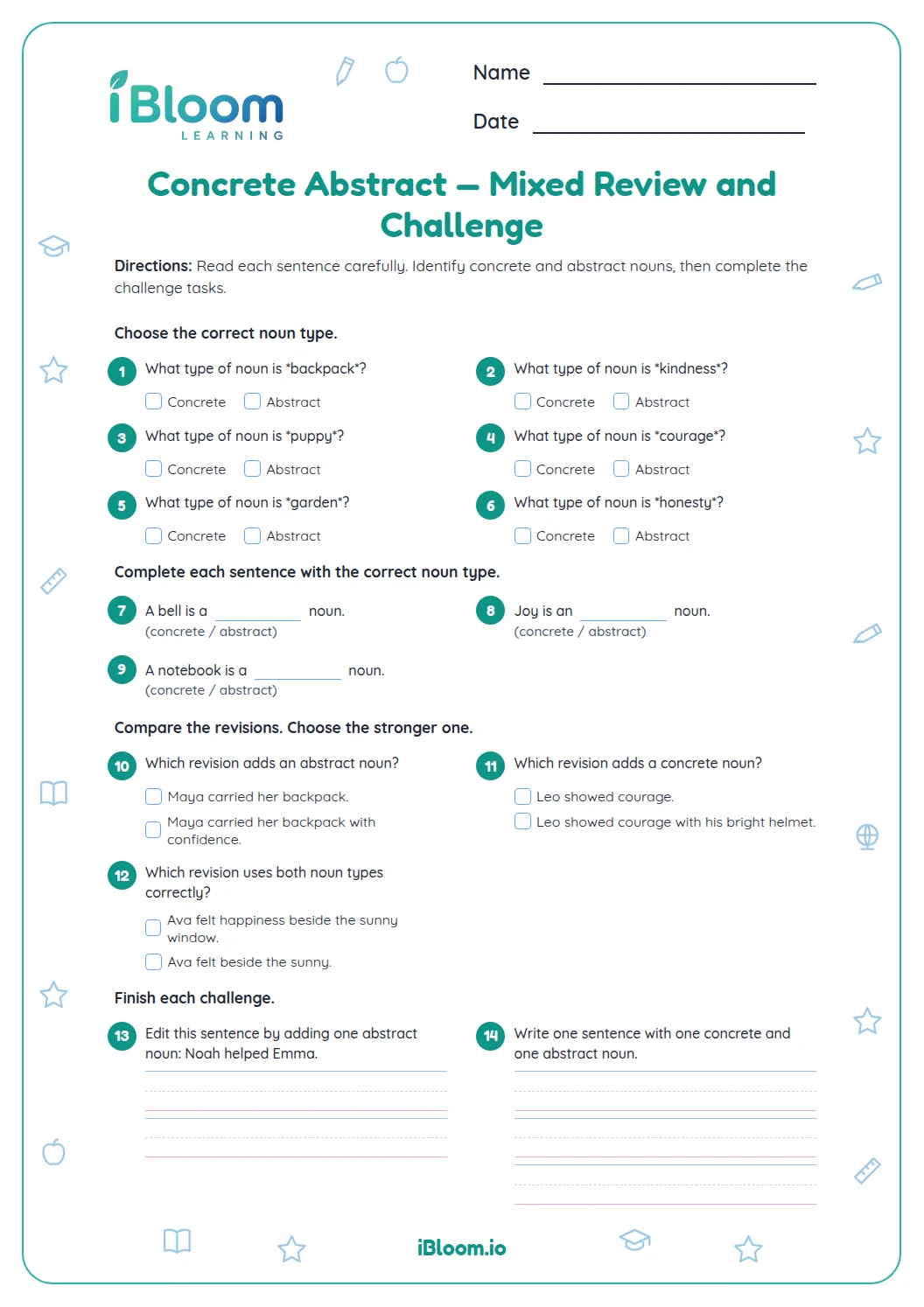
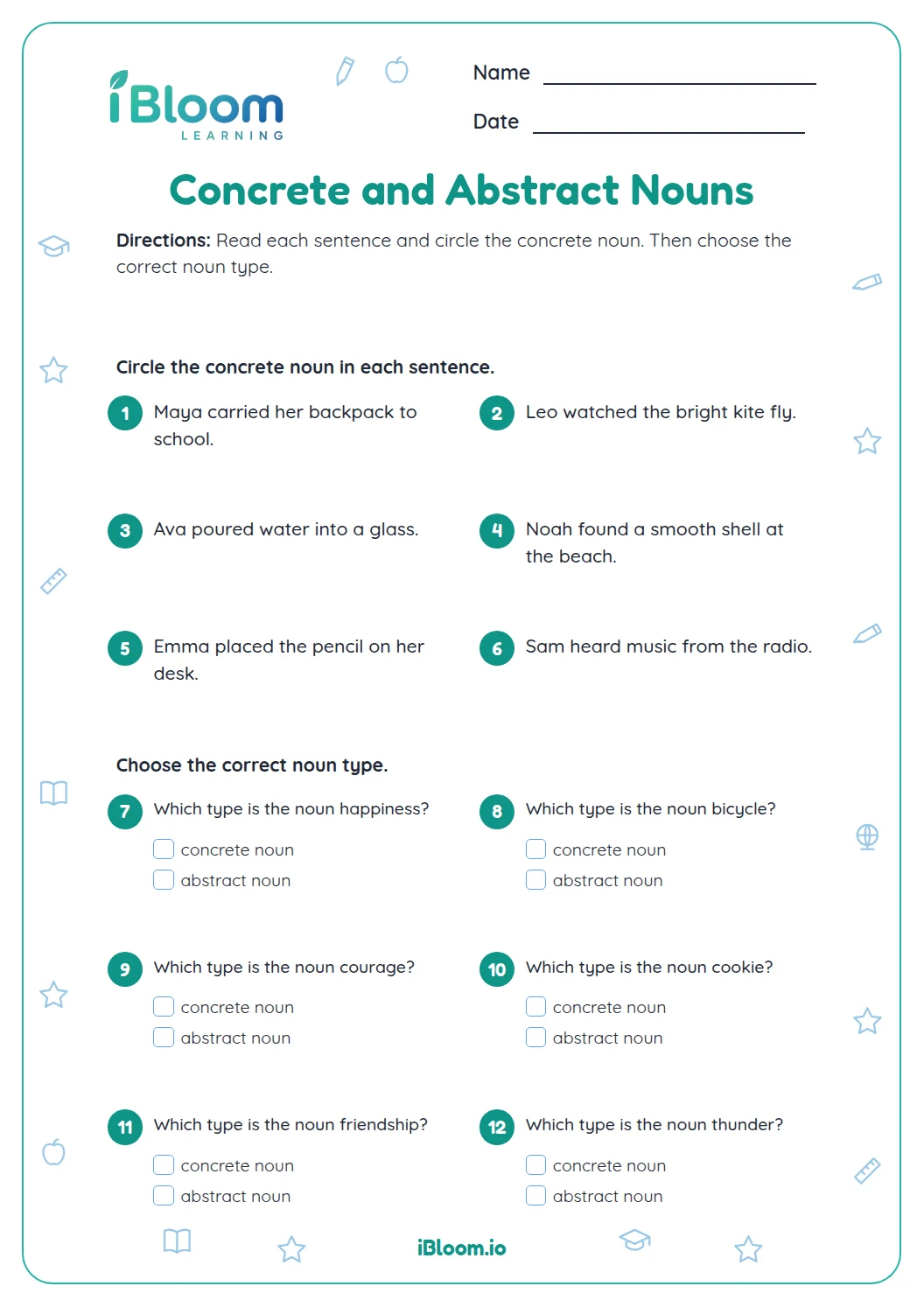
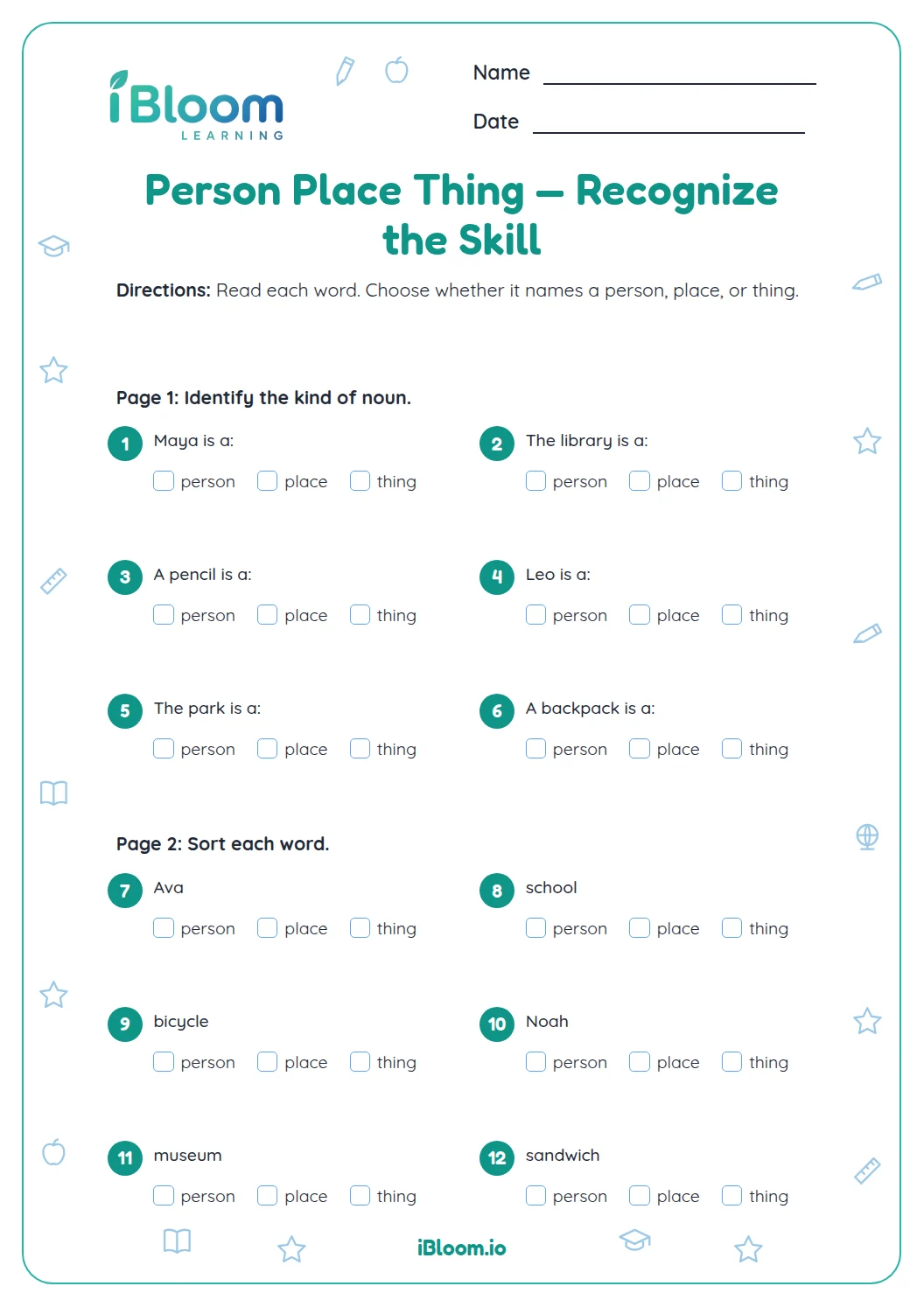
This free Grade 3 grammar worksheet helps students recognize concrete and abstract nouns by what each word names. They classify familiar objects such as apple and shell, then decide whether nouns in short sentences name something tangible or an idea or feeling. The items move from single words to sentence contexts and meaning clues. A separate answer key is included.
How do you tell concrete and abstract nouns apart?
A concrete noun names something a person can sense: see, hear, touch, smell, or taste. An abstract noun names an idea, quality, or feeling. The distinction depends on what the noun means.
- 1Question 6: courage → abstract; it names a quality, not a physical object.
How does a noun work in a sentence?
Find the noun first, then ask what it names. In “Maya packed her lunch,” lunch names food that can be seen and touched, so it is concrete. In “Leo showed great honesty,” honesty names a quality, so it is abstract.
How can a meaning clue help?
A clue can name a sense or meaning category. In “Which noun names something you can touch: hope or stone?” the answer is stone because it names a physical object.
How to use this worksheet
- 1Read the noun or sentence carefully.
- 2For a sentence item, locate the noun named in the question.
- 3Ask whether the noun names something sensed or an idea, quality, or feeling.
- 4Choose concrete or abstract.
Common mix-ups and quick fixes
The mistake
Calling a noun concrete only because it is familiar.
The fix
Ask whether it names something sensed; kindness is familiar but abstract.
The mistake
Treating every sound as abstract.
The fix
Music can be heard, so it is concrete even though it is not solid.
The mistake
Classifying the whole sentence instead of its named noun.
The fix
Find the specific noun the question asks about, then decide what it names.
What to practice next
Make more practice
Questions parents and teachers ask
What is a concrete noun?
A concrete noun names something that can be experienced through one or more senses. In this worksheet, apple, pencil, music, lunch, and shell are concrete nouns because they refer to things a person can sense. Music is concrete because it can be heard.
What is an abstract noun?
An abstract noun names an idea, quality, or feeling rather than a tangible thing. Kindness, freedom, honesty, fear, joy, and victory are examples used on this worksheet. Students classify some in short sentence contexts. Those examples distinguish objects and sensations from qualities or feelings.
Can a sound be a concrete noun?
Yes. Music is concrete because it can be heard. Concrete does not only mean something solid that can be touched; it includes things experienced through any of the senses. A sound can be sensed even if it cannot be held.
How should students classify a noun in a sentence?
First locate the noun named in the question. Then ask what it refers to: a tangible or sensed thing, or an idea, quality, or feeling. Sentence context helps identify the word. The classification depends on the noun’s meaning.
Does the worksheet ask children to write their own nouns?
Yes. The final written response asks for one concrete noun and one abstract noun. A sample response is “chair; kindness,” though other correct examples work. A student may choose different nouns and explain what each names. The key’s examples are suggestions rather than the only possible pair.