




About this worksheet
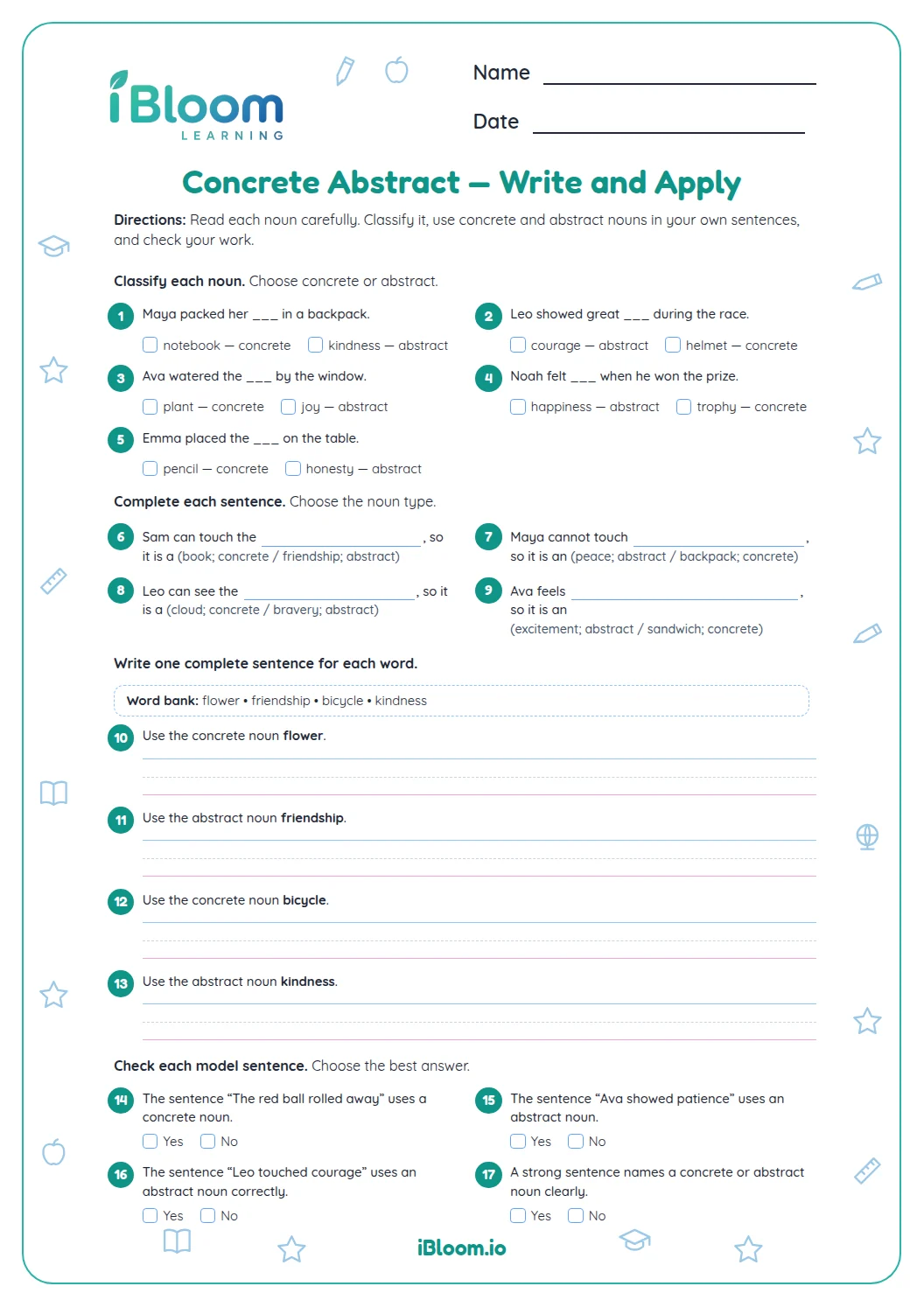
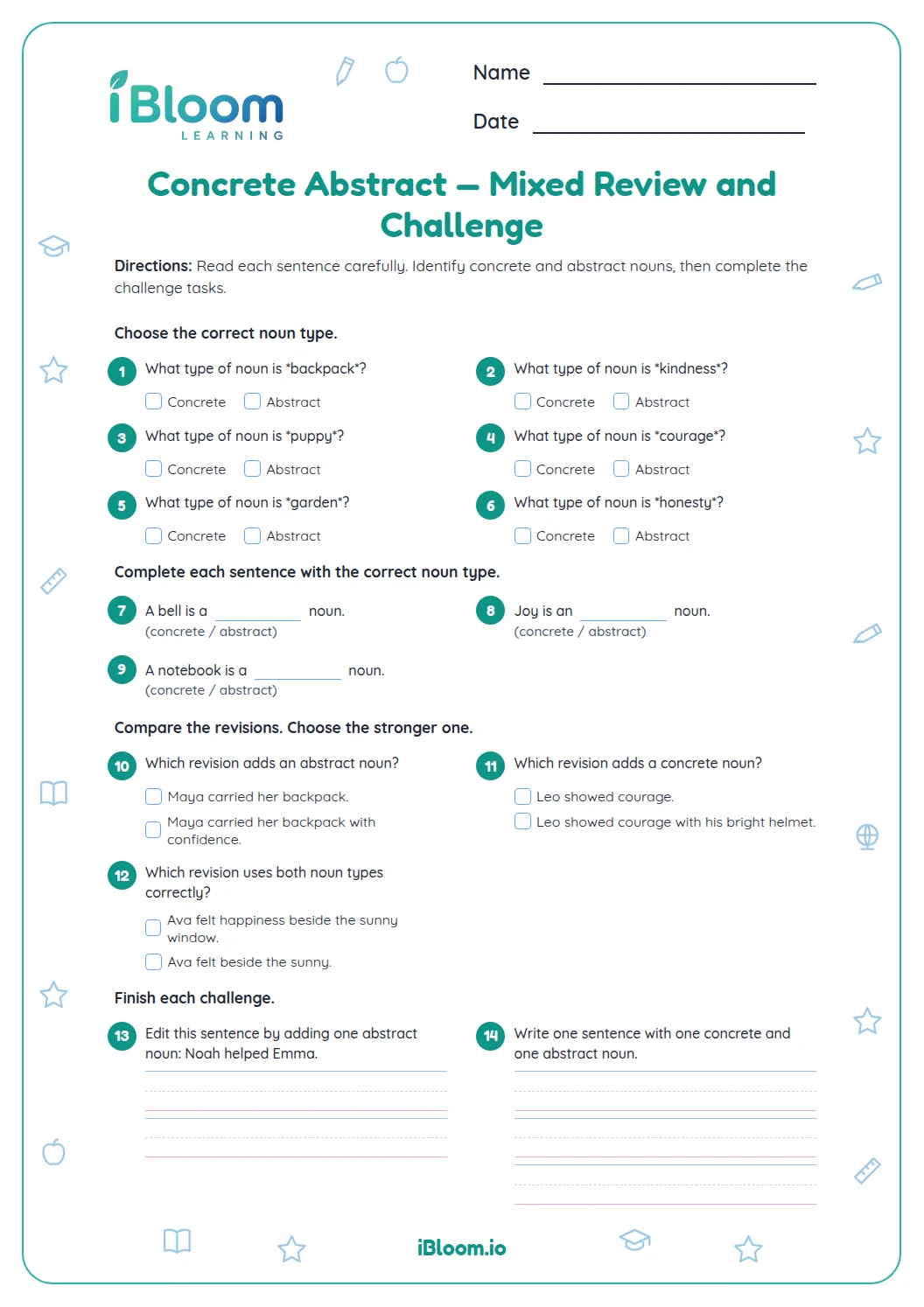
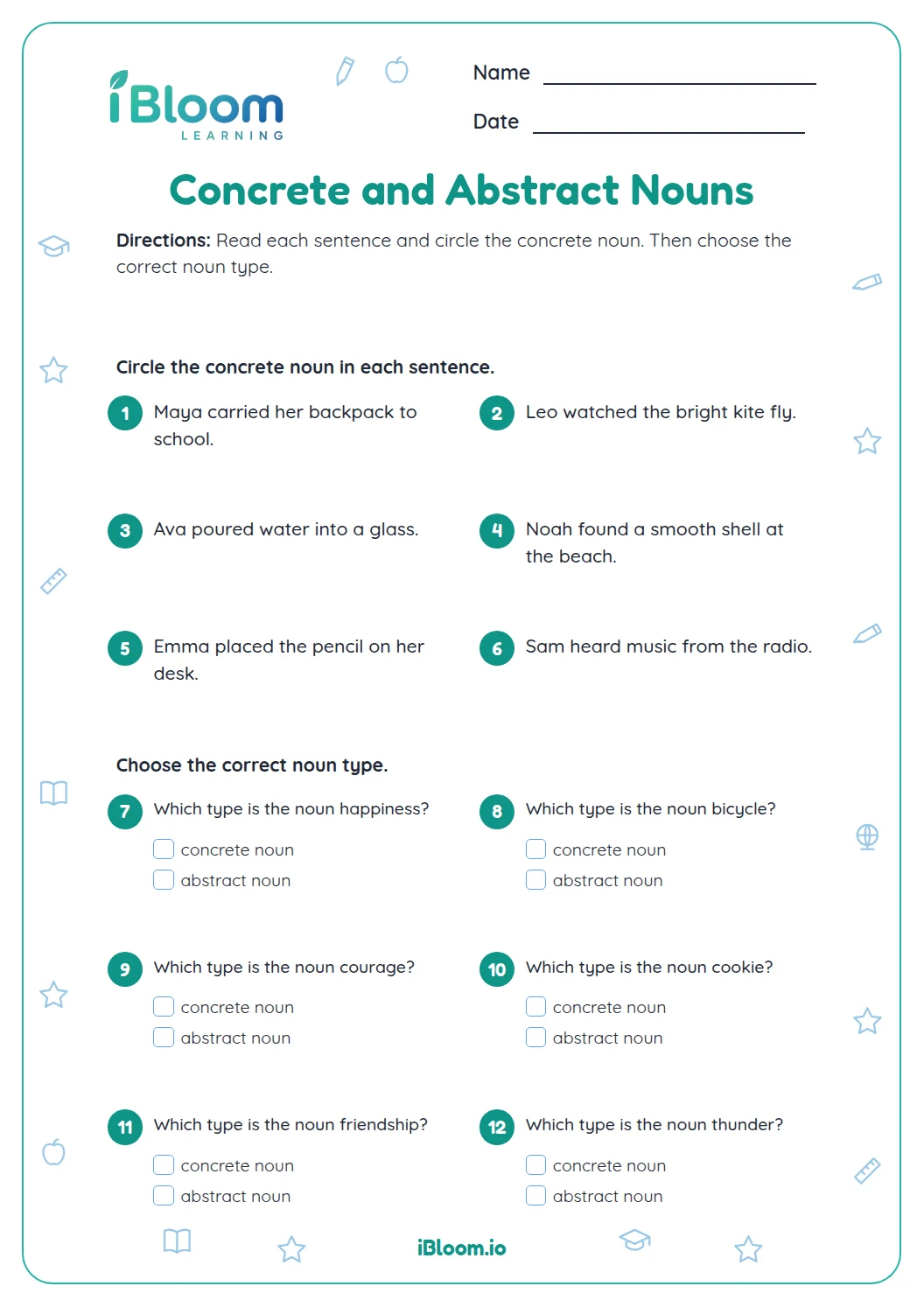
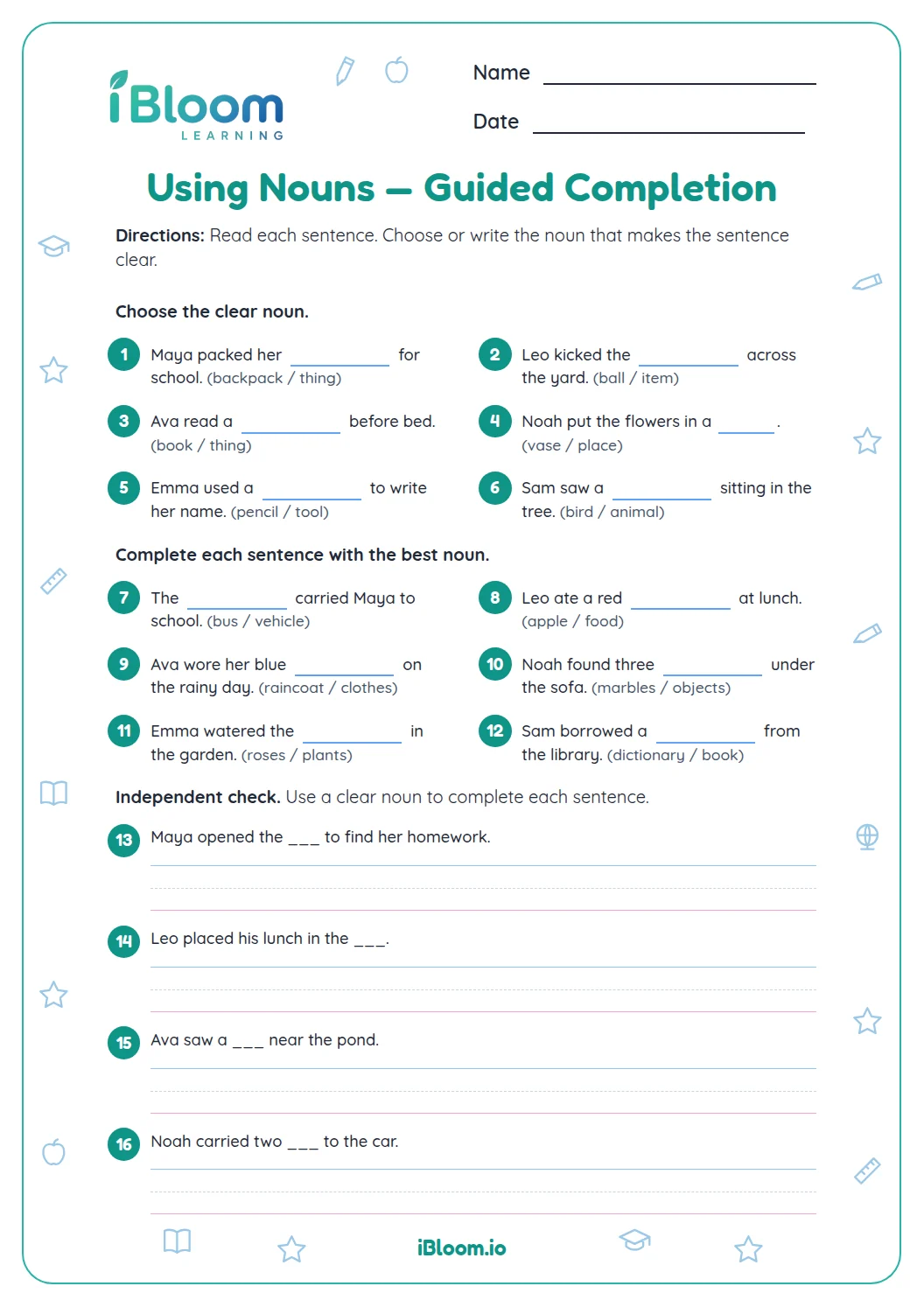
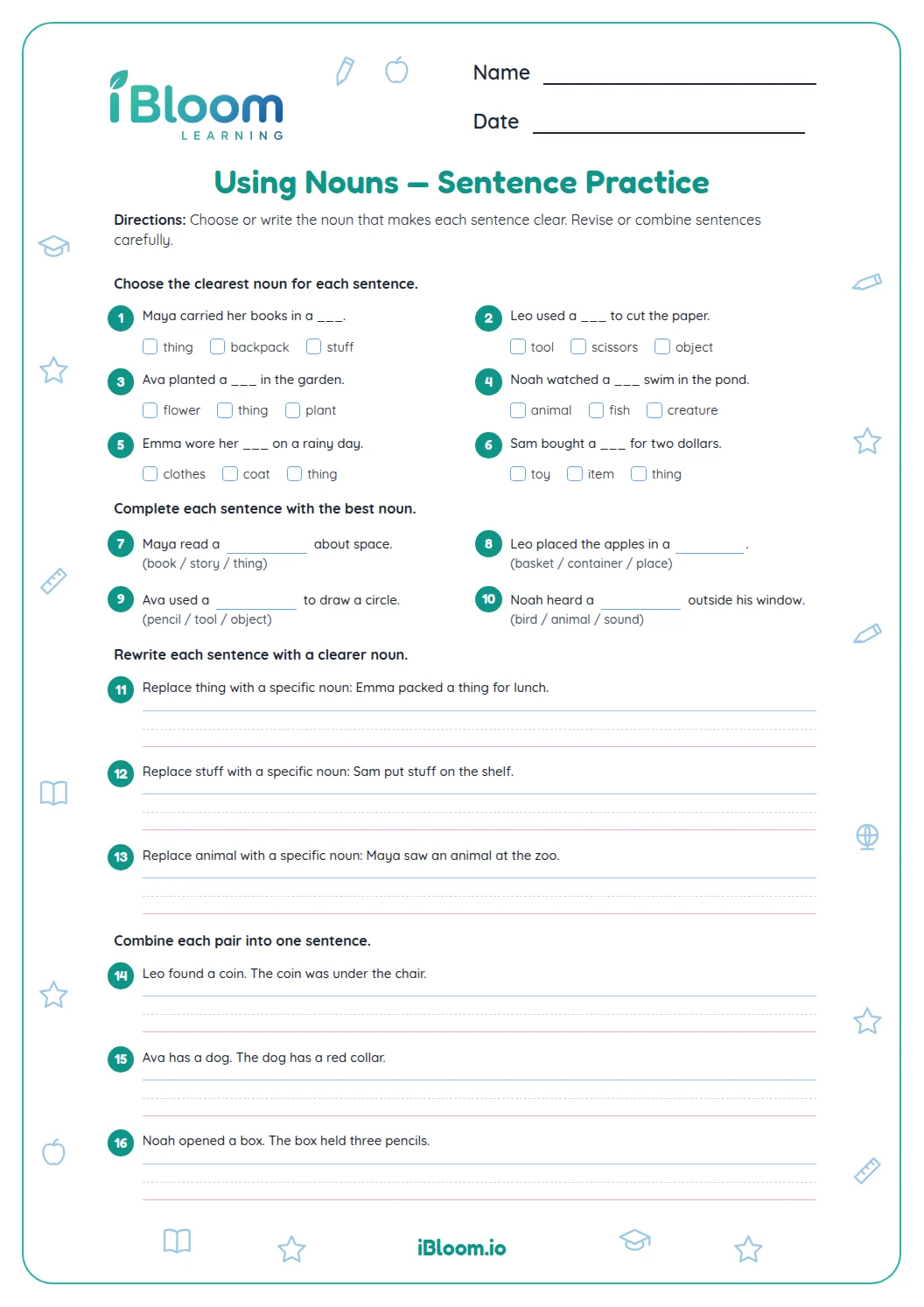
This Grade 3 printable helps students distinguish concrete nouns, which can be experienced with the senses, from abstract nouns such as courage and kindness. The 16 questions move from naming each noun type to choosing a noun that fits a sentence. A separate answer key gives one clear answer for every choice. The practice connects noun meaning to how nouns work in sentences under CCSS L.3.1.a.
Aligned to L.3.1.a
How can you tell a concrete noun from an abstract noun?
A concrete noun names something you can see, hear, touch, taste, or smell, such as a bell or peach. An abstract noun names an idea, feeling, or quality, such as courage or kindness. The test is what the noun names, not whether the word appears in a sentence.
- 1In “Courage helped Lee speak,” courage names a quality, so choose abstract noun.
How do sentence clues help you choose a noun?
Read the words around the blank. “Felt soft in my hand” points to a concrete object; “grew as she practiced” points to a quality. For question 6, pillow fits because you can touch it, while patience does not fit the hand clue.
How should a learner check a noun choice?
After choosing, read the whole sentence with the word in place. Check both the meaning and the noun type. A word may be a noun but still fail the clue: a desk is concrete, but it does not complete “The class showed ___” as naturally as patience.
How to use this worksheet
- 1Read the noun-type definitions in Part A.
- 2For each sentence, underline the clue that narrows the choice.
- 3Choose the word that fits the clue and the sentence grammar.
- 4Read the completed sentence aloud to check its meaning.
- 5Use the key to review any missed item and explain the clue.
Common mistakes and quick fixes
The mistake
Calling every noun concrete because it is a word you can read.
The fix
Ask whether the noun names something sensed or an idea, feeling, or quality.
The mistake
Choosing a noun that fits the topic but not the clue.
The fix
Use the whole sentence: “soft in my hand” requires something touchable.
The mistake
Classifying the whole sentence instead of the named noun.
The fix
Point to the exact noun named in the question, such as courage or bell.
Common Core alignment
This page practices the specific reading, writing, or mathematics skills named below.
Explain how nouns name people, places, things, and ideas in sentences.
On this sheet: Questions distinguish concrete and abstract nouns used in sentences.
Show the official wordingHide the official wording
Explain the function of nouns, pronouns, verbs, adjectives, and adverbs in general and their functions in particular sentences.
What to practice next
Make more practice
Further reading
Questions parents and teachers ask
What is a concrete noun?
A concrete noun names a person, place, or thing that can be experienced through one or more senses. Bell, garden, and peach are concrete nouns. On this worksheet, question 3 uses bell, and question 10 asks learners to choose a concrete food that fits the sentence.
What is an abstract noun?
An abstract noun names an idea, feeling, or quality rather than something sensed directly. Courage, confidence, and kindness are examples. Questions 2 and 4 identify abstract nouns, and later items ask students to use sentence clues to select one.
How many questions are on the worksheet?
There are 16 questions across the worksheet pages, followed by a separate answer key. The first items identify concrete and abstract nouns; the later items ask learners to complete sentences with a fitting noun. Use the answer key to review the intended choice for every item.
Why does the answer key show one choice for each item?
Each prompt gives two choices and a clue designed to make one answer fit. For instance, “soft in my hand” points to pillow, while “grew as she practiced” points to confidence. The key helps an adult quickly check the intended noun and discuss the clue.
What can I ask if my child is unsure?
Ask what the sentence tells about the missing word. A learner can test whether the noun can be sensed or whether it names a feeling, idea, or quality. Then reread the full sentence with the choice in place and explain why it makes sense.