





About this worksheet
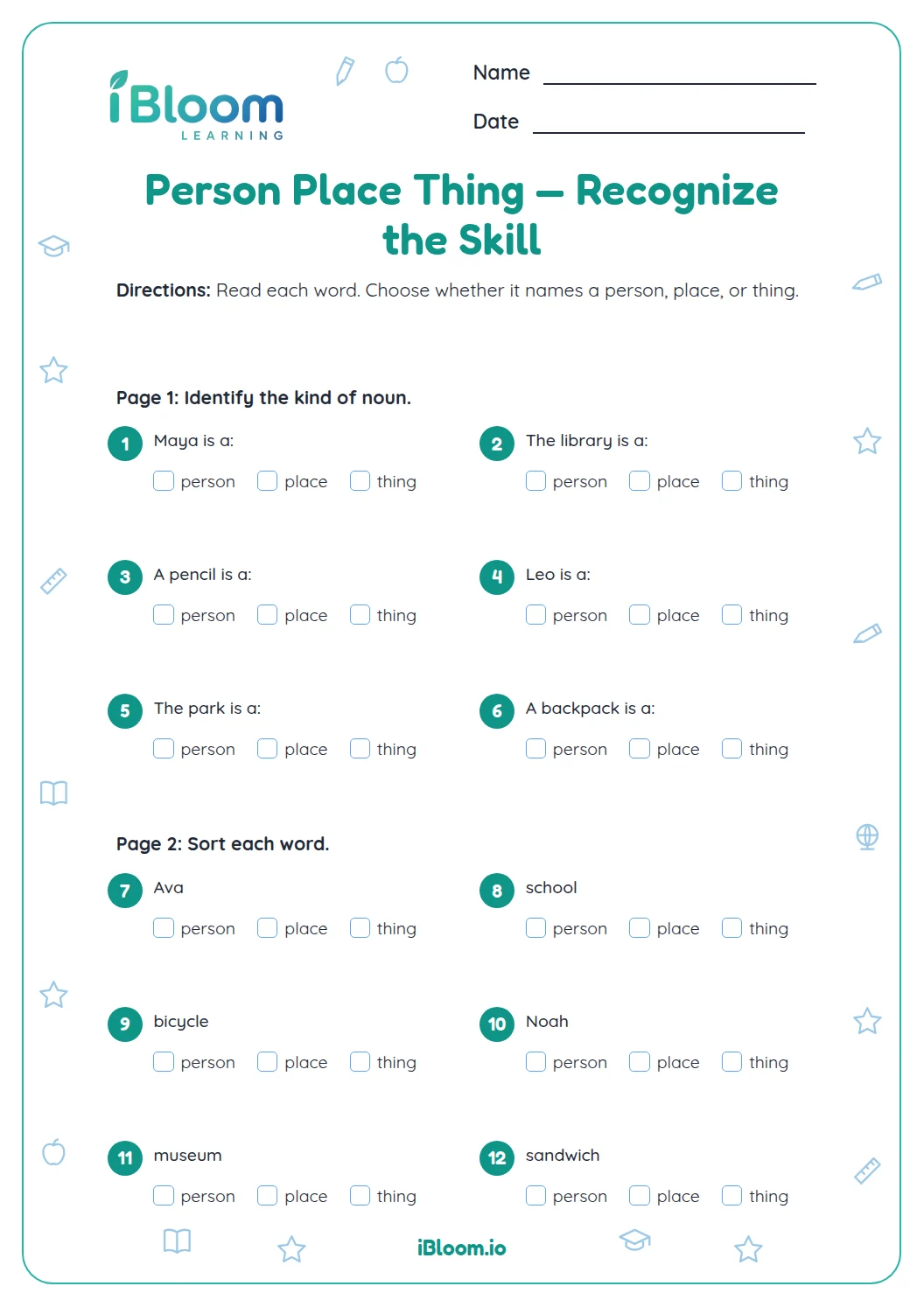
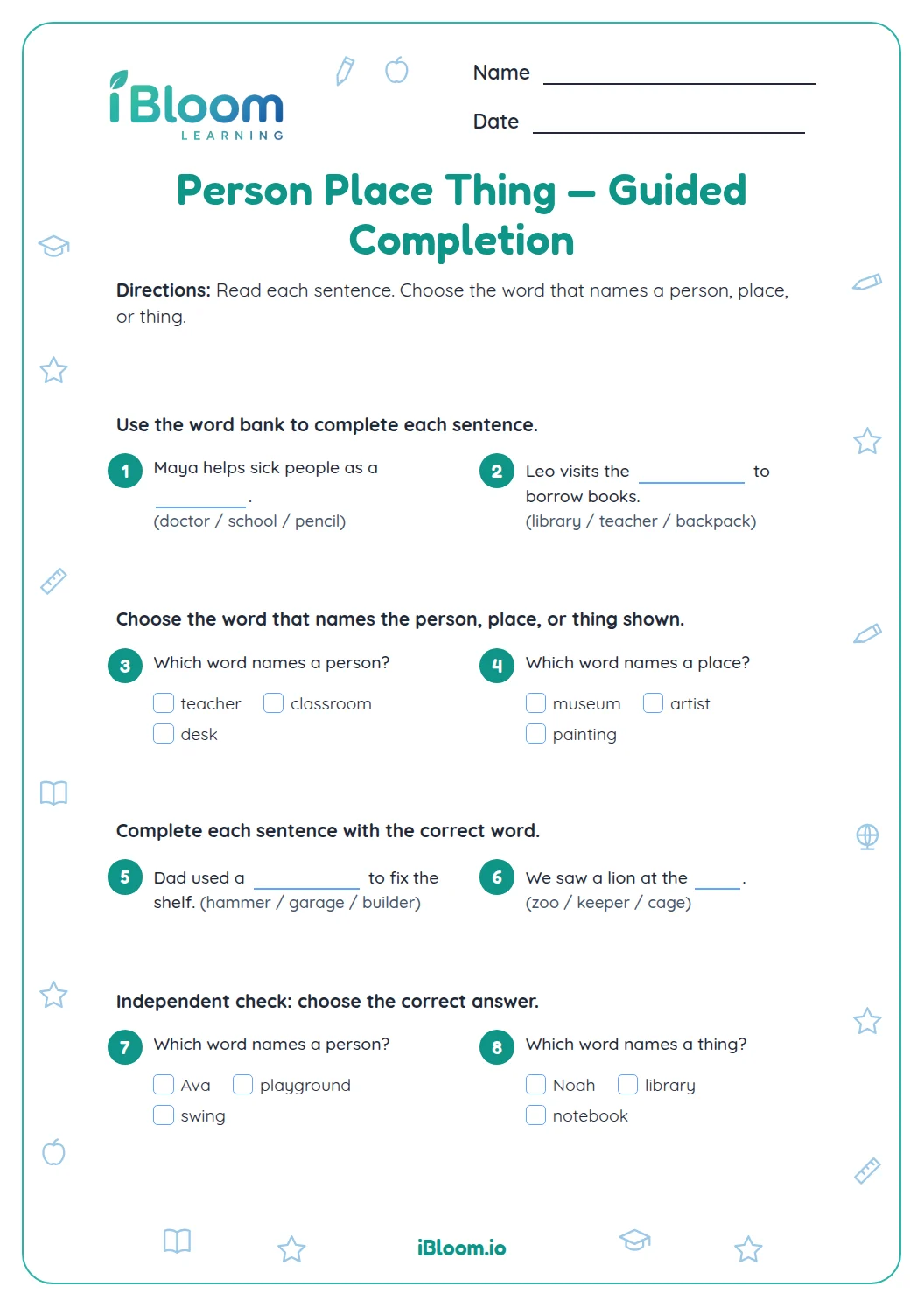
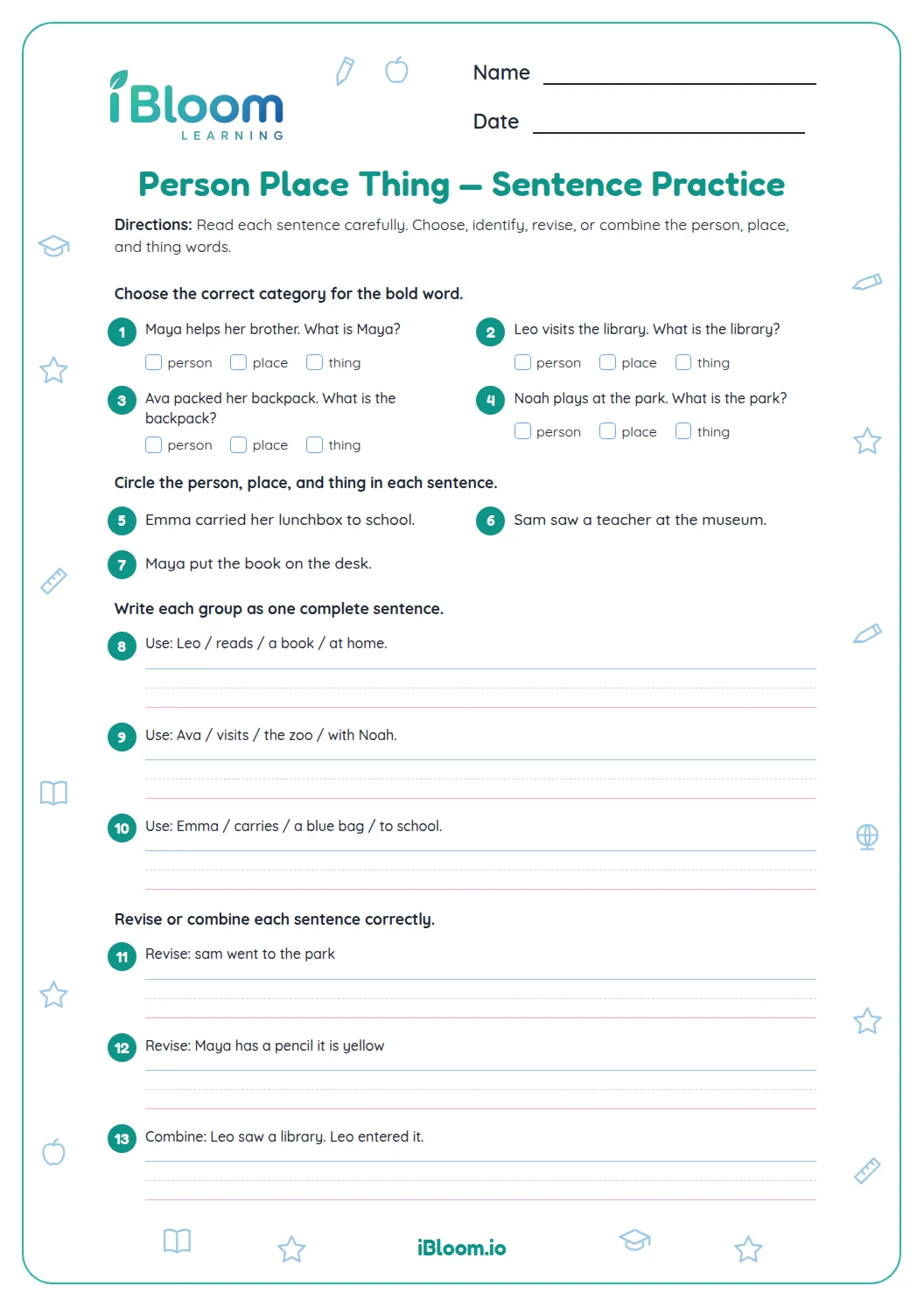
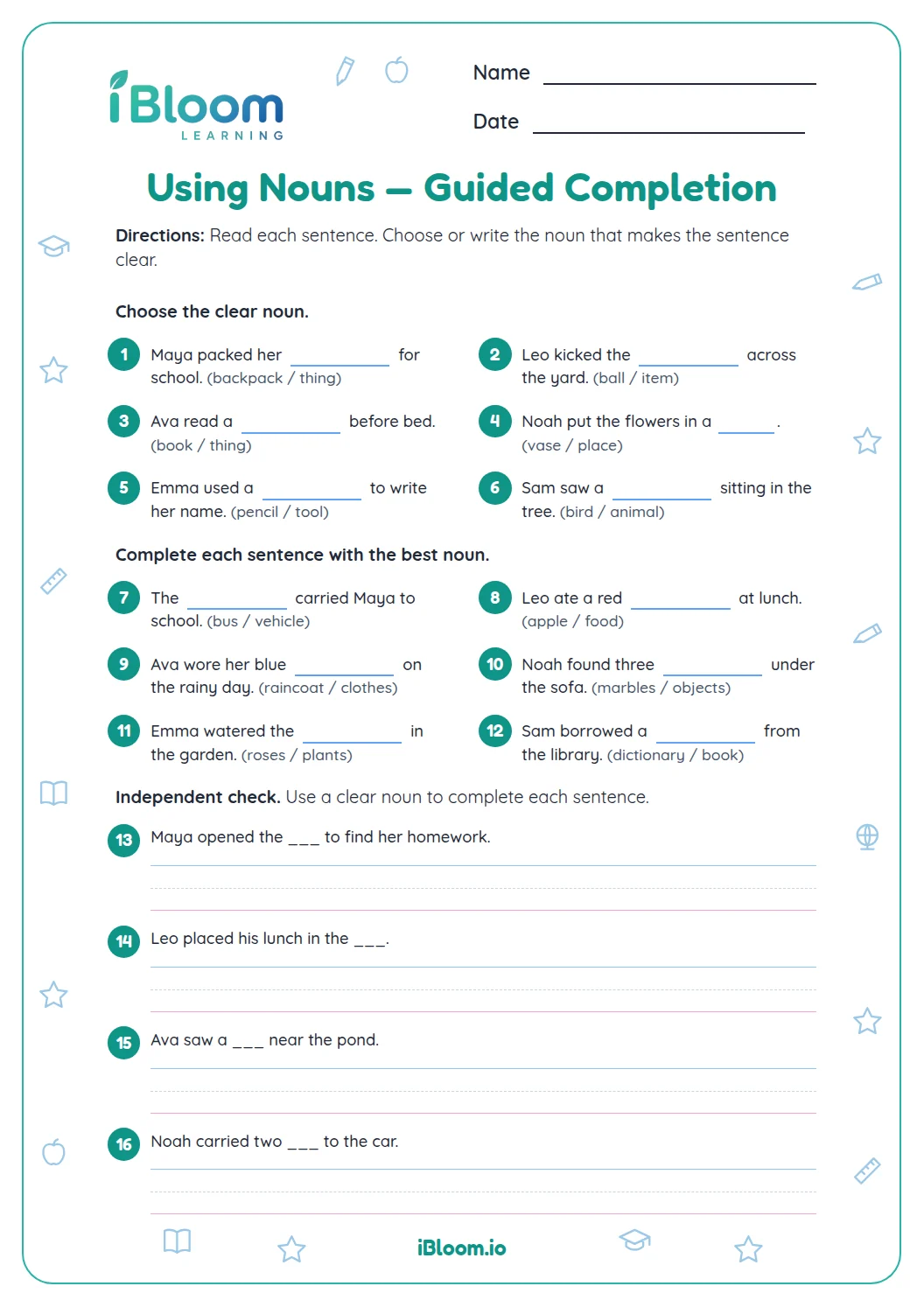
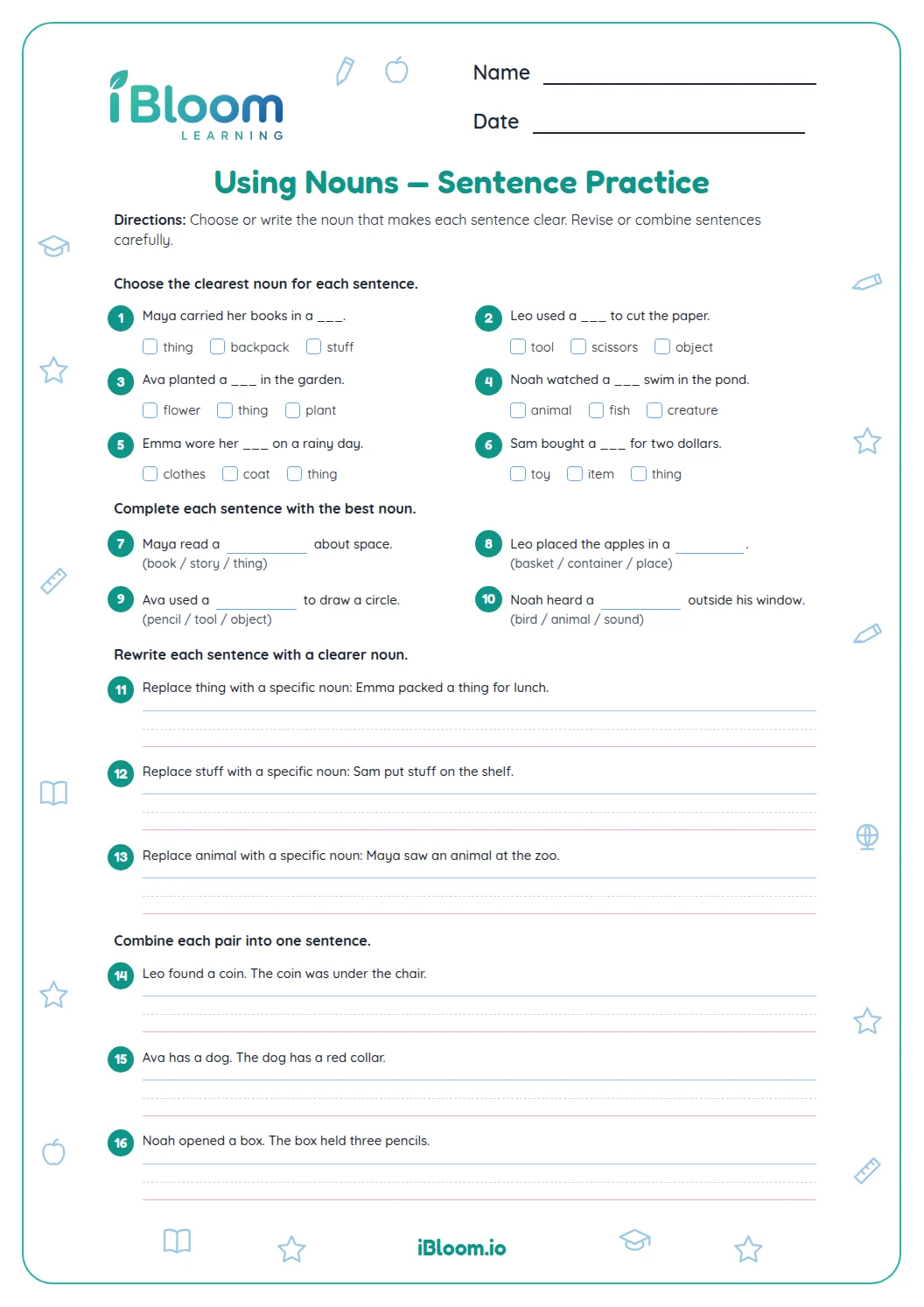
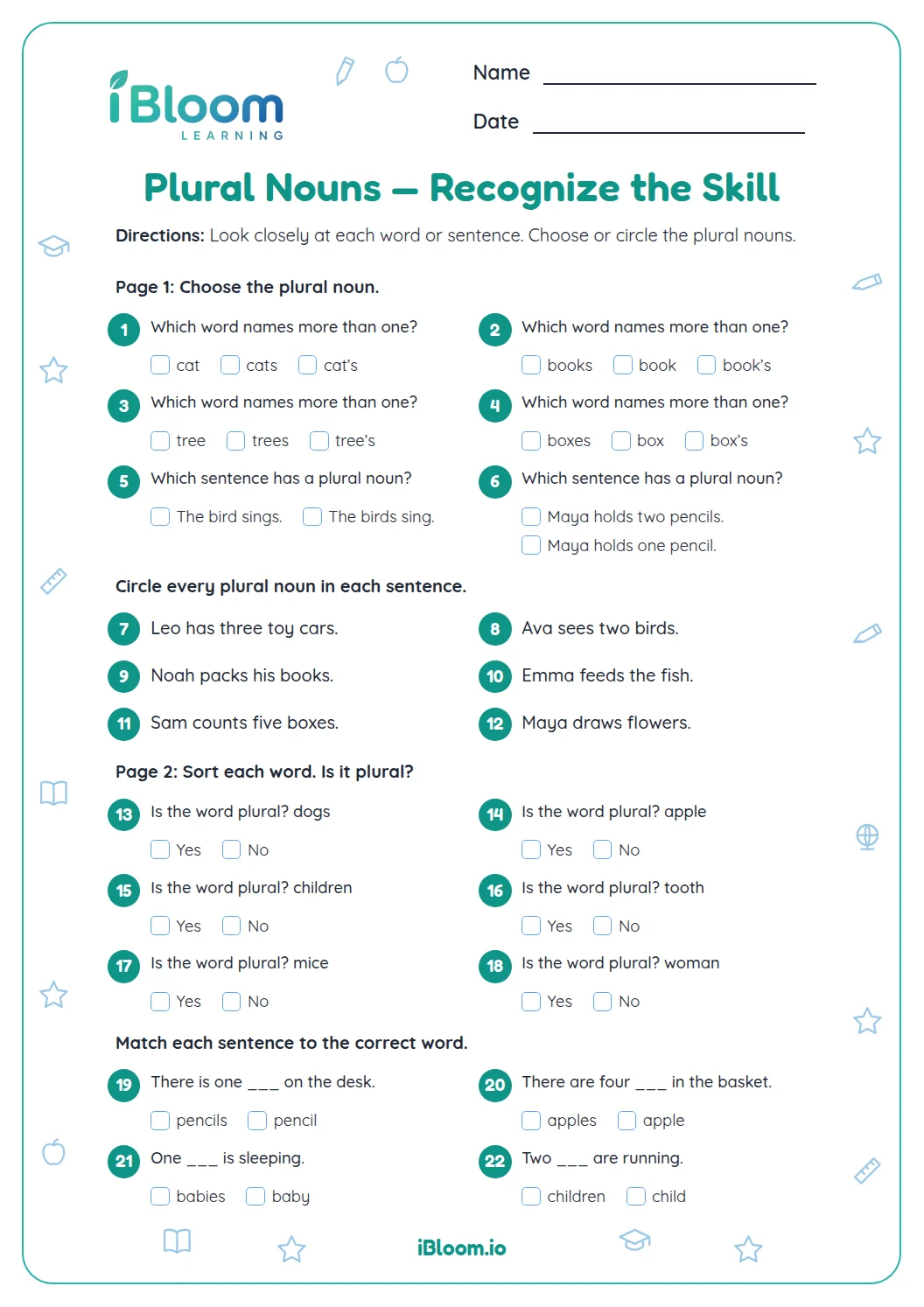
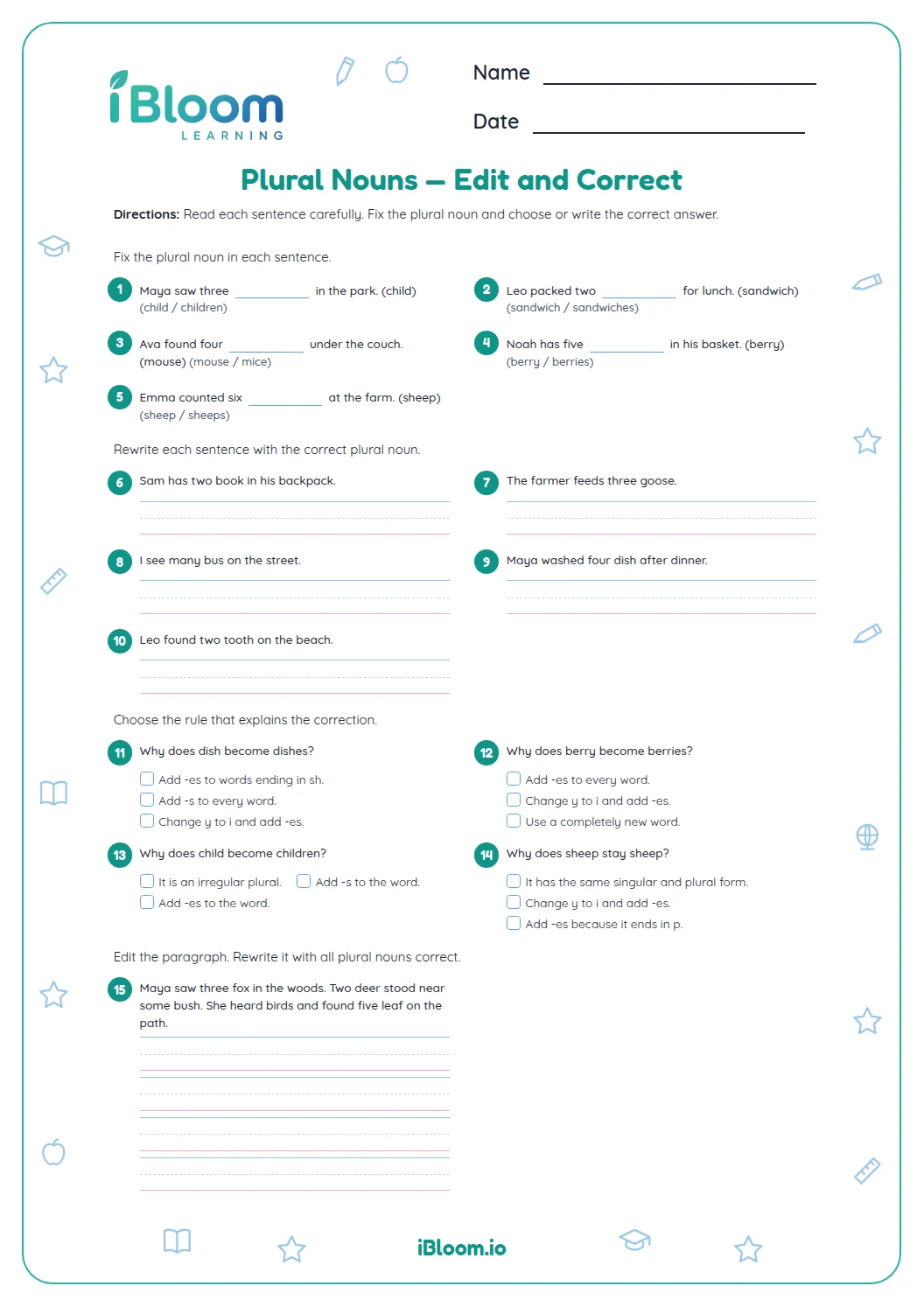
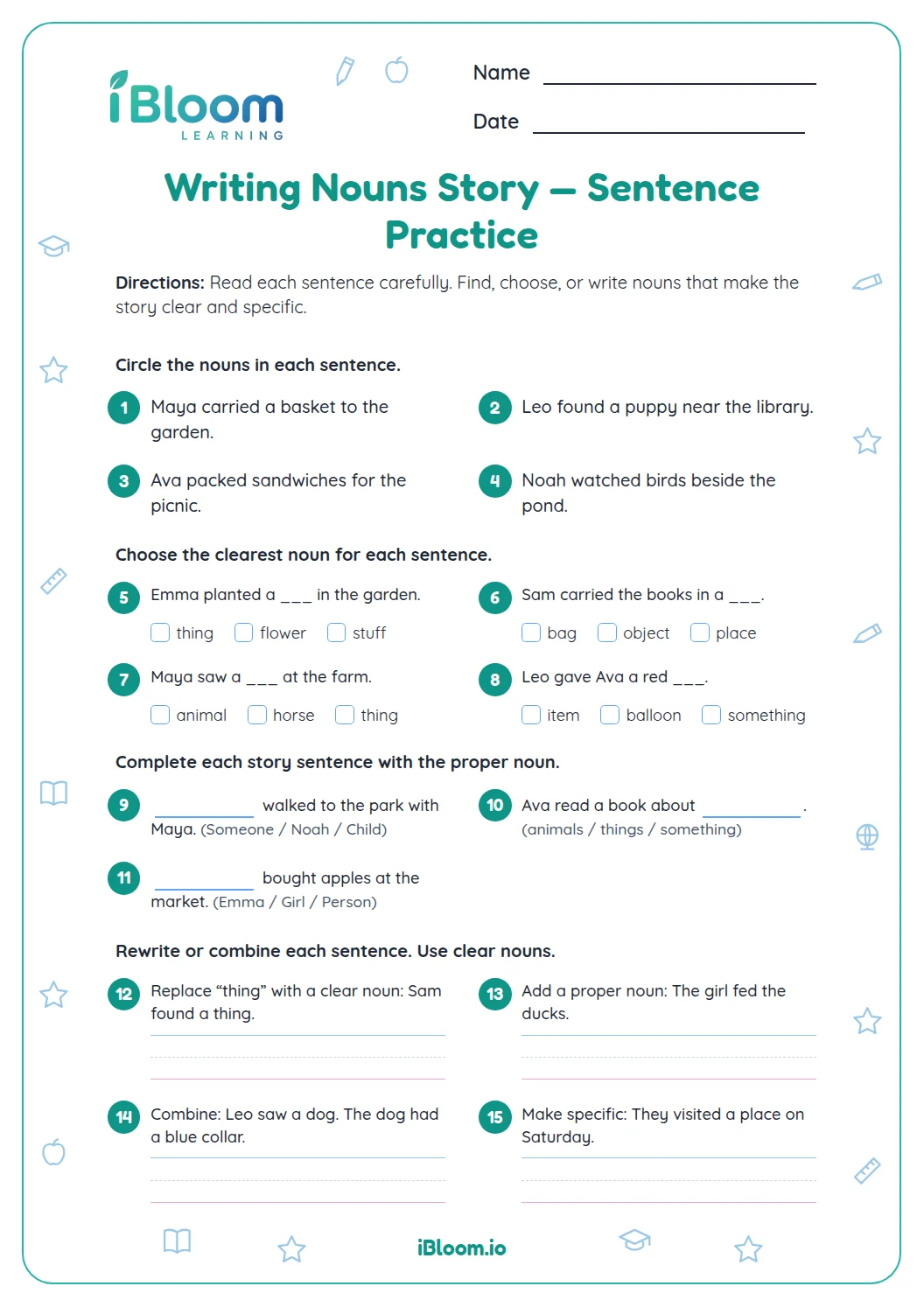
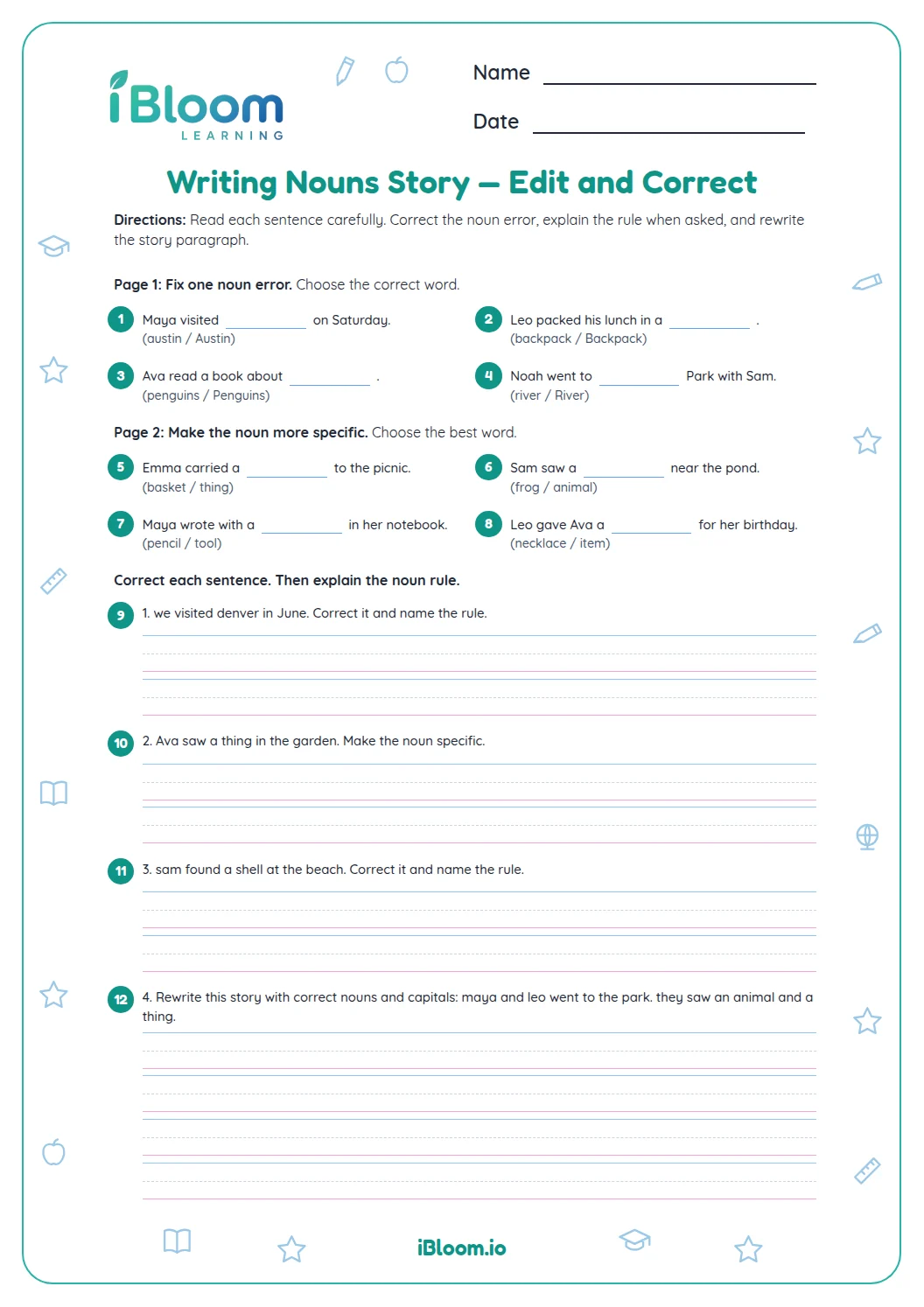
This free Grade 3 grammar worksheet reviews nouns that name a person, place or thing. Students classify nouns in sentence context, complete sentences with the right category, choose clear revisions and write their own sentences. The mixed review builds from quick recognition to applying nouns in writing. A separate answer key gives sample responses for open-ended items.
Aligned to L.3.1.a
How can you tell whether a noun names a person, place or thing?
Look at what the noun names in its sentence. Maya and coach name people, museum and library name places, and camera and tree name things. Context makes the category clear.
For example, in “Leo visited the museum,” museum names a place where someone can go.
- 1Leo visited the museum. What is the museum?
- 2museum → place
Why use a specific noun instead of a vague word?
Words such as there and it can refer to many places or things. A more specific noun helps a reader picture exactly what the sentence means.
“We met at the playground after school” identifies the place more clearly than “We met there after school.”
How can a child use all three noun groups in a sentence?
Start with a person noun, then add a thing and a place that make sense together. “Maya read a book at the library” contains one clear example of each category.
In the final challenge, children replace two vague words. Several revisions can be correct as long as each new noun names a clear person, place or thing.
How to use this worksheet
- 1Read the whole sentence before classifying its noun.
- 2Ask what the noun names: a person, a place or a thing.
- 3Use the category choices to complete Part B.
- 4Compare the two revisions and notice which one names the person or place.
- 5Write complete sentences and check that the nouns fit the meaning.
Common mix-ups and quick fixes
The mistake
Calling “coach” a place because the sentence also says “park.”
The fix
Check which word the question asks about. A coach is a person; a park is a place.
The mistake
Calling “library” a thing because it is a building.
The fix
For this activity, a location where people go is classified as a place.
The mistake
Leaving “there” or “it” in a revision that asks for a clear noun.
The fix
Replace the vague word with a specific name, such as playground or dinosaur.
Curriculum alignment
This practice uses nouns in sentence context and asks students to explain what a noun names.
Classify nouns by the people, places or things they name in sentences.
On this sheet: Students identify nouns and use each noun’s meaning in its sentence to sort person, place and thing.
Show the official wordingHide the official wording
Explain the function of nouns, pronouns, verbs, adjectives, and adverbs in general and their functions in particular sentences.
What to practice next
Make more practice
Further reading
Questions parents and teachers ask
What does person, place and thing mean in grammar?
A person noun names someone, a place noun names a location, and a thing noun names an object or other item. In “Maya read a book at the library,” Maya is a person, book is a thing and library is a place.
How many questions are on this Grade 3 worksheet?
There are 14 questions in four parts: four noun-category choices, six sentence completions, two choices that improve vague wording and two writing tasks. The worksheet takes about 20 minutes and includes a separate answer key with sample responses. The key lists each noun category.
Why is a museum a place and not a thing?
The activity sorts nouns by what they name in context. A museum is a location that people visit, so it is classified as a place. A camera, backpack or book is an item, so each is classified as a thing. The sentence gives a clue about the noun’s meaning.
Can my child write a different sentence in the challenge?
Yes. The key provides a sample, but another complete sentence is correct if it uses the given nouns in a sensible way. For the editing question, accept any revision that replaces both vague words with specific nouns for a place and a thing.
What is the purpose of replacing “there” and “it”?
Those words can point to many places or things, so the reader may not know exactly what happened. Replacing them with nouns such as museum and dinosaur makes the sentence clearer. The last question gives practice making that revision. This is one way precise nouns help readers.