

About this worksheet
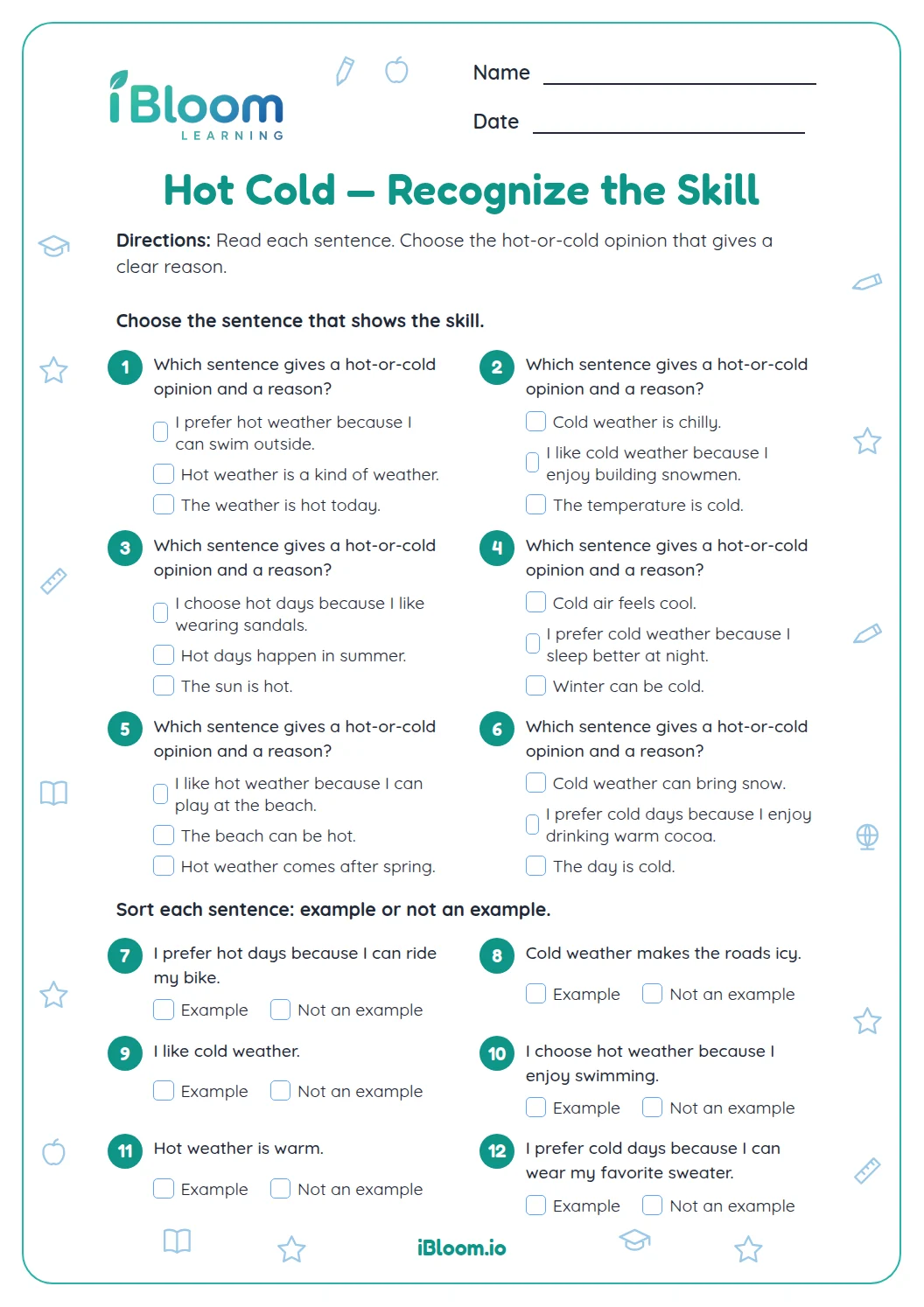
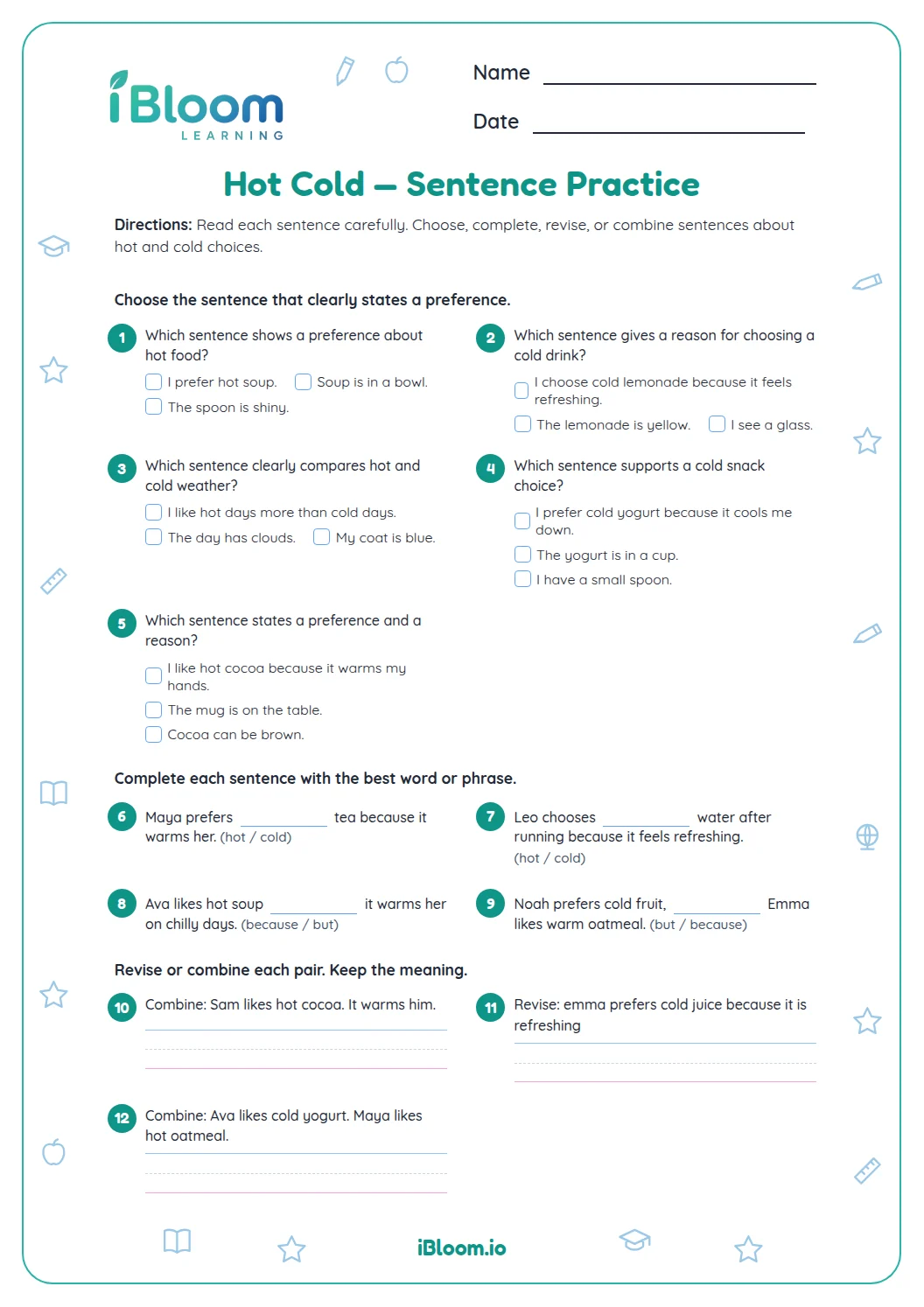
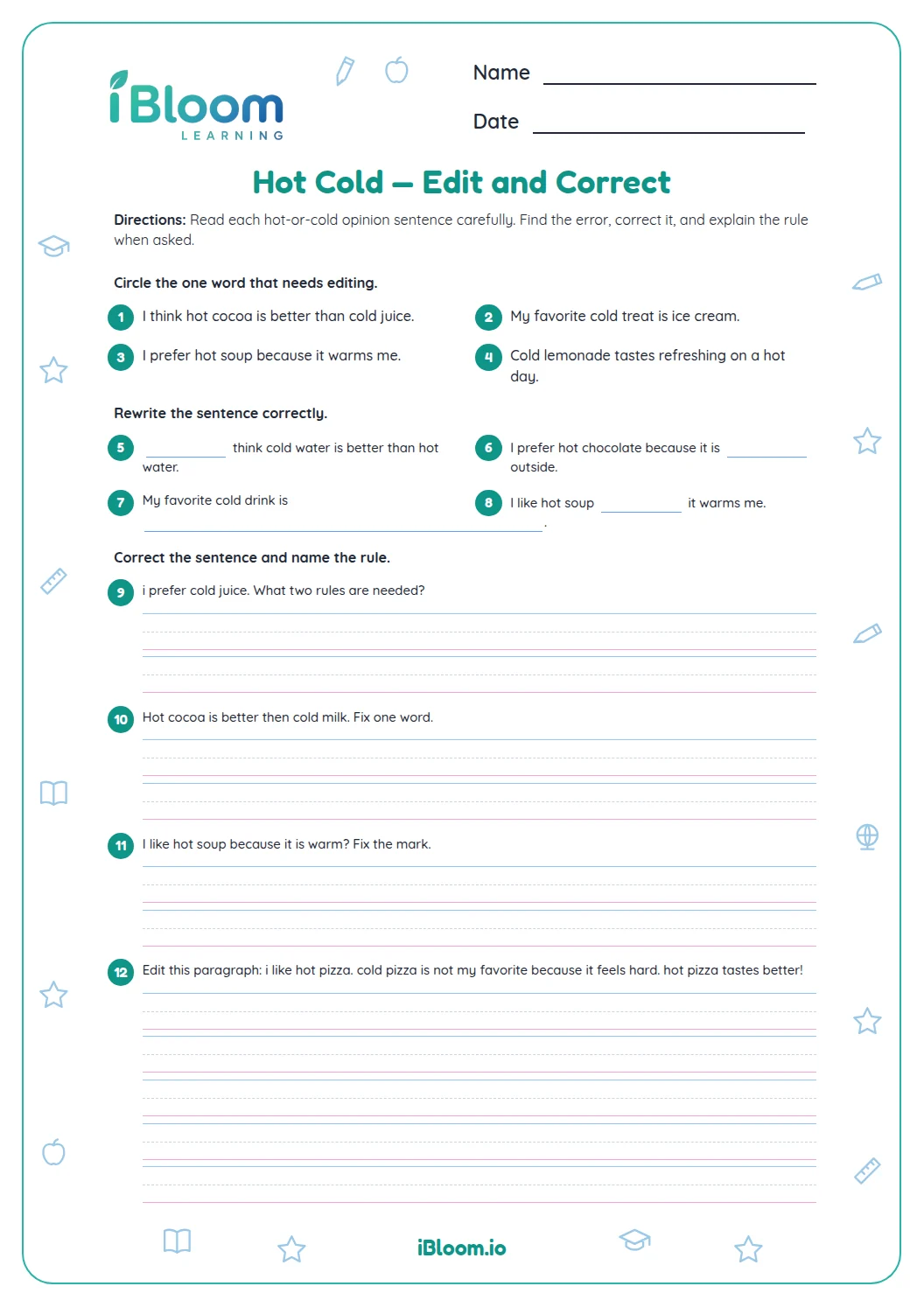
This Grade 3 worksheet guides students through opinions about hot and cold foods and everyday choices. Children choose precise words, finish opinion sentences, and connect a preference to a reason. The final items ask them to distinguish relevant support from a fact that does not support the claim. It practices CCSS W.3.1 and includes an answer key.
Aligned to W.3.1
What will students do on the sheet?
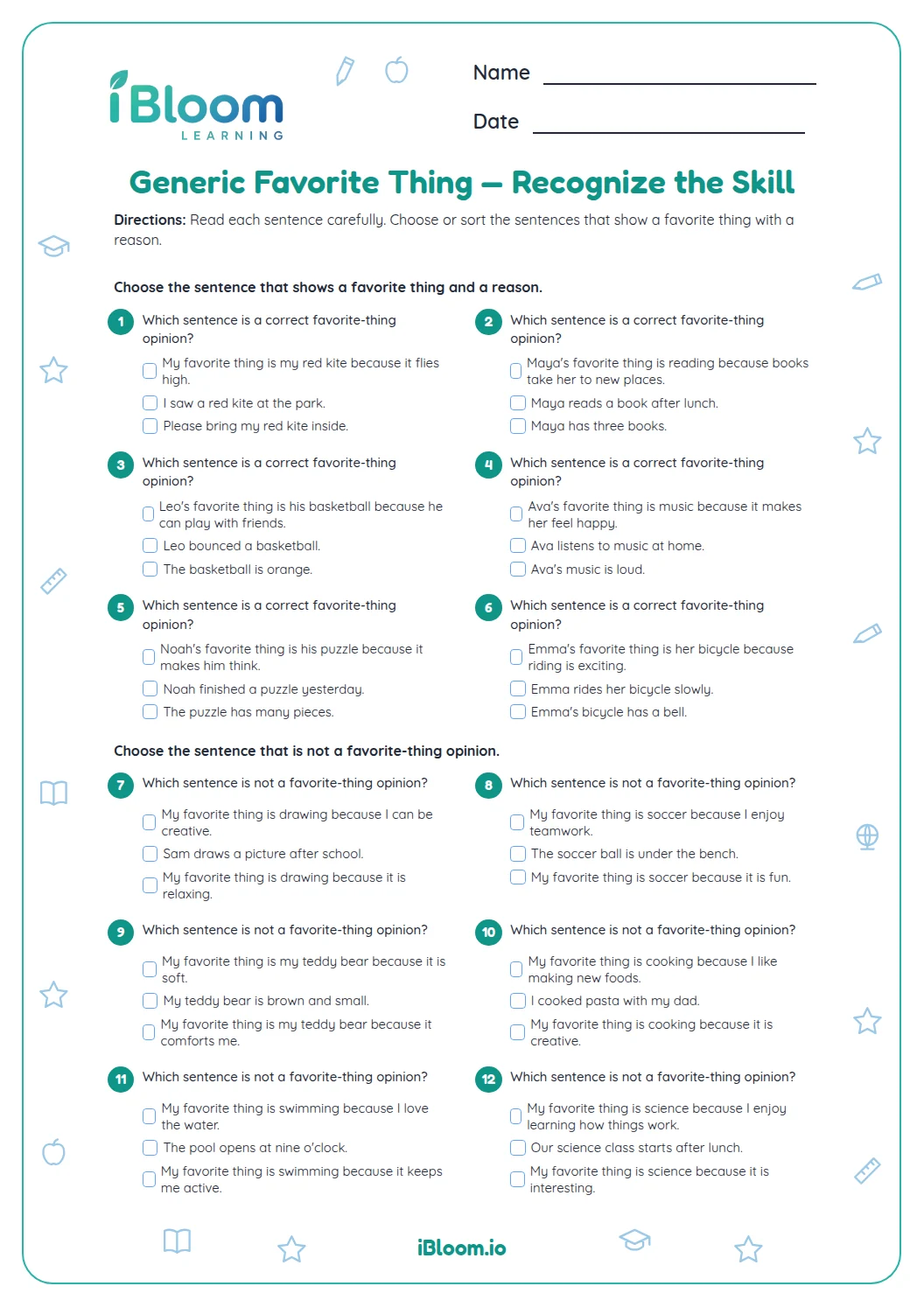
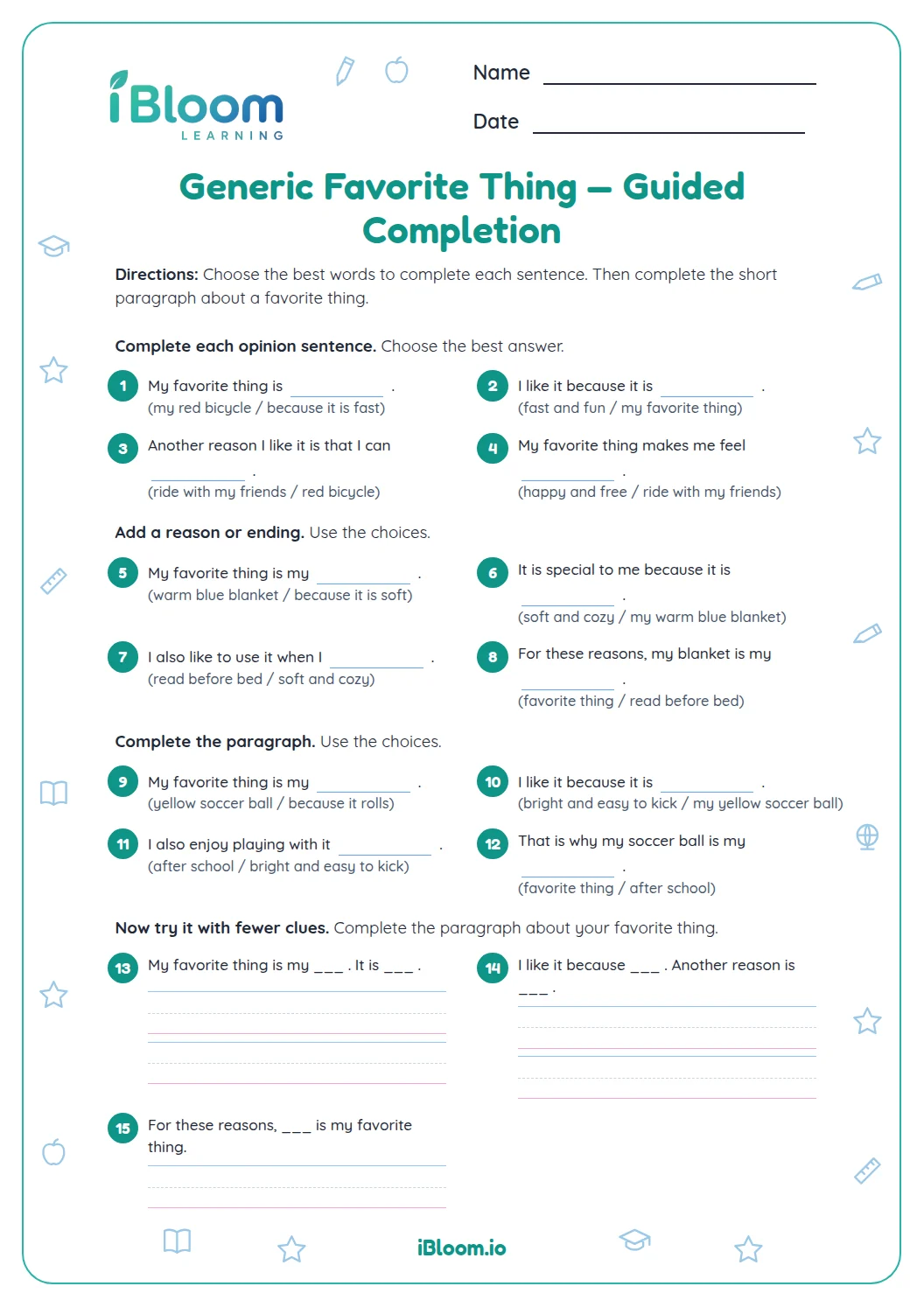
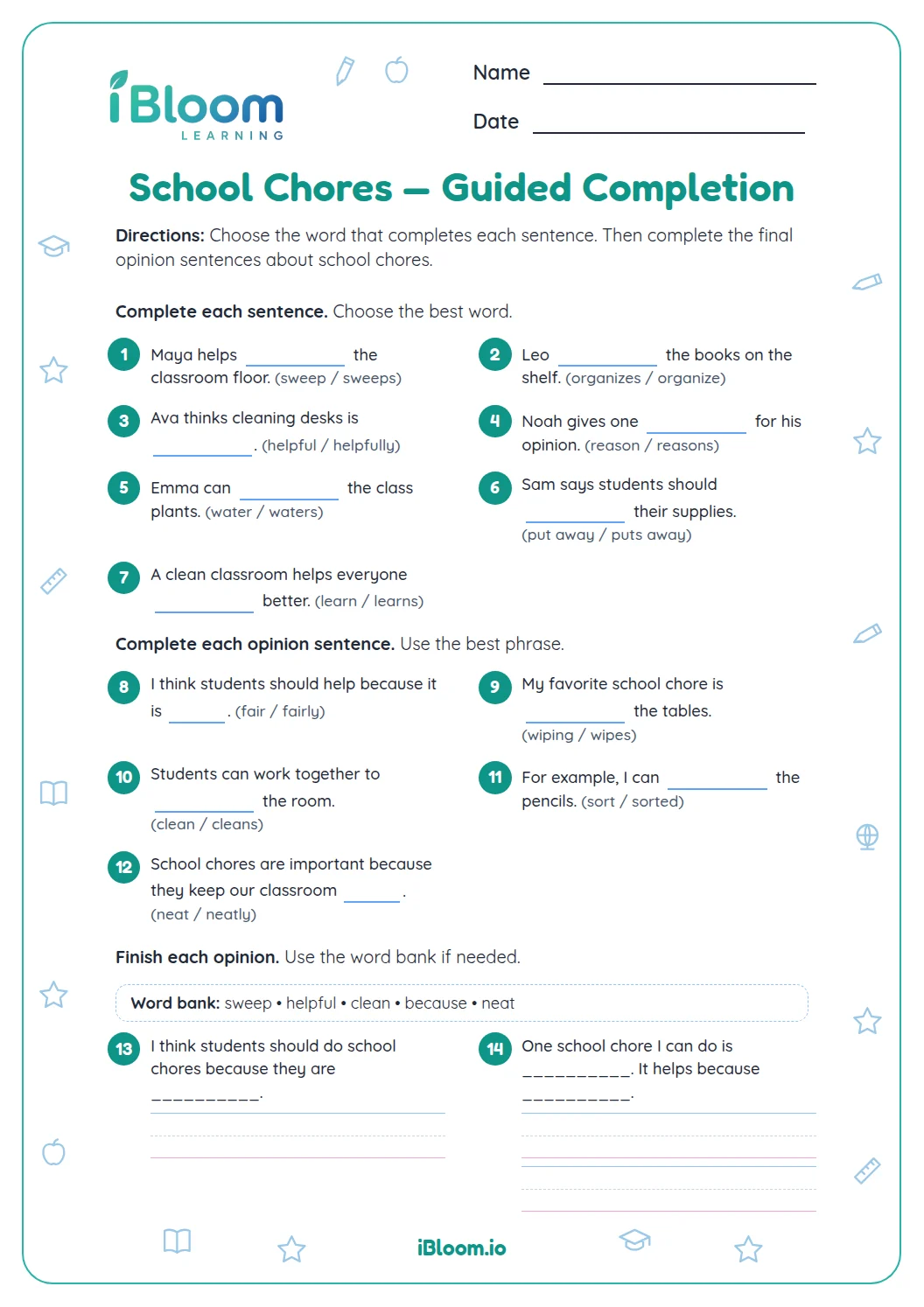
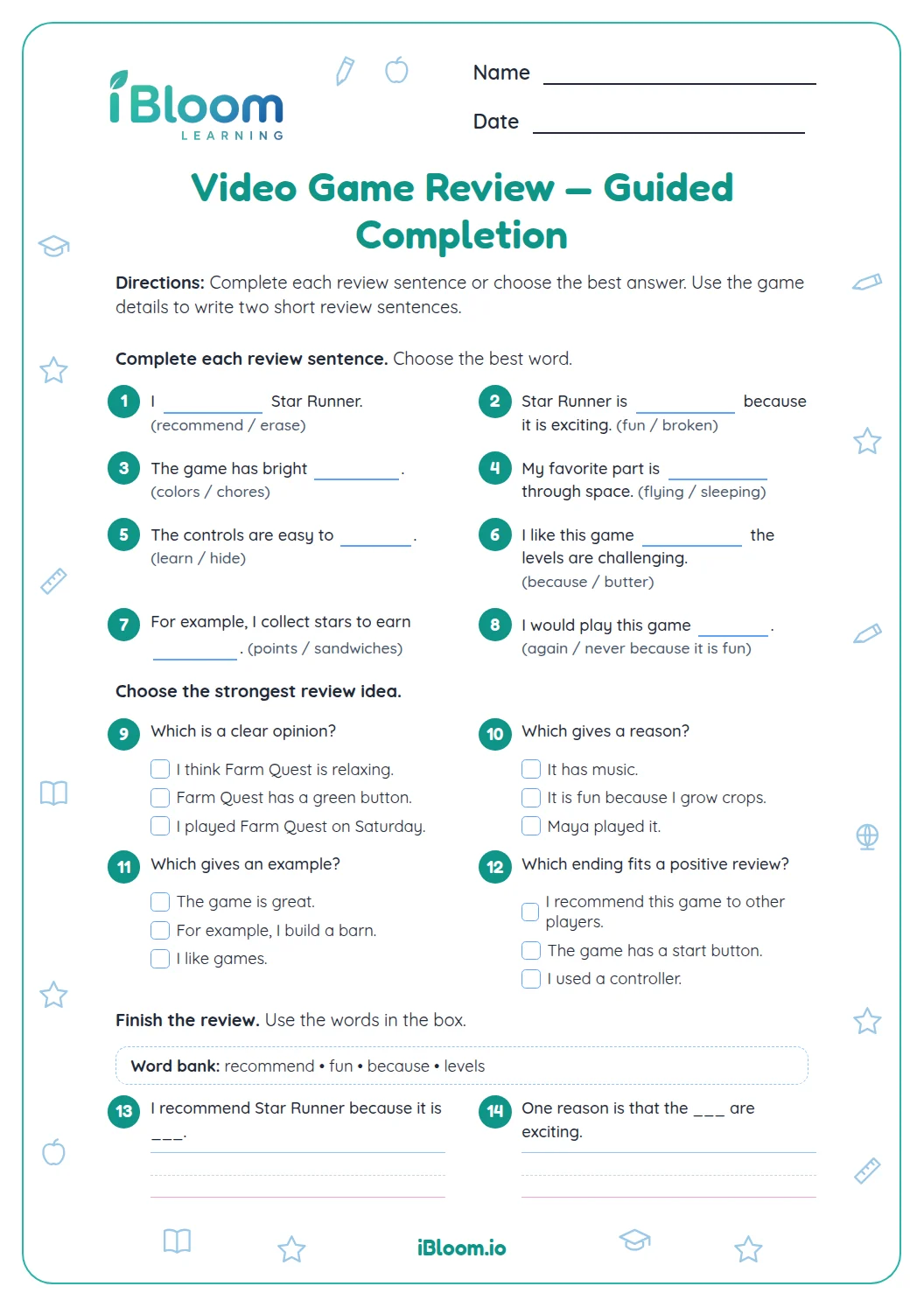
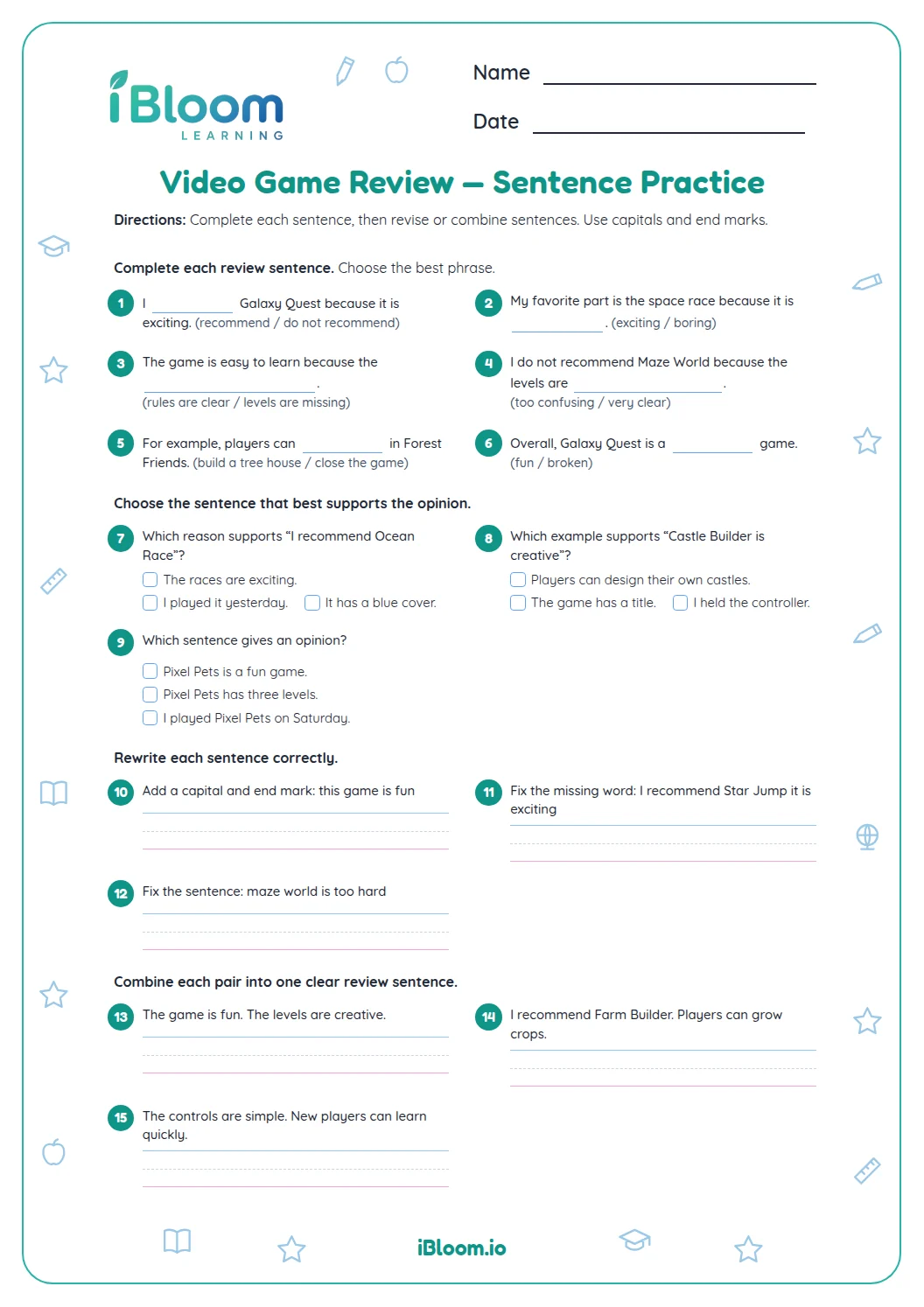
Students recognize hot and cold descriptions, complete opinions, and choose relevant support. Part A supplies sentence frames; Part B gives room for a personal response; Part C checks whether a detail supports the stated preference.
How can a child tell whether a reason fits?
A reason answers “why?” about the opinion. A detail may be true without explaining a preference. Read the opinion and reason together to see whether the second part makes the first part clearer.
- 1I choose the hot bath ___ it helps me relax. → because
- 2“Because” introduces the reason that explains the choice.
How should students answer the open prompts?
Any reasonable preference can work when the child supplies a connected reason. The answer key gives one model, not the only possible response. Encourage a complete thought: name the choice, then explain what the child likes about it.
What can students check before finishing?
Read each completed sentence aloud. Check that the opinion is clear and that a reason follows “because.” Compare each choice with the opinion instead of selecting a detail just because it is true.
How to use this worksheet
- 1Read the full opinion before choosing a word.
- 2Use “because” to introduce a reason.
- 3Check that the reason explains the preference.
- 4Write a complete thought for each open prompt.
- 5Read the opinion and reason together.
Common mistakes and quick fixes
The mistake
Choosing a true detail that does not explain the opinion.
The fix
Ask whether the detail answers “why?” about the preference.
The mistake
Writing a reason that repeats the opinion.
The fix
Add a new detail about how the choice feels, tastes, or helps.
The mistake
Leaving the opinion unclear in an open response.
The fix
Name the choice first, then add a reason with “because.”
Common Core alignment
This worksheet practices forming an opinion and supporting it with reasons.
State an opinion and support it with reasons.
On this sheet: Students complete an opinion and identify reasons that support a point of view.
Show the official wordingHide the official wording
Write opinion pieces on topics or texts, supporting a point of view with reasons.
What to practice next
Make more practice
Further reading
Questions parents and teachers ask
How many questions are on this worksheet?
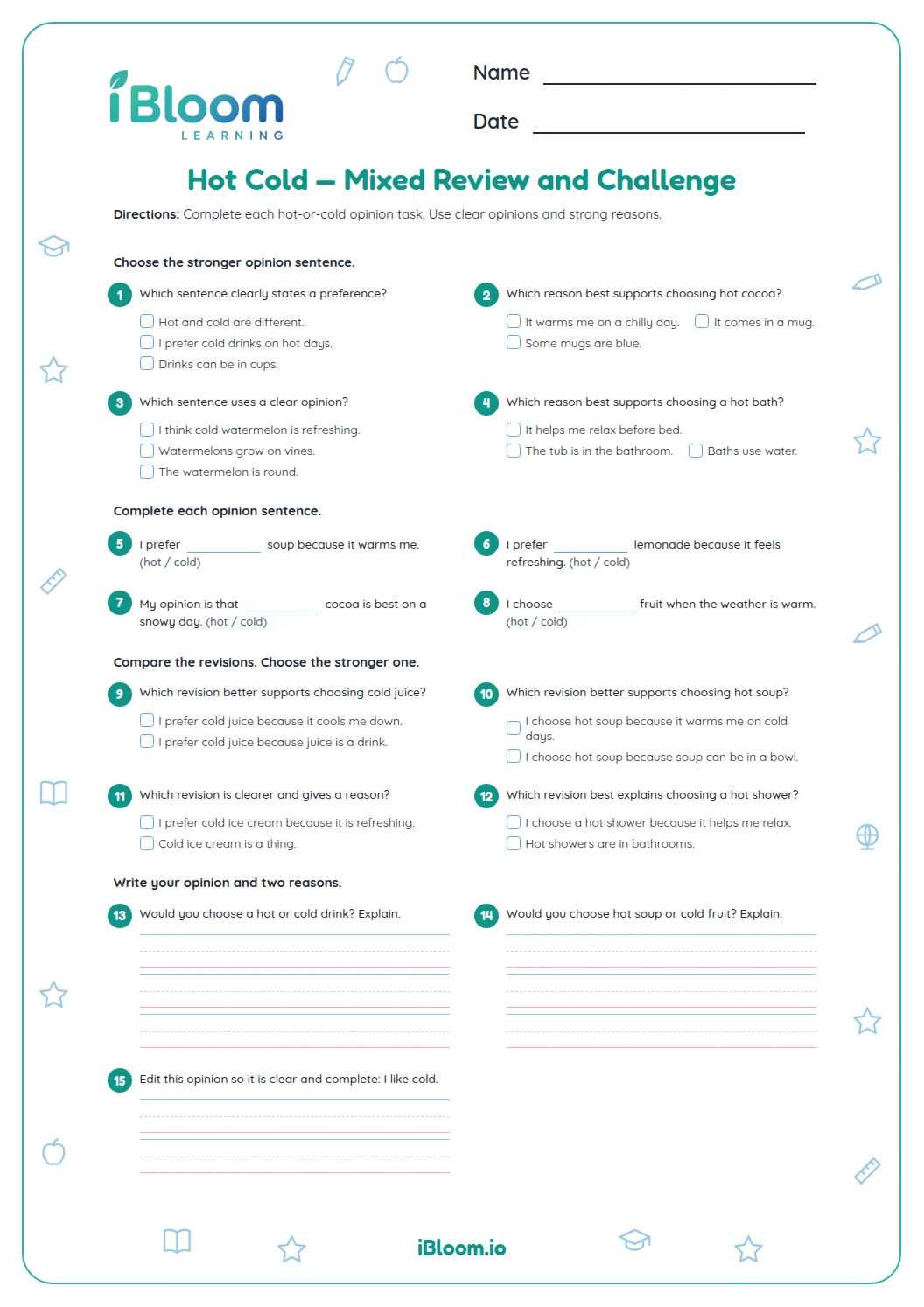
The sheet has 15 questions in three parts: six opinion choices or completions, four written reasons, and five questions about opinions or supporting details. The separate answer key gives fixed answers for choices and sample responses for open writing prompts. This gives families a simple way to review each step together at home.
Are there open-ended answers?
Yes. Four prompts invite students to complete an opinion and give a reason. The key includes a model response for each, and another complete answer is acceptable when its reason supports the stated preference in a clear way. This gives families a simple way to review each step together at home.
What counts as a supporting reason?
A supporting reason explains why someone holds an opinion. “It feels refreshing on a warm day” supports a preference for cold lemonade because it gives a reason for that choice, rather than only describing the drink. This gives families a simple way to review each step together at home.
Can a parent use this at home?
Yes. An adult can read each prompt aloud, then ask the child to explain how a reason connects to a preference. The four open prompts can also be completed independently in writing, with the answer key used afterward. This gives families a simple way to review each step together at home.
What is included in the answer key?
The key lists the correct choices and missing words for closed items. For the four open prompts, it offers one possible response so an adult can check for a clear opinion, a complete sentence, and a reason that matches the choice. This gives families a simple way to review each step together at home.