

About this worksheet
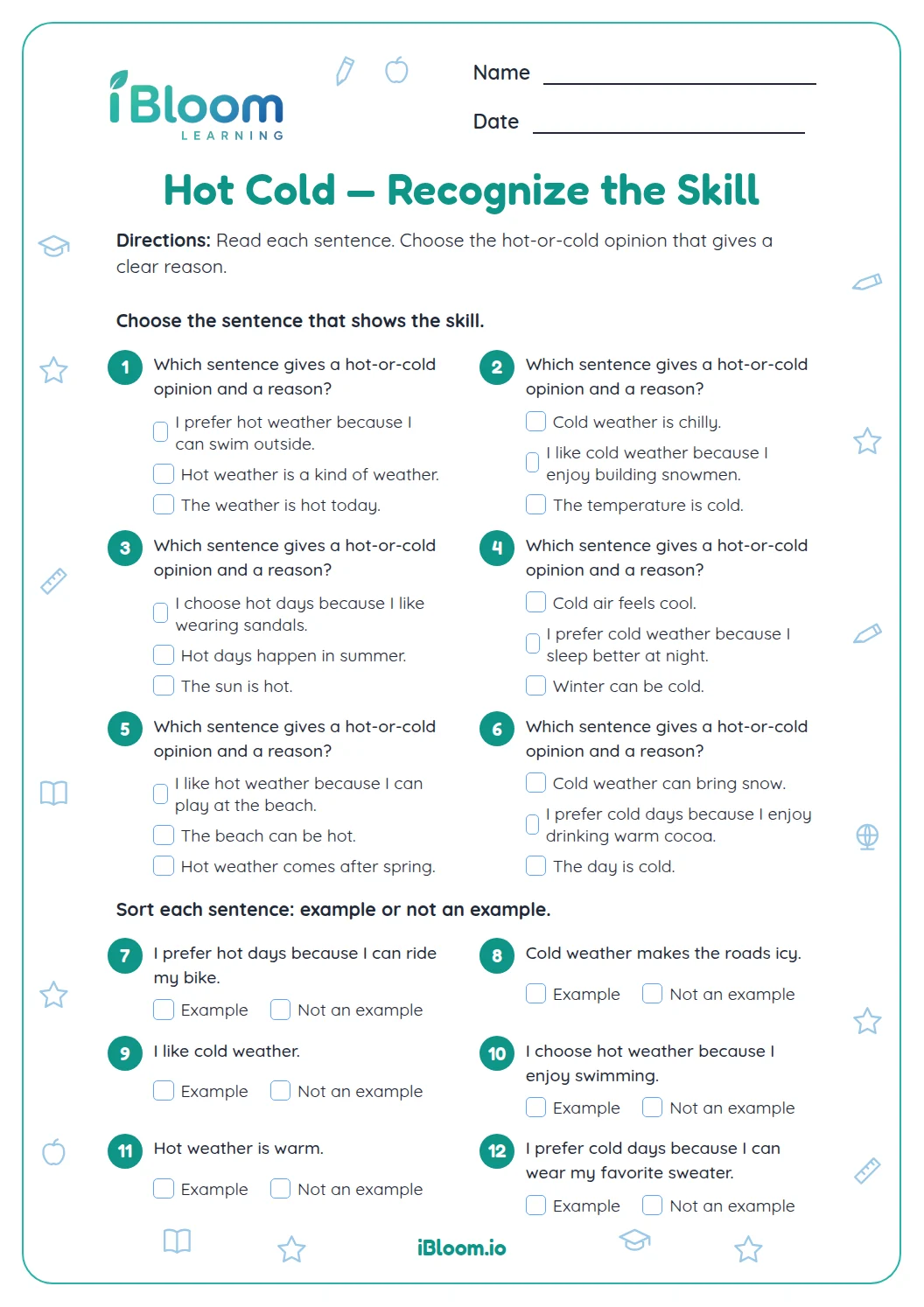
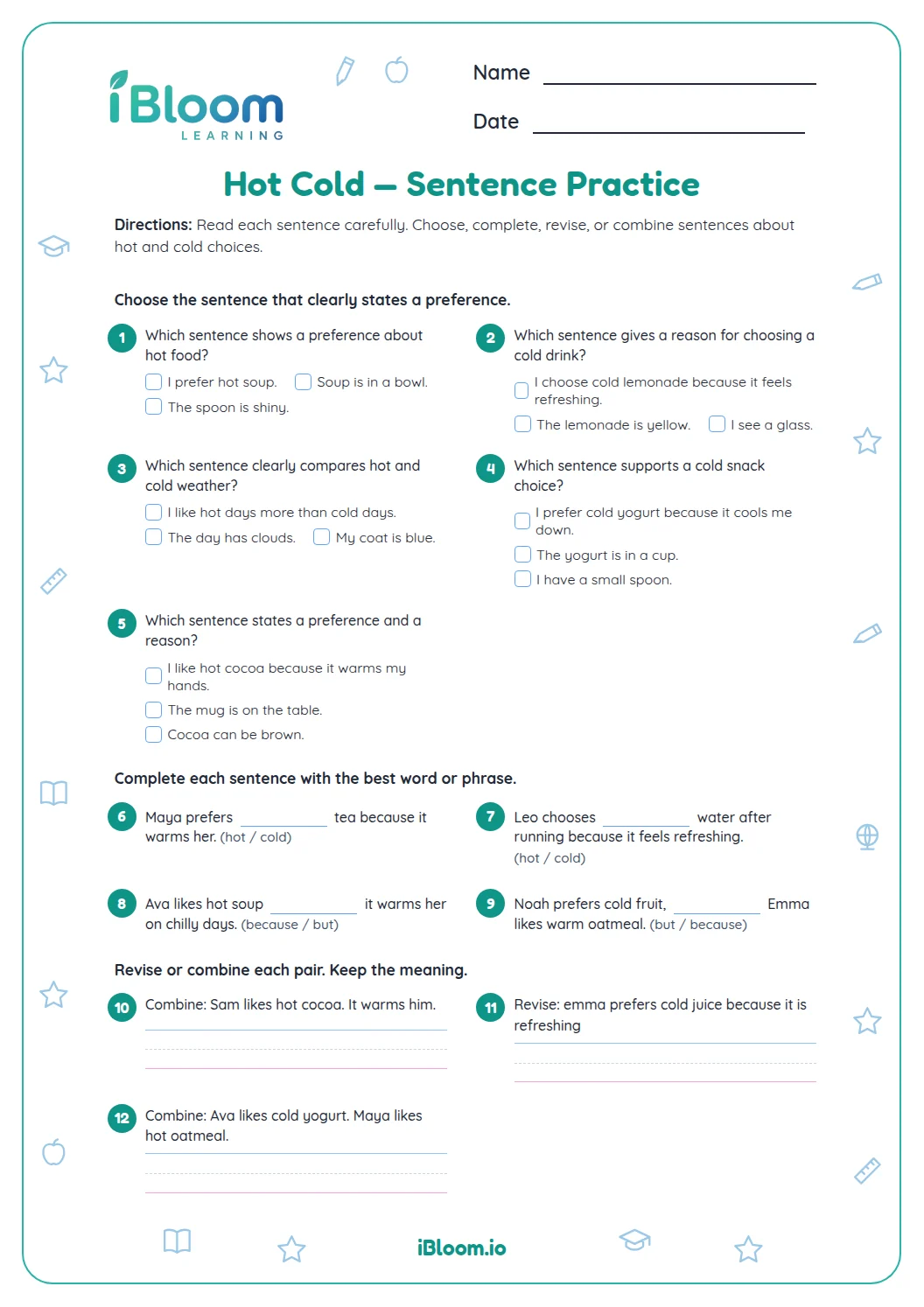
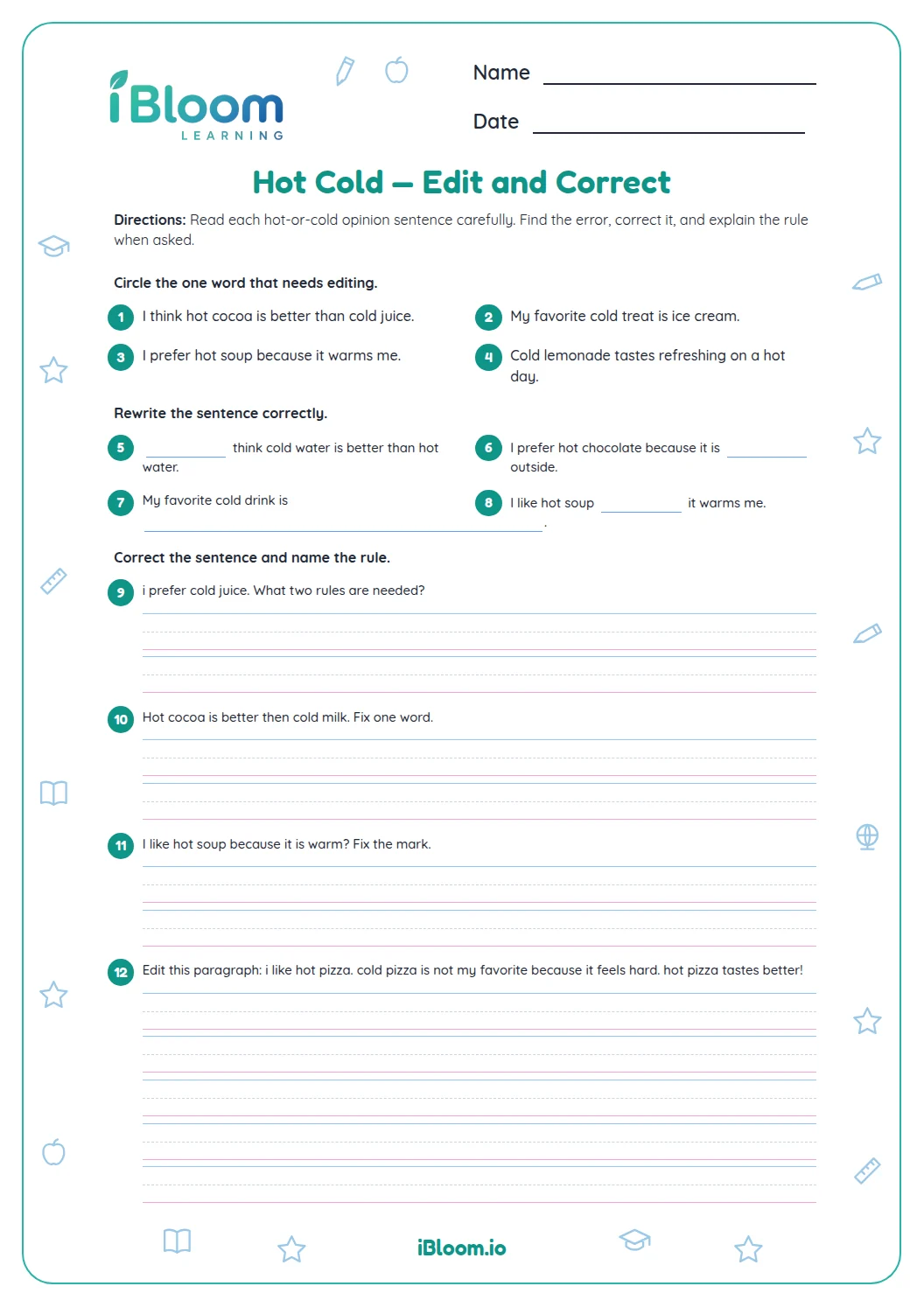
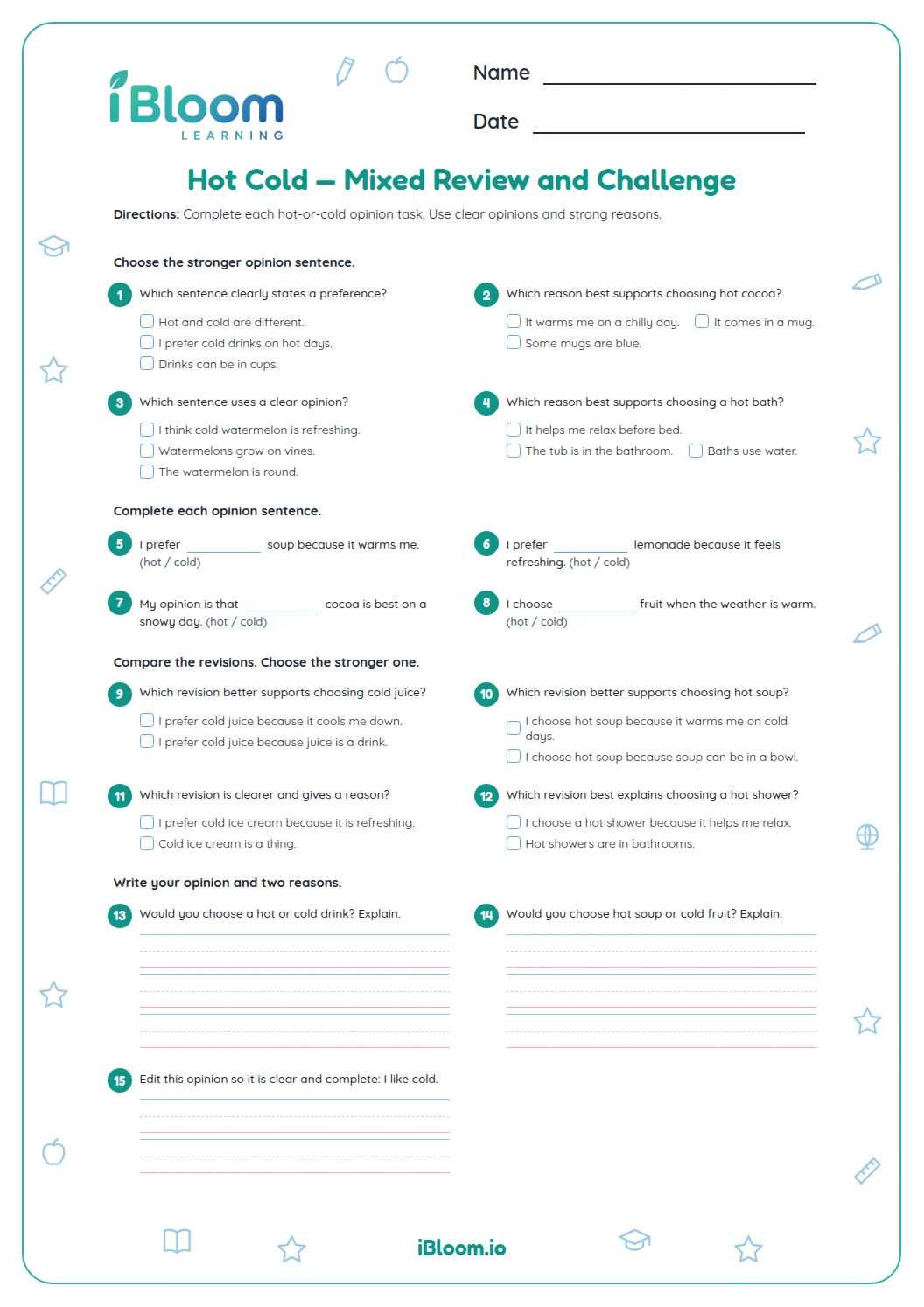
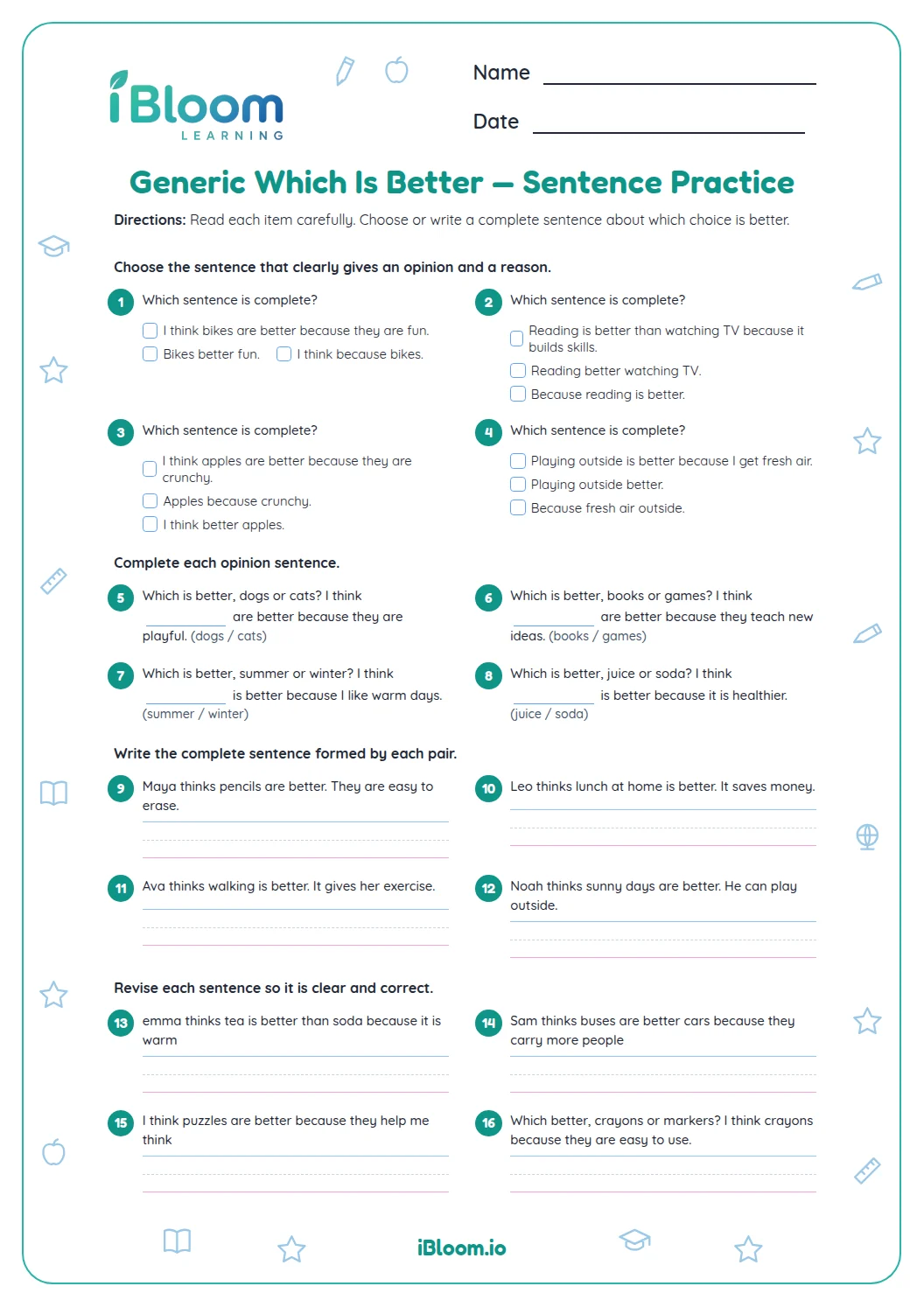
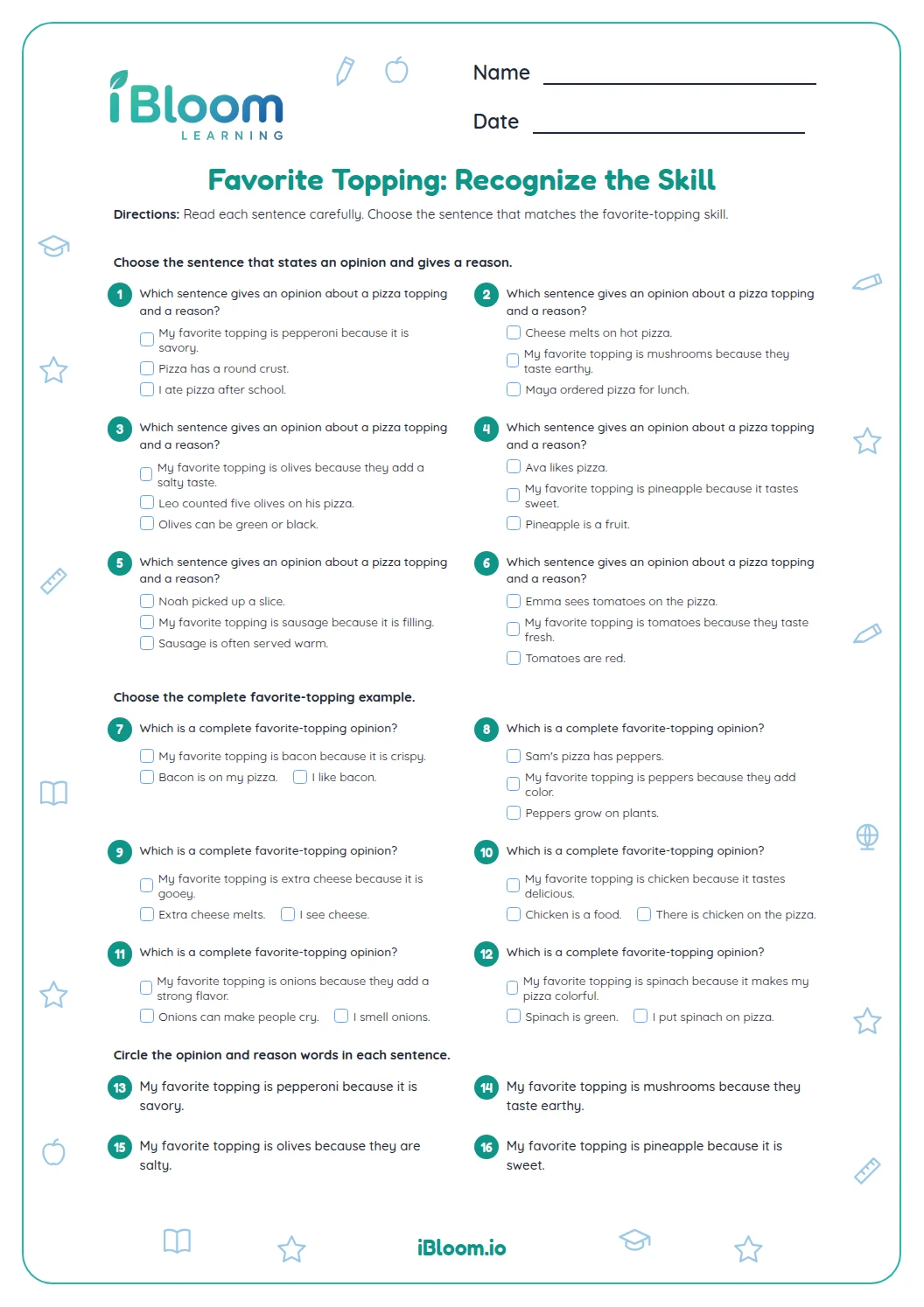
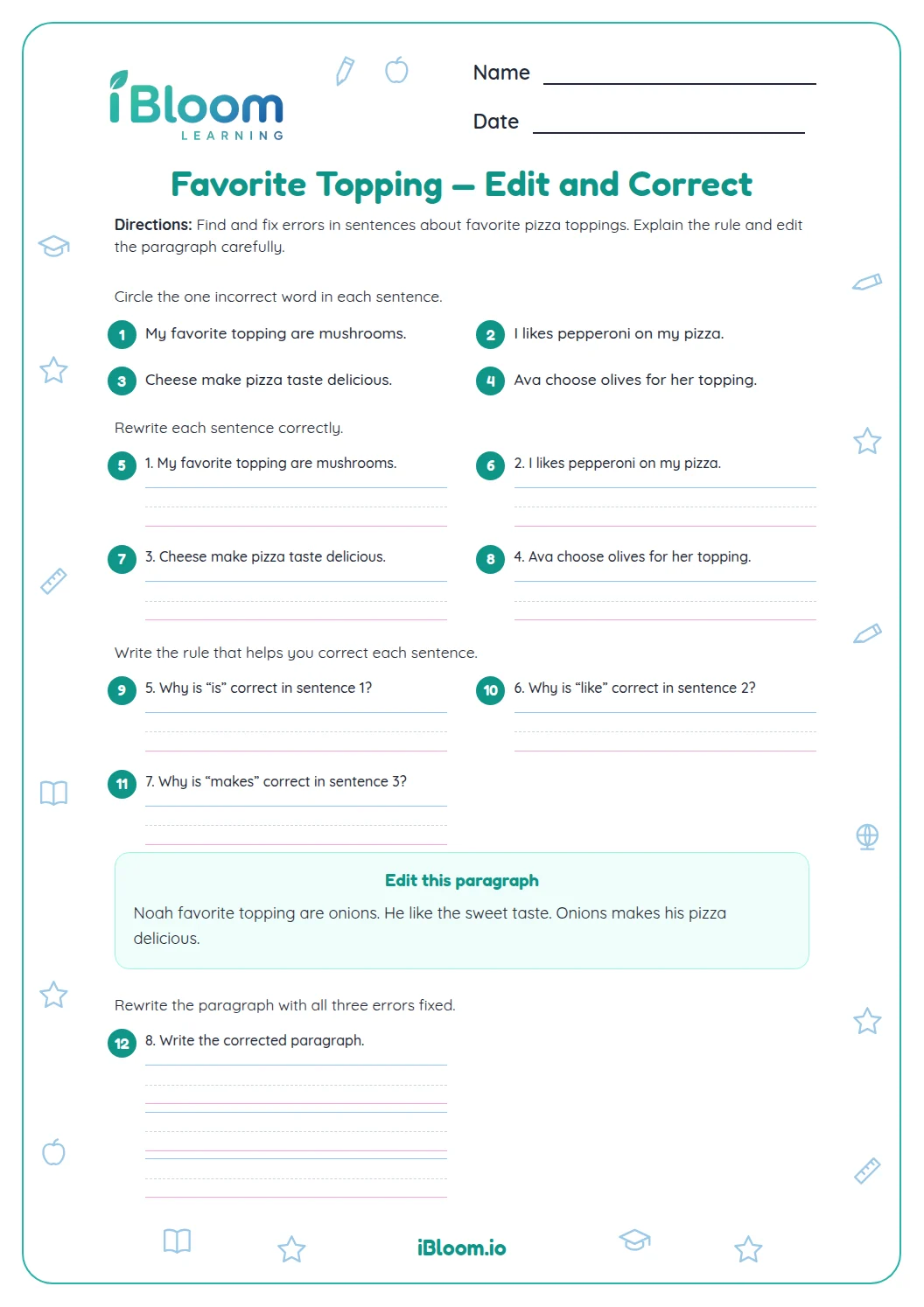
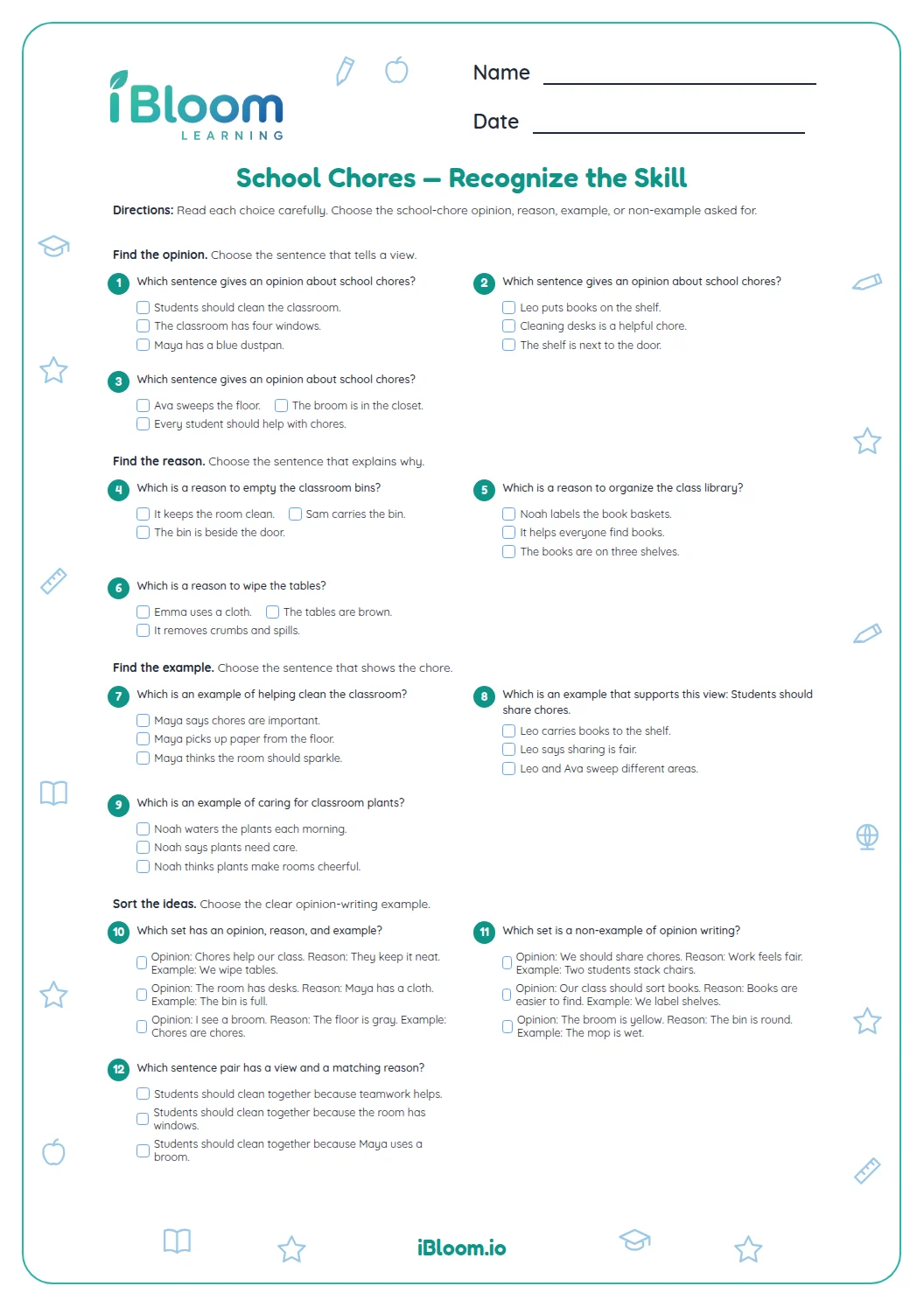
This Grade 3 printable uses familiar hot-and-cold food choices to practice opinion writing. Students recognize opinions and supporting details, complete linking phrases, and then write a short response with a choice, reasons, and a conclusion. The last section builds a small opinion piece one sentence at a time. The answer key gives sample responses; children may use different choices when their reasons and details fit.
Aligned to W.3.1.a and W.3.1.b
What is the hot-or-cold topic?
Students consider warm soup, hot cocoa, cider, cold lemonade, and a fruit cup. The first five questions identify opinion-writing parts. In question 1, “Cold lemonade is the best summer drink” is an opinion because it tells what the writer thinks.
How can a reason support a choice?
A reason explains why the writer prefers one option. Question 2 supports hot soup with the idea that it can warm the writer. A detail adds something specific, such as a measured amount in a recipe.
What will students write in the final part?
Questions 10–13 build an opinion response from a choice and reason to a second reason and conclusion. Question 10 asks students to choose hot soup or a cold fruit cup and explain the choice. The last question applies the same structure to cocoa or lemonade.
How to use this worksheet
- 1Read each prompt and identify the hot or cold topic.
- 2In the first part, distinguish an opinion from a fact or supporting reason.
- 3Complete each linking word and writing-check phrase.
- 4Plan a preference and two reasons before starting question 14.
- 5Finish with a closing sentence that repeats the preference.
- 6Review the sample and explain why its reasons support the choice.
Common mistakes and quick fixes
The mistake
Writing only “I like soup” without explaining the choice.
The fix
Add “because” and a reason, such as “because it warms me up.”
The mistake
Giving a detail that does not support the opinion.
The fix
Ask how the detail helps explain the choice; replace unrelated facts with a reason or example.
The mistake
Ending with a new choice that changes the opinion.
The fix
Restate the same choice in the closing sentence and connect it to the reasons already given.
Common Core alignment
Students state a preference, arrange reasons around it, and provide supporting details in short opinion responses.
State an opinion and organize the writing by listing related reasons.
On this sheet: Students state a preference and organize short responses around reasons.
Show the official wordingHide the official wording
Introduce the topic or text they are writing about, state an opinion, and create an organizational structure that lists reasons.
Give reasons that support the opinion.
On this sheet: Students choose and write reasons that explain a hot-or-cold preference.
Show the official wordingHide the official wording
Provide reasons that support the opinion.
What to practice next
Make more practice
Further reading
Questions parents and teachers ask
What does “hot or cold” mean on this worksheet?
The prompts compare familiar warm and cold foods or drinks, including hot soup, cocoa, iced tea, fruit pops, and lemonade. Students identify opinion parts and then choose one preference to support with reasons. The topic keeps the writing prompt concrete.
Does my child have to choose hot soup?
No. The written prompt allows either hot soup or a cold fruit cup. The key gives one sample, but accept a different preference when the child states it clearly, gives two reasons that fit, and adds a closing sentence. The multiple-choice questions have one best response.
What is a reason in an opinion response?
A reason explains why the writer prefers an option. “I choose hot soup because it warms me” gives a choice and a reason. A second reason adds more support, such as saying that the soup is filling, before the writer finishes the response.
Why do students use linking words?
Linking words show how an opinion and its reason fit together. “Because” introduces why the writer prefers something. Question 6 uses because to connect a preference for soup with the reason that it warms the writer; question 7 uses it to explain the preference for iced tea.
What should a child check before finishing?
The eight fill-ins review links between opinion and reasons, capital letters, punctuation, details, and conclusions. The final written response asks the child to use those ideas by stating a preference, giving two reasons, and closing with the same choice. The key shows a sample.
How long should this writing practice take?
Plan for about 20 minutes. The choice questions and fill-ins are brief, while the final response needs time for planning and rereading. If your child needs more time, finish the recognition and completion parts first, then return to the hot-or-cold opinion at the end.