



About this worksheet
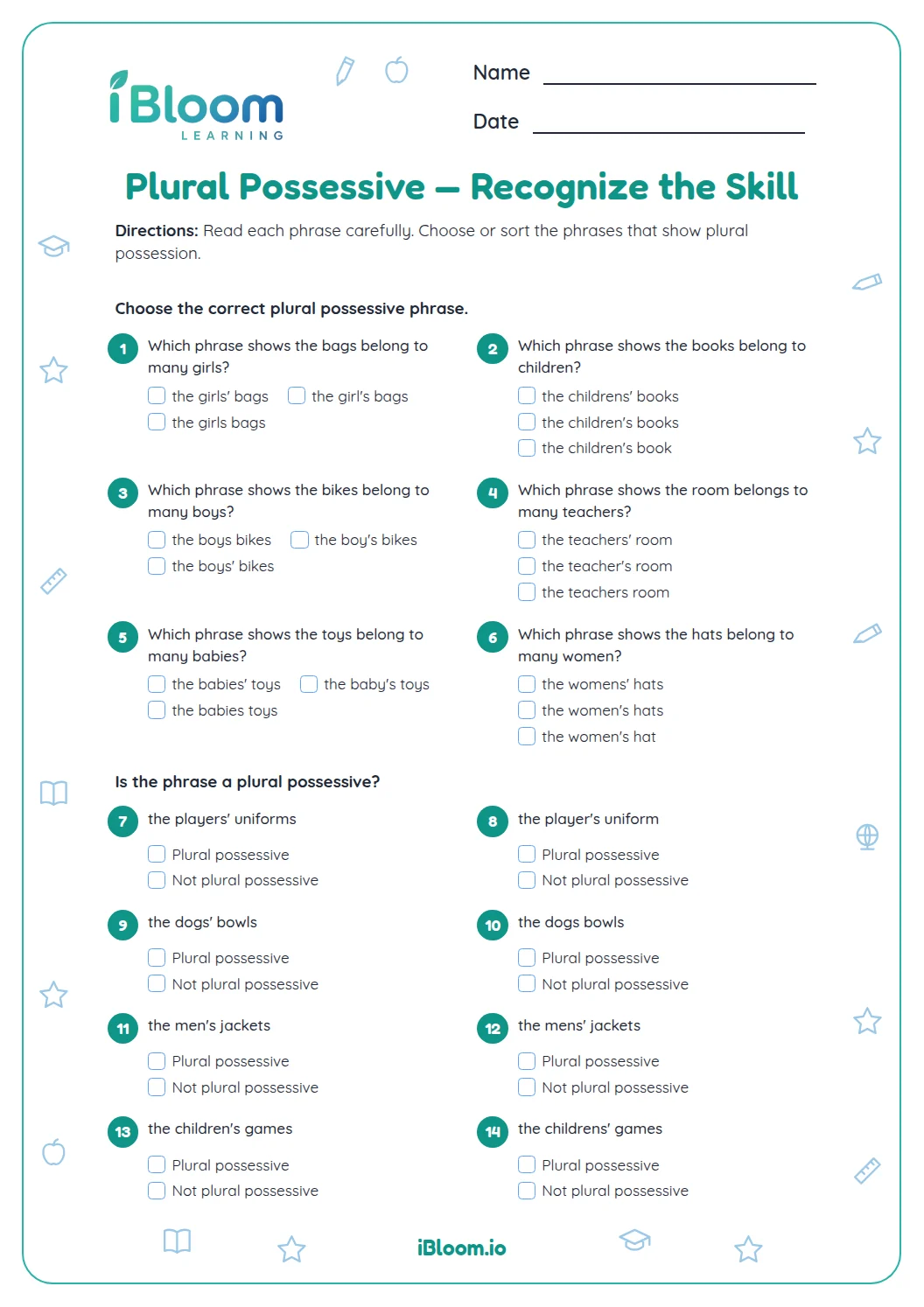
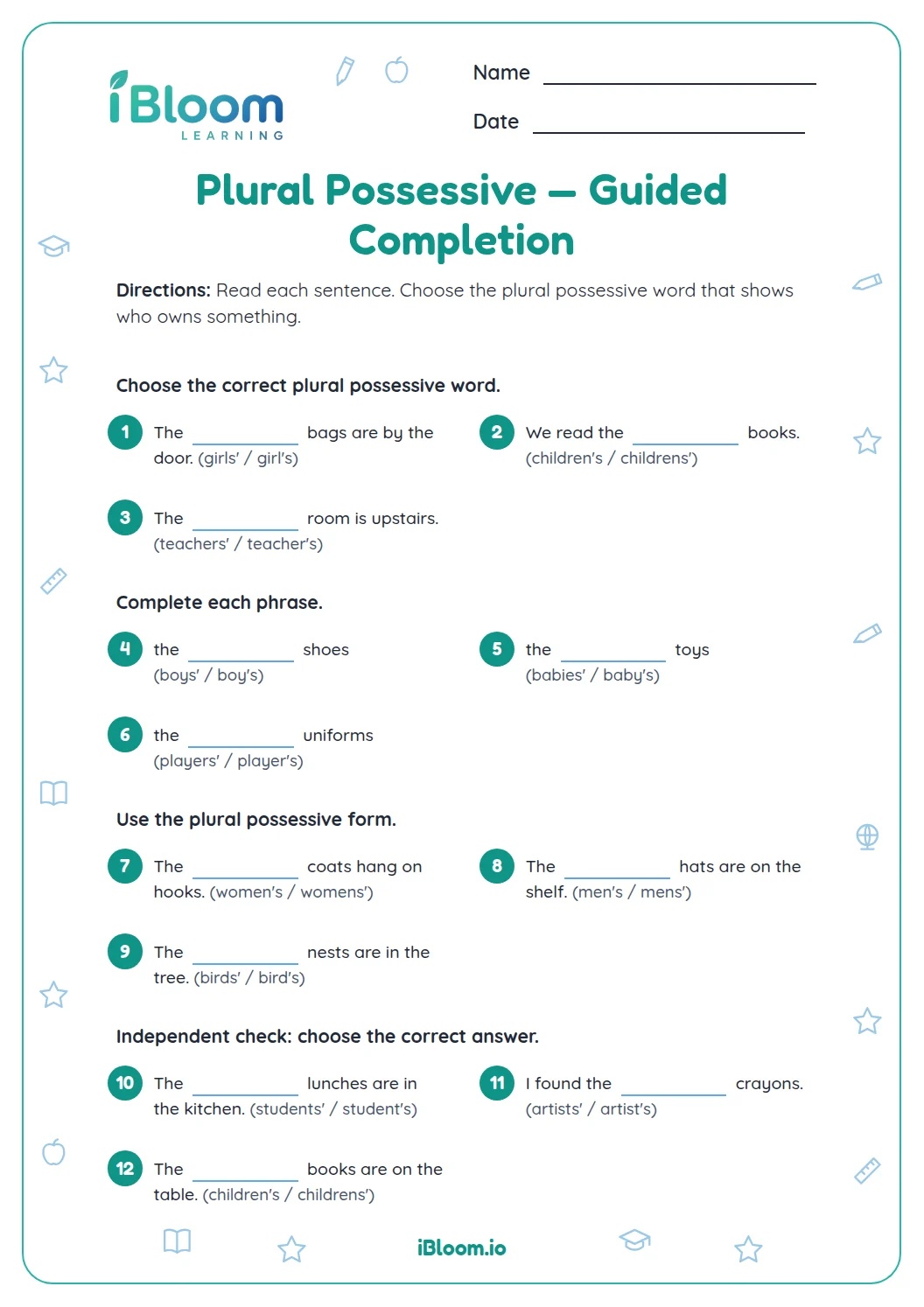
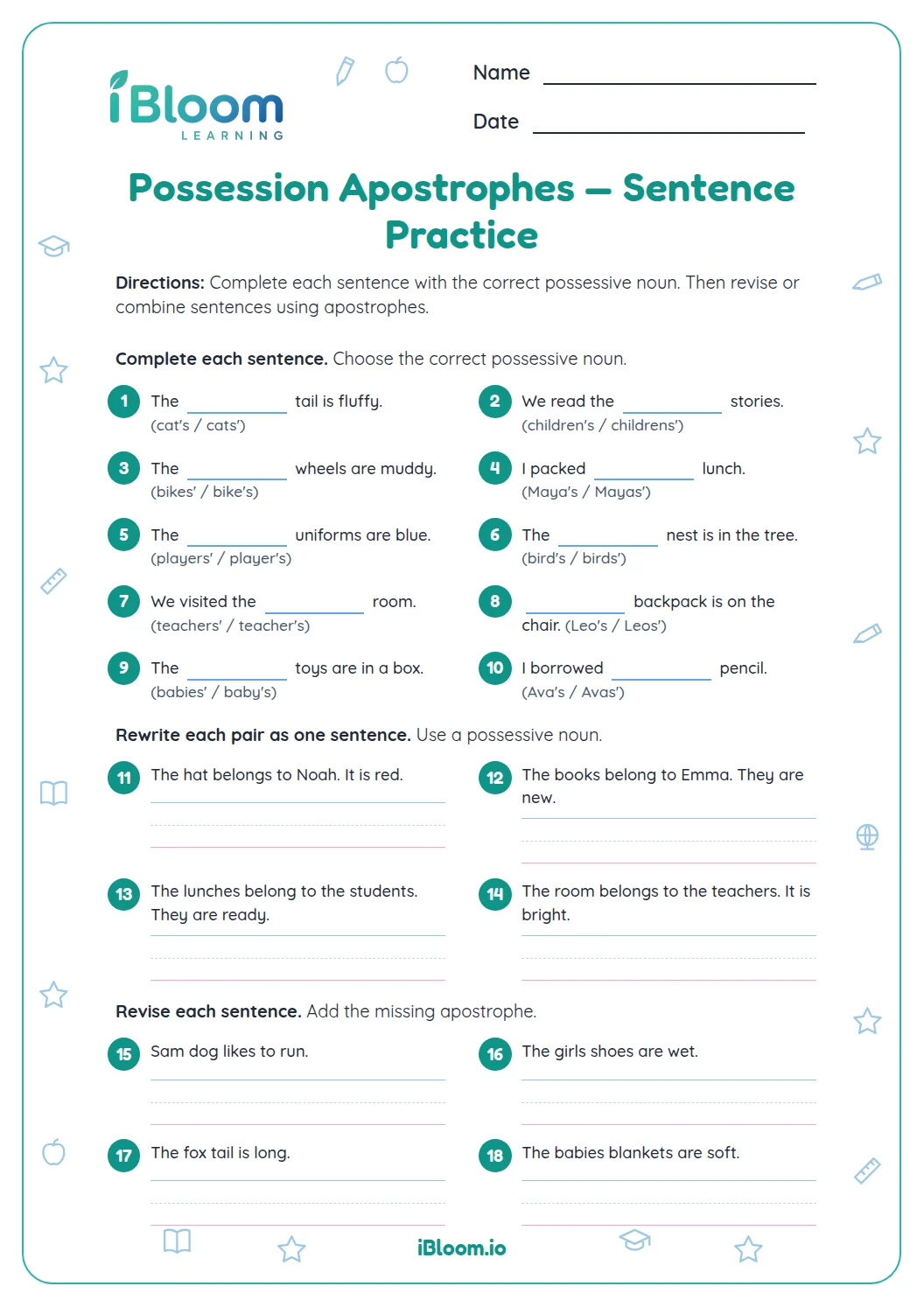
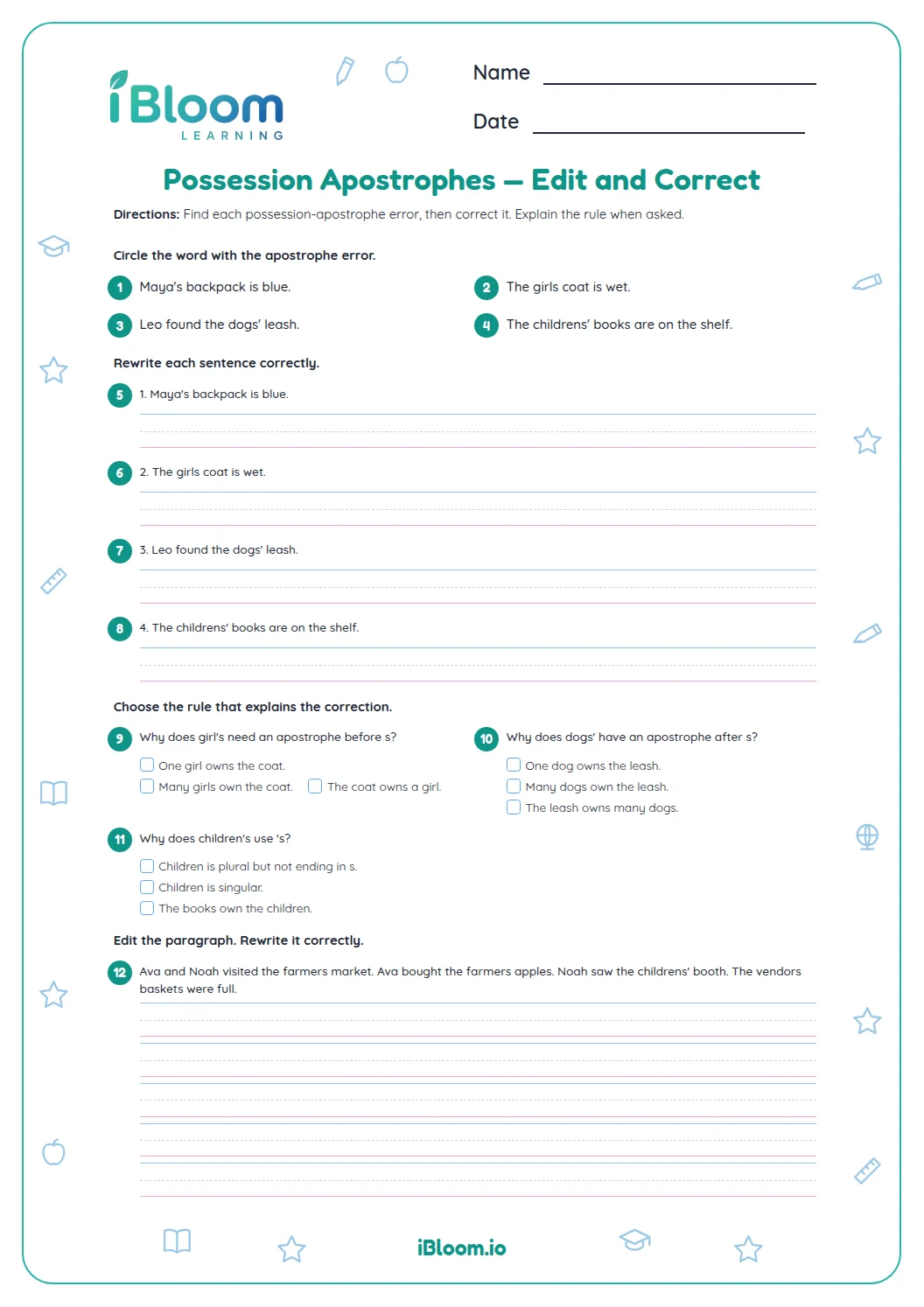
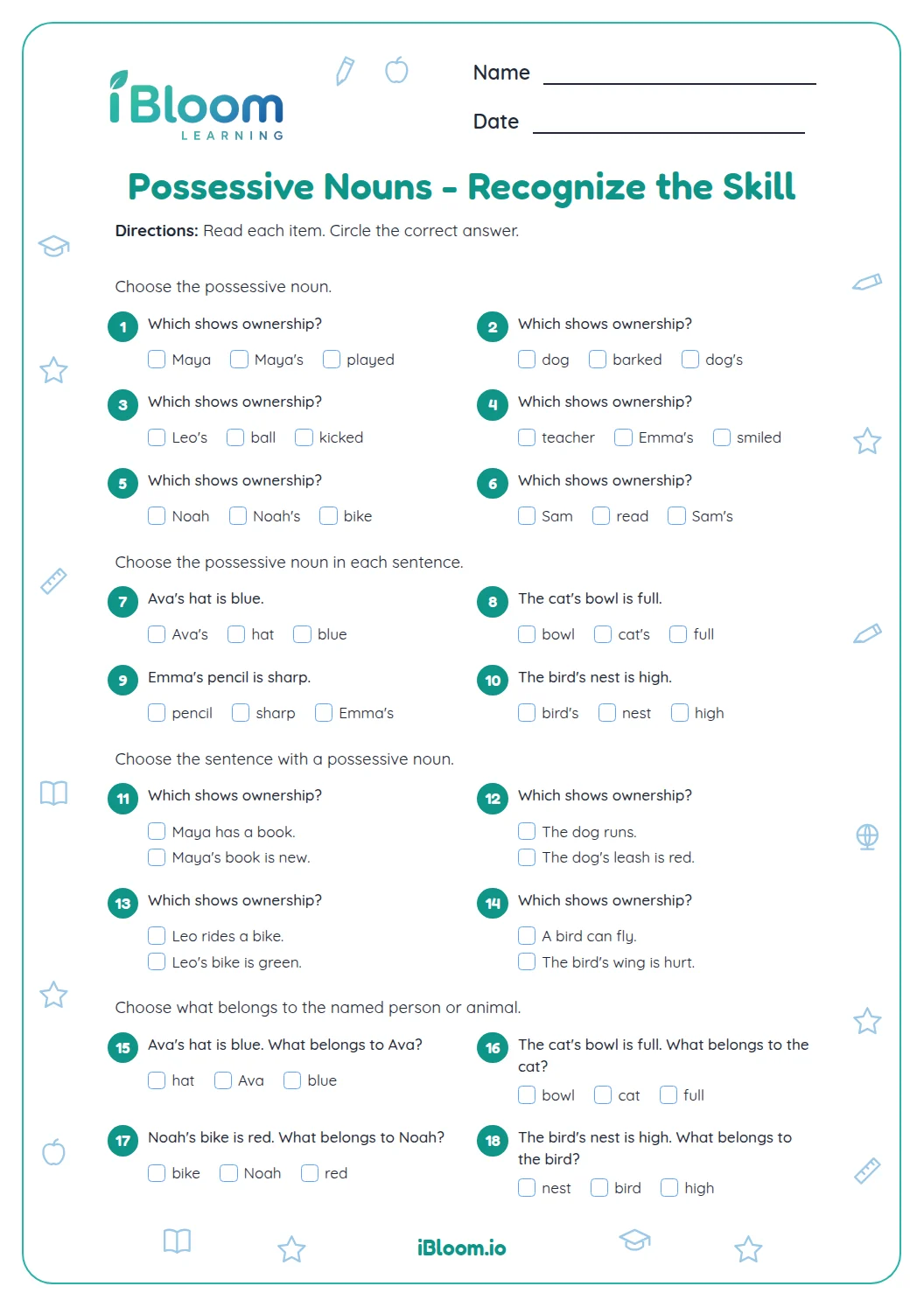
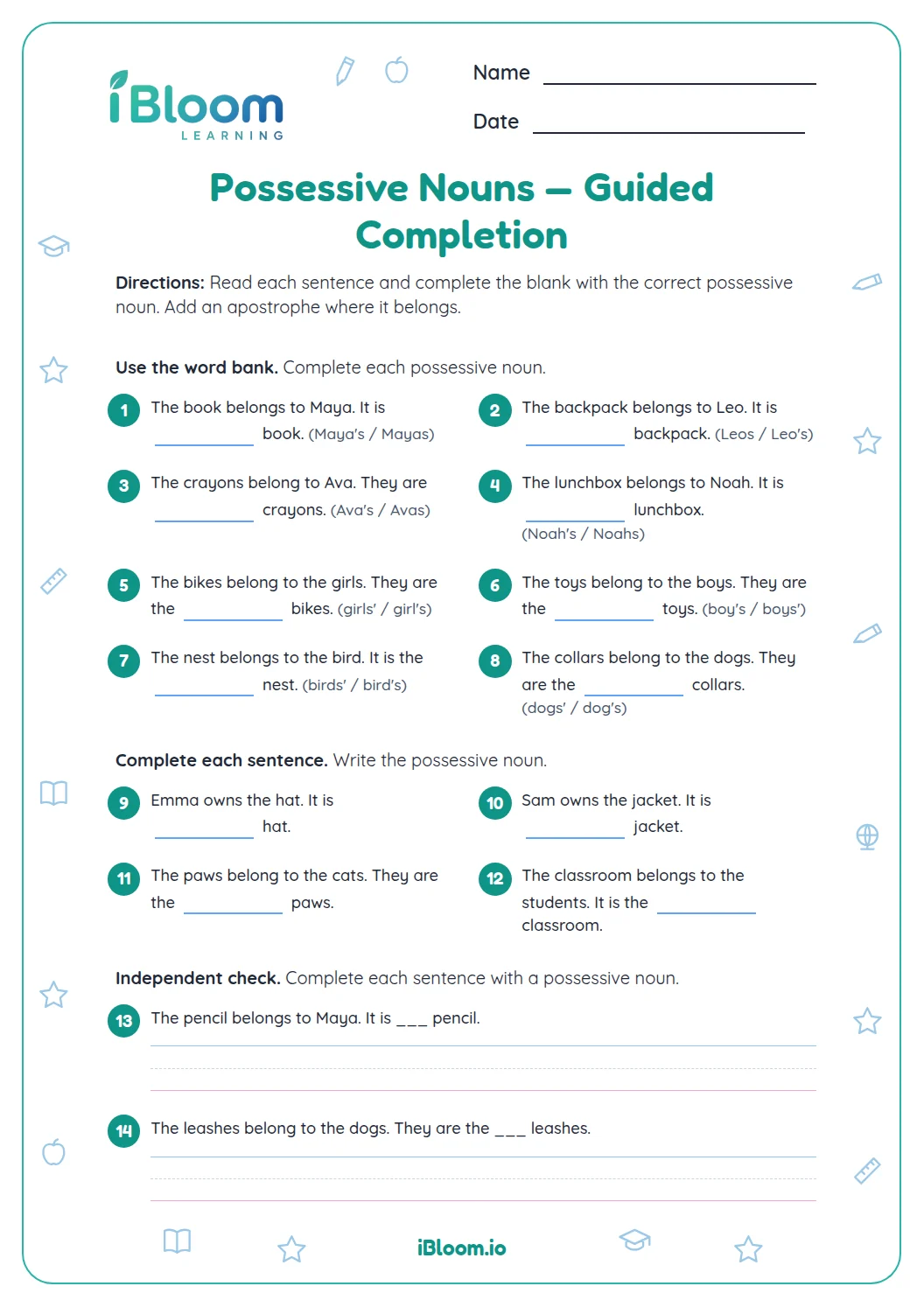
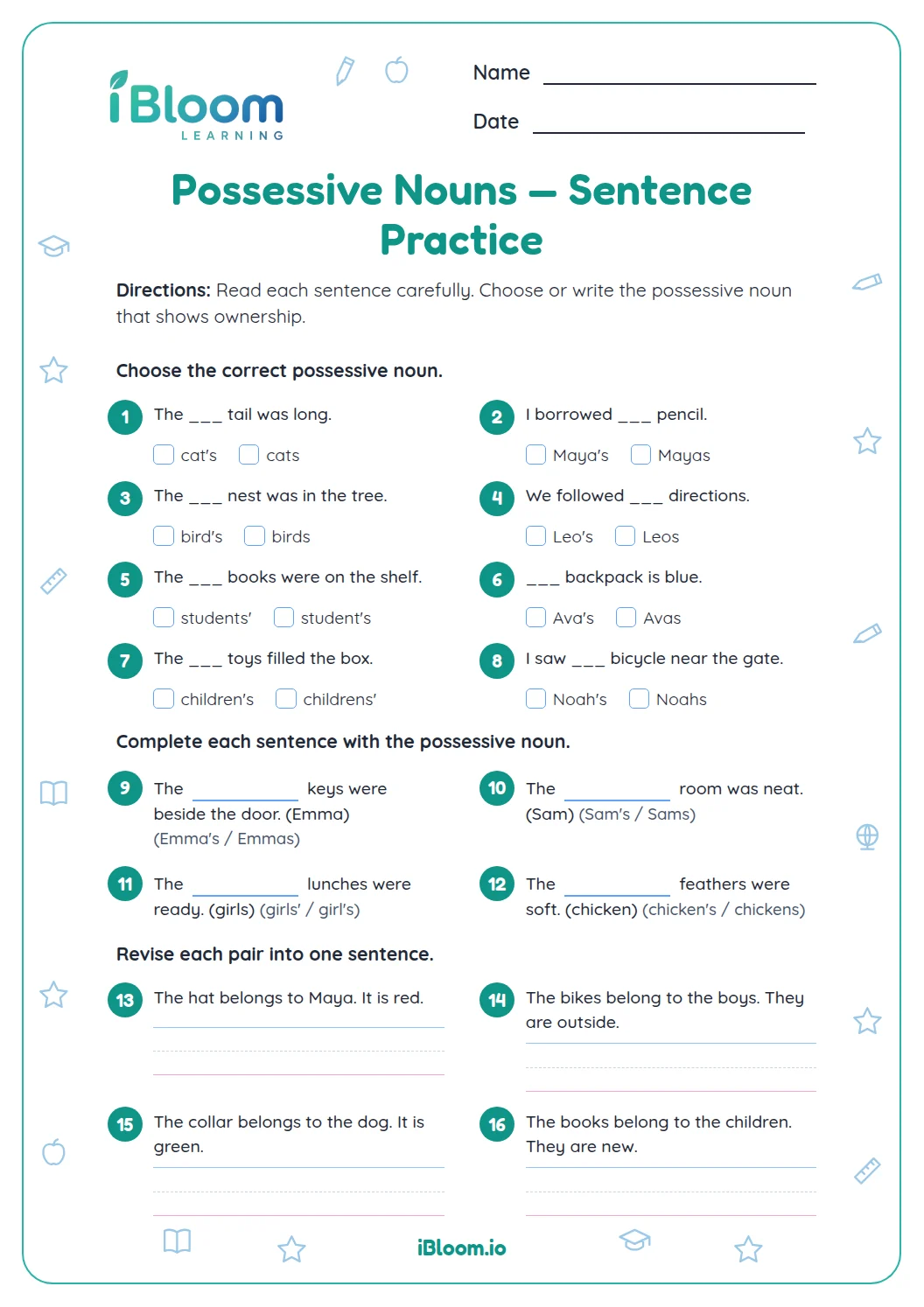
This Grade 3 printable gives students 16 chances to show who owns something using a plural possessive noun. Part A asks them to choose between regular plurals such as cats’ and irregular forms such as children’s. Part B puts the same pattern into sentence blanks. The included answer key makes apostrophe placement easy to check. The activity aligns with CCSS L.3.2.d, “Form and use possessives.”
Aligned to L.3.2.d
What does the worksheet include?
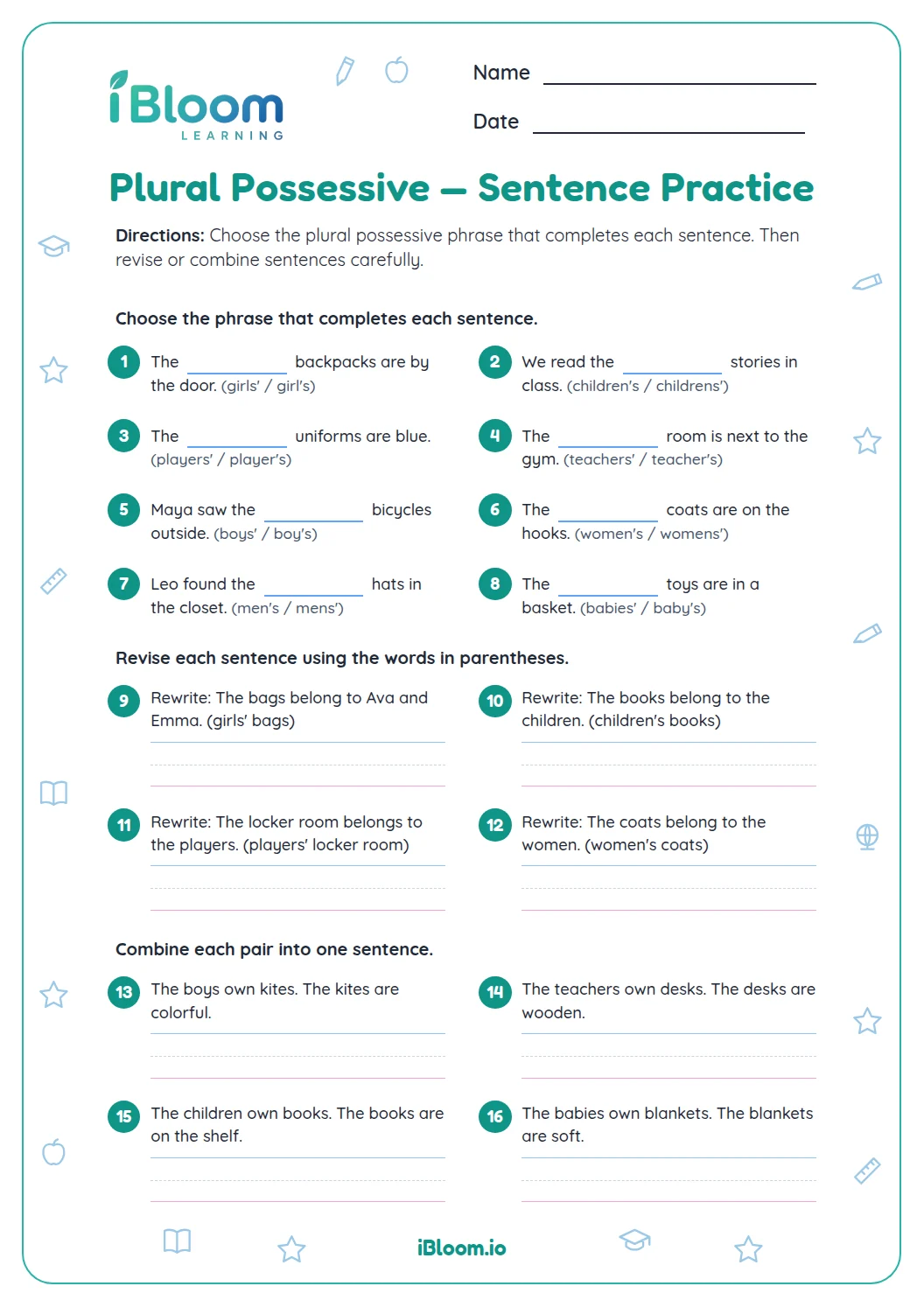
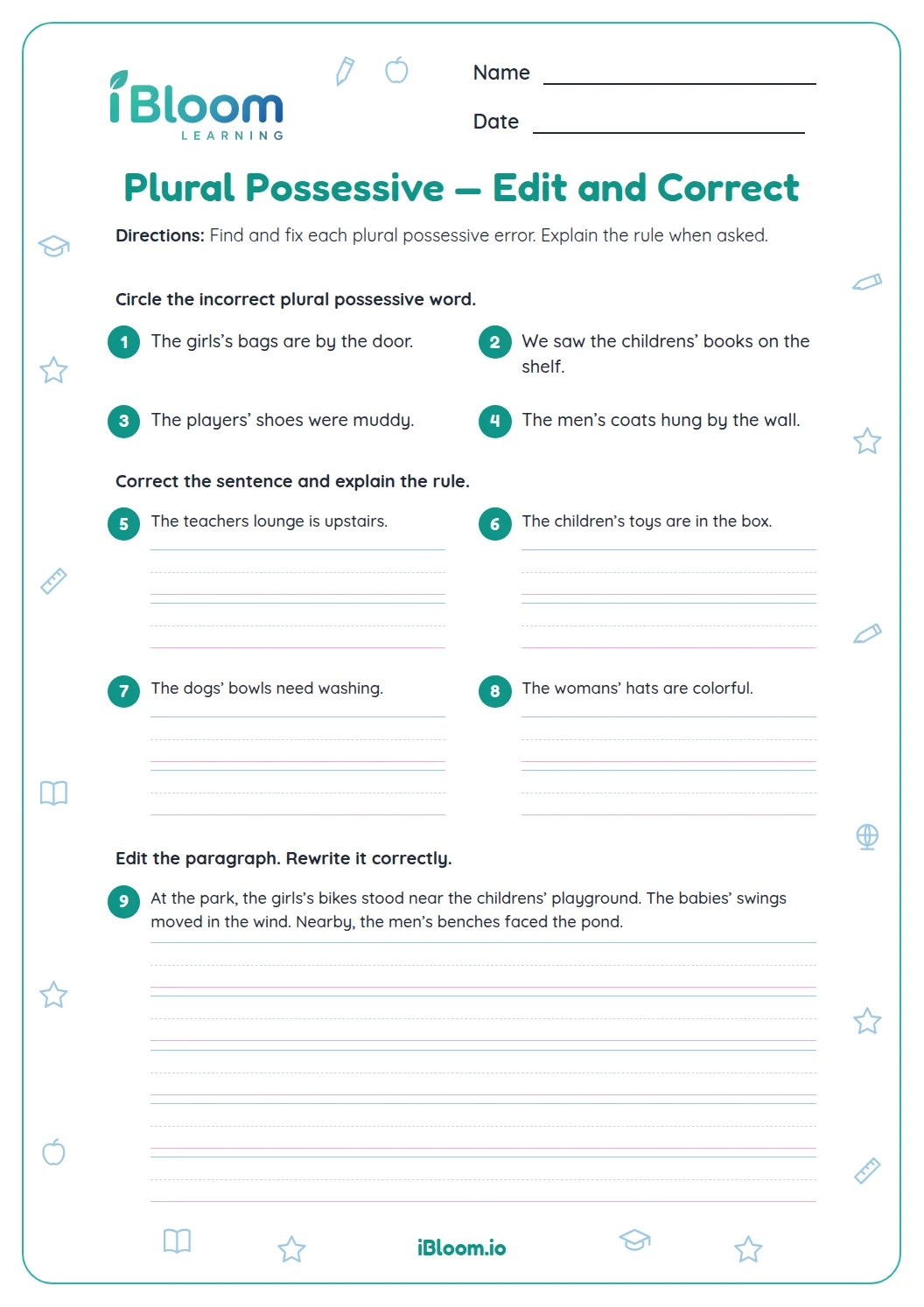
Sixteen items are split into two parts. Part A uses phrase choices to contrast correct and incorrect apostrophe placement. Part B asks students to complete sentences with plural possessive forms, including regular plurals and irregular plurals.
- Part A: choose a correctly formed plural possessive.
- Part B: write the owner form that completes the sentence.
- Examples include cats’, children’s, mice’s, and families’.
When does a plural possessive need only an apostrophe?
A regular plural that ends in s takes an apostrophe after the s. The owners are already plural, so no extra s is needed.
- 1Question 1: several cats own the tails.
- 2cat becomes cats; add the apostrophe after s.
- 3Answer: the cats’ tails.
When does an irregular plural take apostrophe-s?
An irregular plural may change its form and not end in s. Add apostrophe-s to show ownership: children’s, women’s, or mice’s.
- 1Question 3: the toys belong to children.
- 2children is plural and does not end in s.
- 3Answer: the children’s toys.
How can students check each answer?
Read the phrase aloud and identify the owner. Then check whether the plural noun ends in s before placing the apostrophe. The sentence context confirms that the noun shows ownership, not just a plural group.
How to use this worksheet
- 1Read the full phrase or sentence to find the owner.
- 2Make the noun plural before adding an apostrophe.
- 3If the plural ends in s, put the apostrophe after s.
- 4If it does not end in s, add apostrophe-s.
- 5Reread the sentence and check the answer key.
Common mistakes and quick fixes
The mistake
Putting apostrophe-s after a regular plural such as cats.
The fix
Form cats first, then add only an apostrophe: cats’.
The mistake
Writing children’ because children is plural.
The fix
Check the final letter: children does not end in s, so write children’s.
The mistake
Choosing a possessive that does not match the owner named in parentheses.
The fix
Use the clue in parentheses to find the exact owner before adding punctuation.
Common Core alignment
Use possessives to show ownership in the phrases and sentences.
On this sheet: The choices and sentence blanks ask students to form plural possessives, including irregular plural nouns.
Show the official wordingHide the official wording
Form and use possessives.
What to practice next
Make more practice
Further reading
Questions parents and teachers ask
Where does the apostrophe go in a plural possessive?
For a regular plural that already ends in s, place the apostrophe after the s: the cats’ tails. For an irregular plural that does not end in s, add apostrophe-s: the children’s toys. The worksheet includes both patterns. Use the owner named in the sentence to decide which plural form belongs there.
How is a plural possessive different from a singular possessive?
A singular possessive names one owner, as in the cat’s bowl. A regular plural possessive names more than one owner and usually places the apostrophe after the plural s, as in the cats’ bowls. First decide how many owners the sentence names.
Why is “children’s” correct without an s before the apostrophe?
Children is already the plural of child, and it does not end in s. Add apostrophe-s to form children’s. The same spelling pattern applies to women’s and mice’s. Check the plural form first, then place the apostrophe based on its final letter.
What does the answer key show?
The separate key gives the correct plural possessive for all eight phrase choices and all eight sentence blanks. Children can compare one response at a time, then check that the noun shows more than one owner and that the apostrophe follows the correct plural form.
How can I help if my child adds an extra s?
Have the learner say the plural noun first, then check its ending. If it already ends in s, add only an apostrophe; if it does not, add apostrophe-s. This two-step check supports items such as families’ and children’s. Read the owner aloud before adding punctuation to the noun.
What can my child practice next?
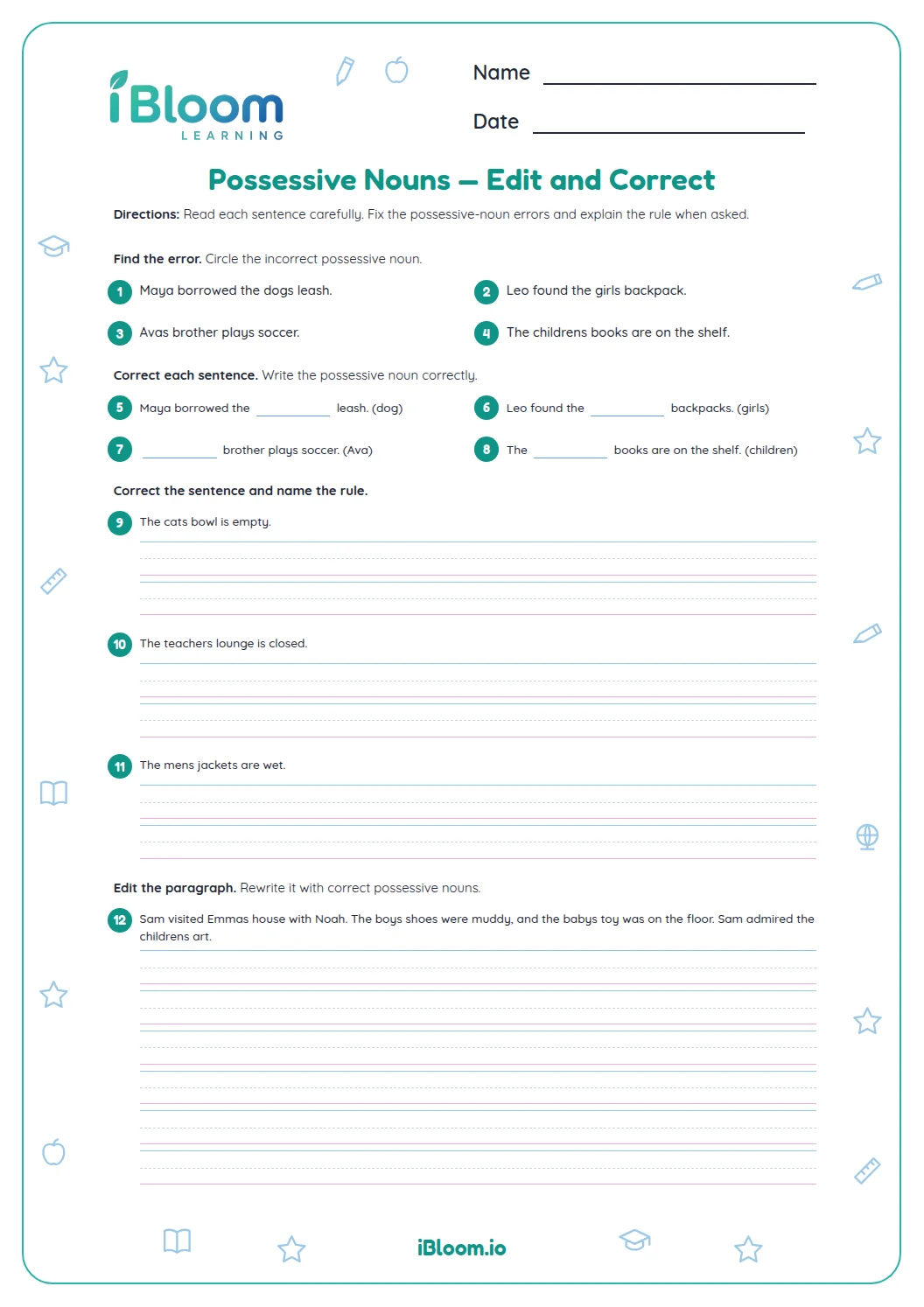
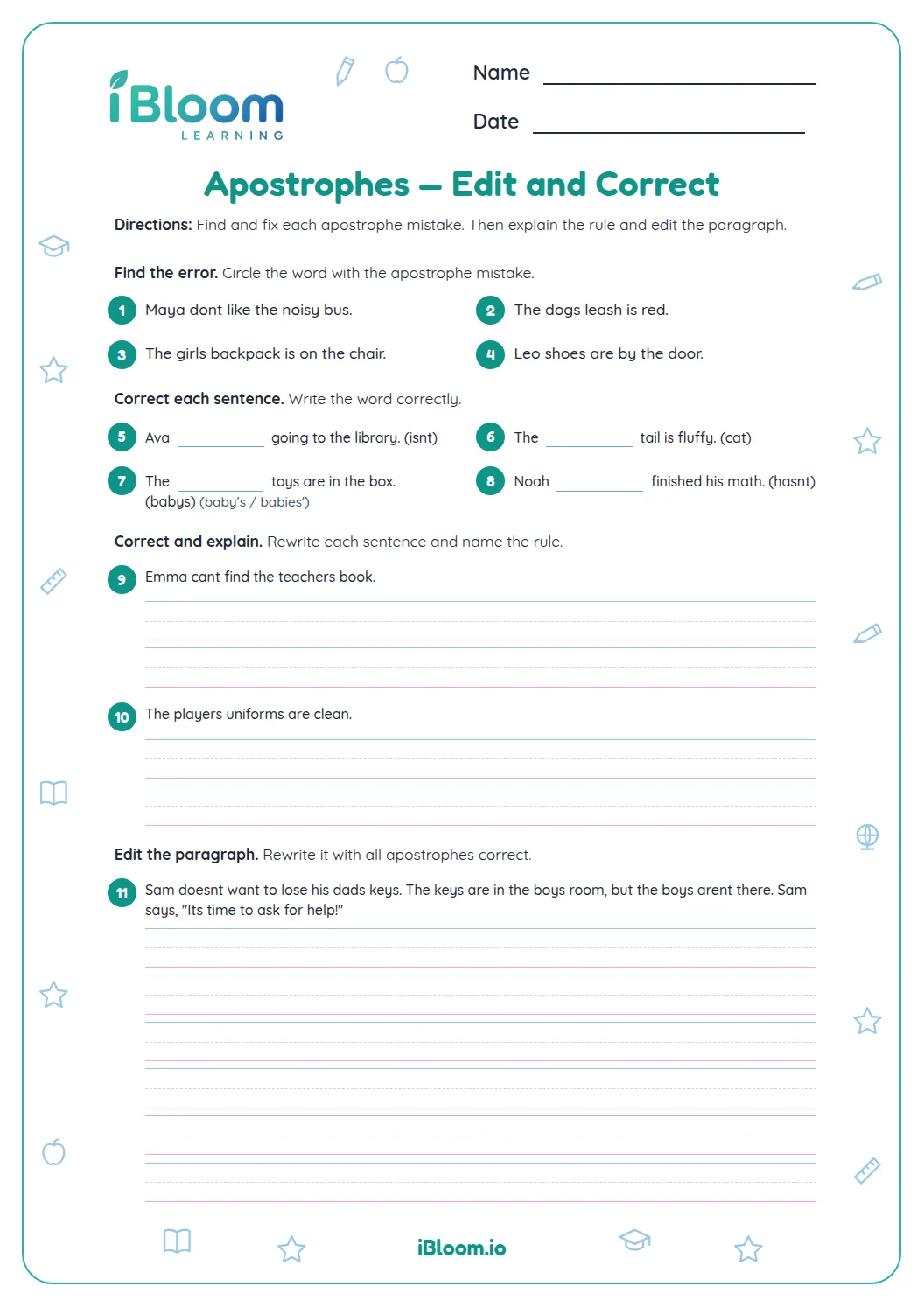
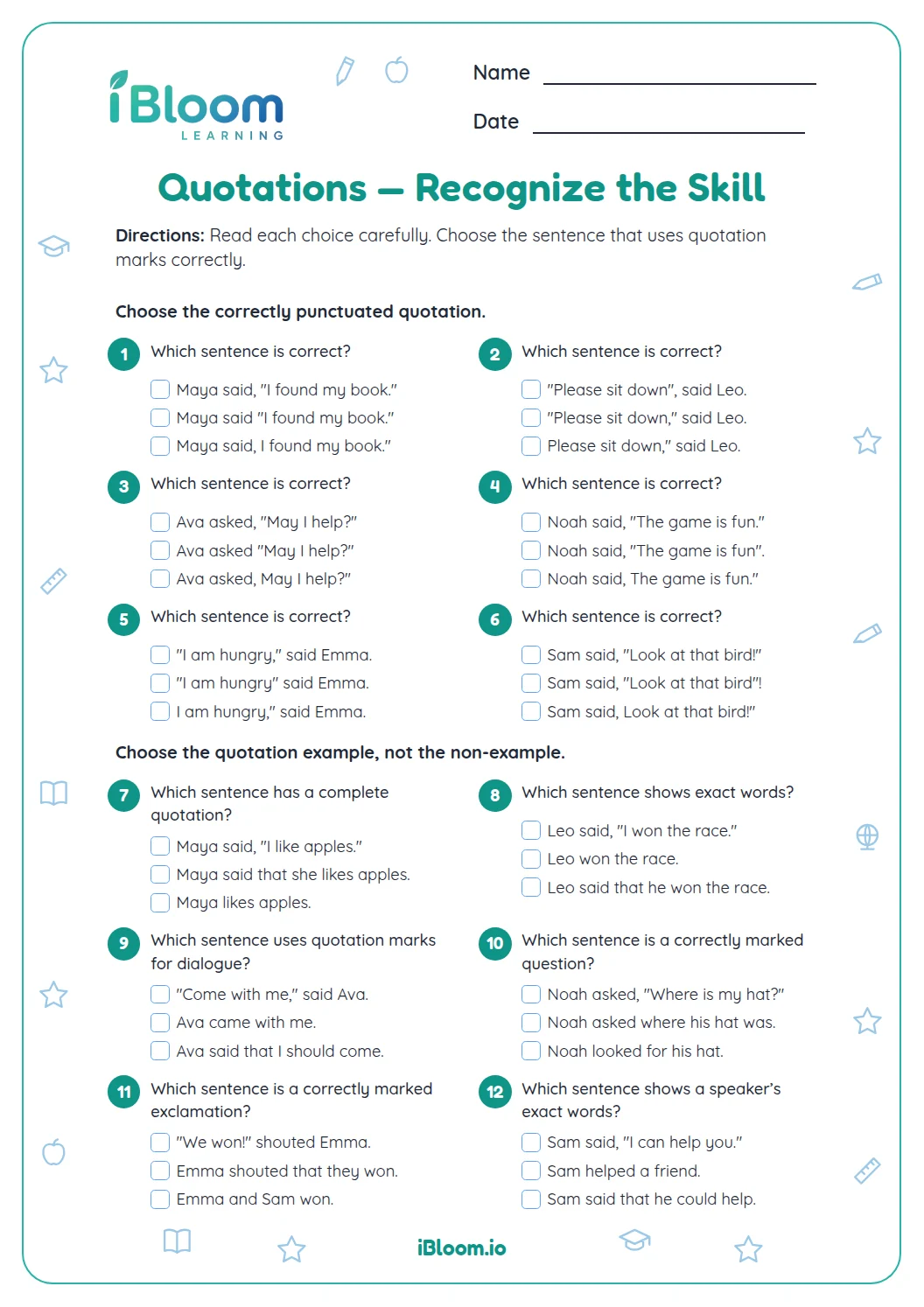
The linked Possession Apostrophes and Possessive Nouns pages continue the ownership skill with related examples. The Apostrophes page offers a wider punctuation review, and Quotations moves to another punctuation use in sentences. Choose the next page based on whether your learner needs more ownership practice or a new punctuation skill.