

About this worksheet
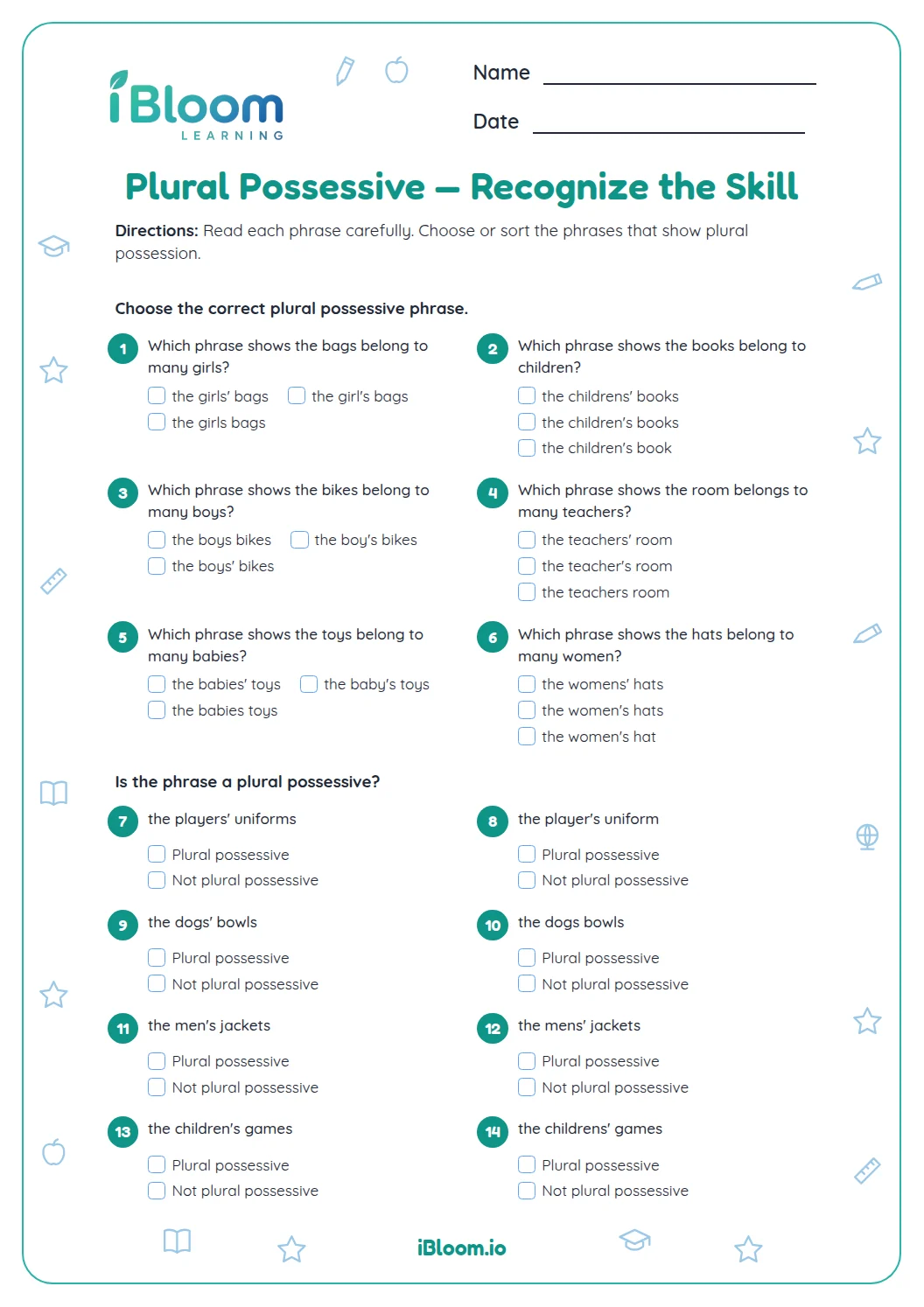
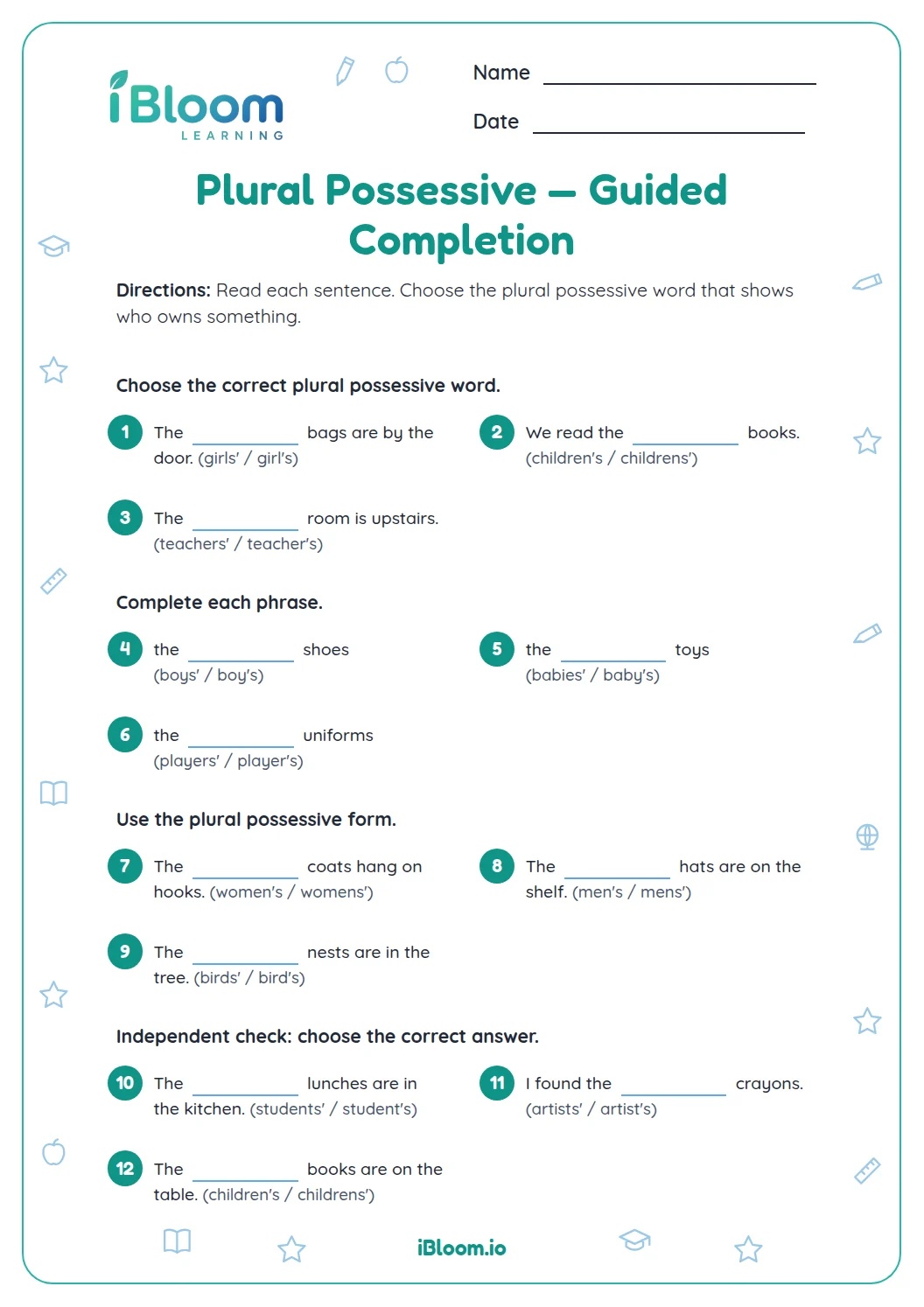
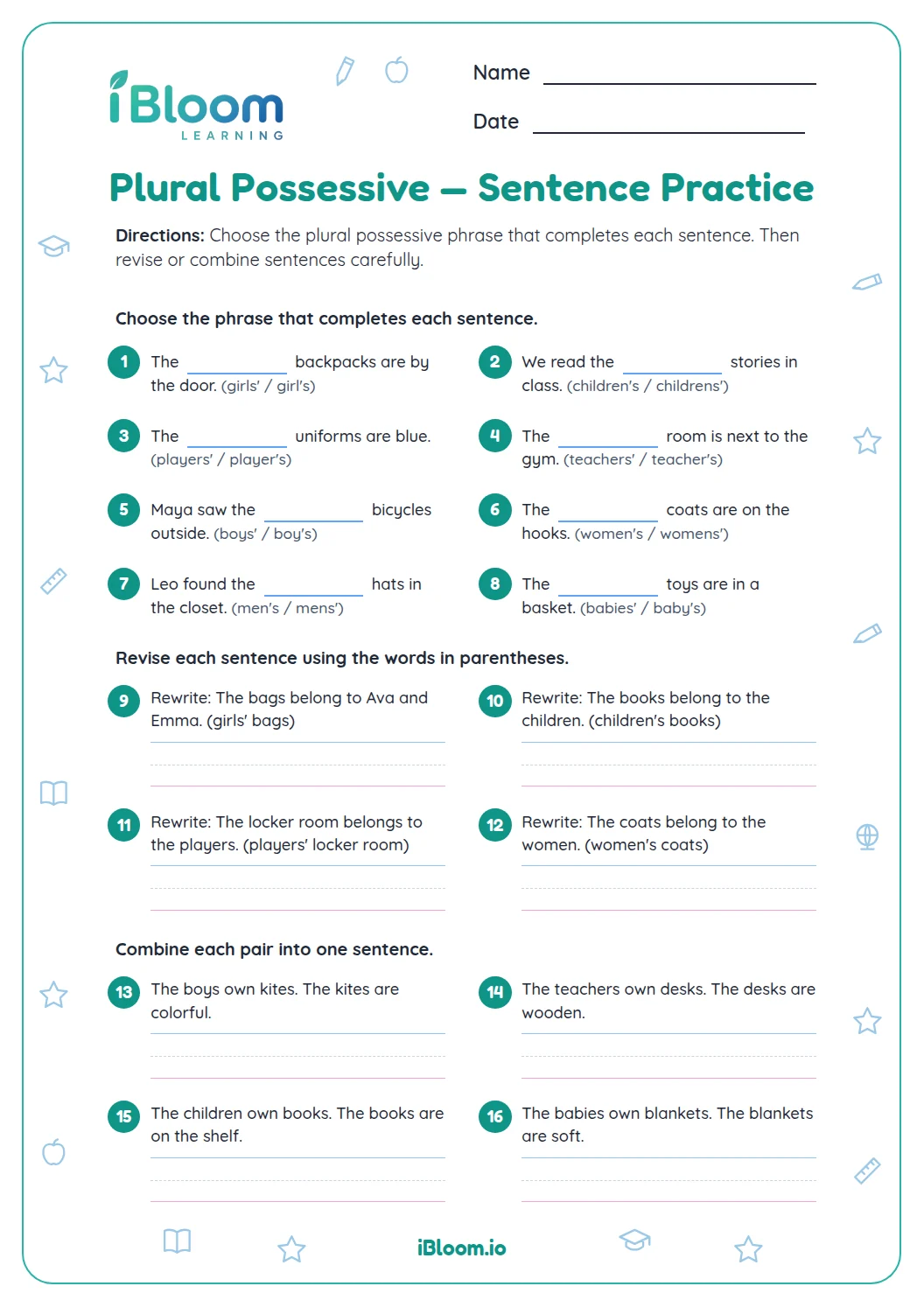
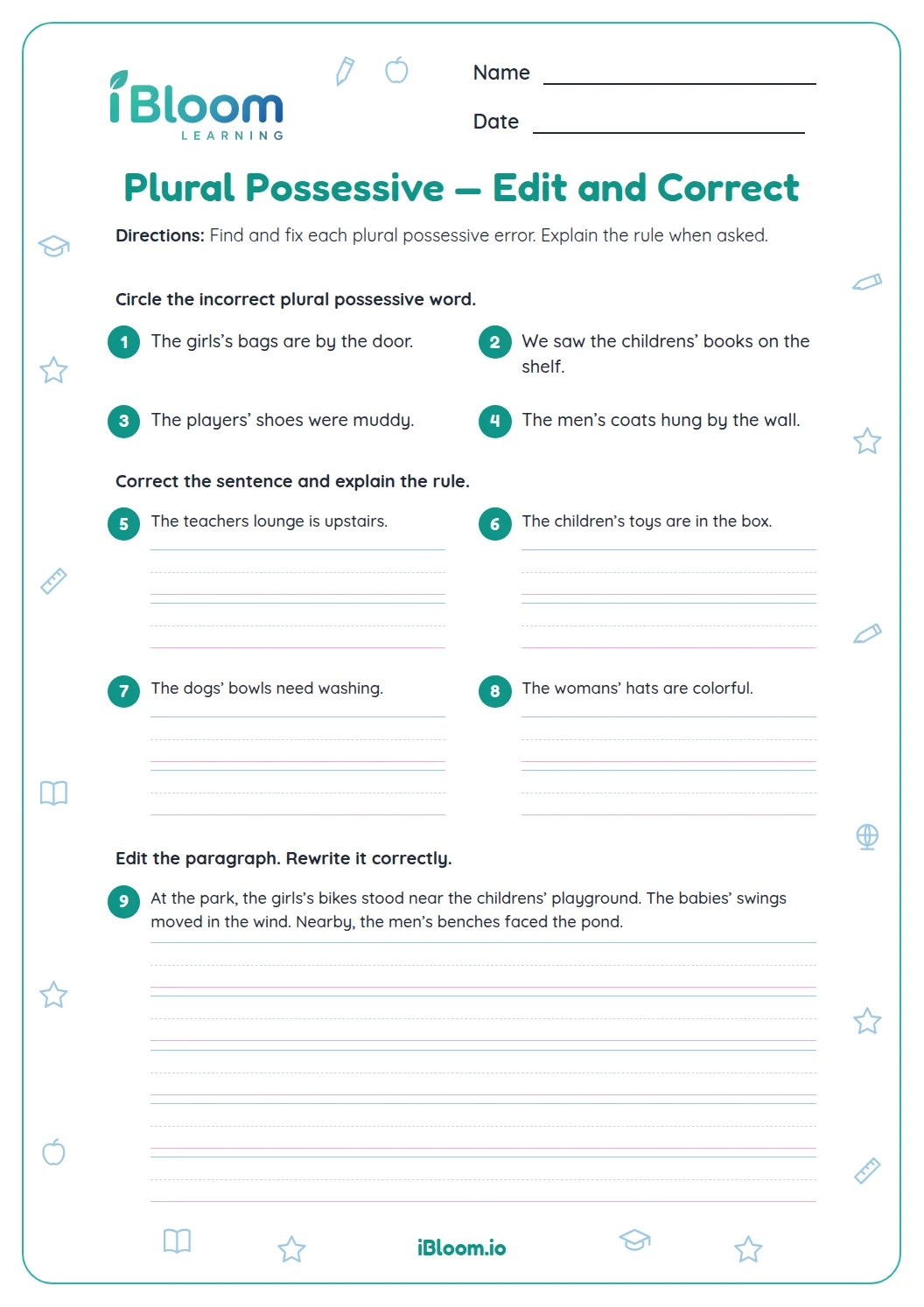
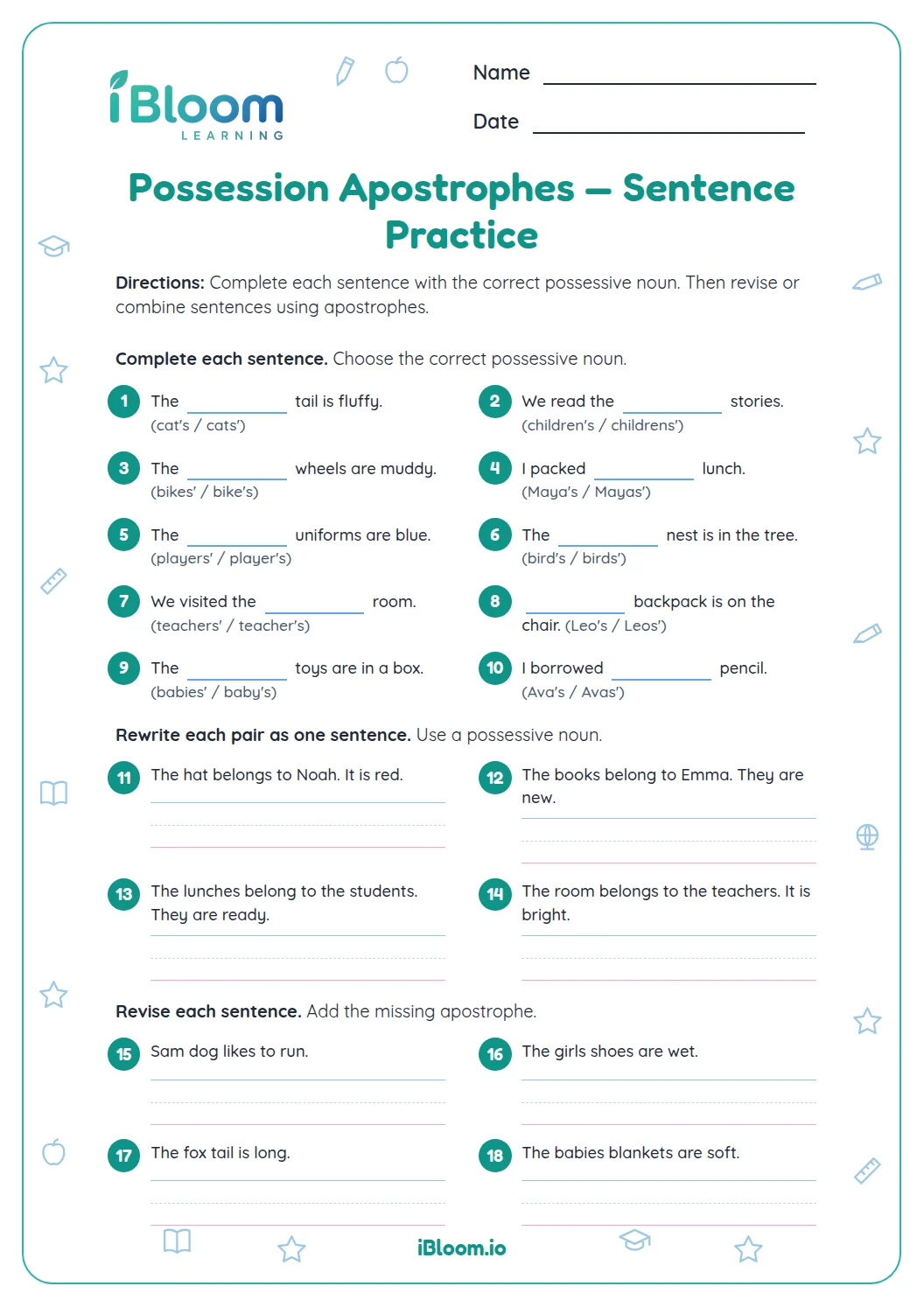
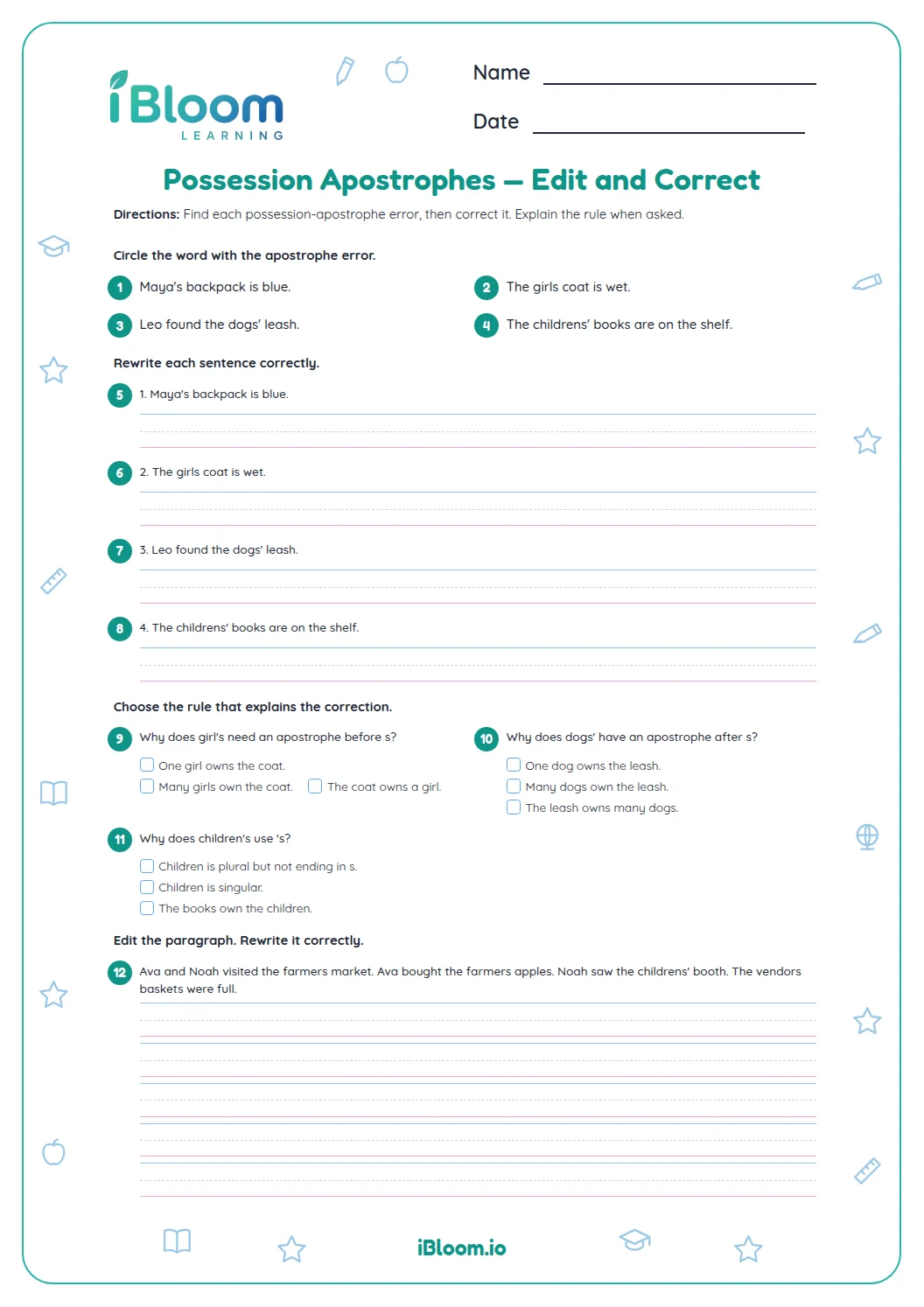
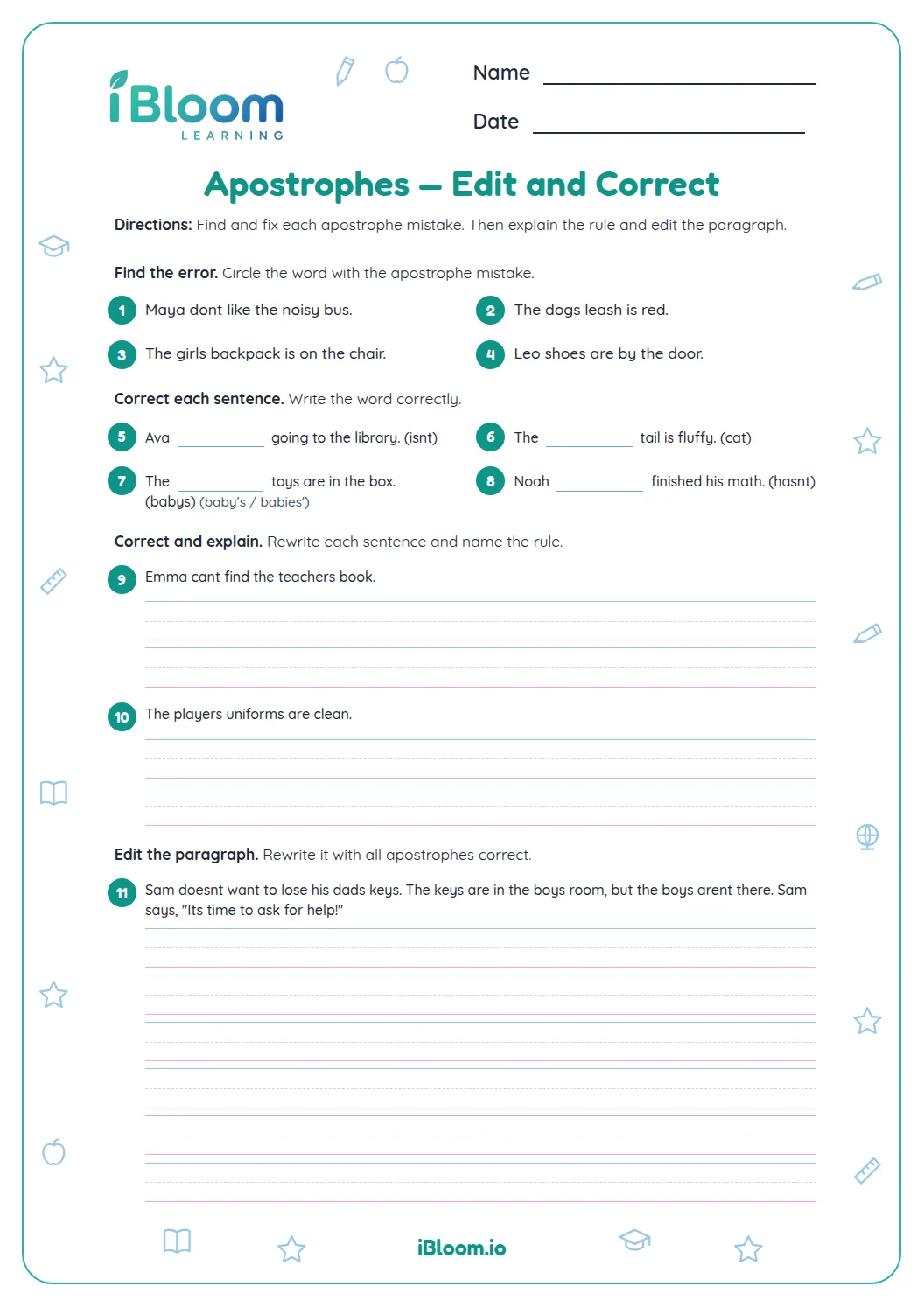
This free Grade 3 worksheet practices plural possessive nouns in sentence context. Children complete forms such as girls’ and children’s, write sentences with plural owners, and check statements about ownership and apostrophe placement. Regular plurals ending in s and irregular plurals that do not end in s both appear. The answer key includes sample sentences for the open writing prompts.
Aligned to L.2.2.c
How do you form a regular plural possessive?
First identify the plural owner. When a regular plural ends in s, add an apostrophe after that s to show ownership: the girls’ hats. The noun stays plural; the apostrophe marks possession.
Question 1 says the hats belong to the girls. The plural is girls, so the possessive is girls’.
- 1Owner: the girls
- 2Plural noun: girls
- 3Add the apostrophe after s: girls’
- 4The girls’ hats are red.
What changes with an irregular plural?
Some plural nouns do not end in s, such as children, men, and women. Add apostrophe-s: children’s, men’s, women’s. Do not form these by adding s to the singular.
Question 3 uses children. Since children does not end in s, add apostrophe-s: children’s toys.
How can you edit a plural possessive sentence?
Find the noun that owns something, decide whether it is singular or plural, then check how the plural is spelled. Add the apostrophe in the right place and reread the complete sentence.
Questions 10 and 11 ask children to write sentences using plural possessives. The key provides one sample for each; a different sentence can work if it clearly shows plural ownership and places the apostrophe correctly.
How to use this worksheet
- 1Find the person or group that owns something.
- 2Write the plural form of the owner.
- 3If the plural ends in s, add an apostrophe after s.
- 4If the irregular plural does not end in s, add apostrophe-s.
- 5Reread to make sure the sentence still names the right owner.
Common mistakes and quick fixes
The mistake
Writing childrens’ for children’s.
The fix
Children is already plural and does not end in s, so add apostrophe-s.
The mistake
Writing girl’s when several girls own the item.
The fix
Make the noun plural first: girls; then add the apostrophe after s.
The mistake
Changing the spelling of an irregular plural such as women.
The fix
Keep the irregular plural spelling, then add apostrophe-s: women’s.
This sheet practices the following Common Core skill.
Children apply apostrophes to frequently occurring plural possessives in sentence writing.
On this sheet:
Show the official wordingHide the official wording
Use an apostrophe to form contractions and frequently occurring possessives.
What to practice next
Make more practice
Further reading
Questions parents and teachers ask
How many questions are on the worksheet?
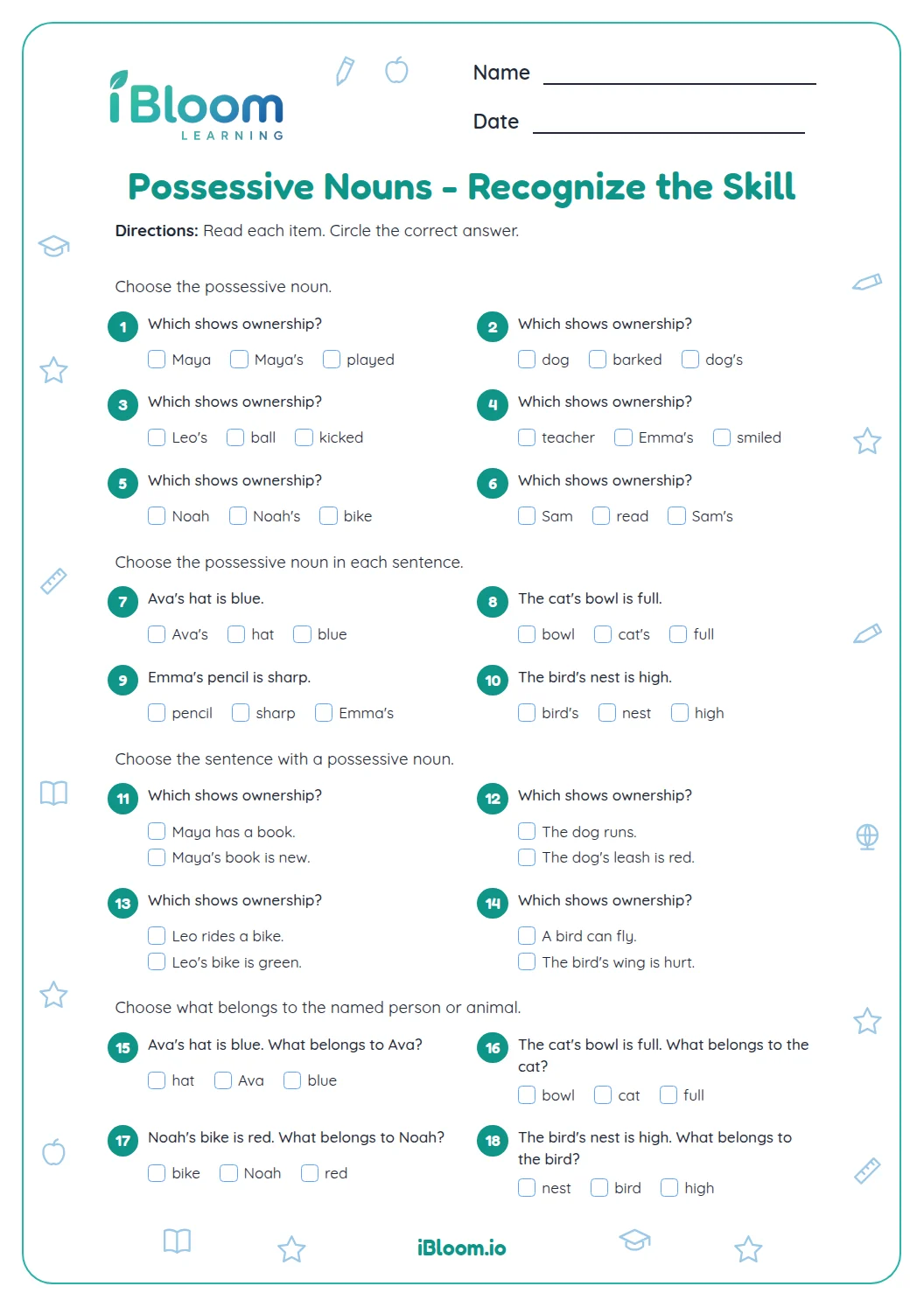
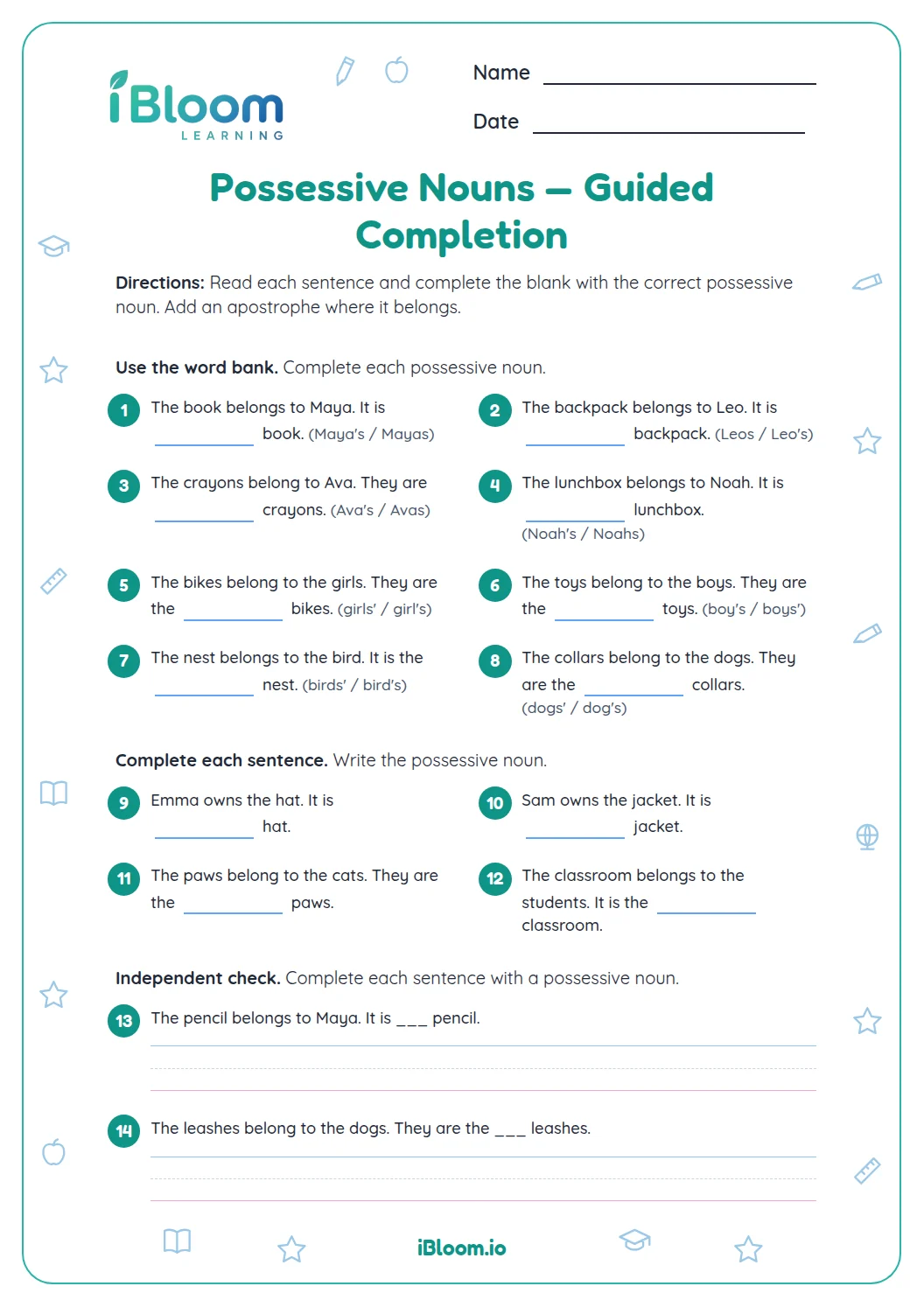
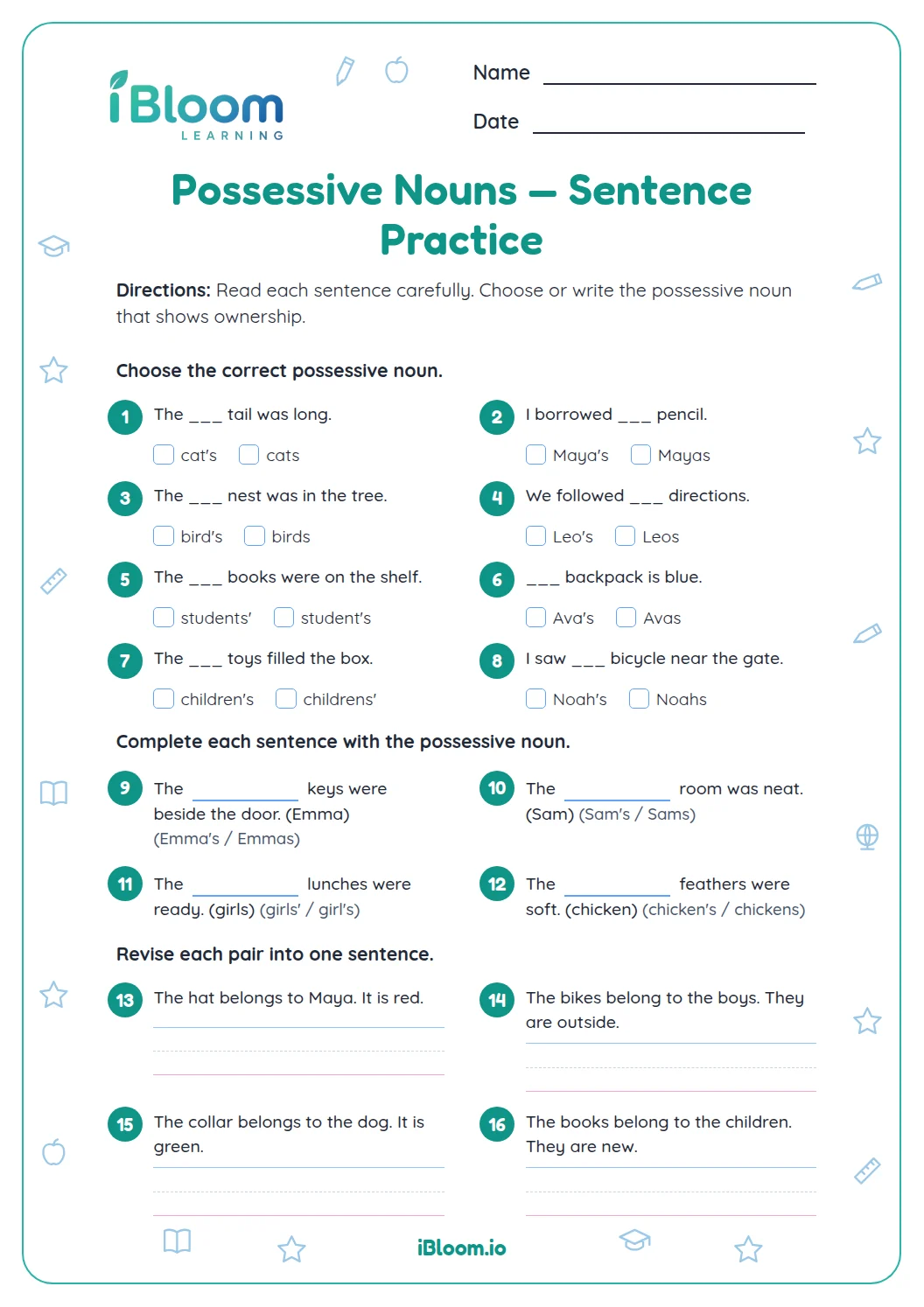
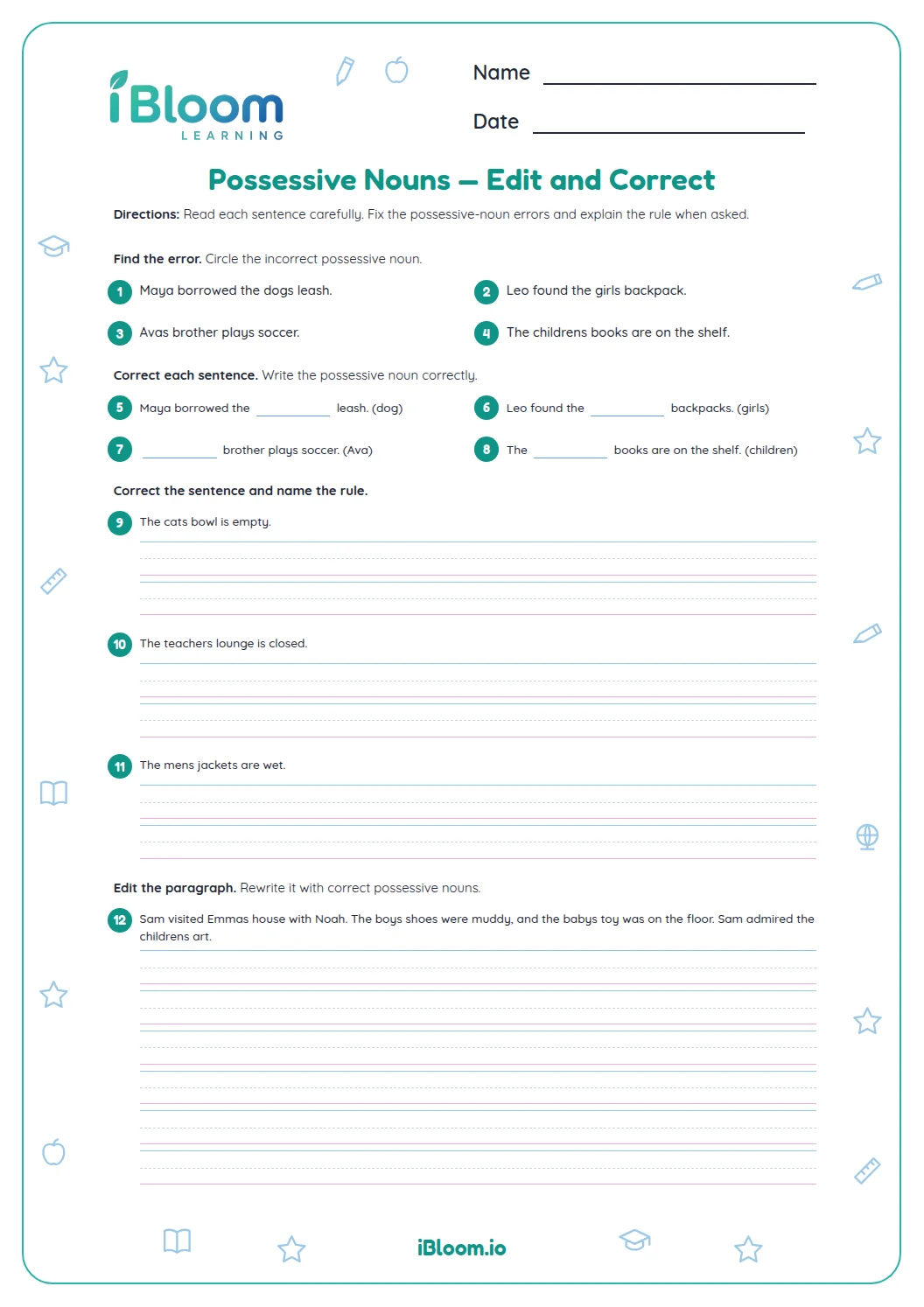
There are 14 questions across two worksheet pages. Children complete plural possessive forms, write sentences using plural owners, and choose statements about ownership and apostrophe placement. A separate two-page answer key is included. The first page focuses on forms, followed by writing and ownership checks.
Where does the apostrophe go in girls’?
For a regular plural noun that already ends in s, put the apostrophe after the s: girls’. The worksheet uses this pattern in phrases such as “the girls’ hats,” where the hats belong to more than one girl. This is the regular plural pattern.
Why is the form children’s?
Children is an irregular plural that does not end in s. Add apostrophe-s to show ownership: children’s. The same form is used for men’s and women’s because those plural nouns also do not end in s. The sentence examples let children apply the spelling pattern in context.
Can the sentence writing questions have different answers?
Yes. The key gives samples for the two prompts that ask children to write sentences. Another sentence is correct when it names a plural owner, uses the right possessive form, and clearly shows what belongs to that owner. Clear ownership is the goal.
How can a child find the owner in a sentence?
Ask who or what the item belongs to. In “The players’ uniforms are clean,” the players own the uniforms, so the plural noun comes before the item and takes an apostrophe after its final s. The clue works for the possessive phrases practiced on both pages.