




About this worksheet
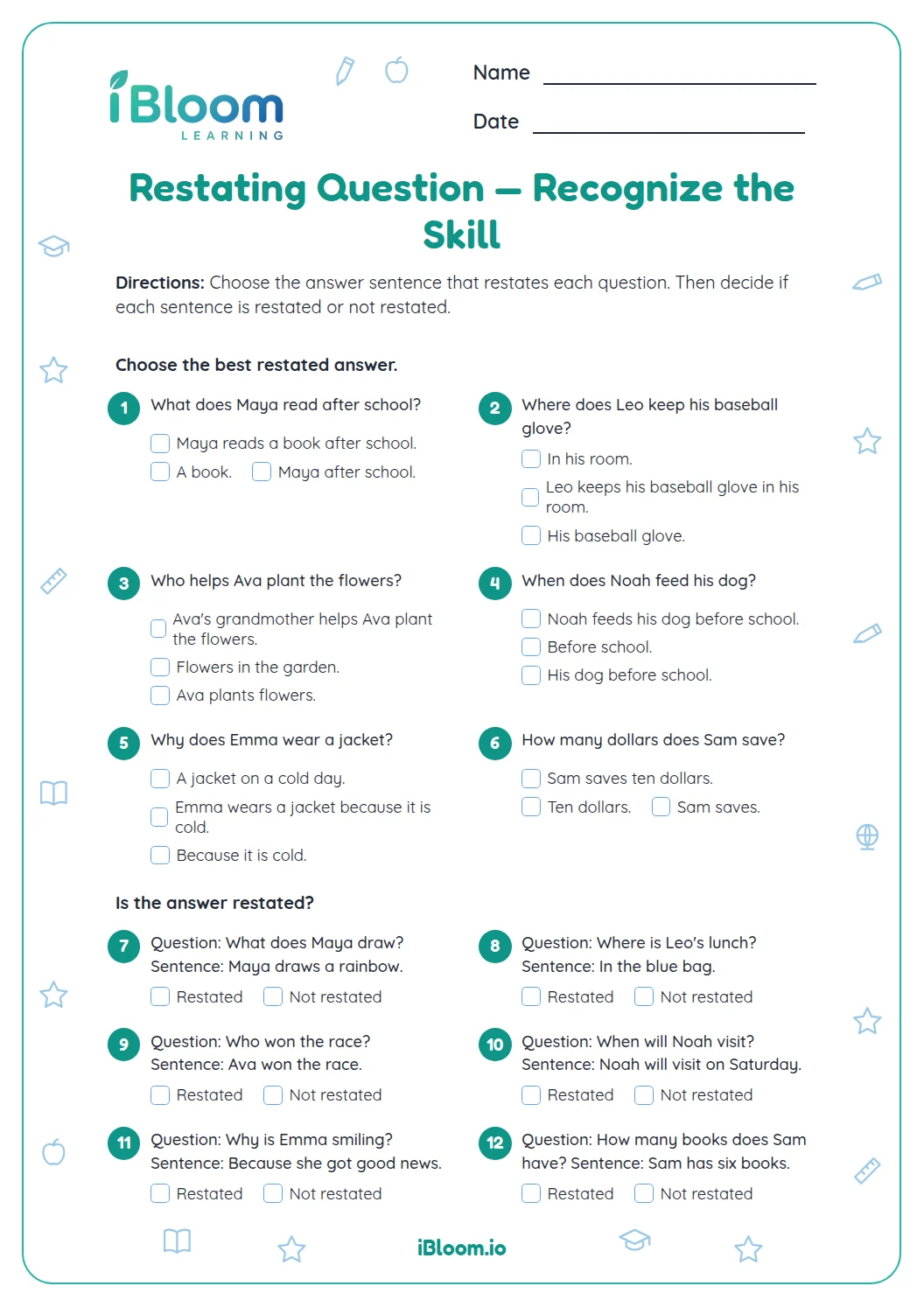
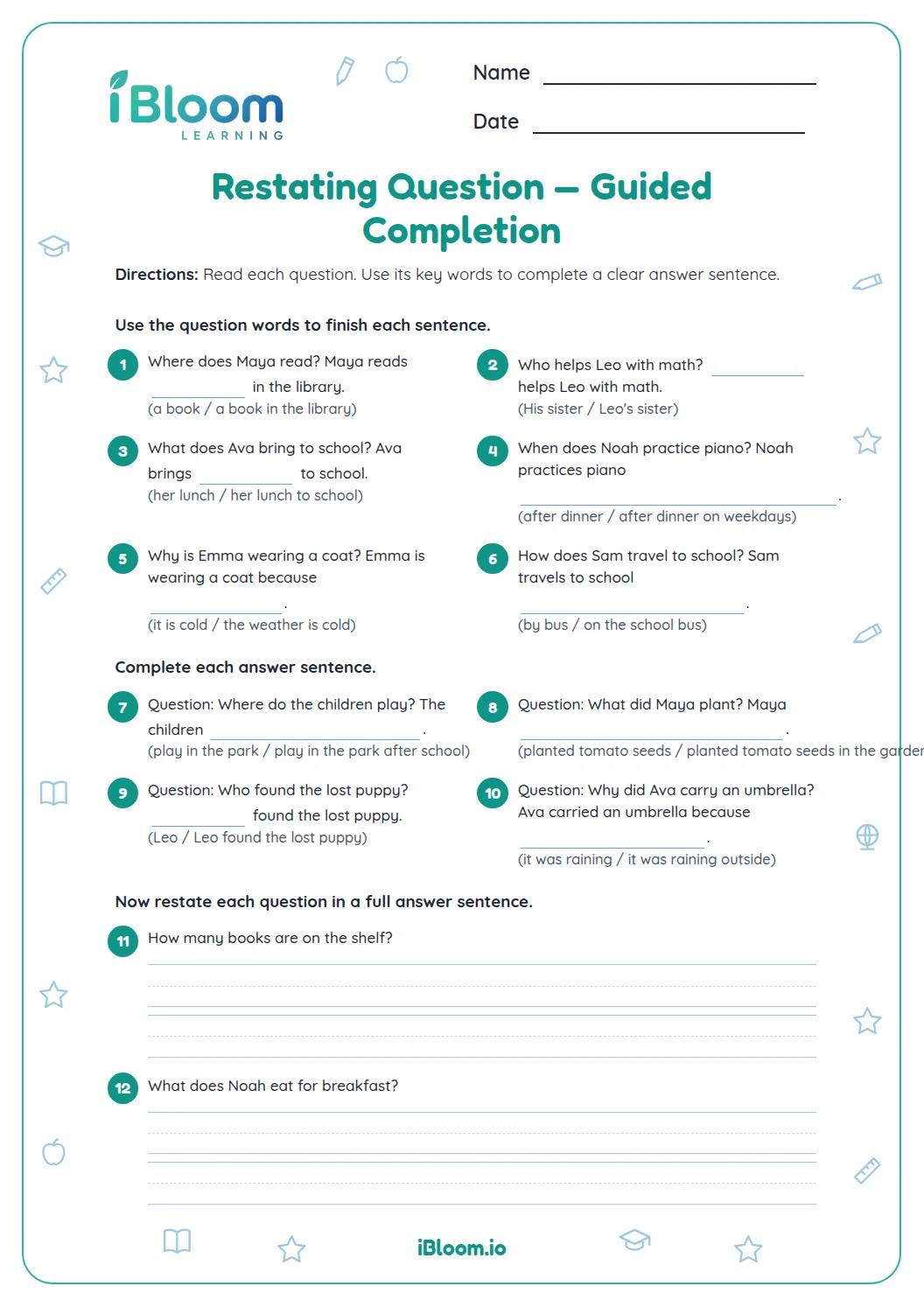
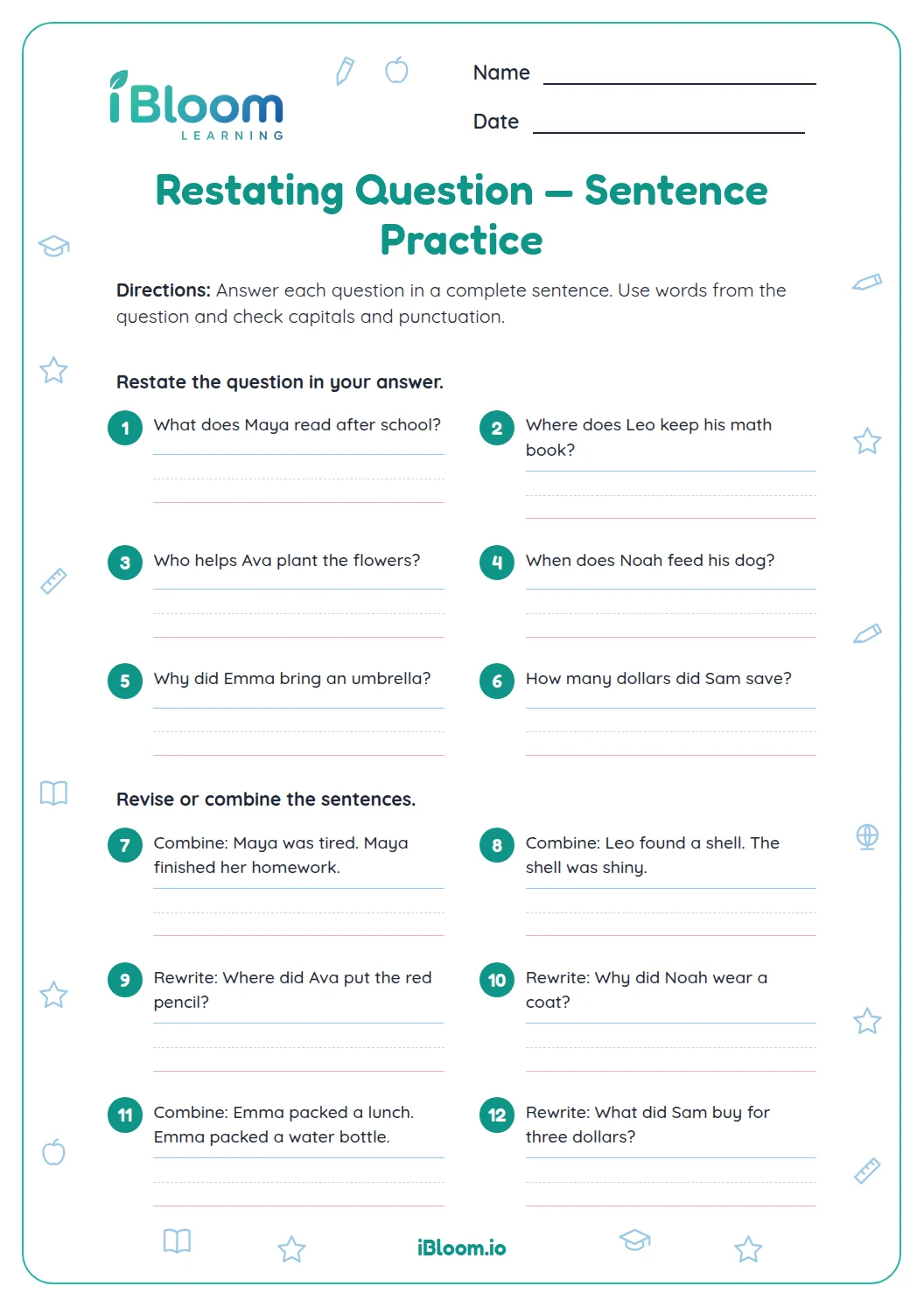
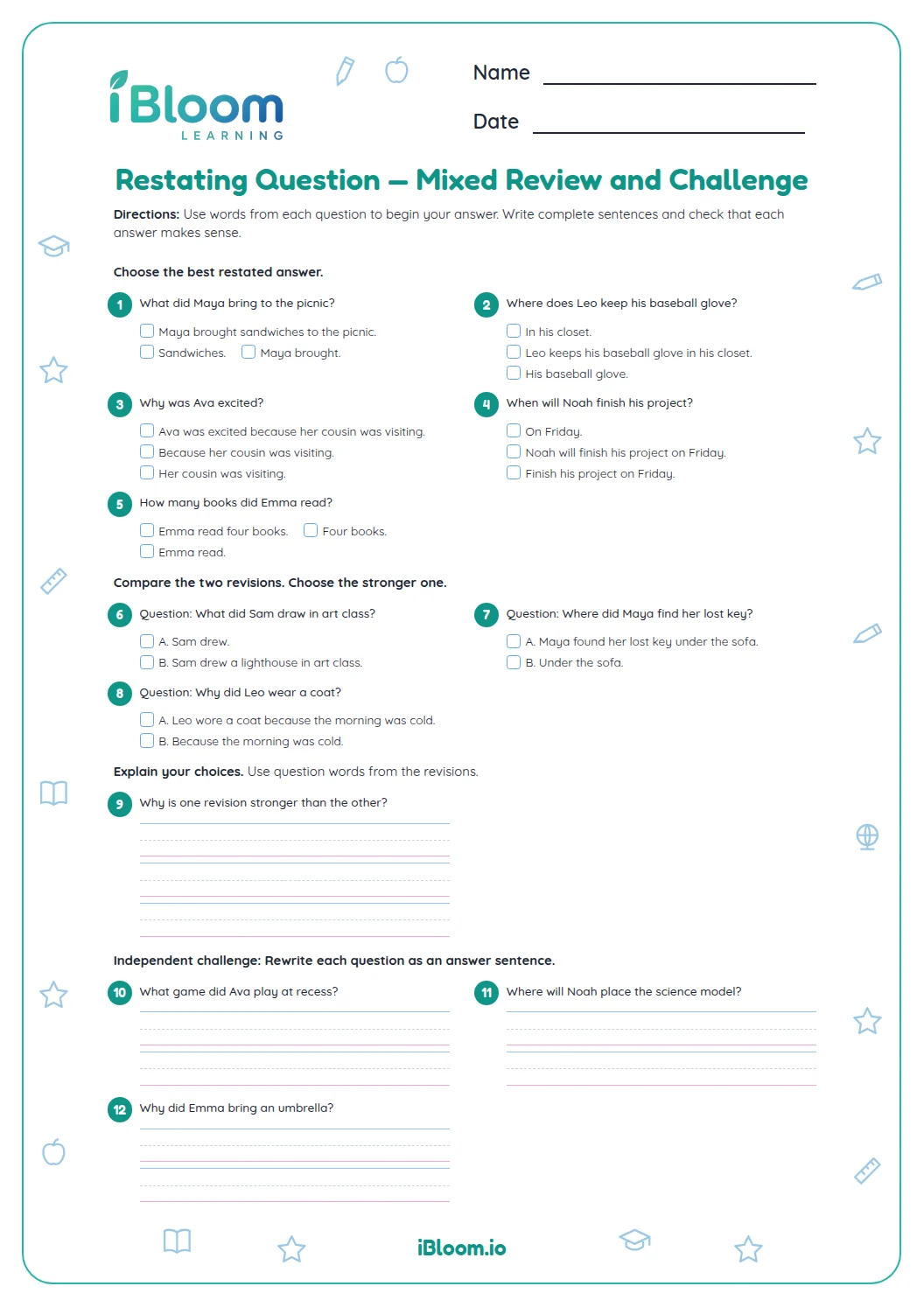
This free Grade 3 writing worksheet helps students answer a question with a complete sentence that includes the question’s key words. Children choose answers that restate the question, complete a sentence beginning, improve a fragment, and write their own responses. The 14 items move from recognizing a complete answer to applying the same habit in writing, with a separate answer key.
What makes an answer restate the question?
A restated answer turns the question’s key words into a sentence. For question 1, “What helps a seed grow?” becomes “Water and sunlight help a seed grow.” The answer repeats the subject and action, then adds the requested information.
A fragment such as “Water and sunlight” gives information but does not form a complete answer sentence.
- 1Question: What helps a seed grow?
- 2Restated answer: Water and sunlight help a seed grow.
- 3The answer includes the question’s subject and verb.
How does the worksheet build a full answer?
Part A asks students to choose a complete restated sentence for questions about a sketchbook, turtles, a class garden, and more. The completion item turns “When does the library open?” into “The library opens at nine o’clock.”
Then students write answers of their own, including revising “Because it is raining” into a complete response to why Sam took an umbrella.
How can students check each response?
Reread the original question and the answer together. Check that the answer begins with the person, place, or idea the question asks about, uses a complete sentence, and gives the requested information. The answer key includes sample responses for open-ended writing.
How to practice restating a question
- 1Underline the question word and the person or topic it asks about.
- 2Turn those key words into the beginning of a sentence.
- 3Add the answer information and choose a verb that fits the question.
- 4Reread the sentence with the original question to check that it answers it.
- 5Use the answer key to review the choices and compare written responses with the samples.
Common answer-writing mistakes
The mistake
Writing only the information, such as “In her backpack.”
The fix
Start with the person and action: “Maya keeps her sketchbook in her backpack.”
The mistake
Answering “why” with only “Because it was raining.”
The fix
Add who and what happened: “Sam took an umbrella because it was raining.”
The mistake
Copying the question without giving the requested detail.
The fix
Use the question’s key words, then add a specific answer.
What to practice next
Make more practice
Questions parents and teachers ask
What does it mean to restate a question?
Restating a question means using its key words to form a complete answer sentence. “Where does Maya keep her sketchbook?” can become “Maya keeps her sketchbook in her backpack.” The worksheet asks children to recognize, finish, and write sentences that follow this pattern.
How many questions are included?
There are 14 questions in three parts: seven multiple-choice items, one sentence completion, and six written responses. The worksheet renders as three pages, and a separate three-page answer key is included. The written-answer key gives sample responses because students may phrase a correct answer in different ways.
Why is “Because it is raining” not a complete answer here?
The phrase explains a reason but does not identify who acted or what happened. For the question “Why did Sam take an umbrella?”, a complete restated answer is “Sam took an umbrella because it was raining.” One of the writing items asks students to make that repair.
Should children copy the whole question into the answer?
They should use the question’s key words, but they do not need to copy every word. A good answer names the person or topic and gives the requested information in a complete sentence. The choices and writing prompts on this sheet let children practice that balance.
Is an answer key provided?
Yes. The separate answer key shows the correct choices and the expected completion. For the six written responses, it provides sample answers; accept another sentence if it answers the question clearly and forms a complete thought. Review a missed response by comparing it with the original question.