


About this worksheet
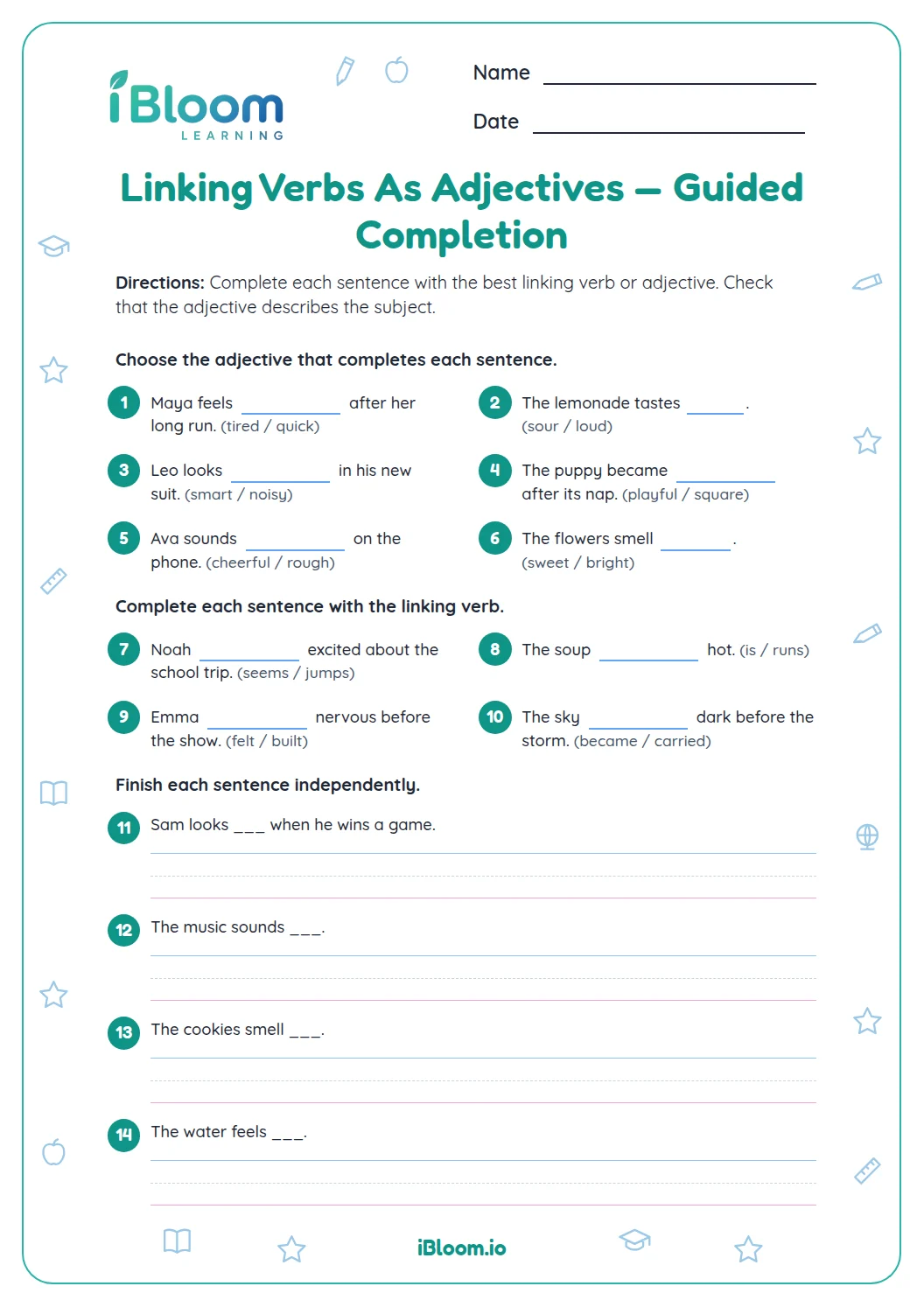
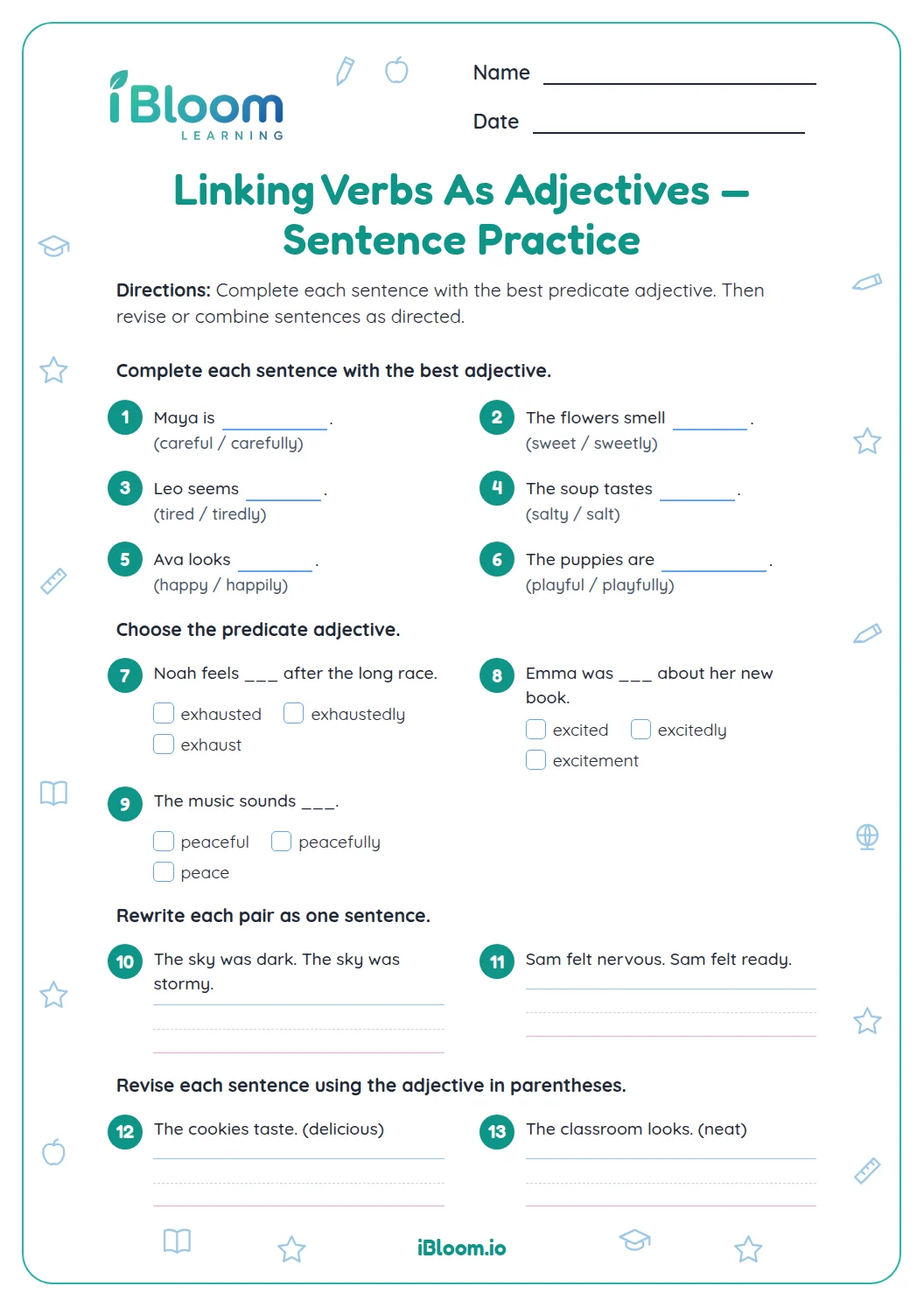
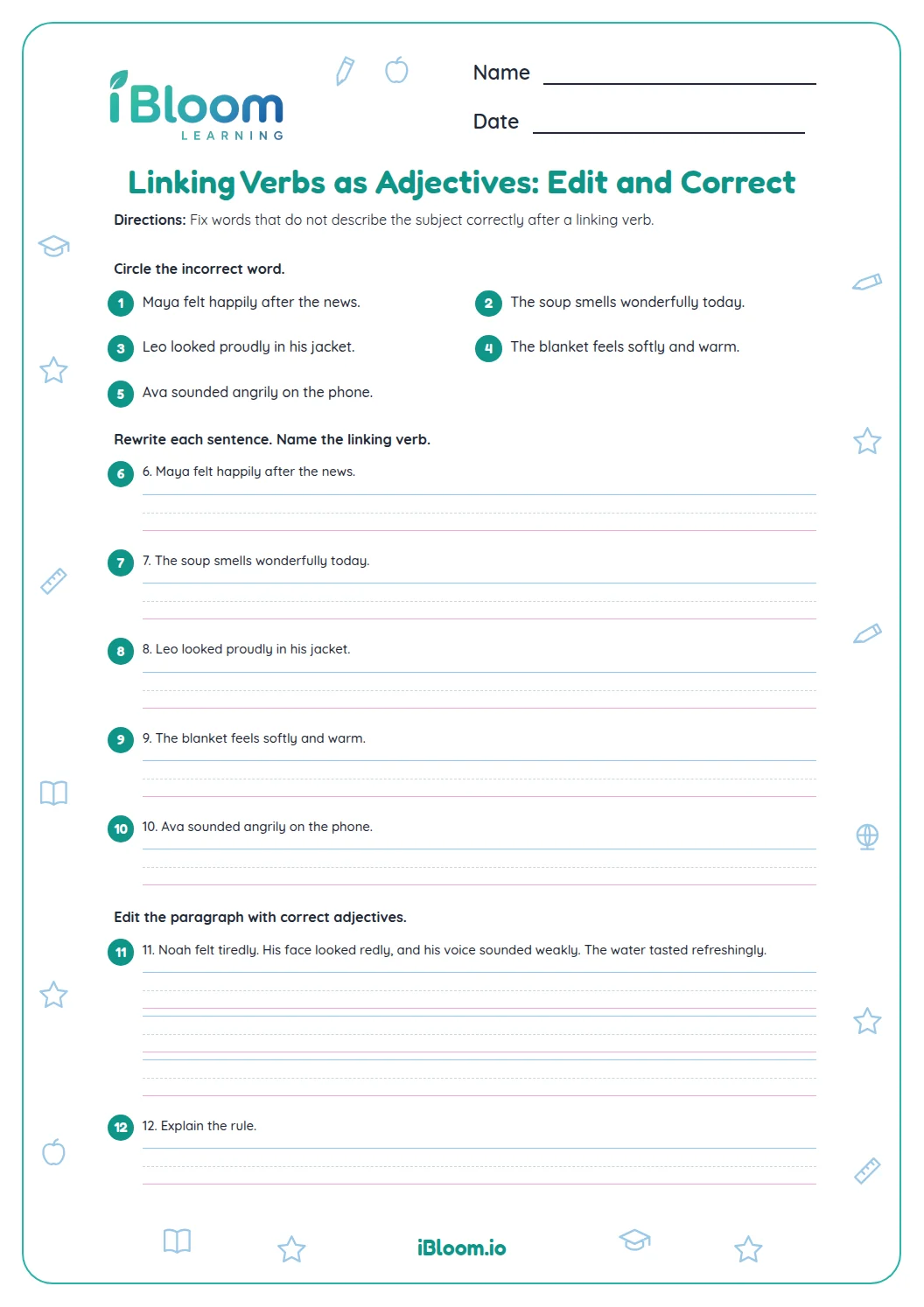
This printable worksheet gives grade 4 learners practice with adjectives after linking verbs and adverbs after action verbs. It contains 16 questions in clear parts, plus a separate answer key. Use the worked example below to model the first step, then invite learners to explain how they checked an answer.
Aligned to L.3.1.a
What will learners do on this worksheet?
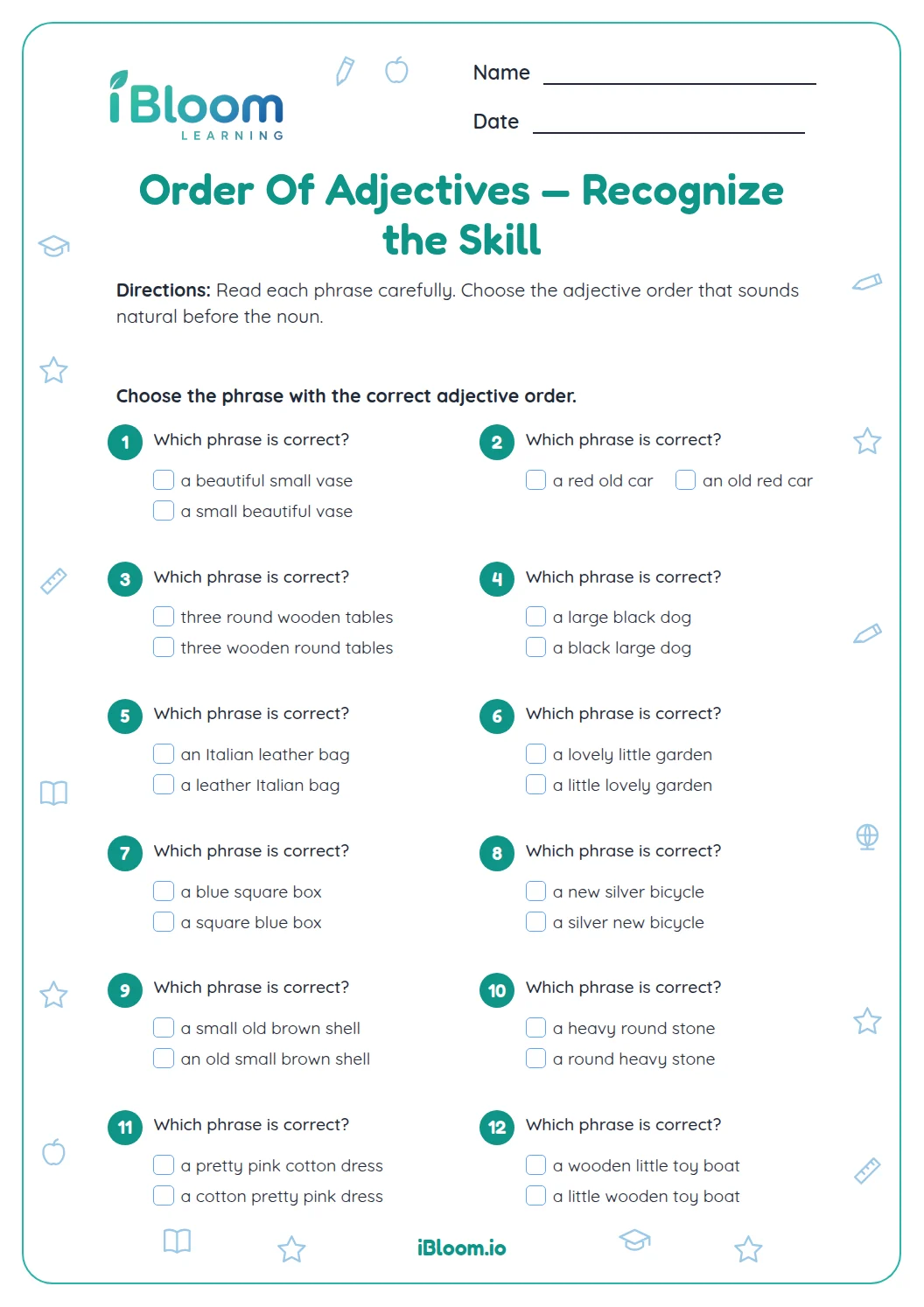
The worksheet has 16 questions in parts that focus on adjectives after linking verbs and adverbs after action verbs. Directions tell learners what to notice and how to record each answer. The separate key gives a quick way to check work.
- 16 questions across two practice pages
- A separate answer key
How can I model one question?
Read the whole question, identify the clue that matters for adjectives after linking verbs and adverbs after action verbs, and explain why the answer fits. Then ask the learner to use the same reasoning on the next item.
- 1“Soup smells delicious.” Delicious describes soup after the linking verb smells, so write adjective.
- 2“Maya sings cheerfully.” Cheerfully describes how Maya sings, so write adverb.
What should I do if an answer is missed?
Return to the exact direction for that part. Ask the learner to point to the number, word, or feature that supports the answer, then try a similar item before checking the key again.
How can we use the answer key?
Check answers after a part is complete. For a missed response, compare the learner’s reasoning with the key and name the step that changes the result.
How to use this worksheet
- 1Read the directions for Part A before starting.
- 2Work through each part in order and show the steps requested.
- 3Pause after each part to check that every item has an answer.
- 4Use the separate key to check work and explain one correction aloud.
Common mistakes and quick fixes
The mistake
Rushing past a direction.
The fix
Read the part direction again before answering.
The mistake
Using a clue from only part of the item.
The fix
Read the whole prompt and check how the answer fits.
The mistake
Copying an answer without checking it.
The fix
Explain the step or clue that supports the answer.
Explain how adjectives and adverbs function in the sentences on this sheet.
On this sheet: Learners identify adjectives describing subjects and adverbs describing actions.
Show the official wordingHide the official wording
Explain the function of nouns, pronouns, verbs, adjectives, and adverbs in general and their functions in particular sentences.
What to practice next
Make more practice
Further reading
Questions parents and teachers ask
What is a predicate adjective?
A predicate adjective follows a linking verb and describes the subject. On this sheet, “delicious” describes soup in “Soup smells delicious.” Ask who or what the sentence is about, then check whether the word tells what that subject is like.
How can a learner tell an adjective from an adverb here?
Check what the last word describes. In “Puppies seem sleepy,” sleepy describes puppies, so it is an adjective. In “Noah runs quickly,” quickly tells how Noah runs, so it is an adverb. This gives an adult a concrete way to discuss the exact skill practiced on the page.
Does every verb in Part A show an action?
No. Verbs such as smells, seem, became, and looks can link a subject to a describing word. Read the sentence meaning: if the word describes the subject, label it adjective. Learners can use the printed example as a model before checking their own work.
What does the answer key show?
The key gives the word job for each sentence. Learners can compare adjective answers in the linking-verb part with adverb answers in the action-verb part, then explain which word each one describes. An adult can ask one follow-up question about the reasoning after checking the key.
How can I help if a learner is unsure?
Ask the learner to name the subject and read the sentence aloud. Then ask whether the last word describes that subject or tells how an action happens. This question points to the distinction practiced on the page. The page keeps the practice focused on the words and decisions named in its directions.