


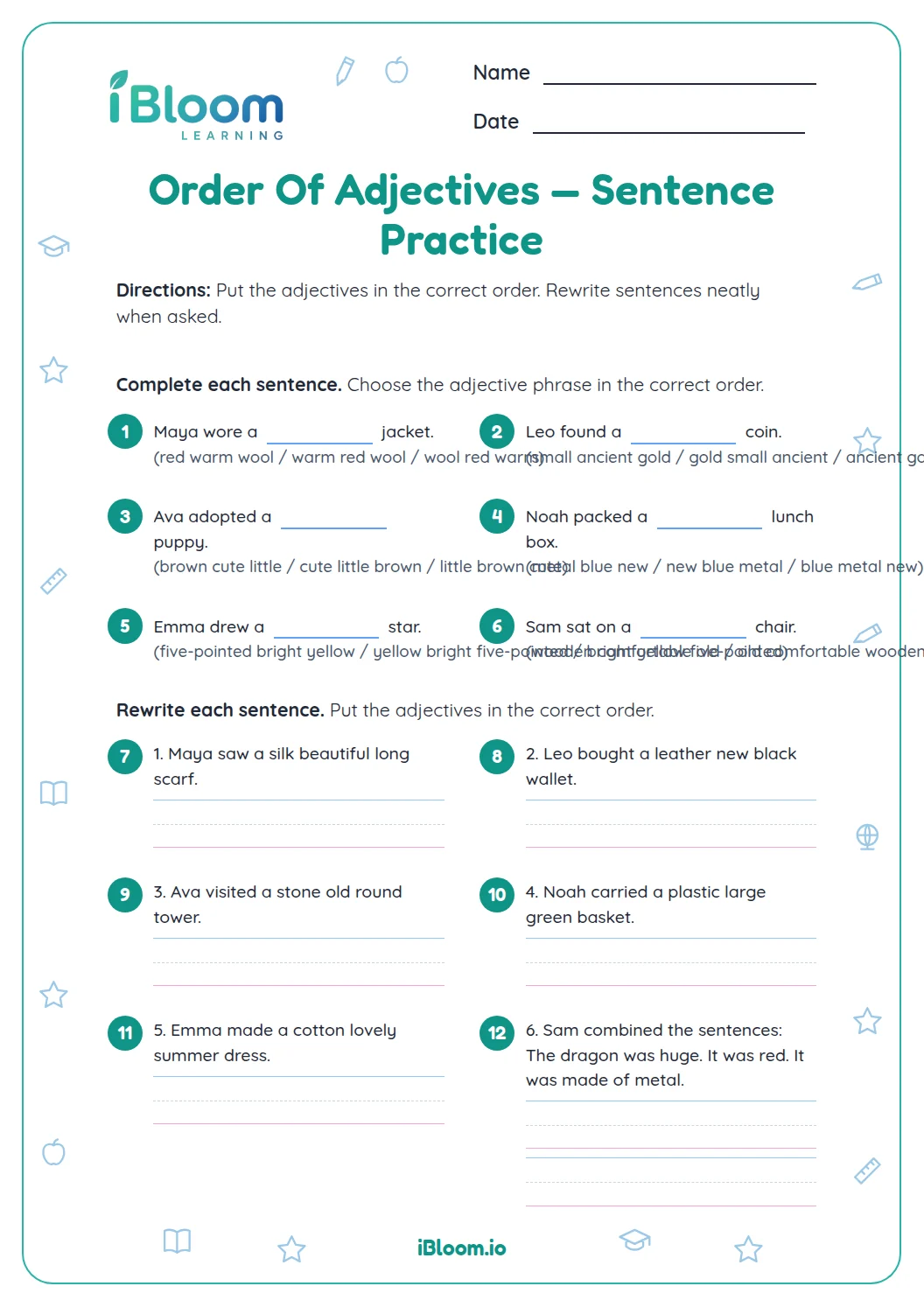
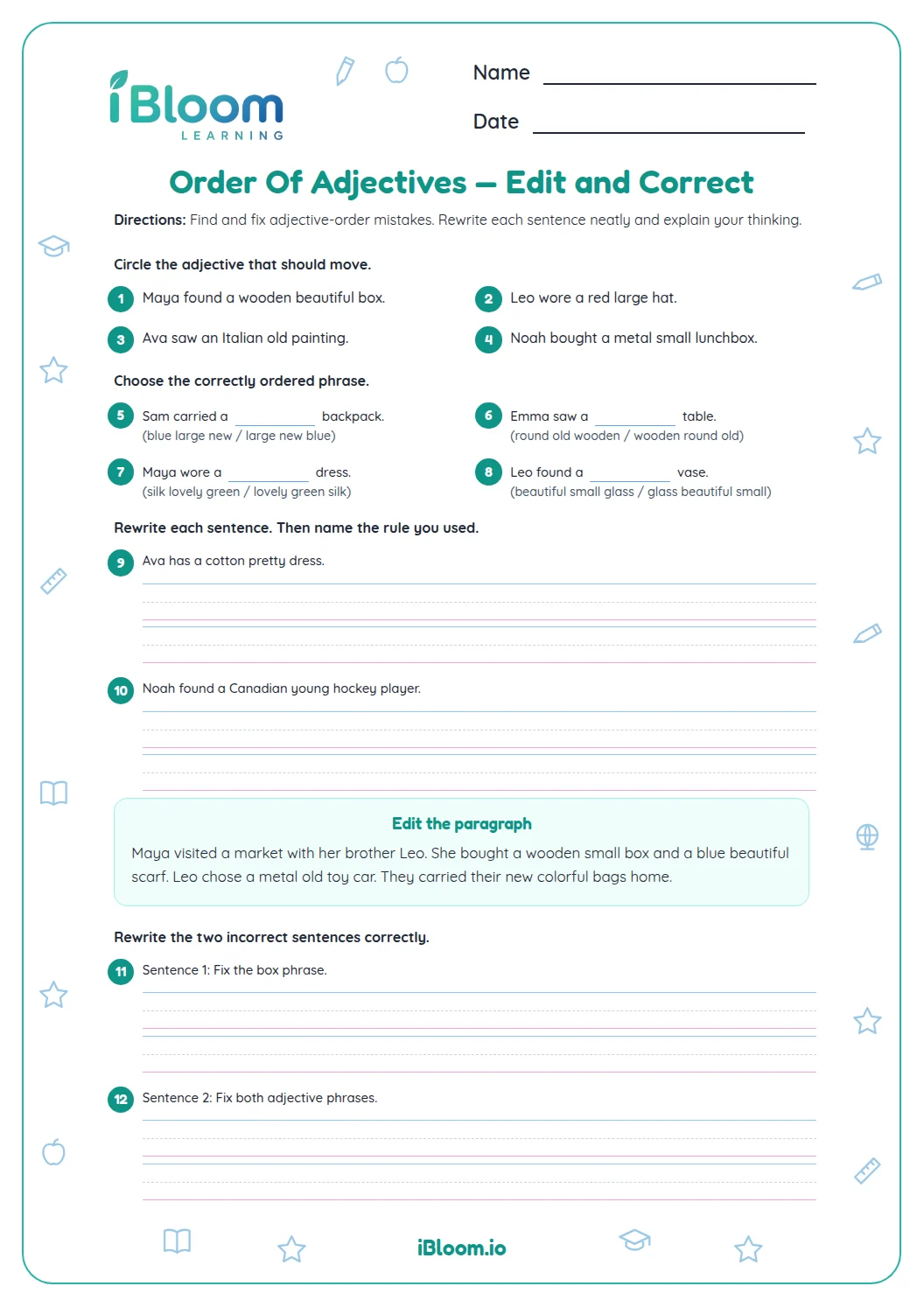
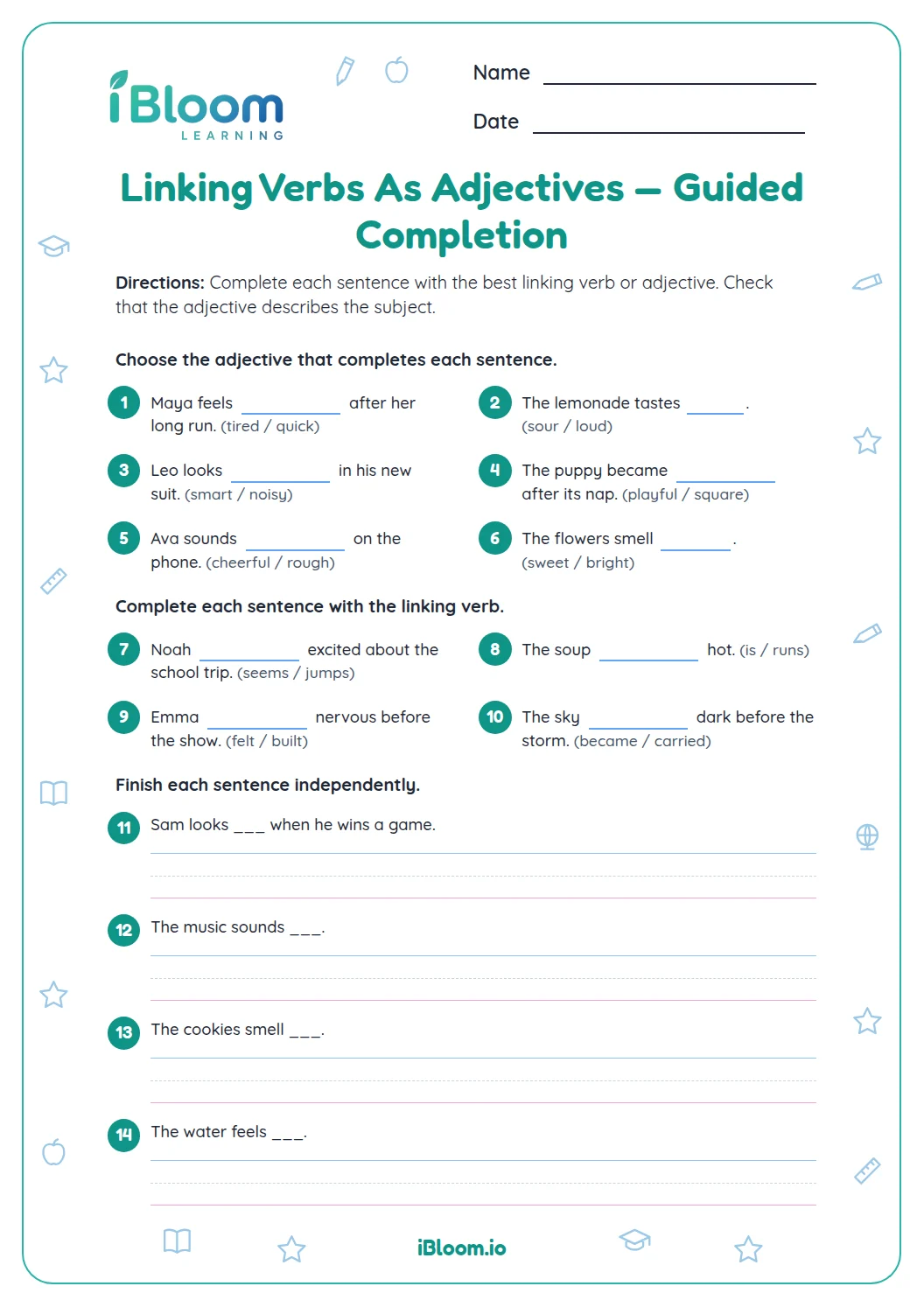
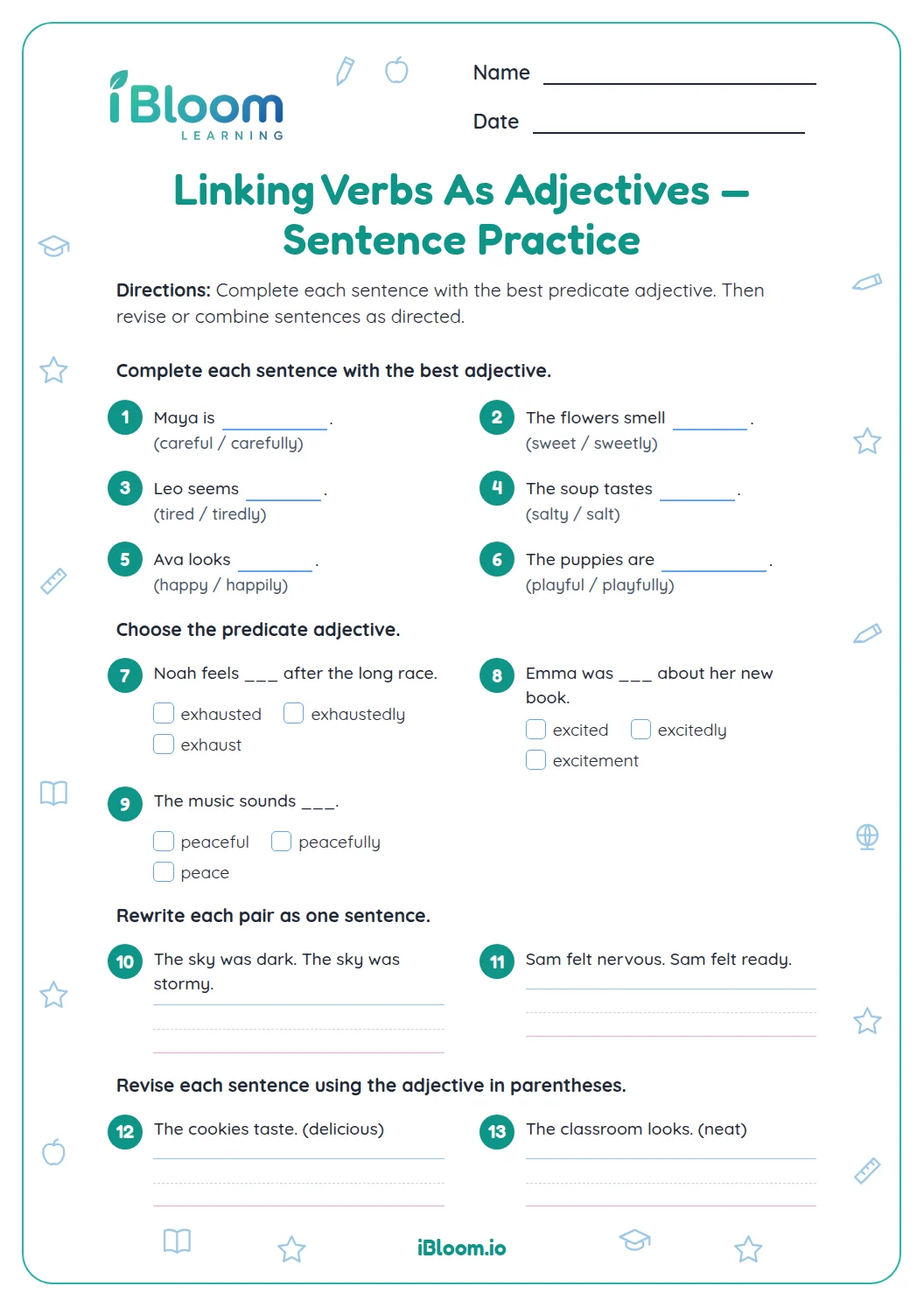
About this worksheet
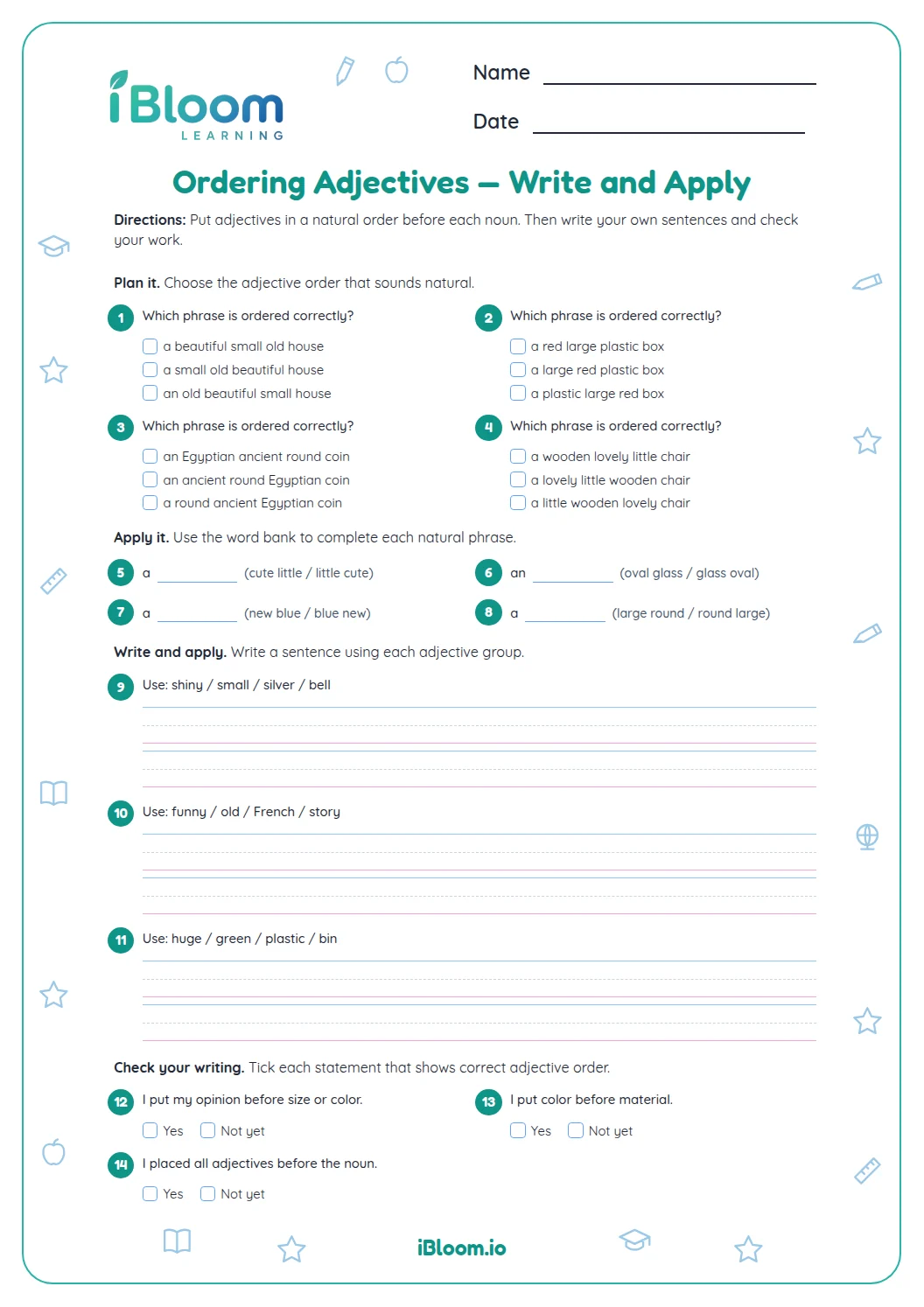
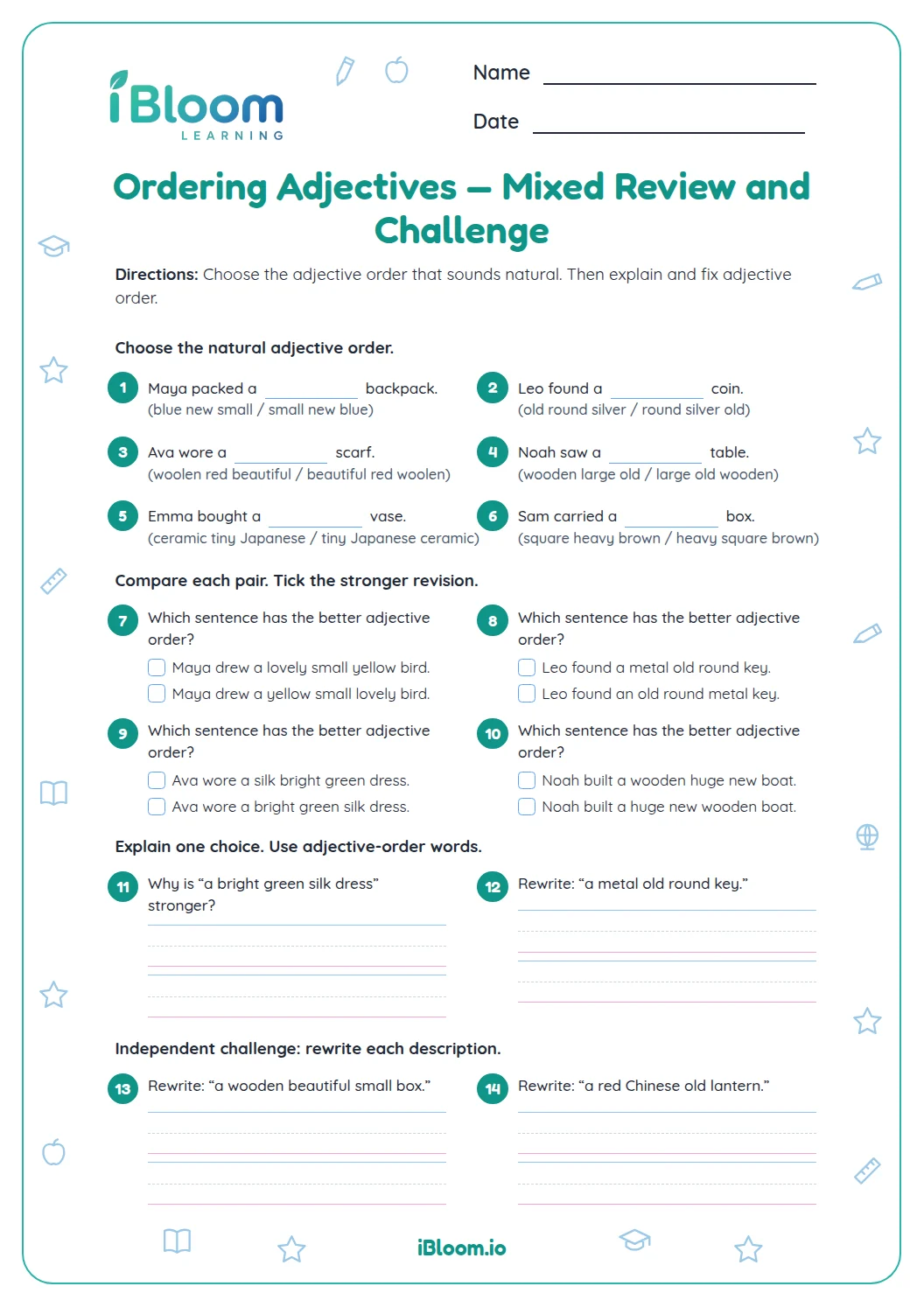
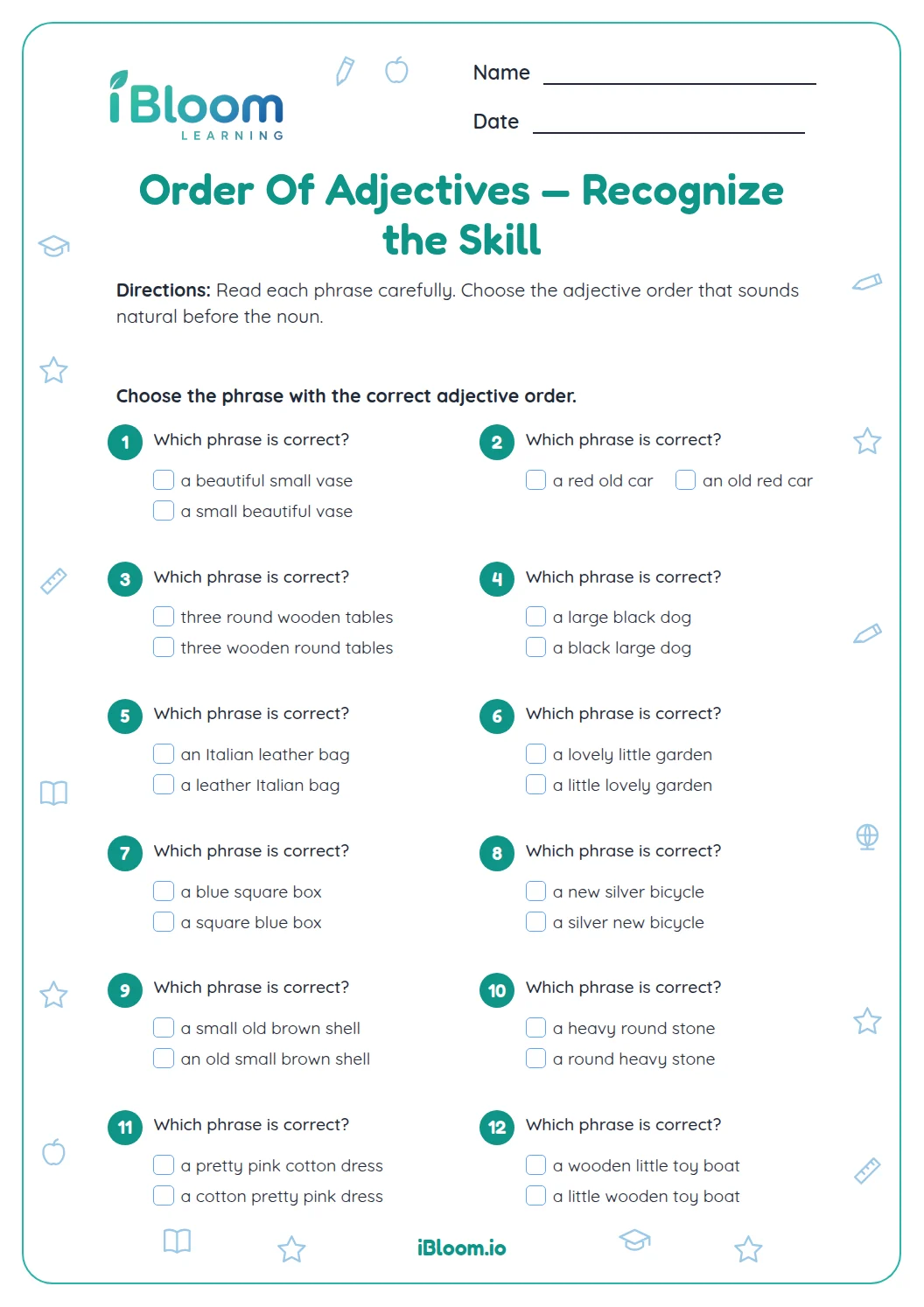
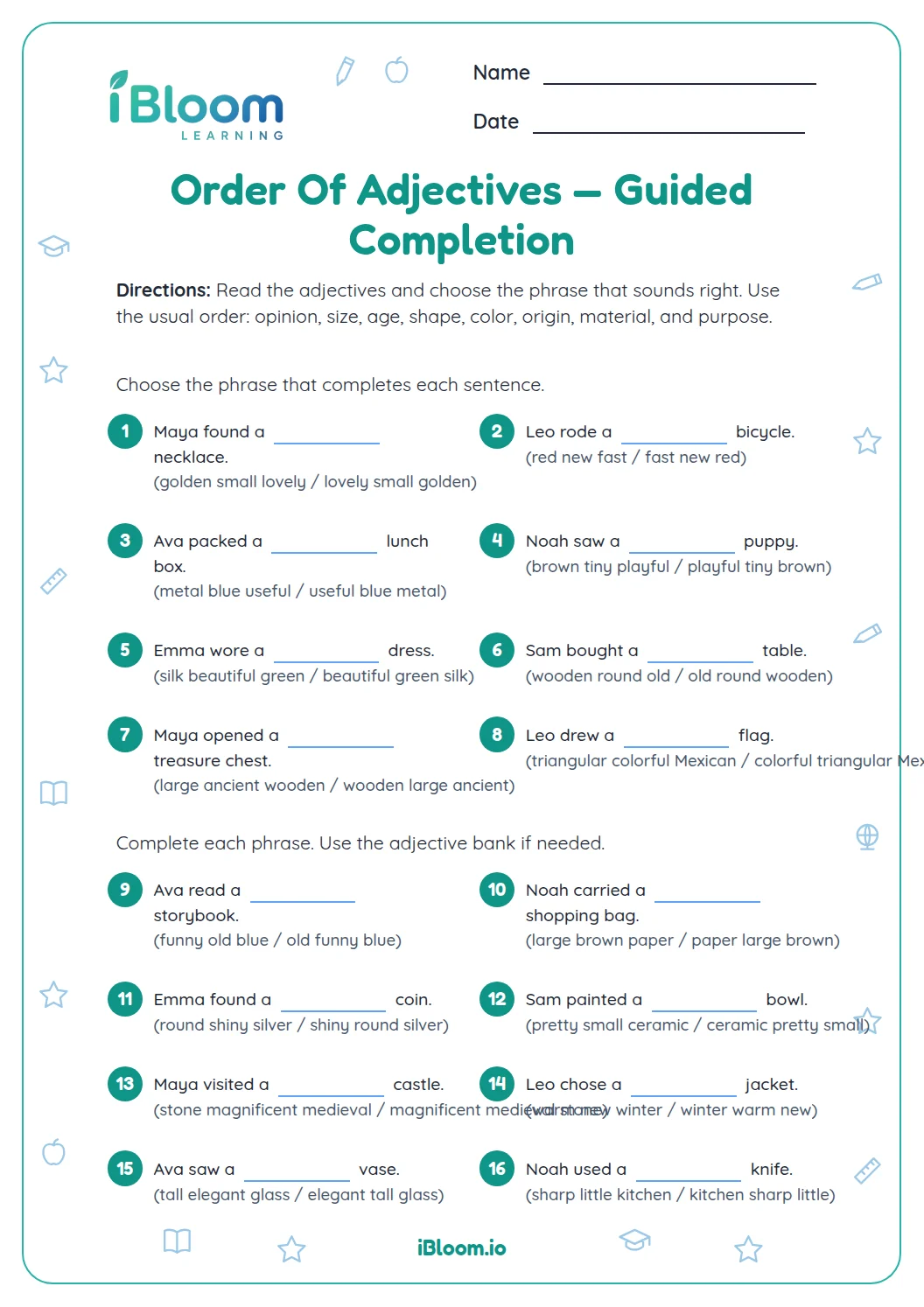
This free Grade 4 worksheet practices conventional adjective order in noun phrases. In Part A, learners choose between two adjective orders; in Part B, they arrange supplied pairs before the noun. The examples include size, shape, color, and material. The practice connects to CCSS L.4.1.d on ordering adjectives according to conventional patterns, and the answer key shows the intended order for all 16 items.
Aligned to L.4.1.d
How can I choose the natural adjective order?
Read both choices and notice what each adjective describes. Size usually comes before color, and size or shape usually comes before material.
- 1“small red bag” places size before color.
What should I do with the adjective pairs?
Use both supplied words, keep the noun in place, and arrange the pair before it. Question 16 uses “heavy” and “woven”: “heavy woven basket” puts size or weight before the material.
How can I check a completed phrase?
Read the complete noun phrase aloud and make sure both words describe the noun. The key gives the intended conventional order; if a phrase sounds unusual, identify whether a color, size, shape, or material adjective is out of place.
How to use this worksheet
- 1Read the noun and both adjective choices together.
- 2Name what each adjective tells: size, color, shape, or material.
- 3Choose the order that follows a familiar pattern.
- 4In Part B, use both supplied words without changing the noun.
- 5Read the whole phrase aloud, then check the answer key.
Common mistakes and quick fixes
The mistake
Putting a color before a size word, as in “red small bag.”
The fix
Try size first: “small red bag.”
The mistake
Putting material before size, as in “wooden large table.”
The fix
Say “large wooden table,” with size before material.
The mistake
Leaving out one supplied adjective.
The fix
Check that both describing words appear before the noun.
Common Core alignment
The practice asks learners to order adjectives in complete noun phrases.
Place size or opinion before color, material, and other noun details.
On this sheet: The worksheet asks learners to practice this skill directly.
Show the official wordingHide the official wording
Order adjectives within sentences according to conventional patterns (e.g., a small red bag rather than a red small bag ).
What to practice next
Make more practice
Further reading
Questions parents and teachers ask
What does adjective order mean?
Adjective order is the familiar pattern for placing more than one describing word before a noun. For example, “small red bag” sounds natural because size comes before color. The worksheet gives eight choice questions and eight guided completions to apply that pattern.
What should a learner do in Part A?
Part A has eight items. Read the two phrases, notice what each adjective describes, and choose the order that sounds conventional. Question 1 contrasts “small red” and “red small”; size before color is the intended order. The other items use similar clues.
How does Part B work?
Part B gives two adjectives in parentheses and a noun phrase with two blanks. Use both words, put them in a natural order, and keep the noun unchanged. The answer key shows the intended phrase for each of the eight completions.
Does adjective order matter in every phrase?
English has patterns that help several adjectives sound natural together. This worksheet focuses on pairs such as size before color or material. Reading the whole phrase aloud helps, but learners should also notice what kind of detail each adjective adds.
How many pages are included?
The printable has two worksheet pages and a separate two-page answer key. It includes 16 questions: eight multiple-choice comparisons and eight guided phrase completions. Plan for about 20 minutes, including time to discuss why one order sounds natural and how each adjective describes the noun.