


About this worksheet
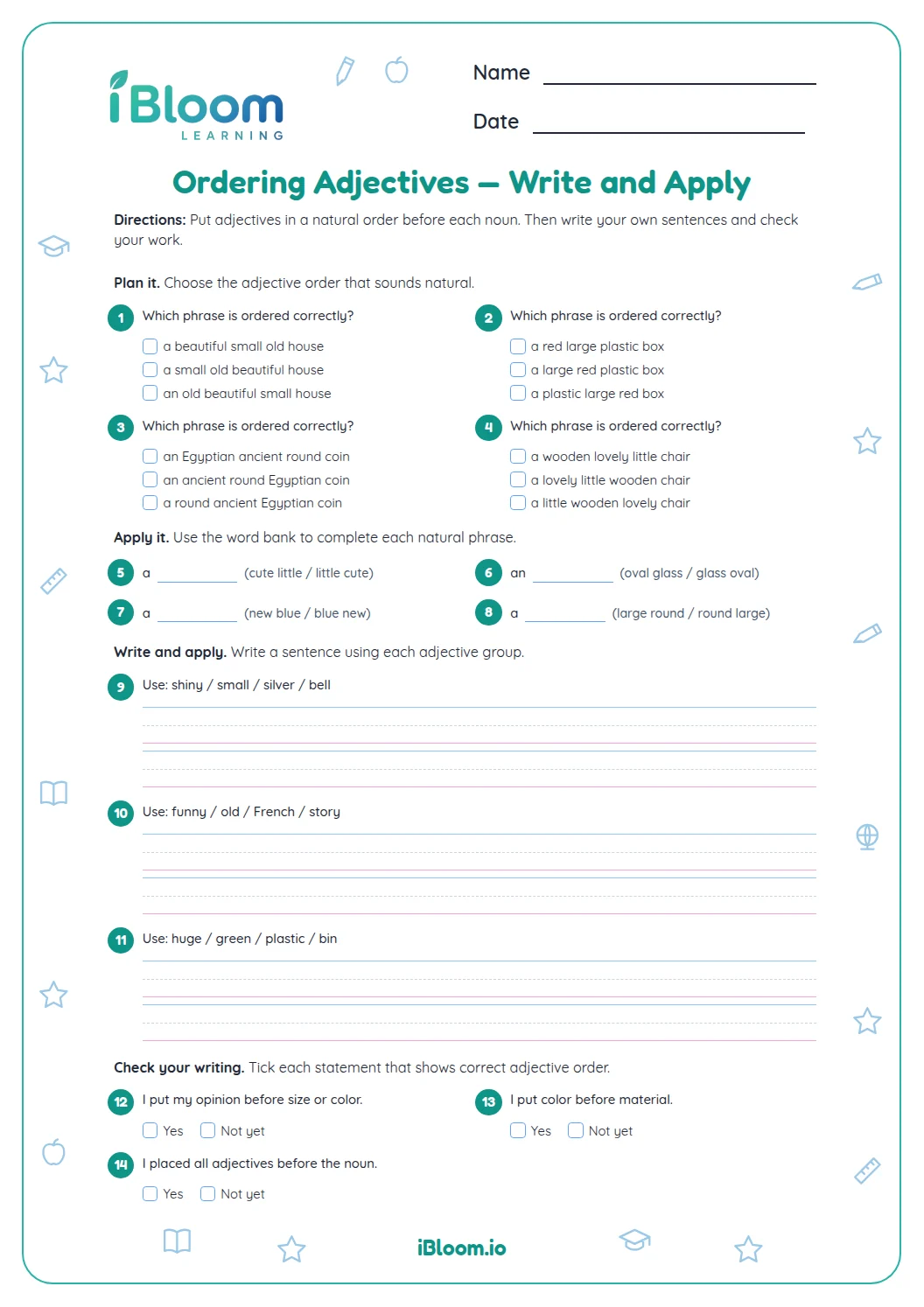
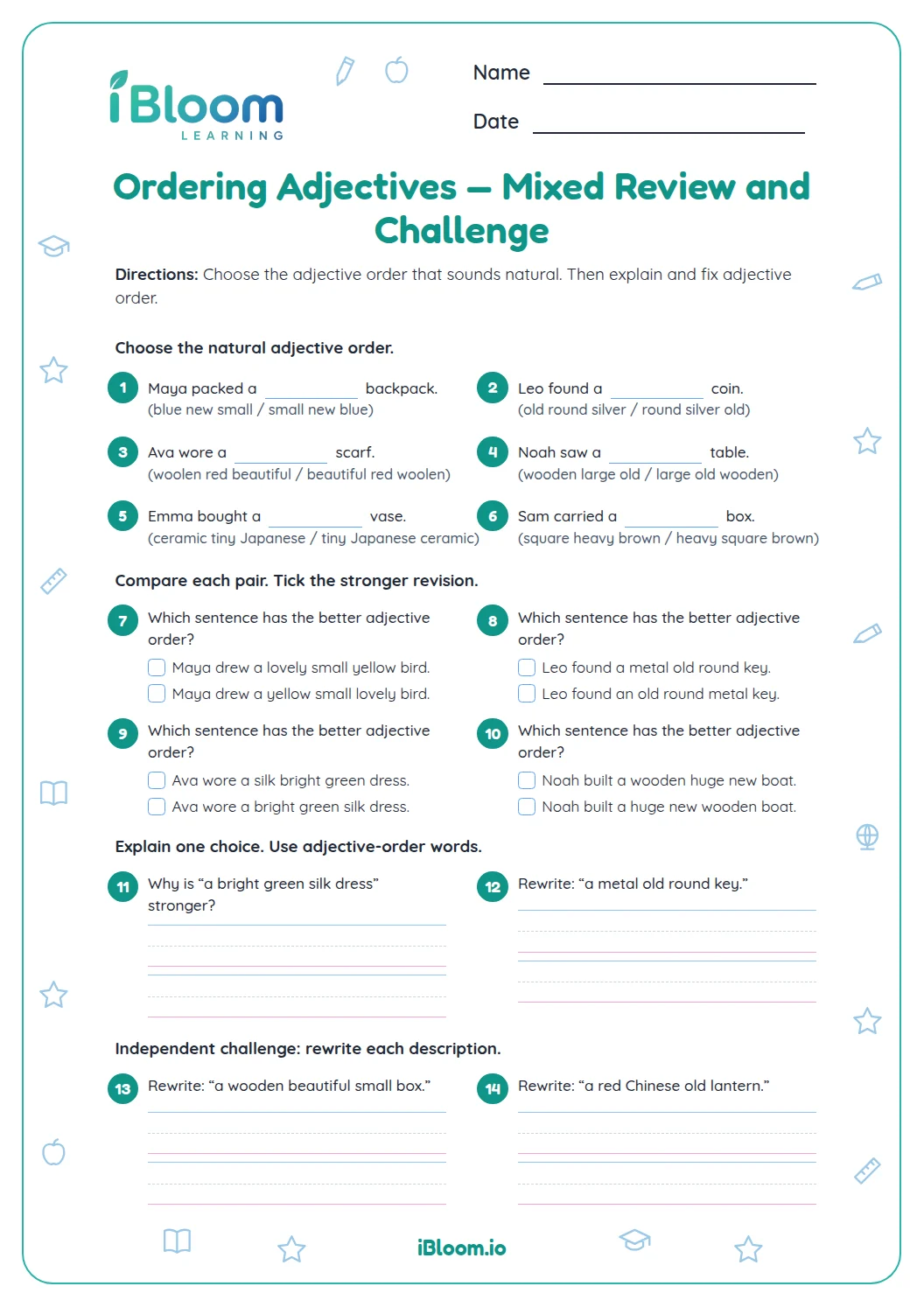
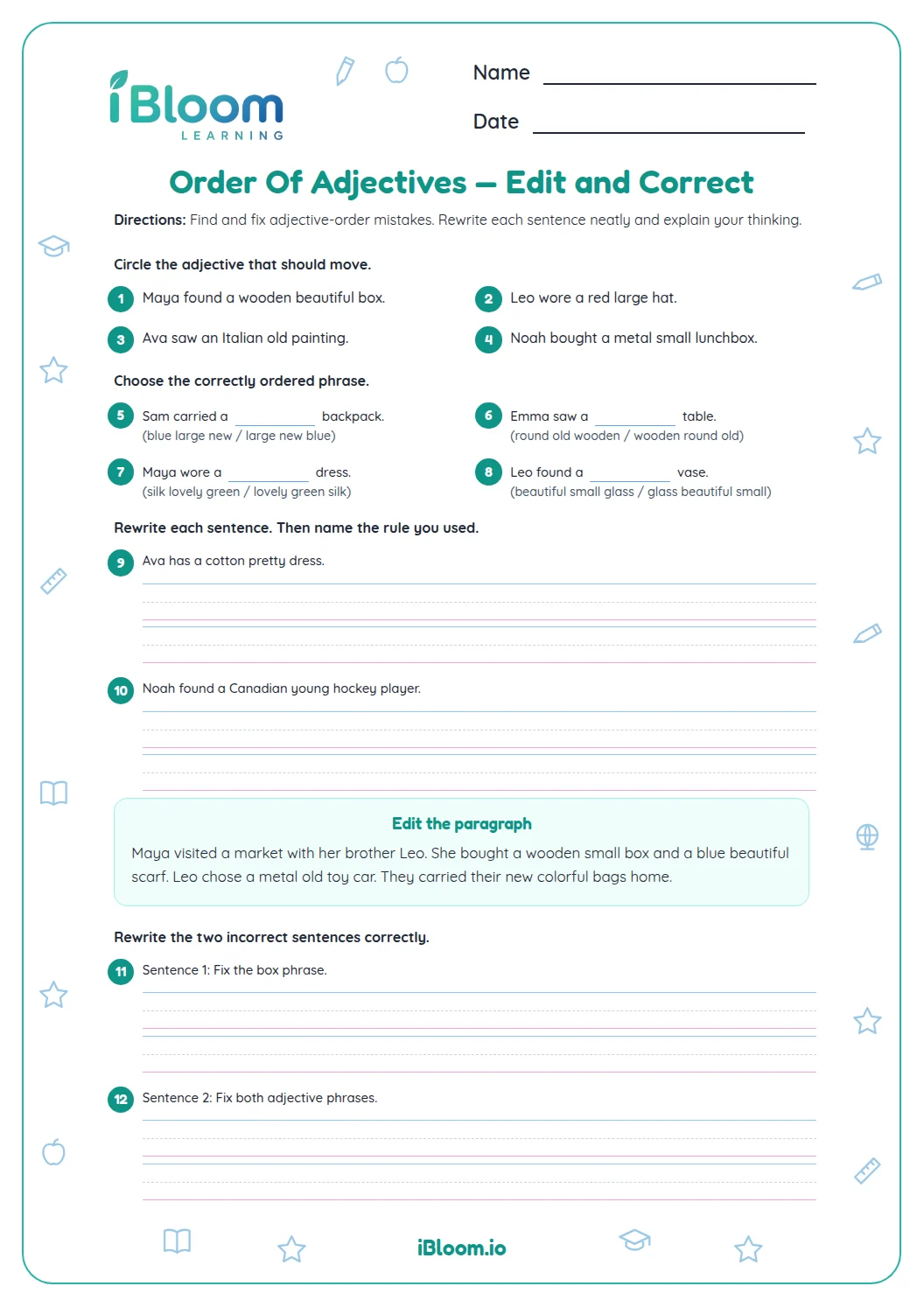
Learners reorder familiar descriptions such as “wooden, small, round bowl” and write the phrase in a natural order. The later items mix material, origin, shape, and opinion words.
Aligned to L.4.1
Use a familiar adjective order
When several adjectives describe one noun, English speakers usually place them in a familiar sequence: opinion, size, age, shape, color, origin, material, and purpose. Not every phrase uses every category, and the pattern is a guide to natural wording.
Compare “a tiny French glass vase” with “a glass tiny French vase.” Size normally comes before origin and material, so the first phrase is easier to read.
Edit the phrase, not the meaning
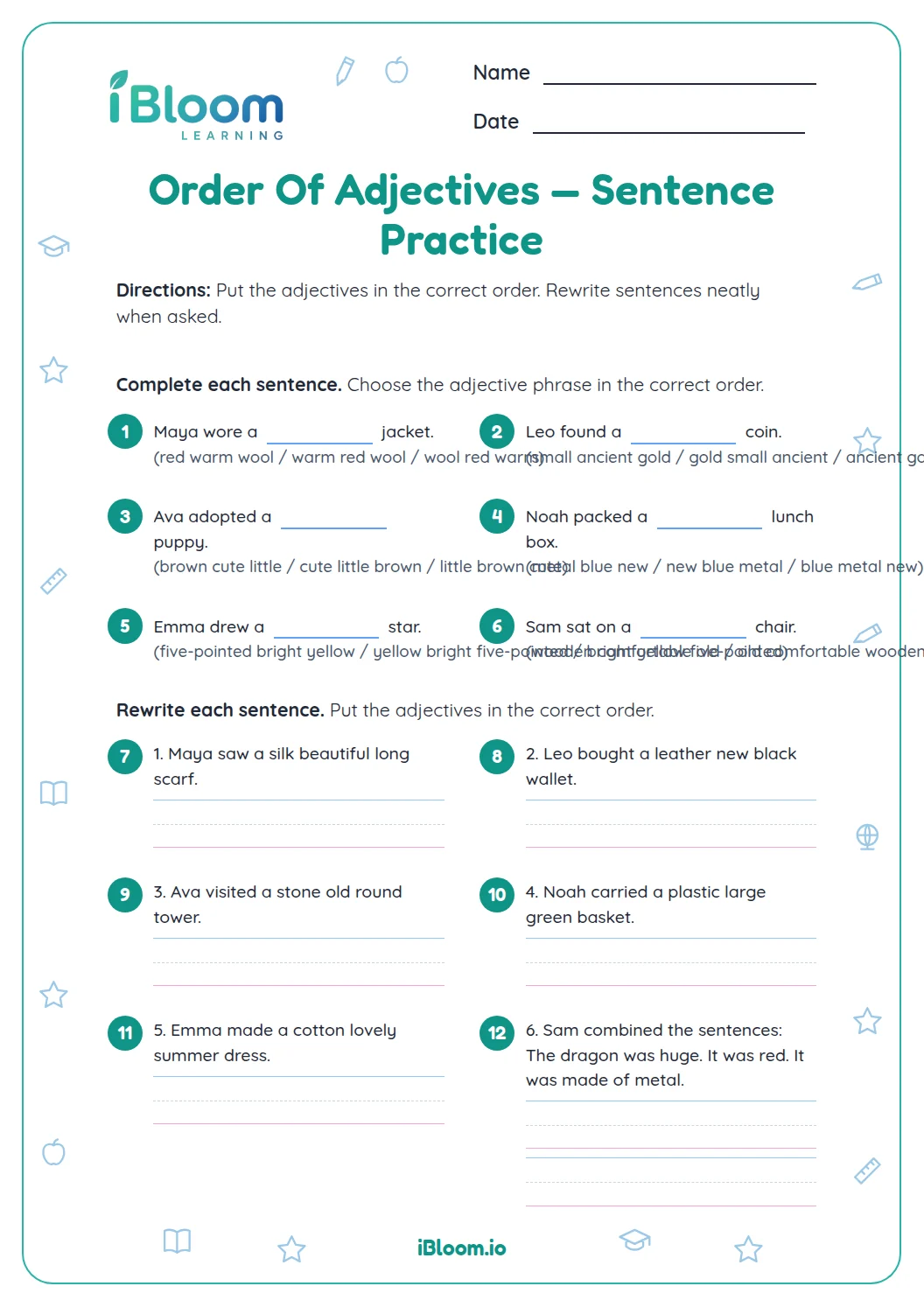
Each prompt gives the same describing words in an awkward order. Keep the words and the noun; move the adjectives into a conventional sequence. “Silk, green, beautiful dress” becomes “a beautiful green silk dress.”
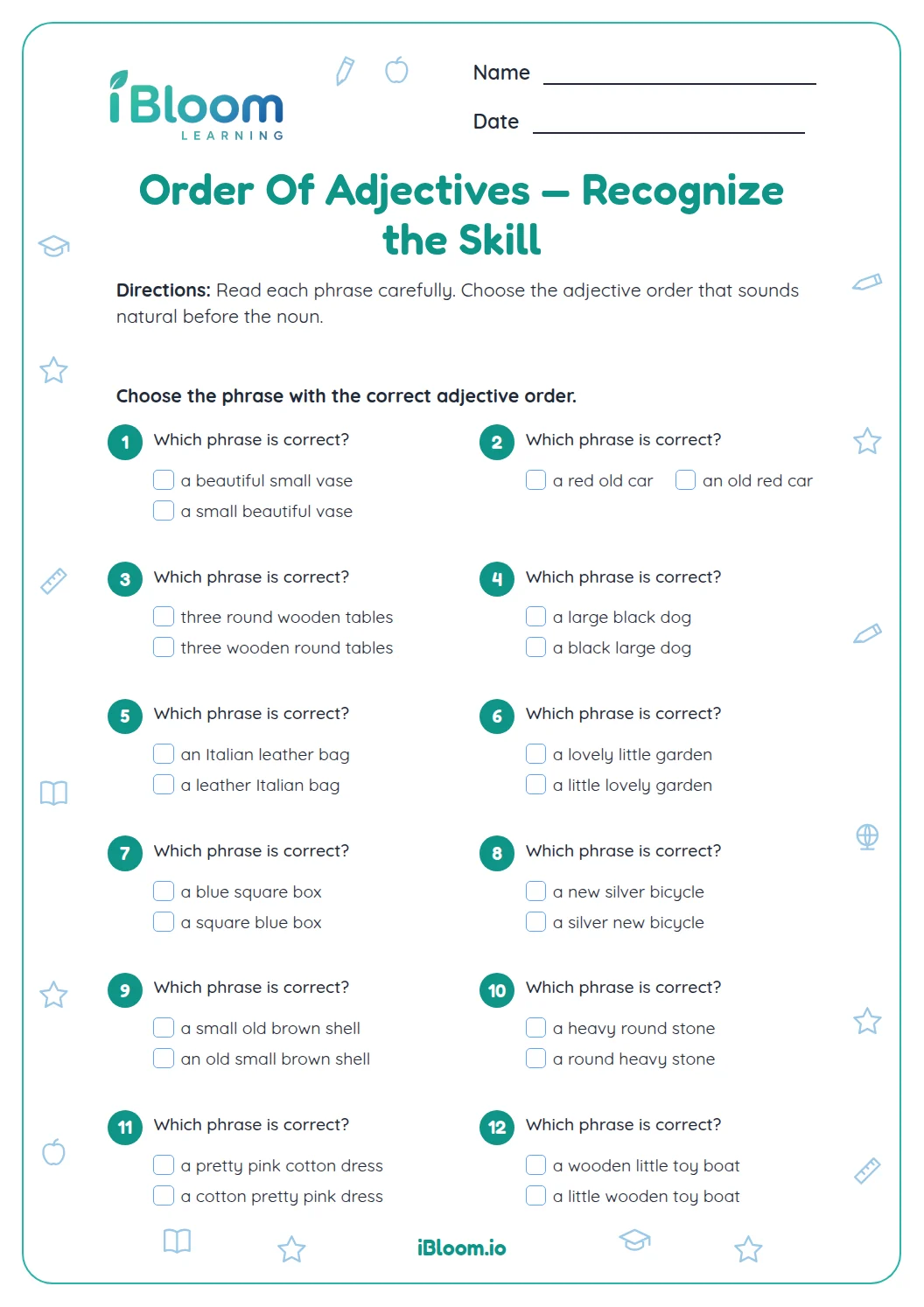
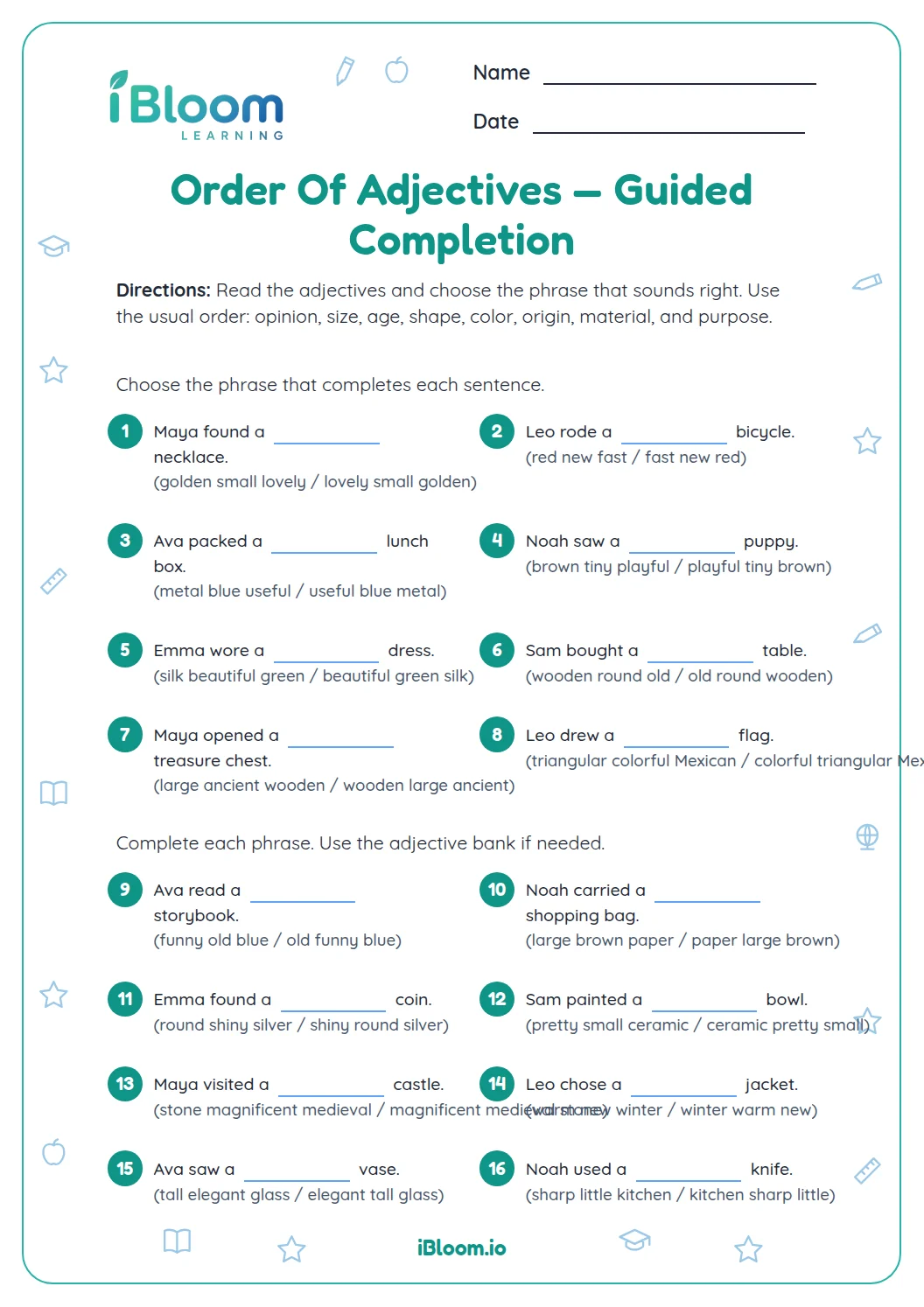
Part A introduces the pattern, Part B asks for short corrections, and the last two parts apply the sequence to longer phrases. Read the finished phrase aloud to check that it sounds natural.
Practice adjective order
- 1Read the noun first so you know what the adjectives describe.
- 2Name each adjective’s job: opinion, size, age, shape, color, origin, material, or purpose.
- 3Rewrite the phrase with the categories in a natural order.
- 4Read the corrected phrase aloud and check that every original detail remains.
- 5Use the answer key to compare order, not handwriting or punctuation.
Common adjective-order mistakes
The mistake
Putting material before size, as in “wooden small bowl.”
The fix
Place size before material: “small wooden bowl.” Add shape before material when both are used.
The mistake
Moving an adjective but dropping another detail.
The fix
Check that every describing word from the prompt appears in the revision.
The mistake
Treating the order as a rule that every phrase must use all eight categories.
The fix
Use only the categories the phrase needs. The sequence helps when several adjectives appear together.
Curriculum alignment
The worksheet connects to Grade 4 grammar and usage. It focuses on conventional adjective order within clear noun phrases.
Demonstrate command of the conventions of standard English grammar and usage when writing or speaking.
On this sheet: Students revise adjective order in written phrases as part of standard English grammar and usage.
Show the official wordingHide the official wording
Demonstrate command of the conventions of standard English grammar and usage when writing or speaking.
What to practice next
Make more practice
Further reading
Questions parents and teachers ask
What adjective order does this worksheet use?
The worksheet follows the common sequence opinion, size, age, shape, color, origin, material, and purpose. A phrase may use only two or three categories. The goal is to put the given descriptions in a natural order before the noun, not to add new adjectives.
How can a student tell which adjective comes first?
Ask what each word tells about the noun. “Tiny” tells size, “French” tells origin, and “glass” tells material, so “tiny French glass vase” follows the usual pattern. Reading the phrase aloud can help a student hear when the order sounds awkward.
Should a child change the words while editing?
No. These prompts ask students to keep the original descriptions and rearrange them. For example, “silk, green, beautiful dress” becomes “a beautiful green silk dress.” The meaning stays the same; only the adjective order changes. Students preserve the original words and change only their order.
How does adjective order connect to Grade 4 grammar?
The sheet asks students to revise adjective order in written phrases, practicing standard English grammar and usage. Learners keep the same words and noun while arranging opinion, size, age, shape, color, origin, and material in a natural sequence. The key shows one conventional order for each phrase.
What makes some adjective orders sound natural?
Readers of English generally put opinion and size before shape, color, origin, and material. The sequence is a useful convention; the answer key models a natural order for each group of words, while allowing that other phrasing can occur in context.