





About this worksheet
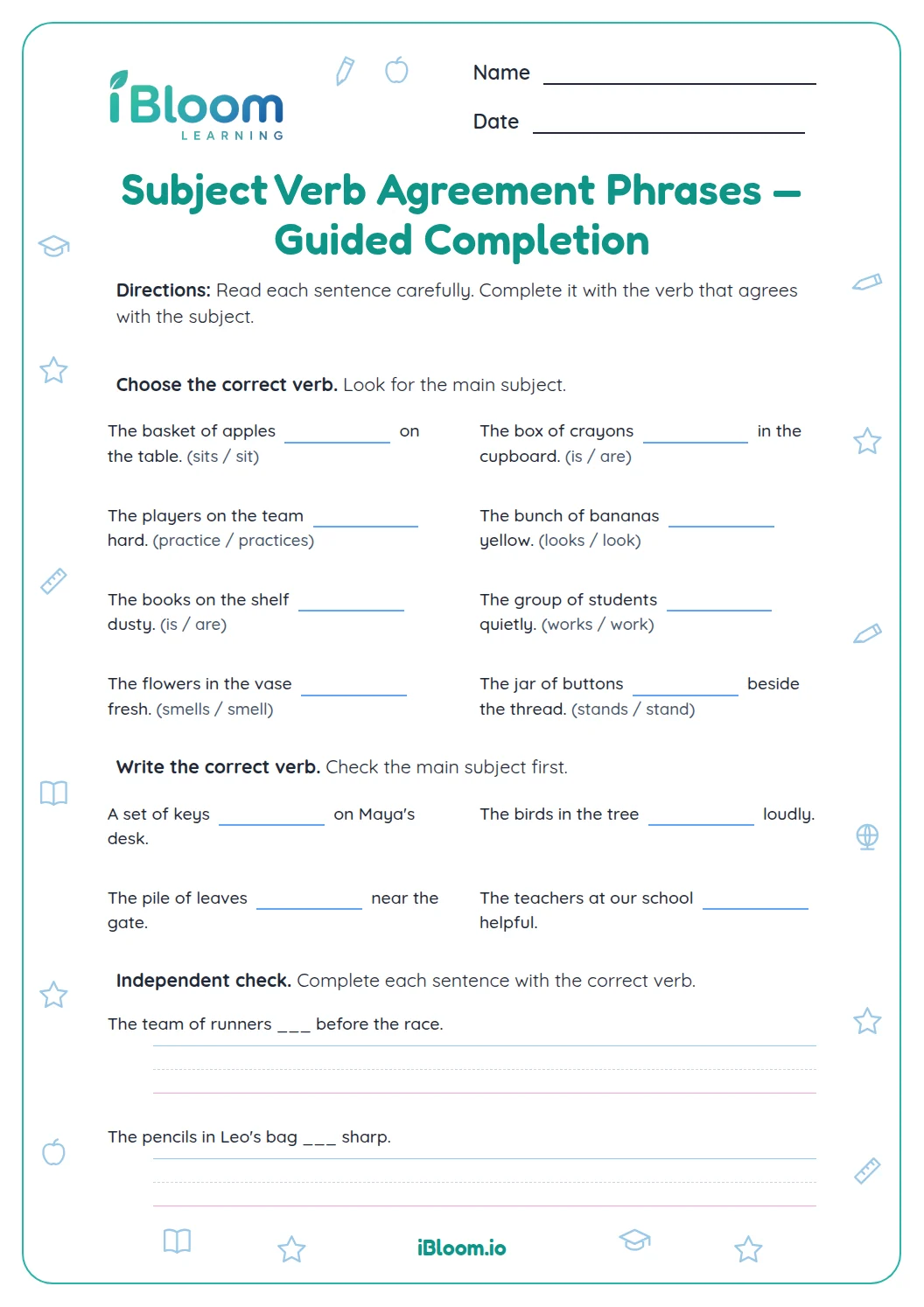
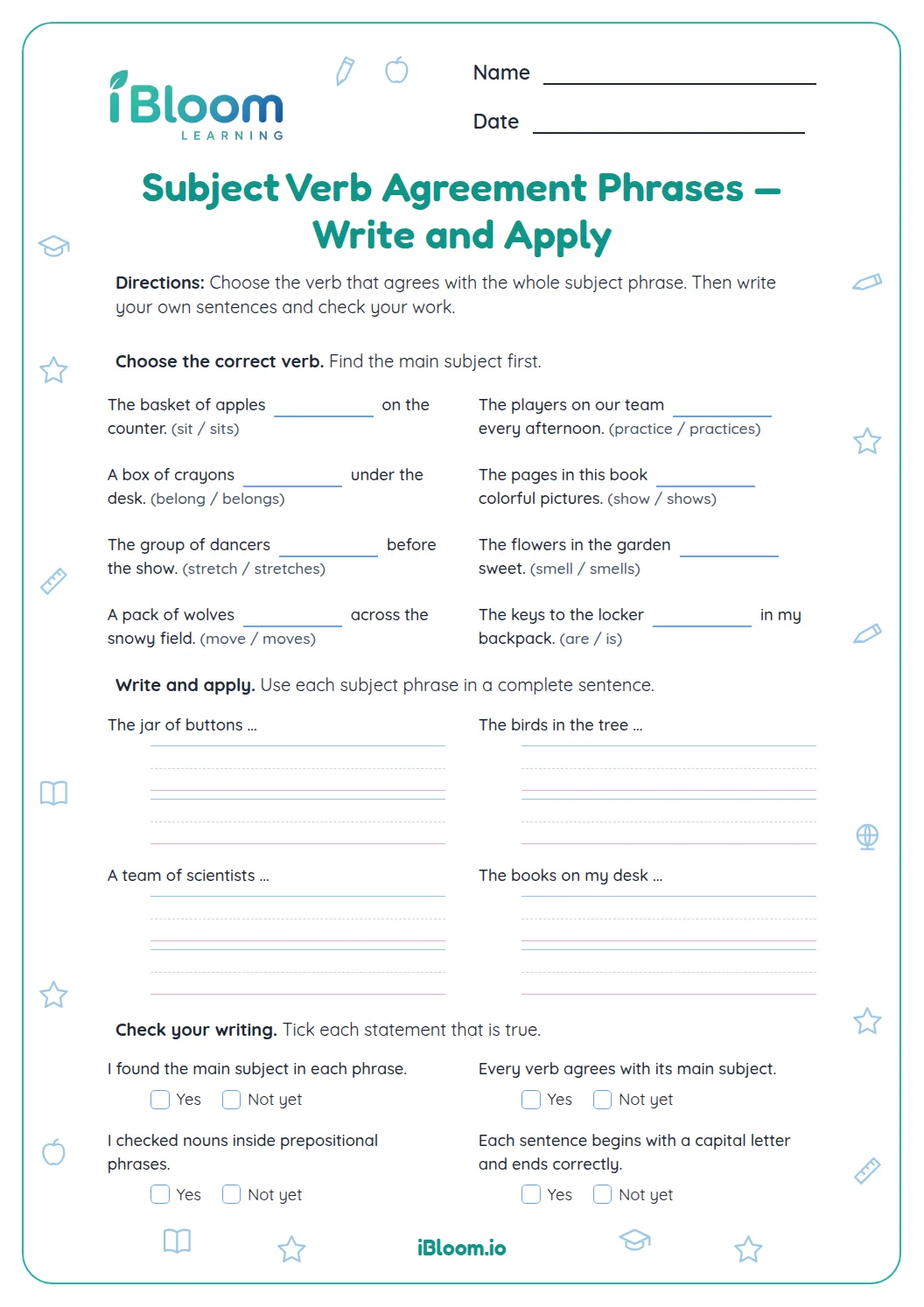
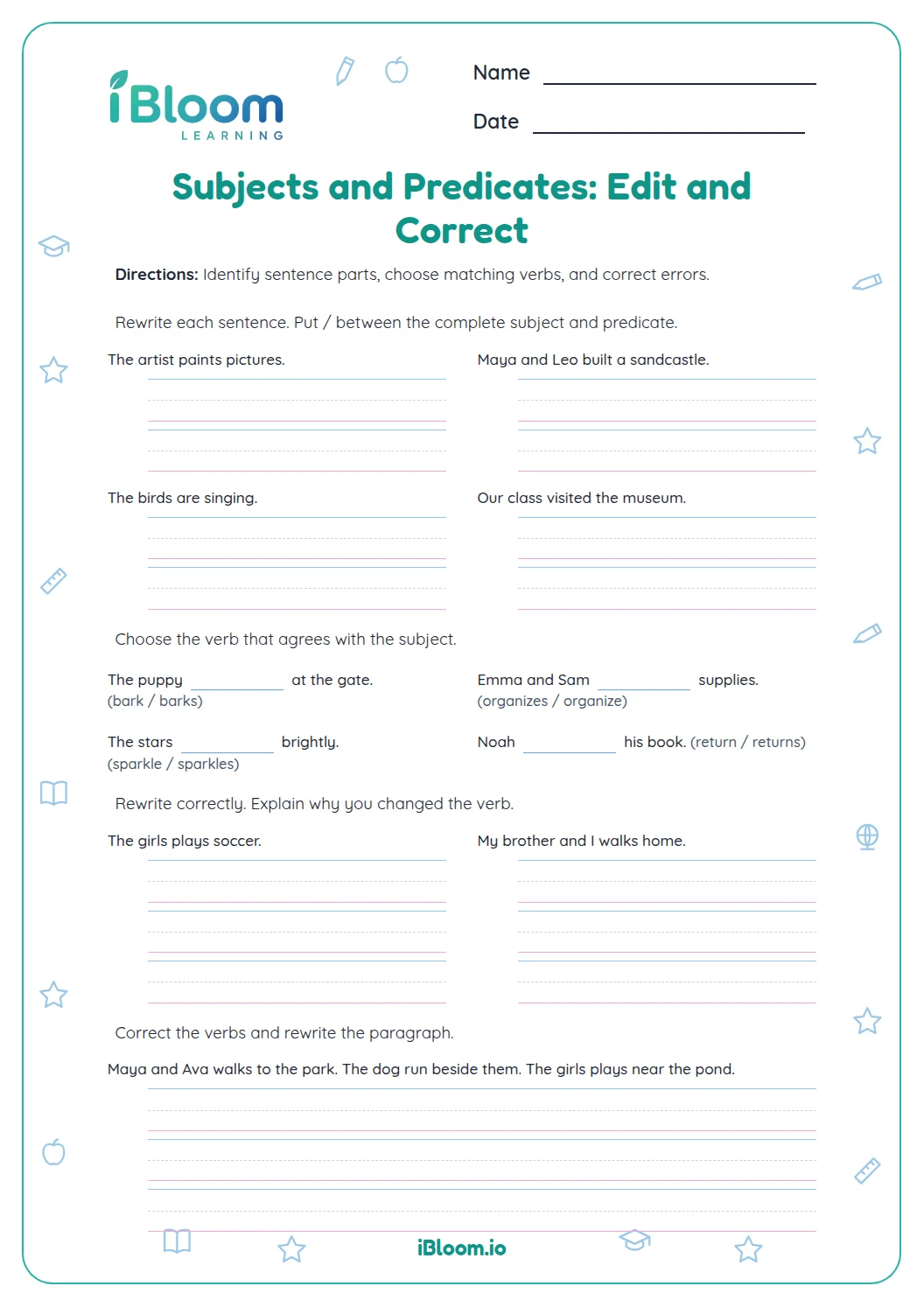
This free Grade 4 grammar worksheet asks children to match verbs to subjects when a prepositional phrase separates them. In “The box of crayons are on the shelf,” the singular subject box needs is, even though crayons is plural. Four questions ask students to identify the subject, eight ask them to choose the agreeing verb, and two ask for a corrected sentence. The page practices Common Core L.3.1f through focused editing, with an answer key for all 14 questions. Directions keep the original tense so students concentrate on agreement.
Aligned to L.3.1f
How do students find the subject?
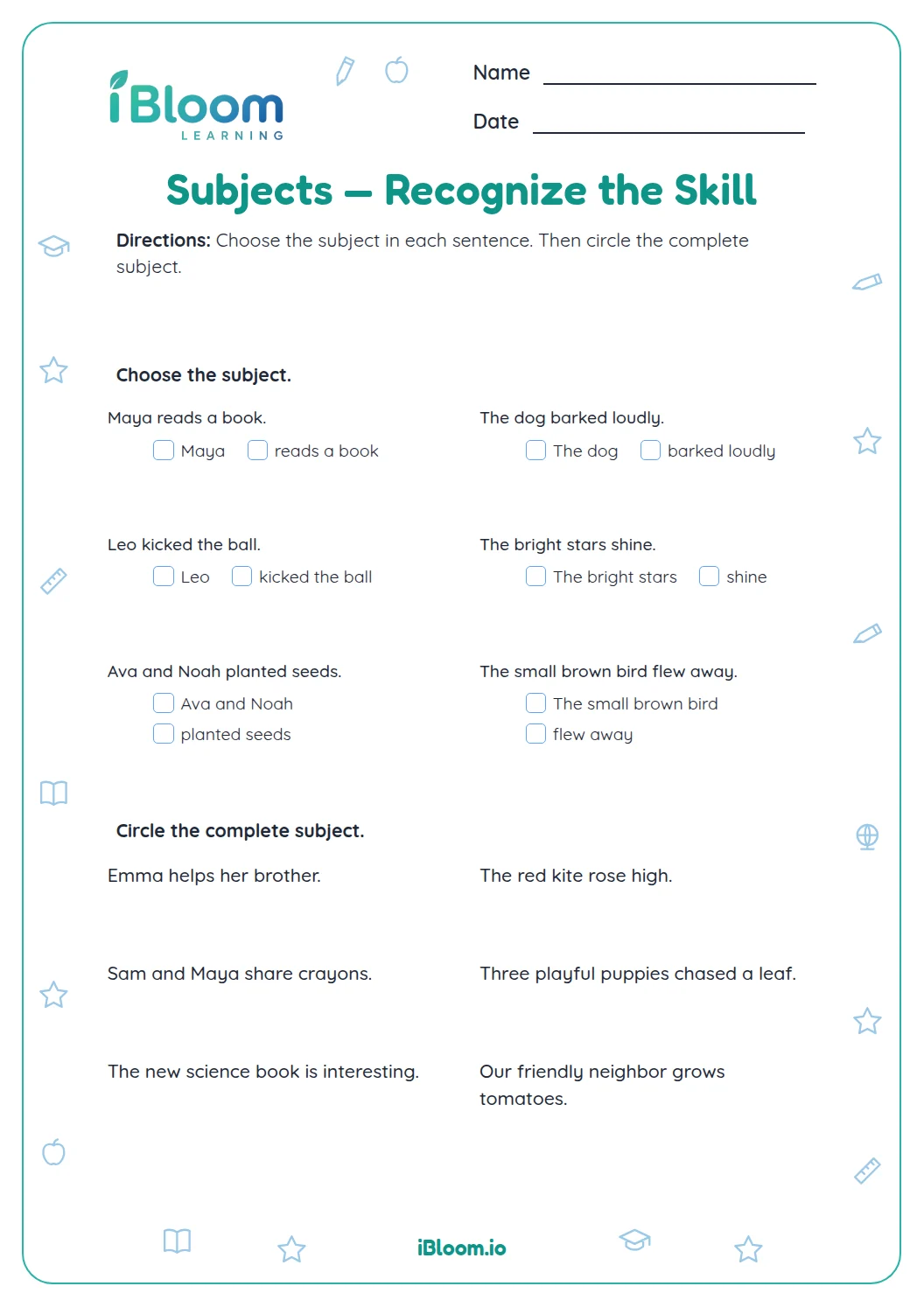
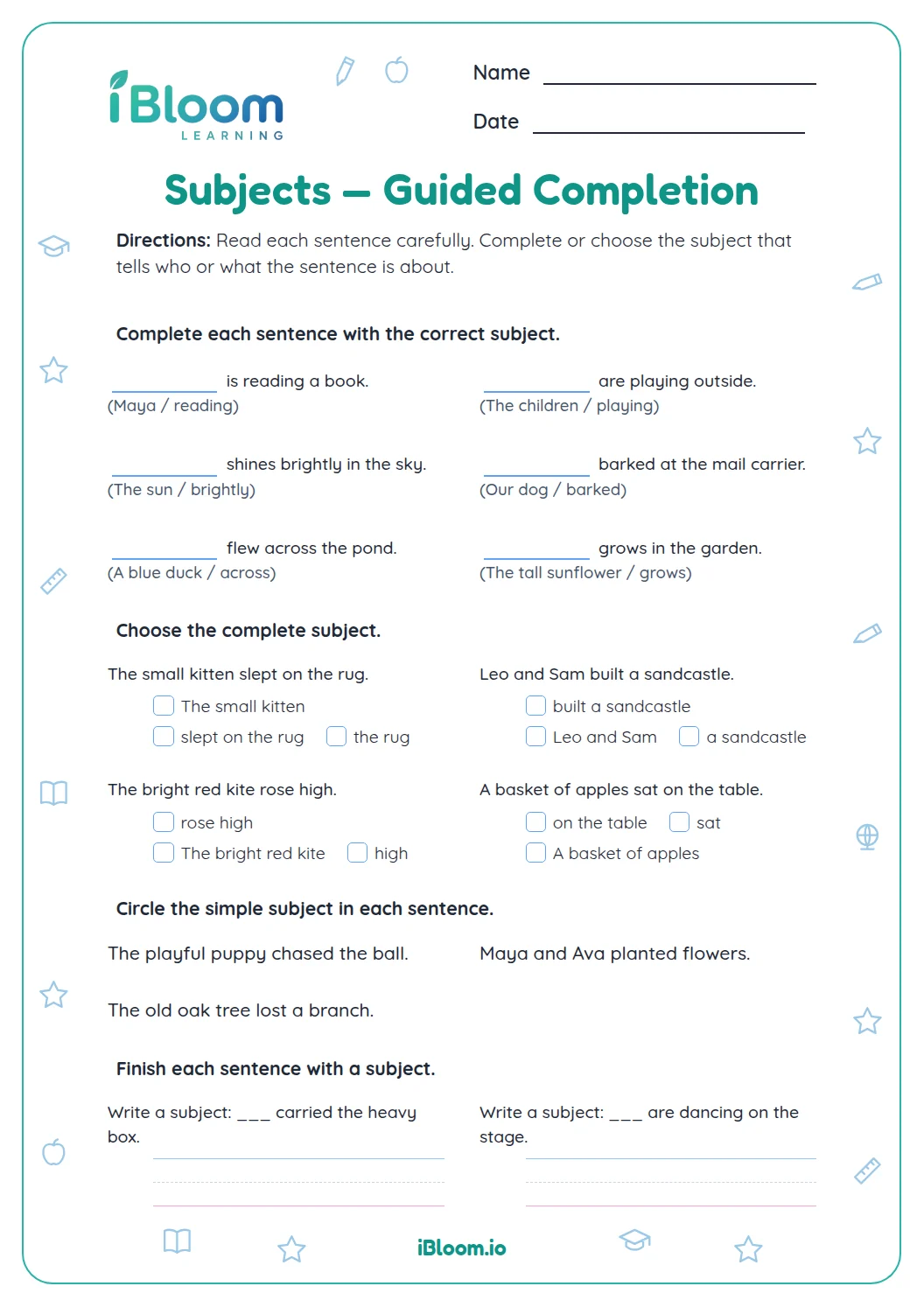
A phrase can add a noun without changing which word controls the verb. In “The box of crayons is on the shelf,” box is the subject; the word crayons is inside a phrase that describes the box. Part A asks students to choose the subject noun before they select a verb.
- 1Question 1: In “The box of crayons is on the shelf,” which noun is the subject?
- 2Choose box, the noun that controls is.
How does the subject guide the verb?
Read the subject and verb together, then set aside the describing phrase. Box is singular, so it pairs with is. The word dogs names a plural subject, so it pairs with bark. Part B practices both patterns, including cases where the nearby noun has the opposite number.
- 1The girl with two puppies ___ to the park.
- 2Girl is singular, so choose walks.
What should change when editing?
Part C asks students to rewrite each complete sentence with a verb that agrees with its true subject. Keep the phrase, subject, and original time the same; change only the verb form.
- 1The sound of the drums fill the room.
- 2Sound is singular, so write: The sound of the drums fills the room.
How to use this worksheet
- 1In Part A, choose the main subject noun in each sentence.
- 2Temporarily ignore the prepositional phrase between subject and verb.
- 3In Part B, choose the verb that agrees with the subject noun.
- 4In Part C, rewrite the full sentence and correct only the verb.
- 5Reread each sentence to check its meaning and tense.
Mistakes to discuss and fix
The mistake
Choosing are because crayons is plural.
The fix
The subject is box, so choose is.
The mistake
Choosing barks because fence is singular.
The fix
The subject is dogs, so choose bark.
The mistake
Changing the subject instead of the verb.
The fix
Keep the original nouns and phrase; correct only the verb.
Common Core alignment
Match verbs to their subjects when a phrase separates the subject and verb.
On this sheet: Grade 4 editing practice applies subject-verb agreement across intervening prepositional phrases.
Show the official wordingHide the official wording
Ensure subject-verb and pronoun-antecedent agreement.*
What to practice next
Make more practice
Further reading
Questions parents and teachers ask
What does Part A ask children to choose?
Part A asks children to choose the true subject, the noun that controls the verb. In question 1, box is the subject in “The box of crayons is on the shelf.” The phrase of crayons describes the box but does not become the subject.
Why can the noun nearest the verb be misleading?
A prepositional phrase can place another noun between the subject and verb. In “The dogs near the fence bark,” fence is singular, but it is only part of the phrase. Dogs remains the subject, so the plural verb bark is correct.
What happens in Part B?
Part B presents eight sentences with a verb choice. Students identify the subject, ignore the intervening phrase, and select the matching verb. The choices include singular and plural subjects, so children practice both is/are patterns and present-tense verb endings in context.
Do students rewrite the whole sentence?
Yes, Part C asks for two complete sentence rewrites. Children keep the subject and phrase, then change the verb form. For example, “The sound of the drums fill the room” becomes “The sound of the drums fills the room.” The key accepts equivalent correct wording.
Which standard does this worksheet practice?
The worksheet practices Common Core L.3.1f, subject-verb agreement. Its questions ask children to identify the subject across a phrase, choose an agreeing verb, and edit sentences while preserving their meaning. The code names this language skill in grammar and usage.