







About this worksheet
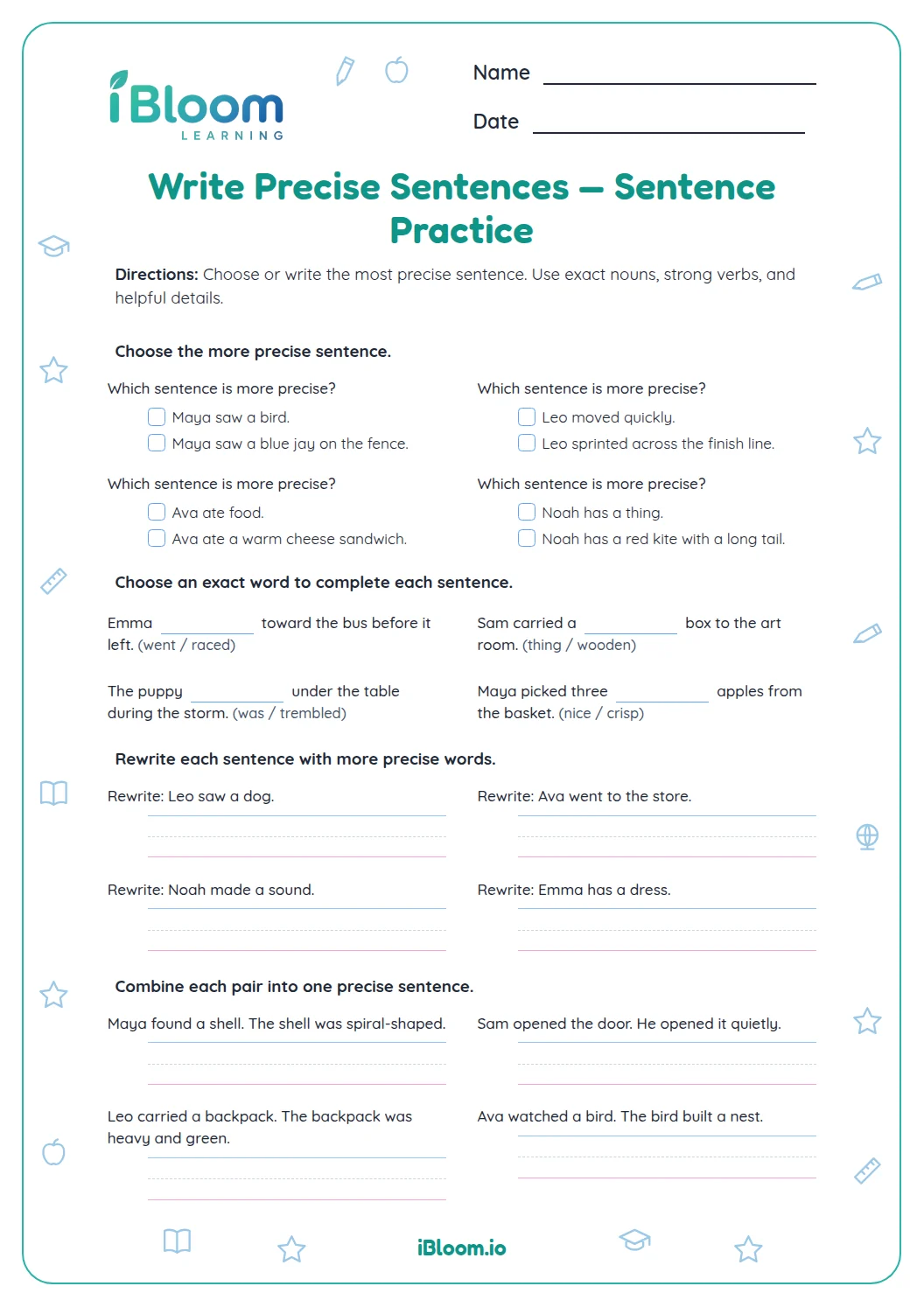
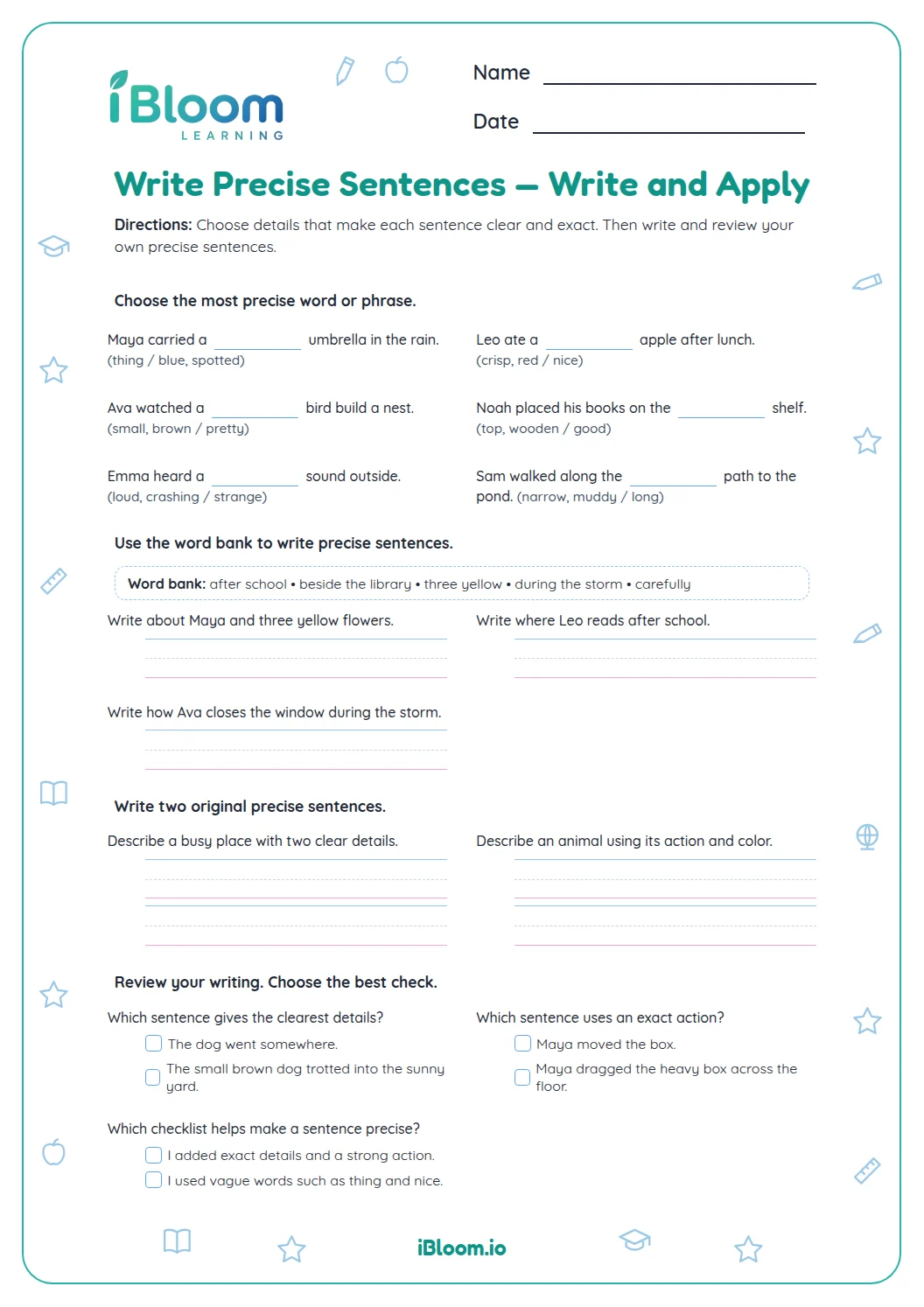
This free Grade 4 worksheet helps students recognize precise sentences by comparing specific details with vague wording. Across 14 multiple-choice questions, students identify exact actions, named objects, clear sounds, places, times, and descriptions. The practice aligns with CCSS L.4.3.a, choosing words and phrases to convey ideas precisely. A separate answer key identifies the clearest sentence for each question.
Aligned to L.4.3.a
How can you recognize a precise sentence?
Part A compares a general sentence with one that names specific details. A useful choice tells the reader more about what happened without adding unrelated information.
- 1The puppy went.
- 2The puppy sprinted to its red bowl.
- 3The second sentence names an exact action and destination.
Which details make an idea clearer?
Part B asks students to notice exact nouns, actions, places, and times. “The soccer game ended at 4:15 p.m.” gives a time the reader can identify; “The game ended later” does not.
How can you check that a sentence is precise?
Ask what the reader learns from the sentence. Then compare it with the general choice: does it name the action, object, setting, or time more exactly and still fit the situation?
How to use this worksheet
- 1Read both sentence choices all the way through.
- 2Notice which details are general and which name something specific.
- 3Check that the extra detail fits the sentence.
- 4Choose the sentence that tells the reader more exactly what happened.
- 5Reread the selected sentence and compare it with the other choice.
Common mistakes and quick fixes
The mistake
Choosing the most dramatic word even when it does not fit.
The fix
Check that the word matches the action or description in the sentence.
The mistake
Replacing a vague word with another general word.
The fix
Choose a noun or verb that names the object or action more exactly.
The mistake
Focusing on one word and ignoring the full sentence.
The fix
Reread the completed sentence; the precise choice must make sense in context.
Common Core alignment
The choices practice using specific words and phrases to convey meaning clearly.
Choose words and phrases that make a sentence’s meaning exact.
On this sheet: Each question asks students to choose a sentence whose specific words and details convey an idea more precisely.
Show the official wordingHide the official wording
Choose words and phrases to convey ideas precisely.*
What to practice next
Make more practice
Further reading
Questions parents and teachers ask
What is a precise word?
A precise word tells the reader something exact. “Sprinted” describes a quick run, while “went” could mean many kinds of movement. Questions on this page ask students to choose words that make an action, object, or description clearer. The sentence context helps show why the choice is clearer.
How many questions are on the worksheet?
There are 14 multiple-choice questions across two worksheet pages, followed by a separate answer key. Students compare two or three sentences and choose the one that gives more exact information about an action, object, place, sound, or time.
What is an example of a precise sentence?
“The retriever barked twice” is more precise than “The dog made a sound.” It names the animal, the action, and how many times it happened. The worksheet uses similar comparisons to help students notice exact information in a sentence.
Should students always choose the most descriptive word?
They should choose the clearest word that fits the sentence. A vivid word can be inaccurate in context, so students need to reread the whole sentence and check both meaning and tone. A word is useful when it is vivid and accurate at once.
How can a parent help without giving the answer?
Ask what the reader learns from each choice. For a verb, ask how the movement differs; for a noun, ask which object is named. Then have the student reread the sentence with each choice and decide which one communicates most exactly.
What can students practice next?
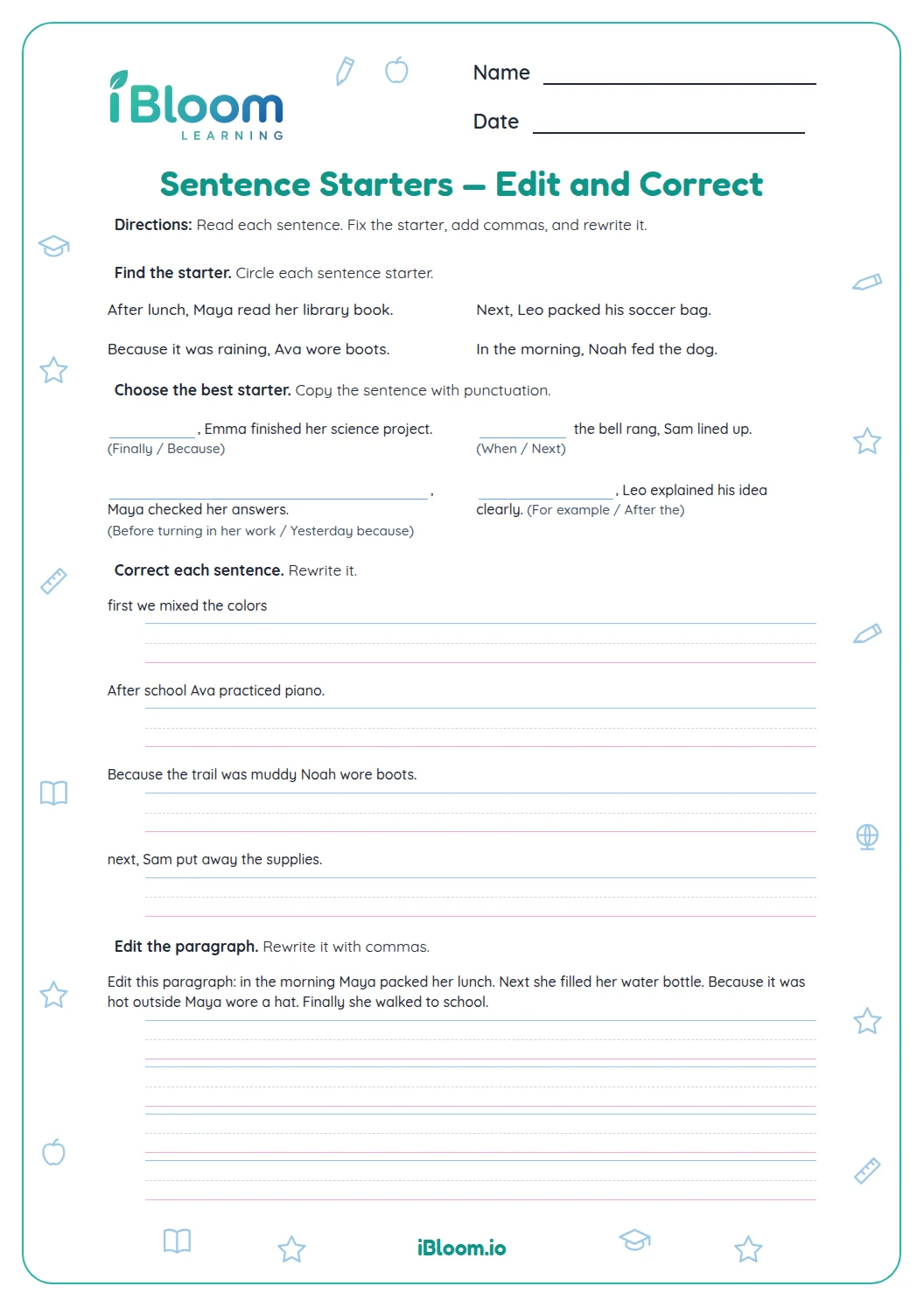
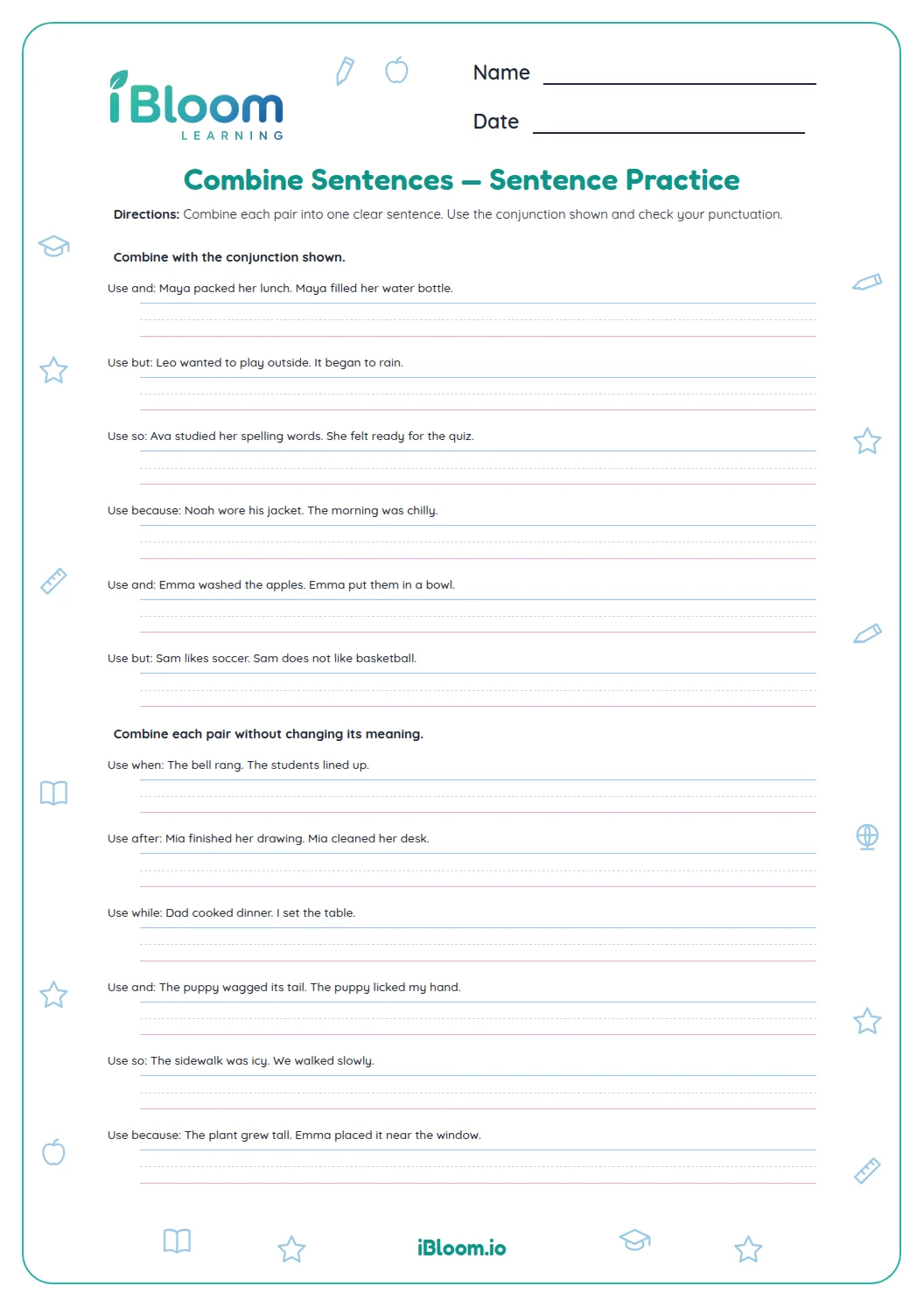
The linked Adding Details page helps students expand a sentence with useful information. Sentence starters and combining-sentences pages let students apply clear word choices while building and connecting complete ideas. The next practice pages let students use the skill in writing.