





About this worksheet
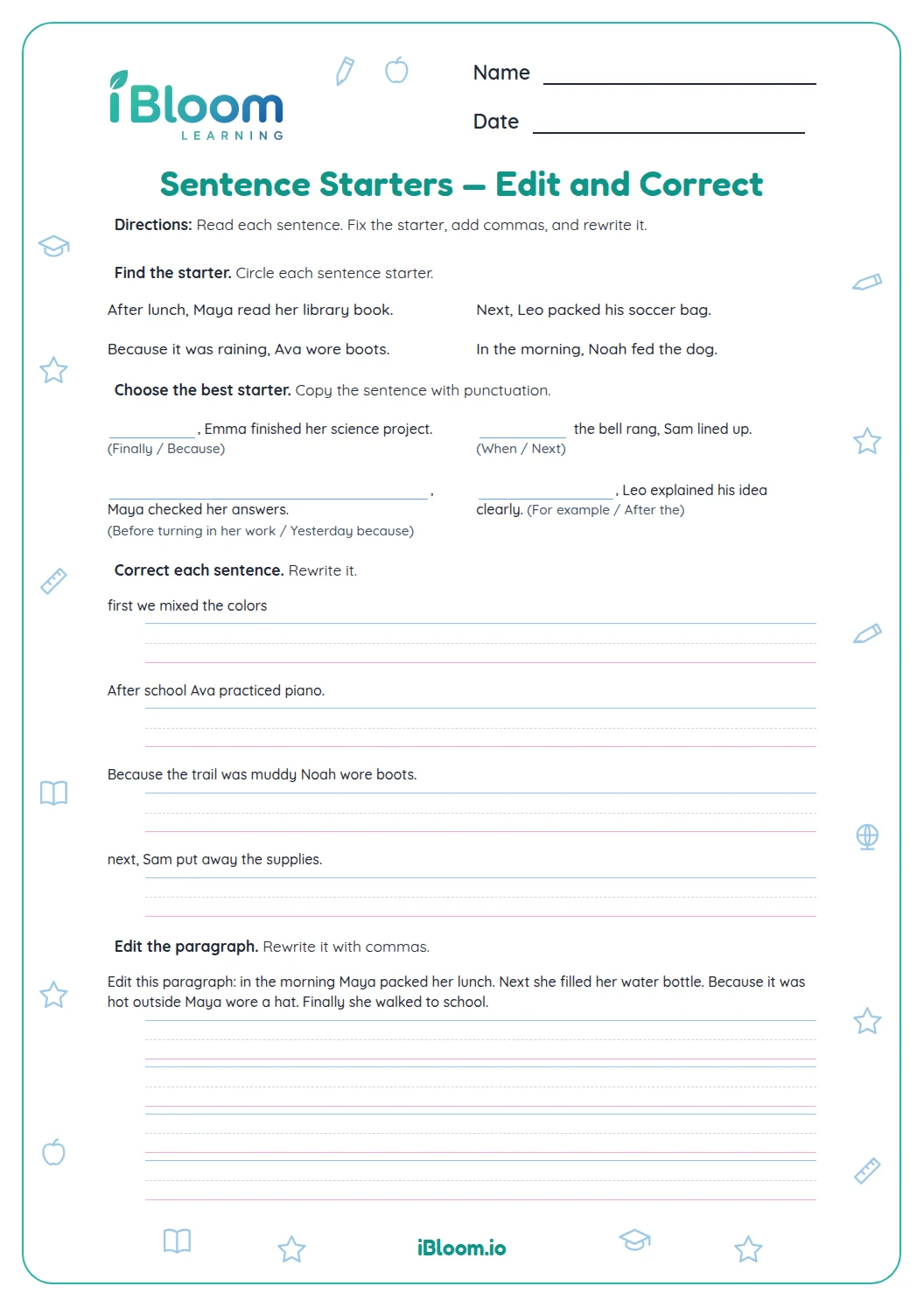
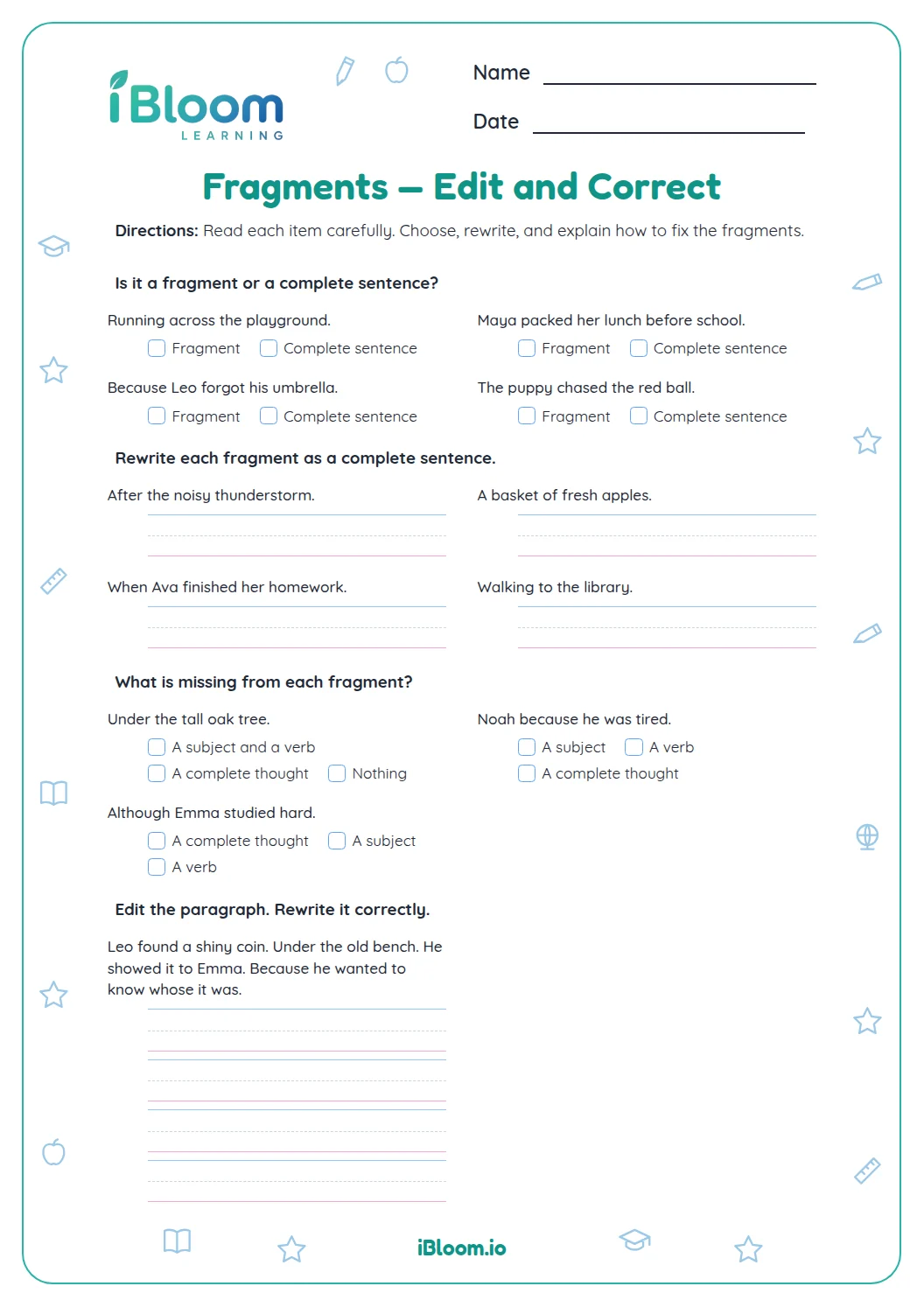
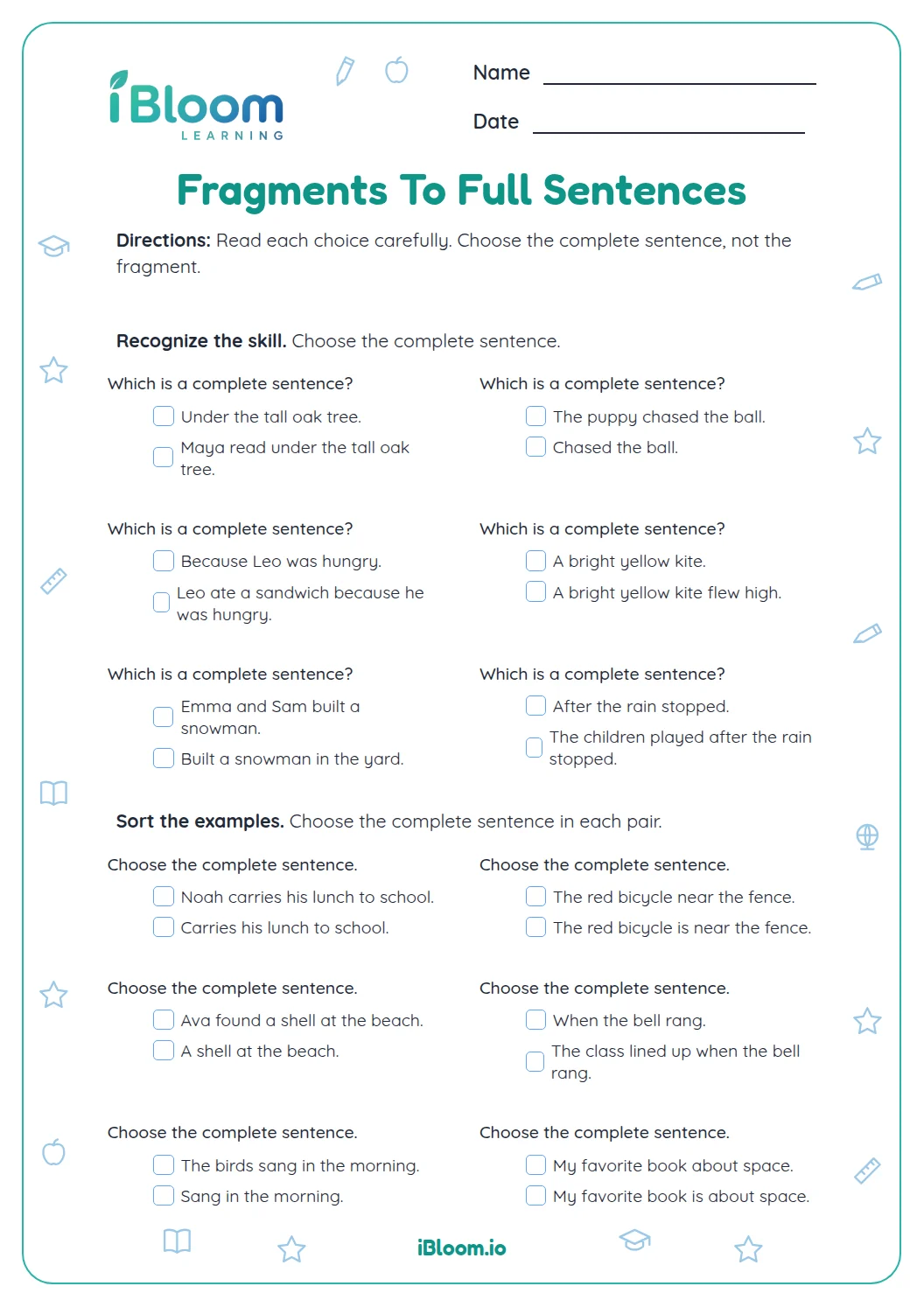
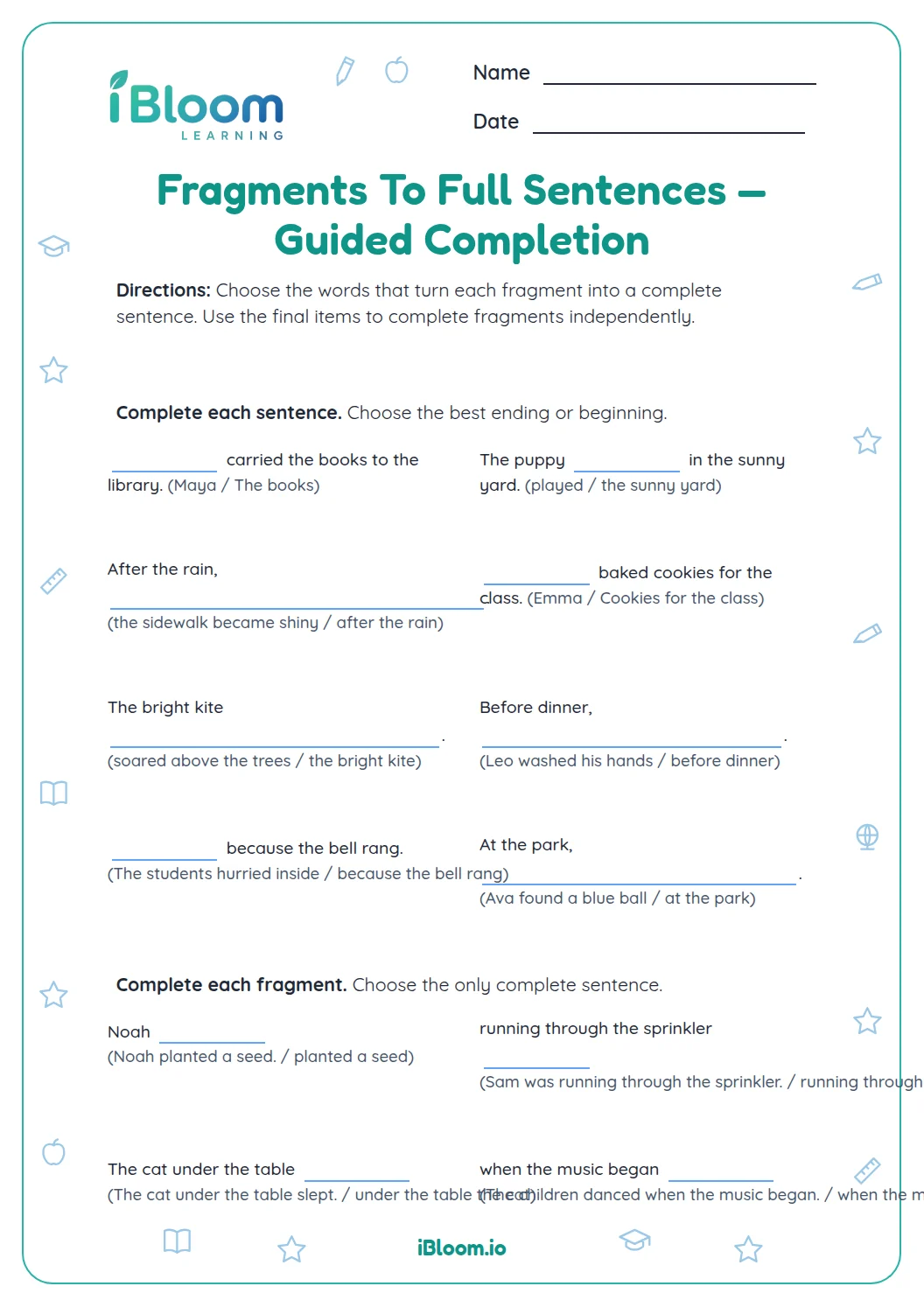
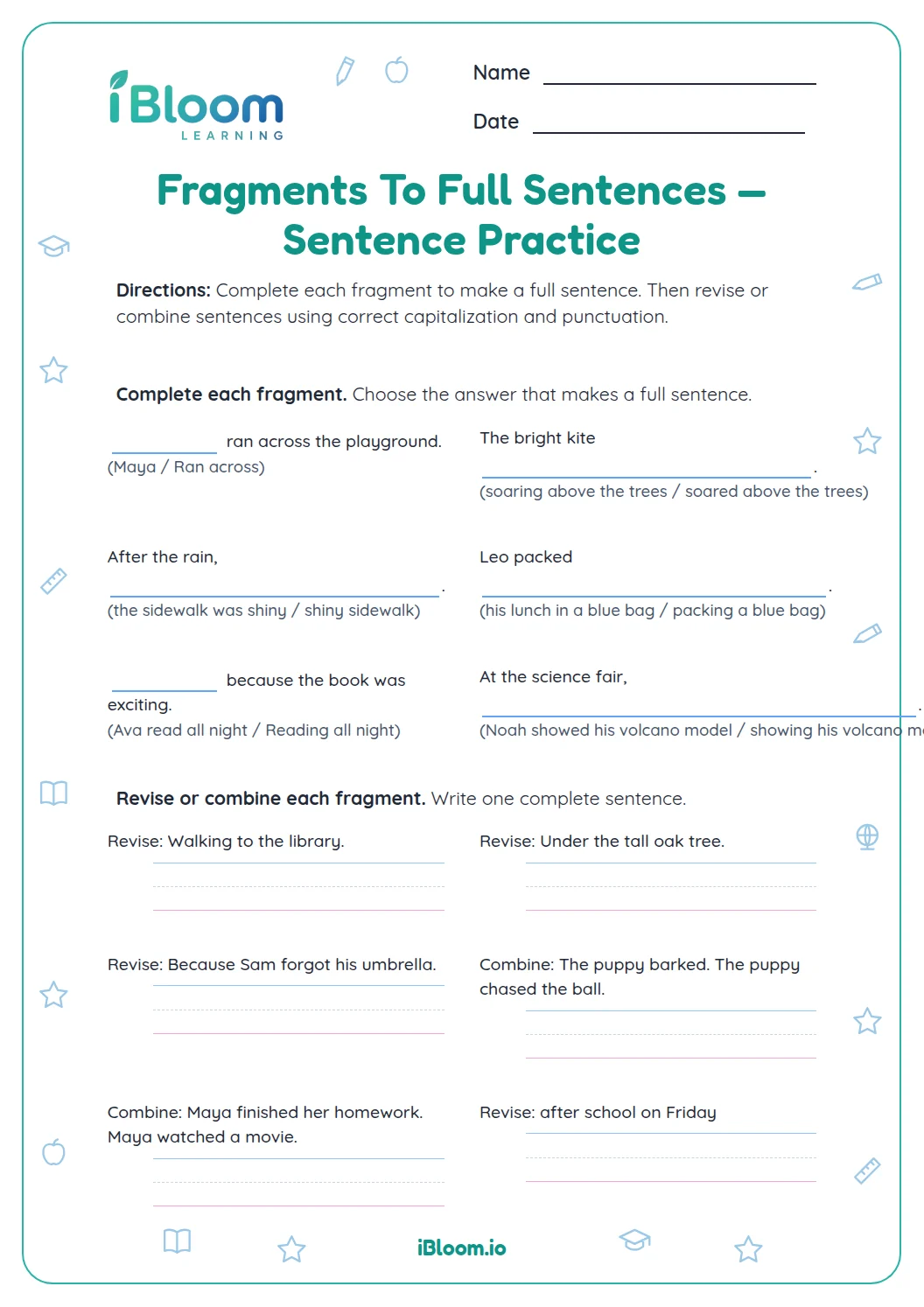
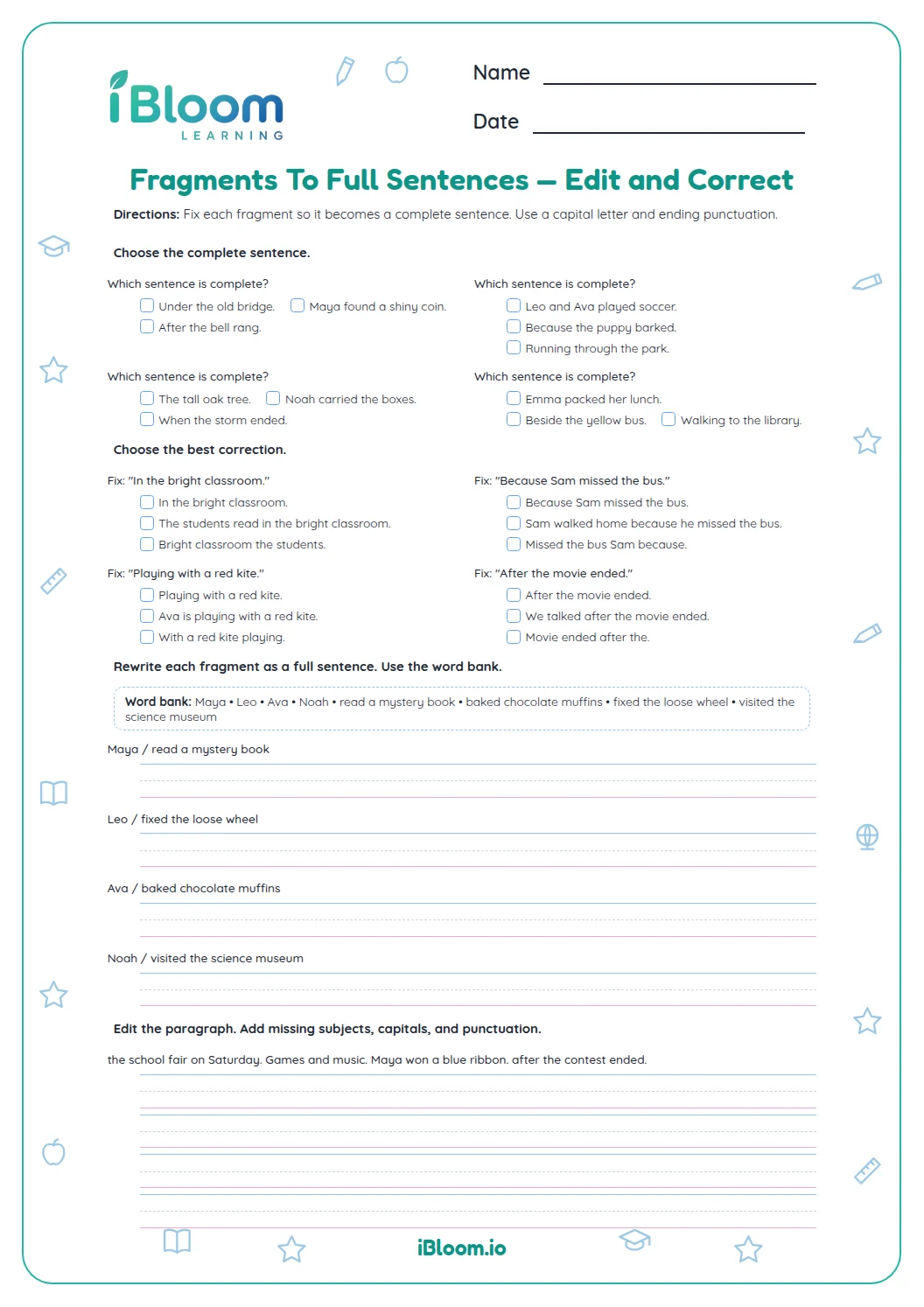
This free Grade 4 worksheet helps students recognize sentence starters that tell when, where, or how. Sixteen questions move from identifying a starter’s job to distinguishing a starter fragment from a complete sentence. A separate answer key includes choices and a sample response. The complete-sentence questions practice CCSS L.4.1.f.
Aligned to L.4.1.f
What does a sentence starter tell?
A starter can orient a reader by telling when, where, or how an action happens. In q1, “After lunch” tells when the reading happened. It is a phrase that begins the sentence, not the whole sentence by itself.
- 1After lunch, we read.
- 2“After lunch” tells when.
- 3“We read” completes the thought.
How can you tell whether the sentence is complete?
Look for a complete thought, including who or what the sentence is about and what happens. “Before the game” is only a starter. “Before the game, we warmed up” adds a complete thought.
How do you choose between when, where, and how?
Ask a direct question about the action: When did it happen? Where did it happen? How was it done? Those questions help classify a starter without confusing its job with the full sentence.
How to recognize a sentence starter
- 1Read the whole sentence, not only its first phrase.
- 2Ask whether the starter tells when, where, or how.
- 3Find the subject and action that complete the thought.
- 4If the prompt gives only a phrase, check whether it is a fragment.
- 5Reread the sentence with the starter attached.
Sentence-starter slips to watch for
The mistake
Calling a phrase such as “Before the game” a complete sentence.
The fix
Look for the subject and what happens; the phrase needs a complete thought after it.
The mistake
Mixing up when and where.
The fix
Ask “At what time?” for when and “At what place?” for where.
The mistake
Thinking every starter tells how.
The fix
Try the questions when, where, and how against the action; use the one the phrase answers.
Common Core alignment
Recognize when a starter is only a fragment and when it joins a complete sentence.
On this sheet: Part B distinguishes complete sentences from standalone starter fragments.
Show the official wordingHide the official wording
Produce complete sentences, recognizing and correcting inappropriate fragments and run-ons.
What to practice next
Make more practice
Further reading
Questions parents and teachers ask
What is a sentence starter?
A sentence starter is a phrase or opening that gives information before the main thought. “After lunch” tells when, while “Beside the old oak” tells where. The sentence still needs a subject and a complete thought. Invite the student to reread the example and explain how its clue supports the answer.
How many questions are on this worksheet?
There are 16 questions in three parts. Students identify starter meaning, recognize complete sentences, and apply both ideas in a final set. The answer key lists each correct choice. Invite the student to reread the example and explain how its clue supports the answer.
Does every starter make a complete sentence?
No. “Before the game” is a starter phrase, but it does not tell what happened. “Before the game, we warmed up” adds a complete thought. Students compare these forms in Part B. Invite the student to reread the example and explain how its clue supports the answer.
What answer choices do students use?
Several questions ask whether a starter tells when, where, or how. Others present sentence options so students can identify the complete sentence or starter phrase. Short choices keep attention on the sentence skill. Invite the student to reread the example and explain how its clue supports the answer.
Is an answer key included?
Yes. The separate key gives the correct choice for each item. In the final question, students choose an example of a starter that tells where, such as “In its bed.” Invite the student to reread the example and explain how its clue supports the answer.