





About this worksheet
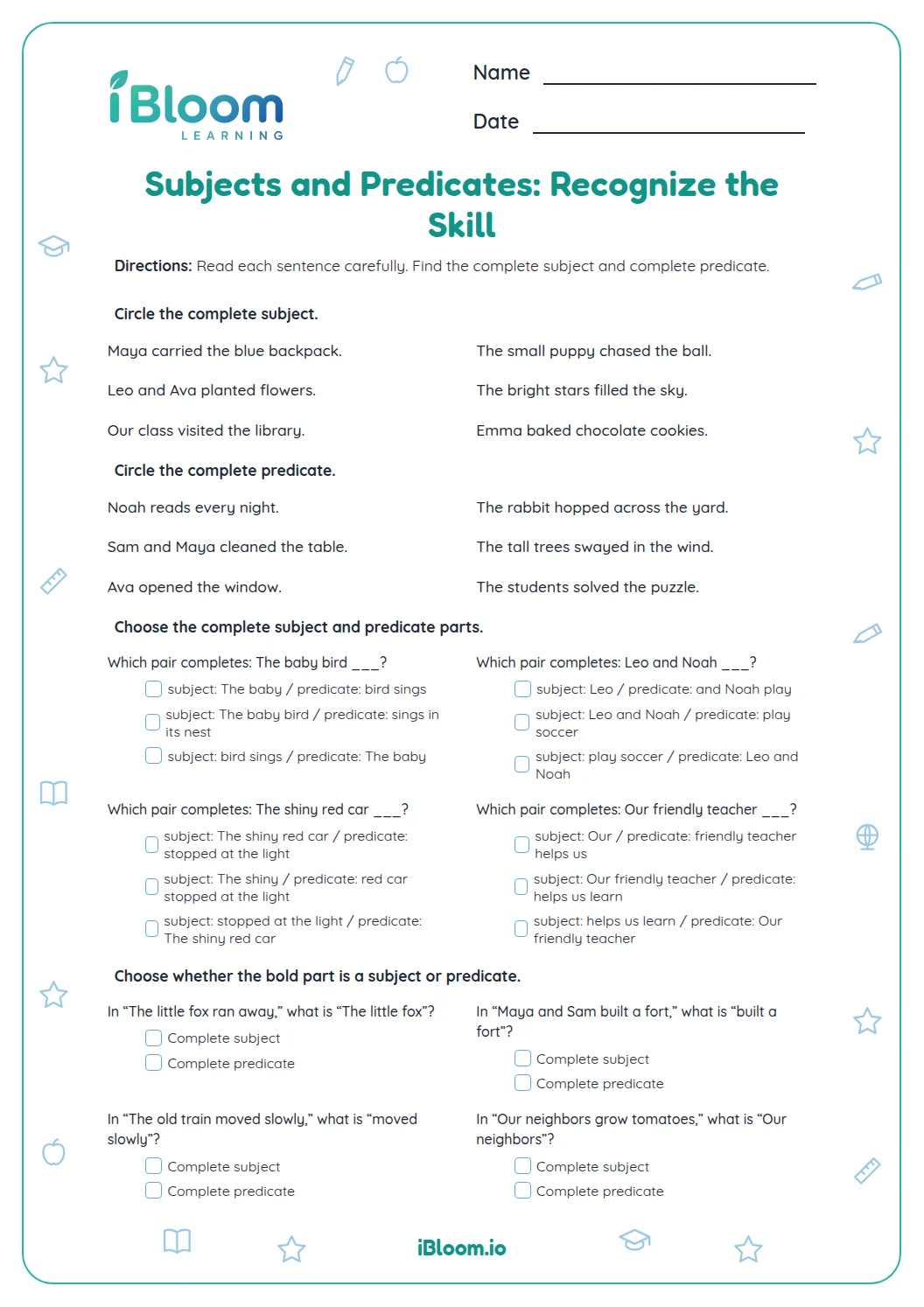
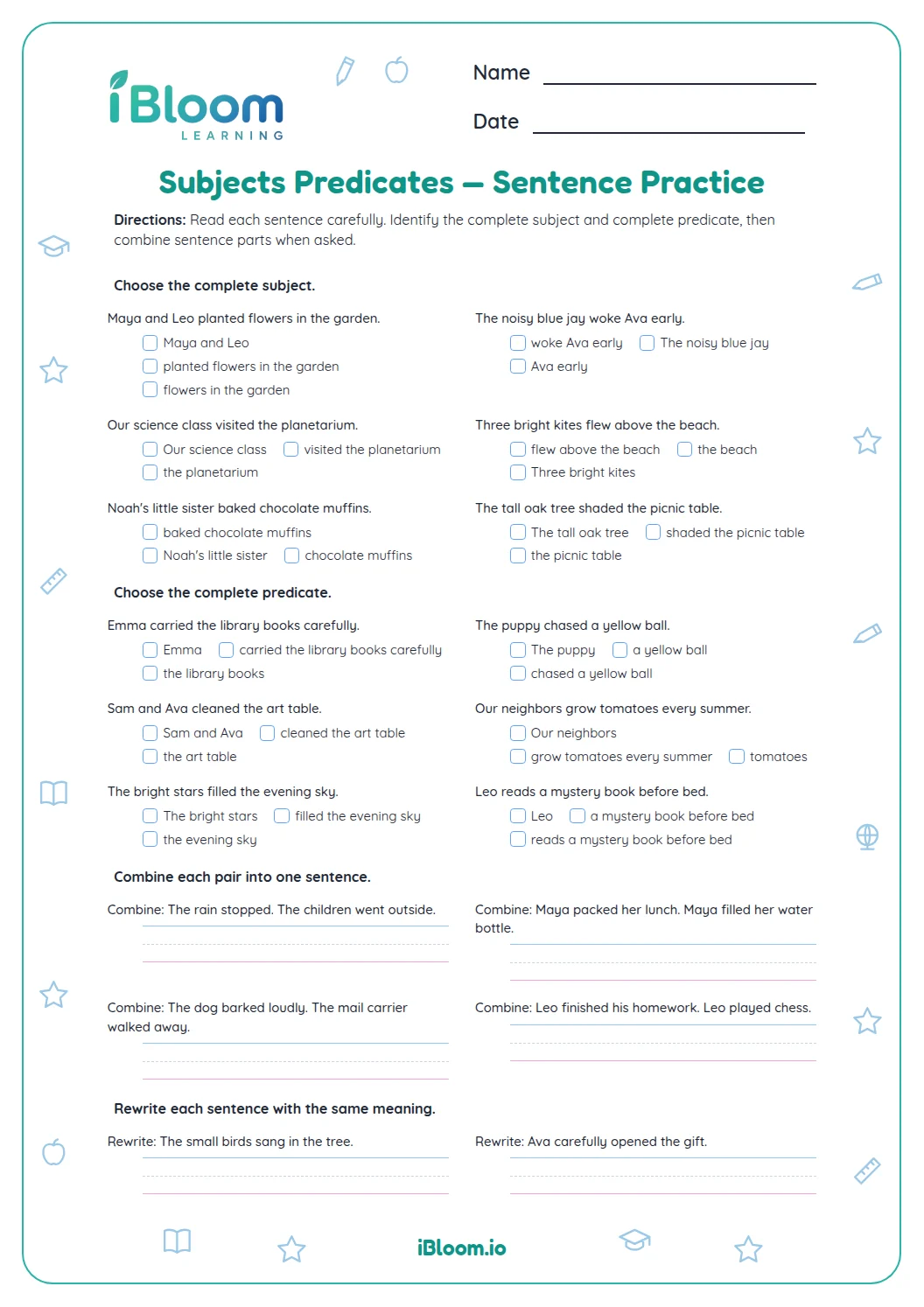
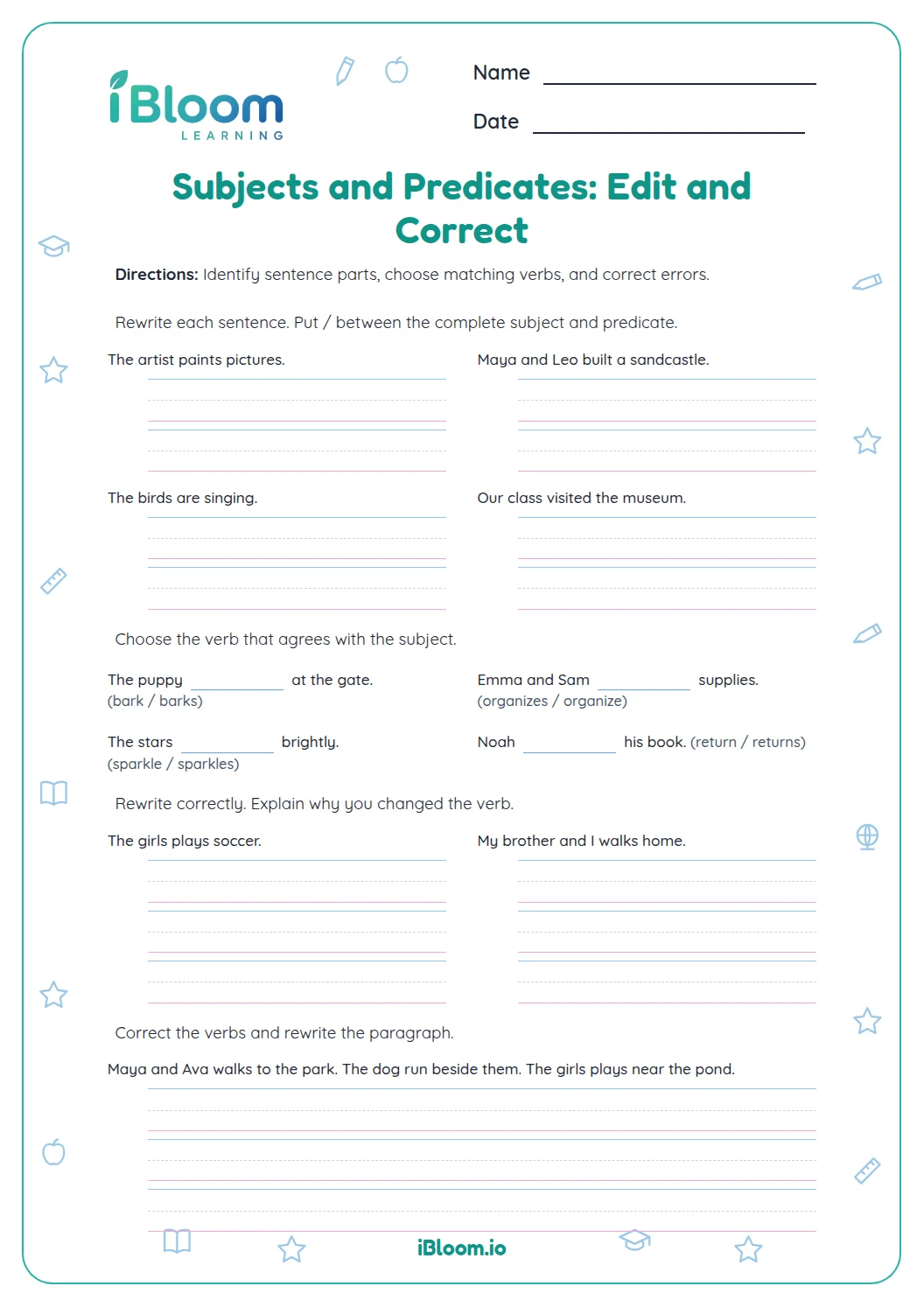
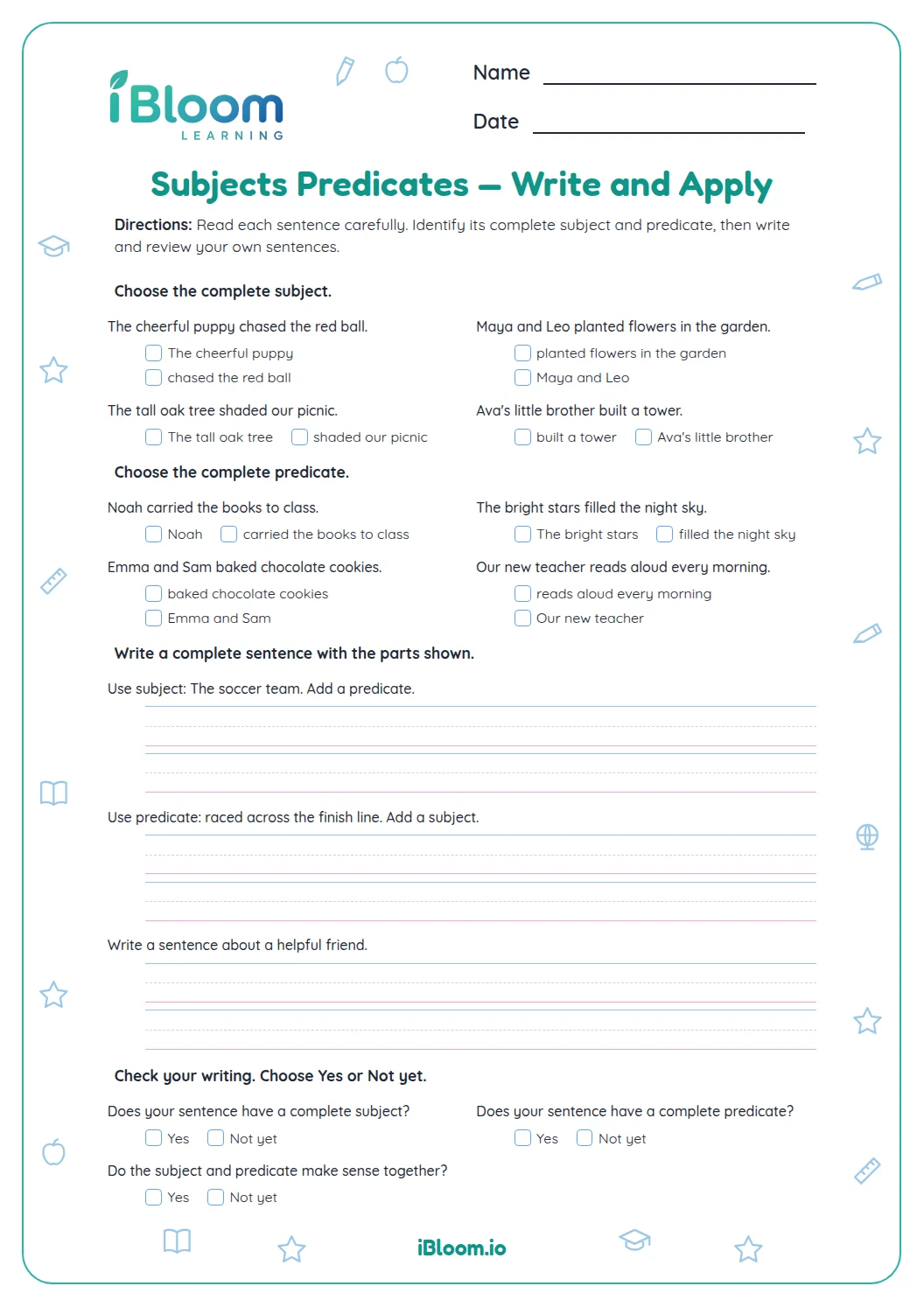
This Grade 4 grammar worksheet reviews complete and simple subjects and predicates, compound parts, and sentence fragments. Students identify sentence parts, complete a subject with a predicate, and recognize what a fragment is missing. The 15 questions are arranged in three parts, with a separate answer key. The page practices producing complete sentences, as described by Common Core standard L.4.1.f.
Aligned to L.4.1.f
What does this worksheet practice?
The first part distinguishes complete subjects from simple subjects; the second does the same for predicates. For example, in “The old red barn stood beside the road,” the complete subject is “The old red barn.” Part C applies the ideas to sentence completion, compound parts, and fragments.
- Part A: identify complete and simple subjects
- Part B: identify complete and simple predicates
- Part C: complete and analyze sentences
How should students approach each question?
To find the complete subject, include the words that tell who or what the sentence is about. To find the simple subject, name its main noun. The complete predicate tells what the subject does or is; the simple predicate is its main verb.
How can families use the page?
Complete one part at a time and pause to review any answer that needs another look.
How to use this worksheet
- 1Read the whole sentence before choosing.
- 2For a complete subject or predicate, include all its words.
- 3For a simple subject or predicate, find the main noun or verb.
- 4Check whether a sentence has both a subject and a predicate.
- 5Use the answer key to review the choices.
Common mistakes and quick fixes
The mistake
Choosing the complete subject when asked for the simple subject.
The fix
The simple subject is the main noun; the complete subject includes its describing words.
The mistake
Including the subject in the complete predicate.
The fix
Start the complete predicate after the subject.
The mistake
Calling a phrase a full sentence when it has no subject or predicate.
The fix
Check that the sentence names who or what and tells something about it.
Common Core alignment
These standards describe the identify and write complete subjects and predicates practiced on the page.
Produce complete sentences and recognize fragments, as students do in Part C.
On this sheet: The questions directly practice identify and write complete subjects and predicates.
Show the official wordingHide the official wording
Produce complete sentences, recognizing and correcting inappropriate fragments and run-ons.
What to practice next
Make more practice
Further reading
Questions parents and teachers ask
What skill does this page practice?
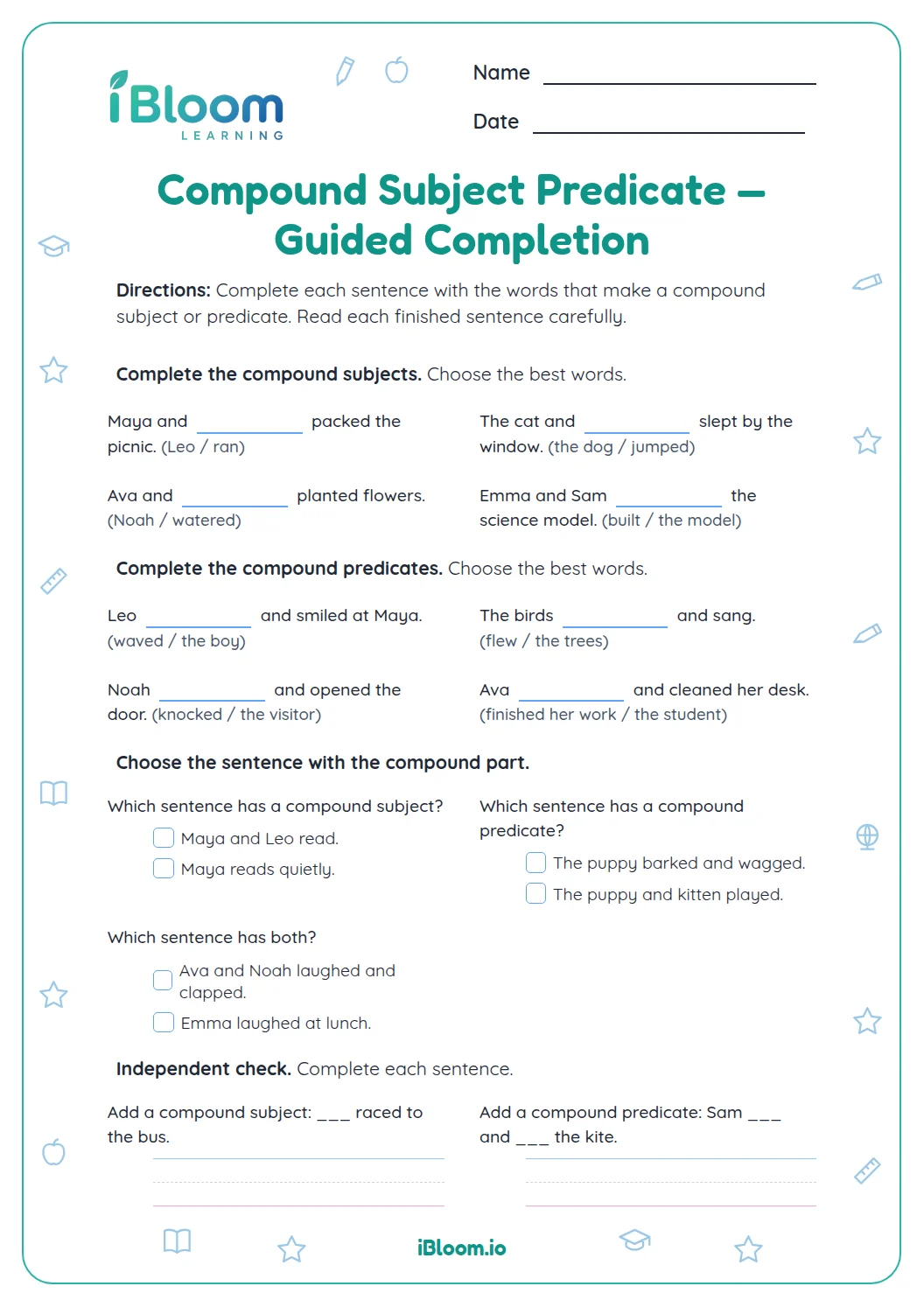
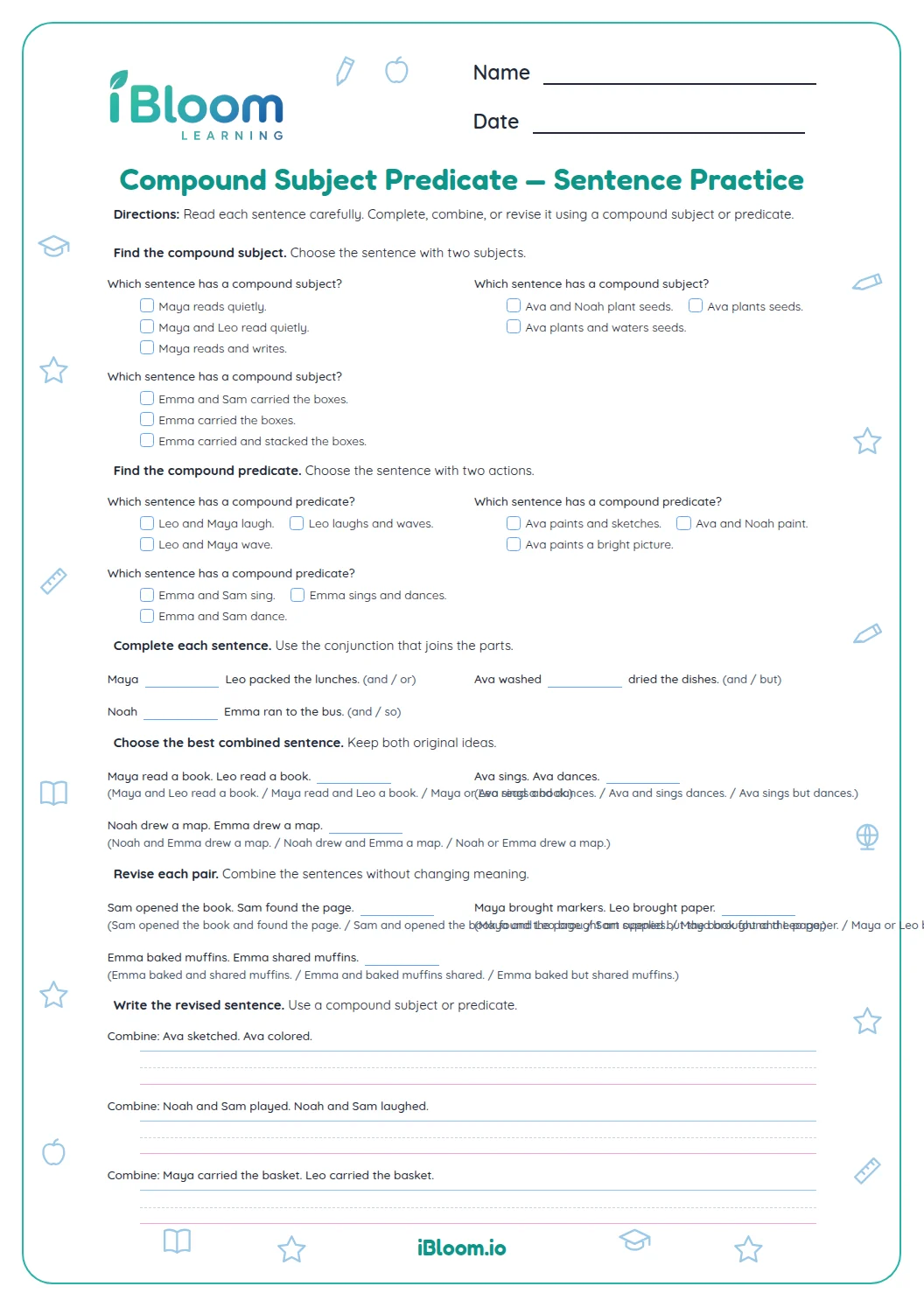
This worksheet reviews complete and simple subjects and predicates. Students also complete a sentence with a predicate, identify compound subjects and predicates, and decide whether a fragment is missing a subject or predicate. The work ends by asking students to produce a complete sentence.
How many questions are included?
There are 15 questions in three parts. Students identify subjects, identify predicates, then apply the ideas to sentence completion, compound subjects and predicates, and fragments. The separate answer key gives the correct response for each item and a sample for the written response.
Is an answer key included?
Yes. A separate answer key lists a response for every question on the worksheet. Students can finish a part before checking it, or an adult can use the key to review the completed page together and discuss any tricky items.
How long should students spend on it?
About 20 minutes is a useful estimate for 15 questions. Students may take extra time to separate a complete subject or predicate from its simple form, then check the answer key after finishing each part. Written answers can vary when they are complete and clear.
Can a student complete it independently?
The directions are written so students can follow each part one step at a time. A family member or teacher may introduce the skill first, then let the student work. The answer key helps an adult review responses afterward.