


About this worksheet
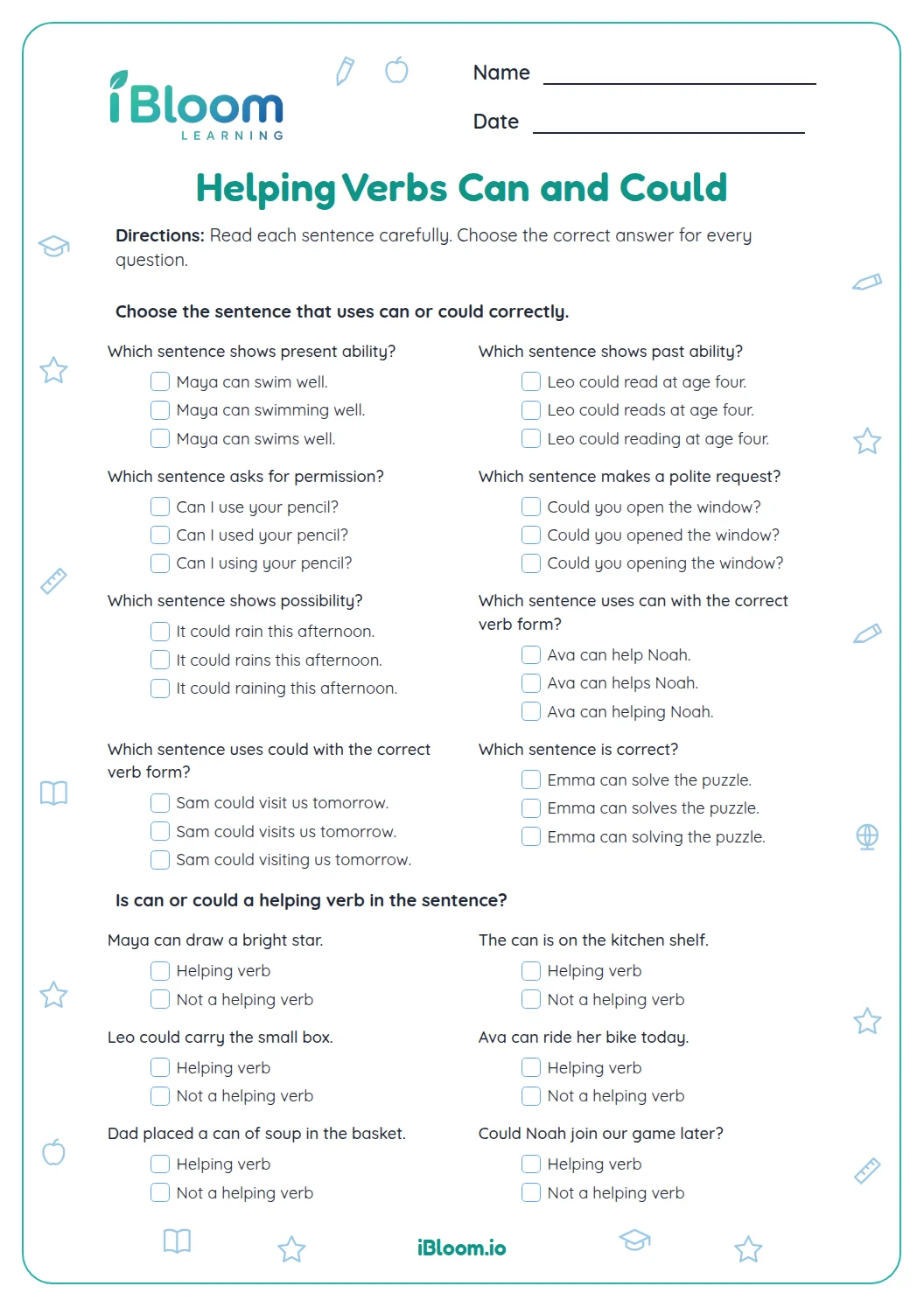
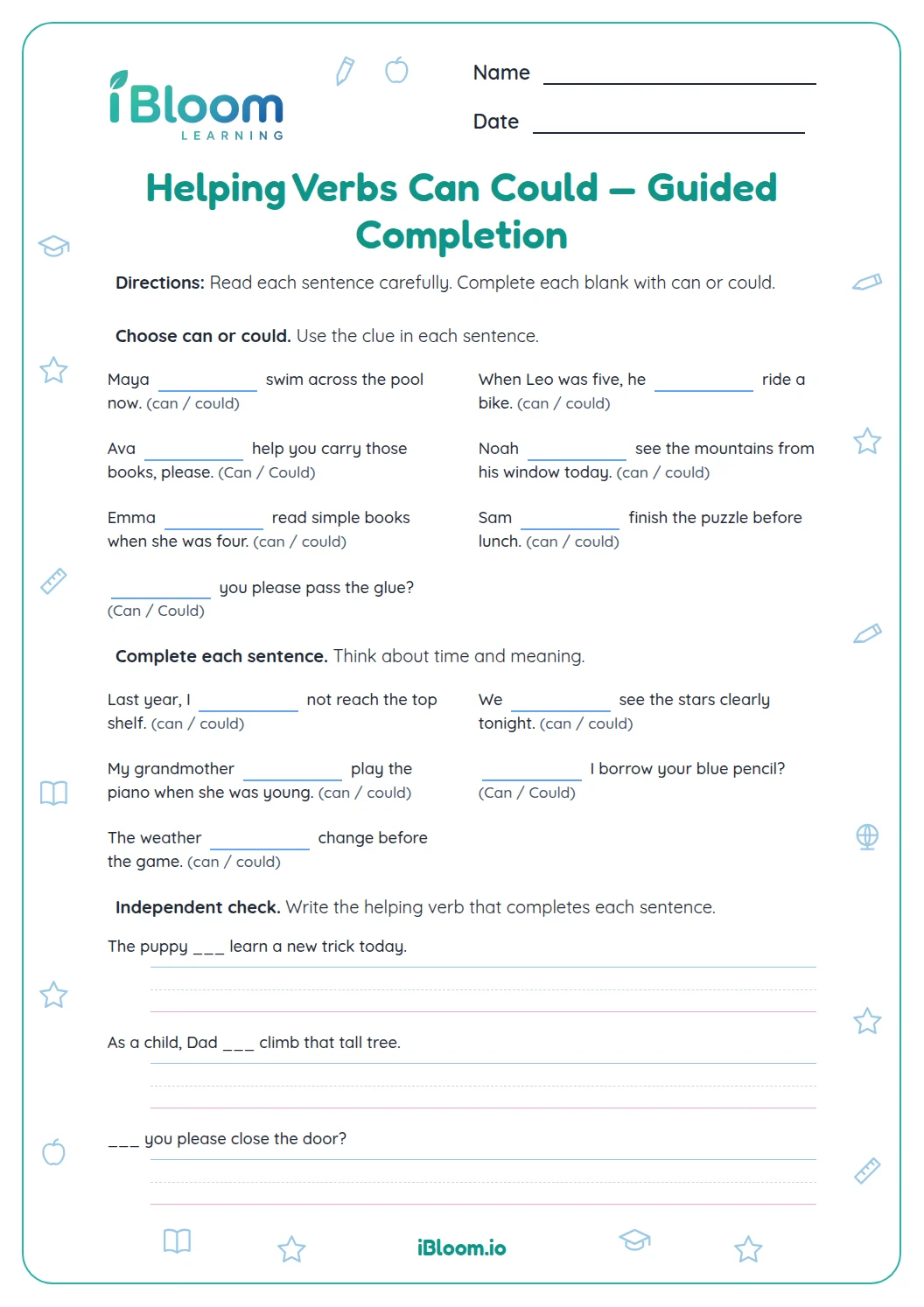
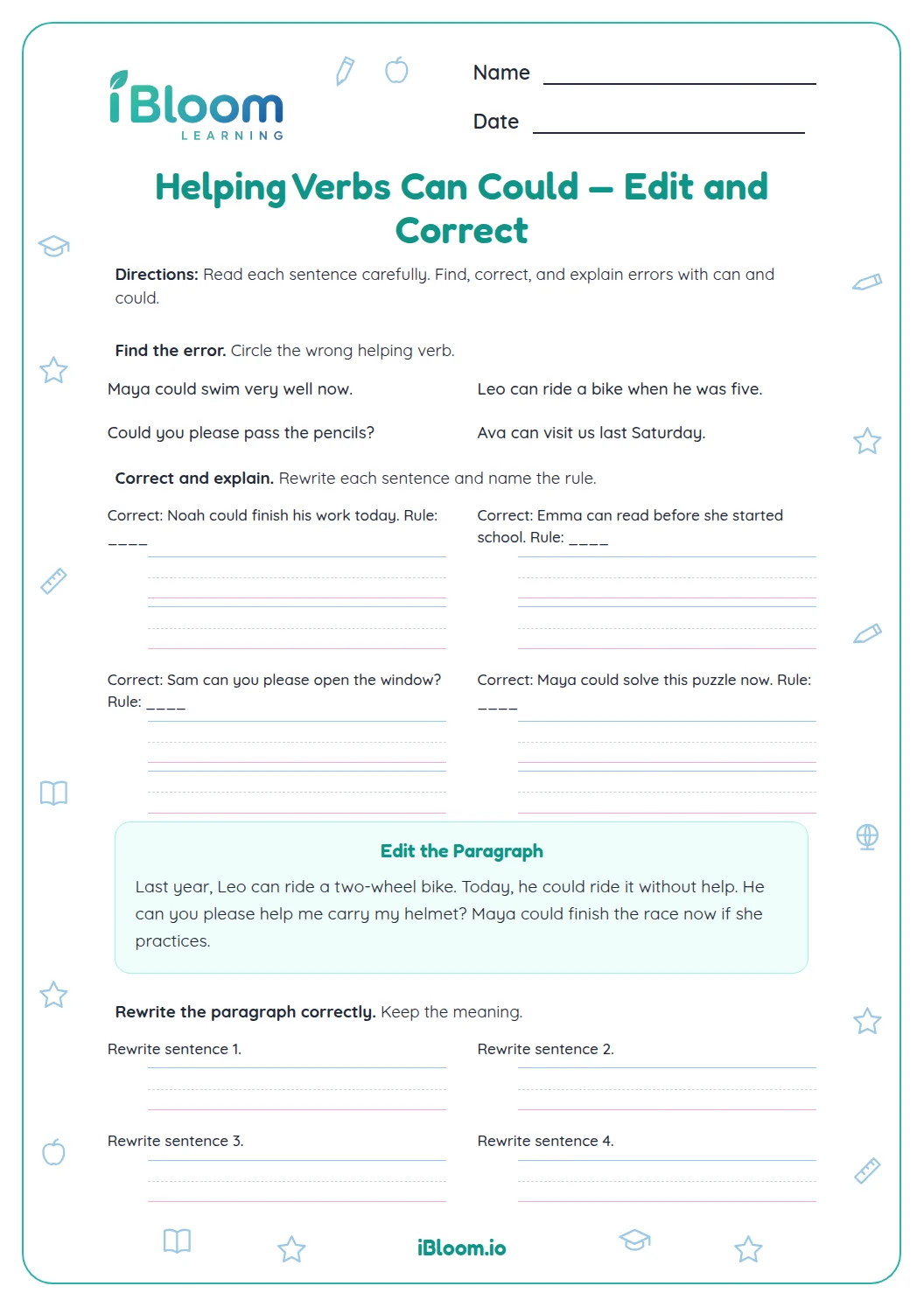
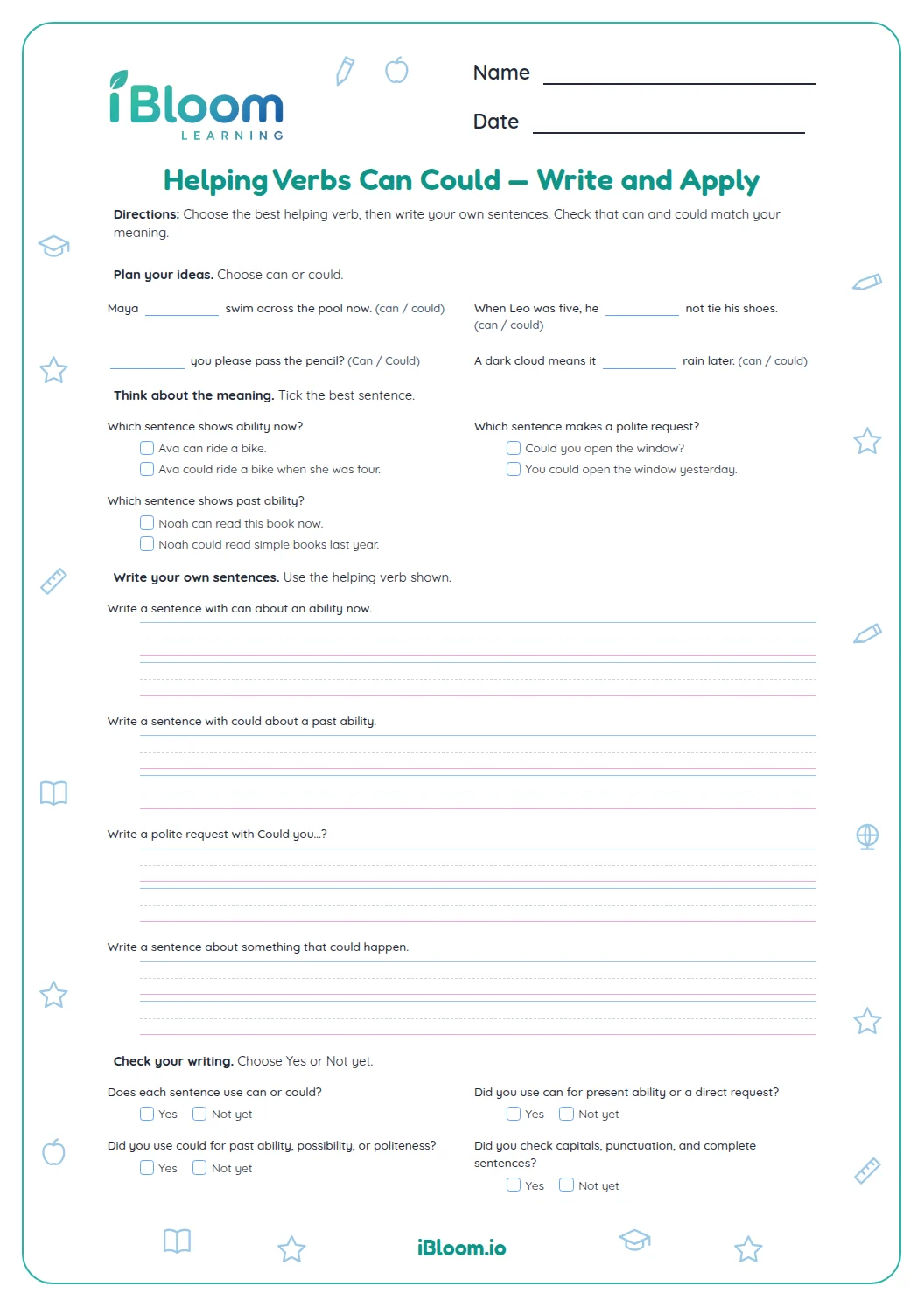
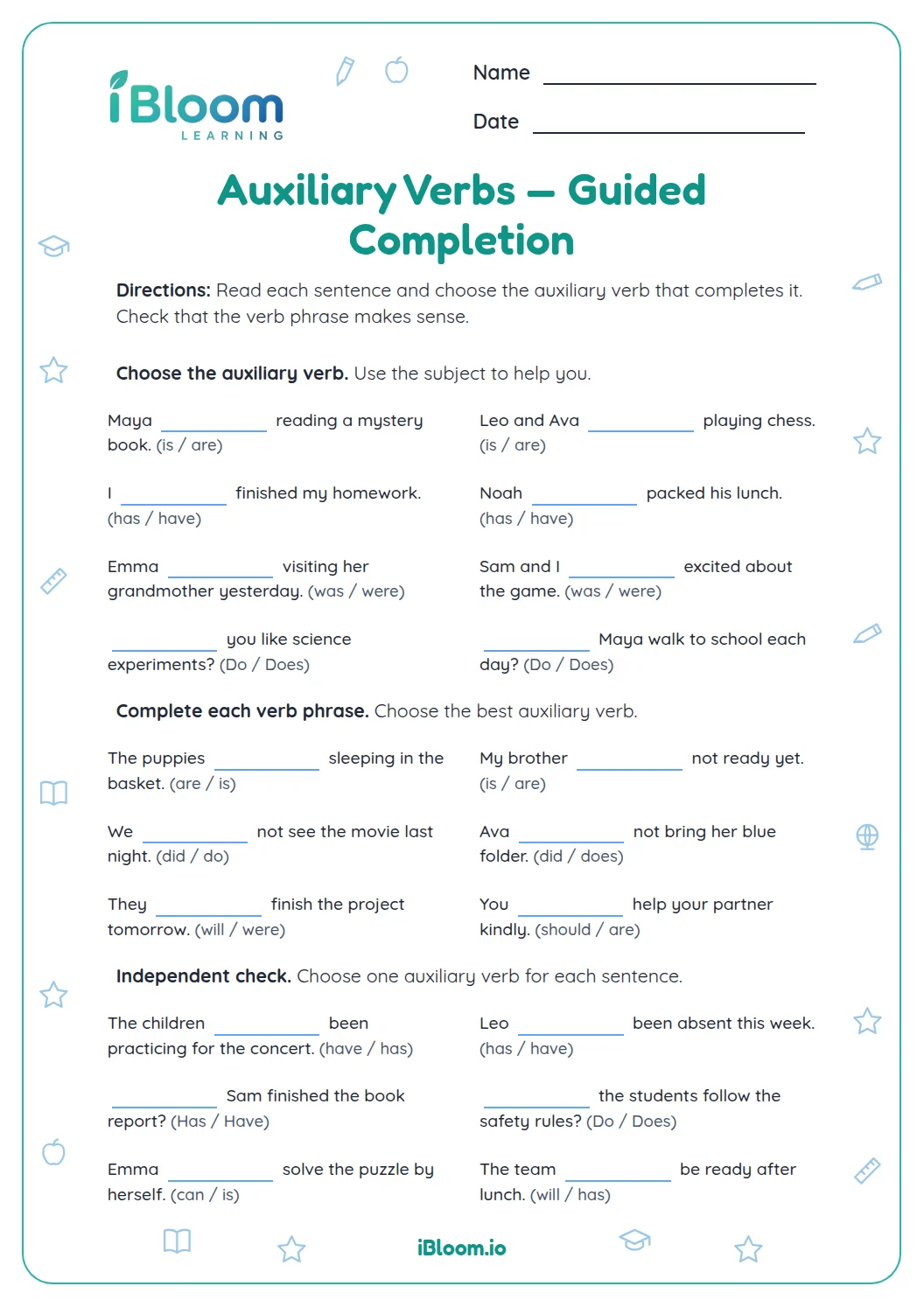
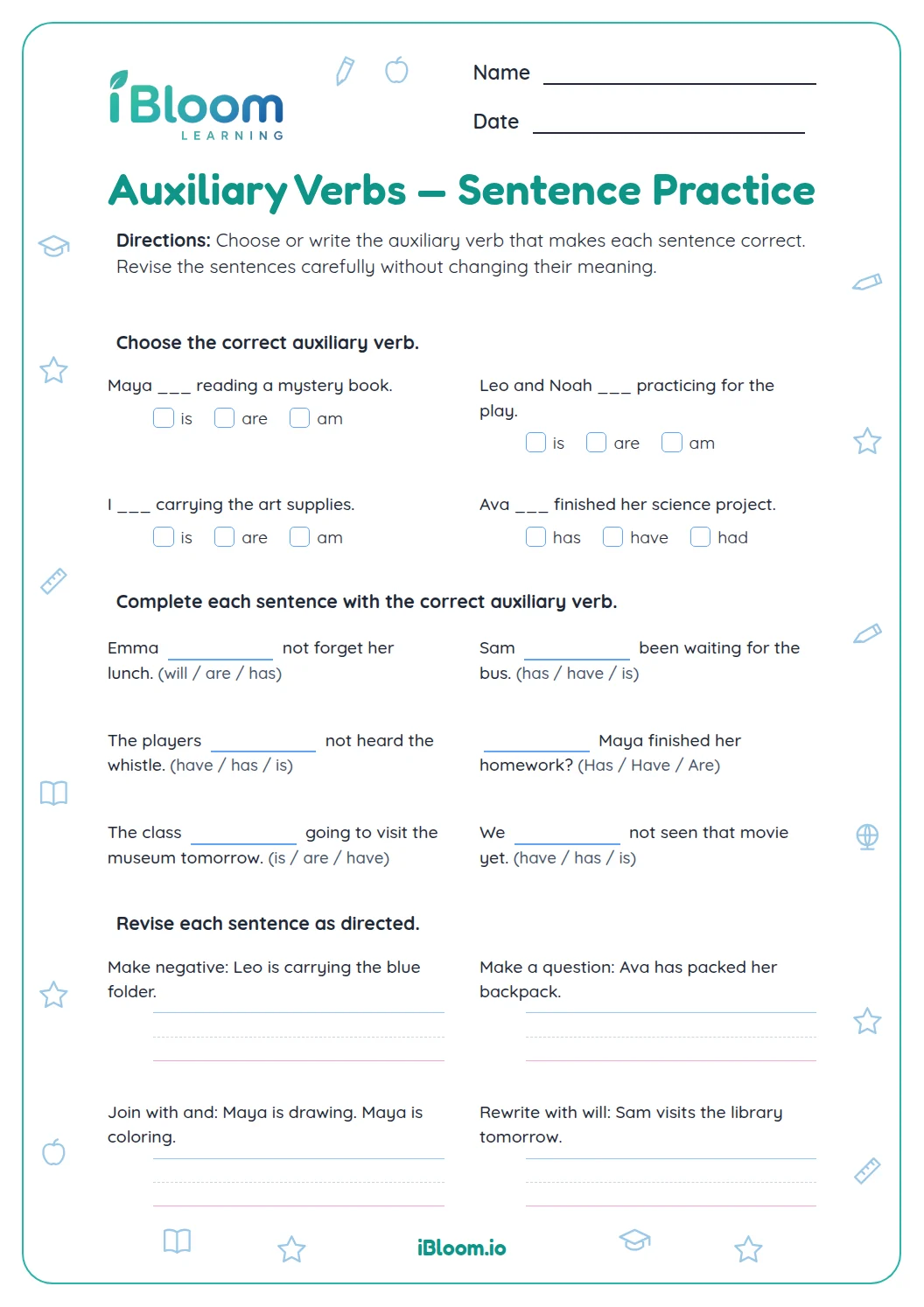
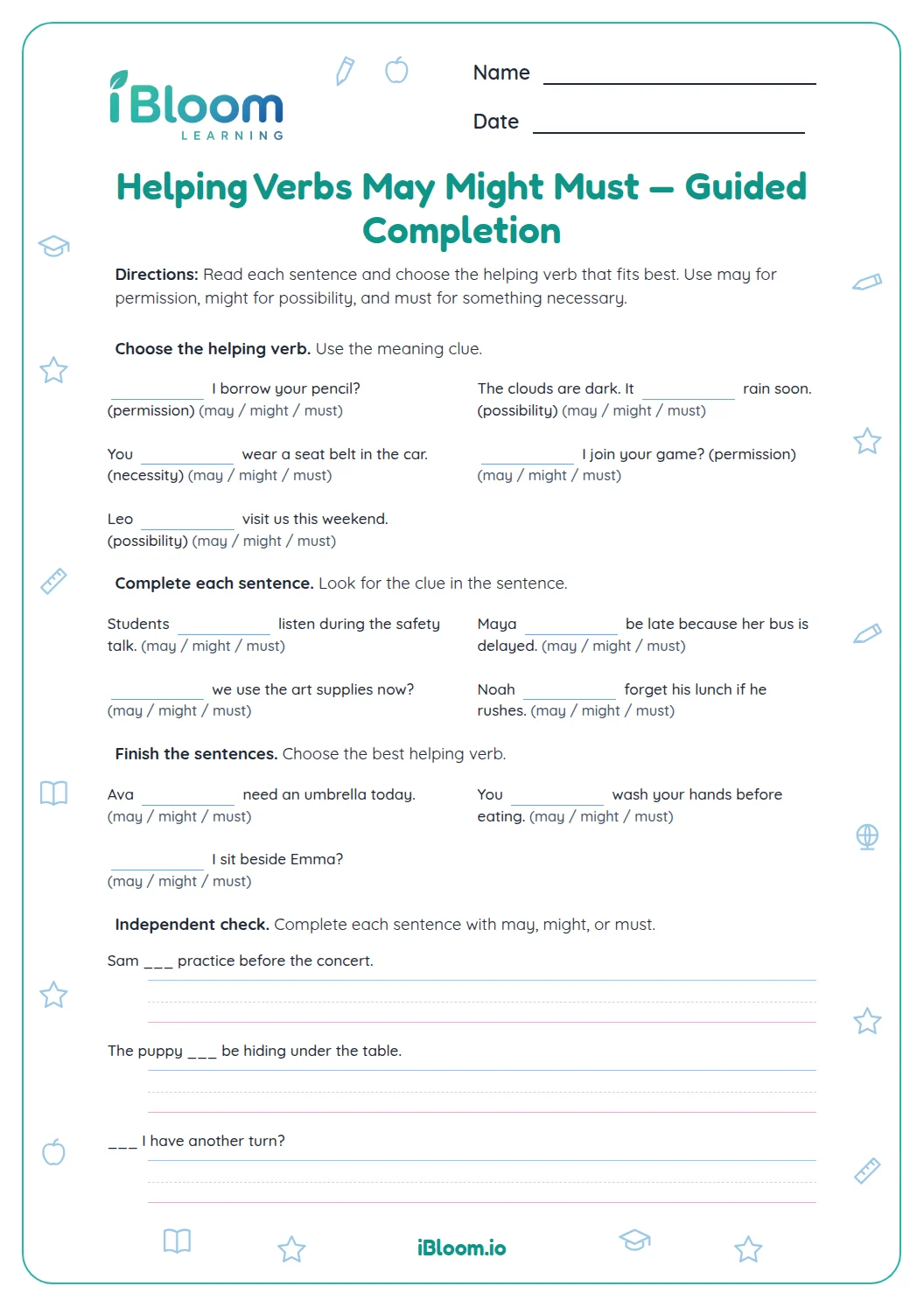
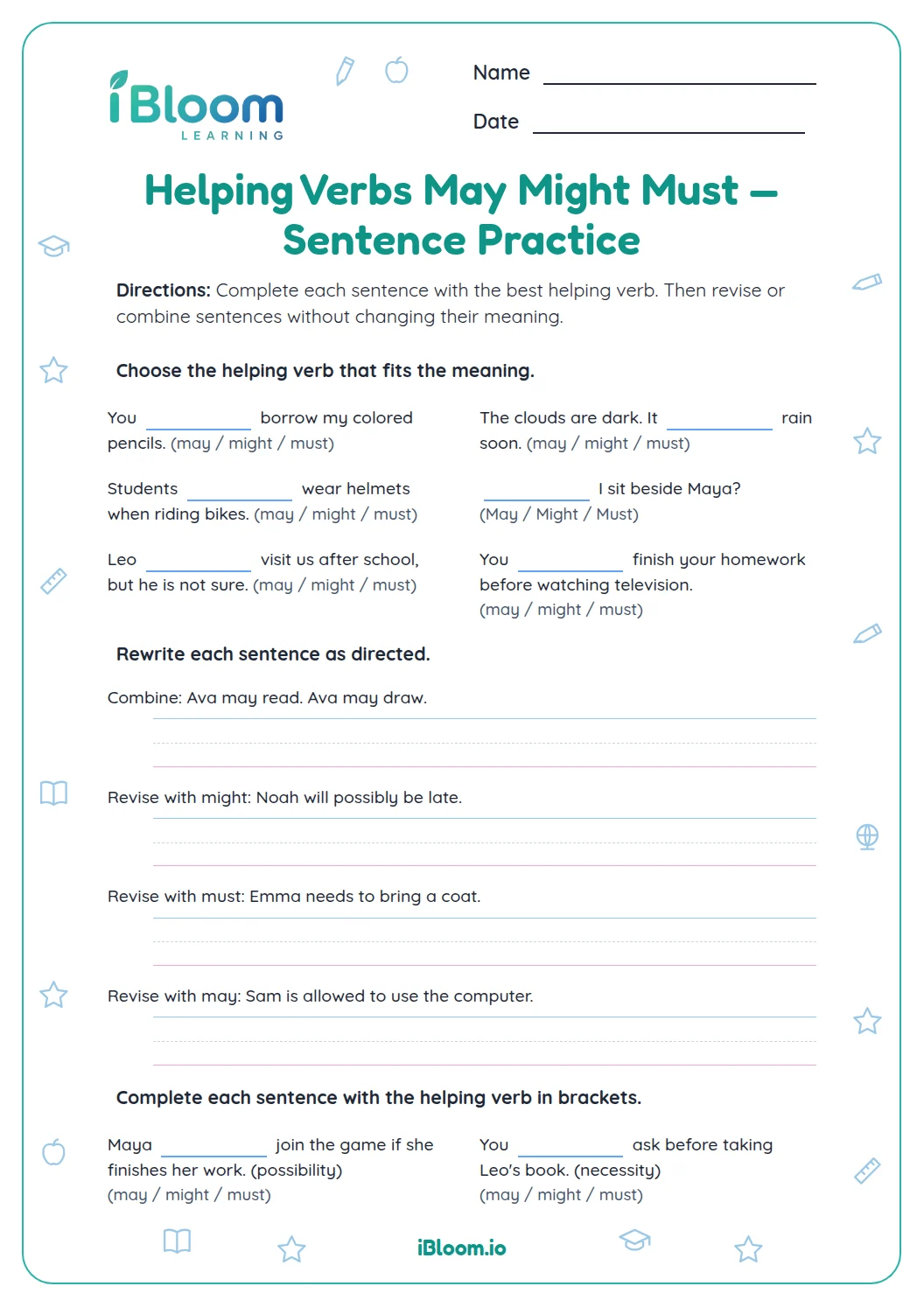
This free Grade 4 worksheet reviews how can and could work with a main verb. Four meaning choices distinguish present ability, past ability, a polite request, and possibility. Four blanks focus on ability at different times, and four sentence repairs check the verb after the helper. Part D asks children to explain a past-time clue and write an original sentence about present ability. The 14 questions practice Common Core L.4.1.c, using modal auxiliaries to convey conditions. A separate answer key includes corrected sentences and sample challenge responses.
Aligned to L.4.1.c
Does could always mean something happened in the past?
Could has more than one job. In “At age five, Ben could tie his shoes,” it tells about past ability. In “Could you please hold the door?” it makes a polite request happening now.
Question 4 uses could for a future possibility: seeing stars tonight depends on the clouds clearing. Read the whole sentence before choosing a meaning.
How do the time clues guide Part B?
Part B specifically asks children to choose can for present ability or could for past ability. Now and today point to present ability. When she was six and before he hurt his hand point to earlier ability.
Keeping the meaning fixed as ability lets children compare the time clues directly. Have them read their completed sentence aloud before moving on.
Which verb form follows can or could?
Use the base form of the main verb: sing, hear, carry, or open. The helper does the grammatical work, so the main verb does not take an added -s, -ed, or to.
Part C includes statements and questions. In both forms, keep can or could and repair the main verb. Preserve the capitalization and punctuation when copying the corrected sentence.
- 1Question 9: She can sings in tune.
- 2The helper is can; the base verb is sing.
- 3Corrected: She can sing in tune.
What does the final challenge ask children to do?
In question 13, children explain why could fits a sentence about Ben at age five. A complete answer connects that past-time clue to past ability.
Question 14 asks for a new sentence with can about something the child can do now. Accept different abilities; check that can is followed by a base verb, as in “I can ride a bike now.”
How to use this worksheet
- 1Read each sentence in Part A and name the meaning before checking the choices.
- 2Compare questions 2 and 3 to hear two different uses of could.
- 3Underline the time clue in each Part B sentence.
- 4In Part C, locate can or could, then check the form of the main verb.
- 5Check Part C against the corrected sentences, then check Part D for a time clue and a base verb.
Common mistakes and quick fixes
The mistake
Calling every use of could past ability.
The fix
Check the sentence purpose: “Could you please…” asks someone to do something.
The mistake
Writing “She can sings” because the subject is she.
The fix
After can, use the base form sing, even with she or he.
The mistake
Correcting “could to hear” to “could heard.”
The fix
Remove to and keep hear: the verb after could stays in its base form.
Common Core alignment
Use can and could to express ability, a request, or possibility.
On this sheet: Children identify modal meanings, choose ability helpers, repair main verbs, and explain and write modal sentences.
Show the official wordingHide the official wording
Use modal auxiliaries (e.g., can, may, must) to convey various conditions.
What to practice next
Make more practice
Further reading
Questions parents and teachers ask
Why is could a polite request in question 3?
The speaker is asking someone to hold a door, so could makes the request polite. The word please and the question form support that reading. Compare it with question 2, where “At age five” describes an ability Ben had at an earlier time.
Can “can” also introduce a request?
Yes, can can be used in a request such as “Can you help me?” Could is also a natural choice and can sound more polite. Part A asks children to identify the meaning of the helper already printed, while Part B specifically asks about present or past ability.
Why does the sheet use could for seeing stars tonight?
Could expresses possibility in that sentence because seeing the stars depends on the clouds clearing. Tonight points ahead, so could is not describing past ability there. Ask your child to read the opening condition, “If the clouds clear,” and explain why the event is uncertain.
What is wrong with “Can Eli carries the bag?”
Carries should be carry because a main verb following can uses its base form. The corrected question is “Can Eli carry the bag?” The same pattern works with other subjects: I can carry, she can carry, and they can carry. Keep the question mark when rewriting.
How much writing does this review require?
Children select four meanings, fill four one-word blanks, and rewrite four short sentences before answering two written challenges. In Part D, they explain why could fits a past-time clue and write an original sentence with can. The key supplies sample responses for these final two tasks.