




About this worksheet
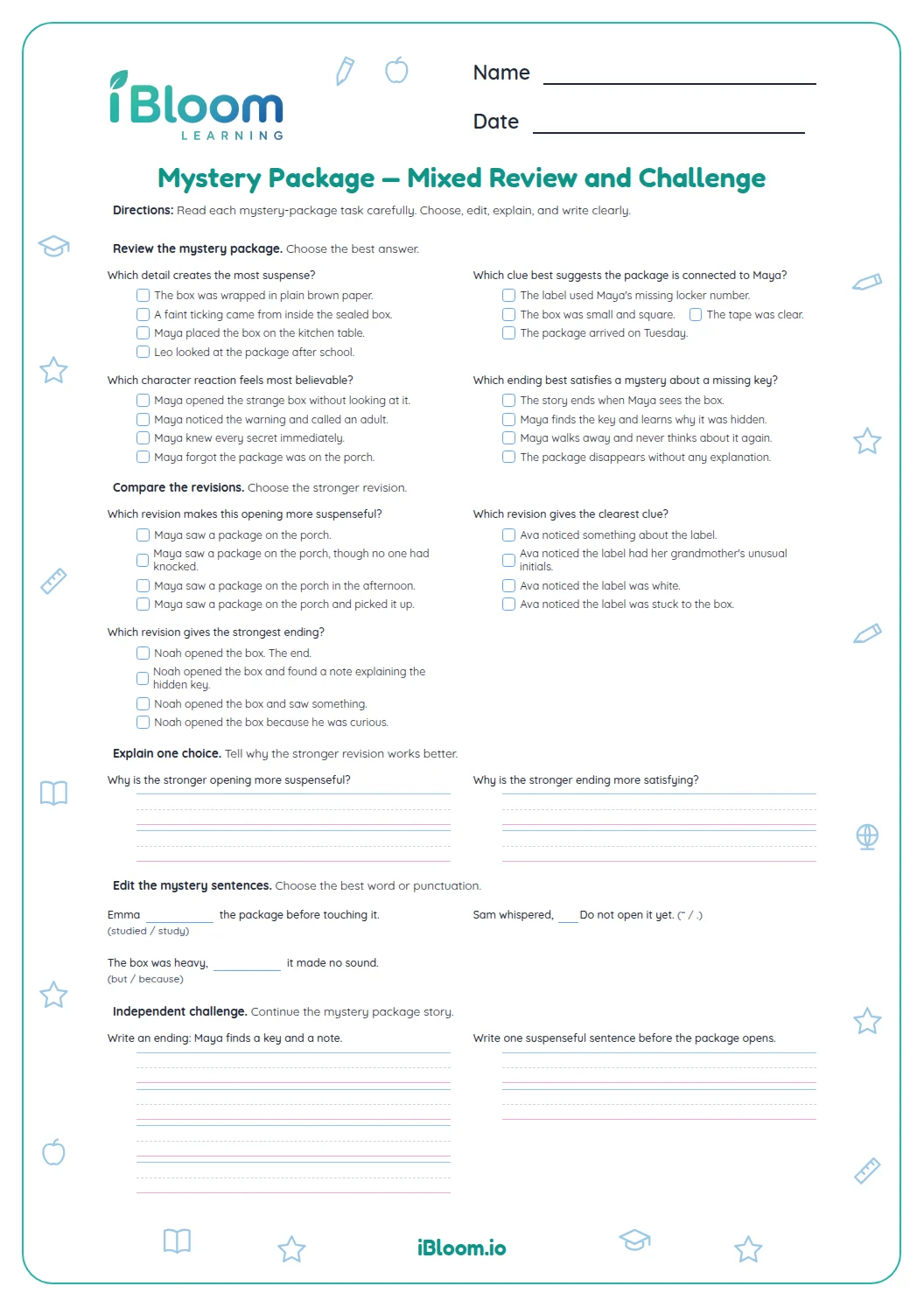
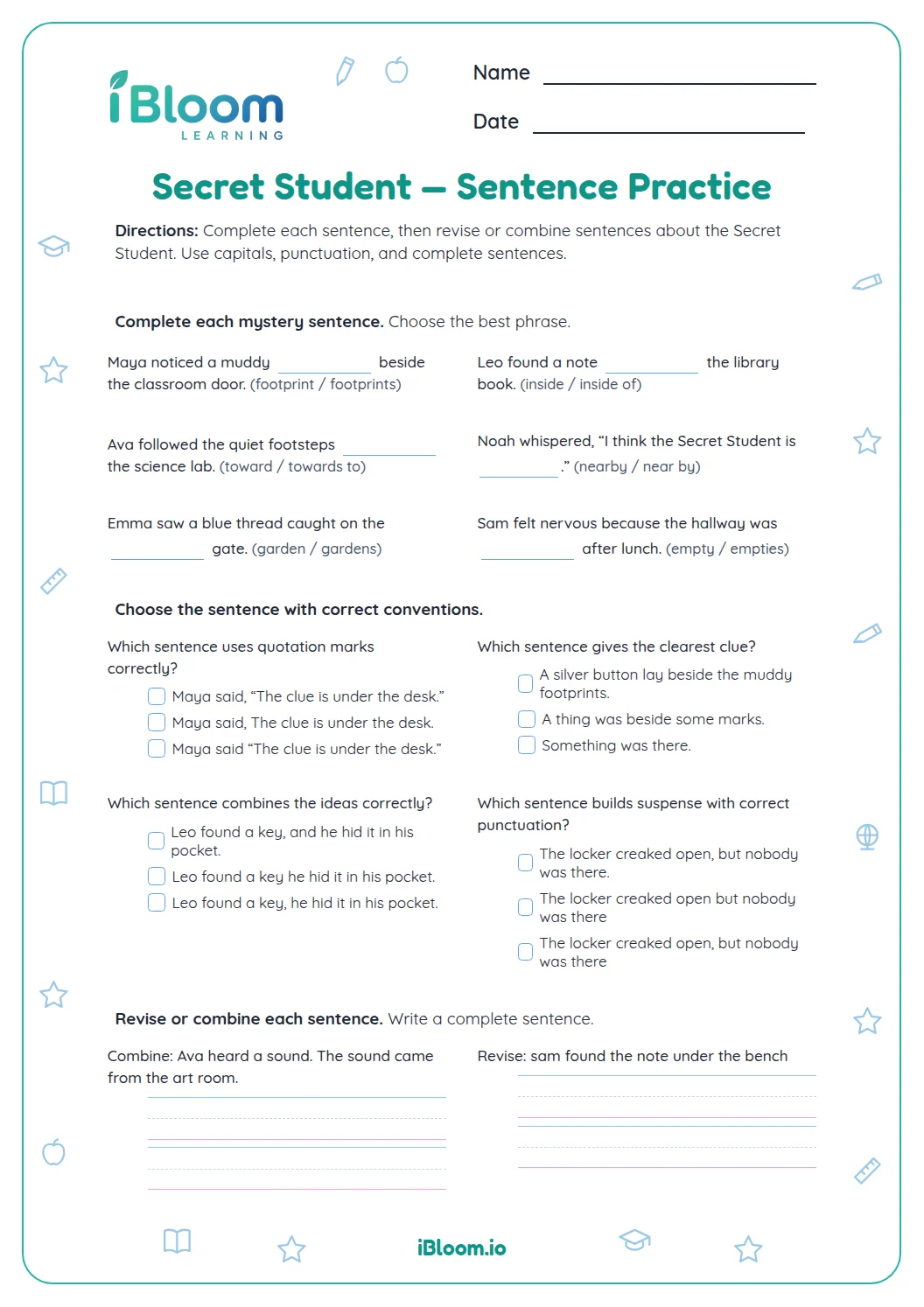
This Grade 5 printable follows a classroom mystery through guided sentence completions, clue choices, and a one-sentence written ending. Learners use details about a package, a trail, and a message to make the story clear. The separate key lists selected answers and gives one possible ending; a different sentence can work if it fits the clues.
Aligned to W.5.3
What does narrative writing practice?
Learners complete short mystery sentences by choosing details that fit, then judge which clues and ending make the story work. The final questions ask them to connect details across the story.
How can a learner work through each part?
Read the sentence around each blank before looking at the choices. Use details from the other items to decide which choices make the mystery believable.
- 1“A muddy ___ leads from the box to the garden.”
- 2A footprint can leave a muddy mark and form a trail.
- 3Answer: footprint.
What is on the printable?
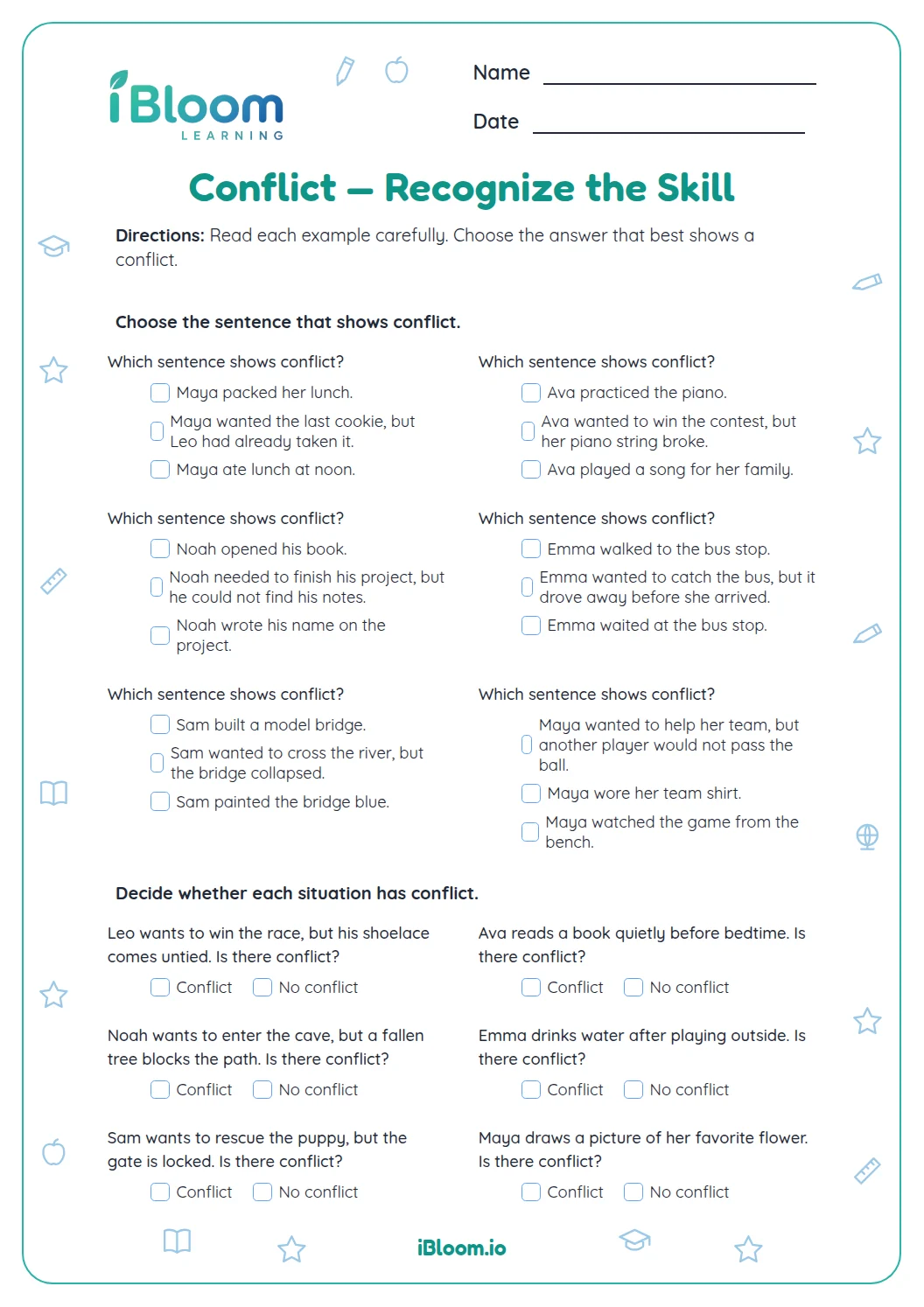
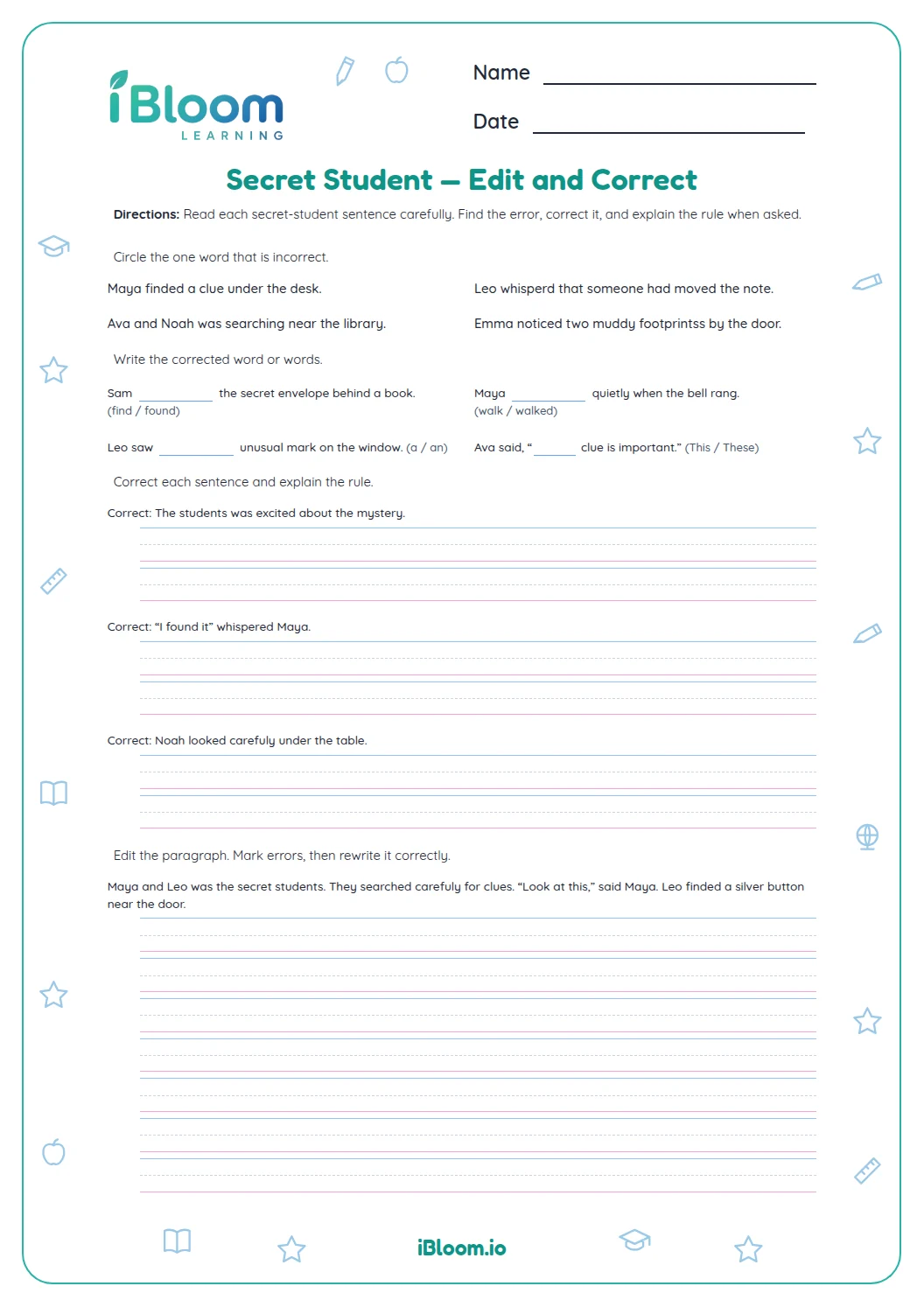
The two-page worksheet has 14 questions across 4 parts: sentence completions, story-detail choices, and one written ending. The separate key lists each answer and provides a sample sentence for the open response. This keeps the old sheet’s guided-completion structure while centering the mystery package.
How to use this worksheet
- 1Read the whole direction before starting.
- 2Complete the first item together and name the helpful clue or step.
- 3Work through the questions in order, taking a short pause between parts.
- 4Check answers with the separate key and revisit any tricky item.
Common mistakes and quick fixes
The mistake
Rushing after noticing only one word or number.
The fix
Read the entire item and check that the response fits all of it.
The mistake
Changing an answer without checking the clue or calculation.
The fix
Point to the evidence or redo the step before revising.
The mistake
Skipping a direction at the start of a new part.
The fix
Read each part heading and its direction before continuing.
Common Core alignment
This printable gives learners practice with the listed skill.
Write narratives with effective technique, descriptive details, and clear event sequences.
On this sheet: The questions directly practice narrative writing.
Show the official wordingHide the official wording
Write narratives to develop real or imagined experiences or events using effective technique, descriptive details, and clear event sequences.
What to practice next
Make more practice
Further reading
Questions parents and teachers ask
What skill does this narrative writing worksheet practice?
It practices completing a narrative with details that fit the events and clues. Learners choose words and story details, then write one sentence to resolve the mystery. The separate key lists each selected answer and gives a sample ending that connects the clues.
How should we start the worksheet?
Read the directions together and complete the first item aloud. Ask the learner to explain the clue or step used, then let them continue independently or with support as needed. Return to the key together at the end.
Is an answer key included?
Yes. A separate answer key follows the worksheet and gives the expected response for every item. The choices have specific answers, and the one-sentence ending has a sample response to show how clues can be connected in a coherent way. Other endings can fit too.
Can an adult read the questions aloud?
Yes. Reading a prompt aloud can make the activity accessible while the learner still does the target thinking. Pause after each item and ask the child to point to the words, pictures, or numbers that helped them decide.
How long will this worksheet take?
Plan for about 15 to 20 minutes. Learners read each sentence, compare its clues with the choices, and check how story details fit together. An adult can ask which clue helped most when the learner reaches the last items.