





About this worksheet
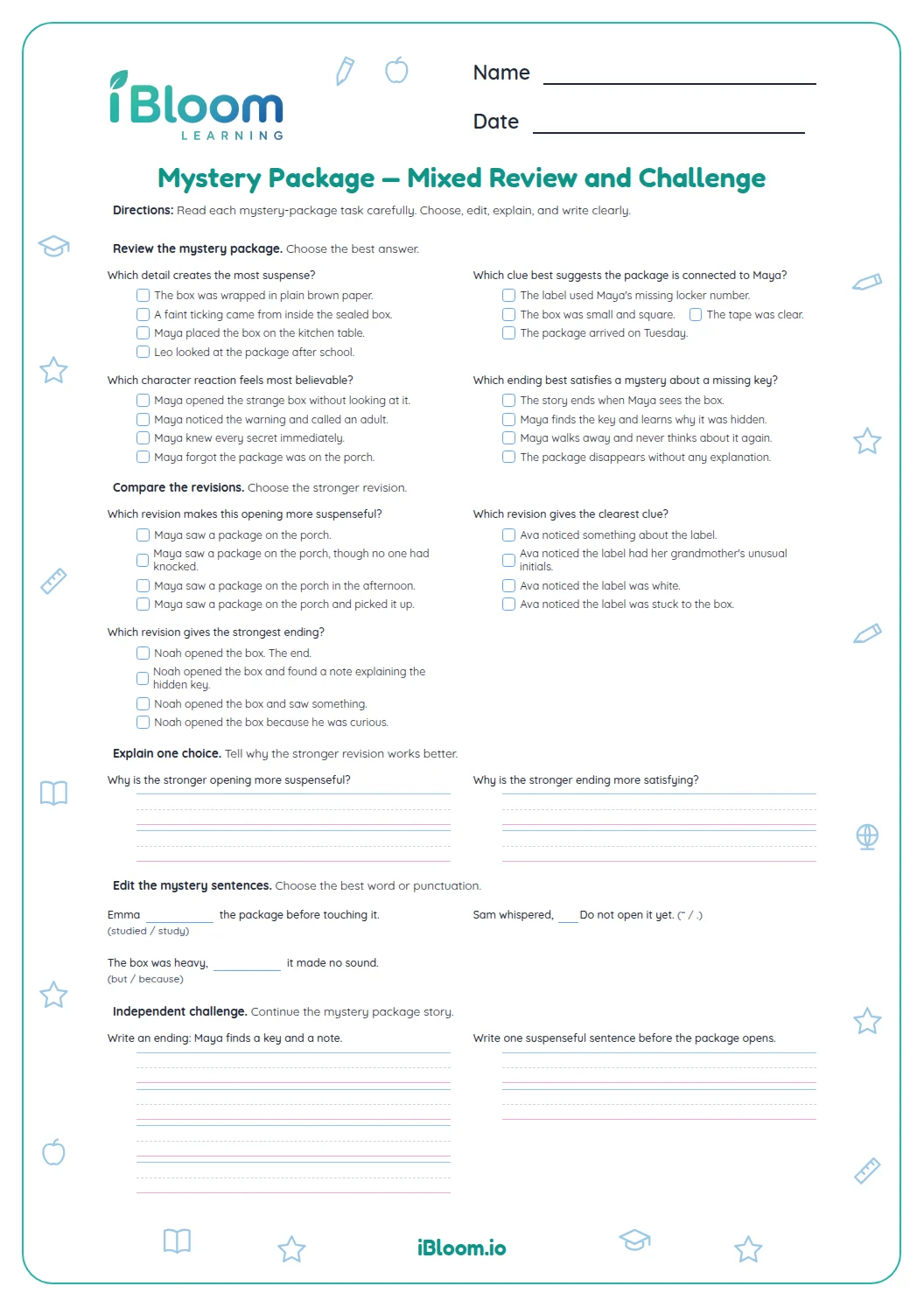
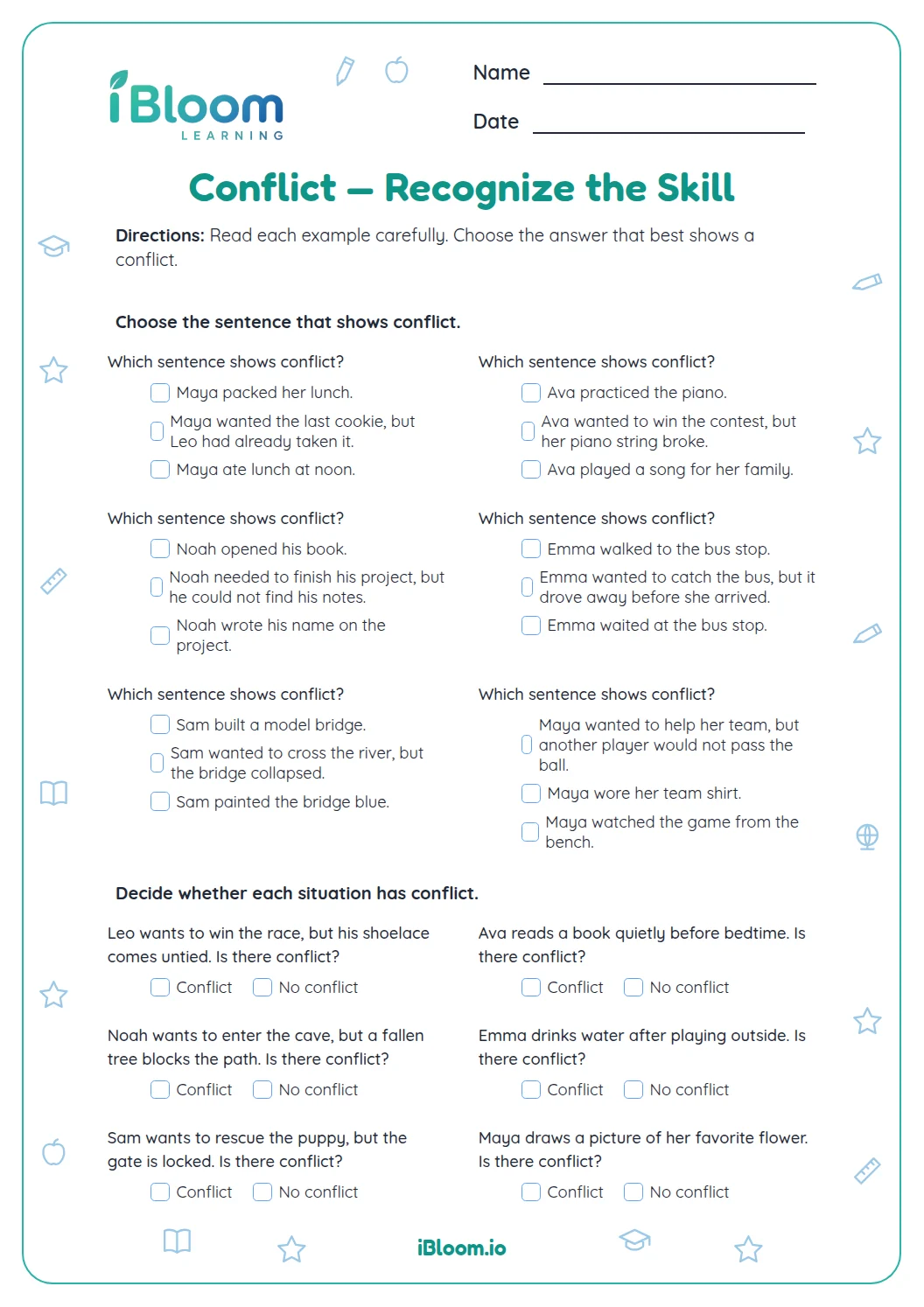
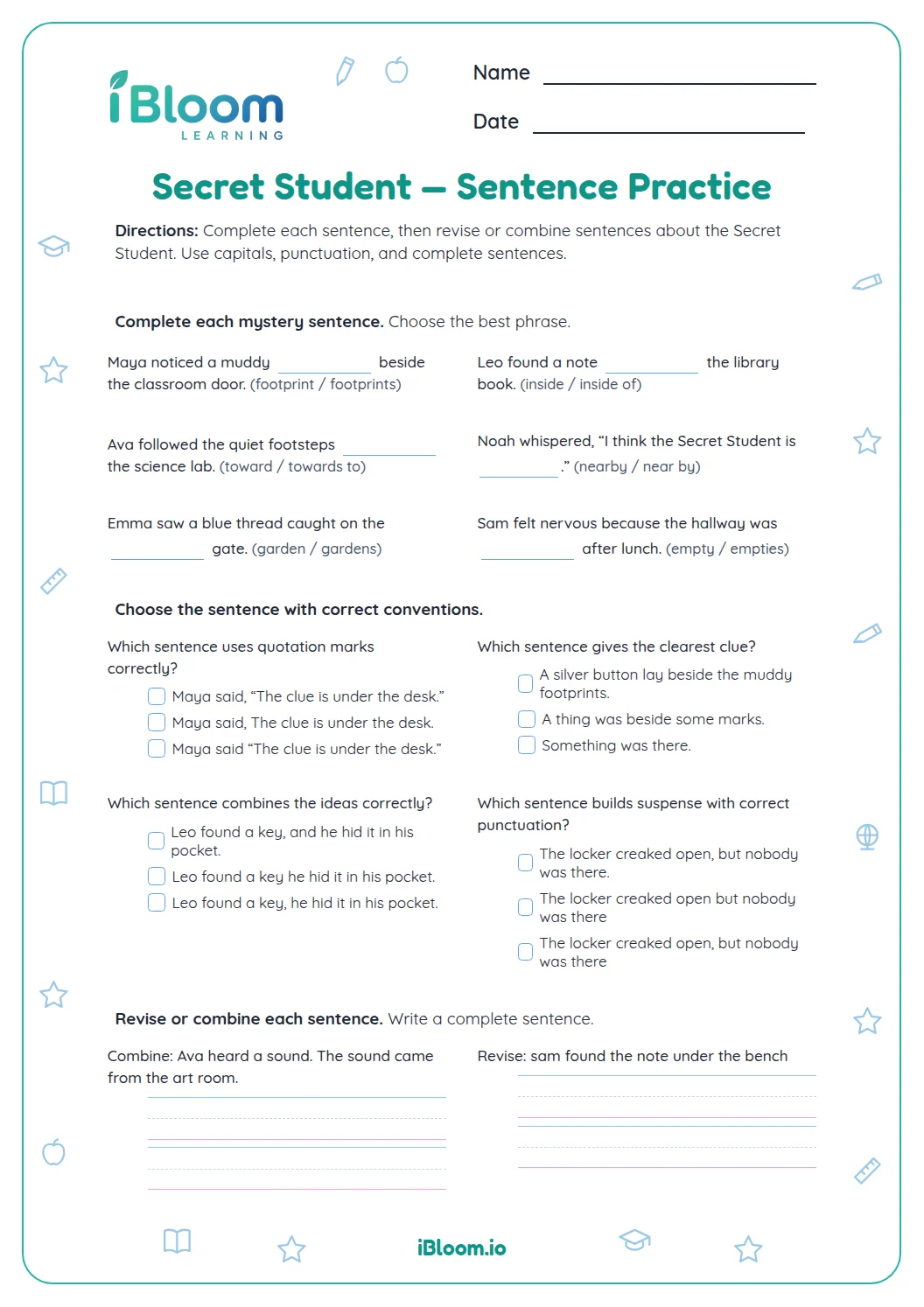
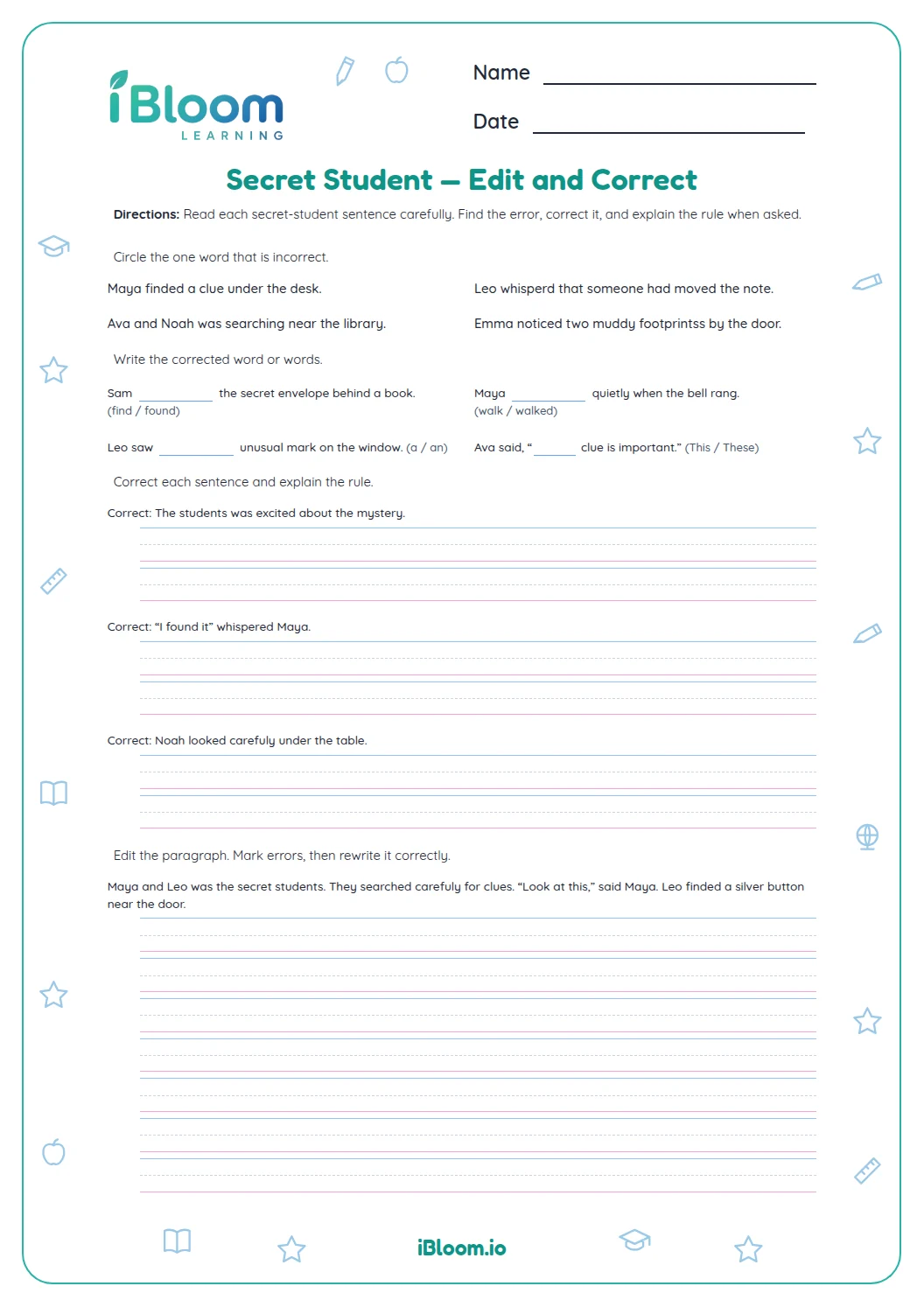
This Grade 5 printable uses a mystery package setting to help students recognize narrative craft. Sixteen choices contrast clear clues with vague ones, suspenseful pacing with rushed action, believable character responses with unrelated actions, and endings that resolve the mystery. The answer key marks the stronger example for each question. The skill supports CCSS W.5.3, which describes developing narratives with effective technique, descriptive details and clear event sequences.
Aligned to W.5.3
What makes a mystery opening clear?
A reader needs to know who found the package and where it appeared. A useful opening establishes the situation and leaves a question to explore.
- 1Maya found an unmarked package outside her door.
- 2The sentence introduces a character, object and setting in one clear event.
How can a detail become a useful clue?
Specific details give the reader something to notice or infer. A torn map to the school basement is more helpful than “something strange” because it points toward a place and possible next step.
How does pacing build suspense?
A brief pause can make a reader wonder what will happen. “The package shook once, then went still” creates a question before the character acts.
- 1The package shook once, then went still.
- 2The pause invites the reader to wonder what is inside.
What makes a mystery ending satisfying?
The ending should connect to clues and complete the character’s search. When Nia matches a key to the locked music-room door, the action resolves the question raised by finding the key.
How to use this worksheet
- 1Read both choices before selecting one.
- 2Ask which sentence gives a reader a specific detail to follow.
- 3Notice how dialogue, thoughts and actions reveal character responses.
- 4Look for transitions that make event order clear.
- 5Check whether the ending answers the question raised by the mystery.
- 6Use the key to discuss why the stronger example works.
Common mistakes and quick fixes
The mistake
Choosing a vague detail because it sounds mysterious.
The fix
Look for a detail the reader can picture or use as a clue, such as a torn map or muddy footprint.
The mistake
Treating any unusual event as suspense.
The fix
Suspense builds a question or pause that makes the reader anticipate what happens next.
The mistake
Choosing an ending that leaves the central mystery unanswered.
The fix
Check that the final event connects to the clues and resolves the package question.
Common Core alignment
Recognize narrative techniques, descriptive details and clear event sequences.
On this sheet: Students identify narrative choices that clarify events, develop reactions and resolve a mystery.
Show the official wordingHide the official wording
Write narratives to develop real or imagined experiences or events using effective technique, descriptive details, and clear event sequences.
What to practice next
Make more practice
Further reading
Questions parents and teachers ask
What makes a clue specific?
A specific clue gives the reader something concrete to notice or investigate. A torn map showing the school basement points to an exact place, while “something strange” gives no detail to follow. The stronger example lets the reader make a useful inference.
How is suspense different from a surprise?
Suspense builds anticipation before an event or answer is revealed. A package that shakes and then goes still makes the reader wonder what is inside before anyone opens it. A surprise is the unexpected reveal itself. Students can point to the sentence detail that creates this anticipation.
Why does believable character action matter?
A character’s choice should fit the situation and help the story move forward. Checking a return label before opening a mystery package is a cautious response a reader can understand. The choice also gives the character a clear next action.
What does sensory detail add?
Sensory detail helps readers imagine how a scene feels, sounds, looks or smells. “The metal key felt cold against Noor’s palm” gives a concrete touch detail that is more vivid than naming an unspecified object. The worksheet asks students to recognize this kind of concrete detail.
How can I use the answer key?
Check each choice, then discuss what makes it stronger: a clearer clue, more suspense, a believable response, useful dialogue or a resolved ending. Those explanations help students carry the same craft decisions into their own stories. Ask students to name the craft choice behind each correct example.