
About this worksheet
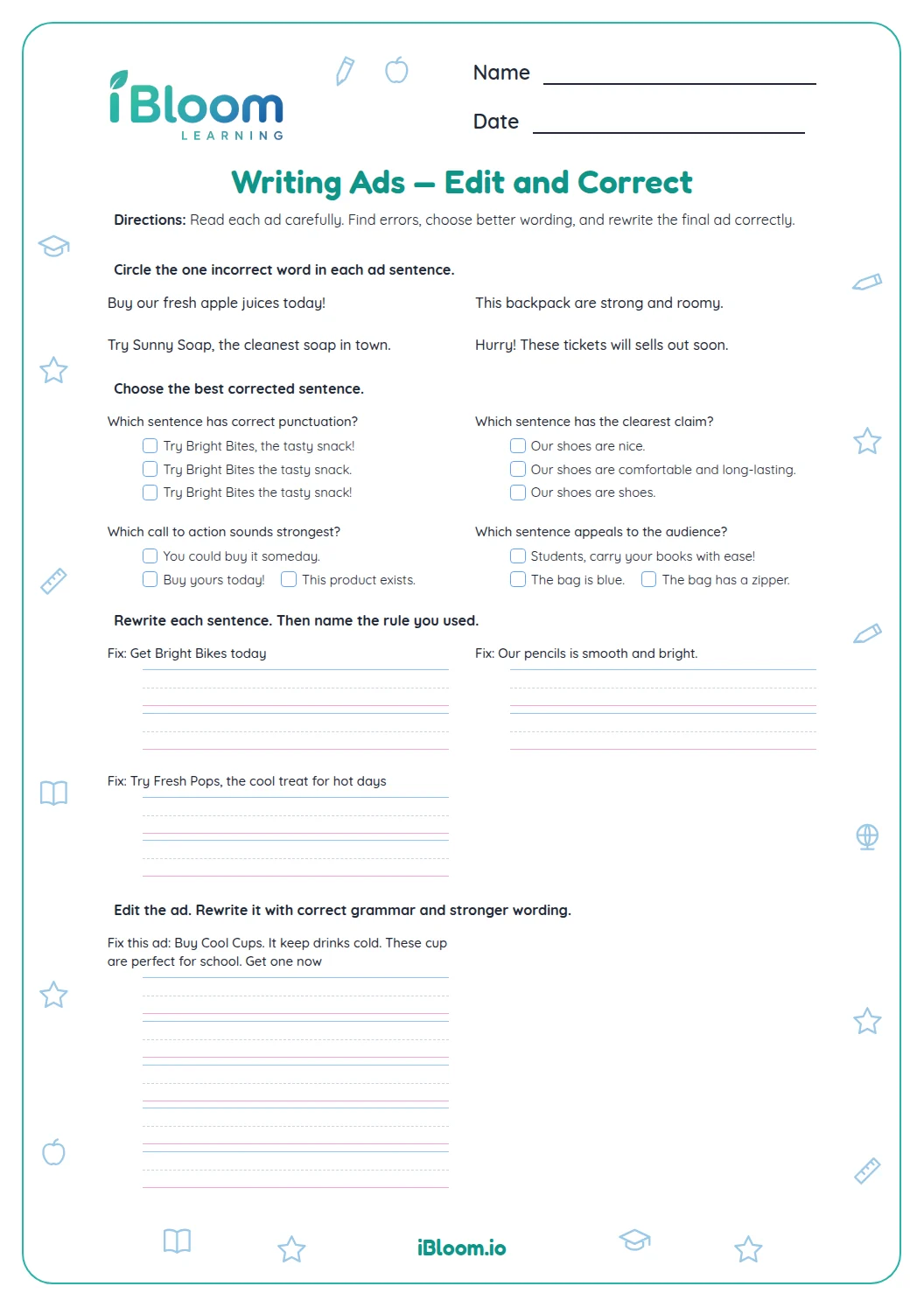
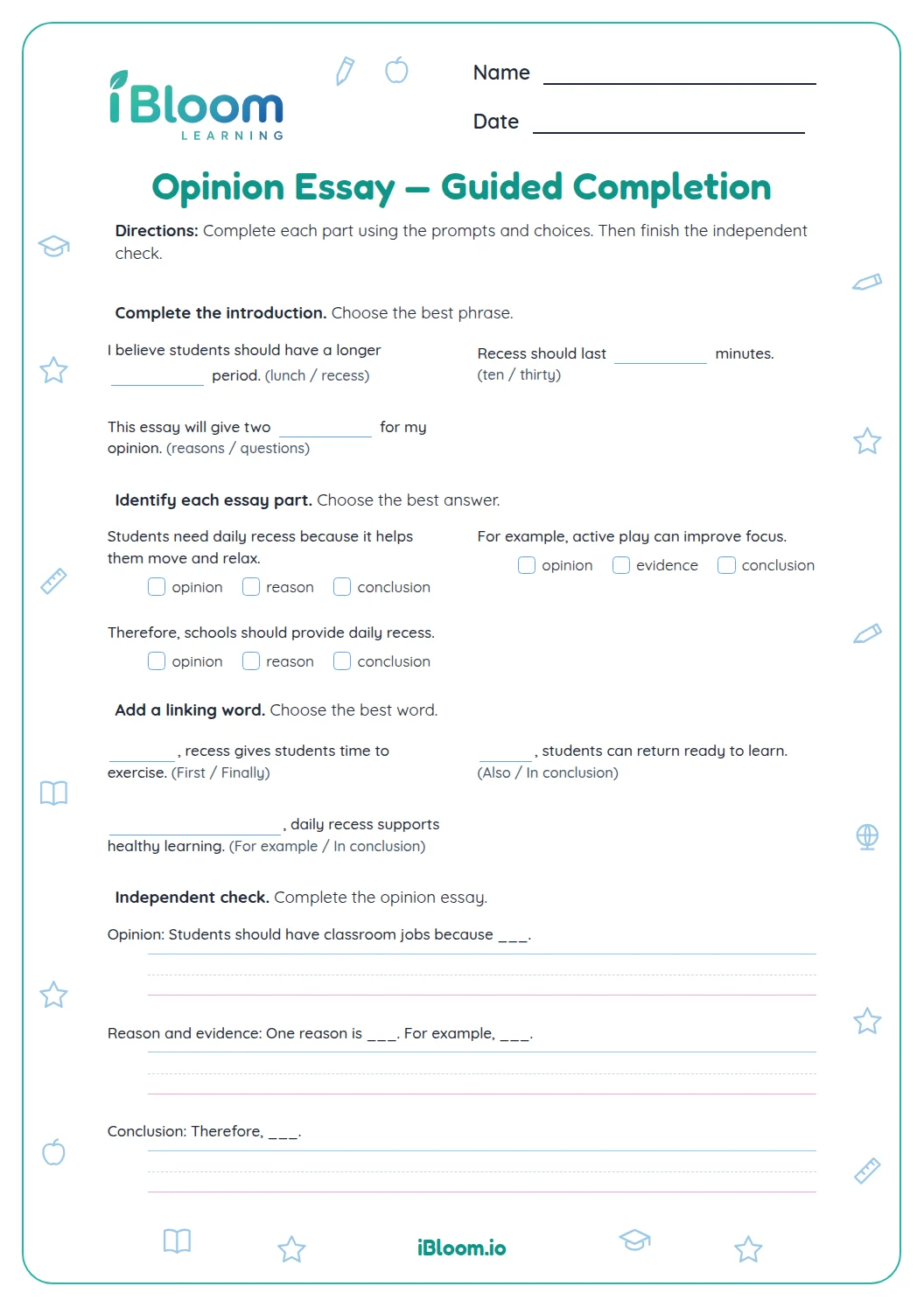
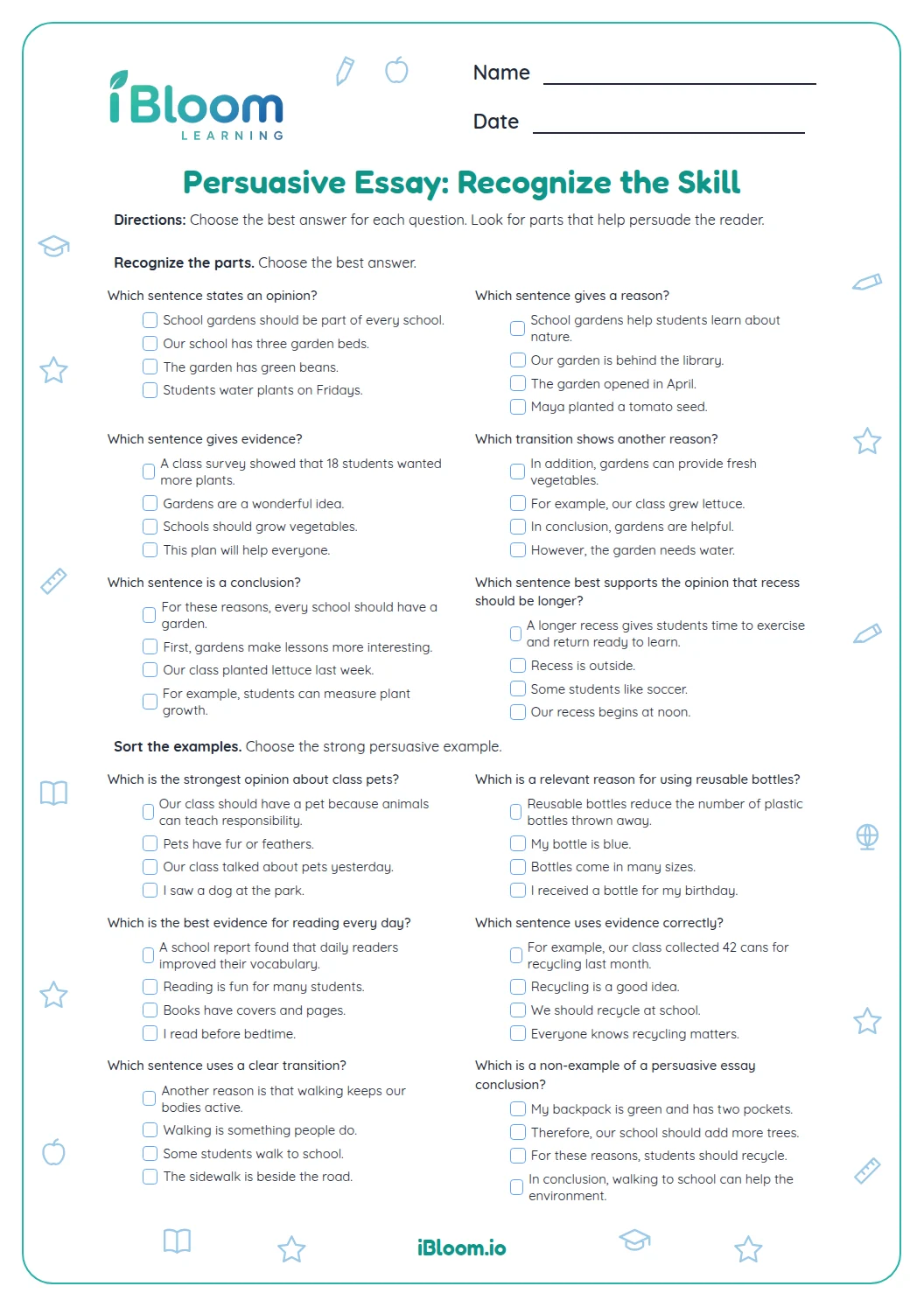
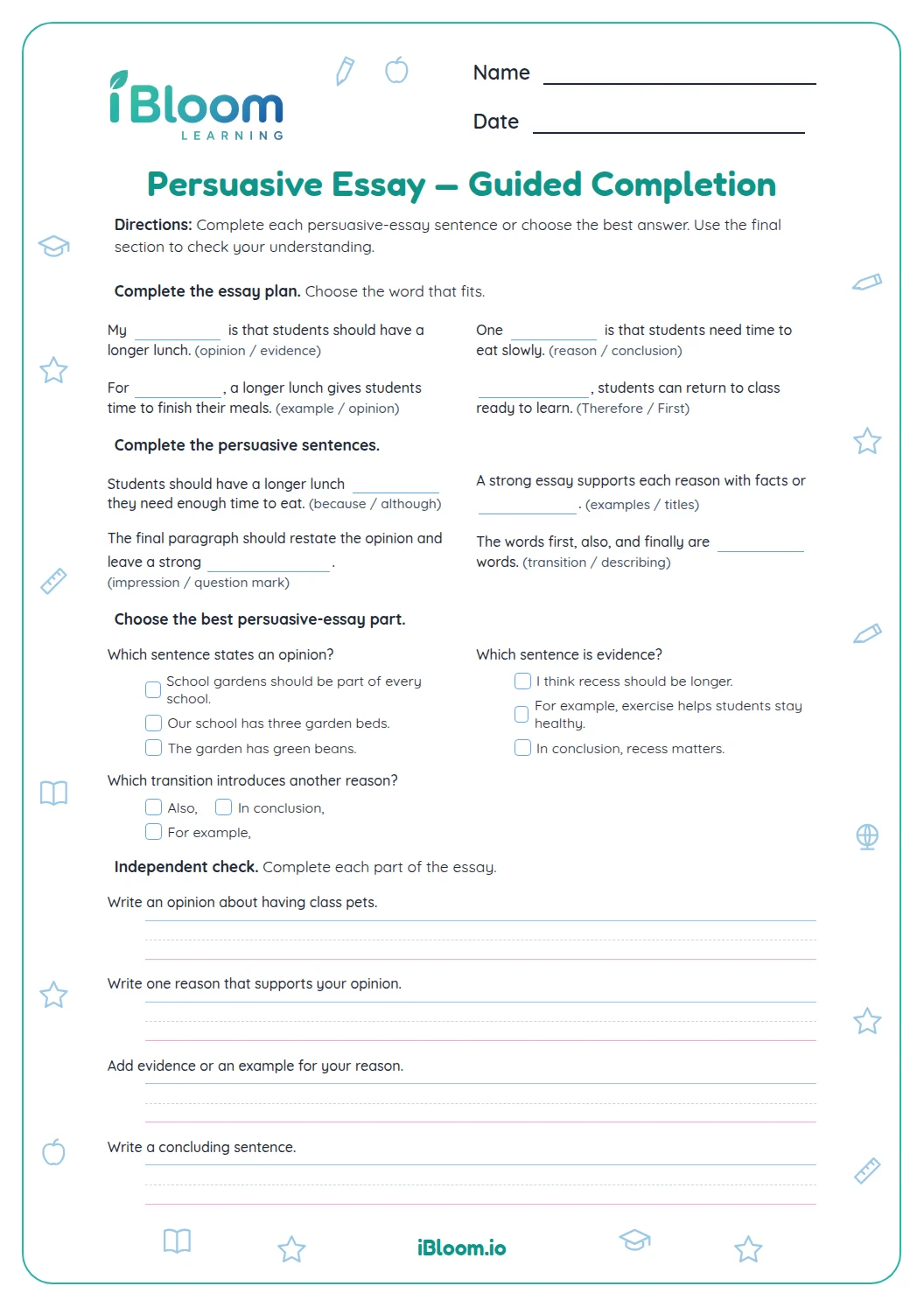
This Grade 5 writing worksheet reviews how ads use a clear claim, relevant details, audience-aware wording, and a call to action. Students answer 13 multiple-choice questions and write one complete two-sentence ad for a reusable bottle. A separate answer key includes a sample response. The writing task practices W.5.1.b by asking for logically ordered reasons supported by facts and details.
Aligned to W.5.1.b
What makes an ad claim persuasive?
A claim tells readers what the ad wants them to believe or do. A useful detail supports that claim with something specific, while a call to action invites the audience to respond.
- 1Claim: A reusable bottle is useful.
- 2Detail: It can be filled again each day.
- 3The detail gives a reason for the claim.
How can you make an ad more precise?
Replace broad praise with a feature a reader can check. Then write an invitation that tells the intended audience what to do next.
How to use this worksheet
- 1Identify the audience and purpose of the ad.
- 2Separate the claim from a fact or product detail.
- 3Check whether the detail supports the claim.
- 4Look for wording that is specific and believable.
- 5End your own ad with a clear invitation to act.
Common mistakes and quick fixes
The mistake
Using a slogan as the only support for a claim.
The fix
Add a relevant fact or checkable product detail.
The mistake
Choosing a detail that is true but unrelated to the claim.
The fix
Ask how the detail gives readers a reason to believe the claim.
The mistake
Ending an ad without telling readers what to do.
The fix
Add a clear call to action such as “Join us Friday.”
Curriculum alignment
This worksheet practices W.5.1.b.
Apply writing ads in the questions on this sheet.
On this sheet: The questions directly practice writing ads.
Show the official wordingHide the official wording
Provide logically ordered reasons that are supported by facts and details.
What to practice next
Make more practice
Further reading
Questions parents and teachers ask
How many questions does this writing worksheet include?
There are 14 questions: 13 multiple-choice items and one written prompt. The questions review claims, evidence, audience, slogans, and calls to action. In the final item, students write a short two-sentence ad and use the answer key’s sample to check that all parts are present.
Does the worksheet ask students to write an ad?
Yes. The final question asks students to write a two-sentence ad for a reusable water bottle. They include a claim, a specific detail that readers can check, and an invitation to act. The key provides a sample that meets all three requirements; students may phrase their own ad differently.
What counts as a supporting detail in an ad?
A supporting detail gives a reason to believe the claim. For a reusable bottle, “It can be filled again each day” supports the claim that it is useful. A color description may be accurate, but it does not explain why the bottle is useful.
What is a call to action?
A call to action tells the audience what to do next. “Sign up today” or “Join us Friday” gives readers a clear step, while a sentence that only describes a place does not invite them to respond. A useful invitation names a clear next step for the audience.
How should students use the answer key?
Students can answer the multiple-choice items and draft their own ad before checking. Compare the draft with the sample and look for the three requested parts: a claim, a checkable detail, and an invitation. The wording can differ as long as those parts are clear.