
About this worksheet
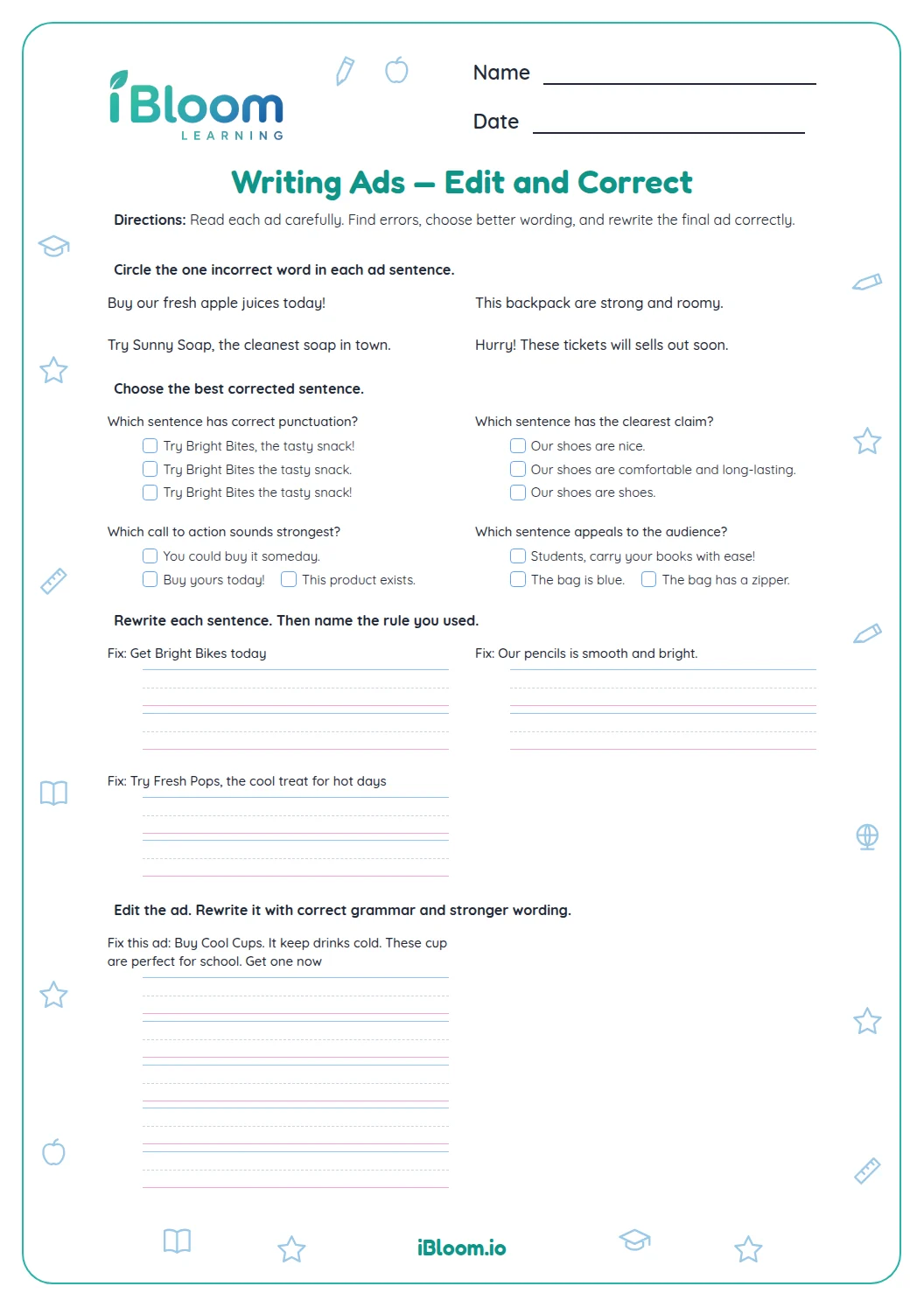
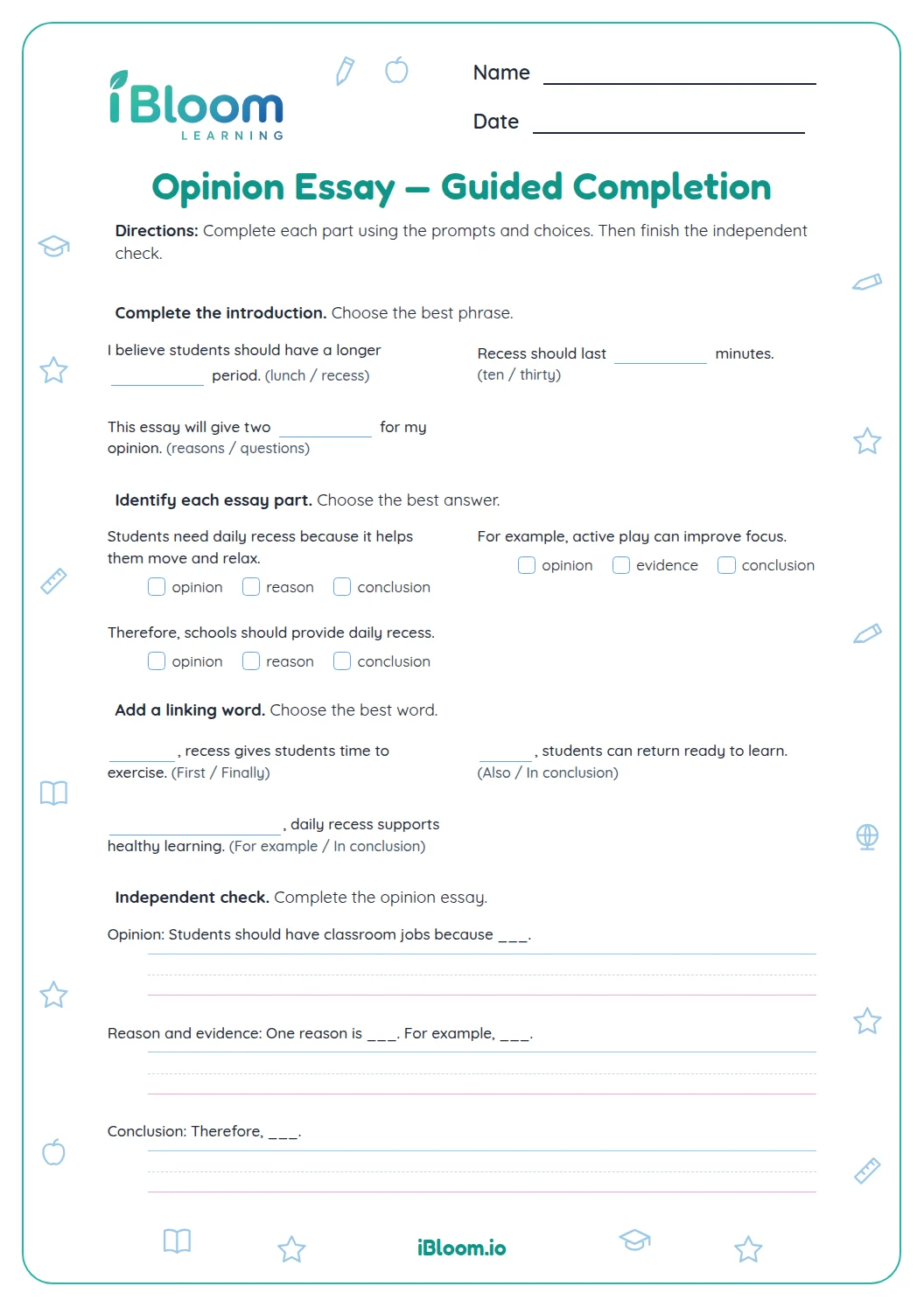
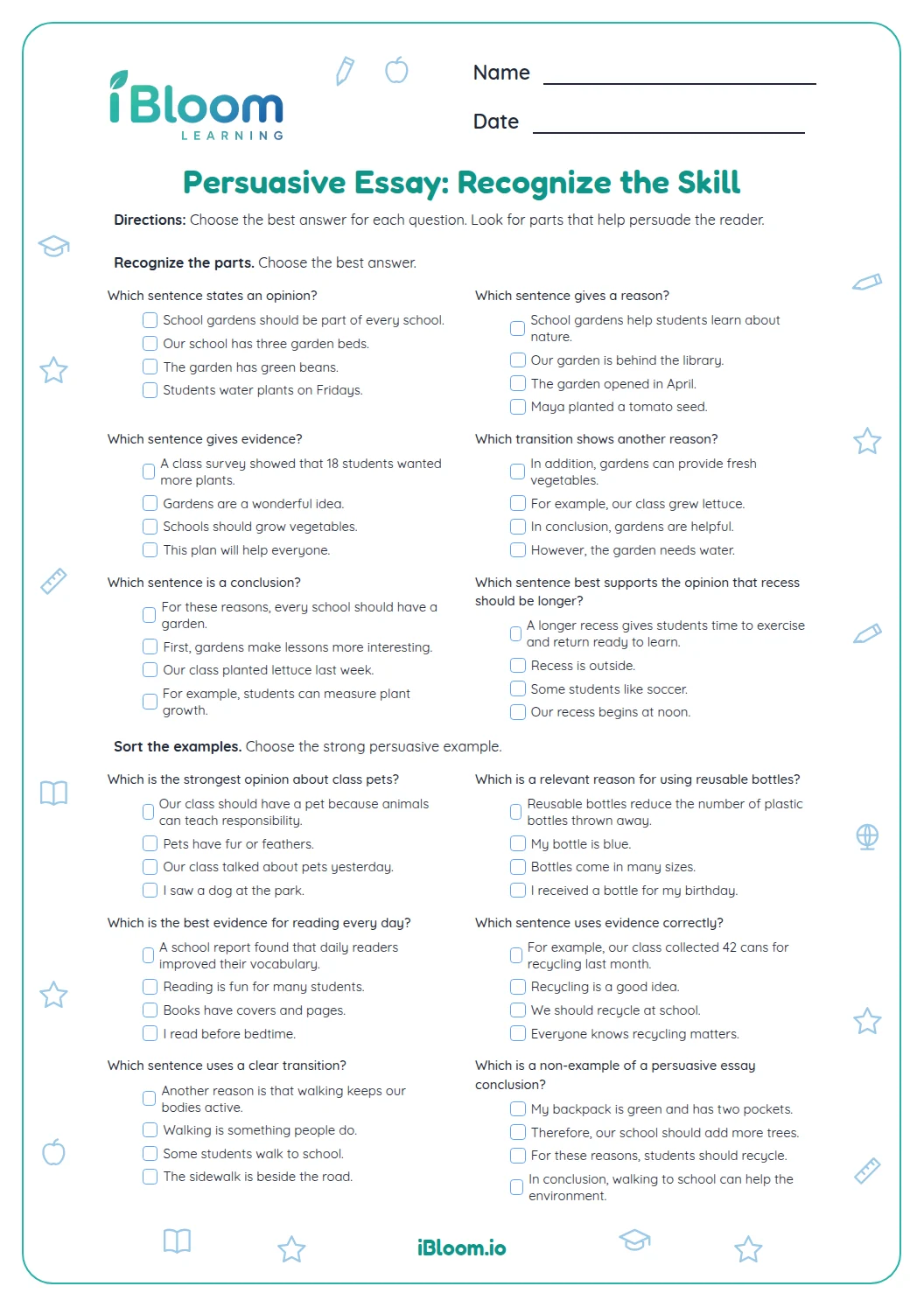
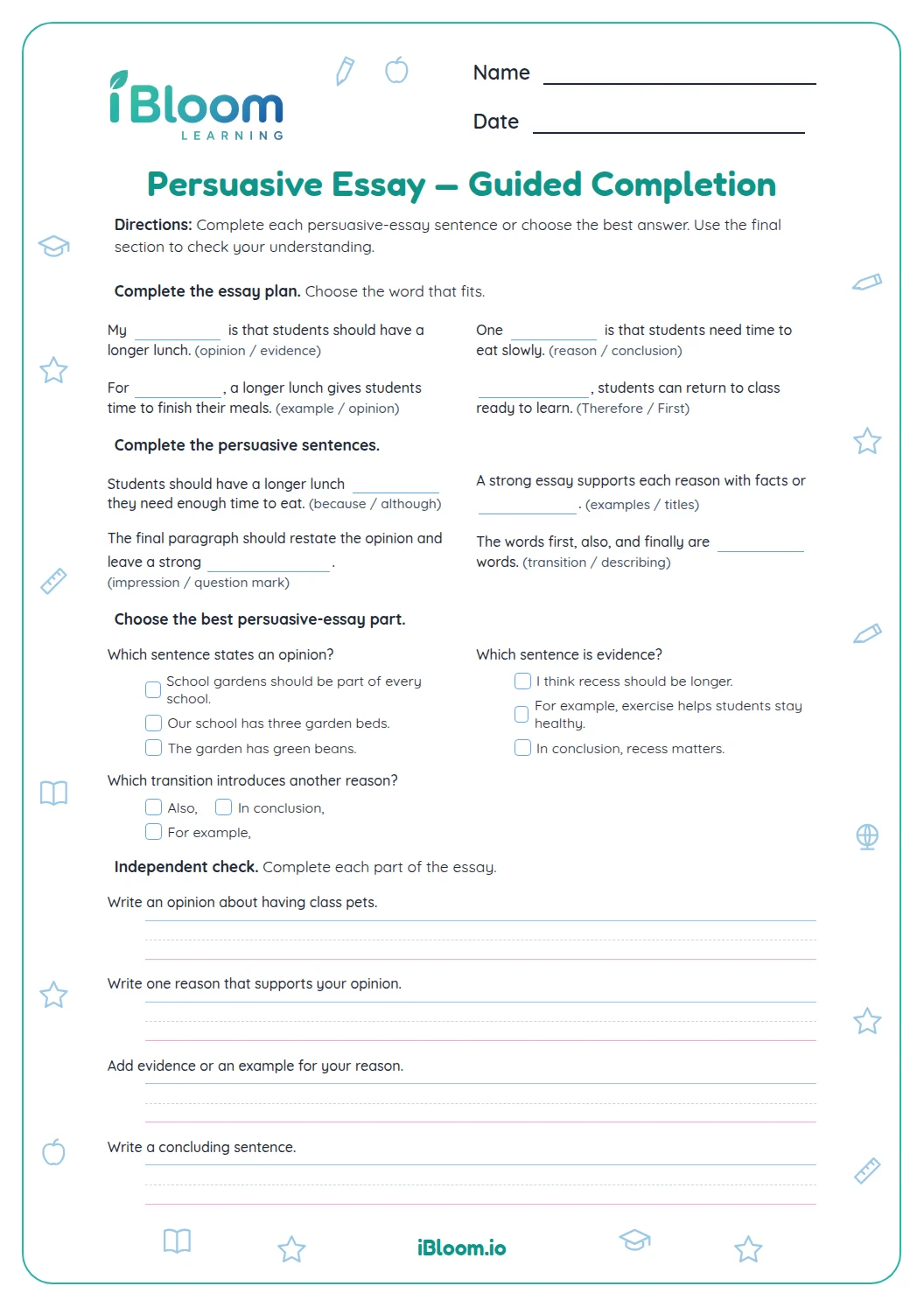
This free printable gives Grade 5 students 16 opportunities to write and improve advertisements. In Part A, students choose claims, reasons, facts, and calls to action. In Part B, they revise or combine sentences into short ad lines. The work practices Common Core W.5.1 by supporting opinions with reasons and information, and includes a separate answer key with sample responses.
Aligned to W.5.1
What do students do in each part?
Part A has eight choices about claims, reasons, facts, linking words, and calls to action. Part B has eight writing tasks: students add reasons, revise broad claims, write headlines, and combine details into mini-ads.
How can a product detail support a claim?
Question 1 gives the detail that a bottle keeps water cold. “Choose this bottle for cold water on the go” uses that feature as a reason for the recommendation.
- 1Claim: choose this bottle.
- 2Reason: it keeps water cold.
How can an ad stay fair to its reader?
Use information supplied in the prompt and connect it to a benefit. A claim such as “fixes every back problem forever” goes beyond the evidence, while a specific feature and a modest benefit are easier to support.
How should students check a written ad?
Read the sentence and find its claim, then ask whether the reason supports it. Check that the detail is specific and that the sentence ends with correct capitalization and punctuation.
How to use this worksheet
- 1Read the entire ad goal before choosing an option.
- 2Find the claim or recommendation in the sentence.
- 3Check that the reason or detail supports that claim.
- 4For a writing task, use a specific feature and a fair benefit.
- 5Reread for capitalization, punctuation, and a clear call to action when requested.
Common mistakes and quick fixes
The mistake
Choosing a true detail that does not support the claim.
The fix
Ask how the detail helps the reader understand the product benefit.
The mistake
Making an absolute promise such as “works for everyone.”
The fix
Use a specific feature and describe a reasonable benefit without promising more than the prompt supports.
The mistake
Writing a feature without connecting it to the reader.
The fix
Use a linking word such as because or so to show why the feature matters.
Curriculum alignment
This worksheet practices the skills named in the standard below.
Support an opinion with reasons and information in persuasive ad sentences.
On this sheet: Students select and write opinion claims supported by relevant reasons and details.
Show the official wordingHide the official wording
Write opinion pieces on topics or texts, supporting a point of view with reasons and information.
What to practice next
Make more practice
Further reading
Questions parents and teachers ask
What makes an ad sentence persuasive?
A persuasive ad states a clear recommendation or opinion and gives a reason that matters to a reader. Question 1 uses the bottle’s stated ability to keep water cold as its reason. A color detail can be true, but it does not explain why someone might choose the bottle.
Why should ad claims be fair?
A fair claim stays close to the information supplied about a product. “Fixes every back problem forever” is an absolute promise that the prompt does not support. The worksheet asks students to connect a specific feature to a reasonable benefit instead of overstating what a product can do.
Can students use their own product ideas?
Yes. In the open writing tasks, students can use the product in the prompt or choose a familiar one when the prompt allows it. The ad should still make a clear claim and support it with a relevant, specific reason. The answer key gives examples rather than required wording.
How should a student check a mini-ad?
Read it once to identify the claim and again to find its reason. Ask whether the reason actually supports the claim and whether the statement is fair. If the task requests two sentences, check that the second sentence connects a feature to a benefit.
How many questions are on this worksheet?
There are 16 questions in two parts: eight sentence choices in Part A and eight writing tasks in Part B. The separate answer key lists the correct choices and sample ad lines. A student’s wording can differ if it meets the prompt and supports the claim.