
About this worksheet
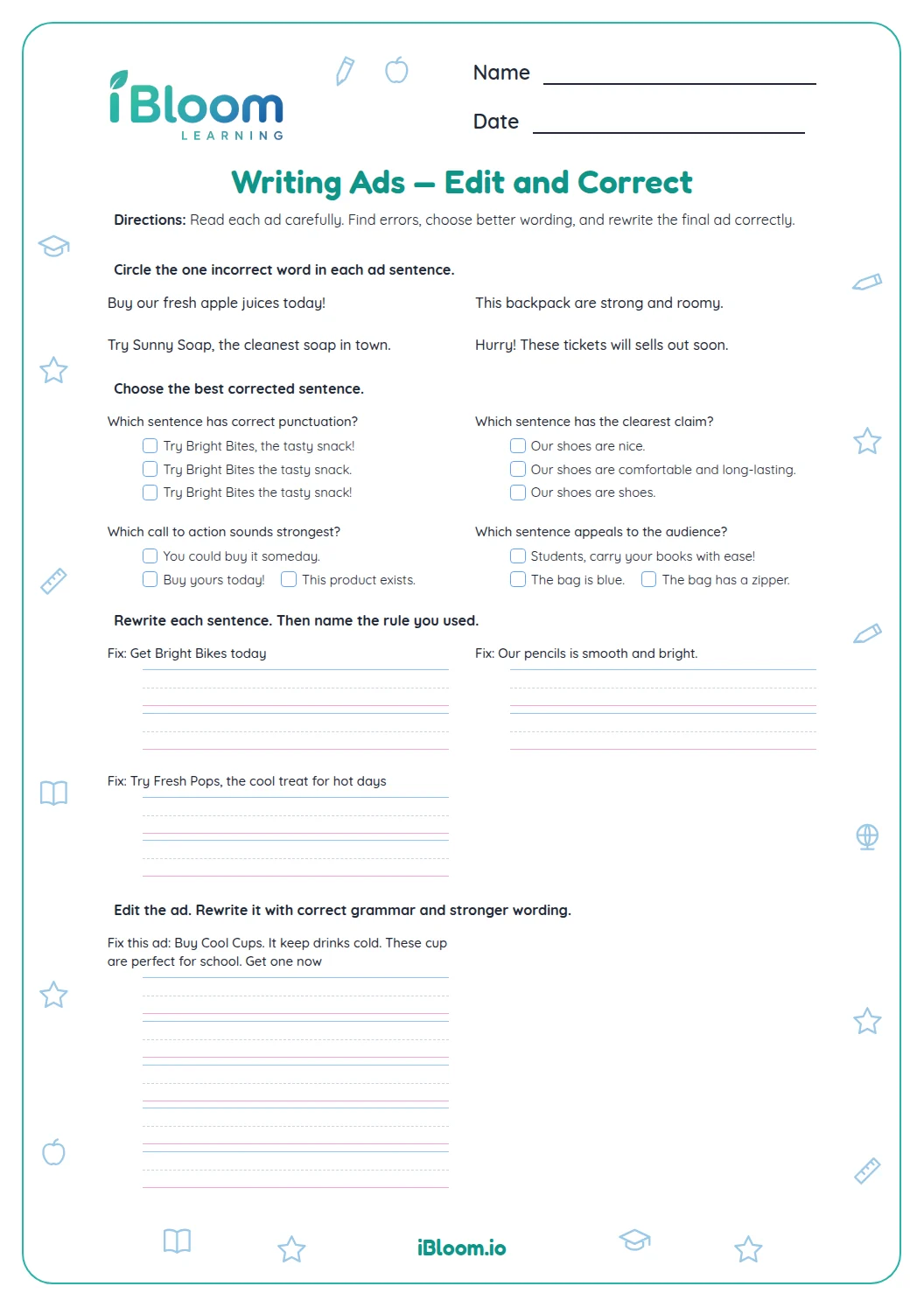
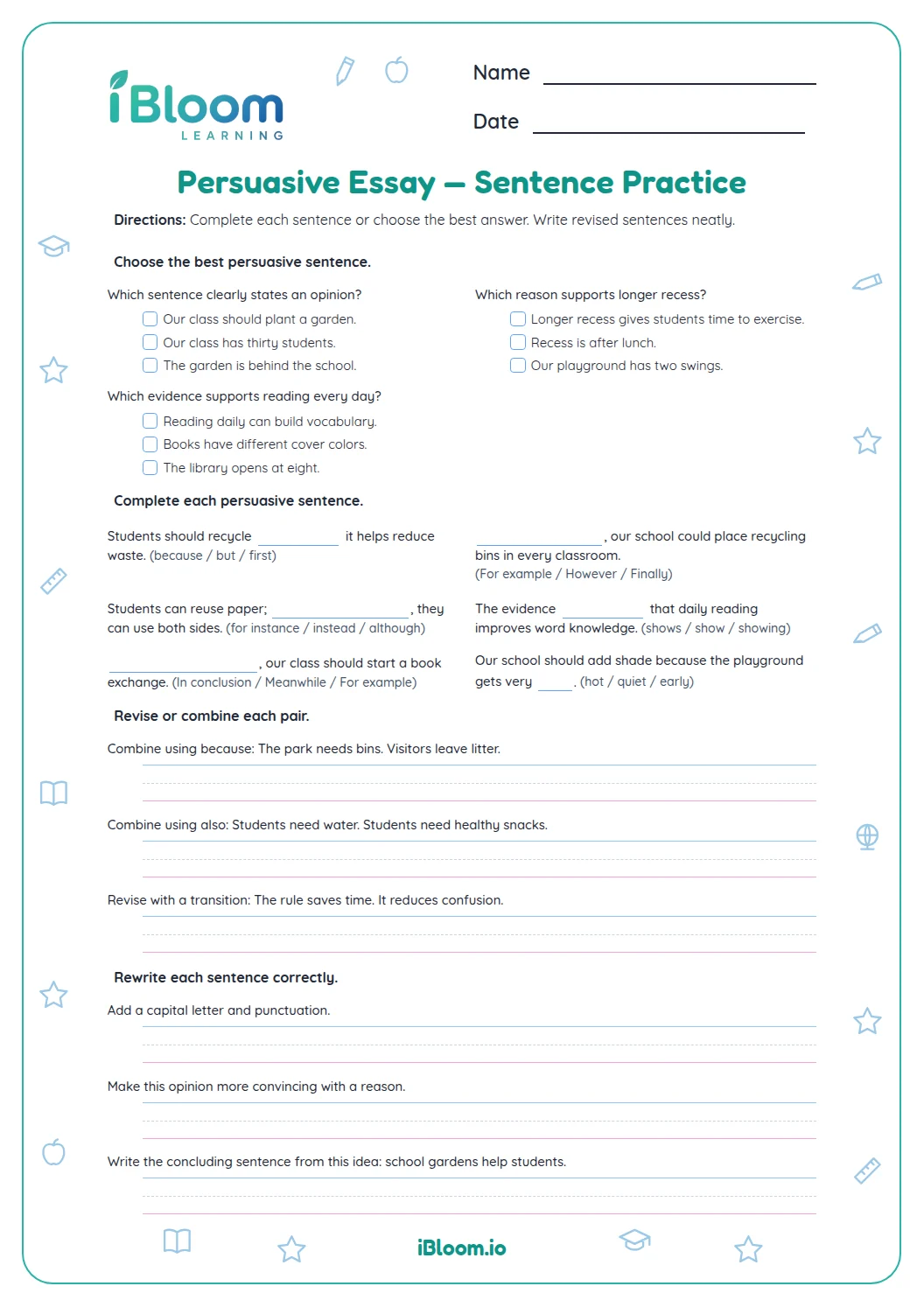
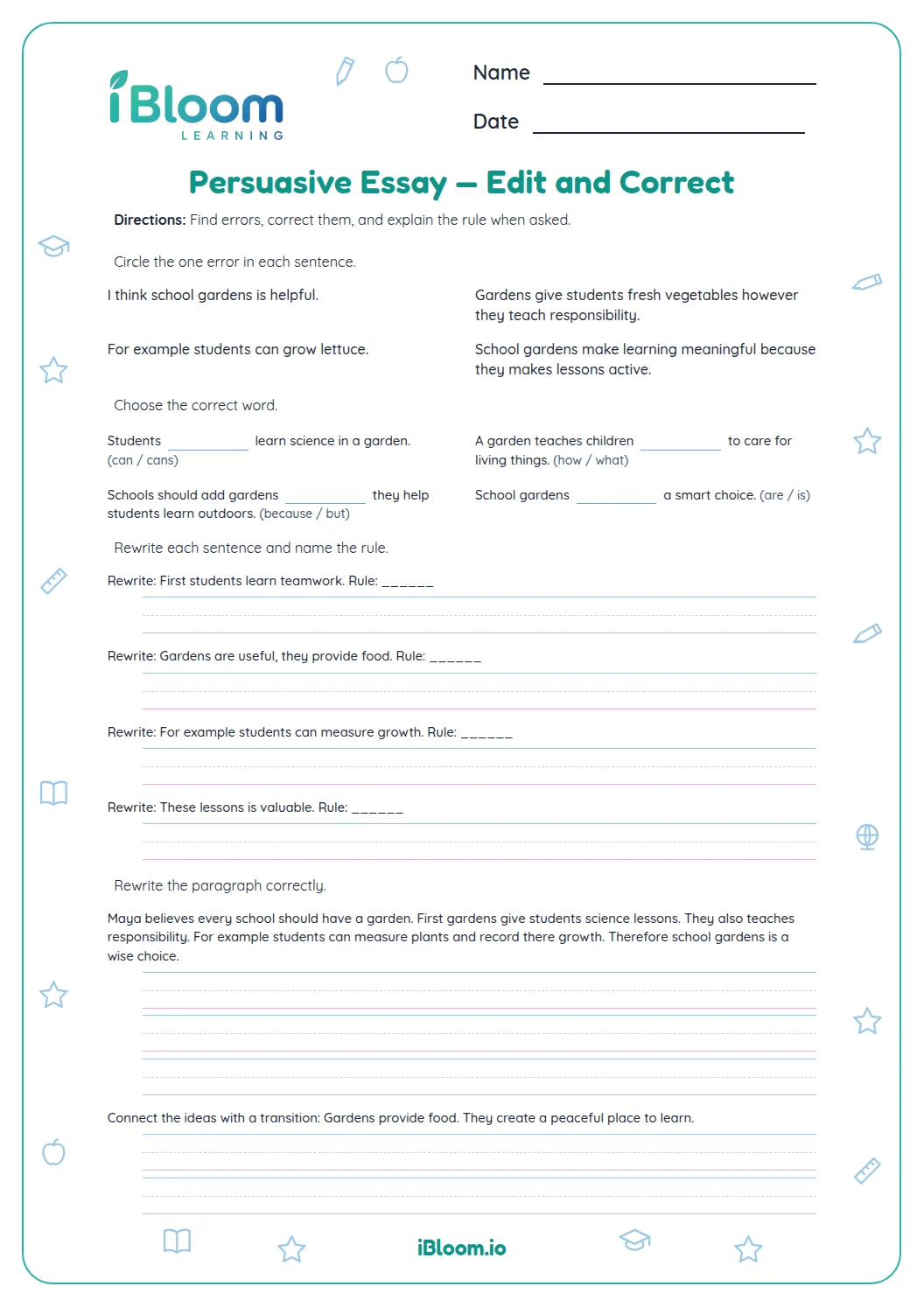
This Grade 5 worksheet helps students recognize how advertisements make a point. They identify claims, benefits, reasons, audiences, believable promises, slogans, and calls to action in short examples. The questions emphasize noticing how a reason or detail supports an ad message.
What makes an advertisement persuasive??
Students identify an ad claim, a customer benefit, reasons, believable promises, audience, slogans, and calls to action. They examine short examples and label the persuasive move, matching the old sheet’s recognition approach.
- The sheet has 14 questions in two parts.
- The answer key follows the practice pages.
How can students spot a believable ad claim?
Question 4 contrasts an impossible promise with “Keeps papers together.” The second line gives a realistic product benefit, so it is the more believable claim.
How can a detail support an ad message?
In question 9, a planting guide is a reason someone might choose the seed kit. Students identify the role of the detail instead of simply repeating the product claim.
How to use this worksheet
- 1Read the directions at the top of the page.
- 2Work through each part in order.
- 3Reread a sentence or example before choosing an answer.
- 4Check the separate answer key and revisit any missed item.
Common ad-writing mix-ups
The mistake
Treating a catchy slogan as evidence.
The fix
A slogan is memorable wording; a reason or fact supports the claim.
The mistake
Assuming an exciting promise is believable.
The fix
Check whether the ad gives a realistic benefit or a detail that supports it.
The mistake
Naming any reader as the audience.
The fix
Look for clues about who would use or benefit from the product.
What to practice next
Make more practice
Questions parents and teachers ask
What parts of an advertisement are covered?
Students identify claims, benefits, reasons, audiences, slogans, and calls to action. They also distinguish believable promises and concrete product details. The examples ask learners to notice how each choice works in a short ad. The worksheet pairs these descriptions with examples so students can practice identifying the idea in context.
How many questions are included?
The worksheet includes 14 questions on two practice pages. Students begin with multiple-choice recognition, then answer short questions about ad examples. The answer key follows the practice pages. The key gives students a way to review each item after completing both parts.
Does every advertisement need a slogan?
No. A slogan can help make a message memorable, but an ad can also persuade with a clear benefit and a supporting reason or detail. The worksheet asks students to recognize several different persuasive choices. The worksheet pairs these descriptions with examples so students can practice identifying the idea in context.
What is a call to action?
A call to action tells the audience what to do next, such as visit a shop or join a club. Students distinguish those directions from product facts, reasons, and slogans in the examples. The worksheet pairs these descriptions with examples so students can practice identifying the idea in context.
Is an answer key included?
Yes. The key follows the two worksheet pages and lists the correct choices and short responses. Students can use it to check which line states a claim, names an audience, or gives a supporting reason. Check the key after completing both parts, then return to any example that needs another look.