


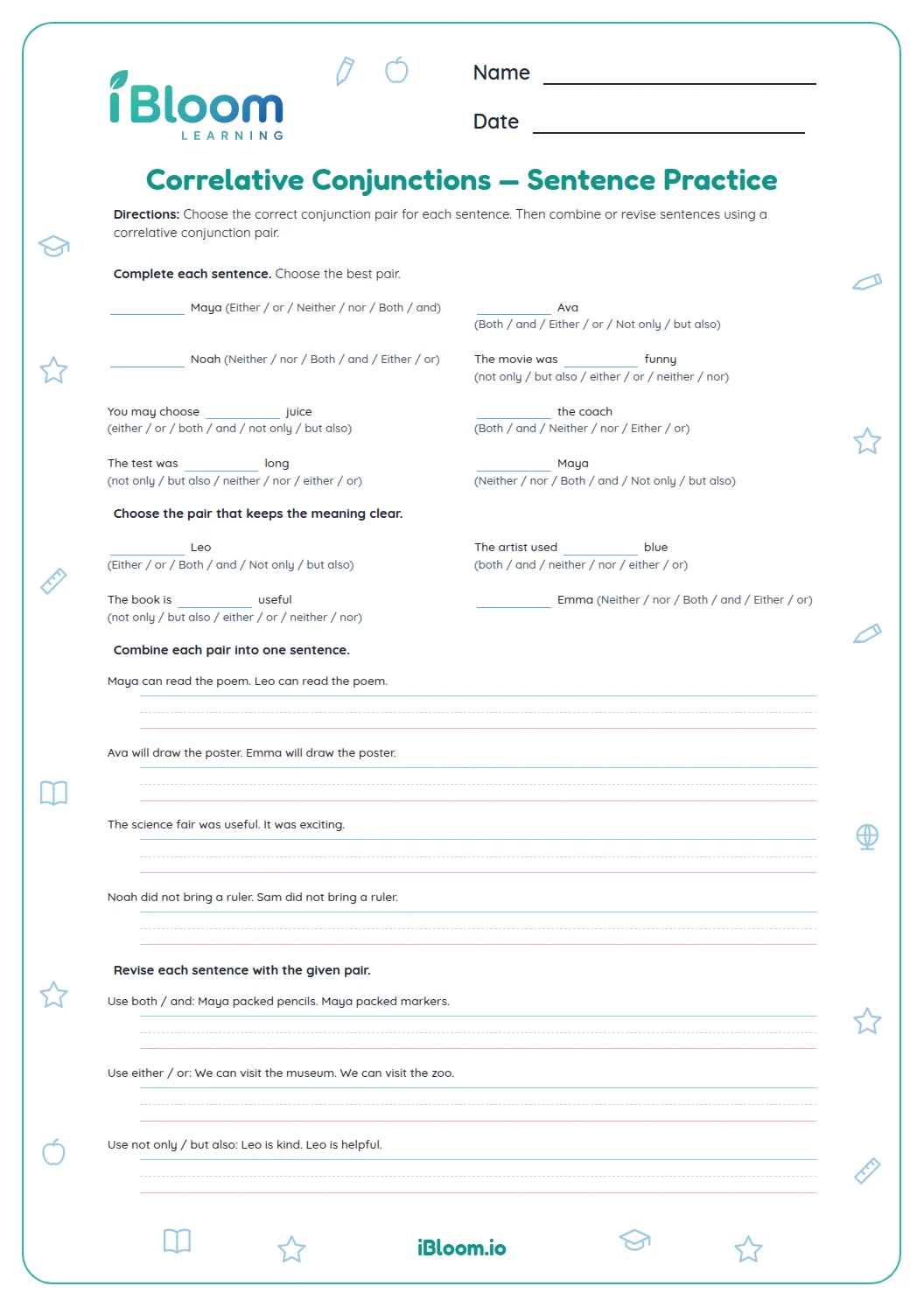
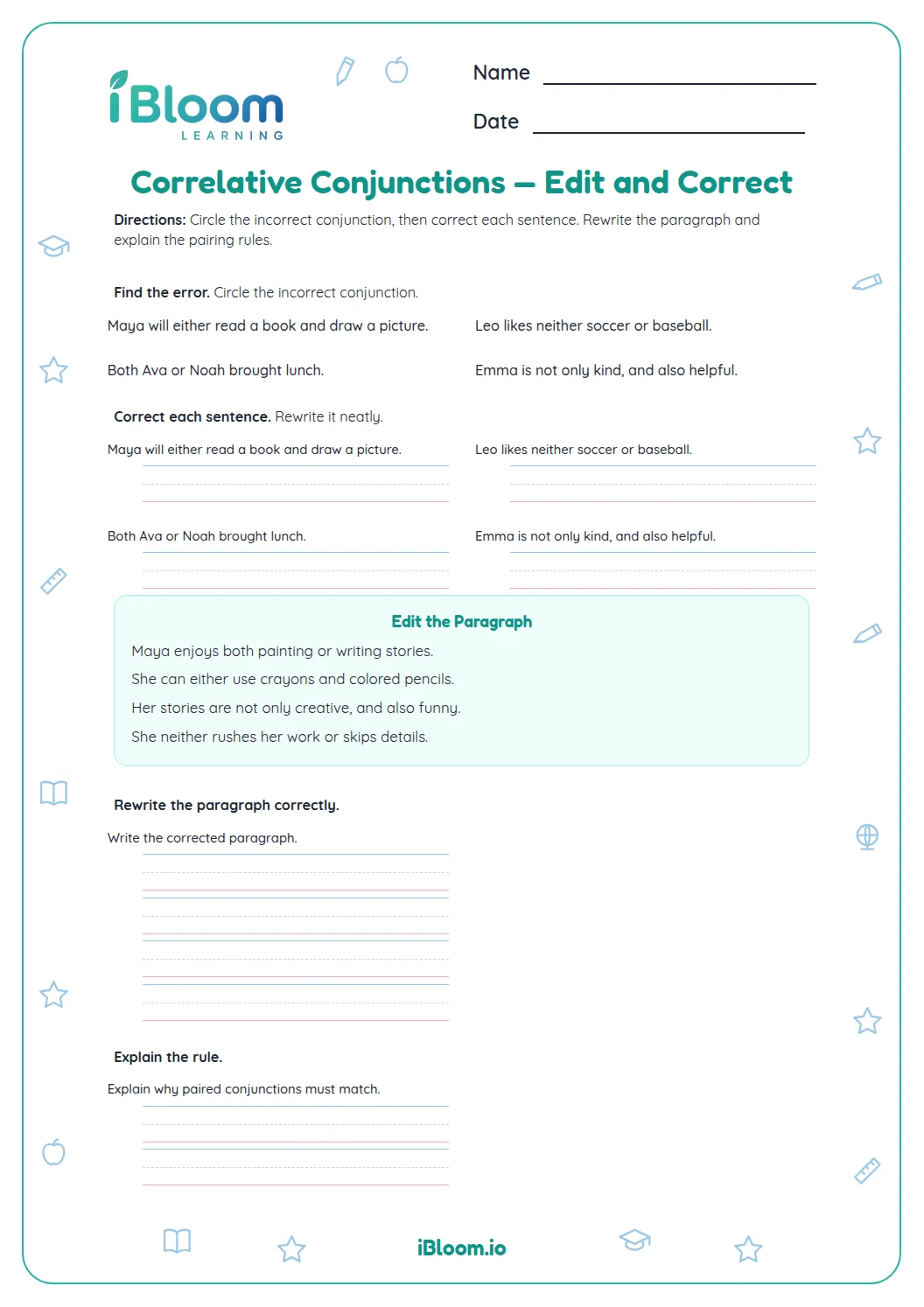


About this worksheet
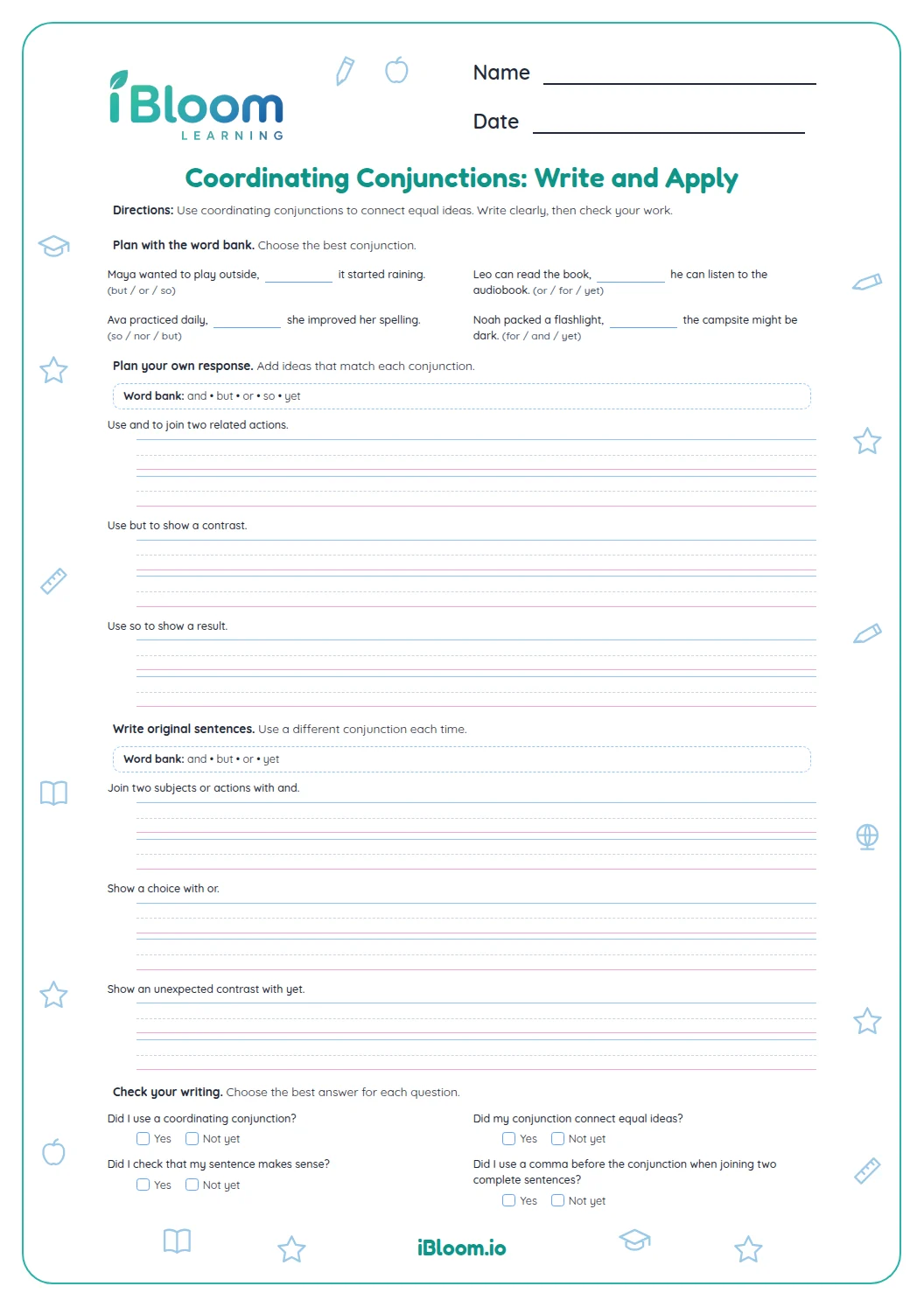
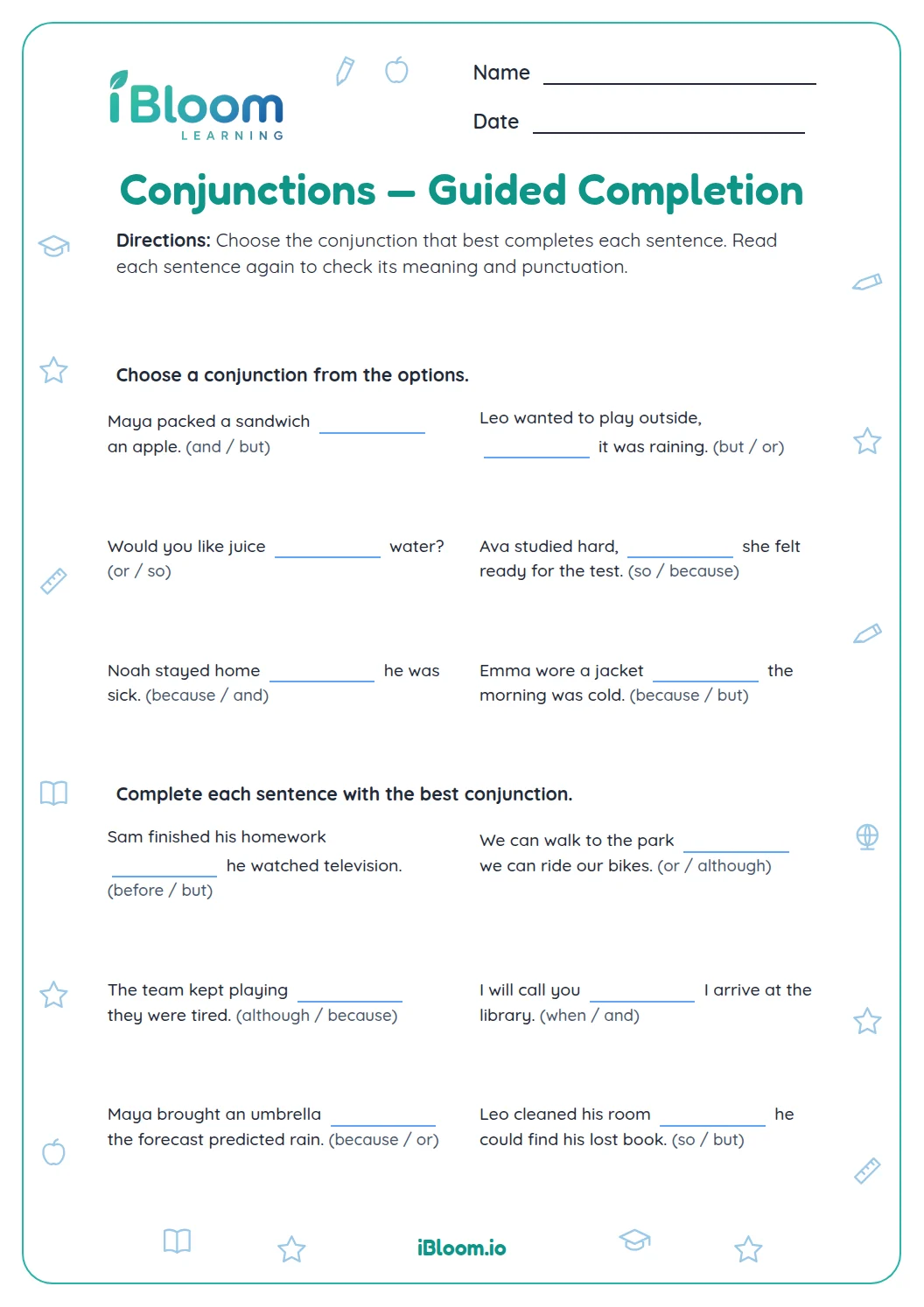
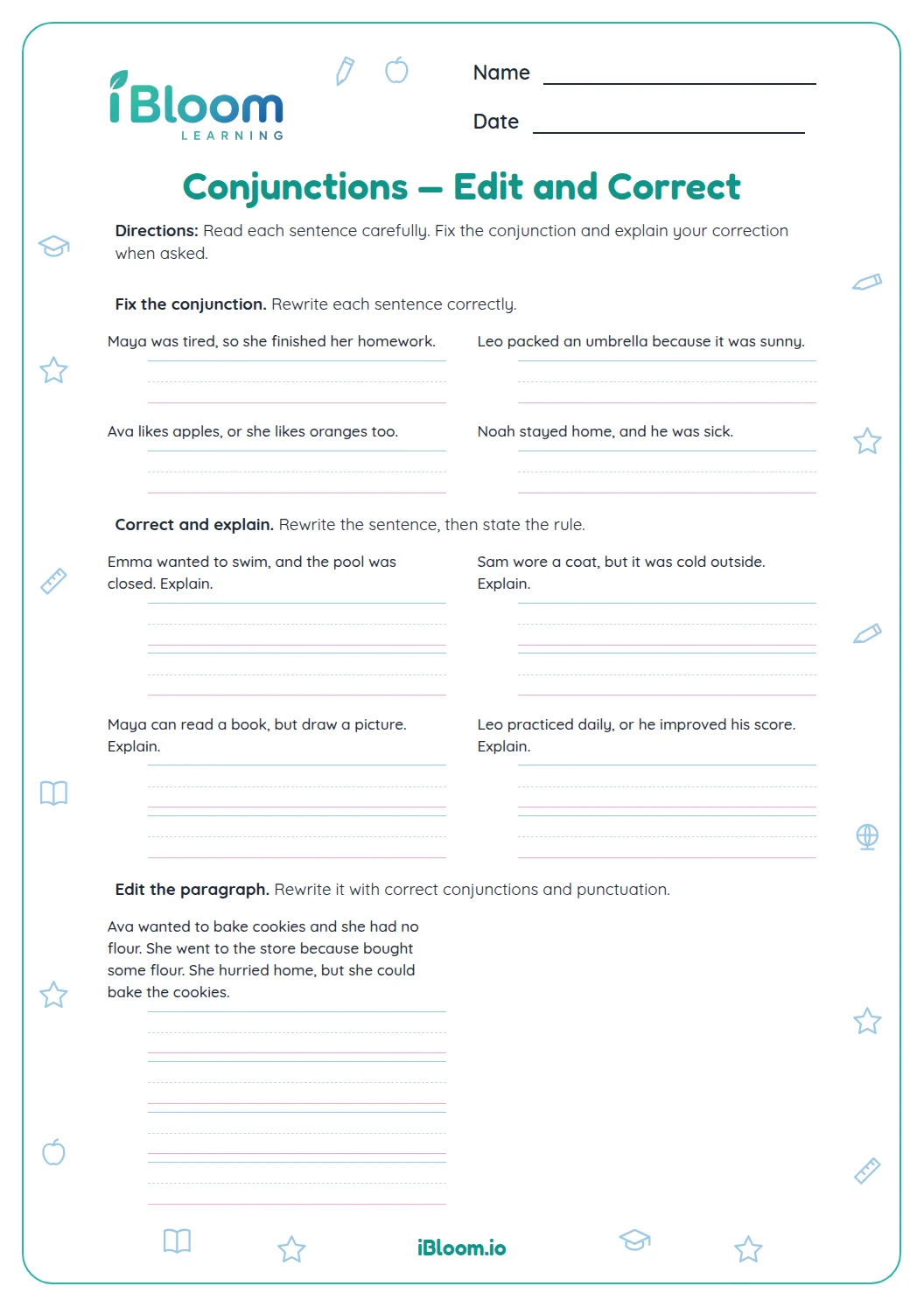
This free printable Grade 5 worksheet practices coordinating conjunctions in three steps. Students choose a connector in two sets of sentence questions, then join sentence pairs with and, but, so, or yet. The 14 questions move from recognition to sentence construction, and a separate answer key includes sample responses for the written items. It aligns with CCSS L.5.1.a, which asks students to explain how conjunctions function in sentences.
Aligned to L.5.1.a
What does a coordinating conjunction tell the reader?
It shows how two words or ideas relate. And adds information, but and yet contrast, or offers a choice, for gives a reason, and so signals a result.
- 1The clouds cleared, ___ the hikers continued. → so; the clearing made it possible to continue.
How can you choose the right connector?
Read the complete thought on each side. Ask whether the second thought adds, contrasts, offers a choice, gives a reason, or follows as a result.
How do you join two complete sentences?
Keep both complete ideas, use the conjunction named in the prompt, and place a comma before it. Then reread the combined sentence to make sure the relationship still makes sense.
- 1Mina opened the window. Fresh air entered. → Mina opened the window, and fresh air entered.
How to work through this page
- 1Read the complete sentence before choosing a connector.
- 2Name the relationship between the ideas: addition, contrast, choice, reason, or result.
- 3For each sentence choice, compare the options and select the connector that fits.
- 4Join each final pair with the named conjunction and reread the result.
- 5Check the choices and sample sentences in the answer key.
Common mistakes and quick checks
The mistake
Choosing a conjunction from the first clause alone.
The fix
Read both sides and identify how the ideas relate.
The mistake
Using so when the second idea contrasts with the first.
The fix
Try but or yet when the second idea is unexpected.
The mistake
Joining two complete thoughts without a comma.
The fix
Place a comma before the coordinating conjunction.
Common Core alignment
This worksheet practices the following Common Core skill.
Explain how conjunctions function in sentences.
On this sheet: Students choose conjunctions by meaning and use named conjunctions to join sentence pairs.
Show the official wordingHide the official wording
Explain the function of conjunctions, prepositions, and interjections in general and their function in particular sentences.
What to practice next
Make more practice
Further reading
Questions parents and teachers ask
What does a coordinating conjunction do?
A coordinating conjunction joins words, phrases, or ideas of equal importance. This worksheet focuses on how and, but, or, so, yet, and for connect ideas in sentences. Students use the meaning on both sides of the blank to choose a connector, then combine two sentence pairs.
How can I choose between but and so?
Use but when the ideas contrast, as in “The path was steep, but we kept climbing.” Use so when the second idea follows as a result, as in “The rain stopped, so the game began.” Read both complete ideas together and check that the relationship sounds logical.
Do students write on this worksheet?
Yes. Four items in the second part ask students to choose a conjunction from three options, and the final two ask them to combine sentence pairs with a named connector. The answer key gives sample combined sentences. A child may use different capitalization only if the completed sentence remains correctly written.
When does a conjunction need a comma?
When a coordinating conjunction joins two complete sentences, place a comma before it. For example, “Mina opened the window, and fresh air entered.” A comma is not usually needed when the conjunction joins two nouns, as in “a map and a compass.”
What can my child practice next?
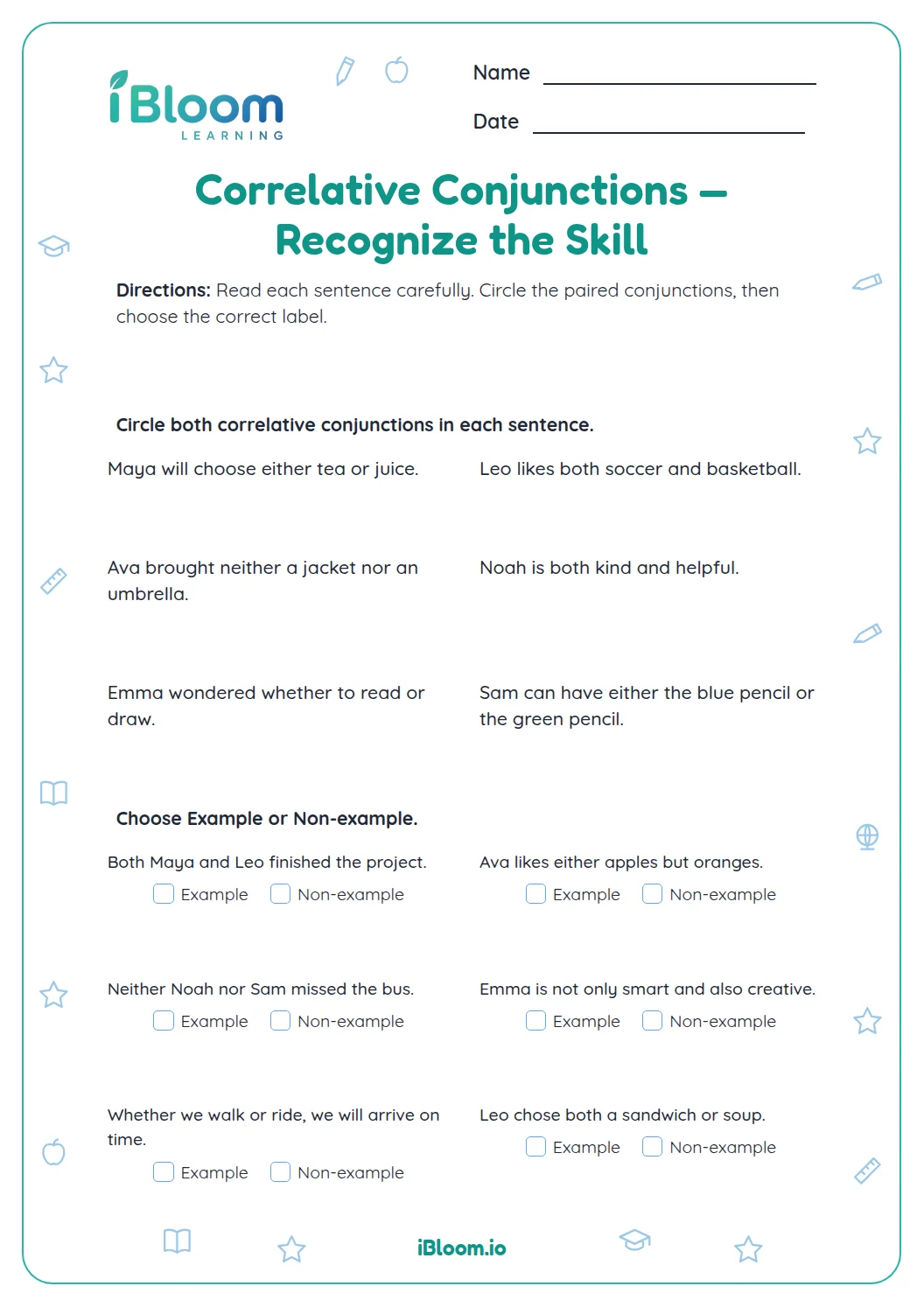
After this page, try a worksheet on correlative conjunctions, which use pairs such as either/or, or subordinating conjunctions, which connect ideas with different roles. The related practice links below lead to those Grade 5 grammar topics. These pages keep practice focused on how conjunctions connect clauses.