

About this worksheet
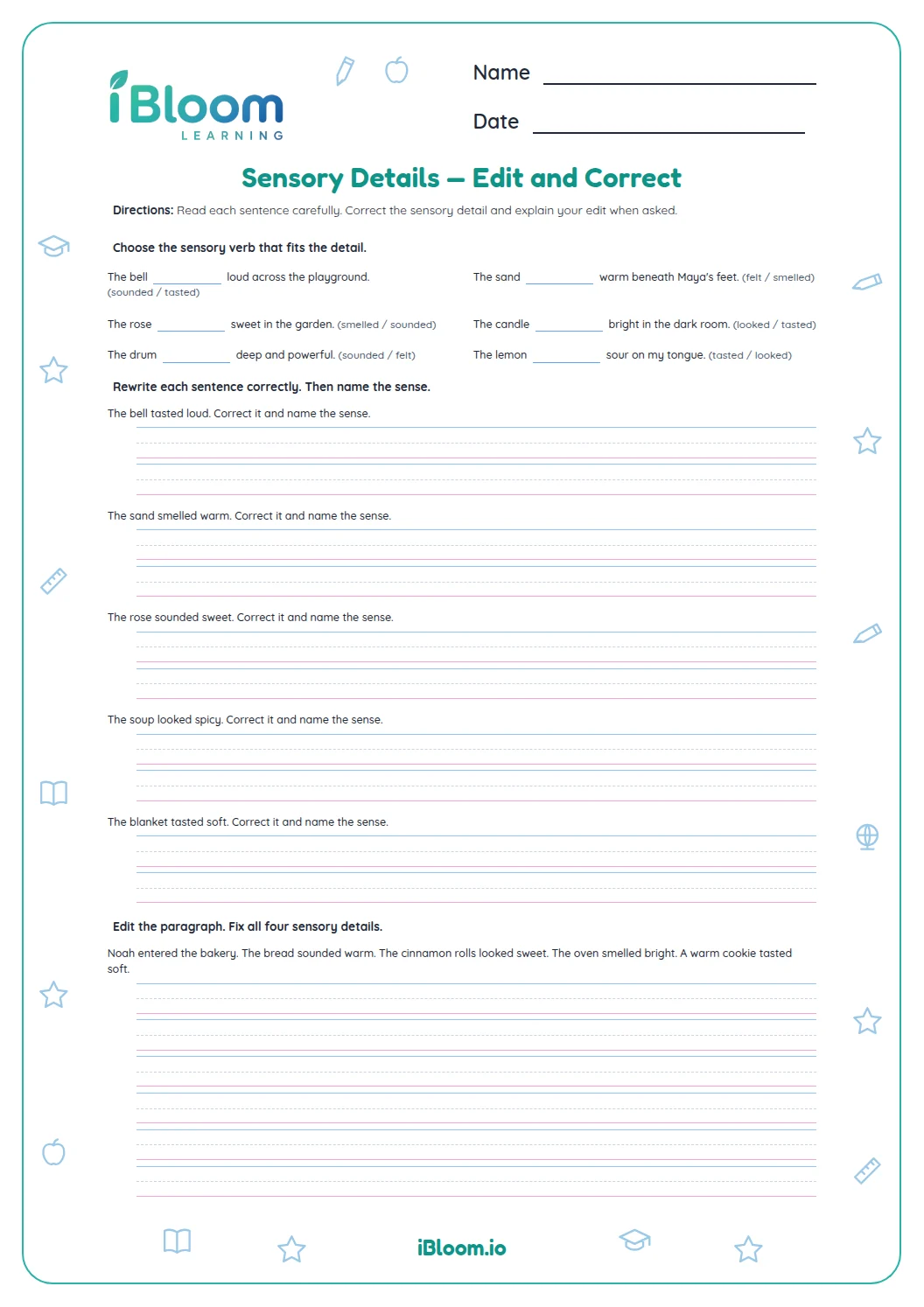
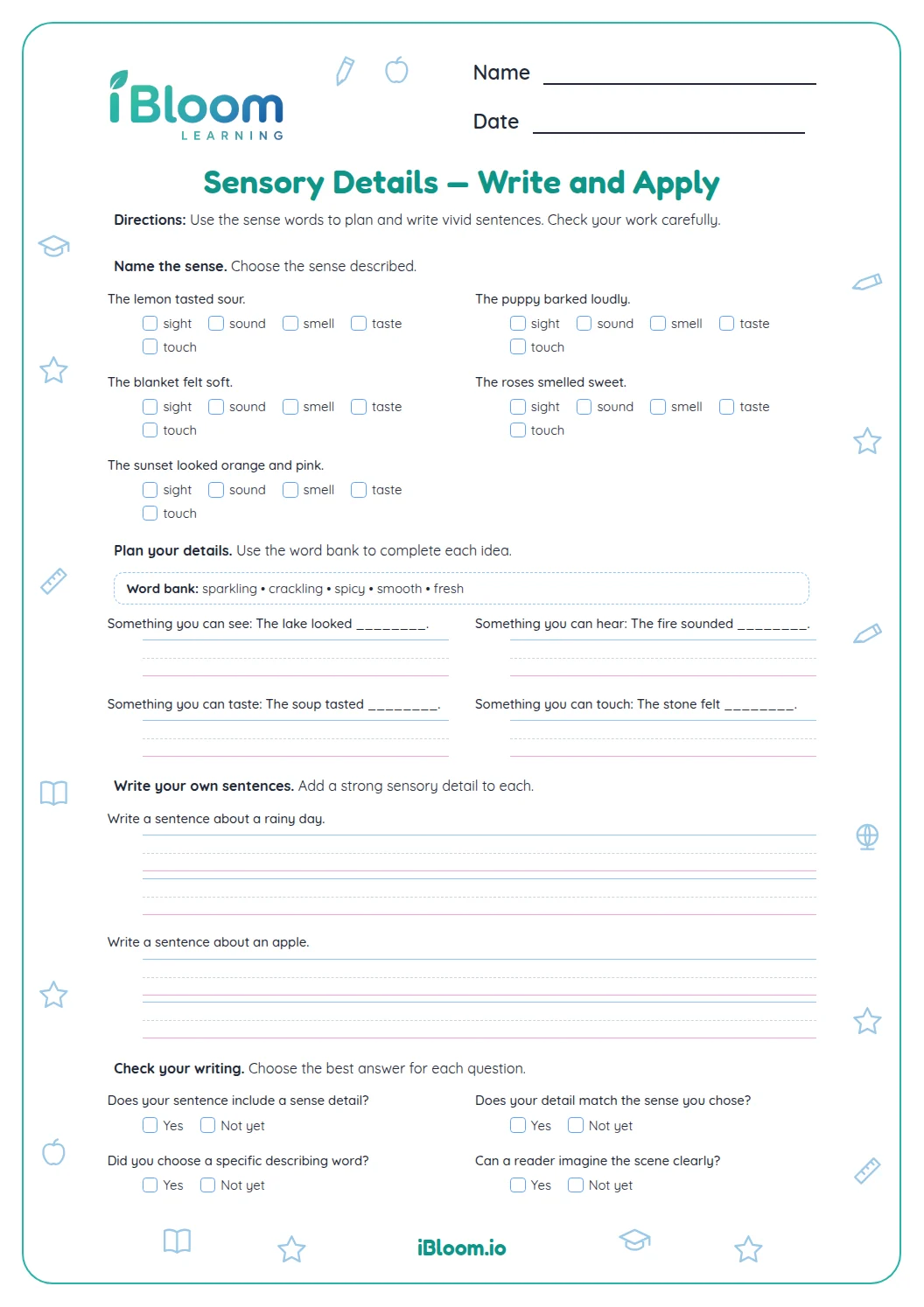
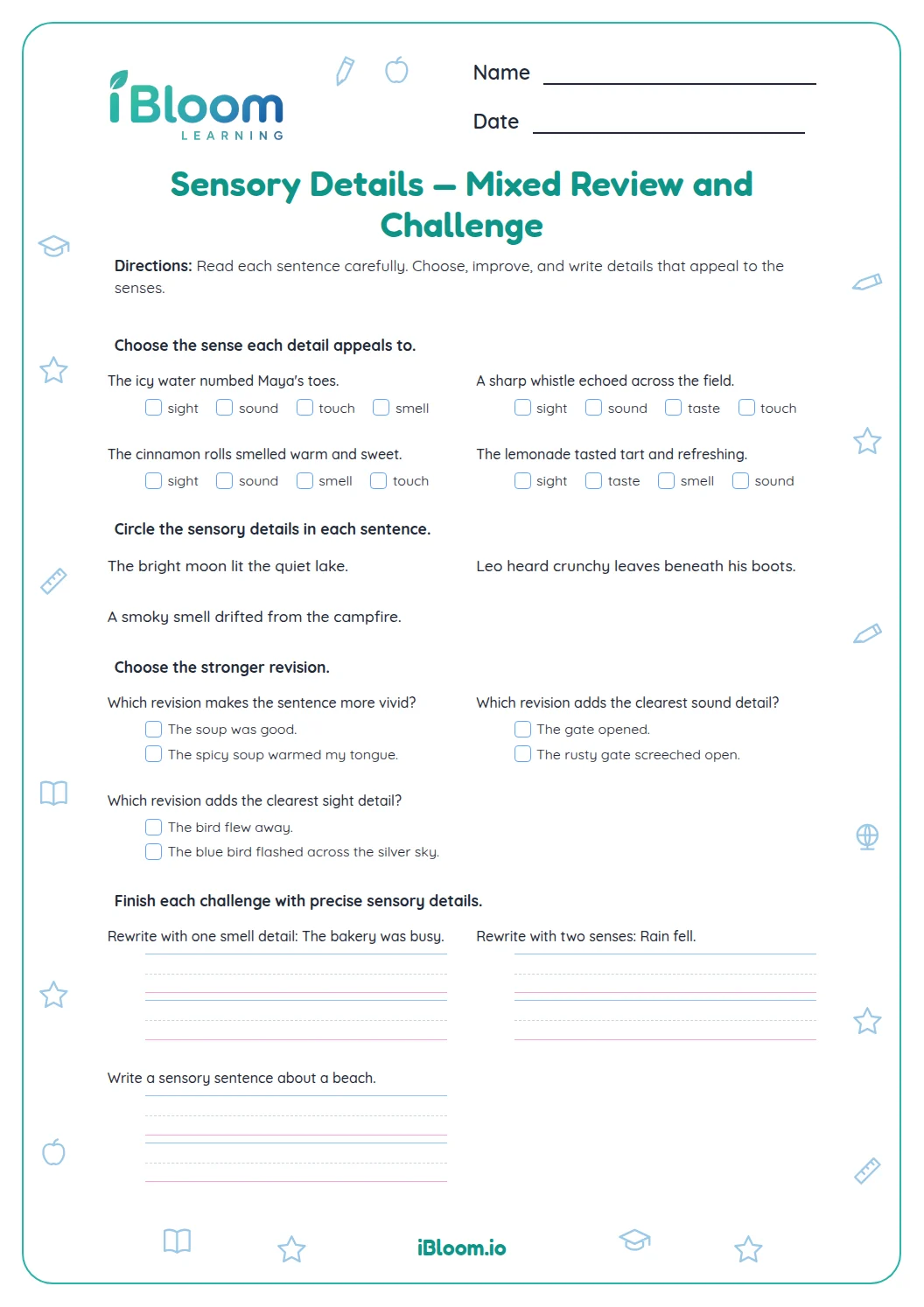
This Grade 5 sensory details worksheet helps students connect concrete words to what a reader can see, hear, smell, taste, or touch. The first questions ask students to recognize a sense or choose a stronger phrase; the later questions ask them to complete and revise sentences. The progression practices CCSS.ELA-Literacy.W.5.3.d, using sensory language to convey experiences precisely. A separate answer key includes sample responses for the writing items.
Aligned to W.5.3.d
How can students identify a sensory detail?
Look for a specific word or phrase tied to one of the senses. “The gate creaked” suggests hearing; “The gate was old” gives information but does not create the same sound.
What makes one detail more precise than another?
A useful detail gives the reader something concrete to picture or sense. Compare “The wind was there” with “The wind tugged at my hood.” The second phrase shows what the wind did.
- 1The wind tugged at my hood. → a specific action a reader can imagine.
How can a writer add a sensory detail?
Keep the sentence meaning, then add a word that fits a sense. A smell detail belongs with a scent; a texture detail describes touch. Check that the added detail makes sense in the scene.
How to use this worksheet
- 1Name the sense before choosing an answer.
- 2Underline the exact sensory word or phrase.
- 3For blanks, read the whole sentence and check which sense is missing.
- 4When revising, replace a general word with a concrete image or action.
- 5Reread the finished sentence to make sure the detail fits.
Common mistakes and quick fixes
The mistake
Picking a color when the question asks about sound.
The fix
Match the detail to what a person could hear, not see.
The mistake
Adding a vivid word that does not fit the scene.
The fix
Check the sentence meaning and the sense named in the prompt.
The mistake
Using a general word such as “nice.”
The fix
Choose a concrete detail that shows what was sensed.
Common Core alignment
These Common Core standards describe the skills practiced on this worksheet.
Use concrete language and sensory details to make experiences precise.
On this sheet: Children identify, complete, and revise sentences with details linked to the senses.
Show the official wordingHide the official wording
Use concrete words and phrases and sensory details to convey experiences and events precisely.
What to practice next
Questions parents and teachers ask
What are sensory details in writing?
Sensory details use concrete language connected to sight, hearing, smell, taste, or touch. “The gate creaked” suggests a sound, while “the gate was old” gives general information. Students use this worksheet to identify sensory phrases and try adding precise details of their own.
Can a student use a different answer from the key?
Yes. The answer key gives sample responses for the written items, and another response can also be correct. Check that it completes the sentence, fits the scene, and uses the sense named in the prompt. The multiple-choice and word-choice items have a specific intended answer.
Which senses are included?
The practice includes sight, hearing, smell, taste, and touch. Early questions ask students to recognize a sensory phrase; later questions ask them to choose a precise detail or write one. This sequence makes the move from noticing sensory language to using it visible.
How can students make a detail more precise?
Replace a general statement with a concrete word, action, or description connected to a sense. Instead of saying that wind was present, a writer might say it tugged at a hood. Ask whether the reader can picture or sense the moment more clearly.
Can more than one sensory detail be correct?
Yes. The multiple-choice and word-choice questions have one intended answer, while the final writing prompts invite original details. The key gives examples for describing an apple with sight and taste and a rainy day with sound and touch. Accept other clear details that use the requested senses.