

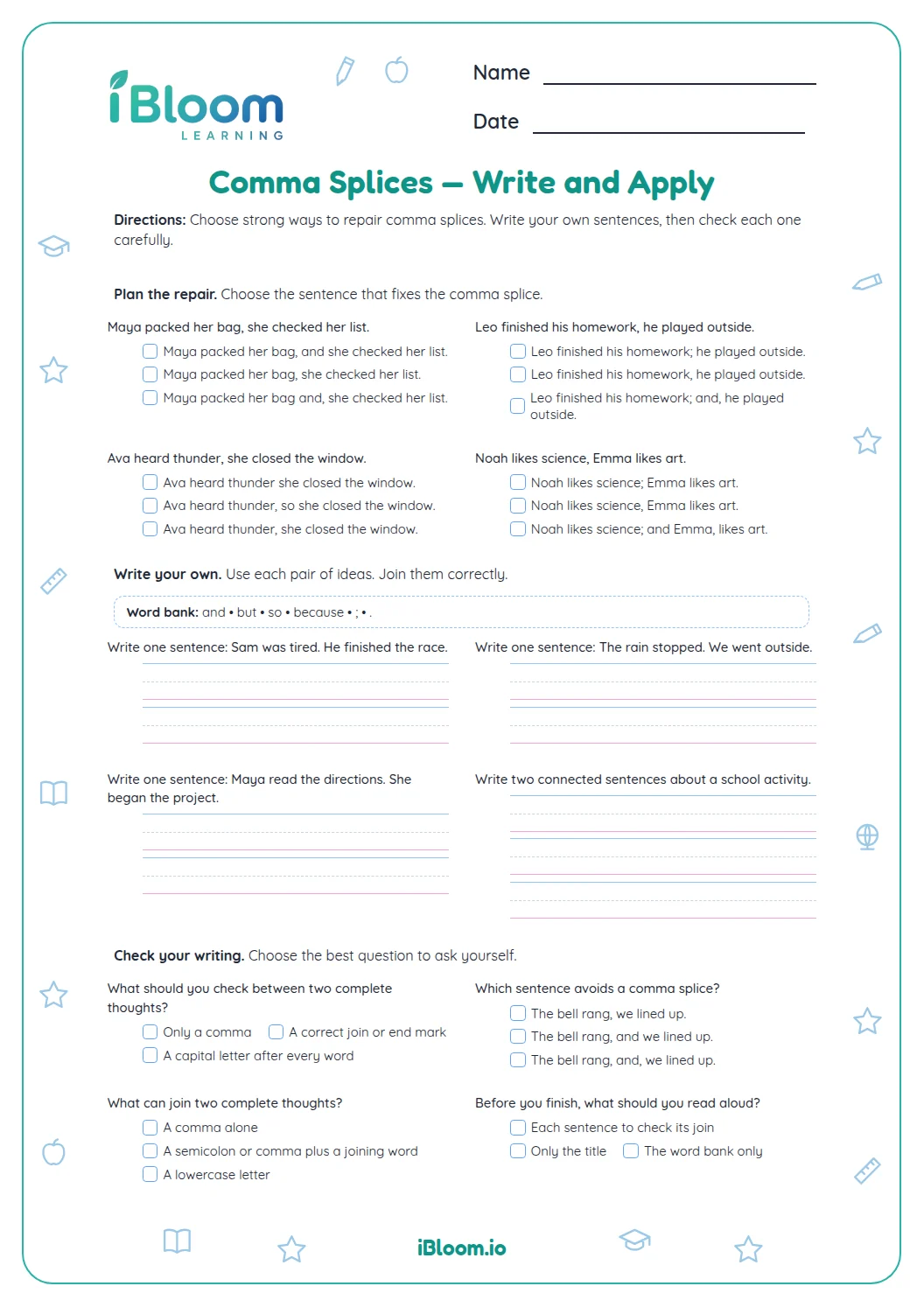
About this worksheet
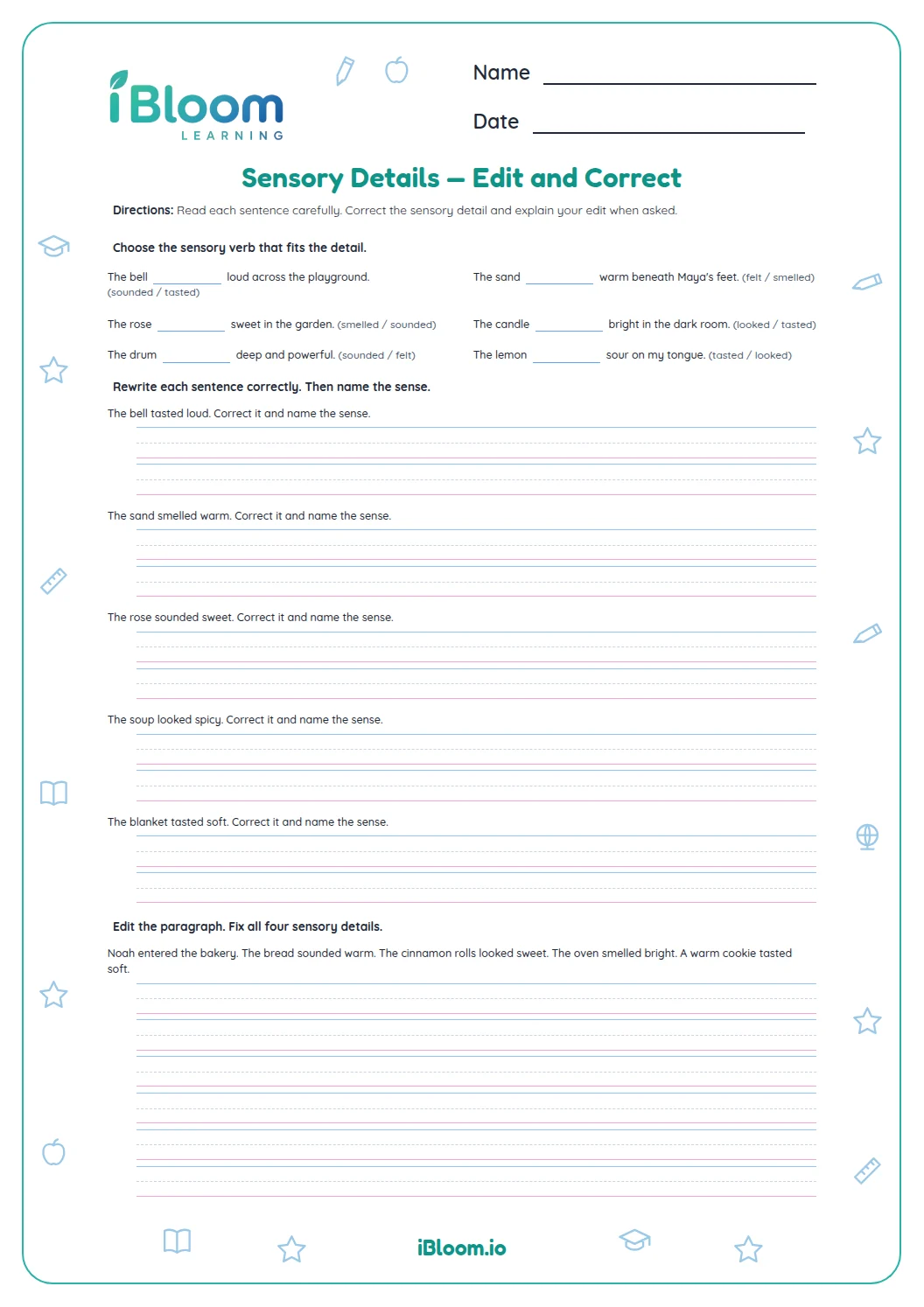
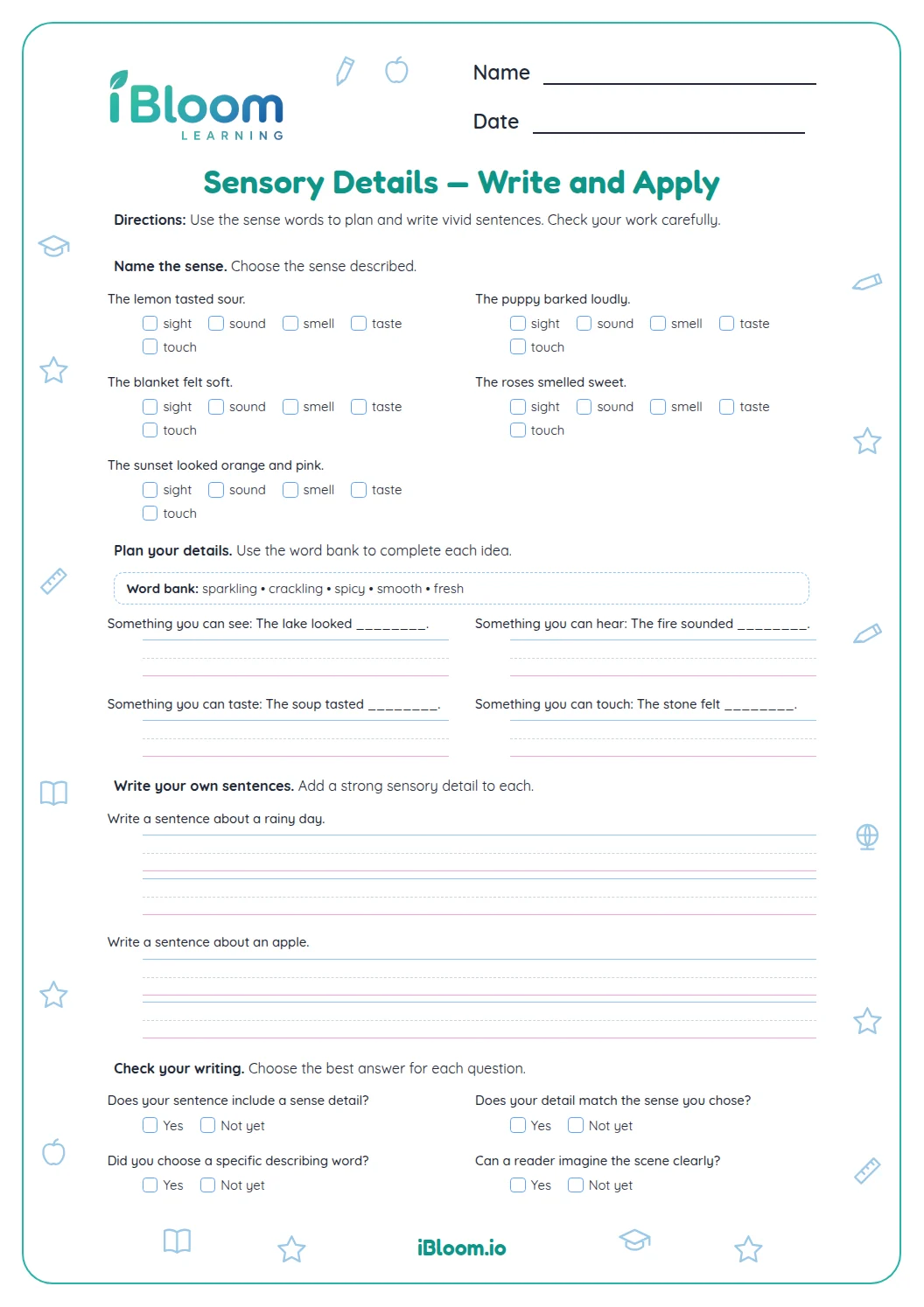
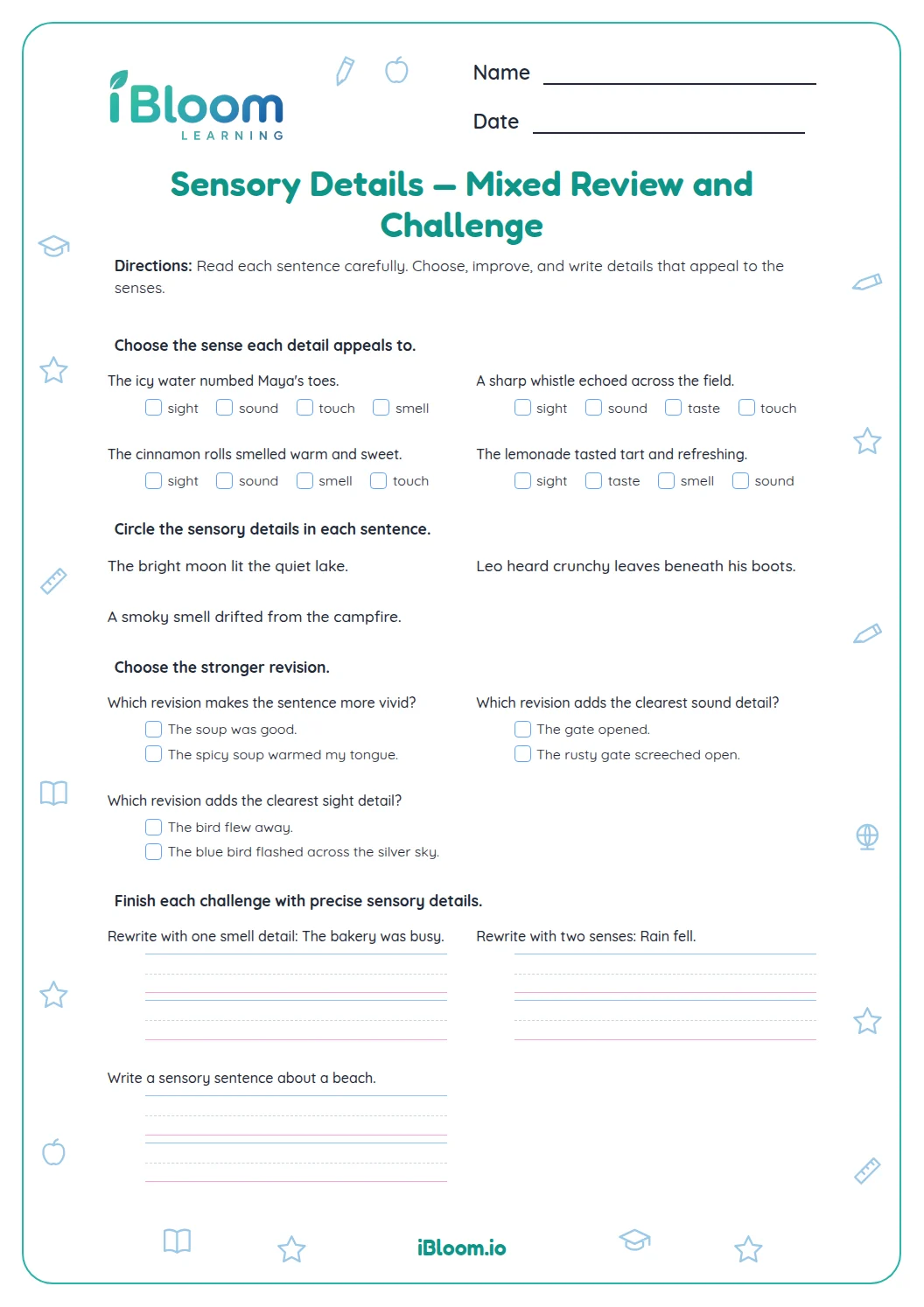
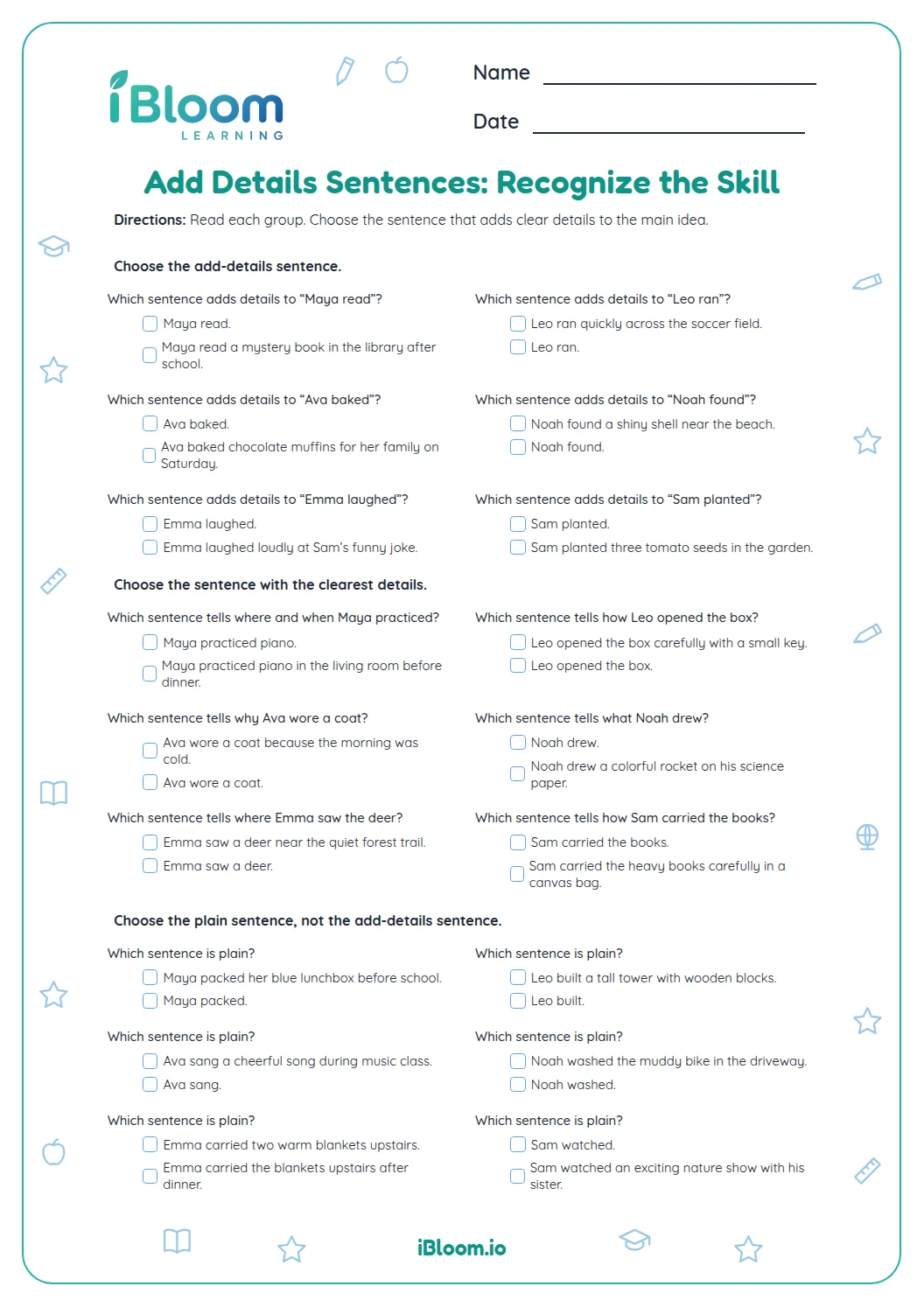
This printable Grade 5 worksheet builds practice with sensory details in sentences. Students identify which sense a phrase appeals to, compare vivid details, then revise plain sentences and compose their own. Students identify and use precise words for sight, sound, smell, taste, and touch. The answer key includes fixed choices and sample responses for the open-ended writing.
How can a reader identify a sensory detail?
Look for words connected to sight, hearing, smell, taste, or touch. A single sentence may include more than one sense, so identify the exact phrase the question asks about.
For example, in “The wet grass felt cool under my shoes,” felt and cool point to touch.
- 1“The cinnamon roll smelled warm and sweet.”
- 2The word smelled signals the sense of smell.
What makes a detail vivid?
A vivid detail uses precise language that lets a reader picture or sense an event. “The gate squeaked” gives a sound; “the gate was old” gives a general fact.
In Part B, compare each phrase with the requested sense. The best choice adds a detail that fits the scene and the sense.
How can a plain sentence become more vivid?
Keep the original idea, then add a precise sensory clue. A useful detail can name a texture, sound, aroma, flavor, or visible feature.
Part C offers sentence revision and a final sentence of your own. The key gives samples; a different response works if it is grammatical and clearly uses the requested senses.
How to use this worksheet
- 1Read the sense named in each question before choosing a detail.
- 2Underline the clue word that signals the sense, such as smelled, tasted, or squeaked.
- 3In Part B, check that the phrase fits both the scene and the requested sense.
- 4For revision items, keep the original idea and replace a vague word with a precise detail.
- 5For the last question, include two details tied to different senses.
- 6Compare your open responses with the sample answers and check that each is a complete sentence.
Common mistakes and quick fixes
The mistake
Choosing a detail about how something looks when the prompt asks for sound.
The fix
Listen for sound words such as squeaked, rumbled, crackled, or tapped.
The mistake
Adding a detail that changes the sentence’s main idea.
The fix
Keep the same object or event and make its description more specific.
The mistake
Using two adjectives that appeal to the same sense for the final prompt.
The fix
Name two distinct senses, such as smell and touch, and include a clue for each.
What to practice next
Make more practice
Questions parents and teachers ask
How many questions are on the sensory details worksheet?
There are 16 questions in three parts. Students identify senses, choose vivid details, and revise or write sentences. The answer key gives the fixed choices and sample responses for open writing items, which may vary when they preserve meaning and use the requested sense.
Which five senses do students practice?
Students practice sight, hearing, smell, taste, and touch. Each identification item asks which sense a phrase uses, and the selection part matches a requested sense with a vivid detail. The final questions ask students to use sensory words in complete revised sentences.
Are there sample answers for writing questions?
Yes. The answer key supplies samples for sentence revisions and original writing prompts. Other responses can work if they keep the prompt’s meaning, form a complete sentence, and include the sense named in the directions. Check each revision for a complete sentence and a clear sensory clue.
How should students revise a vague sentence?
Keep the original subject and idea, then replace a general word with precise sensory language. For example, “The blanket was good” can become “The fleece blanket felt soft against my cheek,” which identifies a specific texture. A smell, texture, sound, flavor, or visible feature can make the detail more precise.
How long does this worksheet take?
Plan for about 20 minutes. Students can finish the sense and detail choices first, then spend more time composing open responses. A brief conversation about why each selected detail fits can add useful practice without changing the worksheet.