


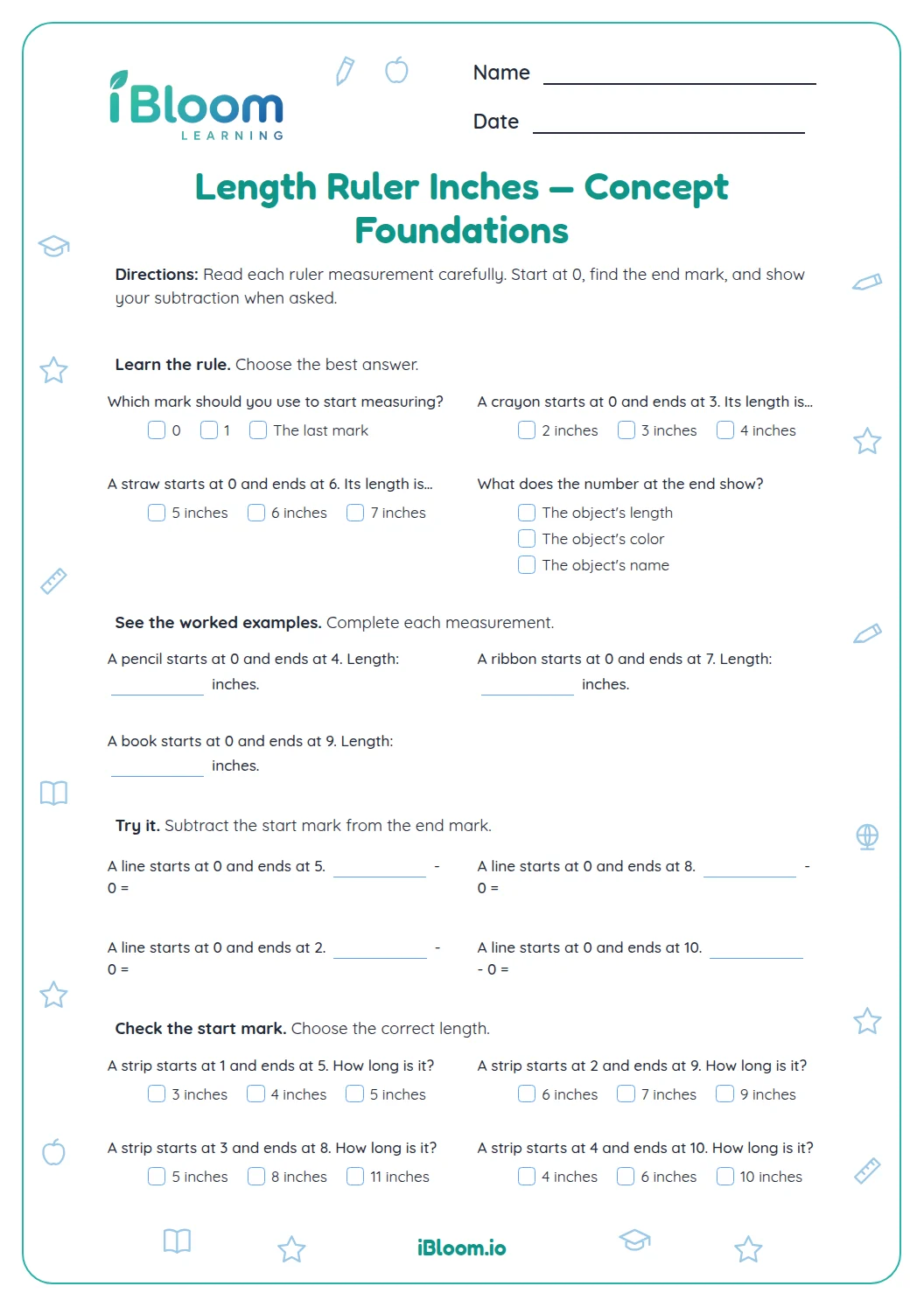


About this worksheet
This printable gives first graders practice comparing two lengths and finding how much longer or shorter one is. Part A builds the comparison idea, Part B checks length clues, and Part C applies them in everyday situations. The examples use inches and cube lengths; no ruler conversions are needed.
Aligned to 1.MD.A.1
How do you compare two lengths?
Compare lengths that use the same unit. The larger measurement names the longer object; subtract to find how much longer it is.
How can subtraction show the difference?
Subtract the shorter measurement from the longer one, and keep the unit in the answer.
- 1Emma’s ribbon is 14 inches; Sam’s is 8 inches.
- 214 − 8 = 6
- 3Emma’s ribbon is 6 inches longer.
How can addition check a comparison?
Add the shorter length and the difference. The sum should equal the longer length.
How to use this worksheet
- 1Read both lengths before choosing an operation.
- 2Ask which length is larger before finding a difference.
- 3Have your child explain one answer aloud using “longer than” or “shorter than.”
Common mistakes and quick fixes
The mistake
Choosing the object with the smaller number as longer.
The fix
Compare the numbers while keeping the units the same.
The mistake
Writing the longer length instead of the difference.
The fix
Subtract the shorter length from the longer one.
Curriculum alignment
This page practices early measurement comparison with same-unit lengths.
Order objects by length and compare lengths indirectly.
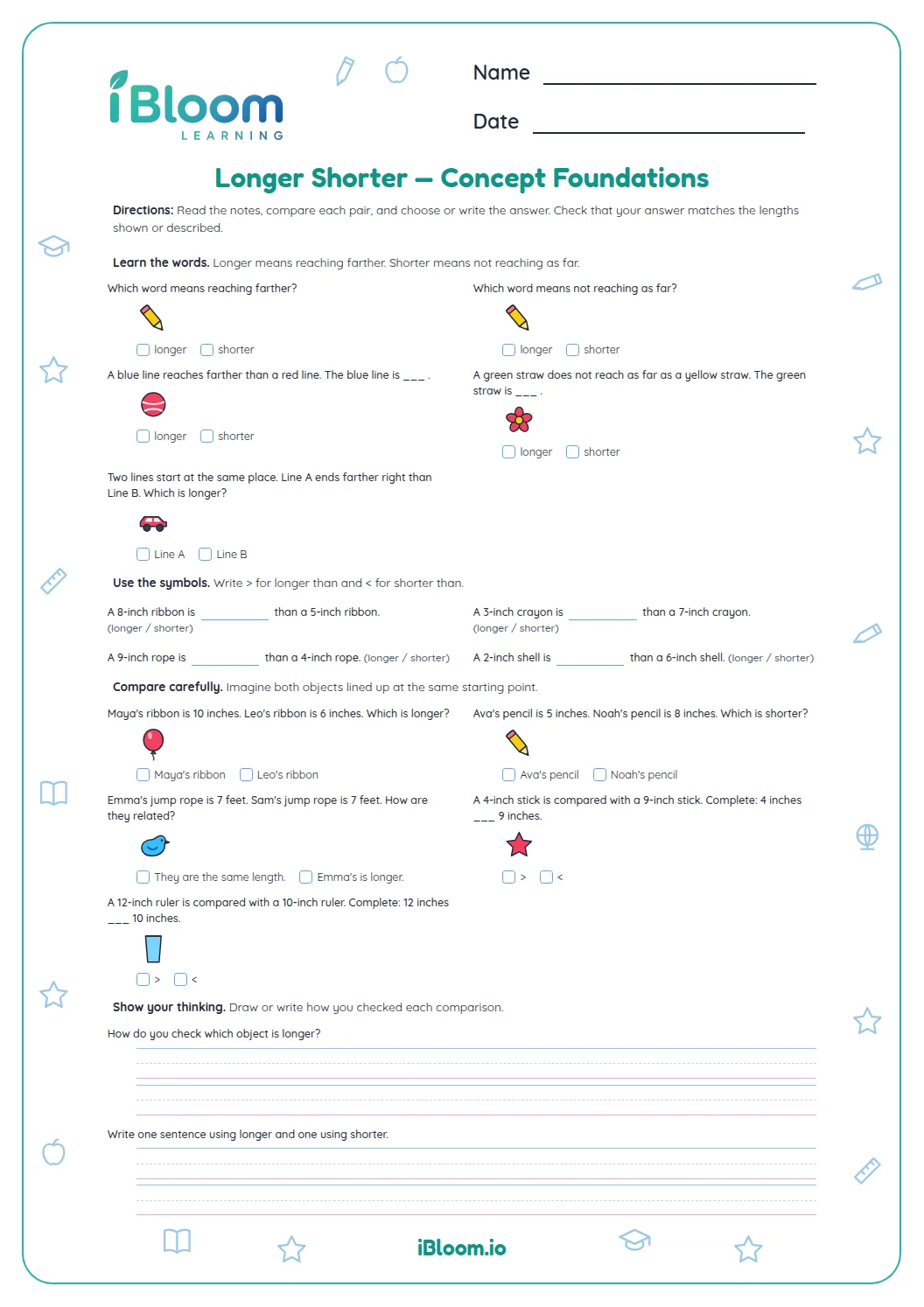
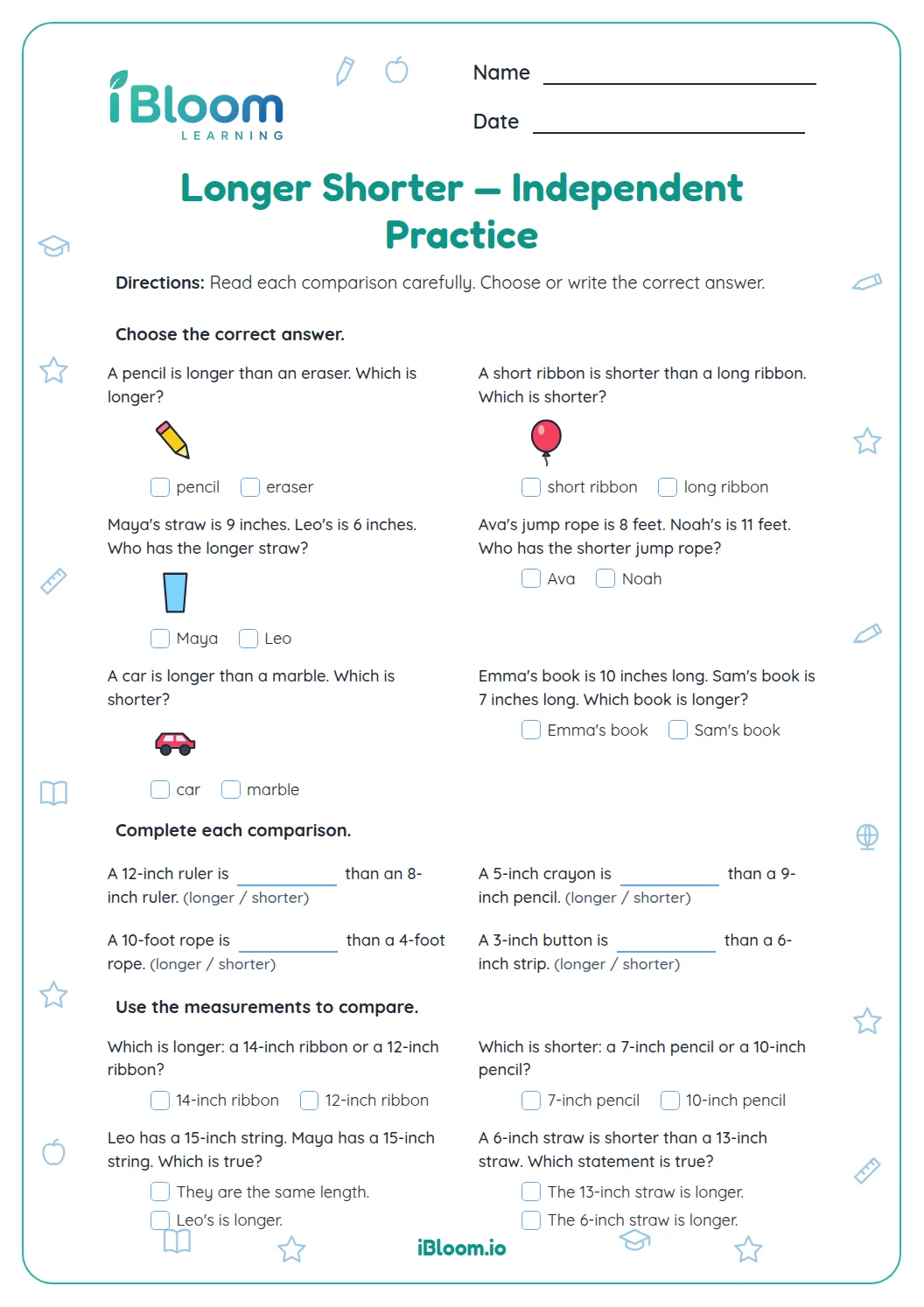
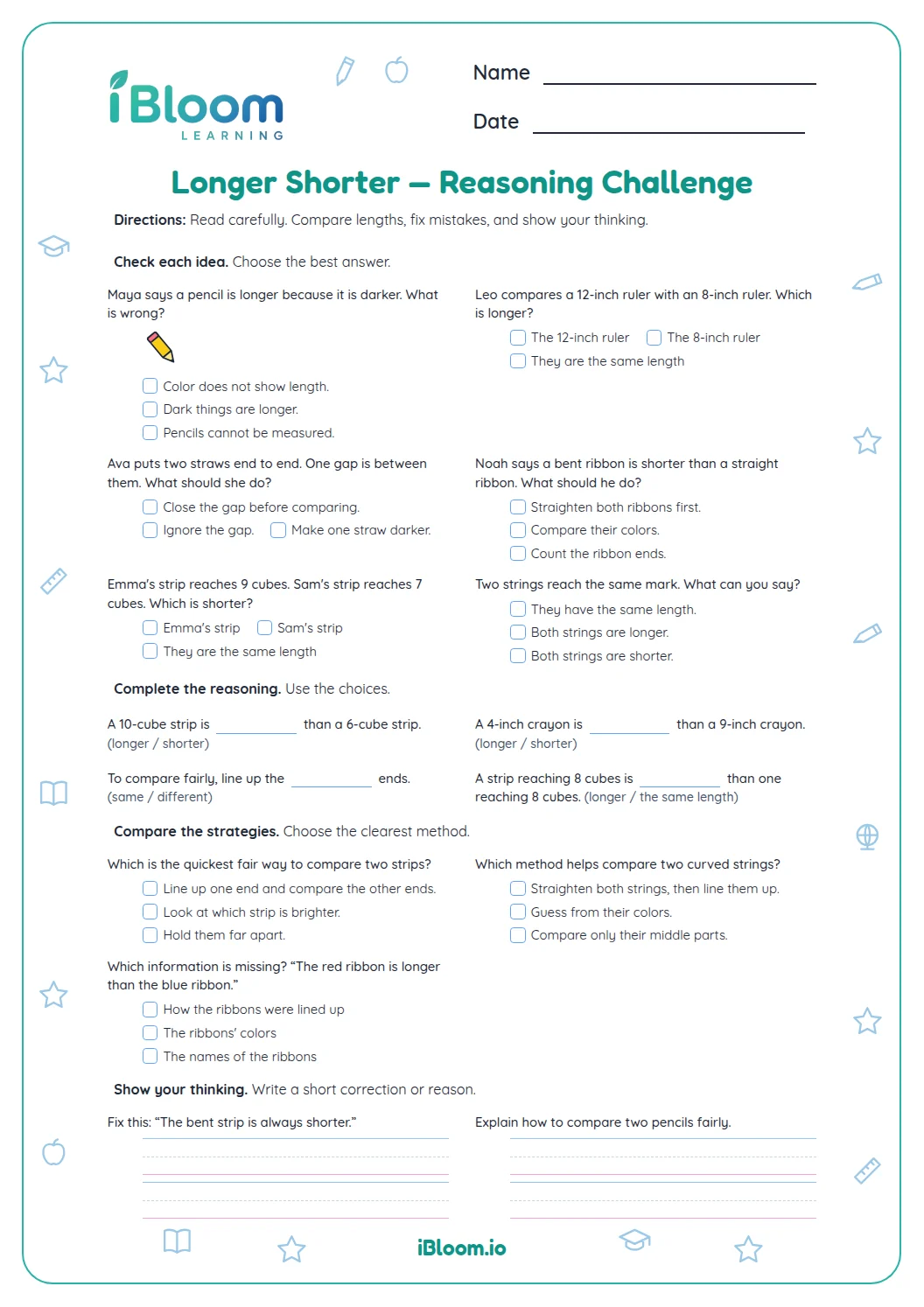
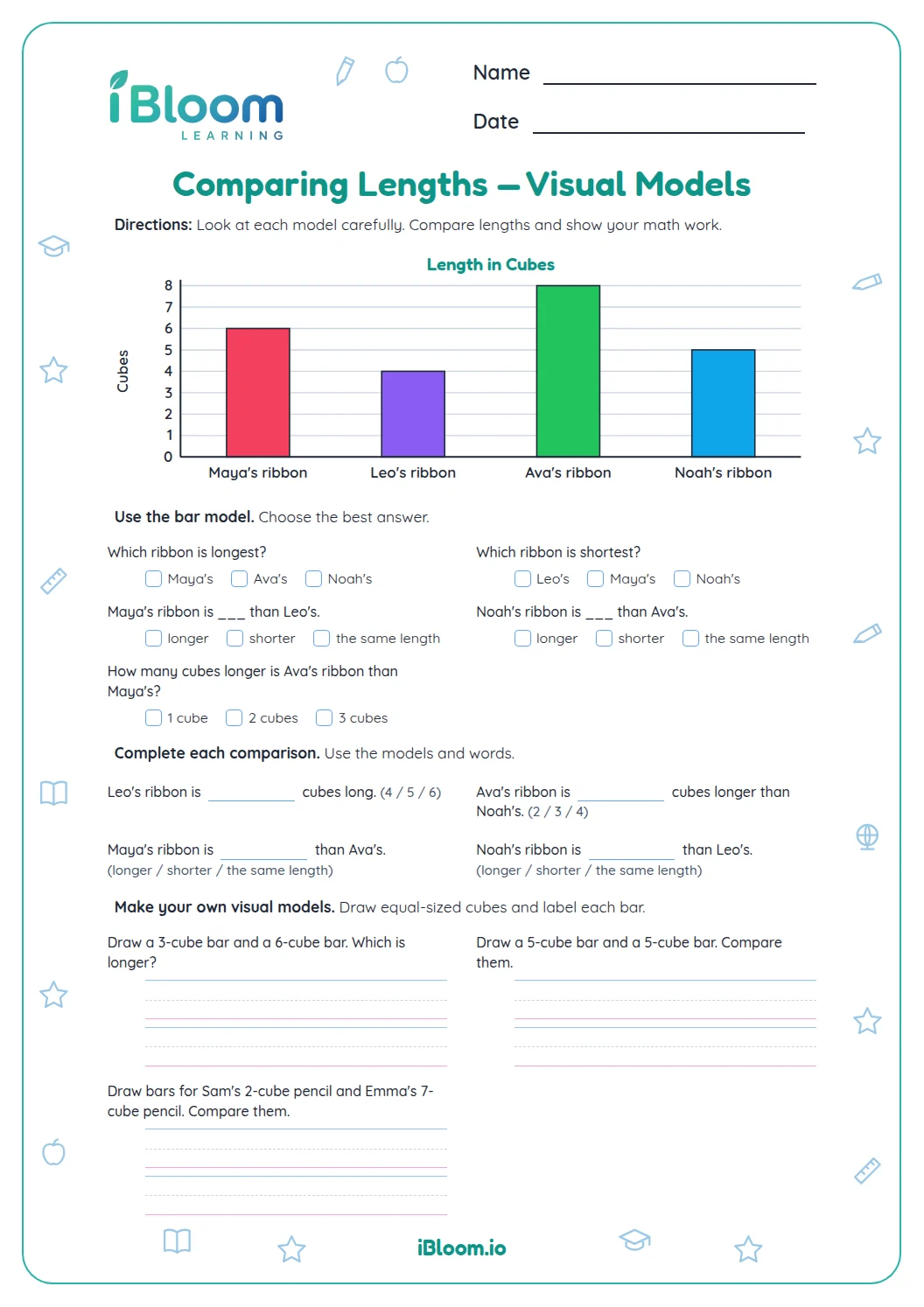
On this sheet: Students compare lengths and identify which object is longer or shorter.
Show the official wordingHide the official wording
Order three objects by length; compare the lengths of two objects indirectly by using a third object.
What to practice next
Make more practice
Questions parents and teachers ask
What does it mean for one object to be longer?
One object is longer when its length is greater than the other object’s length, measured in the same unit. For example, a 9-inch ribbon is longer than a 6-inch ribbon. Comparing the measurements first helps students name which object is longer.
How do students find how much longer something is?
Find the difference by subtracting the shorter length from the longer length. If a pencil is 10 inches and a crayon is 7 inches, the pencil is 3 inches longer. Keep the unit in the answer so the comparison stays clear.
Why should both lengths use the same unit?
The numbers can be compared fairly only when they name the same unit. A length in inches should be compared with another length in inches, and a length in cubes with another length in cubes. This worksheet states the units in each problem.
Does this page require a ruler?
No ruler is needed because every question provides the lengths. A real ruler can still help a child picture the difference: line up two objects at zero, compare their endpoints, then describe which is longer and by how much. If the units differ, compare them with a measuring tool first.