



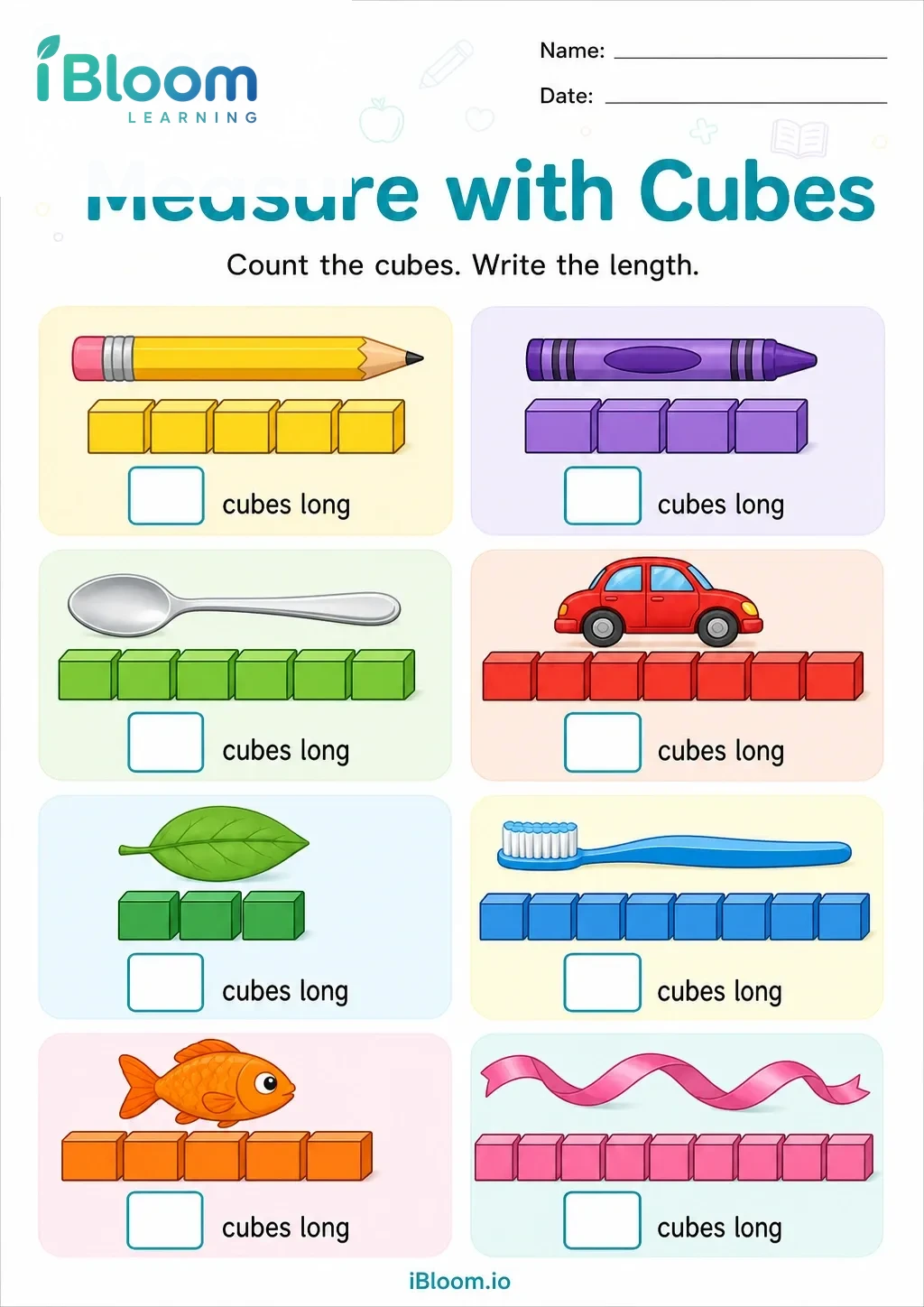
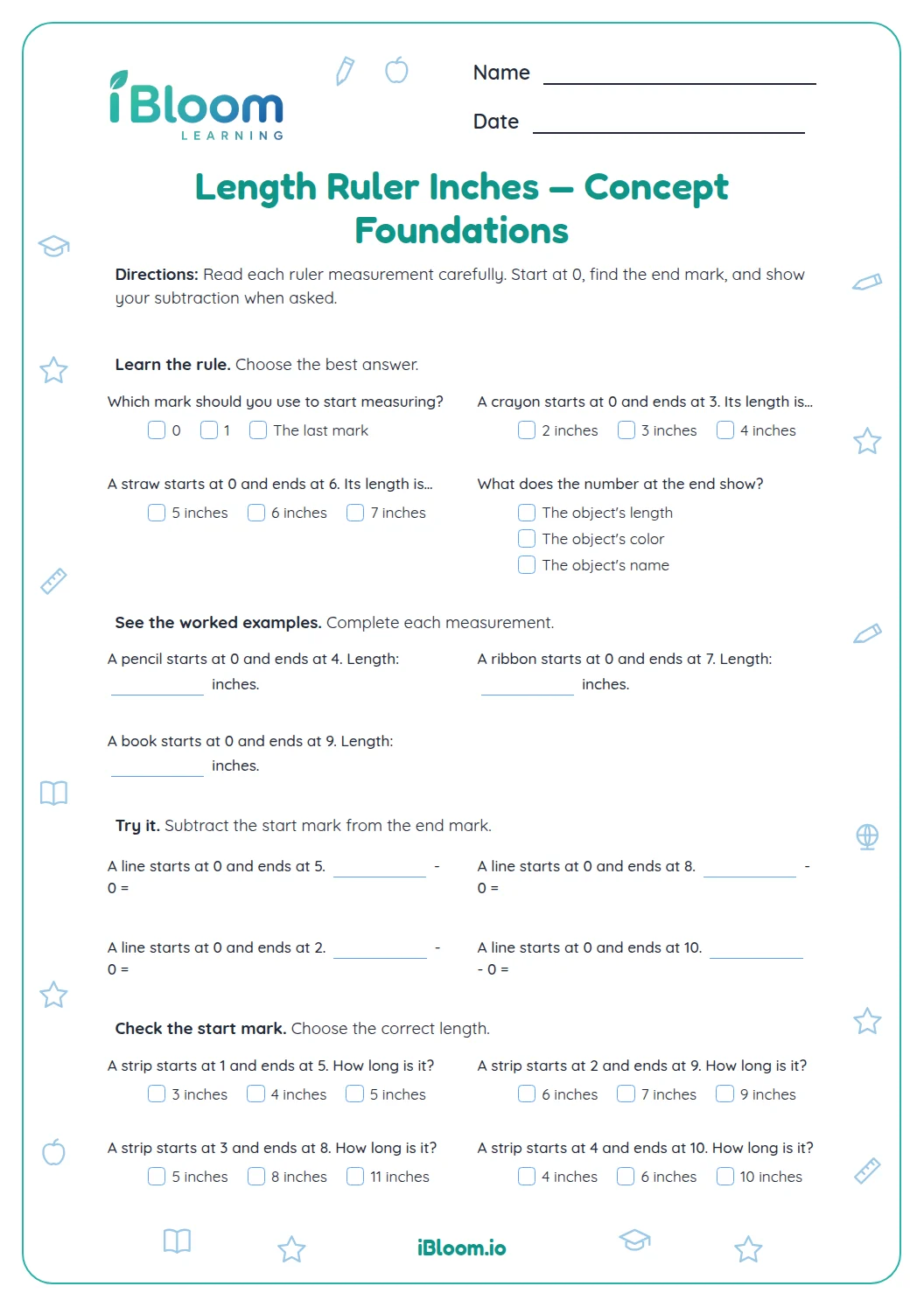


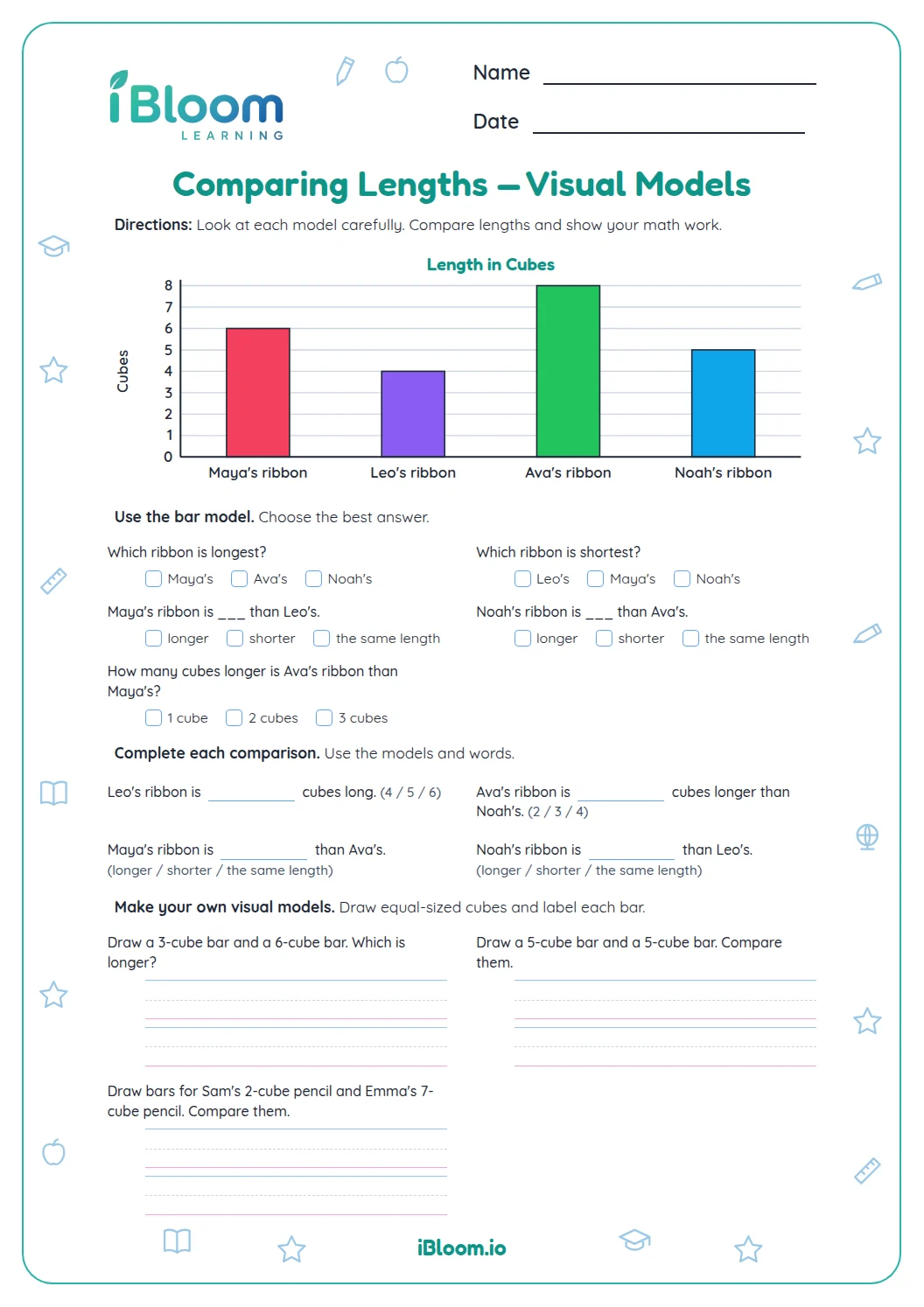
About this worksheet
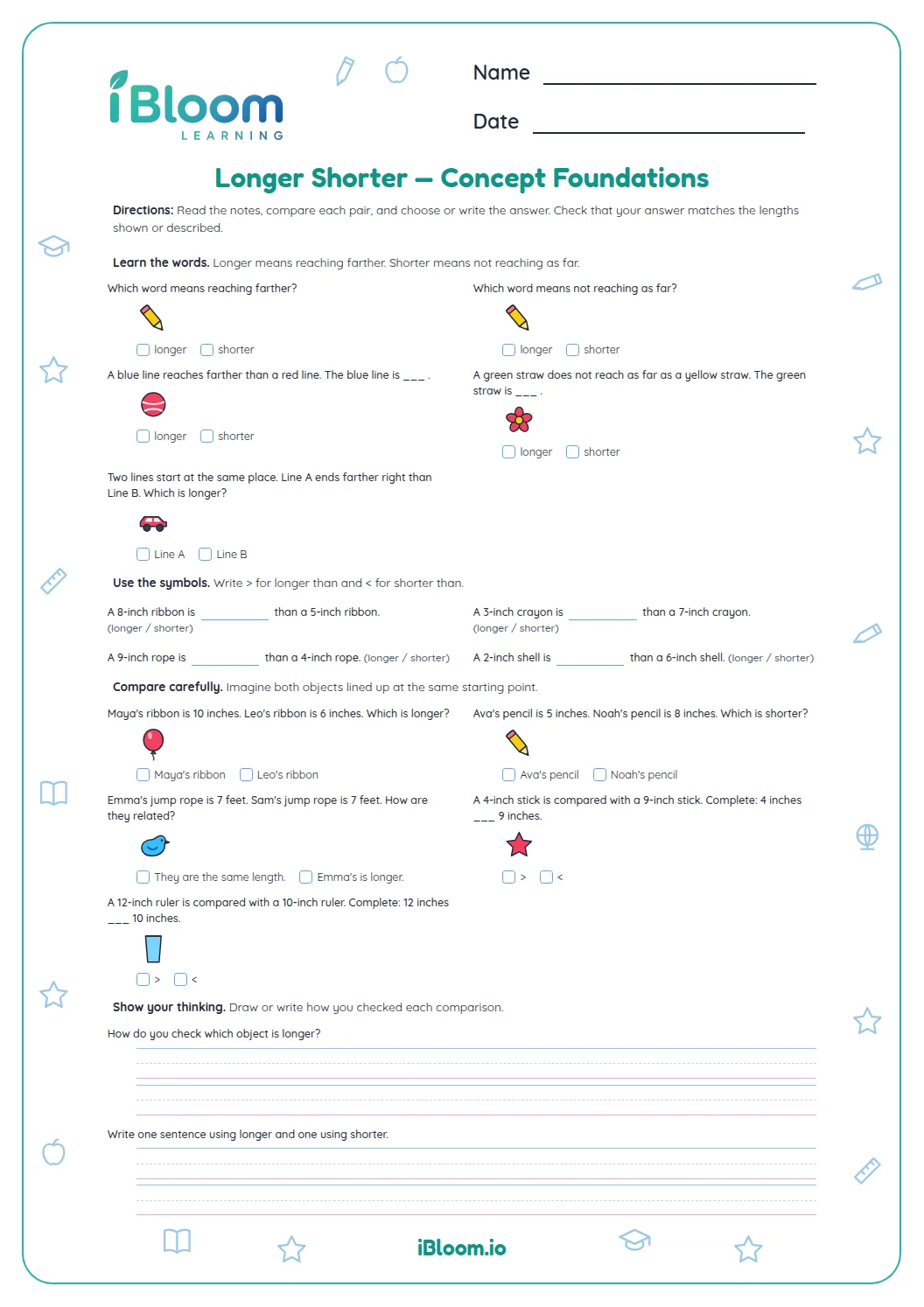
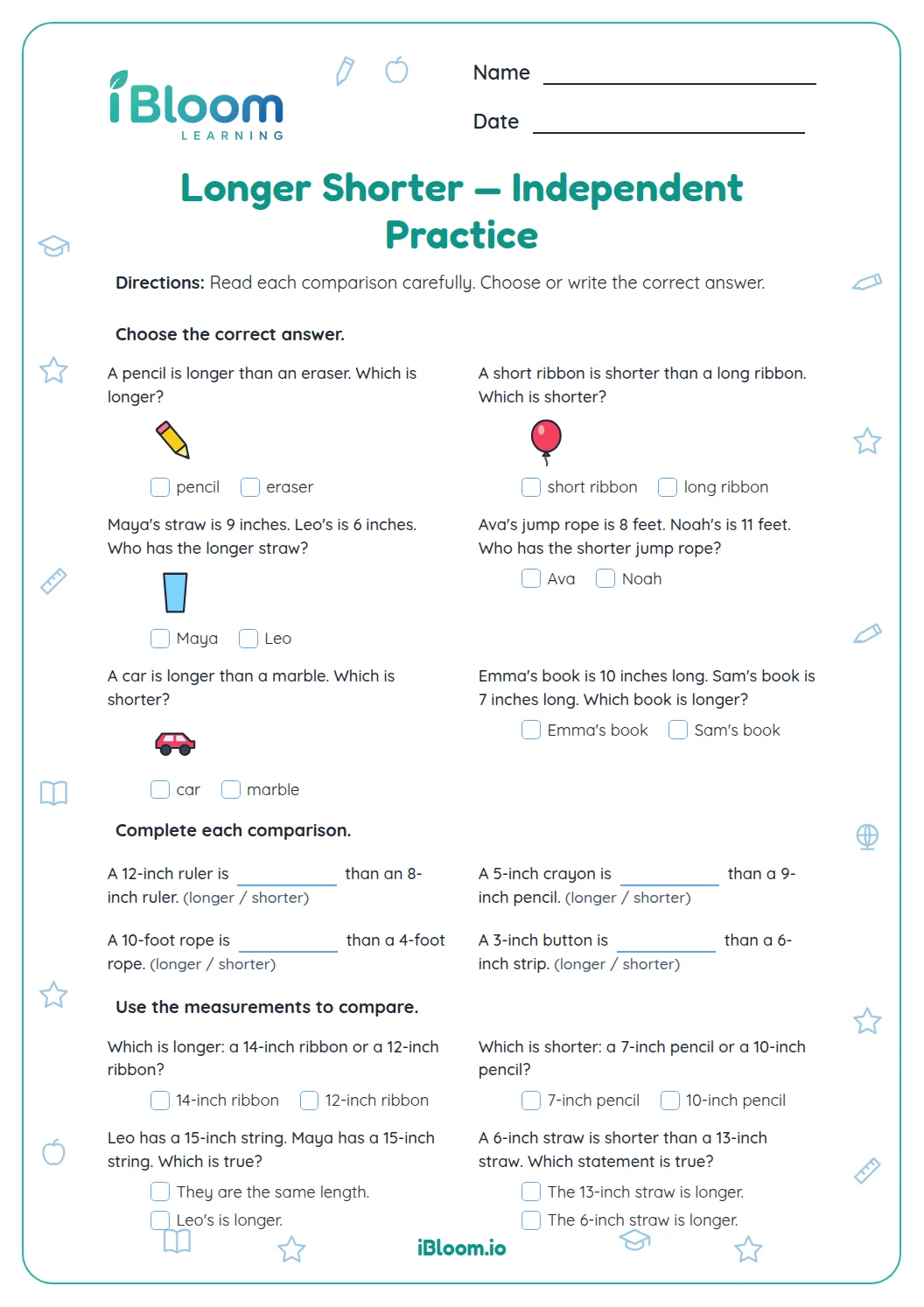
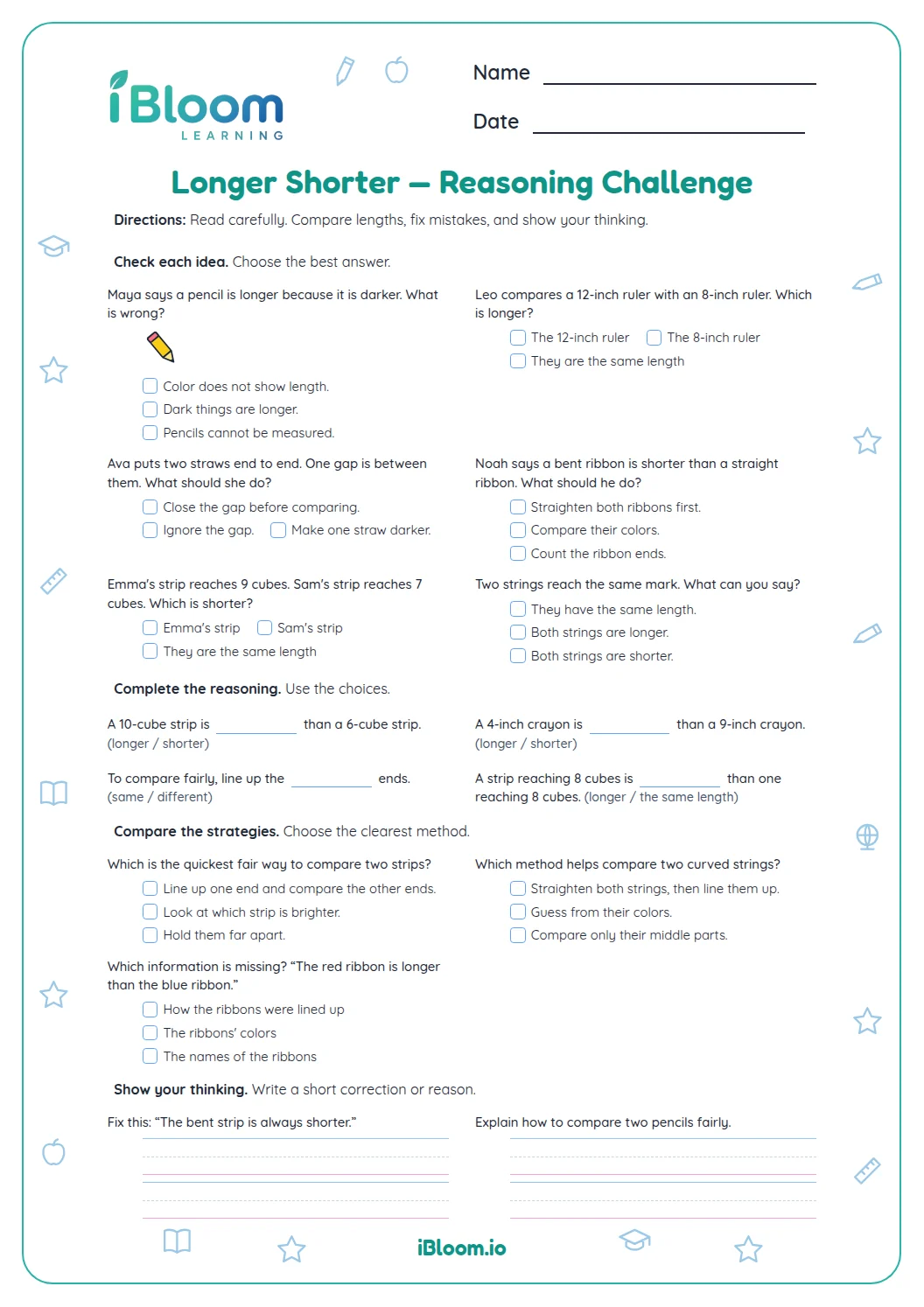
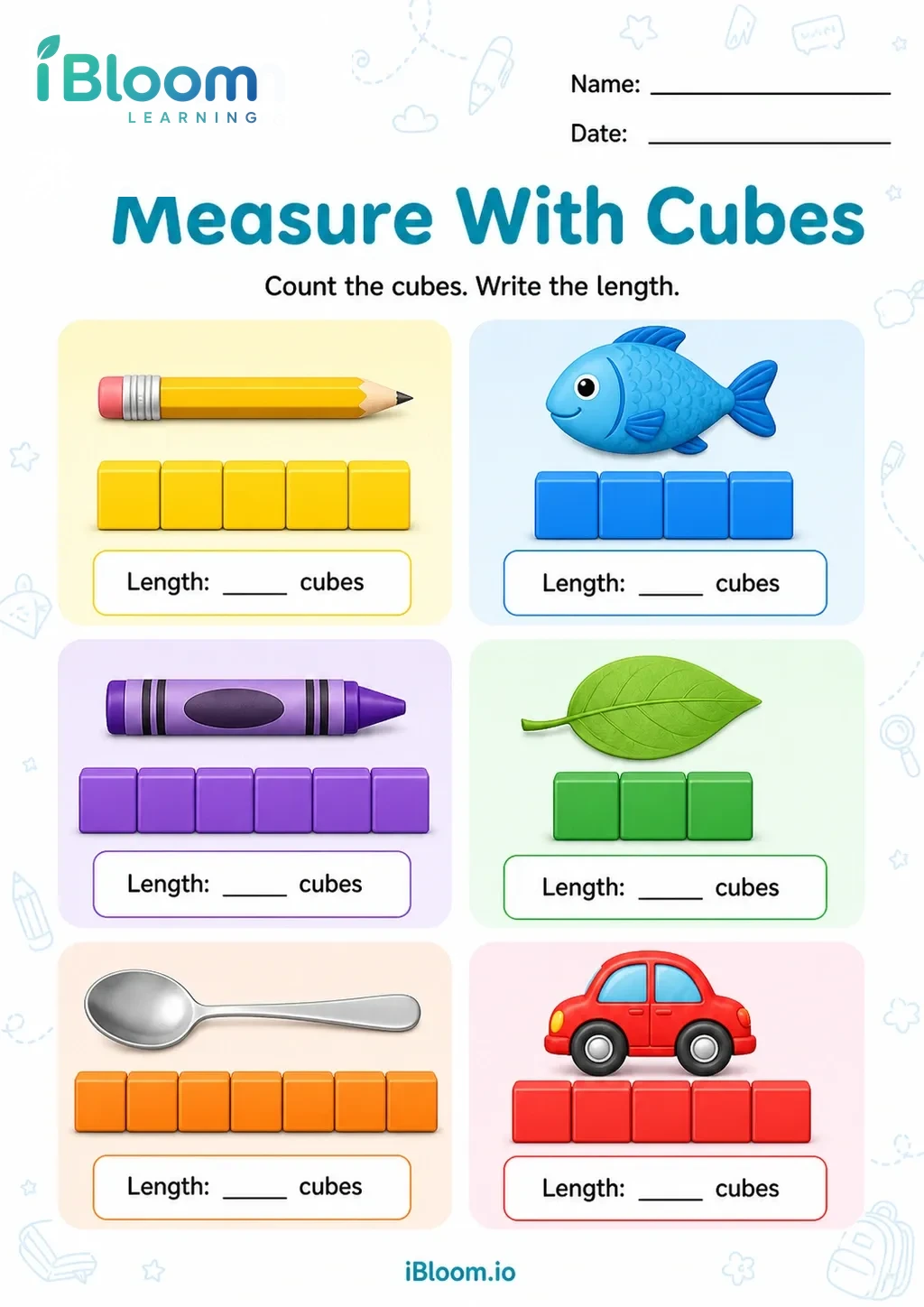
This Grade 1 worksheet helps children compare and order lengths using equal units. Ruler and number-line models make each length visible; children also complete comparison statements and draw two strips. It includes 16 questions and an answer key.
Aligned to 1.MD.A.1
How do children read a length model?
Start at zero and count the whole units marked by the ruler. Compare that count with the other length in the question. The model is an illustration of one measured strip; the prompt supplies the second measurement.
- 1The model measures 3 inches. The other strip is 5 inches.
- 2Compare 3 and 5.
- 33 is less than 5.
- 4Answer: the modeled ribbon is shorter.
When do we say longer, shorter, or the same?
A greater number of equal units means a longer object. A smaller number means a shorter object. When both objects have the same number of units, they are the same length.
- Use the same unit when comparing lengths
- Read ruler marks from zero
- Check whether the question asks for longer, shorter, or longest
What should the last drawings show?
The final two prompts ask children to draw strips in a dashed work area. The first needs a six-unit strip and a four-unit strip. The second needs equal-length strips. The key accepts clear drawings that show the requested relationship.
How to use this worksheet
- 1Look at where each model begins on the ruler or number line.
- 2Count the equal units to find the length.
- 3Compare the values before choosing a word or object.
- 4For three lengths, order the unit counts from least to greatest or identify the greatest.
- 5Draw the requested strips and compare their unit marks.
Common mistakes and quick fixes
The mistake
Reading a ruler from the end of the drawn bar instead of from zero.
The fix
Point to zero first, then count the unit marks the bar covers.
The mistake
Calling the object with fewer units longer.
The fix
Compare the two numbers aloud and connect the greater number to the longer length.
The mistake
Calling two equal lengths longer or shorter.
The fix
Check both unit counts; when they match, say “the same length.”
Common Core alignment
The activities use equal-unit lengths to compare objects.
Compare and order objects by length using measured lengths.
On this sheet: Children compare two or three lengths represented with equal units.
Show the official wordingHide the official wording
Order three objects by length; compare the lengths of two objects indirectly by using a third object.
What to practice next
Make more practice
Further reading
Questions parents and teachers ask
What does “same length” mean?
Two objects have the same length when they span the same number of equal units. In the worksheet, children compare unit counts and choose “same” when both lengths match. The final drawing prompt gives another way to show equal lengths.
Do children need a ruler for this worksheet?
No separate ruler is needed. The worksheet includes ruler and number-line models for children to read, and the prompt gives the other length for comparison. A pencil can help children point to each mark as they count. The final drawing items use an open work area.
How many questions are included?
The worksheet has 16 questions: 14 comparison or length questions and two drawing prompts. Children read ruler models, complete comparisons, identify longest or shortest lengths, and draw strips. The key gives comparison answers and describes what each drawing should show.
What replaces the old unit-square strip drawings?
Ruler drawings and labeled length models replace the old unit-square strips. The replacement keeps the same comparison skill and uses the template’s ruler and number-line visuals. The last prompts still ask children to draw strips showing a length relationship.
What should a correct drawing include?
For the first drawing, one strip should show six equal units and the other four equal units. For the second, both strips should have the same number of equal units. The key describes the relationship rather than requiring a particular artistic style.